Feeds:
Posts
Comments

Archive for the ‘solar power plants’ Category

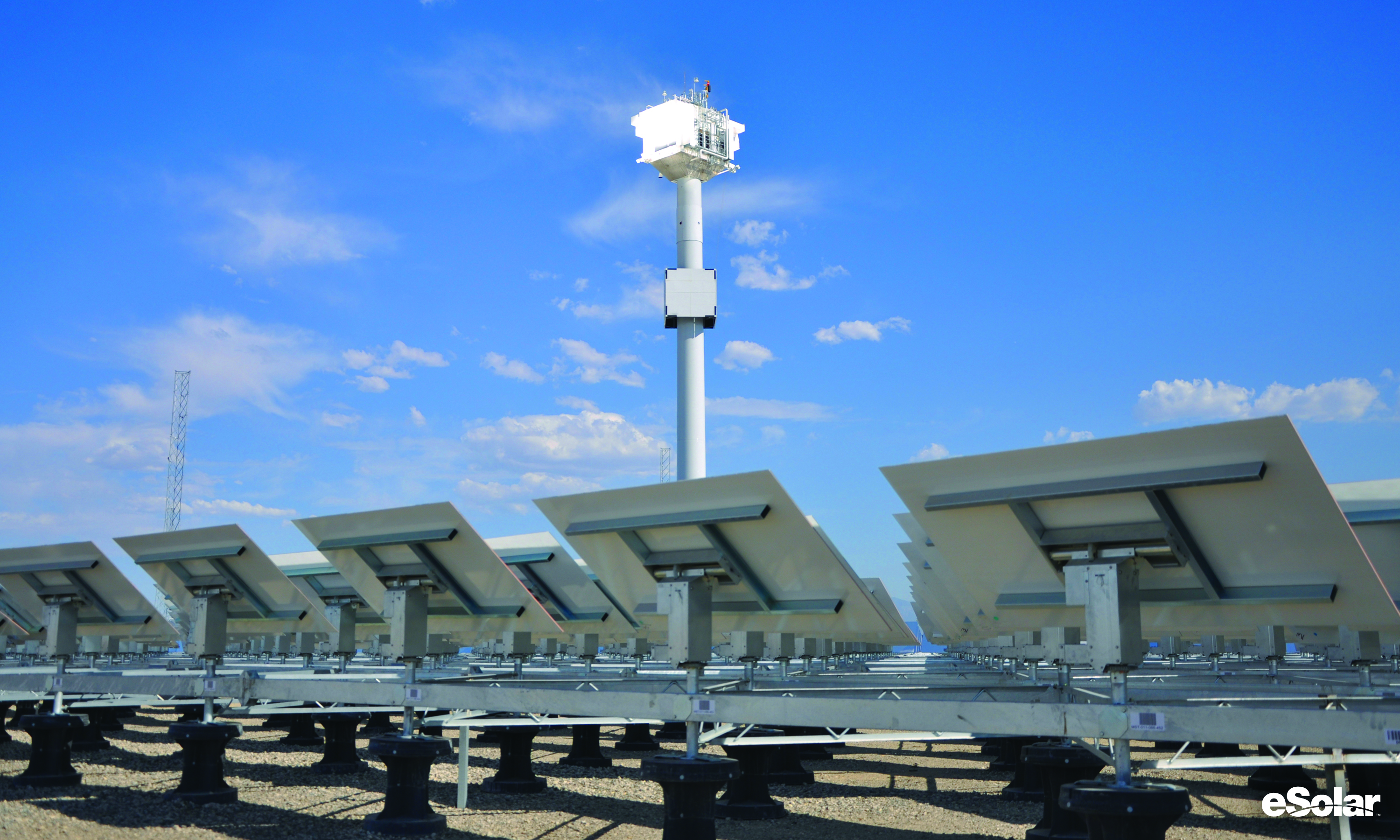
photo: eSolar

In The New York Times on Monday, I follow up on my story in Saturday’s Los Angeles Times on China’s move into solar thermal power with a 2,000 megawatt deal with eSolar of California:

China’s plans to build 2,000 megawatts of solar thermal power using technology from a California company, eSolar, will also include the construction of biomass power plants to generate electricity when the sun sets.

The solar and biomass plants will share turbines and other infrastructure, reducing the projects’ cost and allowing around-the-clock electricity production, according to Bill Gross, eSolar’s chairman.

“That supercharges the economics of solar,” said Mr. Gross in a telephone interview, noting that the addition of biomass generation will allow power plants to operate at 90 percent of capacity.

Under terms of the deal announced Saturday in Beijing, eSolar will license its “power tower” technology to Penglai Electric, which will manage the construction of the power plants over the next decade.

Another Chinese company, China Shaanxi Yulin Huayang New Energy Co., will own and operate the first projects to be built in the 66-square-mile Yulin Energy Park in northern China.

A local shrub grown in the surrounding region to fight desertification, called the sand willow, will supply fuel for the biomass power plants, according to Penglai Electric.

“It’s an economical use of a resource that’s already in place,” said Nathaniel Bullard, a solar analyst with Bloomberg New Energy Finance, a research and consulting firm. “That’s a very savvy move, rather than attach an energy storage system to the solar project.”

You can read the rest of the story here.
Read Full Post »

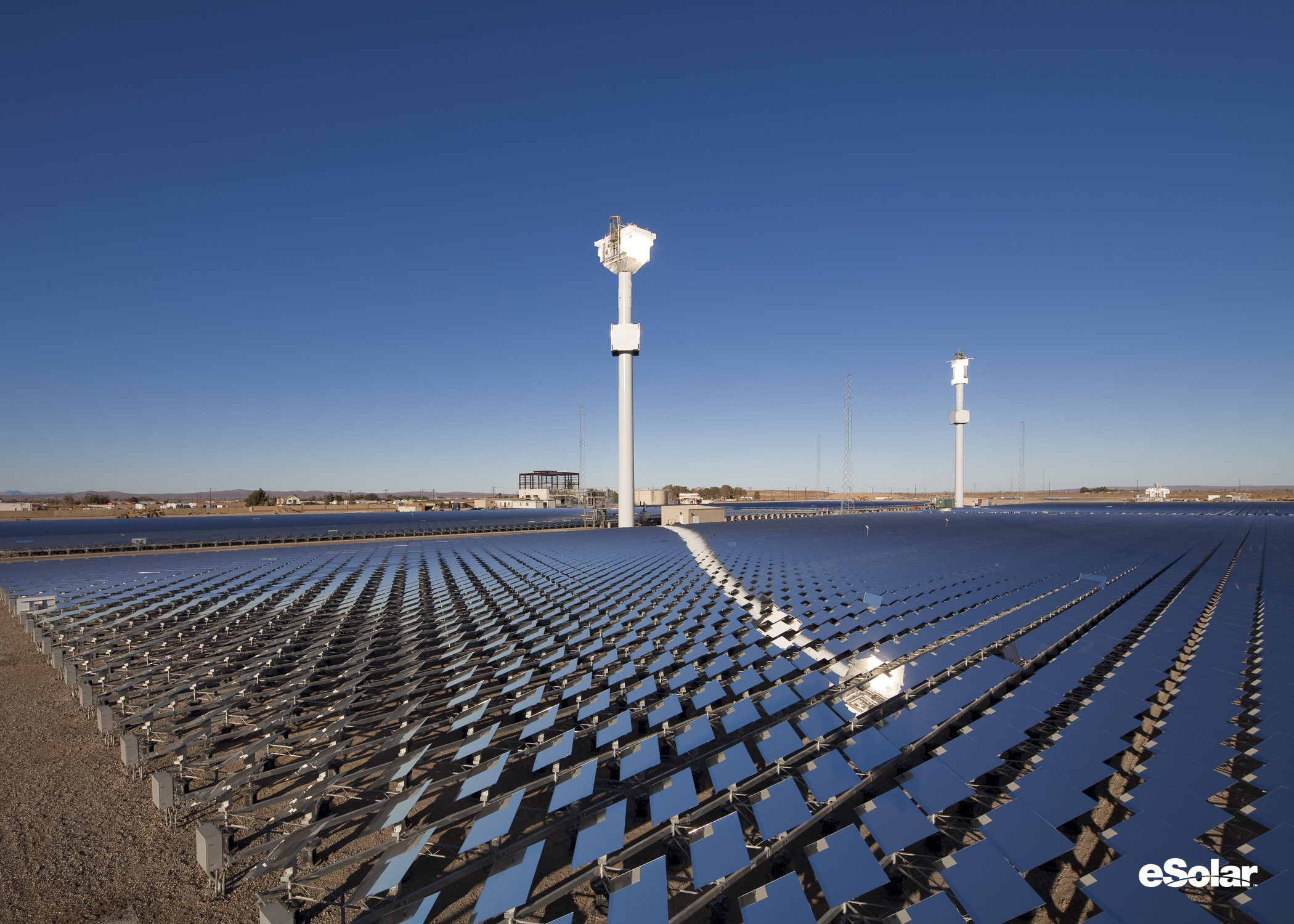
photo: eSolar

In Saturday’s Los Angeles Times, I write about a ground-breaking solar thermal deal struck by eSolar of Pasadena, Calif., to build two gigawatts of power plants in China over the next decade:

ESolar Inc. of Pasadena signed an agreement Friday to build a series of solar thermal power plants in China with a total capacity of 2,000 megawatts, in one of the largest renewable energy deals of its kind.

Coming four months after an Arizona company, First Solar, secured a contract to build an equally large photovoltaic power plant in China, the ESolar deal signals China’s emergence as a major market for renewable energy.

“They’re moving very fast, much faster than the state and U.S. governments are moving,” said Bill Gross, ESolar’s chairman and the founder of Idealab.

Under the agreement, ESolar will provide China Shandong Penglai Electric Power Equipment Manufacturing Co. the technology and expertise to build solar “power tower” plants over the next decade. Those solar farms would generate a total of 2,000 megawatts of electricity; at peak output that would be equivalent to a large nuclear power plant. The terms of the agreement were not disclosed.

The initial project, which includes a 92-megawatt solar power plant to be built this year, will be located in the 66-square-mile Yulin Energy Park in the Mongolian desert in northern China. The region has become a hot spot for renewable energy, with the 2,000-megawatt First Solar project planned 60 miles to the north.

You can read the rest of the story here.

Read Full Post »

photo: SolarReserve

In The New York Times on Saturday, I write about utilities NV Energy and PG&E signing power purchase agreements to buy electricity from SolarReserve’s solar farms, which store the sun’s energy in molten salt to generate power at night:

Solar farms that would serve two Western utilities are planning to use technology that will generate electricity after the sun goes down, a move that could be a potential game-changer for the industry.

The two farms being planned by SolarReserve of Santa Monica, Calif., would store the sun’s energy in molten salt, releasing the heat at night when it could be used to drive a turbine and generate electricity. Two utilities, NV Energy in Nevada and Pacific Gas and Electric, Northern California’s biggest utility, would buy the power.

The sun’s intermittent nature has made large-scale solar farms most useful as so-called peaker plants that supply electricity when demand spikes, typically in the late afternoon on hot days. But the ability of SolarReserve to store the sun’s energy for use at night would be a step forward in technology.

“The energy storage characteristics were a key factor in our selection of the Tonopah solar energy project,” NV Energy’s chief executive, Michael Yackira, said in a statement. The utility will be able to draw electricity from the solar farm more or less on demand, which makes it easier to balance the load on the power grid.

NV Energy would buy power from the 100-megawatt Crescent Dunes Solar Energy Project being planned on federal land near Tonopah, Nev., about 215 miles northwest of Las Vegas.

“We’re expecting to put in 12 hours of storage, which allows us to move power within the day to meet peak requirements as well as to operate at full load,” SolarReserve’s chief executive, Kevin Smith, said of the Tonopah plant.

You can read the rest of the story here.

Read Full Post »

image: Tessera Solar

In a follow-up to my New York Times story Tuesday on Senator Dianne Feinstein’s bill to ban renewable energy production in parts of California’s Mojave Desert, I take a look at some of the incentives in the legislation that could speed green energy projects:

In Tuesday’s Times, I write about Senator Dianne Feinstein’s bill to create two Mojave Desert monuments in California that would ban renewable energy projects on lands that are both coveted for solar farms and valued for their sweeping vistas and populations of rare wildlife.

The mere prospect of the legislation has derailed several massive solar power plants planned by Goldman Sachs and other developers. But Mrs. Feinstein, a California Democrat, has included provisions in the bill that could, if enacted, accelerate renewable energy development and ease tensions over endangered species that are slowing other solar projects outside the monument area.

In a big concession to renewable-energy advocates, Mrs. Feinstein would allow transmission lines to be built through existing utility rights-of-way in the monument to transmit renewable energy from other desert areas to coastal metropolises. That will not likely sit well with some of the senator’s environmental allies. (Nor will a provision that permanently designates areas of the desert for off-road vehicle use.)

The legislation also features a pilot program to assemble huge tracts of land -– at least 200,000 acres — to be used as endangered species habitat to make up for areas lost to renewable energy production.

You can read the rest of the story here.

Read Full Post »

In Tuesday’s New York Times, I write about California Senator Dianne Feinstein’s move to ban renewable energy production in two proposed national monuments in the Mojave Desert:

AMBOY, Calif. — Senator Dianne Feinstein introduced legislation in Congress on Monday to protect a million acres of the Mojave Desert in California by scuttling some 13 big solar plants and wind farms planned for the region.

But before the bill to create two new Mojave national monuments has even had its first hearing, the California Democrat has largely achieved her aim. Regardless of the legislation’s fate, her opposition means that few if any power plants are likely to be built in the monument area, a complication in California’s effort to achieve its aggressive goals for renewable energy.

Developers of the projects have already postponed several proposals or abandoned them entirely. The California agency charged with planning a renewable energy transmission grid has rerouted proposed power lines to avoid the monument.

“The very existence of the monument proposal has certainly chilled development within its boundaries,” said Karen Douglas, chairwoman of the California Energy Commission.

For Mrs. Feinstein, creation of the Mojave national monuments would make good on a promise by the government a decade ago to protect desert land donated by an environmental group that had acquired the property from the Catellus Development Corporation.

“The Catellus lands were purchased with nearly $45 million in private funds and $18 million in federal funds and donated to the federal government for the purpose of conservation, and that commitment must be upheld. Period,” Mrs. Feinstein said in a statement.

The federal government made a competing commitment in 2005, though, when President George W. Bush ordered that renewable energy production be accelerated on public lands, including the Catellus holdings. The Obama administration is trying to balance conservation demands with its goal of radically increasing solar and wind generation by identifying areas suitable for large-scale projects across the West.

Mrs. Feinstein heads the Senate subcommittee that oversees the budget of the Interior Department, giving her substantial clout over that agency, which manages the government’s landholdings. Her intervention in the Mojave means it will be more difficult for California utilities to achieve a goal, set by the state, of obtaining a third of their electricity from renewable sources by 2020; projects in the monument area could have supplied a substantial portion of that power.

“This is arguably the best solar land in the world, and Senator Feinstein shouldn’t be allowed to take this land off the table without a proper and scientific environmental review,” said Robert F. Kennedy Jr., the environmentalist and a partner with a venture capital firm that invested in a solar developer called BrightSource Energy. In September, BrightSource canceled a large project in the monument area.

You can read the rest of the story here.

Read Full Post »

image: Mafic Studios

Could this be another sign that Jerry Brown’s return to the California governorship is imminent? As I write Thursday in The New York Times, the state’s public utilities commission has greenlighted a contract for the world’s first orbiting solar power plant:

California regulators on Thursday went where no regulators have gone before — approving a utility contract for the nation’s first space-based solar power plant.

The 200-megawatt orbiting solar farm would convert solar energy collected in space into radio frequency waves, which would be beamed to a ground station near Fresno, Calif. The radio waves would then be transformed back into electricity and fed into the power grid.

“At the conceptual level, the advantages of space-based systems are significant,” said Michael Peevey, president of the California Public Utilities Commission, during a hearing on Thursday. “This technology would offer around-the-clock access to clean renewable energy, and while there’s no doubt this project has many hurdles to overcome, both regulatory and technological, it’s hard to argue with the audacity of the project.”

“It’s hard to argue with the audacity of the project.”
— Michael Peevey, California Public Utilities Commission
A Southern California startup called Solaren will loft components for the solar power plant into orbit and sell the electricity it generates to Pacific Gas & Electric, the major utility in northern California, under a 15-year contract. The project is supposed to be turned on in 2016.

You can read the rest of the story here.
Read Full Post »

In Monday’s Los Angeles Times, I write about the migration of renewable energy firms from California and the Southwest to the nation’s industrial heartland to tap the down-and-out region’s manufacturing might:

At a recent solar energy conference in Anaheim, economic development officials from Ohio talked up a state that seemed far removed from the solar panels and high-tech devices that dominated the convention floor.

Ohio, long known for its smokestack auto plants and metal-bending factories, would be an ideal place for green technology companies to set up shop, they said.

“People don’t traditionally think of Ohio when they think of solar,” said Lisa Patt-McDaniel, director of Ohio’s economic development agency. But in fact, the Rust Belt goes well with the Green Belt, she said.

In years past, Sunbelt governors recruited Midwestern businesses to set up shop in their states, dangling tax breaks and the lure of a union-free workforce.

Now the tables have turned as solar start-ups, wind turbine companies and electric carmakers from California and the Southwest migrate to the nation’s industrial heartland. They’re looking to tap its manufacturing might and legions of skilled workers, hit hard by the near-collapse of the United States auto industry and eager for work.

For all of green tech’s futuristic sheen, solar power plants and wind farms are made of much of the same stuff as automobiles: machine-stamped steel, glass and gearboxes.

That has renewable energy companies hitting the highway for Detroit and Northeastern industrial states, driven in part by the federal stimulus package’s incentives and buy-American mandates.

You can read the rest of the story here.
Read Full Post »

photo: Solyndra

In my Green State column in Grist this week, I talk to Ryan Pletka, a renewable energy expert at engineering and consulting firm Black & Veatch, who has been conducting economic analysis for California’s Renewable Energy Transmission Initiative.  The rapid evolution of the solar market has prompted Pletka to rethink the the need for massive new transmission projects in California:

California’s ambitious goal of obtaining a third of its electricity from renewable sources by 2020 has spawned a green energy boom with thousands of megawatts of solar, wind, and biomass power plants planned for … the middle of nowhere.

And therein lies the elephant in the green room: transmission. Connecting solar farms and geothermal plants in the Mojave Desert and wind farms in the Tehachapis to coastal metropolises means building a massive new transmission system. The cost for 13 major new power lines would top $15.7 billion, according to a report released in August by the state’s Renewable Energy Transmission Initiative.

The initiative, called RETI, is an attempt to build a statewide green grid in an environmentally sensitive way that will avoid the years-long legal battles that have short-circuited past transmission projects.

But the rapidly evolving solar photovoltaic market may moot the need for some of those expensive and contentious transmission lines, requiring transmission planners to rethink their long-term plans, according to Black & Veatch, the giant consulting and engineering firm that does economic analysis for RETI.

In short, solar panel prices have plummeted so much as to make viable the prospect of generating gigawatts of electricity from rooftops and photovoltaic farms built near cities.

“This has pretty significant implications in terms of transmission planning,” Ryan Pletka, Black & Veatch’s renewable energy project manager, told me last week. “What we thought would happen in a five-year time frame has happened in one year.”

You can read the rest of the column here.

Read Full Post »

Photo: Ausra

Ausra has become the latest credit-crunched solar startup to seek a buyer/investor to bankroll its expansion. As I write Tuesday in The New York Times:

Disrupting trillion-dollar energy markets is expensive, as solar companies like OptiSolar and Solel have found. Both sold out to larger, deep-pocketed companies this year.

Now Ausra, a high-profile solar company bankrolled by some of Silicon Valley’s top venture capital firms, has become the latest renewable energy startup to put itself on the block.

Ausra, which makes solar thermal equipment to generate electricity, is in negotiations with three large international companies interested in taking a majority ownership stake in the venture, according to a person familiar with the situation.

The negotiations were first reported by Reuters.

All three potential acquirers are companies that make equipment for conventional power generation. Ausra declined to comment. Founded in Australia to build solar power plants, Ausra relocated to Silicon Valley and secured funding in 2007 from marquee venture capital firms Khosla Ventures, Kleiner Perkins Caufield & Byers and other investors.

Ausra soon filed plans to build one of the first new solar farms in California in 20 years. The company also built a factory in Las Vegas to manufacture long mirror arrays that focus the sun on water-filled tubes to create steam to drive electricity-generating turbines.

But as the credit crunch made building billion-dollar solar power plants an increasingly dicey proposition, Ausra switched gears earlier this year to focus on supplying solar thermal equipment to other developers.

You can read the rest of the story here.

Read Full Post »

Solarthermische Parabolrinnenkraftwerke Andasol 1 und 2

Photo: Solar Millennium

Water is emerging as a make-or-break issue for solar developers hoping to build massive megawatt solar power plants in the desert Southwest. On Monday, Solar Millennium announced it would rather switch to dry-cooling its proposed 500-megawatt solar farm in the Nevada desert rather than fight to use more than a billion gallons of water a year to cool the power plant. As I write in The New York Times:

A solar developer caught in the crossfire of the West’s water wars is waving the white flag.

Solar Millennium, a German developer, had proposed using as much as 1.3 billon gallons of water a year to cool a massive solar power plant complex it wants to build in a desert valley 80 miles northwest of Las Vegas.

That divided the residents of Amargosa Valley, some of whom feared the solar farm would suck dry their aquifer. Others worried about the impact of the $3 billion project on the endangered pupfish, a tiny blue-gray fish that survives only in a few aquamarine desert pools fed by the valley’s aquifer.

Now Solar Millennium says it will instead dry-cool the twin solar farms, which will result in a 90 percent drop in water consumption.

“We trust that this decision to employ dry-cooling will accelerate the approval process and enable us to begin construction and stimulate the local economy by December 2010,” Josef Eichhammer, president of Solar Millennium’s American operations, said in a statement on Monday.

Water has emerged as contentious issue as dozens of large-scale solar power plants are proposed for the desert Southwest. Solar Millennium’s move is likely to put pressure on other solar developers to follow suit.

You can read the rest of the story here.

Read Full Post »

« Newer Posts - Older Posts »

Design a site like this with WordPress.com
Get started