October 9, 2009 by Todd Woody

photo: Todd Woody
Can a state that gets 95 percent of its electricity from coal-fired power plants go green? The Natural Resources Defense Council thinks so. In a report released this week, the environmental group lays out how Indiana can become the California of the Midwest when it comes to renewable energy. As I write in The New York Times on Friday:
Coal-dependent Indiana could become one of the nation’s greenest states by tapping rural resources to generate renewable energy, according to a new report issued by the Natural Resources Defense Council.
The Hoosier State now obtains 95 percent of its electricity from plants running on coal — largely imported from Wyoming and elsewhere — but it could profit as an exporter of wind energy and machinery, the report said.
“Indiana has some of the best wind potential in the eastern U.S. and has a competitive advantage as a wind producer over most other states because of its location,” said the report’s author, Martin R. Cohen, said during a conference call on Wednesday.
Mr. Cohen noted that while the wind blows stronger in states like North Dakota and Nebraska, Indiana already has the transmission system in place to bring wind-generated electricity to eastern cities.
If Indiana increased wind energy production to 4,500 megawatts from its current 530 megawatts, it would create thousands of jobs and attract turbine manufacturers, according to the report. An owner of a 500-acre farm could earn $30,000 a year from leasing land for wind turbines, Mr. Cohen estimated.
Farmers also could profit, the report said, if Indiana starts harvesting corn stalks, wheat stalks and soybean residue and uses the biomass either for power production or to make ethanol.
You can read the rest of the story here.
Posted in alternative energy, biofuels, climate change, energy, environment, global warming, green collar jobs, green policy, green tech, Natural Resources Defense Council, renewable energy, solar energy | Tagged Indiana, Natural Resources Defense Council, NRDC, renewable energy | Leave a Comment »
October 8, 2009 by Todd Woody
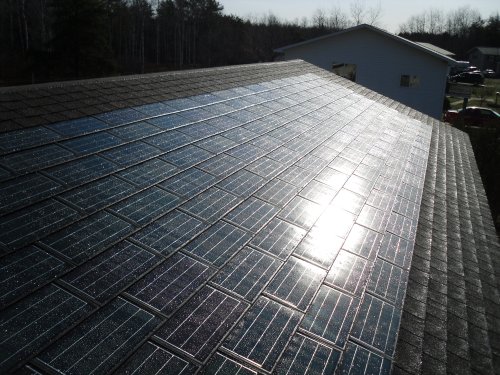
photo: Dow Chemical
Industrial giant Dow Chemical is getting into the residential solar business with a potentially game-changing product: A “solar shingle” that can be integrated into any asphalt-tiled roof and installed by any roofer. As I wrote in The New York Times on Wednesday:
Dow Chemical has unveiled a residential roof shingle in the form of a solar panel designed to be integrated into asphalt-tiled roofs.
Jane Palmieri, managing director of Dow’s Solar Solutions unit, said the Powerhouse thin-film shingle slashes installation costs because it can be installed by a roofer who is already building or retrofitting a roof.
“As a roofer is nailing asphalt shingle on roof, wherever the array needs to be installed he just switches to solar shingle,” said Ms. Palmieri, who said the solar singles are similarly attached to the roof with nails.
“You don’t have to have a solar installation crew do the work or have an electrician on site,” she added. “The solar shingle can be handled like any other shingle – it can be palletized, dropped from a roof, walked on.”
An electrician is still needed to connect the completed array to an inverter and to a home’s electrical system, but unlike conventional solar panels that must be wired together, the solar shingles plug into each other to form the array.
Dow plans to begin test-marketing the solar shingle in mid-2010, initially targeting new-home construction. Ms. Palmieri said the market could be worth $5 billion by 2015 and noted that 90 percent of homes in the United States use asphalt shingles.
You can read the rest of the story here.
Posted in alternative energy, environment, renewable energy, solar energy | Tagged Dow Chemical, residential solar, solar energy, solar shingles | Leave a Comment »
October 6, 2009 by Todd Woody
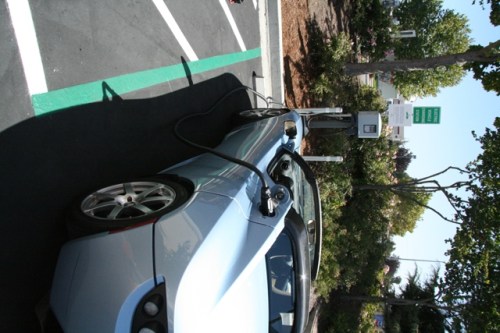
photo: SolarCity
In my new Green State column on Grist, I write about how SolarCity, a Silicon Valley rooftop solar installer, is getting into the electric-car charging station business:
You can’t get more California greenin’ than this.
Peter Rive can charge up his Tesla Roadster electric sports car in his San Francisco garage with carbon-free electricity supplied by a solar array on his roof. Then, if he’s in the mood for a road trip, he can drive to Los Angeles, stopping at a solar-powered charging station along the way to top off the battery.
The free charging stations on the “solar highway”—aka the 101—were recently installed by SolarCity, the Silicon Valley rooftop solar company Rive founded with his brother Lyndon. (The electric-blue Roadster sitting in his garage was made by his cousin Elon Musk‘s startup, Tesla Motors.)
So what’s a solar company doing installing highway charging stations for six-figure sports cars driven by people with seven-figure salaries?
In part, it’s a result of SolarCity’s connection to Tesla and grants the electric carmaker received from the state of California to demo charging stations. It makes for great PR, of course, but the bigger picture here is how the emerging electric vehicle industry will drive (sorry) the adoption of residential and commercial photovoltaic systems.
You can read the rest of the column here.
Posted in electric cars, green cars, green startups, renewable energy, solar energy, SolarCity | Tagged electric cars, electric vehicle charging stations, Elon Musk, Lyndon Rive, Peter Rive, SolarCity, Tesla Motors | Leave a Comment »
October 2, 2009 by Todd Woody

photo: Lemnis Lighting
In the Los Angeles Times today, I write about the introduction Friday of a dimmable LED bulb that can screw into any standard home light fixture. There’s just one catch — it costs $40:
Would you pay $39.95 for a light bulb?
Didn’t think so. But what if it used 90% less electricity than a standard incandescent bulb, cut greenhouse gas emissions and saved you an estimated $280 over its 25-year lifespan?
That’s the challenge facing Dutch start-up Lemnis Lighting today as it begins selling the American version of what apparently is the world’s first dimmable LED bulb compatible with home light fixtures.
LEDs — light-emitting diodes — are semiconductors that glow and are the great light hope for slashing carbon emissions from lighting, which consumes about 19% of energy production worldwide.
Lemnis says its Pharox60 LED lasts six times as long as an energy-efficient compact fluorescent light bulb. But unlike CFLs, LEDS don’t contain toxic mercury.
You can read the rest of the story here.
Posted in Uncategorized | Tagged LED, Lemnis Lighting, lighting | 1 Comment »
October 1, 2009 by Todd Woody
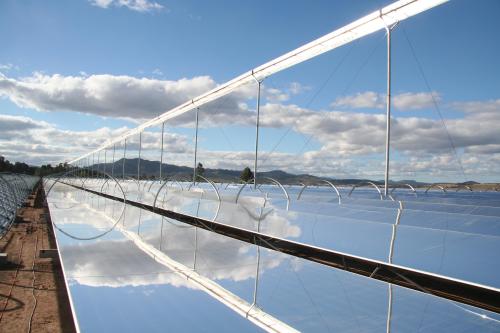
photo: Ausra
Silicon Valley solar startup Ausra in January decided to get out of the solar power plant business and focus on supply solar steam systems to developers. As I write in The New York Times today, the company has announced deals in Australia, Jordan and, soon, the United States:
Ausra, a Silicon Valley solar start-up, burst on to the green-tech scene in 2007, bankrolled by marquee venture capitalists and armed with ambitions to build gigawatts of solar farms.
Earlier this year, though, the company abruptly changed course, abandoning its solar power plant business to focus on supplying solar thermal technology to other developers.
Now the deals are starting to roll in.
On Wednesday, Ausra said it has signed a contract to provide a solar steam system to a German developer, MENA Cleantech. MENA plans to build a 100-megawatt hybrid solar farm in Jordan that will rely on an oil-fired boiler to generate electricity when the sun does not shine.
Robert Fishman, Ausra’s chief executive, said his company also has agreed to build a 23-megawatt solar steam plant adjacent to a 750-megawatt coal-fired power station in Queensland, Australia. The company’s mirror arrays and boilers will produce supplemental steam to boost the coal plant’s electricity production.
You can read the rest of the story here.
Posted in alternative energy, Ausra, Australia, energy, environment, renewable energy, solar energy, solar power plants | Leave a Comment »
September 30, 2009 by Todd Woody

image: Tessera Solar
In a feature published in today’s New York Times, I look at a water war breaking out in the desert Southwest over plans to build dozens of large-scale solar power projects on hundreds of thousands of acres of land:
AMARGOSA VALLEY, Nev. — In a rural corner of Nevada reeling from the recession, a bit of salvation seemed to arrive last year. A German developer, Solar Millennium, announced plans to build two large solar farms here that would harness the sun to generate electricity, creating hundreds of jobs.
But then things got messy. The company revealed that its preferred method of cooling the power plants would consume 1.3 billion gallons of water a year, about 20 percent of this desert valley’s available water.
Now Solar Millennium finds itself in the midst of a new-age version of a Western water war. The public is divided, pitting some people who hope to make money selling water rights to the company against others concerned about the project’s impact on the community and the environment.
“I’m worried about my well and the wells of my neighbors,” George Tucker, a retired chemical engineer, said on a blazing afternoon.
Here is an inconvenient truth about renewable energy: It can sometimes demand a huge amount of water. Many of the proposed solutions to the nation’s energy problems, from certain types of solar farms to biofuel refineries to cleaner coal plants, could consume billions of gallons of water every year.
“When push comes to shove, water could become the real throttle on renewable energy,” said Michael E. Webber, an assistant professor at the University of Texas in Austin who studies the relationship between energy and water.
Conflicts over water could shape the future of many energy technologies. The most water-efficient renewable technologies are not necessarily the most economical, but water shortages could give them a competitive edge.
In California, solar developers have already been forced to switch to less water-intensive technologies when local officials have refused to turn on the tap. Other big solar projects are mired in disputes with state regulators over water consumption.
To date, the flashpoint for such conflicts has been the Southwest, where dozens of multibillion-dollar solar power plants are planned for thousands of acres of desert. While most forms of energy production consume water, its availability is especially limited in the sunny areas that are otherwise well suited for solar farms.
You can read the rest of the story here.
Posted in Abengoa Solar, alternative energy, BrightSource Energy, climate change, energy, enviro startups, environment, global warming, renewable energy, solar energy, Solar Millennium, solar power plants, Tessera Solar | Tagged BrightSource Energy, renewable energy, Solar Millennium, solar power, solar power plants, Tessera Solar, water | 4 Comments »
September 29, 2009 by Todd Woody
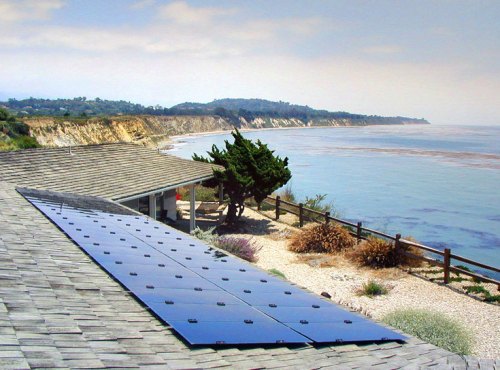
photo: SolarCity
When Wall Street collapsed last year so did tax equity funds, the primary vehicle to finance renewable energy development. But as I write in The New York Times today, investors are beginning to jump back into the game.
U.S. Bancorp has agreed to finance $100 million of solar installations in 2009 for California startup SolarCity. Investors are being lured in part by a federal stimulus package provision that lets them take a 30 percent investment tax credit for renewable energy projects as a cash grant:
The credit crunch has walloped the residential solar industry, making it hard for installers like SolarCity to tap investor funds to finance rooftop arrays for their customers.
But in a sign that the recessionary clouds are parting a bit, SolarCity on Tuesday said that U.S. Bancorp has agreed to finance $100 million worth of solar installations in 2009.
That’s double the money the bank committed to provide SolarCity in June when the original deal – but not the financial details – was announced.
SolarCity, based in the Silicon Valley suburb of Foster City, offers customers the option of leasing their rooftop panels and thus avoiding the five-figure cost of buying a solar system.
The company retains ownership of the solar array and thus qualifies for a 30 percent federal tax credit against its cost. Since most startups have no use for such tax credits, they give them to investors in exchange for financing installations.
Still, most such tax equity partnerships have collapsed along with the Wall Street banks that often funded them. In fact, U.S. Bancorp stepped in after Morgan Stanley pulled the plug on a financing arrangement with SolarCity earlier this year.
“For all of this year, tax equity has been the number one constraint in financing for the entire solar industry,” said Lyndon Rive, SolarCity’s chief executive. “In the third quarter of last year there were about 20 active banks and insurance companies making tax equity investments. They all fell off a cliff and now there’s three or four.”
You can read the rest of the story here.
Posted in alternative energy, climate change, enviro startups, environment, green financing, green startups, renewable energy, solar energy, SolarCity | Tagged investment tax credit, residential solar, SolarCity, tax equity partnerships, U.S. Bancorp | Leave a Comment »
September 29, 2009 by Todd Woody

photo: Think
In The New York Times today, I write about how Stockholm’s congestion pricing system, which charges drivers to enter the city center, has helped triple the number of alternative fuel cars in the Swedish capital:
When Sweden began charging motorists to drive into downtown Stockholm during rush hour, the goal was to reduce traffic congestion, cut greenhouse gas emissions and boost ridership on public transportation.
That has happened, and now a new study has found another benefit from so-called congestion pricing: In the 24-square kilometer congestion zone in Sweden’s capital, the number of registered alternative fuel vehicles, which are exempt from congestion tolls, jumped from five percent of the total vehicle fleet in 2006 to 14 percent in 2008.
“The changes in the make-up of the vehicle fleet are not exclusively due to the congestion tax, but surveys show that exemption from the congestion tax is the single most significant incentive for those buying alternative fuel vehicles in Stockholm,” concluded the report, which was released this month by the Stockholm Traffic Administration.
You can read the rest of the story here.
Posted in climate change, electric cars, environment, global warming, green cars, green policy | Tagged alternative fuel vehicles, congestion pricing, IBM, Stockholm, Sweden | Leave a Comment »
September 24, 2009 by Todd Woody
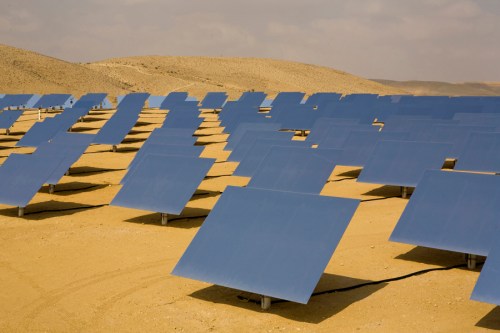
Photo: BrightSource Energy
In today’s New York Times, I write about how Harvey Whittemore — one of Nevada’s biggest power brokers and a confident of Senate majority leader Harry Reid — has responded to the housing crash by leasing desert land at his mega-home development to BrightSource Energy for a 960-megawatt solar farm complex.
What to do when building a 159,000-home city in the Nevada desert and the housing market collapses?
Go solar.
The Coyote Springs Land Company this week expanded a deal with BrightSource Energy, a solar power developer based in Oakland, Calif., to carve out 12 square miles of it its 43,000-acre mega-development for solar power plants that would generate up to 960 megawatts of electricity.
Harvey Whittemore, Coyote Springs’s chairman, said his plan always was to include some renewable energy in the massive golfing community under development 50 miles northeast of Las Vegas. But, Mr. Whittemore said, he decided to go bigger as the housing market crashed and solar developers like BrightSource began to sign deals with utilities.
“We’ve always said we’ll adjust the land use plan to the market,” said Mr. Whittemore in an interview. “At the end of the day we have approvals for 159,000 units and we looked at what we could do to reduce the number of units while at same time coming up with a functional business plan that takes advantage of private land.”
Private land is in short supply in Nevada, where the federal government owns about 87 percent of the state. That has forced solar developers like BrightSource – which is under the gun to supply 2,610 megawatts to California utilities — to seek leases on desert property managed by the United States Bureau of Land Management, a years-long process involving extensive environmental review.
By dealing with Mr. Whittemore, BrightSource is sidestepping all of that and acquiring an ally who knows how to get things done in the Silver State.
You can read the rest of the story here.
Posted in alternative energy, BrightSource Energy, climate change, enviro capitalism, enviro startups, environment, green startups, PG&E, solar energy, solar power plants, Southern California Edison | Tagged BrightSource Energy, Coyote Springs Land Company, Harvey Whittemore, Nevada, solar energy, solar power plants | Leave a Comment »
September 24, 2009 by Todd Woody
photo: Ausra
In my new Green State column on Grist, I sit down with legendary Silicon Valley venture capitalist Vinod Khosla to talk about his approach to green tech. Khosla — who raised a record $1.1 billion for green tech investing earlier this month — believes that unless a technology can scale and be adopted in markets like China and India, it will not have a meaningful impact on climate change.
Getting an audience with Silicon Valley’s guru of green investing isn’t always easy.
If Vinod Khosla is not speaking at one of the innumerable, and apparently recession-proof, green business conferences that seem to happen every other week, he’s giving lectures at Google headquarters, writing white papers, or, of course, inking checks to green tech startups with the potential to disrupt multi trillion-dollar global industries like energy, automobiles and building materials.
He’s something of a Valley legend: Co-founder of Sun Microsystems, then a longtime tech investor with marquee venture capital firm Kleiner Perkins Caufield & Byers and now head of Khosla Ventures, which he started in 2004 to invest in green tech startups.
Khosla and his partners had been investing their own money, but earlier this month the firm announced it had raised $1.1 billion for two funds—one of which is the largest first-time fund in a decade. It was a rather staggering amount, given that clean-tech investing has plummeted from $4 billion in 2008 to $513 million so far this year, according to PricewaterhouseCoopers, as the “Great Recession” continues to take its toll. Putting money into the two Khosla funds was the nation’s largest pension fund, the California Public Employees’ Retirement System.
It’s not the size of Khosla’s fund but what he intends to do with it that should command your attention. In short, he wants to take the green out of green investing and globalize the bottom line.
You can read the rest of the column here.
Posted in alternative energy, biofuels, climate change, enviro capitalism, enviro startups, environment, green financing, green startups, renewable energy | Tagged Calera, green tech, Khosla Ventures, venture capital, Vinod Khosla | Leave a Comment »
« Newer Posts - Older Posts »
 Green Wombat