June 1, 2010 by Todd Woody

Photo: The White House
In my new Green State column on Grist, I attend President Obama’s speech at a Silicon Valley solar panel factory:
Silicon Valley in the Internet age has not made for great presidential photo ops. The Valley’s computer-chip factories were off-shored decades ago and (Google excepted) the software giants that supplanted hardware companies just didn’t have the same pizzazz — T-shirted geeks writing code can’t compete with guys and gals in bunny suits tending big futuristic machines.
The rise of green tech has changed all that. The Valley is back in the business of building stuff — solar panels, electric cars, fuel cells, and various energy efficient widgets and gadgets.
And so when President Obama’s helicopter landed Wednesday morning at Solyndra, a solar module maker, a television-ready tableau awaited — a huge American flag hung in an unfinished factory, shiny high-tech thin-film solar panels were on display and workers in hard hats mingled with an audience of some 200 engineers, scientists, venture capitalists, and California’s patron saint of green tech PR events, Governor Arnold Schwarzenegger.
“We’ve got to go back to making things. We’ve got to go back to exports. We’ve got to go back to innovation,” said Obama on Wednesday in Fremont as Solyndra employees snapped photos with their iPhones.
“The true engine of economic growth will always be companies like Solyndra, will always be America’s businesses,” he continued. “But that doesn’t mean the government can just sit on the sidelines. Government still has the responsibility to help create the conditions in which students can gain an education so they can work at Solyndra, and entrepreneurs can get financing so they can start a company, and new industries can take hold.”
It’s an apt choice of words, for the fortunes of green tech startups like Solyndra have become entwined with the government as the Obama administration attempts to jumpstart a transition to a clean energy economy. The sprawling solar module plant we’re standing in — its construction is employing 3,000 workers — is being financed thanks in large part to a $535 million loan guarantee the Department of Energy granted to Solyndra last year.
You can read the rest of the column here.
Posted in green policy, solar energy, Solyndra, Tesla Motors, the green economy | Tagged Obama, Solyndra, Telsa Motors | Leave a Comment »
May 25, 2010 by Todd Woody
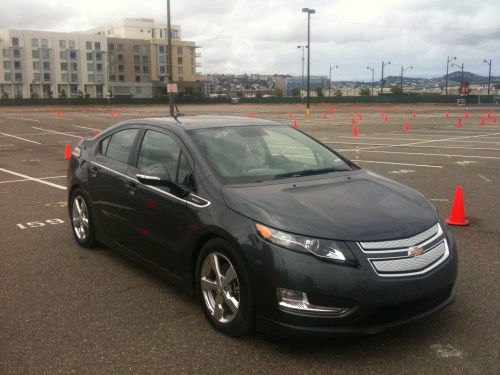
photo: Todd Woody
In my new Green State column on Grist, I test drive the Chevrolet Volt in San Francisco and ponder if General Motors’ electric hybrid car will persuade Californians to buy American again:
If you happened by an empty parking lot near San Francisco’s waterfront baseball park Tuesday morning, you would have seen some people putting a low-slung black sedan through its paces on a makeshift track outlined by fluorescent orange pylons.
What was remarkable was not so much that the car — the Chevrolet Volt — was electric, but that it hailed from Detroit.
Toyotas, Hondas, BMWs, and Mercedes rule the road in the Golden State’s coastal metropolises, where sightings of American sedans are about as rare as a California condor.
Like Ford, Nissan, Coda Automotive, Think, and other electric automakers, General Motors brought the Volt to San Francisco because, as I wrote in The New York Times recently, this is where the future of the electric car is unfolding first. (Driving home that point was Thursday’s news that Silicon Valley startup Tesla Motors is buying the defunct Bay Area manufacturing plant that previously produced cars for Toyota and General Motors and will now build electric cars in partnership with the Japanese auto giant.)
So the Volt may be GM’s best chance to reintroduce itself to two generations of California drivers who wrote the automaker off as the maker of hopelessly staid and low-quality cars.
“The Volt is going to make people reconsider Chevy and GM again,” Tony Posawatz, Volt vehicle line director, tells me as a group of journalists and influential electric car enthusiasts waited for their turn behind the wheel.
You can read the rest of the column here.
Posted in electric cars, green cars | Tagged Chevrolet Volt, Coda Automotive, electric cars, General Motors, Nissan Leaf, Think | 2 Comments »
May 24, 2010 by Todd Woody
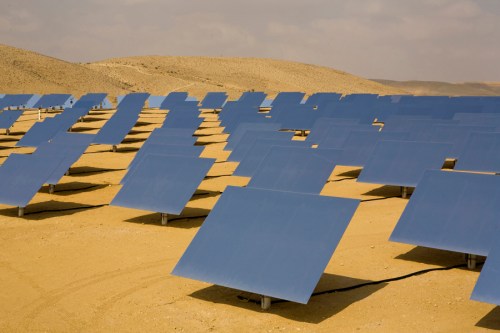
photo: BrightSource Energy
In last Thursday’s New York Times, I wrote about French industrial conglomerate Alstom’s $55 million investment in BrightSource Energy, a California-based solar power plant builder:
Alstom, the French energy giant, has taken a $55 million stake in BrightSource Energy, a solar power plant builder backed by Google, Morgan Stanley and other investors.
The investment is part of a $150 million round raised by BrightSource in one of the biggest renewable energy deals of the year. The California State Teachers Retirement System also joined the latest funding round as did the existing investors VantagePoint Venture Partners, Morgan Stanley and Draper Fisher Jurvetson.
Based in Oakland, Calif., BrightSource has now raised more than $300 million. Alstom becomes one of the startup’s largest shareholders and will take a seat on the board, according to John Woolard, BrightSource’s chief executive. The French company makes turbines and other power systems for fossil fuel, nuclear and hydro power plants and operates a division that builds high-speed trains.
BrightSource has signed contacts to build solar thermal power plants in California that would generate some 2,600 megawatts. In February, the company obtained a $1.37 billion loan guarantee from the federal government to help finance the construction of its first project, a 392-megawatt power plant to be built in the Southern California desert by Bechtel.
Mr. Woolard said Alstom would help the company as it sought to develop more efficient solar power plants.
You can read the rest of the story here.
Posted in alternative energy, BrightSource Energy, corporate green, energy, environment, solar energy, solar power plants | Tagged Alstom, BrightSource Enegy, John Woolard, solar energy | Leave a Comment »
May 22, 2010 by Todd Woody

photo: Todd Woody
Green Wombat has been in transition so I’m a bit behind on posting. In case you missed it, in the Sunday New York Times on May 9, I wrote a profile of David Gelbaum, one of the nation’s biggest — and until now — most reclusive green technology investors and environmental philanthropists:
AMID the $6 million homes perched on a beachfront cliff in this conservative Southern California enclave, the seven-year-old Honda Civic hybrid with the Obama bumper sticker is the giveaway.
It’s not the usual drive of choice for wealthy former hedge fund managers like David Gelbaum. Then again, there’s not much that is business as usual about Mr. Gelbaum, an intensely private person who happens to be one of the nation’s largest — and largely unknown — green technology investors and environmental philanthropists.
Mr. Gelbaum has invested $500 million in clean-tech companies since 2002 through his Quercus Trust, amassing a portfolio of some 40 businesses involved in nearly every aspect of the emerging green economy, be it renewable energy, the smart electric grid, sustainable agriculture, electric cars or biological remediation of oil spills. He has poured almost as much into environmental causes.
“I think his impact on green technology is huge,” says Bill Gross, the serial technology entrepreneur and founder of eSolar, a solar power start-up in which Mr. Gelbaum has invested. “He is supporting bolder and riskier bets, and he’s doing it from a different filter than a traditional venture capitalist, and I think that makes a wider opportunity for success.”
In this economic downturn, many venture capitalists have grown cautious about putting money into what Vinod Khosla, the prominent Silicon Valley green tech investor, calls “science experiments.” But Quercus Trust is still taking chances on blue-sky start-ups pursuing technological breakthroughs.
Working outside the clubby venture capital network, Mr. Gelbaum has, until recently, maintained an obsessively low profile. In Silicon Valley, he remains something of an unknown. Associates say his near-invisibility is owed to a genuine modesty and concerns over the security of his family because of his wealth. Recipients of his philanthropy, for instance, signed confidentiality agreements that forbade mention of his name.
Mr. Gelbaum says he decided to break his long silence upon becoming chief executive in February of Entech Solar, one of his portfolio companies that is publicly traded. “This is what’s best for the company,” he says, pointing out that Entech benefits if he maintains a more public profile.
It is too early to predict whether Mr. Gelbaum’s big green bets will pay off. But he’s been capitalizing on two trends: the rapid decline in the price of photovoltaic power, and a focus on cutting capital costs as solar power competition with China intensifies.
His environmental philanthropy also gives him an influence beyond laboratories and boardrooms. He has given $200 million to the Sierra Club and $250 million to the Wildlands Conservancy, a land trust he co-founded that has acquired and preserved 1,200 square miles of land in California, including more than a half million acres of the Mojave Desert.
You can read the rest of the story here.
Posted in alternative energy, David Gelbaum, energy, enviro capitalism, enviro startups, green policy, green startups, green tech, renewable energy, solar energy, solar power plants, sustainable agriculture | Tagged Bill Gross, Cool Earth Solar, David Gelbaum, Entech Solar, eSolar, green technology, GridPoint, Rob Lamkin, Wildlands Conservancy | Leave a Comment »
April 22, 2010 by Todd Woody

In The New York Times’ Business of Green special section on Thursday, I write about Janine Yorio, a 33-year-old former Wall Street investment banker who is connecting sustainable agriculture startups and venture capitalists:
SILICON VALLEY’S apricot and cherry orchards disappeared decades ago, replaced by semiconductor plants and office parks populated by technologists. Now some of the Valley’s most prominent venture capitalists are looking to the region’s roots for what could be the next new thing in an old business: agriculture.
“Sustainable agriculture is a space that looks as big or bigger than clean tech,” said Paul Matteucci, a venture capitalist with U.S. Venture Partners in Menlo Park, Calif. “Historically, we have not seen a ton of entrepreneurial activity in agriculture, but we are beginning to see it now, and the opportunities are huge.”
A catch-all phrase for environmentally beneficial farming, sustainable agriculture has long been the province of organic enthusiasts. But venture capitalists say a growing awareness of conventional agriculture’s contribution to climate change and concerns over its consumption of water and energy are creating markets for technological innovation to minimize those effects.
The Johnny Appleseed of what is being called Agriculture 2.0 is a 33-year-old former Wall Street investment banker named Janine Yorio. Her New York firm, NewSeed Advisors, brings together sustainable agriculture entrepreneurs and investors.
At the Four Seasons hotel in East Palo Alto, Calif., last month, NewSeed Advisors attracted a crowd of well-dressed investors from some of Silicon Valley’s top venture capital firms. They packed a ballroom to hear entrepreneurs pitch start-ups developing everything from nontoxic pesticides and analytical tools for soil analysis to indoor urban farming systems.
“If you’re interested in investing in energy and water, you become interested in investing in agriculture,” said Amol Deshpande, a venture partner at Kleiner Perkins Caufield & Byers, who attended the conference. “A lot of ag opportunities are going to be driven by water, it’s availability and cleanliness.”
You can read the rest of the story here.
Posted in Agriculture 2.0, sustainable agriculture | Tagged Agriculture 2.0, Cityscape Farms, Janine Yorio, NewSeed Advisors, sustainable agriculture | Leave a Comment »
April 22, 2010 by Todd Woody
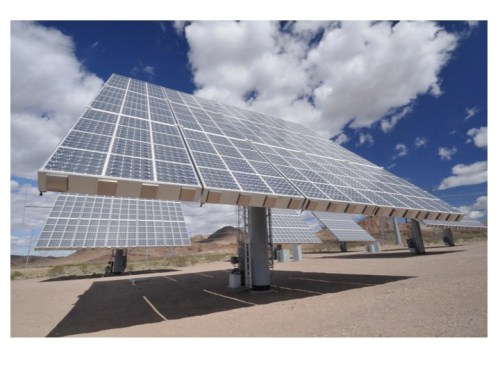
Photo: Amonix
In The New York Times on Wednesday, I wrote about Southern California solar company Amonix scoring one of the biggest rounds of green tech funding this year — $129.4 million from investors led by Silicon Valley heavyweight Kleiner Perkins Caufield & Byers:
In one of the biggest green technology deals of the year, a prominent Silicon Valley venture capital firm is leading a $129.4 million investment in a long-promising solar technology that is starting to gain traction in the United States.
The venture firm, Kleiner Perkins Caufield & Byers, and other investors are making a big bet on Amonix, a company in southern California that has spent 20 years developing concentrating photovoltaic power systems that resemble gigantic solar panels.
Plastic lenses focus the sun on tiny but highly efficient solar cells to generate more electricity than conventional photovoltaic panels. The so-called multijunction cells, which were first developed to power satellites, use fewer expensive semiconducting materials like silicon.
“We have reviewed hundreds of solar companies, and Amonix stands out to us as one that has breakout potential,” said Ben Kortlang, a partner at Kleiner Perkins who formerly helped lead the alternative-energy investing unit at Goldman Sachs. “We believe this is the low-cost solar technology for sunny climates.”
You can read the rest of the story here.
Posted in alternative energy, Amonix, solar energy, solar power plants | Tagged Amonix, concentrating photovoltaics, Kleiner Perkins Caufield & Byers, SolFocus | Leave a Comment »
April 14, 2010 by Todd Woody
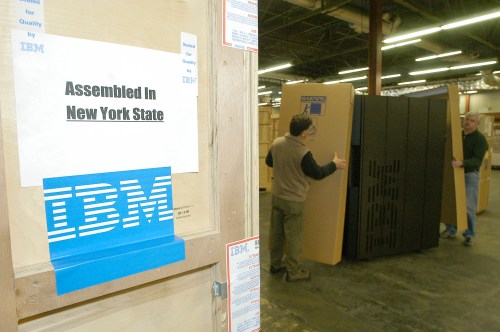
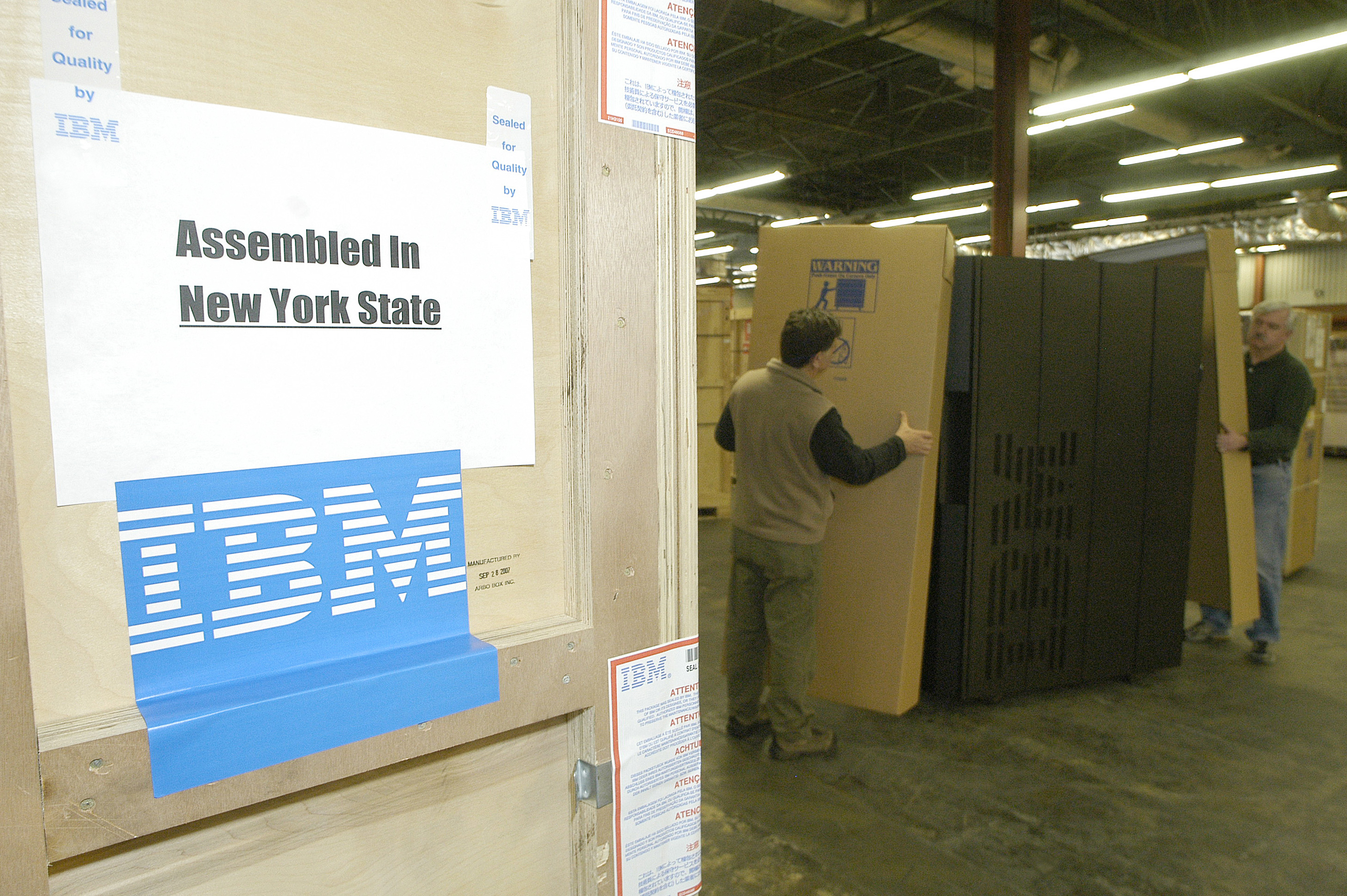
Photo: IBM
In a story in The New York Times on Wednesday, I write about IBM’s new initiative to green up its $40 billion global supply chain:
I.B.M. said on Wednesday that it will require its 28,000 suppliers in more than 90 countries to install management systems to gather data on their energy use, greenhouse gas emissions and waste and recycling.
Those companies in turn must ask their subcontractors to do the same if their products or services end up as a significant part of I.BM.’s $40 billion global supply chain. The suppliers must also set environmental goals and make public their progress in meeting those objectives.
“We will be amongst the first, if not the first, with these broad-based markers on our supply base and we’re going to have to spend an appropriate amount of time and money to help our suppliers do what we’re asking them to do,” John Patterson, vice president of I.B.M. global supply and chief procurement officer, said in a telephone interview from Hong Kong.
“It’s clear that there’s real financial benefits to be had for procurers across the world to get innovative with their suppliers,” Mr. Patterson added. “In the long term, as the Earth’s resources get consumed, prices are going to go up. We’ve already seen large price increases and problems with water.”
The initiative follows Wal-Mart’s announcement in February that it would require its suppliers to eliminate 20 million metric tons of greenhouse gas emissions from the lifecycle of the products it sells.
I.B.M., one of the world’s largest technology companies, is not setting numerical targets for its suppliers to achieve. Rather, the goal is to institutionalize data-gathering systems that will collect information on a variety of measures of environmental performance, according to Wayne Balta, the company’s vice president of corporate environmental affairs and product safety.
“Our overall interest is to systemize environmental management and sustainability across our global supply chain so it helps our suppliers build their own capacity in a way that’s not only good for the environment but their business,” said Mr. Balta. “It’s about creating a system that works regardless of who is in leadership and what’s in green vogue.”
You an read the rest of the story here.
Posted in corporate green, corporate sustainability, green tech, IBM | Tagged environment and sustainability, IBM, supply chain | 1 Comment »
April 7, 2010 by Todd Woody

Photo: Molson Coors
In a story published in Wednesday’s New York Times, I write about the Carbon Disclosure Project’s new campaign to get global corporations to reveal their water consumption and the financial risks and opportunities in an increasingly water-constrained world:
SAN FRANCISCO — The Carbon Disclosure Project, an investor-backed nonprofit organization that has persuaded some of the world’s largest corporations to disclose their greenhouse gas emissions, will announce on Wednesday that it is asking 302 global companies to begin issuing detailed reports on their water use.
The move begins a campaign to put water consumption on par with carbon emissions as a concern of company shareholders. Scientists predict climate change will aggravate worldwide water shortages in the coming decades.
“For investors, it’s a material issue,” Marcus Norton, head of the new project, called C.D.P. Water Disclosure, said in an interview by phone from London. “It matters because long-term investors in particular see that water scarcity is going to impact companies’ operations and supply chains.”
Companies increasingly are running into water-related obstacles. Last week, New York State denied a permit for Entergy’s Indian Point nuclear power plant because of its enormous consumption of cooling water.
A few days earlier, the Environmental Protection Agency issued new water quality rules that could limit mining company operations. And in California, regulators recently pressured the utility giant FPL Group to use more water-efficient technology in a solar power plant project while denying access to water supplies to other developers.
Norges Bank Investment Management in Oslo has identified 1,100 companies in its portfolio facing water risks, according to Anne Kvam, global head of ownership strategies for the bank, which manages $441 billion.
“As investors, we need to know if companies are in industry sectors or regions where water supplies are scarce and how they are managing those supplies,” Ms. Kvam said. “It’s a challenging thing to get good information about water management.”
You can read the rest of the story here.
Posted in water | Tagged Carbon Disclosure Project, CDP Water Disclsoure, Ford, Molson Coors, water use | Leave a Comment »
April 7, 2010 by Todd Woody

In my Grist column this week, I take a look at some innovative sustainable urban farming startups:
In my last Green State column, I wrote about Agriculture 2.0. The conference, held in Silicon Valley recently, brought together venture capitalists and sustainable ag startups in an effort to jump start a market for the regional distribution of fresh food.
This week I take a closer look at some of the companies that tried to catch the ear and checkbooks of the high-profile investors who packed that confab at the Four Seasons in Palo Alto.
One of the more intriguing ideas came from startups thinking outside the agribusiness box by developing urban farms in a box. Literally.
Take AeroFarms. The New York company builds aeroponic farms that fit inside containers — soil and sun not required. The containers, which can be stacked on top of each other in warehouses and old buildings, have the potential to transform blocks of abandoned structures in places like Detroit or Newark into agri-lofts tended by urban farmers.
“This puts buildings back into play with a technology that would do something productive and employ people,” Ed Harwood, AeroFarms’ founder and chief executive, told prospective investors at the conference.
You can read the rest of the column here.
Posted in green startups | Tagged AeroFarms, Agriculture 2.0, Cityscape Farms, Verdant Green Technologies | Leave a Comment »
March 19, 2010 by Todd Woody
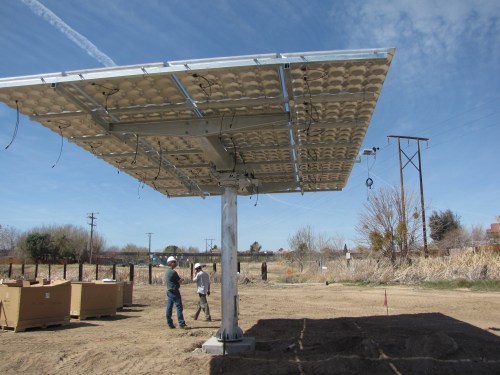
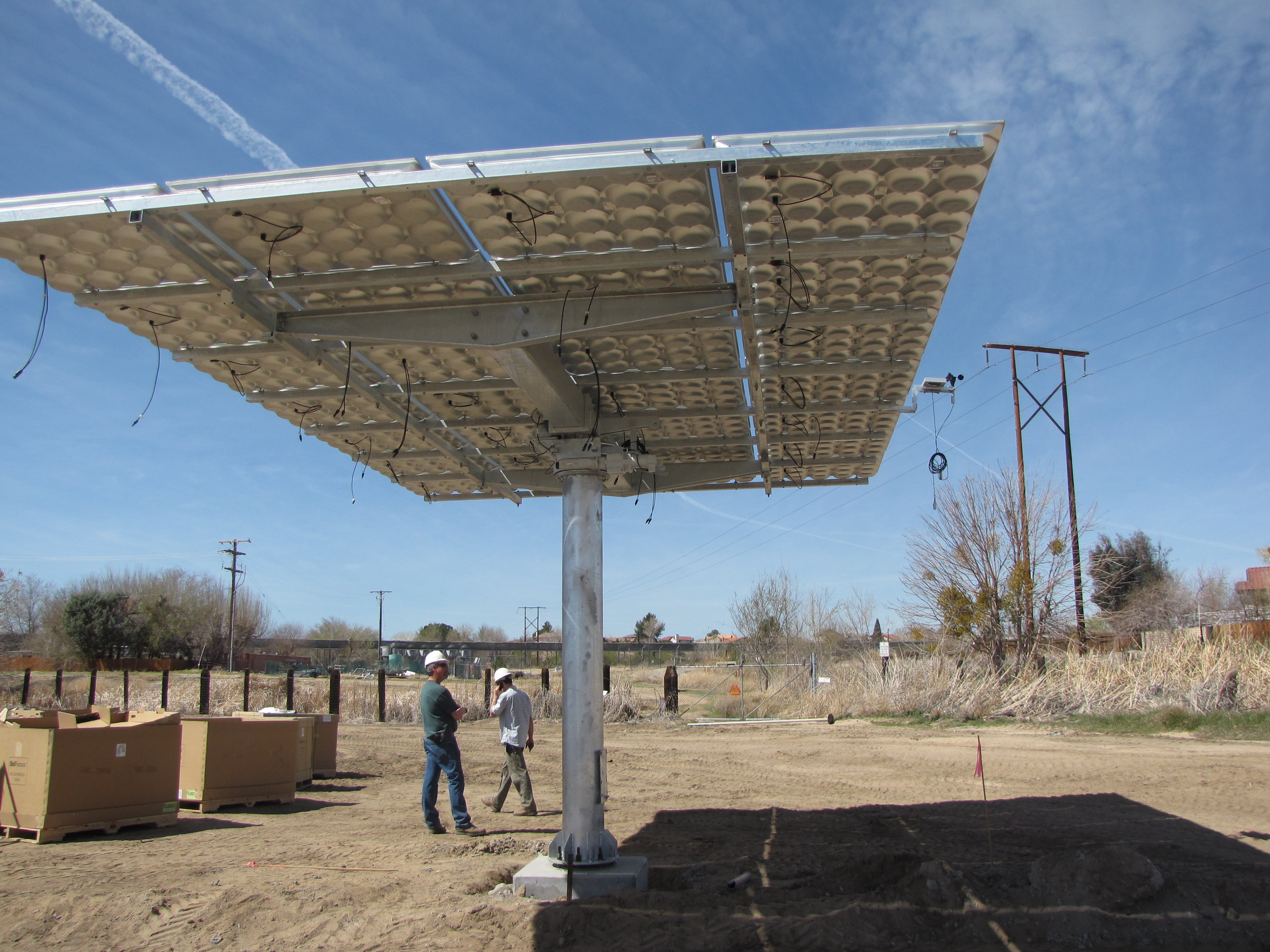
Photo: SolFocus
In The New York Times on Thursday, I wrote that Silicon Valley startup SolFocus is building the first large concentrating photovoltaic power plant in the United States:
The nation’s first big concentrating photovoltaic power plant is under construction in the California desert.
SolFocus, a Silicon Valley startup, is building the one-megawatt solar farm for Victor Valley College in Victorville, a desert community northeast of Los Angeles.
The company builds large solar panels that contain small mirrors that concentrate sunlight onto tiny, high-efficiency solar cells. Though more expensive than conventional solar cells, they use a fraction of the silicon and produce more electricity. That means less land is needed for a SolFocus power plant than one deploying conventional photovoltaic panels.
The SolFocus panels are mounted on trackers that follow the sun throughout the day. While SolFocus has built power plants in Europe, the California project is its first solar farm in the United States. Victor Valley College selected SolFocus after receiving competitive bids from several companies that install conventional photovoltaic panels and thin-film solar systems.
“After reviewing several options for a solar provider, SolFocus demonstrated that it could deliver the best value in solar energy for the college,” Robert Silverman, Victor Valley College’s president, said in a statement. The SolFocus power plant will supply about 30 percent of the college’s overall electricity demand.
SolFocus’ technology needs strong, direct sunlight to maximize electricity production. “If this deployment had been in somewhere in Northern California or Washington or Oregon, we probably wouldn’t have won the battle,” said Nancy Hartsoch, a vice president of marketing at SolFocus. Ms. Hartsoch added that in desert regions, the company’s technology generates electricity at prices competitive with traditional photovoltaic panels.
You can read the rest of the story here.
Posted in alternative energy, solar energy, solar power plants, SolFocus | Tagged California, concentrating photovoltaics, SolFocus | Leave a Comment »
« Newer Posts - Older Posts »




 Green Wombat