Feeds:
Posts
Comments

Archive for the ‘renewable energy’ Category

In Monday’s Los Angeles Times, I write about the migration of renewable energy firms from California and the Southwest to the nation’s industrial heartland to tap the down-and-out region’s manufacturing might:

At a recent solar energy conference in Anaheim, economic development officials from Ohio talked up a state that seemed far removed from the solar panels and high-tech devices that dominated the convention floor.

Ohio, long known for its smokestack auto plants and metal-bending factories, would be an ideal place for green technology companies to set up shop, they said.

“People don’t traditionally think of Ohio when they think of solar,” said Lisa Patt-McDaniel, director of Ohio’s economic development agency. But in fact, the Rust Belt goes well with the Green Belt, she said.

In years past, Sunbelt governors recruited Midwestern businesses to set up shop in their states, dangling tax breaks and the lure of a union-free workforce.

Now the tables have turned as solar start-ups, wind turbine companies and electric carmakers from California and the Southwest migrate to the nation’s industrial heartland. They’re looking to tap its manufacturing might and legions of skilled workers, hit hard by the near-collapse of the United States auto industry and eager for work.

For all of green tech’s futuristic sheen, solar power plants and wind farms are made of much of the same stuff as automobiles: machine-stamped steel, glass and gearboxes.

That has renewable energy companies hitting the highway for Detroit and Northeastern industrial states, driven in part by the federal stimulus package’s incentives and buy-American mandates.

You can read the rest of the story here.
Read Full Post »

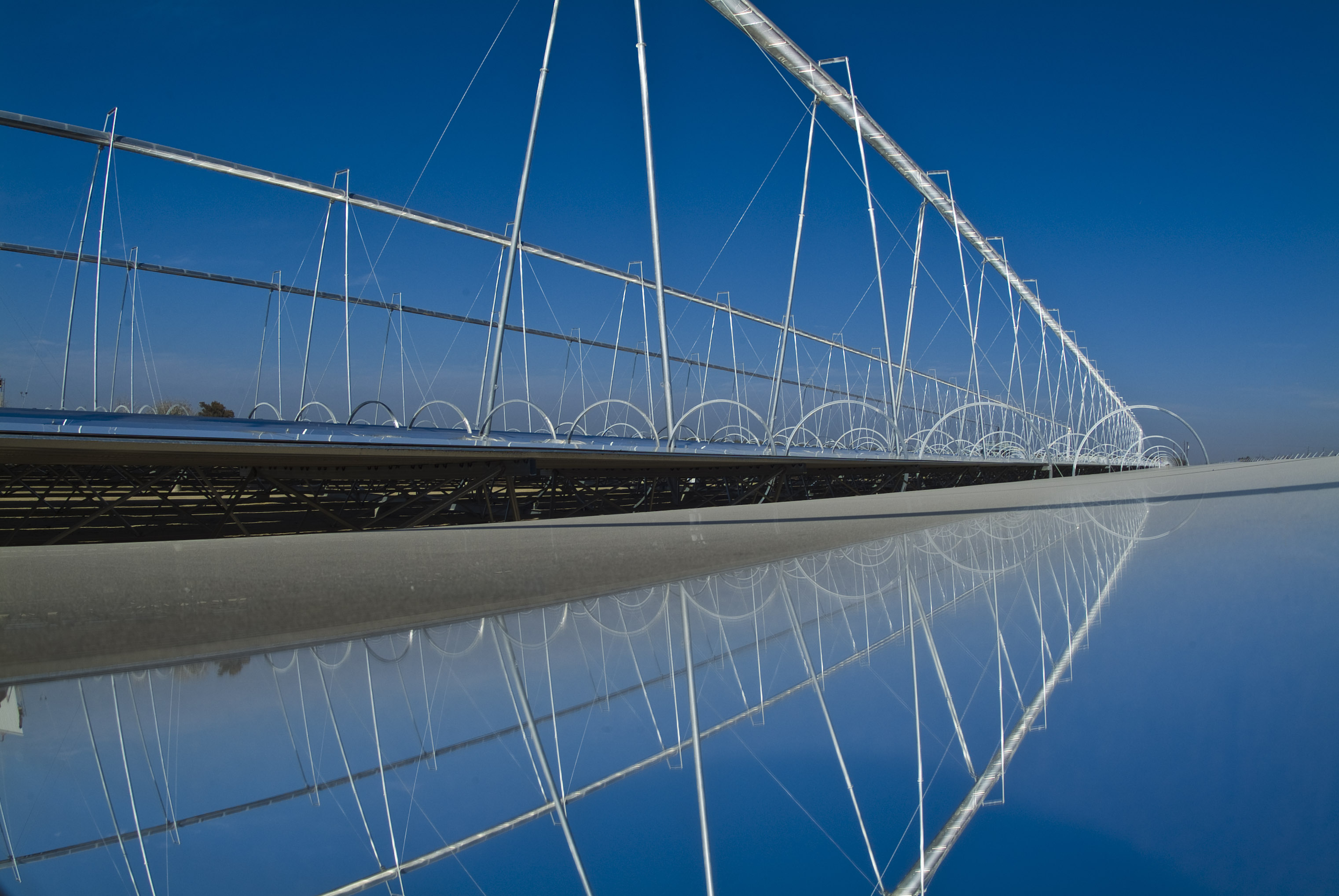
Photo: Ausra

Ausra has become the latest credit-crunched solar startup to seek a buyer/investor to bankroll its expansion. As I write Tuesday in The New York Times:

Disrupting trillion-dollar energy markets is expensive, as solar companies like OptiSolar and Solel have found. Both sold out to larger, deep-pocketed companies this year.

Now Ausra, a high-profile solar company bankrolled by some of Silicon Valley’s top venture capital firms, has become the latest renewable energy startup to put itself on the block.

Ausra, which makes solar thermal equipment to generate electricity, is in negotiations with three large international companies interested in taking a majority ownership stake in the venture, according to a person familiar with the situation.

The negotiations were first reported by Reuters.

All three potential acquirers are companies that make equipment for conventional power generation. Ausra declined to comment. Founded in Australia to build solar power plants, Ausra relocated to Silicon Valley and secured funding in 2007 from marquee venture capital firms Khosla Ventures, Kleiner Perkins Caufield & Byers and other investors.

Ausra soon filed plans to build one of the first new solar farms in California in 20 years. The company also built a factory in Las Vegas to manufacture long mirror arrays that focus the sun on water-filled tubes to create steam to drive electricity-generating turbines.

But as the credit crunch made building billion-dollar solar power plants an increasingly dicey proposition, Ausra switched gears earlier this year to focus on supplying solar thermal equipment to other developers.

You can read the rest of the story here.

Read Full Post »

Solarthermische Parabolrinnenkraftwerke Andasol 1 und 2

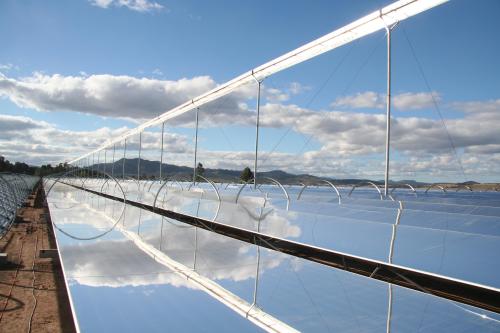
Photo: Solar Millennium

Water is emerging as a make-or-break issue for solar developers hoping to build massive megawatt solar power plants in the desert Southwest. On Monday, Solar Millennium announced it would rather switch to dry-cooling its proposed 500-megawatt solar farm in the Nevada desert rather than fight to use more than a billion gallons of water a year to cool the power plant. As I write in The New York Times:

A solar developer caught in the crossfire of the West’s water wars is waving the white flag.

Solar Millennium, a German developer, had proposed using as much as 1.3 billon gallons of water a year to cool a massive solar power plant complex it wants to build in a desert valley 80 miles northwest of Las Vegas.

That divided the residents of Amargosa Valley, some of whom feared the solar farm would suck dry their aquifer. Others worried about the impact of the $3 billion project on the endangered pupfish, a tiny blue-gray fish that survives only in a few aquamarine desert pools fed by the valley’s aquifer.

Now Solar Millennium says it will instead dry-cool the twin solar farms, which will result in a 90 percent drop in water consumption.

“We trust that this decision to employ dry-cooling will accelerate the approval process and enable us to begin construction and stimulate the local economy by December 2010,” Josef Eichhammer, president of Solar Millennium’s American operations, said in a statement on Monday.

Water has emerged as contentious issue as dozens of large-scale solar power plants are proposed for the desert Southwest. Solar Millennium’s move is likely to put pressure on other solar developers to follow suit.

You can read the rest of the story here.
Read Full Post »

ausra-16

photo: Ausra

Silicon Valley solar company Ausra has sold its sole remaining solar power plant project in the United States, all but completing its exit from solar farming. As I write Thursday in The New York Times:

Ausra is continuing its exit from the business of building solar power plants, announcing on Wednesday that it has sold a planned California solar farm to First Solar.

The Carrizo Energy Solar Farm was one of the three large solar power plants planned within a few miles of each other in San Luis Obispo County on California’s central coast.

Together they would supply nearly 1,000 megawatts of electricity to the utility Pacific Gas and Electric.

First Solar will not build the Carrizo project, and the deal has resulted in the cancellation of Ausra’s contract to provide 177 megawatts to P.G.&E. — a setback in the utility’s efforts to meet state-mandated renewable energy targets.

But it could speed up approval of the two other solar projects, which have been bogged down in disputes over their impact on wildlife, and face resistance from residents concerned about the concentration of so many big solar farms in a rural region.

First Solar is only buying an option on the farmland where the Ausra project was to be built, according to Alan Bernheimer, a First Solar spokesman. Terms of the sale were not disclosed.

The deal will let First Solar revamp its own solar farm, a nearby 550-megawatt project called Topaz that will feature thousands of photovoltaic panels arrayed on miles of ranchland.

“This will allow us to reconfigure Topaz in a way that lessens its impact and creates wildlife corridors,” said Mr. Bernheimer.

You can read the rest of the story here.

Read Full Post »

IMG_1214

photo: Todd Woody

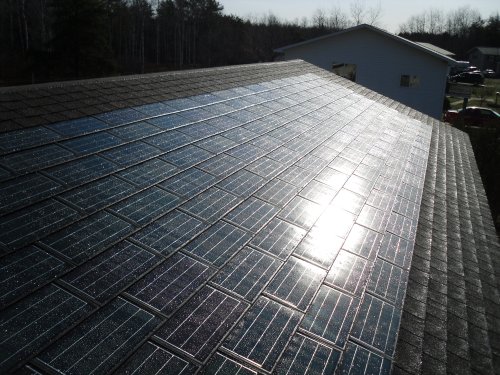
Can a state that gets 95 percent of its electricity from coal-fired power plants go green? The Natural Resources Defense Council thinks so. In a report released this week, the environmental group lays out how Indiana can become the California of the Midwest when it comes to renewable energy. As I write in The New York Times on Friday:

Coal-dependent Indiana could become one of the nation’s greenest states by tapping rural resources to generate renewable energy, according to a new report issued by the Natural Resources Defense Council.

The Hoosier State now obtains 95 percent of its electricity from plants running on coal — largely imported from Wyoming and elsewhere — but it could profit as an exporter of wind energy and machinery, the report said.

“Indiana has some of the best wind potential in the eastern U.S. and has a competitive advantage as a wind producer over most other states because of its location,” said the report’s author, Martin R. Cohen, said during a conference call on Wednesday.

Mr. Cohen noted that while the wind blows stronger in states like North Dakota and Nebraska, Indiana already has the transmission system in place to bring wind-generated electricity to eastern cities.

If Indiana increased wind energy production to 4,500 megawatts from its current 530 megawatts, it would create thousands of jobs and attract turbine manufacturers, according to the report. An owner of a 500-acre farm could earn $30,000 a year from leasing land for wind turbines, Mr. Cohen estimated.

Farmers also could profit, the report said, if Indiana starts harvesting corn stalks, wheat stalks and soybean residue and uses the biomass either for power production or to make ethanol.

You can read the rest of the story here.
Read Full Post »

POWERHOUSE1

photo: Dow Chemical

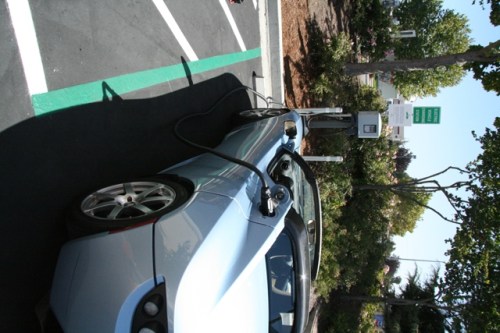
Industrial giant Dow Chemical is getting into the residential solar business with a potentially game-changing product: A “solar shingle” that can be integrated into any asphalt-tiled roof and installed by any roofer. As I wrote in The New York Times on Wednesday:

Dow Chemical has unveiled a residential roof shingle in the form of a solar panel designed to be integrated into asphalt-tiled roofs.

Jane Palmieri, managing director of Dow’s Solar Solutions unit, said the Powerhouse thin-film shingle slashes installation costs because it can be installed by a roofer who is already building or retrofitting a roof.

“As a roofer is nailing asphalt shingle on roof, wherever the array needs to be installed he just switches to solar shingle,” said Ms. Palmieri, who said the solar singles are similarly attached to the roof with nails.

“You don’t have to have a solar installation crew do the work or have an electrician on site,” she added. “The solar shingle can be handled like any other shingle – it can be palletized, dropped from a roof, walked on.”

An electrician is still needed to connect the completed array to an inverter and to a home’s electrical system, but unlike conventional solar panels that must be wired together, the solar shingles plug into each other to form the array.

Dow plans to begin test-marketing the solar shingle in mid-2010, initially targeting new-home construction. Ms. Palmieri said the market could be worth $5 billion by 2015 and noted that 90 percent of homes in the United States use asphalt shingles.

You can read the rest of the story here.
Read Full Post »

SalinasRabobankTeslaChargingSM

photo: SolarCity

In my new Green State column on Grist, I write about how SolarCity, a Silicon Valley rooftop solar installer, is getting into the electric-car charging station business:

You can’t get more California greenin’ than this.

Peter Rive can charge up his Tesla Roadster electric sports car in his San Francisco garage with carbon-free electricity supplied by a solar array on his roof. Then, if he’s in the mood for a road trip, he can drive to Los Angeles, stopping at a solar-powered charging station along the way to top off the battery.

The free charging stations on the “solar highway”—aka the 101—were recently installed by SolarCity, the Silicon Valley rooftop solar company Rive founded with his brother Lyndon. (The electric-blue Roadster sitting in his garage was made by his cousin Elon Musk‘s startup, Tesla Motors.)

So what’s a solar company doing installing highway charging stations for six-figure sports cars driven by people with seven-figure salaries?

In part, it’s a result of SolarCity’s connection to Tesla and grants the electric carmaker received from the state of California to demo charging stations. It makes for great PR, of course, but the bigger picture here is how the emerging electric vehicle industry will drive (sorry) the adoption of residential and commercial photovoltaic systems.

You can read the rest of the column here.

Read Full Post »

ausra-16

photo: Ausra

Silicon Valley solar startup Ausra in January decided to get out of the solar power plant business and focus on supply solar steam systems to developers. As I write in The New York Times today, the company has announced deals in Australia, Jordan and, soon, the United States:

Ausra, a Silicon Valley solar start-up, burst on to the green-tech scene in 2007, bankrolled by marquee venture capitalists and armed with ambitions to build gigawatts of solar farms.

Earlier this year, though, the company abruptly changed course, abandoning its solar power plant business to focus on supplying solar thermal technology to other developers.

Now the deals are starting to roll in.

On Wednesday, Ausra said it has signed a contract to provide a solar steam system to a German developer, MENA Cleantech. MENA plans to build a 100-megawatt hybrid solar farm in Jordan that will rely on an oil-fired boiler to generate electricity when the sun does not shine.

Robert Fishman, Ausra’s chief executive, said his company also has agreed to build a 23-megawatt solar steam plant adjacent to a 750-megawatt coal-fired power station in Queensland, Australia. The company’s mirror arrays and boilers will produce supplemental steam to boost the coal plant’s electricity production.

You can read the rest of the story here.

Read Full Post »

Stirling Energy Systems Solar One project

image: Tessera Solar

In a feature published in today’s New York Times, I look at a water war breaking out in the desert Southwest over plans to build dozens of large-scale solar power projects on hundreds of thousands of acres of land:

AMARGOSA VALLEY, Nev. — In a rural corner of Nevada reeling from the recession, a bit of salvation seemed to arrive last year. A German developer, Solar Millennium, announced plans to build two large solar farms here that would harness the sun to generate electricity, creating hundreds of jobs.

But then things got messy. The company revealed that its preferred method of cooling the power plants would consume 1.3 billion gallons of water a year, about 20 percent of this desert valley’s available water.

Now Solar Millennium finds itself in the midst of a new-age version of a Western water war. The public is divided, pitting some people who hope to make money selling water rights to the company against others concerned about the project’s impact on the community and the environment.

“I’m worried about my well and the wells of my neighbors,” George Tucker, a retired chemical engineer, said on a blazing afternoon.

Here is an inconvenient truth about renewable energy: It can sometimes demand a huge amount of water. Many of the proposed solutions to the nation’s energy problems, from certain types of solar farms to biofuel refineries to cleaner coal plants, could consume billions of gallons of water every year.

“When push comes to shove, water could become the real throttle on renewable energy,” said Michael E. Webber, an assistant professor at the University of Texas in Austin who studies the relationship between energy and water.

Conflicts over water could shape the future of many energy technologies. The most water-efficient renewable technologies are not necessarily the most economical, but water shortages could give them a competitive edge.

In California, solar developers have already been forced to switch to less water-intensive technologies when local officials have refused to turn on the tap. Other big solar projects are mired in disputes with state regulators over water consumption.

To date, the flashpoint for such conflicts has been the Southwest, where dozens of multibillion-dollar solar power plants are planned for thousands of acres of desert. While most forms of energy production consume water, its availability is especially limited in the sunny areas that are otherwise well suited for solar farms.

You can read the rest of the story here.
Read Full Post »

SolarCity_FirstSolarArray-_Coast

photo: SolarCity

When Wall Street collapsed last year so did  tax equity funds, the primary vehicle to finance renewable energy development.  But as I write in The New York Times today, investors are beginning to jump back into the game.

U.S. Bancorp has agreed to finance $100 million of solar installations in 2009 for California startup SolarCity. Investors are being lured in part by a federal stimulus package provision that lets them take a 30 percent investment tax credit for renewable energy projects as a cash grant:

The credit crunch has walloped the residential solar industry, making it hard for installers like SolarCity to tap investor funds to finance rooftop arrays for their customers.

But in a sign that the recessionary clouds are parting a bit, SolarCity on Tuesday said that U.S. Bancorp has agreed to finance $100 million worth of solar installations in 2009.

That’s double the money the bank committed to provide SolarCity in June when the original deal – but not the financial details – was announced.

SolarCity, based in the Silicon Valley suburb of Foster City, offers customers the option of leasing their rooftop panels and thus avoiding the five-figure cost of buying a solar system.

The company retains ownership of the solar array and thus qualifies for a 30 percent federal tax credit against its cost. Since most startups have no use for such tax credits, they give them to investors in exchange for financing installations.

Still, most such tax equity partnerships have collapsed along with the Wall Street banks that often funded them. In fact, U.S. Bancorp stepped in after Morgan Stanley pulled the plug on a financing arrangement with SolarCity earlier this year.

“For all of this year, tax equity has been the number one constraint in financing for the entire solar industry,” said Lyndon Rive, SolarCity’s chief executive. “In the third quarter of last year there were about 20 active banks and insurance companies making tax equity investments. They all fell off a cliff and now there’s three or four.”

You can read the rest of the story here.

Read Full Post »

« Newer Posts - Older Posts »

Design a site like this with WordPress.com
Get started