Feeds:
Posts
Comments

Archive for the ‘green cars’ Category

Präsentation der Studie „Auswirkung von Elektrofahrzeugen auf die Stromwirtschaft“

photo: Think

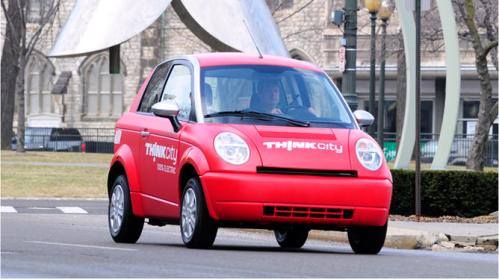
Norwegian electric car maker Think has started shipping its City urban runabout to an Austria utility as part of a government project to test the impact of EVs on the power grid.

The €4.7 million ($6.3 million) Vlotte initiative is placing 100 electric vehicles with companies, municipal governments and individuals in Austria’s Bregenz region. The project is being managed by utility Vorarlberger Kraftwerke and will evaluate how well the cars perform in an area where most people drive an average 50 kilometers (31 miles) a day. The Think City has a range of about 180 kilometers (112 miles).

Solar arrays will be used to charge the plastic-bodied cars to ensure they remain carbon neutral, according to the utility. In 2010, Vlotte will offer electric cars for lease if there is sufficent demand from local residents.

Think CEO Richard Canny said Think is expected to supply most of the cars for the project.

It’s the latest deal for Think, which continues to seed the City across Europe despite financial problems that have stalled its Norwegian assembly plant. Earlier this month, Think signed an agreement to supply 500 cars to a Dutch auto leasing company and announced plans to open a factory in the United States in 2010.

Read Full Post »

thnk-goes-amsterdam77

photo: Think

For a company in the breakdown lane of near-bankruptcy, Norwegian electric carmaker Think keeps hitting the accelerator. On Wednesday, Think said it has signed an agreement to sell 500 of its City electric cars this year to a subsidiary of Mobility Service Netherlands, a Dutch automotive leasing company.

The deal follows Think’s announcement last week that it plans to open an assembly plant in the United States by 2010 to produce the urban runabout.

Think sales director Richard Waitz told Green Wombat that the company will supply cars to ElmoNet, a subsidiary of Mobility Service Netherlands that will lease only electric cars. Earlier this year the Dutch government launched a 10 million euro ($13 million) incentive program for electric cars.

“We’ve entered into a similar agreement in Austria,” Waitz said. That deal, signed last month, calls for Think to supply up to 100 cars to a consortium of Austrian companies.

First, however, Think must raise the capital to resume full production of the City. The Oslo company idled its Norwegian assembly plant and laid off workers late last year as the financial crisis cut off funding. Think obtained a $5.7 million bridge loan in January and said last week it expects to raise more money from its existing European and U.S. investors.

Read Full Post »

thnk-city-michigan-usa_imagelarge

photo: Think

Norwegian electric car company Think announced Thursday that it will open a factory in the United States in 2010 to produce its City urban runabout.

Think CEO Richard Canny, a former Ford executive, is in Ann Arbor, Mich., this week meeting with officials from eight states vying for the factory. But don’t put in your order just yet – only 2,500 cars will roll off the assembly line the first year and they will be reserved for demonstration projects and fleet sales.

“The U.S. is quickly overtaking Europe as an attractive market for EVs and is an ideal location to engineer and build EVs,” Canny said in a statement. “We see ourselves playing a small but potentially growing role in re-inventing the U.S. auto industry by bringing back new manufacturing jobs to the U.S.”  Think has not yet responded to Green Wombat’s inquiry about which states, other than Michigan, is in talks with the company for the factory.

How Think will finance its North American expansion remains an open question. Just three months ago the company was teetering on the edge of bankruptcy as the global financial crisis cut off capital and forced Think to idle its Norwegian factory and lay off workers. The company obtained $5.7 million interim financing in January and recalled some workers. A report on Treehugger Thursday cited sources that said Think was contemplating relocating to Sweden or the U.K.

Think spokeswoman Katinka Von Der Lippe told Green Wombat on Thursday that the interim financing has been extended but that the company is still seeking a new infusion of capital to resume full production of the City, a two-seater that goes 112 miles on a charge with a top speed of about 62 miles per hour.  Update: Think’s U.S. spokesman, Brendan Prebo, tells Green Wombat that Think will raise most of the new capital from its existing European and U.S. investors, which include General Electric (GE), so it can resume full production of the City in Norway.

The company said that it will apply for a low-interest loan from the U.S. Department of Energy under its Advanced Technology Vehicle Manufacturing program to help pay for the factory. Prebo declined to reveal the size of the DOE loan the company will seek but noted it “will be a substantial investment for Think” but small compared to what some of the big automakers want.

After the first-year startup phase, the U.S. factory will initially employ 300 workers and produce 16,000 cars annually, according to Think. Capacity would eventually be expanded to 60,000 cars and a workforce of 900. A research and development center will employ about 70 people.

But calling a Think facility a factory is somewhat misleading. It’s really an assembly plant and the one Green Wombat visited in 2007 in Aurskog, Norway, was more Ikea than Henry Ford, with plastic-bodied Think City models quietly gliding through clean well-lighted spaces.

The question for Think, Tesla Motors other EV startups is whether they can gain a foothold in the market before the major players big-foot them with their own electric and plug-in electric cars. Ford (F), General Motors (GM), Honda (HMC), Toyota (TM), Renault-Nissan and other global automakers all are accelerating plans to introduce electric vehicles.

Thursday’s announcement follows the formation of Think North America, unveiled in April 2008 at Fortune’s Brainstorm Green conference.  A bicoastal group of venture capital firms – Silicon Valley’s Kleiner Perkins Caufield & Byers and Boston’s Rockport Capital Partners – signed on as lead investors.

Read Full Post »

header_cngAT&T said Wednesday that over the next decade it will replace 15,000 vehicles, or about 20% of its fleet, with cars and trucks powered by compressed natural gas, electricity and other alternative fuels.

“AT&T is making the largest-ever commitment by any U.S. company to purchase alternative fuel vehicles,” AT&T chief executive Randall Stephenson said Wednesday morning in a speech in Washington.

He said the $565 million initiative will cut AT&T(T)’s gasoline bill by an estimated 49 million gallons and reduce carbon emissions by 211 million metric tons over ten years as its alt fuel fleet grows from about 100 vehicles now on the road. “That’s good for the environment and it will reduce our reliance on foreign oil – my new neighbor Boone Pickens and I have talked a lot about that,” Stephenson said.

Pickens, the Texas oil wildcatter-turned-wind magnate, advocates using natural gas as fuel for cars and trucks rather than to make electricity, which would be supplied by massive wind farms.

“Smart American companies can be green and profitable and they don’t have to trade one for the other,” Pickens said in a statement Wednesday.

The communications giant will spend $350 million to buy 8,000 compressed natural gas, or CNG, vehicles and $215 million on electric hybrid cars made in the United States. That could be a small boost for battered automakers General Motors (GM) and Ford (F). (Of course, it could also be good news for those other leading “domestic” alt fuel manufacturers, Honda (HMC) and Toyota (TM).)

A U.S. car maker will build the chassis for the CNG vehicles and AT&T will have them converted to run on compressed natural gas. The company will also build a network CNG fueling stations. All told, AT&T said 5,000 jobs will be created or saved through the program in the first five years. About 7,100 AT&T passenger cars wi
ll be retired in favor of electric hybrids and other alt fuel vehicles.

Read Full Post »

scibToshiba and Volkswagen on Thursday unveiled a partnership to develop next-generation battery systems for electric cars.

For the Japanese conglomerate, the VW deal is just its latest green tech move.  Though known in the United States mainly for its laptop computers, Toshiba is the General Electric (GE) of Japan – it makes everything from consumer electronics to medical devices to nuclear power plant components.

In January, Toshiba announced that it was getting into the solar power plant business to build photovoltaic farms for utilities. The company also said it would install carbon-capture technology at a coal-fired power plant in Japan as part of a pilot project.

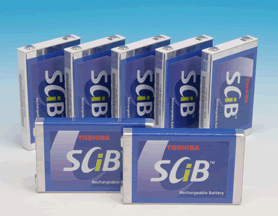
But its development of advanced battery technology could have the biggest impact.  Toshiba’s Super Charge ion Battery, or SCiB, can charge to 90% capacity in ten minutes, depending on its use, according to the company. Laptop versions of the SCiB can be discharged 6,000 times versus 500 times for a conventional battery. Larger versions of the battery are used to power electric bicycles and industrial equipment like forklifts. The real breakthrough will come if the SCiB can be adapted for electric cars.

“One of our big target markets is the automobile market,” Craig Hershberg, Toshiba’s director of environmental affairs, told Green Wombat. “We’re currently talking to one of the big automakers in the U.S.”

He declined to name the car company but General Motors (GM), Ford (F) and Chrysler have all accelerated electric car programs as have Toyota (TM) and Honda (HMC). Those talks probably will get a boost from the stimulus bill passed this week that gives a $7,500 tax credit to consumers who purchase plug-in electric hybrid vehicles.

The company is building a SCiB factory in Japan and is also exploring the potential of the SCiB to store electricity generated by solar power plants and wind farms.

“Toshiba aims to make SCiB a mainstay of its industrial systems and automotive products businesses worldwide,” the company said in a statement.

Read Full Post »

img_1214

photo: Todd Woody

Here’s a talking point in the green jobs debate: The wind industry now employs more people than coal mining in the United States.

Wind industry jobs jumped to 85,000 in 2008, a 70% increase from the previous year, according to a report released Tuesday from the American Wind Energy Association. In contrast, the coal industry mining employs about 81,000 workers. (Those figures are from a 2007 U.S. Department of Energy report but coal employment has remained steady in recent years though it’s down by nearly 50% since 1986.) Wind industry employment includes 13,000 manufacturing jobs concentrated in regions of the country hard hit by the deindustrialization of the past two decades.

The big spike in wind jobs was a result of a record-setting 50% increase in installed wind capacity, with 8,358 megawatts coming online in 2008 (enough to power some 2 million homes).  That’s a third of the nation’s total 25,170 megawatts of wind power generation. Wind farms generating more than 4,000 megawatts of electricity were completed in the last three months of 2008 alone.

Another sign that wind power is no longer a niche green energy play: Wind accounted for 42% of all new electricity generation installed last year in the U.S. Power, literally, is shifting from the east to west, to the wind belt of the Midwest, west Texas and the West Coast. Texas continues to lead the country, with 7,116 megawatts of wind capacity but Iowa in 2008 overtook California for the No. 2 spot, with 2,790 megawatts of wind generation. Other new wind powers include Oregon, Minnesota, Colorado and Washington state.

But last year’s record is unlikely to be repeated in 2009 as the global credit crisis delays or scuttles new projects because developers are unable to secure financing for wind farms. Layoffs have already hit turbine makers like Clipper Windpower and Gamesa as well as companies that produce turbine towers, blades and other components.

The Obama administration’s $825 billion stimulus package includes a three-year extension of a key production tax credit that has spurred the wind industry’s expansion. But given the dearth of investors with tax liabilities willing to invest in wind projects in exchange for the credits, the stimulus is unlikely to be stimulating to the industry unless the tax credit is made refundable to developers.

The U.S. wind industry is dominated by European wind developers and turbine makers – General Electric (GE) and Clipper are the only two domestic turbine manufacturers – and those companies’ fortunes rise and fall with the global economy.  As the U.S. market has boomed, European companies have been moving production close to their customers – the percentage of domestically manufactured wind turbine components rose from 30% to 50% between 2005 and 2008, according to the American Wind Energy Association.

Read Full Post »

b_342

photo: Better Place

Electric cars, eh?

Silicon Valley startup Better Place on Thursday unveiled a deal with the government of Ontario – the Michigan of Canada – to build an electric car charging network in the automaking province. The announcement comes on the heels of agreements Better Place — the electric car infrastructure company founded by former software executive Shai Agassi — has made with governments in Australia, California, Denmark, Hawaii, Israel and Japan.  Better Place is working with the Canadian arm of Sydney-based infrastructure finance giant Macquarie to develop the Ontario electric car network.

“We need to be where the puck is going and in this case bring the puck to Ontario,” said Ontario minister of international trade Pupatello at a press conference in Toronto Thursday morning.

The Canadian deal comes amid turmoil in the nascent electric car industry. While EV companies like Think and Tesla struggle to survive the credit crisis, the big automakers – Ford (F), General Motors (GM), Toyota (TM), Honda (HMC) and Chrysler – have announced they’re accelerating plans to build electric cars and, in GM’s case, a battery-making factory.

On Thursday, the premier of Ontario, Dalton McGuinty, said his government will conduct a study on how to expedite the introduction of electric cars in the province. When the study is released in May, Better Place will detail its plan and investment timeline for building the network of charging posts and battery-swapping stations.

Better Place, said McGuinty,  “is a model with the power to reshape our province. It’s going to create new green jobs, it’s going to make life more convenient for car drivers of the future and it’s going to signal to the world that Ontario is electric-car friendly and will make it a more attractive place to build electric cars.”

Agassi has now committed to raising billions in capital to simultaneously build charging networks in five far-flung countries over the next three years. When Green Wombat talked to Agassi in November after he signed a deal to build a $1 billion San Francisco Bay Area charging network, he insisted the financial crisis would not hamper efforts to raise funding.

Under Better Place’s system, consumers will buy the electric cars while Better Place will own the batteries, charging subscribers to its network a fee per-mile (or kilometer) driven. Renault-Nissan is supplying electric cars for Better Place’s other networks. An electric Nissan SUV – emblazoned with little wind turbines – was parked at the press conference but company spokeswoman Julie Mullins said an electric car supplier had not yet been selected for Ontario. “Ultimately, we expect a wide range of vehicle makes and models to be available to drivers,” she wrote in an e-mail. “We are currently in talks with several car companies.”

Ontario-based Bullfrog Power will provide renewable energy – 80% hydro, 20% wind – for the Better Place network. “We’re going to create a virtual oil field across the province,” said Agassi.

Read Full Post »

think-city-8_imagelarge

photo: Think

Norwegian electric carmaker Think said Tuesday it has obtained a $5.7 million bridge loan from battery maker Ener1 Group and other investors to allow the company to resume limited production of its City urban runabout.

In December Think idled its assembly line and laid off workers as the global credit crunch took its toll and the company was unable to obtain funding to finance continued production of its electric vehicles.

Think CEO Richard Canny said in a statement Tuesday that the company is continuing negotiations to raise capital but the interim financing from Ener1, which is supplying lithium-ion batteries to Think, will allow the recall of some workers to complete cars from parts on hand.  “We have encouraging engagement with a number of potential new equity investors for our recapitalization process,” said Canny.

The Think financing comes as Ford (F), Toyota (TM), Honda (HMC) and other major automakers unveil prototypes for new electric cars and plug-in hybrids at the Detroit Auto Show.

Read Full Post »

thinkcity_0122

photo: Think

Think Global, the innovative Norwegian electric car company, has temporarily halted production of its City urban runabout and laid off half its workforce as it considers a sale to survive the credit crisis, Think CEO Richard Canny told Green Wombat Tuesday.

“Think is in a situation where we can’t grow anymore,” Canny said from Think’s Oslo headquarters, where the management team was still working at midnight. “We have started an emergency shutdown to protect our capital and our brand. We’ll need a new and stronger partner, whether that is a 25% owner or a majority owner or someone who buys the company.”

The Norwegian government said on Tuesday that it would not make an equity investment in the automaker but is considering Think’s request to guarantee up to $29 million in short-term loans. “Even a small participation from the Norwegian government will give investors confidence,” Canny said, noting that the company needs to raise $40 million to continue manufacturing its electric car. “The financial crisis has hit at a very critical stage as we’re ramping up production and when external financing is hard to bring into the company and internal funding is limited.”

He said a rescue package might include aid from from the Norwegian government and an infusion of cash from new investors or strategic partners. “We’re putting a hand out. People who would like to work with us should pick up the phone.”

Ford (F) acquired the startup in 1999 and sold it a few years later. Norwegian solar entrepreneur Jan-Olaf Willums and other investors rescued Think from bankruptcy in 2006, aiming to upend a century-old automotive paradigm by changing the way cars are made, sold and driven to create a sustainable auto industry.

As Green Wombat wrote in a 2007 feature story on Think, “Taking a cue from Dell, the company will sell cars online, built to order. It will forgo showrooms and seed the market through car-sharing services like Zipcar. Every car will be Internet-and Wi-Fi-enabled, becoming, according to Willums, a rolling computer that can communicate wirelessly with its driver, other Think owners, and the power grid. In other words, it’s Web 2.0 on wheels. ‘We want to sell mobility,’ Willums says. ‘We don’t want to sell a thing called the Think.’

The company sells the car but leases the battery so buyers don’t have to fork over cash upfront for an electric vehicle’s single most expensive component – an idea subsequently adopted embraced by everyone from Shai Agassi’s Better Place electric car infrastructure company to General Motors (GM).

The failure of the new Think would be a blow at a time when the auto industry desperately needs to reinvent itself. While Think is a niche player and faces formidible competition as Toyota (TM)  and other big automakers go electric, it has pioneered  the idea of a new automotive infrastructure that includes tech companies and utilities like PG&E (PCG).

Whether Think can survive the global financial crisis remains to be seen, but Willums, who stepped aside as CEO recently but remains on the board, is a prodigious networker with deep contacts in Silicon Valley and elsewhere. In little more than a year he raised around $100 million from an A-list of U.S. and European investors that includes General Electric (GE), Keiner Perkins Caulfield & Byers and Rockport Capital Partners – the latter two marquee venture capital firms formed a joint venture with Think to sell the City in North America. Canny said the U.S. expansion plans are now on hold.

The question now is whether Think’s investors, absent a government bailout, will step up to save the company just as it has started to gain a foothold in the market. In a presentation made Monday, Canny, a Ford veteran, said eight to 10 two-seater City cars a day had been rolling off the company’s assembly line outside Oslo.  Think has a blacklog of 550 orders and 150 cars will be delivered by January.  The company was set to begin selling a 2+2 version of the City in mid-2009. (Think had planned to begin selling its next model, a five-seat crossover car called the Think Ox, in 2011.)

“There are limited possibilities of funding working capital through bank credits without extra guarantees in today’s financial market,” Canny said, noting that the company hopes to resume production in the first quarter of 2009. “Think’s automotive suppliers are severely hit by the overall industry crisis, leading to tougher terms of parts delivery to Think.”

Green Wombat will throw out one potential savior of Think: Google (GOOG). Many aspects of Think’s innovative business model were born at a brainstorming session that the search giant hosted in 2006 for Willums at the Googleplex in Mountain View, Calif. Given that Google.org, the company’s philanthropic arm, has poured tens of millions of dollars in green energy companies and electric car research, an investment in Think would be another way to drive progress toward its goal of a carbon-free economy.

Read Full Post »
20081117_5075_betterplace

photo: Better Place

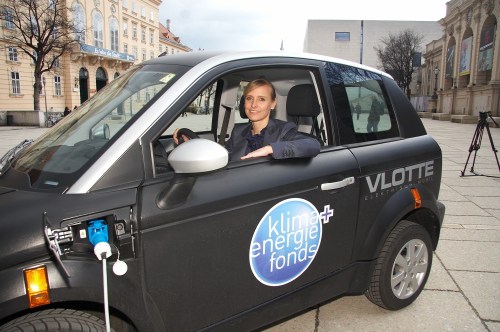
Silicon Valley startup Better Place on Tuesday announced a deal with Hawaii’s governor and the state’s biggest utility to build an electric car charging network throughout the islands.

The agreement comes less than two weeks after Better Place CEO Shai Agassi and the mayors of Northern California’s three largest cities unveiled a plan to build an electric car infrastructure for the San Francisco Bay Area. Better Place also has signed similar deals with governments in Australia, Denmark and Israel.

Agassi said the network of charging posts and battery swapping stations will be ready by 2012. That’s roughly the target date for Better Place’s other projects, which means the year-old startup will be simultaneously building electric car networks in four countries while raising billions of dollars in project finance.

Renault-Nissan will supply electric cars for the network. Better Place will own the car batteries and charge drivers for the miles (or kilometers) driven. By removing the battery from the purchase price of electric cars – the most expensive component – Better Place hopes to sell vehicles at prices competitive with their fossil-fueled counterparts.

Appearing with Agassi at a press conference at the capitol in Honolulu, Hawaii Governor Linda Lingle said the Better Place partnership offers the state the opportunity to slash the $7 billion it spends annually on imported oil and provide a market for renewable energy. Hawaiians pay some of the highest gasoline prices in the U.S. and the state has set a goal of obtaining 70% of its energy from solar, wind and other renewable sources by 2030.

“It’s not a simple goal – we’re looking to end our dependence on oil,” said Agassi, who shed his customary dark suit for a gray polo shirt and wore a lei. “Any form of renewable energy – wind, solar, geothermal – is here in Hawaii.”

“This will be the blueprint where six or seven million visitors will come and experience first-hand what it’s like to drive an electric car,” added Agassi, 40, a former top executive at business software giant SAP. “You couldn’t ask for a better advertisement.”

Utility Hawaiian Electric (HE), which supplies 95% of the state’s power, will generate renewable electricity equal to what the Better Place network consumes and work with the company on developing the charging infrastructure.

“The price of oil is irrelevant to us – we have to reach a clean and secure energy future,” Lingle said.

Better Place’s latest deal came on the same day that General Motors (GM) and Ford, which have asked for a multi billion-dollar bailout from Congress, (F) announced plans ramp up production of hybrid and electric cars.

“It’s a win-win-win – the only loser in the equation is oil and that’s ok,” said Hawaiian Electric executive vice president Robbie Alm. “Green cars will provide the market for renewable energy.”

Read Full Post »

« Newer Posts - Older Posts »

Design a site like this with WordPress.com
Get started