Feeds:
Posts
Comments

Archive for March, 2011

In The New York Times on Tuesday, I wrote about the strategy of San Francisco billionaire Tom Steyer, the leader of the campaign against Proposition 23 last year, to fight efforts to restrict the EPA’s ability to regulate greenhouse gas emissions:

Is Thomas F. Steyer the anti-Koch?

For years, Mr. Steyer, a billionaire San Francisco hedge fund manager, assiduously maintained a low profile while becoming a major donor to Democratic candidates. That changed in 2010 when he led the successful fight to defeat Proposition 23, a California ballot measure backed by two Texas oil companies and a company controlled by Charles G. and David H. Koch, the secretive billionaire brothers and bankrollers of conservative causes.

Proposition 23 would have effectively derailed the state’s landmark global warming law, which would have been a big setback for California’s blooming green technology industry. Mr. Steyer, the founder of Farallon Capital Management, is the main financial backer of Greener Capital, a venture firm that invests in renewable energy start-ups.

Now Mr. Steyer appears to be itching to take on the Koch brothers and their supporters as Republican lawmakers seek to limit the United States Environmental Protection Agency’s ability to regulate greenhouse gas emissions. “As an investor who one might say is insanely obsessed with energy and its generation and use around the world, it seems crazy to me we would roll back science-based clean air standards because there are skillful political operatives and wealthy political donors who really want to get rid of E.P.A. regulations,” he said in a speech Monday evening at the Cleantech Forum conference in San Francisco. “That seems nuts to me.”

While Mr. Steyer did not mention the Koch brothers directly in his speech, he assailed their support for Proposition 23 during the campaign.

Mr. Steyer, who said he had spent time consulting with the Obama administration after last November’s election, laid out a political strategy to focus on swing states and promote environmental regulation as a boon for job creation, drawing on lessons from the battle over Proposition 23.

“It’s all about public health and clean air,” he said. “It’s all about creating new jobs and really what we’re fighting is self-interested dirty energy companies.”

He noted that opponents of a Democrats’ failed efforts to pass climate change legislation last year had gone state by state to talk about potential job losses from capping greenhouse gas emissions.

“Our strategy going forward as a group is that we have to have answers on the state and local level,” Mr. Steyer said. “The idea that we would change the way energy is generated and used in the United States without engaging the American people locally in a real way seems to me to be wrong.”

Mr. Steyer said he had consulted with Vernon Jordan, the civil rights leader and adviser to former President Bill Clinton, to gain a better understanding of how the civil rights movement organized its campaigns.

“I asked, ‘How did you guys do it? How did you change the way Americans think about civil rights, something that nobody was anxious to engage on as far as I can tell but where there was a gross need for change, just as there is here,’ ” Mr. Steyer said.

You can read the rest of the story here.
Read Full Post »

photo: REC Solar

I wrote this story for Grist, where it first appeared.

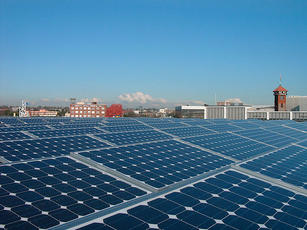
The United States solar businesses boomed, as usual, in 2010, growing 67 percent to $6 billion, according to an annual report released Thursday by an industry trade group.

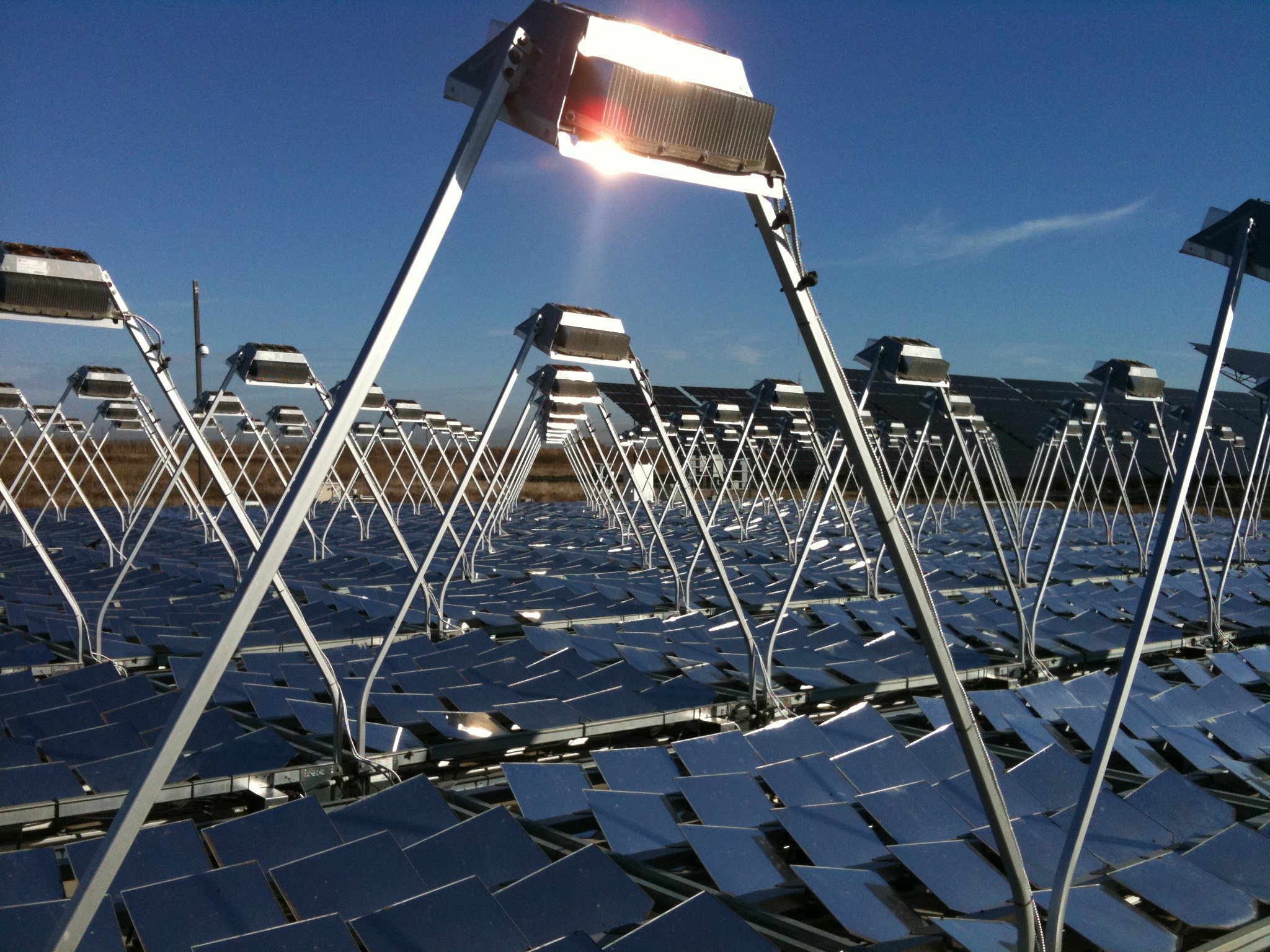
That’s been the story for the past several years, but what’s notable is that solar is no longer just a California thing. The industry is expanding to the East. Back in 2004-2005, California accounted for a whopping 80 percent of the U.S. market. In 2010, that share fell to 30 percent, with 258.9 megawatts of the 878.3 megawatts of photovoltaic power installed that year, according to the report prepared by the Solar Energy Industries Association and GTM Research.

New Jersey is now the nation’s second solar state, with 16 percent of new photovoltaic installations in 2010. And while it is no surprise that sun-soaked states like Arizona, New Mexico and Nevada are also in the top 10, the list also includes states like Pennsylvania and North Carolina. Texas, the country’s No. 1 wind power state, made the top 10 with 22.6 megawatts of photovoltaics installed in 2010. The rest of the country collectively put 135.2 megawatts of solar on its roofs.

Back in 2007, only four states installed more than 10 megawatts of solar. Last year, 16 states did. The U.S. now is generating a total of 2.6 gigawatts from photovoltaic panels.

But the domestic market was a relative laggard as the solar boom continued overseas.

“U.S. demand growth was, however, outpaced by a global market boom driven primarily by the German and Italian markets,” the report noted. “Over 17 GW were installed globally in 2010, more than 13 percent growth over 2009. As a result, despite U.S. demand expansion, the U.S. market share of global installations fell from 6.5 percent in 2009 to 5 percent in 2010.”

That could change in the years ahead, though, as subsidies subside in Europe and solar companies look to the U.S. as the big growth market.

The report predicts the U.S. solar market will double in 2011, but warns that expiring federal subsidies make growth in 2012 and beyond uncertain.

At least one Chinese solar company is betting the solar boom will continue. On Thursday, JA Solar announced it will begin construction this year of a new factory that will have a capacity to manufacture 3,000 megawatts’ worth of photovoltaic cells a year, thanks in part to a government loan.

Read Full Post »

photo: Todd Woody

I wrote this story for Grist, where it first appeared.

The California Legislature is moving to put into law a regulation requiring the state’s utilities to obtain a third of their electricity from renewable energy by 2020. But how did California’s three big investor-owned utilities do in meeting a previous mandate to secure 20 percent of their electricity supplies from carbon-free sources by the end of 2010?

Close, but not quite. Overall, the three utilities — Pacific Gas & Electric, Southern California Edison, and San Diego Gas & Electric — are getting 18 percent of their electricity from wind farms, solar power plants, geothermal, and biomass facilities, according to a new report from the California Public Utilities Commission.

Southern California Edison fell just short with 19.4 percent of its power coming from renewable sources. PG&E didn’t do as well but 17.7 percent of its electricity is green. The smallest utility, San Diego Gas & Electric, is the brownest of the bunch, with renewables accounting for only 11.9 percent of its power portfolio.

State regulators estimate that the three utilities will collectively hit the 20 percent target — one of the most aggressive in the United States — by the end of 2012. Of course, they have an even bigger mandate to meet eight years after that.

The good news is that the trajectory looks positive, if the growth in renewable energy generation in recent years is any guide. For instance, the percentage of green electricity in PG&E’s portfolio jumped from 14.4 in 2009 to 17.7 in 2010 while Southern California Edison increased its percentage of renewable energy by two points in 2010.

Hitting the so-called RPS — renewable portfolio standard — admittedly is a tricky business. A review of more than 200 renewable energy projects the utilities have signed shows that many have come online, some have cratered, and others are in limbo as environmentalist and developers face off over the impact of big solar power plants on desert flora and fauna.

There have also been big changes in renewable energy technology in recent years. The price of photovoltaic modules has plummeted over the past two years and utilities have been recently signing deals to buy electricity from photovoltaic farms at a pell-mell pace.

Still, expect stricter scrutiny of these deals as the 2020 deadline approaches, pressure mounts to make good on the 2010 mandate, and Gov. Jerry Brown’s new appointees to the public utilities commission weigh in.

Of the hundreds of renewable energy contacts the utilities have submitted for approval, only two have been rejected — a wave energy deal and a wind project.

Meanwhile, regulators list a project to transmit 200 megawatts of electricity to PG&E from an orbiting space-based solar farm as “on schedule.”

Beam me down, Scotty.

Read Full Post »

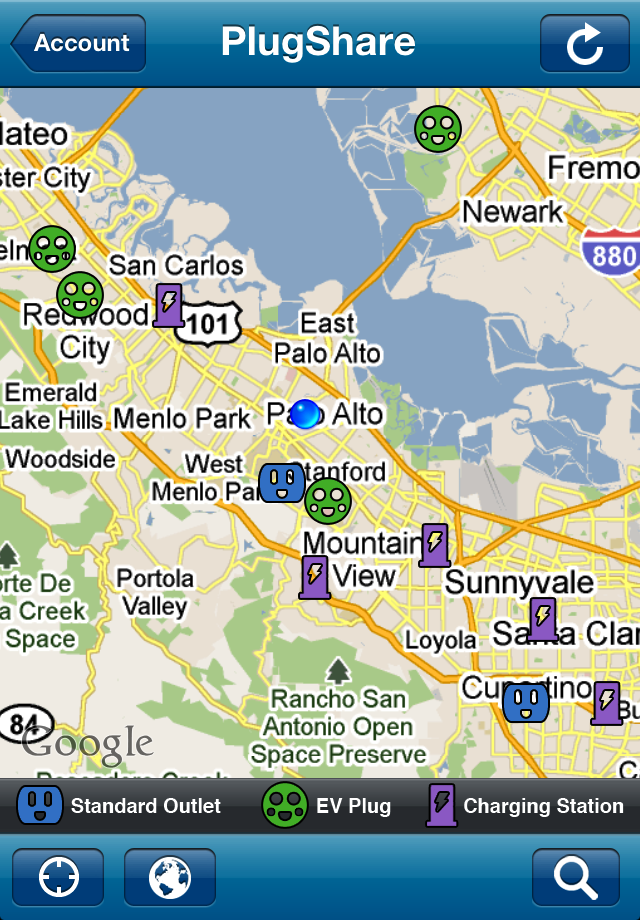
In The New York Times on Monday, I write about PlugShare, a new iPhone app that lets people share their household outlets and electric car charging stations with EV drivers:

First there was music sharing and then car sharing. Now get ready for plug sharing.

Xatori, a Silicon Valley software start-up, aims to create a network of electric car enthusiasts who make their household power outlets and home chargers available for drivers who need to top off their battery or who find themselves out of range of the few public-charging stations currently available.

On Monday, Xatori released PlugShare, a free iPhone app that lets drivers and outlet owners locate and offer electricity.

“We want to break down that barrier in people’s minds about where it’s acceptable to charge,” said Armen Petrosian, Xatori’s co-founder and chief technology officer. “We think the infrastructure to charge is everywhere.”

Drivers can punch in their destination to see the availability of shared outlets as well as public charging stations along their route.

People who want to share their electricity indicate what type of outlet or charger they have, how to gain access and their preferred method of contact. Given that most outlets are located in locked garages or otherwise behind closed doors, Xatori expects plug sharers will ask drivers to schedule a time to charge by calling or sending a text message.

“I think a big positive of using the app is that you get to connect with other E.V. owners,” said Mr. Petrosian.

In other words, think of PlugShare as a combination of FaceBook and Foursquare, the location-based service, for electric car owners and their supporters.

“People who don’t own an electric car can be part of the electric vehicle revolution,” said Forrest North, Xatori’s chief executive and the founder of Mission Motors, a San Francisco start-up developing an electric motorcycle.

But how much is it going to cost to take part in this revolution if the revolutionaries are giving away their power?

Not much, according to Xatori’s founders, who believe that most people will share their standard 110-volt household outlets. In the San Francisco Bay Area, for instance, they say it’ll cost on average about 15 cents an hour to charge an electric car. (Under a variable rate structure, that cost could go up if a household is a particularly heavy electricity user.)

“This is more like a backup network, like A.A.A.,” said Mr. Petrosian, who says he has a battery-powered Nissan Leaf on order. “Most of the time you’ll drive on energy from your own house. If you miscalculate, you can rely on the community.”

You can read the rest of the story here.
Read Full Post »

I wrote this story for Grist, where it first appeared.

Portlandia may not be the sunniest of places, but it’s exporting solar energy in the form of photovoltaic panels used to build carbon-free power plants.

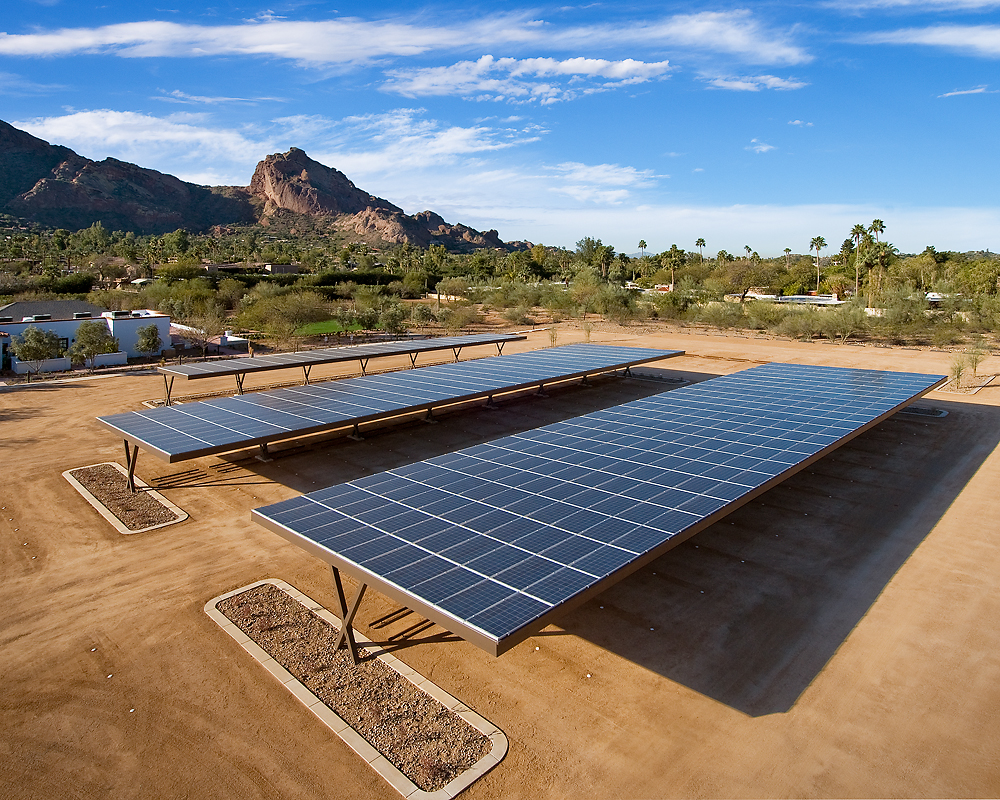
On Wednesday, SolarWorld — the German photovoltaic module maker that operates a big factory in Hillsboro, Ore. — announced it would supply panels and help develop an 11.6-megawatt solar farm in the Southern California desert for the Los Angeles Department of Water and Power.

That’s a fairly small solar power plant. But it’s notable in that SolarWorld is jumping into the solar power plant development business. It’s also notable that the LADWP, the nation’s biggest municipally owned utility — immortalized in the Roman Polanski classic Chinatown for making the water grab that enabled modern Los Angeles — is taking steps to wean itself from coal-fired power.

For SolarWorld, the LADWP deal is back to the future. Ben Santarris, SolarWorld’s public affairs manager, told me that in 1981, during the solar dark ages, the world’s first 1-megawatt photovoltaic power plant was installed in Southern California by a firm subsequently acquired by the German company.

Santarris said solar panel supply had hindered SolarWorld’s power plant ambitions. But with the expansion of its Oregon factory, the company is back in the game.

“Just recently, for instance, we finished engineering and supply for a 1 MW system for the city of Bakersfield, and we are working on other similar projects in the distributed generation range of utility-scale projects,” Santarris said in an email. “Expansion of our U.S. capacity to 500 MW, however, has allowed us to resume our former vigor in multi-megawatt projects.”

And while California utilities have cultivated a clean and green image — you won’t find coal-fired power plants in the Golden State — the dirty little secret is that out-of-state coal supplies about 20 percent of our electricity. The LADWP is particularly coal-dependent, getting about 40 percent of its power from the black stuff.

California regulators have prohibited the state’s three big investor-owned utilities from signing any more long-term contracts for coal-fired power, and the LADWP has pledged to replace coal with renewable energy.

As part of that effort, SolarWorld is supplying 46,322 photovoltaic panels for what is called the Adelanto project. The LADWP will own and operate Adelanto, now under construction, when the power plant is completed.

The deal comes after the region’s dominant utility, Southern California Edison, has signed 1,081 megawatts worth of deals for photovoltaic power plants just since January.

Increasingly, it’s a solar world and we just live in it.

Read Full Post »

I wrote this story for Grist, where it first appeared.

The people want to topple the petro-energy regime.

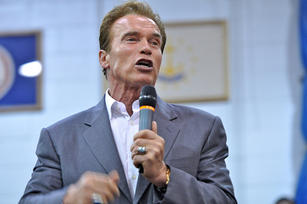
Former California Gov. Arnold Schwarzenegger on Tuesday all but called for a Tunisian-style revolution to overturn the United States’ old energy order.

“It is breathtaking to see: people by the hundreds of thousands who want change … who want to throw off the old order and subvert the status quo. It is fascinating to me how rapidly the debate in the Middle East shifted from — could the people rise up to could the rulers hang on?” Scharzenegger said at the United States Department of Energy’s ARPA-E Energy Innovation Summit in National Harbor, Md., according to his prepared remarks. “And then when the demonstrations reached a critical mass, the old structures gave way. They could not stand up to the momentum of the future.”

“All of which brings me to you here today,” the governator continued. “What you in this room also are saying by the work that you do is: We want to subvert the status quo. We want change. Innovation. We want to overturn the old energy order.”

Schwarzenegger, of course, made climate change and green energy cornerstones of his administration. But in his speech Tuesday before policymakers and politicians gathered at the ARPA-E (Advanced Research Projects Agency-Energy) he offered a full-throated call to move beyond the tired climate change debate and get on with the job of building a renewable energy economy.

Echoing the themes of last year’s successful campaign to crush Proposition 23, a ballot measure that would have derailed California’s landmark global warming law, Schwarzenegger linked green technology to the creation of jobs, a healthier environment, and international competitiveness.

“We have about 100,000 premature deaths in the U.S. each year from petroleum-related air pollution, and we have 6.5 million annual hospital visits by people with respiratory illnesses caused by the same thing,” Schwarzenegger said. “These deaths are far greater in number than the combined deaths from car accidents, drunk drivers, gang wars, suicides or Iraq and Afghanistan.”

“The suffering and expense of these petro-deaths needs to be recognized,” he added. “Think what it means when in the Central Valley of California one in six children use an inhaler. People need to think about that.”

Schwarzenegger also repeated warnings that other countries threaten to leave the U.S. in the coal dust.

“China has made the decision, backed by billions of dollars, that green is where the economic action is going to be. China is an ancient culture with new ideas,” he added. “We cannot let America be a young culture with old ideas.”

As is his wont, the former governor recalled his bodybuilding days to compare the negative perception of the sport in its early days to views of alternative energy today.

“We needed to change bodybuilding’s whole perception, so it wouldn’t simply be equated with men in skimpy bathing suits,” said Schwarzenegger.  “We began using different names — pumping up, working out, fitness training, weight resistance training. We started talking about health benefits and how it improves your performance in sports and how it keeps you younger.

“And now weight training has become an integral part of millions of people’s lives,” he continued. “Today totally normal people talk about their abs and their pecs. Today, in the same way, we are stuck on global climate change.  Let’s face it … if we haven’t convinced the skeptics by now, we aren’t going to. So, unless the North Pole breaks off this spring and floats up onto the north shore of Long Island, let’s move past the old arguments.”

Read Full Post »

« Newer Posts

Design a site like this with WordPress.com
Get started