Feeds:
Posts
Comments

Archive for March, 2011

photo: Todd Woody

I wrote this story for Grist, where it first appeared.

One of the biggest knocks against electric cars, other than their current range, is the rather steep upfront cost due to the price of the battery.

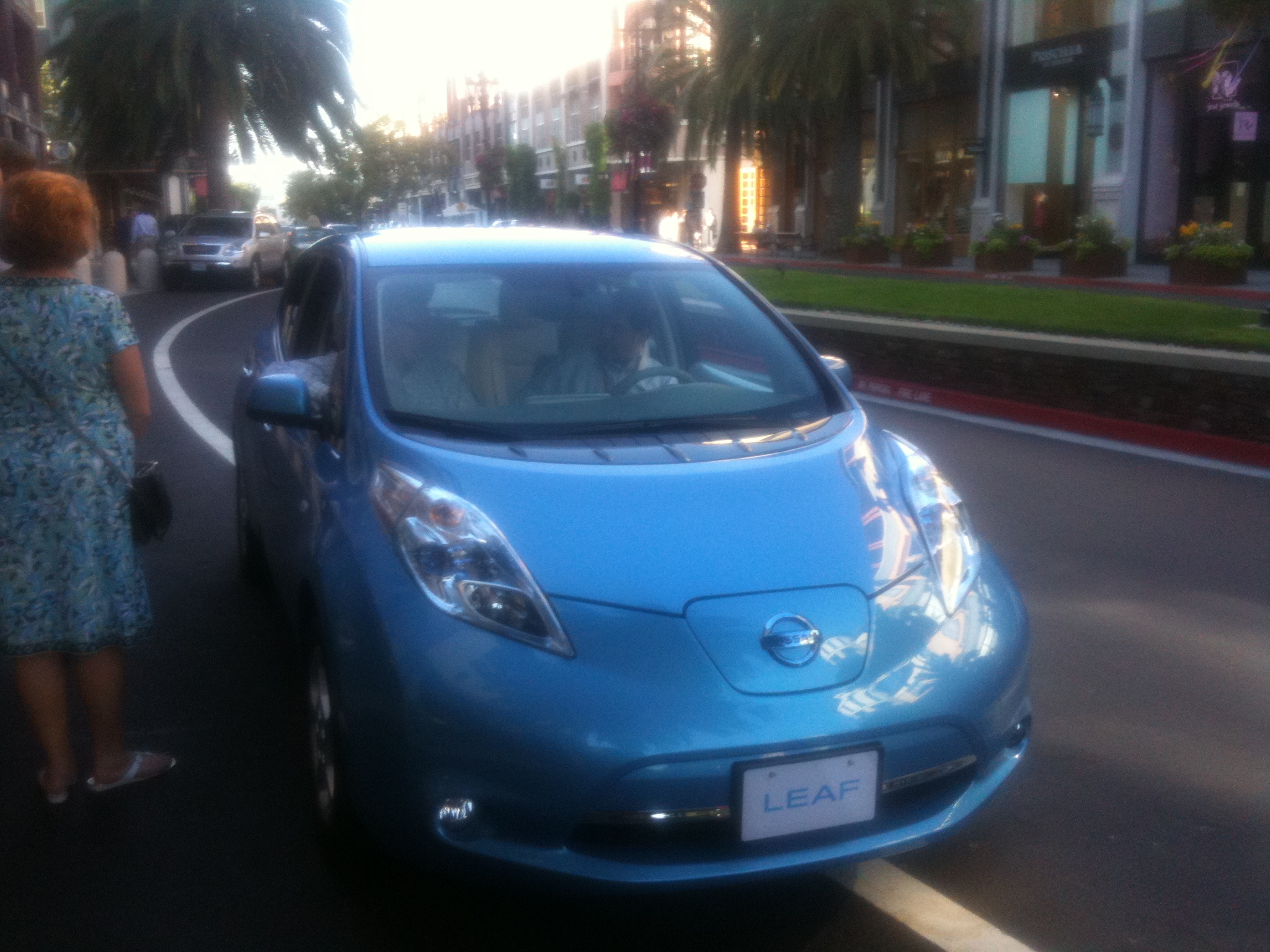
Of course, you’re essentially pre-paying much of your fuel costs for the life of the car. But that’s a hard message to get across to a potential buyer contemplating forking over $41,000 for a Chevrolet Volt or $33,000 for a Nissan Leaf before state and federal incentives.

However, rising gasoline prices — now topping $4 a gallon in the San Francisco Bay Area — may finally drive the message home that electric cars, despite the expense of the first generation mass production models, are a hedge against an uncertain fuel future. (Not to mention environmental catastrophe.)

In a new report on electric cars and the smart grid, GTM Research includes a handy chart listing average gasoline prices (as of Jan. 2011) in the United States and Europe, along with the price of electricity and the savings from trading in a gas-guzzler for an electron-sipper.

In the U.S., drivers of battery-powered rides can save the equivalent of $2.05 a gallon, assuming gas prices of $3.25 a gallon and electricity rates of 12 cents a kilowatt-hour. Of course, gas and power prices in the U.S. vary dramatically from state to state. In California, both are among the highest in the land. But so are subsidies for solar panels, which can be used to charge your car, a further hedge against peak oil.

But in Europe the savings are particularly dramatic. In nuclear-powered France, the GTM snapshot shows electricity rates at 19 cents a kilowatt-hour while petro prices are at $7.61. Switching to an electric car would save the equivalent of $5.71 a gallon.

Electricity rates in Spain, which has been on a renewable energy building boom in recent years, are just seven cents a kilowatt-hour. Going electric would take the equivalent of $5.20 off the $5.90 price of a gallon of gasoline.

“The German government recently announced an objective of having one million EVs on that country’s roads by 2020,” wrote David J. Leeds, the report’s author, who cited a German utility industry study that concluded renewable energy could power 50 million electric cars by 2020.

In Copenhagen, where petro prices were $6.89 as of Jan. 21, a Danish utility plans to provide free power to electric car drivers for two to three years, according to the report.

“In terms of the consumer experience and encouraging wider adoption, not having to pay for fuel appears to be a very savvy strategy,” wrote Leeds.

Just don’t expect to see Huge Chavez trading in the presidential limo for a Leaf: Gas prices in oil-rich Venezuela are about six cents a gallon.


Read Full Post »

photo: Todd Woody

I wrote this story for Grist, where it first appeared.

As the first mass-market electric cars start to, slowly, hit the streets, the big question is whether battery-powered vehicles are the future or a fad.

The answer won’t be known for years but a new report from GTM Research offers some interesting insights into where the electric road might lead. The report, “The Networked EV: The Convergence of Smart Grids and Electric Vehicles,” predicts there will be 3.8 million electric cars on the road worldwide by 2016, with about 1.5 million in the United States, 1.5 million in Europe and 760,000 in Asia.

“It is the hope of this industry that just as cellular phones and laptops before them, EVs will begin as luxury products but will eventually become widely affordable,” wrote David J. Leeds, the report’s author.

Leeds notes that it took a decade and three generations of the Toyota Prius hybrid to capture five percent of the California automotive market. He expects it’ll take a third generation of electric cars, likely to be introduced around 2018-2020, for carbon-free driving to break out of Berkeley, Portland, and other early adopter cities.

It’ll come as no shock that Leeds estimates that 20 percent of electric cars will be sold in California, which currently accounts for 11 percent of total auto sales in the U.S. New York will follow with nine percent of electric car sales with Florida, Texas, and Illinois rounding out the top five.

Predicting such numbers is a guessing game, of course, and electric cars sales will be determined by a multitude of factors, including vehicle cost, advancements in battery technology, gasoline prices, government subsidies, and the fickle tastes of car buyers.

The early adopters of electric cars that will like drive the industry aren’t so much all those Prius owners but corporate accountants looking to keep a lid on the cost of company fleets of cars and trucks.

“Electric vehicles make great sense for fleets due to their highly predictable routes, as well as the fact that these groups tend to excel at logistical operations,” wrote Leeds. “More than any other sources, commercial and government fleet purchases have the power to accelerate the adoption curve of this market.”

He noted that fleets account for 15 percent of miles driven in the U.S. and that many of those vehicles travel fewer than 100 miles a day, the range of many current electric vehicles, and can take advantage of centralized parking and charging stations as well as lower electricity rates negotiated by big corporations.

General Electric, which will buy 25,000 electric vehicles over the next four years, is aggressively promoting EVs among its corporate customers.

“We can’t forgot the importance of scale,” Luis Ramirez, chief executive of GE Industrial Solution, told me earlier this month when he came to San Francisco to promote electric vehicles and GE’s various services for them. “An average delivery truck makes 10 deliveries a day in a city like San Francisco. So when you think of electric vehicles, that creates a whole new blueprint that’s more efficient and uses less energy.”

Clarence Nunn, chief executive of GE Fleet Services, noted that a big cost of operating delivery trucks is the fuel wasted when idling in congested urban areas. Noise ordinances also can restrict delivery times for fossil-fueled powered vehicles. That’s not a problem, of course, for electrics.

The blogosphere had been buzzing over reports of low sales so far of the electric Nissan Leaf and plug-in hybrid electric Chevrolet Volt. That, however, may be more of a production than a demand problem. Leeds noted that nearly 250,000 potential Volt buyers had registered on GM’s site.

“We’d like to buy more than they can build,” said Ramirez of the Volt and Leaf.

Read Full Post »

In The New York Times on Friday, I wrote about the organizers of California’s No on Proposition 23 campaign resurrecting their coalition to press for green energy policies in the Golden State and Washington:

George P. Shultz, the Republican former secretary of state, and Thomas F. Steyer, the Democratic hedge fund billionaire, are reviving the coalition that campaigned last year to defeat Proposition 23, the California ballot measure that would have derailed the state’s’ landmark global warming law.

Their new organization, Californians for Clean Energy and Jobs, will push for greater investment in green technology and the enforcement of the global warming law, known as A.B. 32, according to Mr. Steyer, founder of Farallon Capital Management in San Francisco.

“We’re going to be fighting to make sure it is implemented in a way that not just creates businesses here, but the jobs stay here, and we get the kind of growth that will show the country that this way of thinking is intensely practical and real world,” Mr. Steyer said on Friday at a news conference.

“I hate to say we’re getting the band back together, but we’re getting the band back together,” he added.

Mr. Steyer and Mr. Shultz served as co-chairmen of the “No on 23″ campaign, which drew support from Silicon Valley venture capitalists, mainstream businesses, labor unions, environmentalists and minority groups. The No campaign won 61.4 percent of the vote last November to reject Proposition 23, which was largely backed by two Texas oil companies.

Mr. Shultz said the new group also hopes to have an impact in Washington, but he and Mr. Steyer were vague on specific policies they would support.

“The most important thing the federal government can do is to have substantial and sustained support for energy R&D – that’s what’s going to produce the game changers,” Mr. Shultz said.

In a speech last week in San Francisco, Mr. Steyer laid out a national strategy to fight Republican efforts to limit the United States Environmental Protection Agency’s ability to regulate greenhouse gas emissions.

But on Friday, he kept his focus on California, saying that the “No on 23″ campaign had about $1 million left in its coffers that would be used to support the new group’s efforts.

You can read the rest of the story here.

Read Full Post »

I wrote this story for Grist, where it first appeared.

Over the past year, a revolt against the rollout of utility Pacific Gas & Electric’s smart meters has swept through Northern California as some customers claimed the devices’ wireless transmission of electricity data was harming their health. In response, city councils in a number of cities tried to ban their installation.

On Thursday, PG&E, acting under orders from state regulators, unveiled a proposal to let customers have their smart meter’s radio turned off — for a price. PG&E would charge a one-time fee ranging from $105 to $270 and then customers would pay between $14 and $20 a month for two years. All in all, it would cost about $600 for the average customer to disable their smart meter.

“This cost is based on what it costs PG&E to disable the radio, adjust our IT system, adjust our billing system, and to manually read customers,” Paul Moreno, a PG&E spokesperson, said in an email.

In other words, that’s the price of dumbing down smart meters.

Tens of the millions of the devices are being installed nationwide and are a linchpin of the coming smart grid. Smart meters monitor electricity use in real time, allowing utilities to better balance supply and demand and charge accordingly. Customers can use that data to adjust their electricity use when rates are high and pinpoint the power hogs in their homes.

PG&E expects nearly 150,000 of its 5.1 million customers to shut down their smart meters’ radio transmitters.

“There is a loss of the benefits of the smart grid (power outage detection, ability to participate in demand response programs to reduce peak demand energy and better utilize renewable power),” said Moreno.

While the rollout has gone fairly smoothly in Southern California, some activists in the greater Bay Area claim the frequencies emitted by the smart meters’ wireless transmitters have triggered migraines and myriad other health problems.

“I’m here to charge you with the following criminal counts,” one person told members of the California Public Utilities Commission at a meeting last September. “This is misguided, Big Brother green ideology that the smart meters support.”

“This is massive experimentation of massive proportions and we are the victims,” declared another person.

Mobile phones, microwave ovens, and a host of other household gadgets also emit such frequencies, and to date there has been no scientific evidence to support claims about the health effects of smart meters.

(When I was at Southern California Edison in Los Angeles last October, an executive told me that utility had received only a handful of complaints about its smart meters.)

Nonetheless, regulators ordered PG&E to allow customers to opt out of the smart-meter program. The utilities commission must approve the utility’s proposal, so expect more fireworks over the cost of disabling smart meters.

Read Full Post »

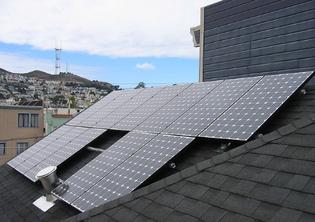
photo: KB Home

In The New York Times on Thursday, I wrote about a home builder installing solar arrays as standard equipment in new developments in Southern California:

Among the standard features offered for new homes at Manzanita at Paseo del Sol, a KB Home development in a desert suburb southeast of Los Angeles, are nine-foot ceilings, six-panel doors and a 1.4-kilowatt solar array.

While KB Home has offered rooftop photovoltaic panels as an option for some time, the home builder now will make solar arrays from SunPower standard equipment on more than 800 homes in 10 communities being built in Southern California.

“This is a game changer for our industry and a powerful way for us to compete in the marketplace, especially with resale homes,” Craig LeMessurier, KB Home’s director of corporate communications, said in an e-mail. While pricey solar panels are often found on the roofs of high-end houses, it’s notable that KB Home is installing the arrays on homes with base selling prices that range from $250,000 to $360,000. In California, that’s starter home territory.

KB Home estimates that the standard 1.4-kilowatt solar array will supply about 30 percent of the electricity for an 1,800-foot to 2,000-foot square home. Of course, that all depends on how much a homeowner runs their air conditioning, for instance.

Rooftop solar can be a hedge against California’s high and rising electricity rates. And given the intense sunshine and air-conditioning demands in desert areas where KB Home is building its latest developments, such arrays will generate more electricity than they could in, say, San Francisco. Homeowners will also qualify for a 30 percent federal tax credit as well as state incentives.

You can read the rest of the story here.

Read Full Post »

I wrote this story for Grist, where it first appeared.

Recession-wracked California is truly going down the toilet.

For green energy, that is. In a gift to headline writers everywhere, the California Energy Commission on Wednesday handed out nearly $1 million to fund an experimental project to convert what it politely refers to as “biosolids” into electricity. In other words, sh*t.

Okay, we’ll suppress our inner 12-year-old boy now. This is serious sh*t. No, really, we’ll stop.

Biosolids are a nasty pollution problem; beyond human waste, they can also include a sludge of heavy metals and other toxins left over from wastewater treatment. While in some cases biosolids can be used as fertilizer for crops, they most often have to be disposed of in landfills.

“Existing options for using biosolids are limited (mainly land application and alternative daily cover in landfills) and face increasing environmental challenges that could eliminate those options,” the energy commission noted. “Current disposal practices often involve hauling biosolids long distances, which consumes transportation fuels, increases greenhouse gas emissions, and increases ratepayers’ costs for wastewater treatment.”

California produced 661,000 dry metric tons of biosolids in 2009, according to the energy commission. Ick.

Thus this new move to see if renewable energy can be spun from dross. The $999,924 (guess the state couldn’t cough up another $76 to make it an even million) allocated to the Delta Diablo Sanitation District in Northern California will help pay for a $4.7 million research project.

A Bay Area company called Intellergy will use “steam/carbon dioxide reforming” technology to vaporize liquid residues and gasify the organic solid portion of biosolids in an airlock chamber. The company will pump in steam and carbon dioxide to create a hydrogen-rich gas that could be used in fuel cells to generate electricity.

The process remains unproven, but if it works it could supply the growing number of Bloom Energy fuel cells being installed by Fortune 500 companies, particularly on the campuses of Silicon Valley tech giants like Google and Adobe.

“California continues to make significant strides in bioenergy research,” James Boyd, vice chair of the energy commission, said in a statement. “By studying how to use biosolids more effectively, California will generate energy from previously untapped waste streams and reduce the volume going into our state’s growing landfills.”

Read Full Post »

photo:  jfraser

I wrote this story for Grist, where it first appeared.

Where could you get 797 people to stand in line outside a nightclub to attend a $100-a-ticket fundraiser for a nonprofit that advocates for solar energy? Not-so-sunny San Francisco, of course.

The queue to get into the Vote Solar Initiative annual spring equinox bash snaked down the street Monday, and even the sun made an appearance during a break in the deluge that has been soaking the Bay Area for the past week.

Now, I don’t cover the party beat. But as someone who lived in San Francisco during the dot-com boom of the late ’90s and worked at the leading chronicler of the era, The Industry Standard, I came to see parties as an indicator of any boom.

Back then, the line for the Standard’s weekly rooftop bash routinely stretched down the block. (It was the only magazine I’ve ever worked for that employed its own doorman.) What started out as reporters and editors knocking back a few beers ballooned into an over-the-top bacchanal, taken over by PR people and advertisers. (For the Standard’s second anniversary, the magazine rented out San Francisco City Hall and installed hot-and-cold running martini and sushi bars.)

Well, we all know how that ended.

There was plenty of drink and slow food to be had at the Vote Solar bash, and a self-confident air of optimism among the largely young crowd. But given the politicians and corporate solar heavyweights like SunPower and Suntech backing the event, it’s clear that the green scene promises to have far more staying power than the dot-com bubble.

“We’ve got to make sure this city is on 100 percent renewable energy,” San Francisco Mayor Edwin Lee told the crowd. Folks in attendance were decked out in cowboy hats, to commemorate the defeat last year of Proposition 23 — the ballot measure backed by Texas oil companies that would have derailed California’s landmark global warming law.

“Not just municipal,” added Lee, noting the city now generates 17 megawatts of solar electricity. “Everybody has got to do that. Everybody. We want the whole city in 2020 to be 100 percent renewable energy.”

Adam Browning, VoteSolar’s executive director, told partygoers that action on pro-solar policy would shift from Congress to the states.

“We’ve got real trouble and out of crisis comes opportunity,” he said. “The way forward will probably not be at the federal level. Talk about real trouble. Which leaves us with our strategy at the state level.”

While Vote Solar was born in California, it’s now expanding its lobbying efforts to the East Coast and the Midwest.

Another reason to party like it’s 2011.

Read Full Post »

I wrote this story for Grist, where it first appeared.

By the third day of any conference, one’s eyes begin to glaze over. But Lisa Gansky provided an intellectual jolt on the final morning of the Cleantech Forum in San Francisco this week when she appeared on stage to talk about “the Mesh.”

That’s what Gansky, a veteran Internet entrepreneur, calls the confluence of social networks, GPS-enabled mobile technology (smartphones, iPads, and the like) and the tagging of physical objects with chips that pinpoint their location.

“The Mesh is a fundamental shift in our relationship to the things in our lives,” said Gansky, who has written a book by the same name. “We’re moving to an economy where access to goods and services trumps ownership of them.  The opportunity of the Mesh is to really design and support better things easily shared.”

“The recession has caused us to ask what the real value of things versus the cost,” she added. “This is a time where we’re more connected to more people than ever before.”

And so in recent years, we’ve seen the rise of a panoply of peer-to-peer services, beginning with music sharing in the Napster era to peer-to-peer money lending to car sharing.

The advent of smartphones and social networks like Facebook, Foursquare, Twitter and Yelp has accelerated the trend. But whether the Mesh is a plaything of the urban techno-hipsters or represents the advent of new economic model, as Gansky posits, remains to be seen.

But what struck me is the truly radical economic notion enmeshed in the Mesh: The more we share our stuff, the less we need to buy all that new stuff that inevitably leads to ever-rising greenhouse gas emissions, environmental degradation, and the pursuit of unsustainable consumption.

“If we look at ourselves as a global community, we have a lot of stuff,” Gansky said. “What we actually use of the stuff we have is a really small percentage.”

Gansky noted that people in the United States and Europe typically use their cars only 8 percent of the day. “For most people, the second most expensive thing we own is just sitting for most of the time,” she said.

So why not make cars share-ready when they roll off the assembly line?

“Not only in terms of their ability of to tap into a network but so when I buy a car and I automatically and easily have the option to make it available to somebody else to use and pay me or not,” Gansky said.

She noted that it took six years for Zipcar, which lets people rent vehicles by the hour in urban areas, to build a fleet of 1,000 cars. But it only took six months for WhipCar, a peer-to-peer car sharing service, to put 1,000 cars in service after its launch last year in the U.K. That’s because WhipCar lets people share their personal cars, much like the U.S. services Getaround, RelayRide and Spride Share.

Now think about embedding that ability to share in all sorts of objects.

Gansky acknowledged that getting people to change long-entrenched habits and cultural attitudes about ownership won’t be easy.

“We have experiences in our lives where sharing was irresistible but how do we do that on a regular basis and in a scalable way,” she said. “Generally, people change their habits when one thing happens — their pants are on fire.”

But you only have to turn on the news to know its getting hot in here.


Read Full Post »

photo: CoolPlanetBiofuels

In The New York Times on Thursday, I wrote about Google Ventures funding a Southern California startup that is developing mobile biofuel refineries that will travel to the fuel source to process agricultural waste and other biomass:

Google Ventures has led a $20 million financing round in CoolPlanetBiofuels, a Southern California start-up that is developing mobile refineries to turn wood chips, agriculture waste and other biomass into biofuels.

CoolPlanetBiofuels, an 18-month-old company, has also attracted the attention of ConocoPhillips, GE Capital and NRG Energy, which participated in the financing round along with North Bridge Venture Partners.

CoolPlanetBiofuels declined to disclose the total capital that it had raised, but it noted that Google Ventures was a major participant in the series B round announced Thursday.

“We take biomass such as corncobs, yard clippings wood chips and fractionate that biomass into discrete gas streams,” said Mike Cheiky, CoolPlanetBiofuels’ chief executive and a longtime technology executive. “Those individual gas streams aren’t really useful by themselves, so we run them through catalytic conversion columns that convert them to useful fuels.”

One limitation of using biomass as a feedstock for biofuels has been the expense of trucking low-value waste long distances to a refinery. So CoolPlanetBiofuels plans to take the refineries to the fuel source by packaging its machines in tractor-trailers.

“Biomass cannot be transported very far because in raw form it has a very low energy content,” Mr. Cheiky said.

He said a typical refinery would consist of a cluster of tractor-trailers that can process 10 million gallons of fuel a year.

“There’s a very large market opportunity here with a lot of headroom for innovation,” said Bill Maris, Google Ventures’ managing director. “These are early days and this space won’t end up with a single winner but any progress Mike and CoolPlanet can make will have a profoundly positive impact on consumers, the industry and the world.”

So far CoolPlanetBiofuels has built a small pilot plant that is producing biofuel for evaluation by oil companies, Mr. Cheiky said. He declined to identify the companies, citing a confidentiality agreement. The company expects to have its first one-million gallon mobile refinery operating within a year.

You can read the rest of the story here.

Read Full Post »

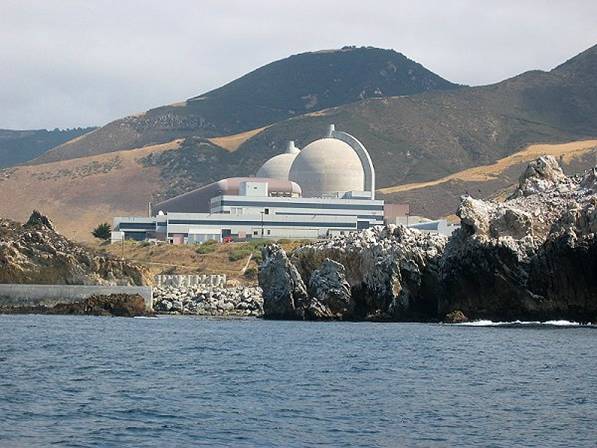
photo: San Luis Obispo County

In The New York Times on Thursday, I wrote about a United States Department of Energy official affiming that loan guarantees for nuclear power projects would continue in the wake of the Japanese reactor disaster. He also said loans for a “significant” number of large renewable energy projects would be issued in the coming months:

With many riveted on Japan’s reactor crisis, the head of the  Department of Energy’s loan guarantee program has affirmed that it will continue to finance nuclear projects in the United States.

“Assuming there is a desire in the Capitol to move forward, nuclear remains an important part of the energy mix,” Jonathan Silver, executive director of the Energy Department’s loan programs office, said on Wednesday in a presentation at the Cleantech Forum conference in San Francisco.

“I point out here that the technology at use in the project we financed is quite different from the ones that have been affected by Japan,” he added. “Nonetheless, we obviously take this quite seriously.”

Mr. Silver’s remarks followed Congressional testimony in Washington by Energy Secretary Steven Chu and Gregory B. Jaczko, chairman of the Nuclear Regulatory Commission. Dr. Chu said that the Obama administration continued to support nuclear energy, noting the president had requested that $36 billion be appropriated for the nuclear loan guarantee program.

During his presentation, Mr. Silver, however, focused on renewable energy.

“In 2010, the loan program was the largest financier of renewable energy program in the world with the exception of China,” said Mr. Silver, a former venture capitalist. “We invested more money into clean energy than the 10 largest project finance groups in the world, public or private sector combined, except China.”

As financing for multibillion-dollar renewable energy projects dried up in the recession and bankers became leery of taking risks on new technologies, solar and wind developers have come to depend on the loan guarantee program.

“The sun shines and the wind blows in red and blue states,” Mr. Silver said. “We are agnostic on the topic of geography and we are agnostic on the topic of technology other than is it innovative and potentially transformative at scale.”

The loan guarantee program has come under fire from all sides, with some green energy advocates complaining that the Energy Department has been slow to hand out cash for projects. Congressional Republicans, meanwhile, have questioned whether the department has spent its money wisely and have moved to cut funding for the $71 billion program.

An audit released last week by the Energy Department’s inspector general found that poor record-keeping made it difficult to evaluate some loan decisions.

Mr. Silver did not address the audit on Wednesday but noted that although the loan guarantee program began under the Bush administration in 2005, it was not funded until 2008 and had only 35 employees when he became executive director in early 2009.

You can read the rest of the story here.

Read Full Post »

Older Posts »

Design a site like this with WordPress.com
Get started