Feeds:
Posts
Comments

Posts Tagged ‘electric cars’

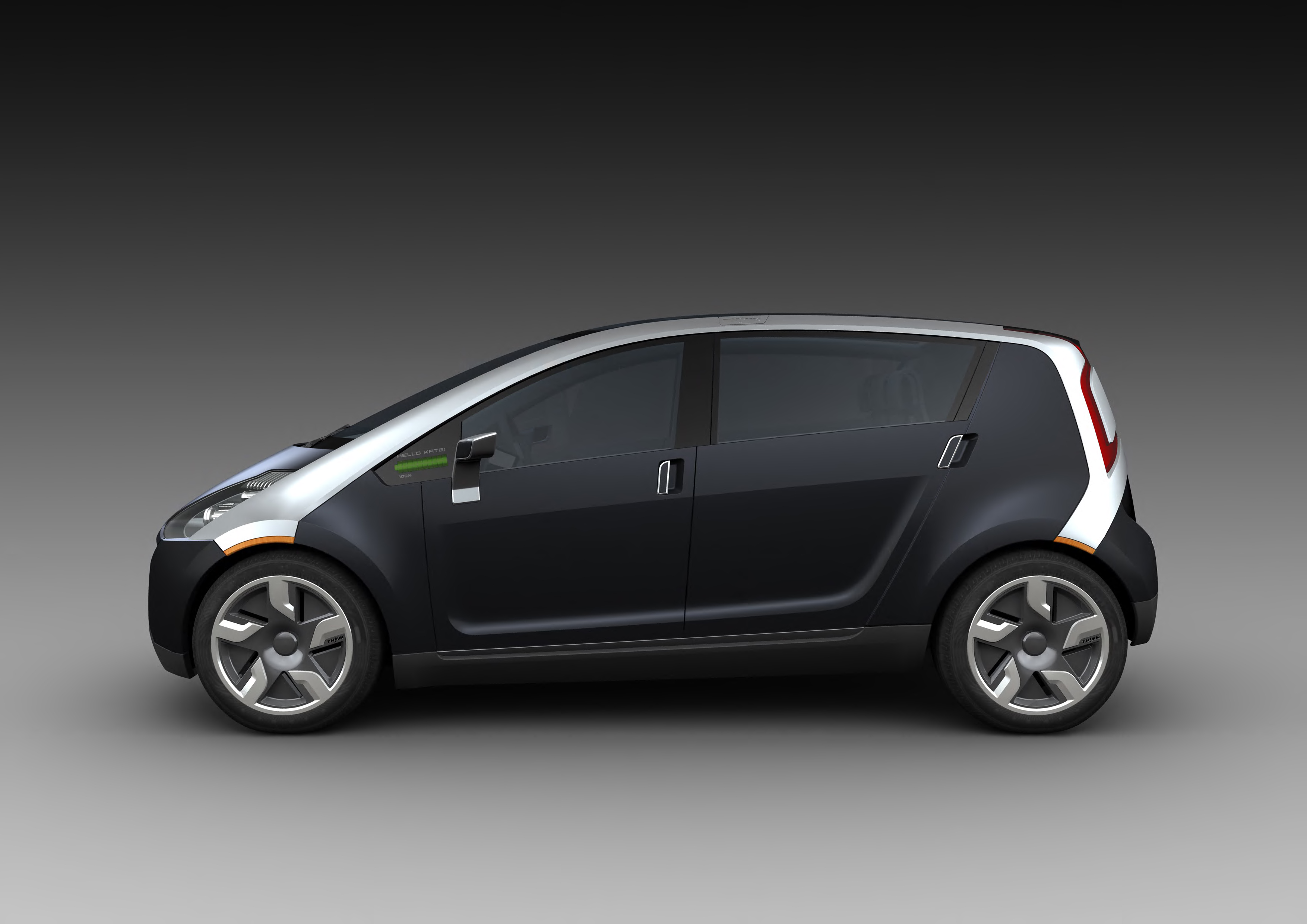
think-city-8_imagelarge

photo: Think

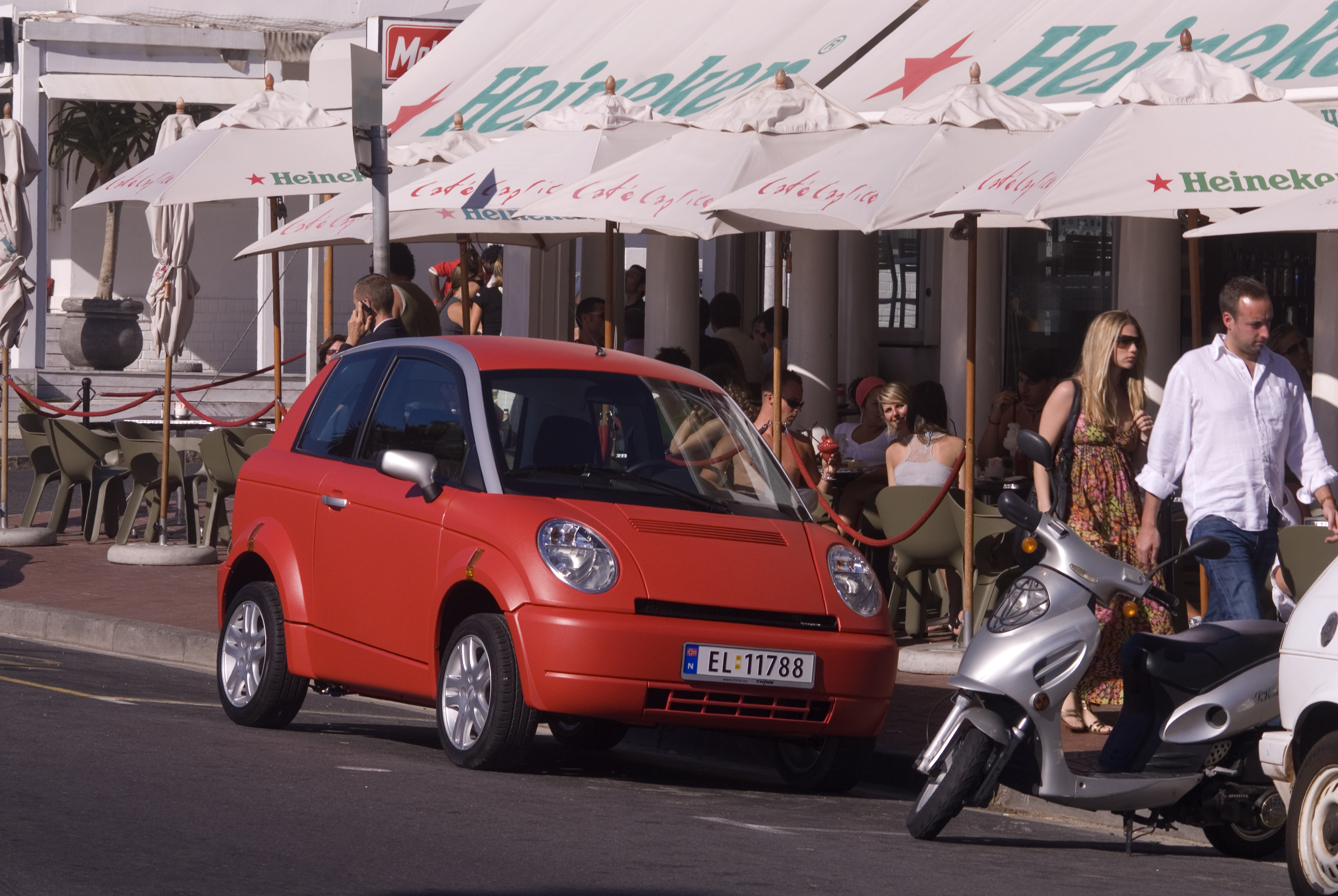
Norwegian electric carmaker Think said Tuesday it has obtained a $5.7 million bridge loan from battery maker Ener1 Group and other investors to allow the company to resume limited production of its City urban runabout.

In December Think idled its assembly line and laid off workers as the global credit crunch took its toll and the company was unable to obtain funding to finance continued production of its electric vehicles.

Think CEO Richard Canny said in a statement Tuesday that the company is continuing negotiations to raise capital but the interim financing from Ener1, which is supplying lithium-ion batteries to Think, will allow the recall of some workers to complete cars from parts on hand.  “We have encouraging engagement with a number of potential new equity investors for our recapitalization process,” said Canny.

The Think financing comes as Ford (F), Toyota (TM), Honda (HMC) and other major automakers unveil prototypes for new electric cars and plug-in hybrids at the Detroit Auto Show.

Read Full Post »

thinkcity_0122

photo: Think

Think Global, the innovative Norwegian electric car company, has temporarily halted production of its City urban runabout and laid off half its workforce as it considers a sale to survive the credit crisis, Think CEO Richard Canny told Green Wombat Tuesday.

“Think is in a situation where we can’t grow anymore,” Canny said from Think’s Oslo headquarters, where the management team was still working at midnight. “We have started an emergency shutdown to protect our capital and our brand. We’ll need a new and stronger partner, whether that is a 25% owner or a majority owner or someone who buys the company.”

The Norwegian government said on Tuesday that it would not make an equity investment in the automaker but is considering Think’s request to guarantee up to $29 million in short-term loans. “Even a small participation from the Norwegian government will give investors confidence,” Canny said, noting that the company needs to raise $40 million to continue manufacturing its electric car. “The financial crisis has hit at a very critical stage as we’re ramping up production and when external financing is hard to bring into the company and internal funding is limited.”

He said a rescue package might include aid from from the Norwegian government and an infusion of cash from new investors or strategic partners. “We’re putting a hand out. People who would like to work with us should pick up the phone.”

Ford (F) acquired the startup in 1999 and sold it a few years later. Norwegian solar entrepreneur Jan-Olaf Willums and other investors rescued Think from bankruptcy in 2006, aiming to upend a century-old automotive paradigm by changing the way cars are made, sold and driven to create a sustainable auto industry.

As Green Wombat wrote in a 2007 feature story on Think, “Taking a cue from Dell, the company will sell cars online, built to order. It will forgo showrooms and seed the market through car-sharing services like Zipcar. Every car will be Internet-and Wi-Fi-enabled, becoming, according to Willums, a rolling computer that can communicate wirelessly with its driver, other Think owners, and the power grid. In other words, it’s Web 2.0 on wheels. ‘We want to sell mobility,’ Willums says. ‘We don’t want to sell a thing called the Think.’

The company sells the car but leases the battery so buyers don’t have to fork over cash upfront for an electric vehicle’s single most expensive component – an idea subsequently adopted embraced by everyone from Shai Agassi’s Better Place electric car infrastructure company to General Motors (GM).

The failure of the new Think would be a blow at a time when the auto industry desperately needs to reinvent itself. While Think is a niche player and faces formidible competition as Toyota (TM)  and other big automakers go electric, it has pioneered  the idea of a new automotive infrastructure that includes tech companies and utilities like PG&E (PCG).

Whether Think can survive the global financial crisis remains to be seen, but Willums, who stepped aside as CEO recently but remains on the board, is a prodigious networker with deep contacts in Silicon Valley and elsewhere. In little more than a year he raised around $100 million from an A-list of U.S. and European investors that includes General Electric (GE), Keiner Perkins Caulfield & Byers and Rockport Capital Partners – the latter two marquee venture capital firms formed a joint venture with Think to sell the City in North America. Canny said the U.S. expansion plans are now on hold.

The question now is whether Think’s investors, absent a government bailout, will step up to save the company just as it has started to gain a foothold in the market. In a presentation made Monday, Canny, a Ford veteran, said eight to 10 two-seater City cars a day had been rolling off the company’s assembly line outside Oslo.  Think has a blacklog of 550 orders and 150 cars will be delivered by January.  The company was set to begin selling a 2+2 version of the City in mid-2009. (Think had planned to begin selling its next model, a five-seat crossover car called the Think Ox, in 2011.)

“There are limited possibilities of funding working capital through bank credits without extra guarantees in today’s financial market,” Canny said, noting that the company hopes to resume production in the first quarter of 2009. “Think’s automotive suppliers are severely hit by the overall industry crisis, leading to tougher terms of parts delivery to Think.”

Green Wombat will throw out one potential savior of Think: Google (GOOG). Many aspects of Think’s innovative business model were born at a brainstorming session that the search giant hosted in 2006 for Willums at the Googleplex in Mountain View, Calif. Given that Google.org, the company’s philanthropic arm, has poured tens of millions of dollars in green energy companies and electric car research, an investment in Think would be another way to drive progress toward its goal of a carbon-free economy.

Read Full Post »

sracer_580
Photo: SolarWorld

When Green Wombat met with SolarWorld COO Boris Klebensberger last month, he noted that the German solar cell maker opened for business in 1998 just as oil prices hit an all-time low. “The company was founded by five crazy guys who people thought were on drugs, ” he laughed.

They still might. SolarWorld, now the world’s fifth-largest solar module manufacturer, has made an unsolicited $1.3 billion offer to buy General Motors’ German-based Opel division. And why would a renewable energy company want to get into a fossil fuel-dependent business? To build green cars, of course.

“The automotive industry is down a deep well and when you’re in a deep well you have to find a new product for the future,” SolarWorld CEO Frank Asbeck told Green Wombat as he was getting out of taxi Wednesday in Rome to attend the dedication of a SolarWorld solar array at the Vatican. “The next cycle will be renewable energy. The switch will be from automotive to electromotive, or as we call it, sunmotive.”

If the Pope can go green, why not another tradition-bound global institution?

If SolarWorld’s bid seems comically low for a century-old automotive powerhouse, consider this: As of Wednesday morning General Motors’ (GM) total market capitalization stood at $2.2 billion. That’s not a typo — Sergey Brin and Larry Page probably have that much rattling around the change drawers of their Priuses (TM). SolarWorld’s market cap, in contrast, is $1.6 billion.

The SolarWorld bid does come with a rather large catch, however. The company wants GM to make compensation payments of 40,000 euros (about $51,500) per Opel worker for a total of 1 billion euros ($1.3 billion) — what the automaker would have to shell out under German law if it shut down. Opel has been something of a jewel in GM’s crown, but it has suffered from its parent’s mistakes and now Opel executives themselves are asking the German government for a billion-dollar bailout.

GM has dismissed the SolarWorld bid out of hand while some financial analysts called the offer a PR stunt. If it was a joke, it’s been a costly one: the company’s shares initially plunged 19% after Jefferies questioned management’s credibility and downgraded its stock.

“We’re not making jokes,” Asbeck says. “We say we’ll give a billion and General Motors gives a billion. We are strong enough in renewable energy to give scale to old fossil fuel industry.”

While SolarWorld has no plans to make a sun-powered car like the experimental racer (pictured above) it built, Asbeck says the company would retool Opel to increase production of green cars by 5% each year, transitioning from plug-in electric hybrids like the Chevy Volt to all-electric vehicles. “We think extended range cars are the car for the next five years,” he says, noting that Opel management would be left in place but given a new mission.

SolarWorld’s chances of acquiring Opel might appear slim, but Asbeck’s strategy is sober. Just witness Silicon Valley startup Better Place’s success at signing deals with the governments of Israel, Denmark, Australia and California to build an electric car infrastructure and its alliance with Renault-Nissan to produce battery-powered vehicles. Even Ford (F) executive chairman Bill Ford has been developing a green strategy for the auto industry, according to The New York Times.

“I think that times have changed and we as a solar company can export our spirit of building a new industry,” says Asbeck. “Opel can be the first green car company in Germany.”

Read Full Post »

betterplaceplugElectric cars are as good for the economy as the environment and could put $80 billion in consumers’ pockets by 2030, according to a new study from the University of California.

Not surprisingly, the oil industry would take a $175 billion hit under the scenario sketched by UC Berkeley’s Global Venture Lab, while a booming battery business would gain $130 billion as the internal combustion engine sputters out. “There will also be significant changes in the balance of payments among nations as petroleum imports decline,” the authors wrote. “We find the net imports of the U.S. will decline by $20 billion.”

The report makes several assumptions to arrive at its optimistic conclusions: The Cal researchers are counting on 39% of cars on the road to be electric by 2030 and powered by electricity generated from renewable sources like wind and solar.

Electric car owners would save an estimated $7,203 in operating costs, mainly because with no engines to maintain, battery-powered vehicles rarely see the inside of mechanic’s garage.

Left unexplored in the report was the impact of electric cars on the United States auto industry. If General Motors (GM), Ford (F) and Chrysler survive – and that’s a big if these days – they stand to benefit assuming they retool for the electric age and produce cars consumers want to buy before rivals like Toyota (TM), Honda (HMC) and Renault-Nissan beat them to the punch. But their dealer networks are sure to suffer once their lucrative repair and maintenance business evaporates.

Another winner in the electric car economy will be solar and wind companies and utilities, particularly those like PG&E (PCG) and Southern California Edison (EIX) that are making multi billion-dollar investments in renewable energy.

One of the biggest assumption the Cal report makes involves the rise of a U.S. battery industry. “We don’t have a battery industry today,” said Shai Agassi, CEO of electric car infrastructure startup Better Place, on Friday at a panel Green Wombat moderated for the University of California’s Global Technology Leaders Conference. “Either we make them here or they’re going to be made in China.”

Agassi and the mayors of San Francisco, San Jose and Oakland on Friday announced that Better Place would build a $1 billion network of charging stations throughout the Bay Area. Renault-Nissan has agreen to provide Better Place with the hundreds of thousands of electric cars it’ll need to put on the road make its business model profitable.

photo: Better Place

Read Full Post »

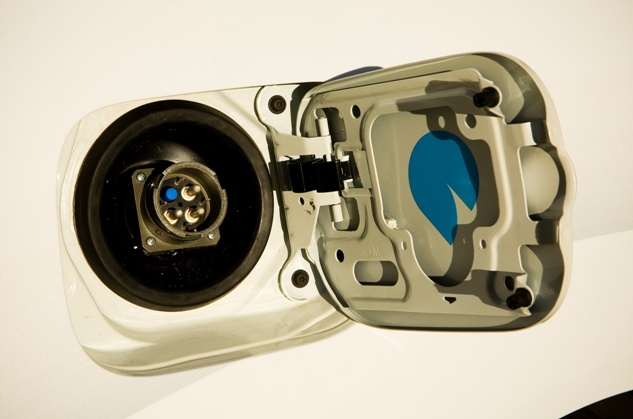
20081117_3625_betterplace

Photo: Better Place/Acey Harper

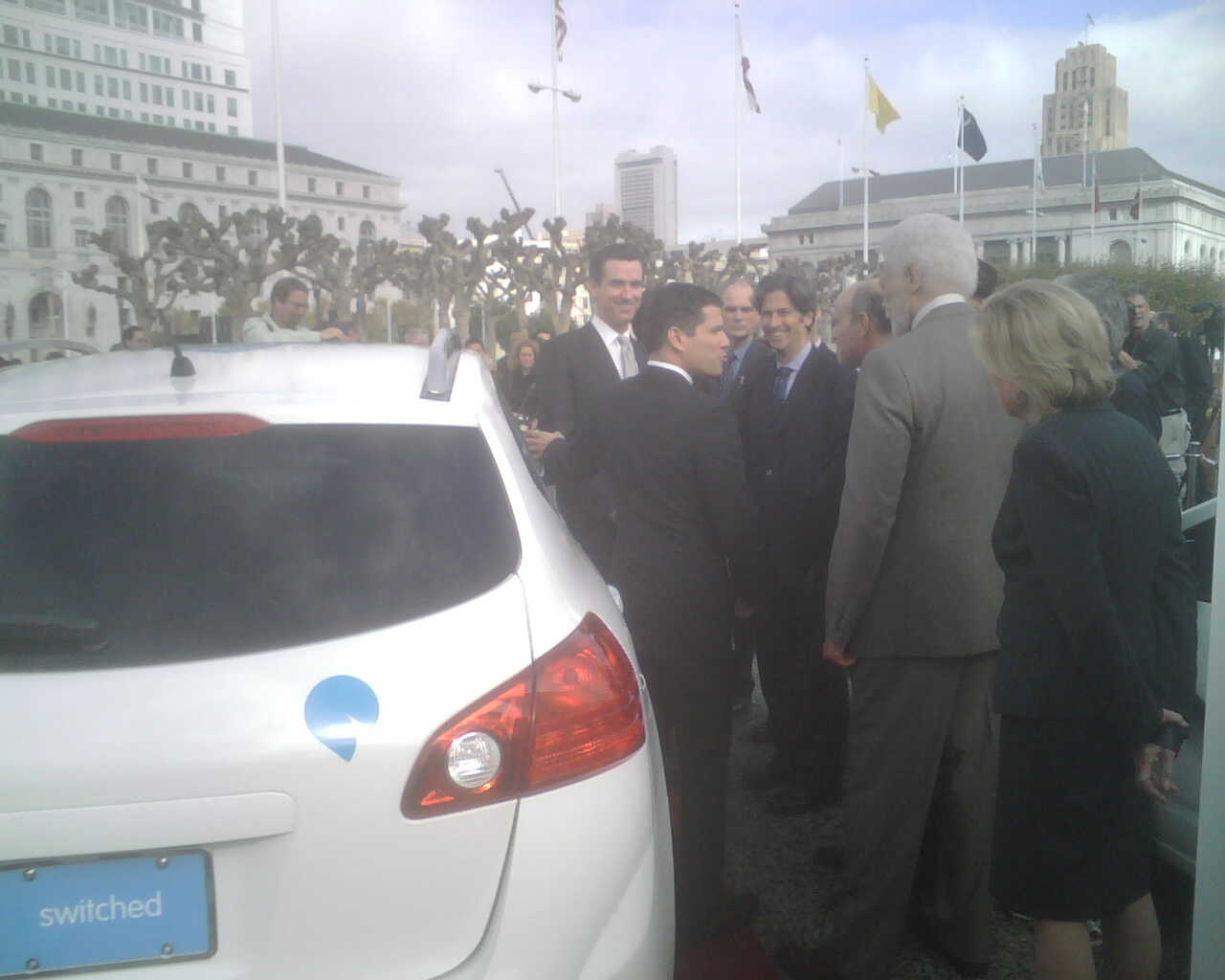
SAN FRANCISCO – It was a day when the shift from the past to the future was almost palpable.

It started Thursday morning in Berkeley where Green Wombat was moderating a panel of tech luminaries gathered at the University of California’s Global Technology Leaders Conference. As Shai Agassi, founder of electric car infrastructure company Better Place, makes the case for harnessing Silicon Valley’s technological innovation to Detroit’s manufacturing might to create a sustainable car industry, dispatches from the automotive apocalypse roll down my BlackBerry: Ford (F) shares sink to $1.01…GM’s (GM) stock falls to its lowest level since World War II…U.S. automakers beg for a bailout…California Congressman Henry Waxman ousts Michigan’s John Dingell — the Duke of Detroit — from his 28-year chairmanship of the powerful House Energy and Commerce Committee.

Agassi slips out of the conference and an hour later I catch up with him across the Bay at San Francisco City Hall where he and representatives of Governor Arnold Schwarzenegger and the mayors of San Francisco, San Jose and Oakland announce a $1 billion project to build a regional network of electric car charging stations. Better Place has signed similar deals with governments in Israel, Denmark and Australia, but California is the company’s first foray into the U.S. market. Planning for the Bay Area network begins in 2009 with construction scheduled to start in 2010 and commercial rollout set for 2012.

better20place202The mood is ebullient. “This is the start of a regional effort to become the capital of electric vehicles in the United States,” proclaims San Francisco Mayor Gavin Newsom before an audience that includes representatives from state and federal environmental agencies, green groups. Silicon Valley business leaders and officials from GM and Toyota (TM).

For his part, Agassi says, ” We believe this is not just a model for California, but a blueprint for the United States.”

The blueprint works like this: The mayors of the Bay Area’s three largest cities agreed to expedite permitting and installation of electric car charging stations, standardize regional regulations to promote an electric car infrastructure and offer incentives to employers to install chargers at workplaces. The mayors also agreed to pool purchases of municipal electric car fleets.

Better Place will raise the capital to install thousands of charging spots on the streets of San Francisco, San Jose and Oakland as well as stations between California cities where drivers can swap depleted batteries for fresh ones when they make longer trips. The Palo Alto-based company will own the car batteries and charge drivers for the miles driven. Automaker Renault-Nissan is developing electric cars for the Better Place network.

The big idea: Only by building an electric car infrastructure first will automakers produce the tens of millions of electric cars needed to make a significant dent in greenhouse gas emissions and the nation’s dependence on foreign oil.

That business model elicited some skepticism earlier in the day at the Berkeley conference, where Michael Marks, former CEO of electric carmaker Tesla Motors, questioned Agassi’s claim that Better Place would be able to provide electric cars that cost no more than gasoline-powered vehicles. And Jim Davidson, co-founder of Silicon Valley private equity firm Silver Lake, asked if Better Place would essentially be tapping the power grid to create a monopoly. (No, Agassi said, the Better Place network would be open to all electric cars.)

When Green Wombat sat down with Agassi and Newsom in the mayor’s offices Thursday afternoon, I asked Agassi, who brings a charismatic messianism to his mission, how Better Place would raise the billions needed to roll out an electric car infrastructure in California amid a global economic meltdown. He noted that in Australia Better Place signed up investment giant Macquarie Bank to create an infrastructure fund to finance that project while in Denmark a utility will provide financing.

“We will do the same thing here; we’re working with Morgan Stanley (MS) and Goldman Sachs (GS),” Agassi says, recounting a conversation he recently had with investors who he said were eager to put money in Better Place projects.

If anything, Newsom, 41, and Agassi, 40, and their allies regard the confluence of the financial crisis, the great Detroit car crash and the consolidation of green power in the incoming Obama administration and Congress as a once-in-a-lifetime opportunity to launch a disruptive technology on a global scale and transform the U.S. automotive industry.

“We’re uniquely positioned in that our local representative is Speaker of the House,” notes Newsom, referring to his close political ally, San Francisco Democrat Nancy Pelosi, who on Thursday sent a message of support for the Better Place initiative. “That can elevate what we’re trying to achieve out here.”

There’s no doubt that Newsom has a knack for game-changing politics. (He launched the gay marriage movement in these offices.) But the nuts and bolts of getting the bureaucracy to fall in line will be a harder challenge, as anyone who has ever tried to get a permit to do a home renovation in San Francisco can tell you. And not all of San Francisco’s collaborations with Silicon Valley tech companies have gone well — witness the collapse of the citywide Wi-Fi initiative Newsom undertook with Google (GOOG).

Agassi hesitated when I asked about plans to extend the Bay Area electric car network to the rest of California, noting that negotiating agreements with the nearly 100 municipalities that make up Greater Los Angeles poses a challenge. “I got a call the other day from the mayor of L.A. asking where are we,” Agassi says. “We hope to eventually make it an electric charging corridor from California to Seattle to Vancouver.”

On Thursday, Agassi and the politicians took pains to paint the Better Place initiative as not a California versus Michigan thing, or new economy versus old. And they just may be right. For in a strange way, by building an electric car infrastructure, California is offering Detroit a rescue package of its own: Supplying the network lays the groundwork for the mass production of electric cars that could be the auto industry’s salvation.

That may be counter to conventional wisdom, but perhaps Robert F. Kennedy Jr., environmentalist and advisor to Silicon Valley’s VantagePoint Venture Partners – a Better Place investor – put it best on Thursday at the press event when he upended the East Coast view of the Golden State: “When you come to California, you find people in touch with reality.”

Read Full Post »

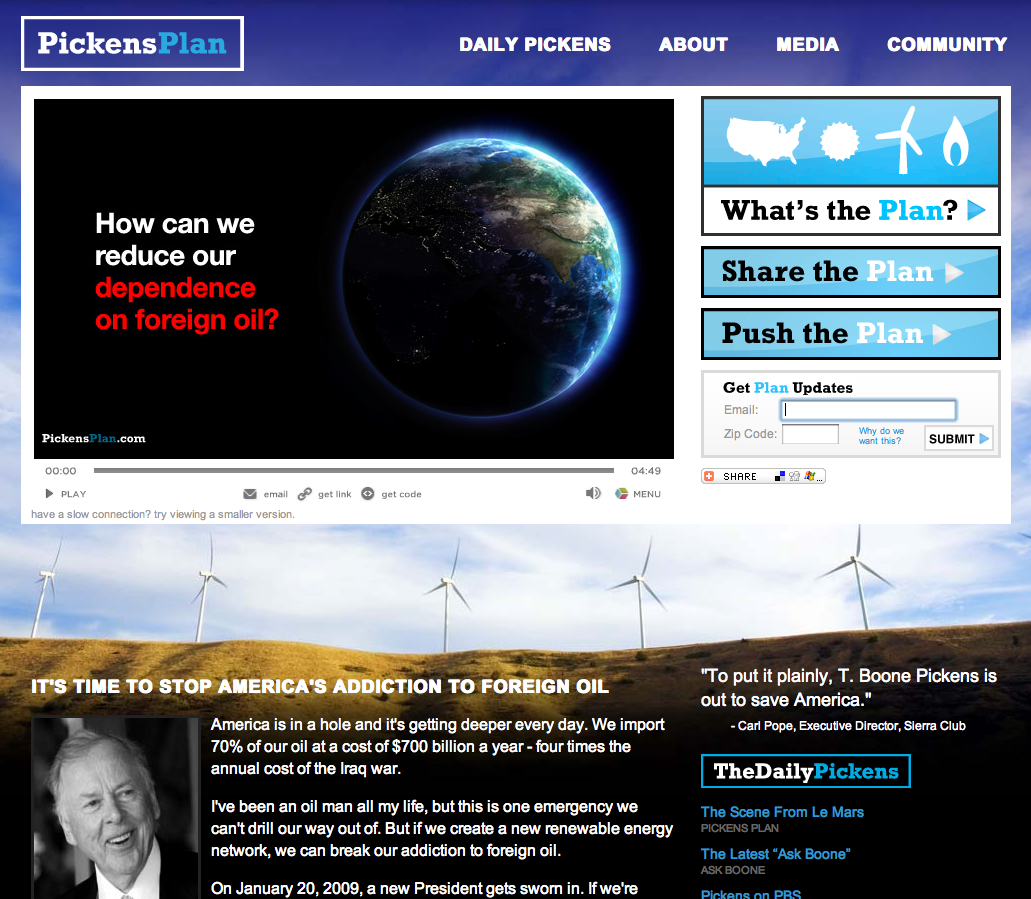
Oilman turned wind wildcatter T. Boone Pickens met with presumptive Republican presidential nominee  John McCain Friday morning to pump his Pickens Plan to wean the United States from imported oil by shifting electricity production to wind farms and using natural gas to fuel cars and trucks. On Sunday, he’ll hook up with Democrat Barack Obama.

The McCain meeting was “good…very relaxed,” Pickens said Friday during a conference call with Senate Majority Leader Harry Reid to promote next week’s National Clean Energy Summit in Las Vegas. “It was a free flowing discussion. I presented the Pickens Plan to him, and he asked a lot of questions about it. He feels like I’m an energy expert, and he wanted information.”

Pickens began a campaign in July to foster a bipartisan approach to reducing the U.S.’s dependence on imported oil, declaring the “the United States is the Saudi Arabia of wind power.” Pickens is building the nation’s largest wind farm in Texas, and he has an interest in a natural gas transportation company.

Though Nevada Democrat Reid remarked, “Who would have thought that T. Boone Pickens and Sen. Harry Reid would have been in same boat pulling the oars same way,” Pickens made clear he’s no latter-day Al Gore.

“I’d open it all up to drilling – OCS, ANWAR,” he said, referring to the outer continental shelf and the Alaskan National Wildlife Refuge – the third rail of environmental politics.

“The one place I differ with Senator McCain is that I said if you’re going to open the OCS, throw in ANWAR too,” Pickens added.

Gore and other greens have questioned the viability and environmental impact of using natural gas for transportation. Pickens, on the other hand, said he isn’t opposed to electric cars. But, he added, “We can’t make a big cut [in oil imports] in ten years without using natural gas as a transportation fuel.  Use it for trucks and let them do what they want with cars.”

For Reid’s part, he said offshore drilling was still on the table, but he’s pushing for Congress to extend the renewable energy investment tax credit that expires at the end of the year. Scores of wind and solar projects – like the massive photovoltaic power plants that California utility PG&E (PCG) unveiled Thursday with SunPower (SPWR) and OptiSolar – are contingent upon Congress renewing the 30% tax credit.

“We have people standing by willing to invest billions of dollars in renewable energy,” Reid said. “The future is not in a commodity that was discovered in the 18th century. The future is sun, wind, geothermal.”

Read Full Post »

photo: Think Global

Norwegian electric carmaker Think Global, once owned by Ford, has tapped Ford executive Richard Canny as its new president and chief operating officer. Canny previously served as president of Ford South America, president of Ford Argentina and managing director of Ford Malaysia.

Think also announced Tuesday that it has hired a veteran of Volvo and Saab, Mikael Ekholm, as executive vice president for engineering and manufacturing. The appointment of the Australian-born Canny comes as the Oslo company ramps up production of the City, it’s Internet-enabled, battery-powered urban runabout.

Green Wombat chatted with Think CEO Jan-Olaf Willums via e-mail Tuesday about the rollout of the City in Europe, its next model – an electric crossover SUV –  and the company’s plans for the United States market. (At Fortune’s Brainstorm Green conference in April, Willums announced the formation of Think North America with marquee venture capital firms Kleiner Perkins Caufield & Byers and Rockport Capital Partners. Other investors in Think include General Electric (GE) )

“The factory completed its planned build of 100 cars for the local market prior to the Norwegian summer shutdown,” says Willums, a longtime entrepreneur and sustainability expert who made his fortune as a co-founder of Norweigan solar company REC Solar. “Of course, like any new vehicle launch we are having occasional new issues arise and teething problems to overcome.”

The cars are now on Oslo roads racking up high mileage under real-world conditions, he adds.

(You can still spot the previous generation of the City, built under Ford (F) ownership, tooling around Oslo, as I did when I visited in 2007 for a story I did on Think.)

Willums says Think will boost production in the second half of the year to support sales in Norway and elswhere in Scandinavia. “During 2009, we are planning a roll out to a number of other European markets with our plans for the major cities (Paris, Amsterdam, Nice, Zurich, Basel) being the priority,” he says. The order of the rollout, he notes, will depend in part on where the government and private sector incentives for electric vehicles are strongest.

To that end, Willums says that the timing of the City’s debut in the United States will be determined in part by state incentives and the policy of the incoming administration in Washington.

Think is in a race to get its cars on the road as the big automakers accelerate their plans for plug-in hybrids and all-electric cars for the mass market. General Motors (GM) is hurrying to bring its Chevy Volt plug-in electric hybrid to showrooms while Toyota (TM) is working on a plug-in version of the Prius. Mitsubishi will supply its i MiEV electric car to California utilities PG&E (PCG) and Southern California Edison (EIX) for fleet testing.

Meanwhile, work continues on the Think Ox, the company’s planned five-seater crossover model. Think showed off a concept version of the electric car at the Geneva auto show earlier this year. The addition of Canny, Willums says, should help the company “grow and mature to a larger scale electric car producer.”

Along with gearing up production of the City, Think has been energizing its marketing efforts, judging by the slick promotional video it created for the Ox below. (For a higher-def version, go here.)

Read Full Post »

“Years ago we came to the conclusion that global warming was a problem, it was an urgent problem and the need for action is now. The problem appears to be worse and more imminent today, and the need to take action sooner and take more significant action is greater than ever before” — PG&E Chairman and CEO Peter Darbee

The head of one of the nation’s largest utilities seemed to be channeling Al Gore on Tuesday when he met with a half-dozen environmental business writers, including Green Wombat, in the PG&E (PCG) boardroom in downtown San Francisco. While a lot of top executives talk green these days, for Darbee green has become the business model, one that represents the future of the utility industry in a carbon-constrained age.

As Katherine Ellison wrote in a feature story on PG&E that appeared in the final issue of Business 2.0 magazine last September, California’s large utilities — including Southern California Edison (EIX) and San Diego Gas & Electric (SRE) — are uniquely positioned to make the transition to renewable energy and profit from green power.

First of all, they have no choice. State regulators have mandated that California’s investor-owned utilities obtain 20 percent of their electricity from renewable sources by 2010 with a 33 percent target by 2020. Regulators have also prohibited the utilities from signing long-term contracts for dirty power – i.e. with the out-of-state coal-fired plants that currently supply 20 percent of California’s electricity. Second, PG&E and other California utilities profit when they sells less energy and thus emit fewer greenhouse gases. That’s because California regulators “decouple” utility profits from sales, setting their rate of return based on things like how well they encourage energy efficiency or promote green power.
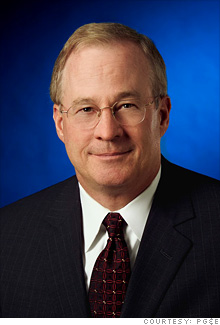
Still, few utility CEOs have made green a corporate crusade like Darbee has since taking the top job in 2005. And the idea of a staid regulated monopoly embracing technological change and collaborating with the likes of Google (GOOG) and electric car company Tesla Motors on green tech initiatives still seems strange, if not slightly suspicious, to some Northern Californians, especially in left-leaning San Francisco where PG&E-bashing is local sport.

In a wide-ranging conversation, Darbee, 54, sketched sketched a future where being a successful utility is less about building big centralized power plants that sit idle until demand spikes and more about data management – tapping diverse sources of energy — from solar, wind and waves to electric cars — and balancing supply and demand through a smart grid that monitors everything from your home appliances to where you plugged in your car. “I love change, I love innovation,” says Darbee, who came to PG&E after a career in telecommunications and investment banking.

Renewable energy

“On renewable energy what we’ve seen is the market is thin,” says Darbee. “Demand just from ourselves is greater than supply in terms of reliable, well-funded companies that can provide the service.”

PG&E so far has signed power purchase agreements with three solar startups — Ausra, BrightSource Energy and Solel — for up to 1.6 gigawatts of electricity to be produced by massive solar power plants. Each company is deploying a different solar thermal technology and uncertainty over whether the billion-dollar solar power stations will ultimately be built has prompted PG&E to consider jumping into the Big Solar game itself.

“We’re looking hard at the question of whether we can get into the business ourselves in order to do solar and other forms of renewables on a larger scale,” Darbee says. “Let’s take some of the work that’s been done around solar thermal and see if we can partner with one of the vendors and own larger solar installations on a farm rather than on a rooftop.”

“I like the idea of bringing the balance sheet of a utility, $35 billion in assets, to bear on this problem,” he adds.

It’s an approach taken by the renewable energy arm of Florida-based utility FPL (FPL), which has applied to build a 250-megawatt solar power plant on the edge of the Mojave Desert in California.

For now, PG&E is placing its biggest green bets on solar and wind. The utility has also signed a 2-megawatt deal with Finavera Renewables for a pilot wave energy project off the Northern California coast. Given the power unleashed by the ocean 24/7, wave energy holds great promise, Darbee noted, but the technology is in its infancy. “How does this technology hold up against the tremendous power of the of the Pacific Ocean?”

Electric cars

Darbee is an auto enthusiast and is especially enthusiastic about electric vehicles and their potential to change the business models of both the utility and car industries. (At Fortune’s recent Brainstorm Green conference, Darbee took Think Global’s all-electric Think City coupe for a spin and participated in panels on solar energy and the electric car.)

California utilities look at electric cars and plug-in hybrids as mobile generators whose batteries can be tapped to supply electricity during peak demand to avoid firing up expensive and carbon-spewing power plants. If thousands of electric cars are charged at night they also offer a possible solution to the conundrum of wind power in California, where the breeze blows most strongly in the late evenings when electricity demand falls, leaving electrons twisting in the wind as it were.

“If these cars are plugged in we would be able to shift the load from wind at night to using wind energy during the day through batteries in the car,” Darbee says.

The car owner, in other words, uses wind power to “fill up” at night and then plugs back into the grid during the day at work so PG&E can tap the battery when temperatures rise and everyone cranks up their air conditioners.

Darbee envisions an electricity auction market emerging when demand spikes. “You might plug your car in and say, ‘I’m available and I’m watching the market and you bid me on the spot-market and I’ll punch in I’m ready to sell at 17 cents a kilowatt-hour,” he says. “PG&E would take all the information into its computers and then as temperatures come up there would be a type of Dutch auction and we start to draw upon the power that is most economical.”

That presents a tremendous data management challenge, of course, as every car would need a unique ID so it can be tracked and the driver appropriately charged or credited wherever the vehicle is plugged in. Which is one reason PG&E is working with Google on vehicle-to-grid technology.

“One of the beneficiaries of really having substantial numbers of plug-in hybrid cars is that the cost for electric utility users could go down,” says Darbee. “We have a lot of plants out there standing by for much of the year, sort of like the Maytag repairman, waiting to be called on for those super peak days. And so it’s a large investment of fixed capital not being utilized.” In other words, more electric and plug-in cars on the road mean fewer fossil-fuel peaking power plants would need to be built. (And to answer a question that always comes up, studies show that California currently has electric generating capacity to charge millions of electric cars.)

Nuclear power

Nuclear power is one of the hotter hot-button issues in the global warming debate. Left for dead following the Three Mile Island and Chernobyl disasters, the nuclear power industry got a new lease on life as proponents pushed its ability to produce huge amounts of carbon-free electricity.

“The most pressing problem that we have in the United States and across the globe is global warming and I think for the United States as a whole, nuclear needs to be on the table to be evaluated,” says Darbee.

That’s unlikely to happen, however in California. The state in the late 1970s banned new nuclear power plant construction until a solution to the disposal of radioactive waste is found. PG&E operates the Diablo Canyon nuclear plant, a project that was mired in controversy for years in the ’70s as the anti-nuke movement protested its location near several earthquake faults.

“It’s a treasure for the state of California – It’s producing electricity at about 4 cents a kilowatt hour,” Darbee says of Diablo Canyon. “I have concerns about the lack of consensus in California around nuclear and therefore even if the California Energy Commission said, `Okay, we feel nuclear should play a role,’ I’m not sure we ought to move ahead. I’d rather push on energy efficiency and renewables in California.”

The utility industry

No surprise that Darbee’s peers among coal-dependent utilities haven’t quite embraced the green way. “I spent Saturday in Chicago meeting with utility executives from around the country and we’re trying to see if we can come to consensus on this very issue,” he says diplomatically. “There’s a genuine concern on the part of the industry about this issue but there are undoubtedly different views about how to proceed and what time frames to proceed on.”

For Darbee one of the keys to reducing utility carbon emissions is not so much green technology as green policy that replicates the California approach of decoupling utility profits from sales. “If you’re a utility CEO you’ve got to deliver earnings per share and you’ve got to grow them,” he says. “But if selling less energy is contradictory to that you’re not going to get a lot of performance on energy efficiency out of utilities.”

“This is a war,” Darbee adds, “In fact, some people describe [global warming] as the greatest challenge mankind has ever faced — therefore what we ought to do is look at what are the most cost-effective solutions.”

Read Full Post »

PASADENA, Calif. — Green tech guru Vinod Khosla probably didn’t win many friends among the chardonnay-and-carbon-offsets crowd Tuesday during an appearance at Fortune’s Brainstorm Green conference, where he castigated well-heeled enviros for thinking that driving a Toyota (TM) Prius and other “feel-good solutions” will save the planet

“The Prius is more greenwash than green,” the venture capitalist said on stage during a conversation with Fortune senior writer Adam Lashinsky. “Priuses sell a lot but so do Gucci bags. The hybridization of cars is the most expensive way to reduce carbon.”

“We do a lot of feel-good things like put solar panels up in foggy San Francisco so a few middle-class and upper-middle-class people feel good about themselves,” he added.

Ouch.

If Khosla was typically on the offensive, he’s been on the defensive a bit of late over early investments in corn-based biofuels. Alarm has escalated over the past year about the impact of taking food crops out of production to grow a gasoline substitute.

After Lashinsky read a recent quote from the Indian finance minister – “food-based biofuels are a crime against humanity,” Khosla agreed that “food-based biofuels are the wrong way to go. We have much better alternatives.” He has long championed cellulosic biofuels that can be produced from non-food plants like switchgrass or from wood waste and characterized his ethanol investments as a way to get the lay of the biofuels landscape.

Never shy about stirring the pot, he declared that, “People’s views on green are obsolete.” The way to fight climate, according to Khosla, is not to focus on putting solar panels on roofs or building electric cars but increasing the efficiency of things like engines and the operations of mainstream businesses.

Worried about the high price of oil? Don’t. “My forecast for 2030 is that price of oil will be below $25 a barrel,” Khosla said. No matter, he added, because by then biofuels will be cheaper.

So stick that in your Prius.

Read Full Post »

« Newer Posts

Design a site like this with WordPress.com
Get started