Feeds:
Posts
Comments

photo: Tessera Solar

I wrote this story for Reuters, where it first appeared:

The California Energy Commission has temporarily withdrawn approval of a controversial solar power plant by NTR’s Tessera Solar after opponents protested that the 663.5-megawatt Calico project had been improperly licensed.

California aims to get a third of its electricity from renewable energy by 2020 and the $2 billion plant is an important step toward that goal.

An attorney for California Unions for Reliable Energy had argued in a November 11 letter that the energy commission, which licenses large-scale solar thermal power plants, had not filed required written findings about Calico environmental consequences when it approved the project on October 28.

The order was issued late on Friday and the commission will take up the decision again on December 1, but the Sierra Club told Reuters on Monday that the environmental group may mount a legal challenge to Calico due to its impact on the imperiled desert tortoise, fringe-toed lizard and other wildlife.

“We are considering litigation,” Gloria D. Smith, a senior staff attorney with the Sierra Club in San Francisco, said in an email.

California Unions for Reliable Energy also is contemplating a legal challenge to the Calico decision on environmental grounds, said Marc D. Joseph, an attorney for the group.

Calico is one of seven huge solar thermal power plants that the energy commission has licensed over the past three months so developers can begin construction by the end of the year to qualify for a federal cash grant that covers 30 percent of a project’s cost.

Tessera has signed a contract to supply electricity generated by Calico to utility Edison International’s Southern California Edison, which is counting on the project to help it meet its renewable energy targets.

On Friday, Karen Douglas, the energy commission’s chairman, issued an order withdrawing the date approval would go into effect for Calico.

Douglas wrote that the decision did not mean that the commission agreed with the California Unions for Reliable Energy that the commission’s action had been improper.

Sean Gallagher, Tessera’s vice president of market strategy and regulatory affairs, described the issue as a procedural one that the commission could easily correct.

“There were some clerical errors in the way the documents were issued,” he said. “They are not going to address the substance of the decision.”

The company plans to deploy 26,540 solar dishes called Suncatchers at Calico. Resembling giant mirrored satellite receivers, each Suncatcher is 40 feet high and 38 feet wide and generates electricity by focusing the sun on a Stirling engine to heat hydrogen gas. As the gas expands, it drives pistons to generate electricity.

The commission approved Calico only after Tessera agreed to reduce its footprint nearly in half to 4,613 acres in Southern California’s Mojave Desert. The revised configuration would reduce the impact on the desert tortoise by 79 percent, the commission said.

But in an October 20 letter to the commission, Smith argued that even a downsized project would prove devastating to protected wildlife.

You can read the rest of the story here.
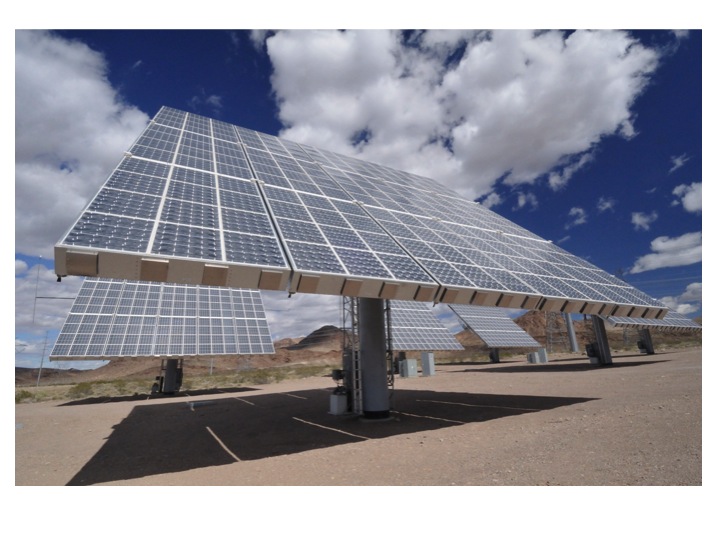
photo: Amonix

I wrote this story for Reuters, where it first appeared:

As solar panel prices have plummeted over the past year, photovoltaic power plants have become a more attractive option for utilities under pressure to meet renewable energy targets.

Case in point: Late last week utility Southern California Edison announced it had signed contracts for 239.5 megawatts of electricity to be generated by 20 small-scale photovoltaic farms.

“Photovoltaics are definitely more cost competitive than they were just a couple of years ago,” said Mike Marelli, director of contracts for renewable and alternative power at Southern California Edison. “We’re seeing just a wild response to our solicitations for projects.”

The utility has inked deals in past years for huge solar thermal power plants that can generate 500 megawatts or more. But those projects — which focus large arrays of mirrors on liquid-filled boilers to generate steam that drives electricity-generating turbines –  need vast stretches of desert land.  Transmission lines must often be built or upgraded to carry the power to coastal cities.

The photovoltaic farms, ranging in size from five megawatts to 20 megawatts, are designed to be built near existing transmission lines or substations and plugged into the grid. And in California, for instance, photovoltaic power plants do not undergo the extensive environmental review required of big solar thermal projects, meaning they can be built much more quickly.

In the power purchase agreements reached last week, Southern California Edison also for the first time placed bets on a technology known as concentrating photovoltaics – -CPV — signing contracts for 28.5 megawatts of electricity to be generated by four projects using technology supplied by Amonix,  a Seal Beach, Calif., company.

Resembling supersized solar panels, each Amonix CPV power generator is 77 feet by 50 feet and produces 72 kilowatts of electricity by using plastic lenses to focus the sun on tiny but highly efficient solar cells.

The panels are more efficient than conventional photovoltaic modules but high production costs, technological challenges and other hurdles had kept CPV on the sidelines with just a few small installations operating around the world.

You can read the rest of the story here.
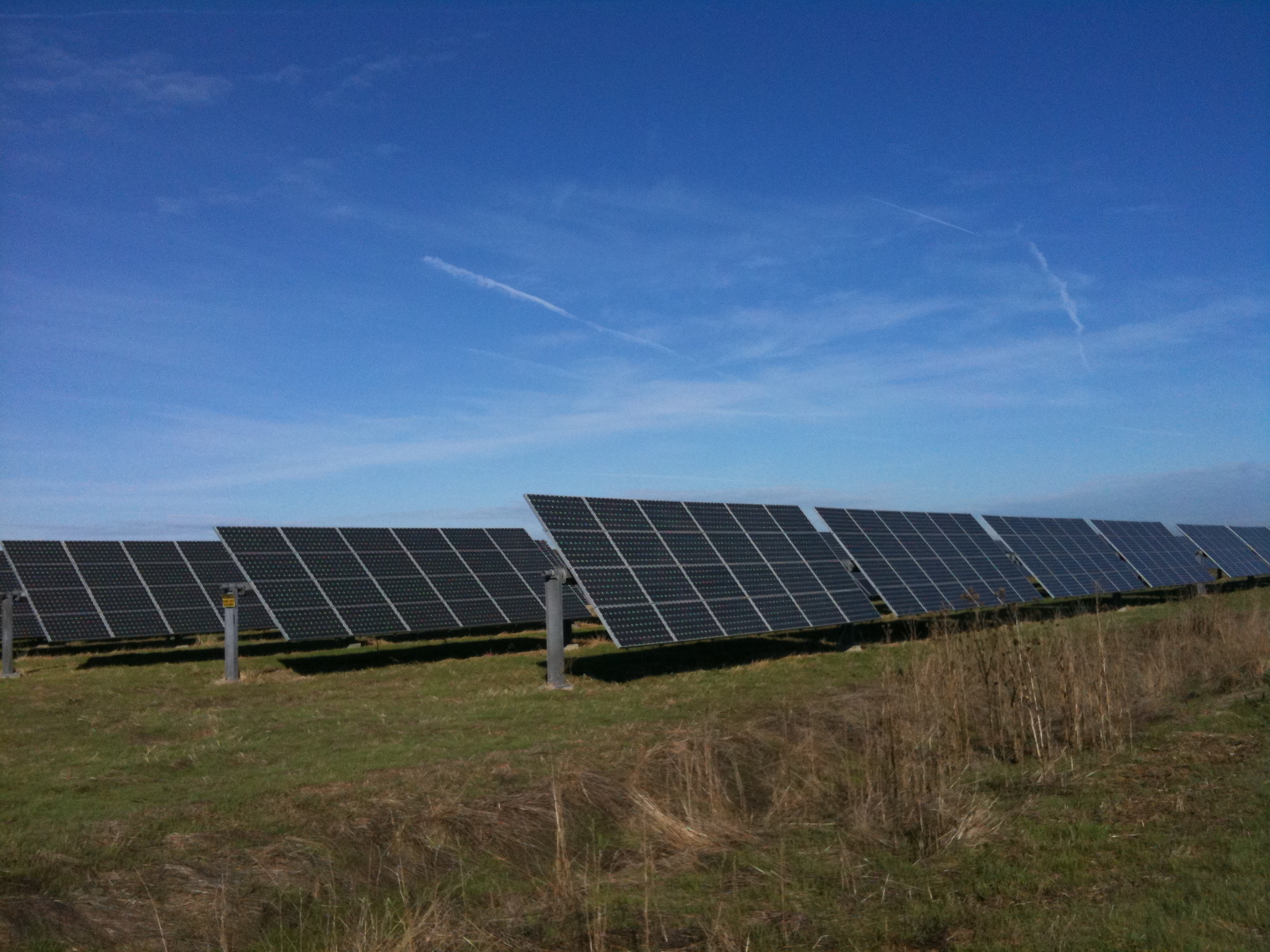
photo: Todd Woody

I made my debut on Reuters on Thursday with a scoop on one of China’s biggest solar companies forming a joint venture with California’s SolarReserve to build photovoltaic power plants in the United States:

A subsidiary of China’s GCL-Poly Energy Holdings Ltd has formed a joint venture with SolarReserve, a California developer, to build photovoltaic power plants in the United States.

The deal, to be announced Thursday, marks a major bid by a Chinese solar company to enter a market dominated by European and U.S. firms. Last week, GCL obtained a commitment from Wells Fargo to provide $100 million in financing for its solar projects.

GCL is China’s largest manufacturer of polysilicon and wafers used to make photovoltaic modules. The company also builds conventional power plants in China along with wind and solar projects. The state-owned China Investment Corporation owns a 20 percent stake in GCL.

“We value the U.S. market as one of the most important markets for us and we wanted to get into the development side of the game,” Yumin Liu, president of GCL Solar Energy Inc, the company’s San Francisco-based subsidiary, said in an interview.

“To support the continued growth of the company we have to have a portfolio for years to come. The only way to do it economically is to secure a pipeline of projects.”

GCL will acquire a 50 percent share of SolarReserve’s 1,100-megawatt project pipeline in photovoltaics for an undisclosed price.

SolarReserve, based in Santa Monica, California, has focused on developing large solar thermal power plants using molten-salt technology licensed from United Technologies Corporation. This type of plant is not part of the joint venture.

Kevin Smith, SolarReserve’s chief executive, said the startup last year began to acquire control of 40 sites throughout the desert Southwest that would be suitable for smaller-scale photovoltaic-power projects. The company hired Macquarie Capital to search for a partner to share development costs.

“The U.S. market is a hugely competitive market on pricing, given the current policy structures and limited federal government support for renewable energy,” Smith said. “Partnering with a low-cost Chinese company gives us insight on how to maintain competitiveness in these markets and we will learn a trick or two.”

He said that SolarReserve will handle land acquisition, permitting and negotiating power purchase agreements with utilities while GCL will oversee procurement of solar panels and construction. Work on 400 megawatts’ worth of projects should begin in 2011.

You can read the rest of the story here.
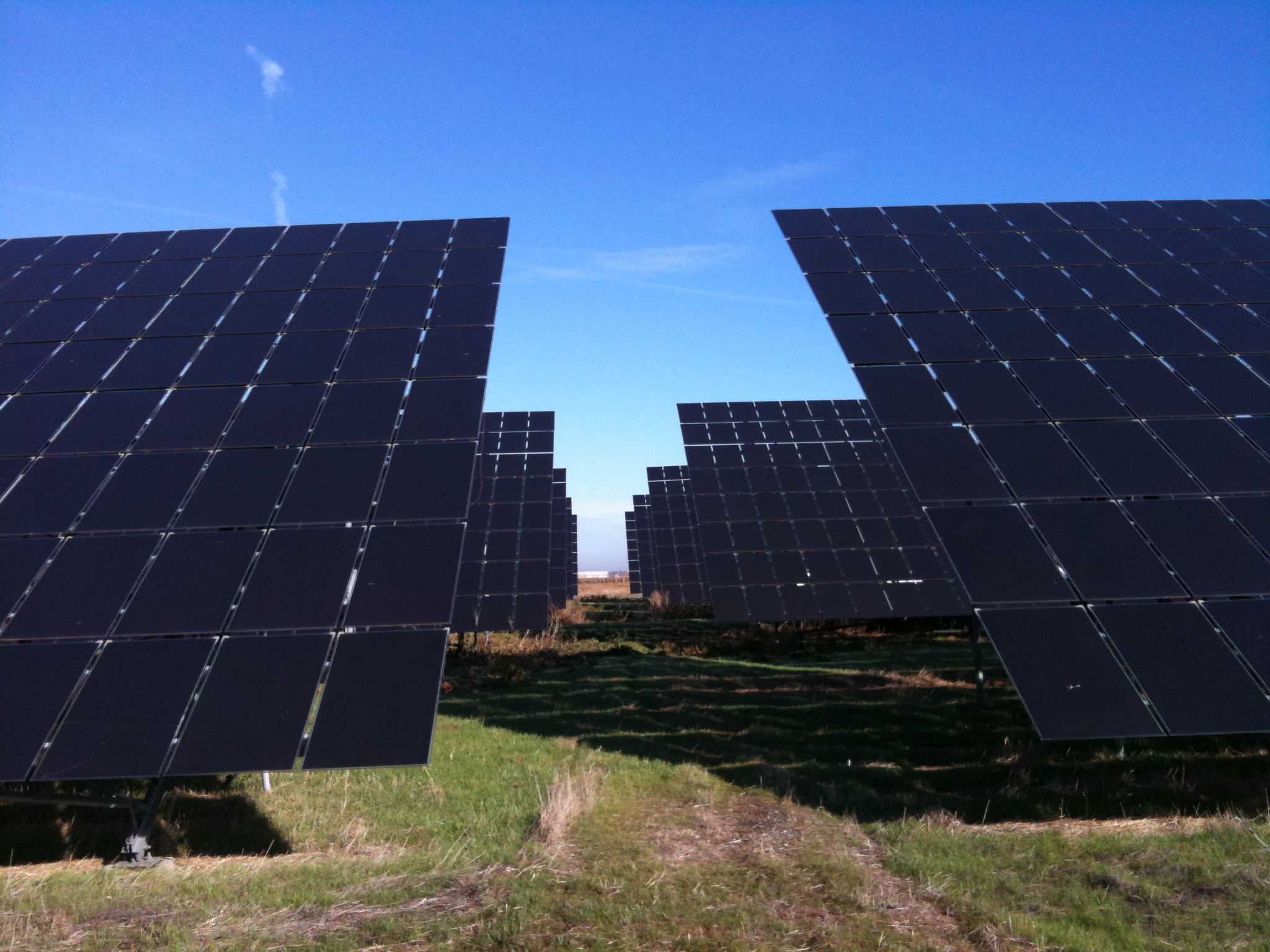
photo: Todd Woody

In The New York Times on Wednesday, I follow up my story on community solar power plants:

In an article in the special Energy section of The New York Times on Wednesday, I write about a developer who wants to sell “garden plots” in a 15-megawatt photovoltaic farm in Davis, Calif., so that residents can go solar without having to cut down trees in the city’s urban forest to install rooftop arrays.

While solar power plants seem like a 21st-century phenomenon, the Davis project dates from 1987, when the utility Pacific Gas and Electric built P.V.U.S.A. — Photovoltaics for Utility Scale Applications –- to test various nascent technologies.

Matt Cheney, a veteran renewable financier in San Francisco and founder of CleanPath Ventures, eventually acquired P.V.U.S.A. and received the city’s blessing to expand the power plant from around one megawatt to 15 megawatts.

Last week, I took a took a tour of the solar farm, a veritable outdoor Smithsonian of solar power displaying a dozen photovoltaic technologies. Some have become common sights on rooftops and at power plants while others barely left the laboratory before failing and bear the name of start-ups long gone.

Built on an abandoned wastewater treatment plant and surrounded by farmland on Davis’s outskirts, P.V.U.S.A. features two-story-high thin-film solar panel arrays that were on the technological cutting edge in their day but only became commercially viable in recent years.

Strips of early solar tiles designed to serve as power-generating roofing material are laid out on a wooden platform.

And behind rows of more conventional solar panels lies a field of what looks like photovoltaic sunflowers. Pods of 25 small mirrors designed to concentrate the sun on a high-efficiency photovoltaic cell suspended on a stamenlike strut.

“They installed them back in 2004 and 2005, and two months into the installation, it stopped working and the company didn’t want to deal with them anymore,” said Dang H. Dang, P.V.U.S.A.’s on-site manager, as jackrabbits darted among the arrays.

You can read the rest of the story here.

photo: Todd Woody

In the New York Times on Wednesday, I follow up my story on solar power plants and desert tortoises:

In an article in The New York Times on Wednesday, I write about how the fortunes of big solar power plants in the desert Southwest can hinge on the way developers handle imperiled wildlife in the path of their projects.

The protected desert tortoise has become the totemic animal for environmentalists fighting to ensure that the huge solar farms don’t eliminate essential habitat for the long-lived reptile and other wildlife, like the bighorn sheep and flat-tailed horned lizard.

The tortoise has been in decline for decades, and the rampant changing of the desert — including the development of casinos, strip malls and subdivisions, and designation of off-road recreational vehicle areas — took its toll long before construction began late last month on the Ivanpah solar power plant, the first large-scale solar thermal project to be break ground in the United States in 20 years.

Still, the solar farms will industrialize the desert on an unparalleled scale. The seven projects already licensed in California will cover 42 square miles with immense mirror arrays.

But as much as some biologists fear that the need to generate electricity without carbon dioxide emissions will harm the desert tortoise, the projects offer an opportunity for intensive research on the critter. That’s because regulations require solar developers to monitor tortoises for three years after they are relocated.

“Certainly the monitoring of the translocated desert tortoises will yield useful research information on the ability of desert tortoises to adapt to new surroundings,” Larry LaPré, a wildlife biologist with the United States Bureau of Land Management, said in an e-mail.

Such data is critical. While environmental regulations and efforts by developers like BrightSource Energy, the builder of the Ivanpah project in Southern California, are tailored to remove the tortoise from harm’s way during construction, the survival of the animals depends on how well they adjust to their new homes.

The track record on tortoise relocations is not encouraging. In 2008, more than 700 tortoises were moved from the Fort Irwin military installation in Southern California so the base could expand. Nearly half the relocated tortoises died within two years from, among other things, predation by coyotes and ravens, according to state records.

Biologists I met recently at the Ivanpah power plant site were far more optimistic about the relocation of 23 tortoises found in the project’s first phase.

“The tortoises at Fort Irwin were moved a lot further than these, and there also was a big problem with predators there,” Peter Woodman, a biologist who worked on the military project, explained as he stood by a holding pen where the Ivanpah tortoises will live until they are moved next spring.

You can read the rest of the story here.

photo: Todd Woody

In The New York Times special Energy report, I write about how the success of large-scale solar power plants being built in the desert Southwest depends on how developers deal with the imperiled desert tortoise and other wildlife:

NIPTON, Calif. — On the construction site of the $2 billion Ivanpah solar power plant here, burly laborers slowly walk around their trucks, dropping to their knees to peer underneath before turning the ignition. Hanging on each rearview mirror is a placard warning workers to “Look under your car for desert tortoise before you drive away!”

Road graders and backhoes crawl along at 10 miles per hour, led by biologists wearing green hard hats who scan for tortoises in a landscape studded with creosote bushes. “Nobody is allowed on the site without a biologist to escort them,” said Mercy Vaughn, the lead biologist for BrightSource Energy, the Oakland, Calif., company that is building the 370-megawatt power plant, the first large-scale solar thermal project to break ground in the United States in two decades.

The imperiled desert tortoise sets the pace here in the desert Southwest, and how developers deal with a host of protected plants and animals has become crucial to getting vast renewable energy projects built. That means hiring scores of biologists, managing the relocation of species and acquiring thousands of acres of replacement habitat.

With seven large solar power plants already approved that would cover 42 square miles of the California desert with huge mirror arrays, solar dishes and towers, environmentalists and regulators have increasingly become concerned about the impact that industrialization of the desert will have on fragile landscapes.

“If wildlife issues are not at the top of a developer’s list, they should be,” said Karen Douglas, the chairwoman of the California Energy Commission, which licenses large solar thermal power plants. “The footprint of these solar projects is unprecedented, and obviously they can impact a range of species.”

Developers underestimate the importance of desert animals at their peril.

The California Energy Commission in October, for instance, approved Tessera Solar’s huge Calico project in Southern California only after the company agreed to slash the project nearly in half to avoid having to relocate most of the 104 tortoises found on the site this year. And the commission’s staff has indicated that it is unlikely to recommend the licensing of Solar Millennium’s 250-megawatt Ridgecrest power plant because of its impact on the desert tortoise and the Mohave ground squirrel.

Late last month, the Quechan Indian Tribe sued the federal government over its approval of a second Tessera power plant, contending that the 709-megawatt Imperial Valley Solar Project would harm the flat-tailed horned lizard, an animal proposed for endangered species protection. It is part of the tribe’s creation story.

As the first big solar thermal power project to undergo licensing in 20 years and the first to begin construction, Ivanpah is being watched closely by environmentalists, regulators and competitors over how it handles wildlife challenges.

BrightSource, which is backed by Google, Morgan Stanley and several oil companies, has signed contracts to deliver 2,610 megawatts of electricity to utilities in the state. It took three years for the project to be licensed by the California Energy Commission as BrightSource and environmental groups tussled over the power plant’s impact on the desert tortoise, bighorn sheep and other species that roam the 3,582-acre site in the Mojave Desert.

BrightSource shrank Ivanpah by 12 percent, reducing the number of desert tortoises that would have to be relocated and avoiding an area of rare plants. The portion of the project that would most affect wildlife was cut by 23 percent.

The energy commission in September licensed Ivanpah over the objections of the Sierra Club, the Center for Biological Diversity and other groups that argued it would eliminate high-quality habitat for the tortoise.

“If you put a project in the wrong place and even do some things to reduce its impact, it’s still bad,” said Lisa Belenky, a senior lawyer with the Center for Biological Diversity in San Francisco. “We’re really trying to get companies and regulators focused on lands that have already been disturbed.”

The Ivanpah site is just over the Nevada border, about 40 miles southwest of Las Vegas. The neon glow of two hulking casinos looms in the distance. An incongruous patch of luminescent green marks an 18-hole golf course adjacent to the site.

“Everyone wants to do the right thing, but everyone is concerned because there are so many precedents that are being set since we’re the first ones through the hoop,” Todd Stewart, the Ivanpah project manager, said recently as he stood amid the desert scrub as biologists tracked a tortoise that had been outfitted with a radio transmitter. The orange and brown tortoise, which the biologists said was probably 30 to 40 years old, was about the size of a soccer ball.

By 2014, nearly six square miles of government-owned desert surrounding Mr. Stewart will be covered with 347,000 mirrors, each the dimension of a billboard. The mirrors will focus the sun on a three 459-foot towers topped by water-filled boilers to create steam that will drive turbines to generate electricity.

BrightSource executives take pains to point out that they designed Ivanpah to minimize its disturbance of the desert. Vegetation, for example, will be trimmed rather than plowed as equipment is installed.

Following conditions of its license, the company fielded an army of more than 50 biologists to capture and radio-tag tortoises in the 900-acre first phase of the project and ensure none were harmed as construction began.

You can read the rest of the story here.
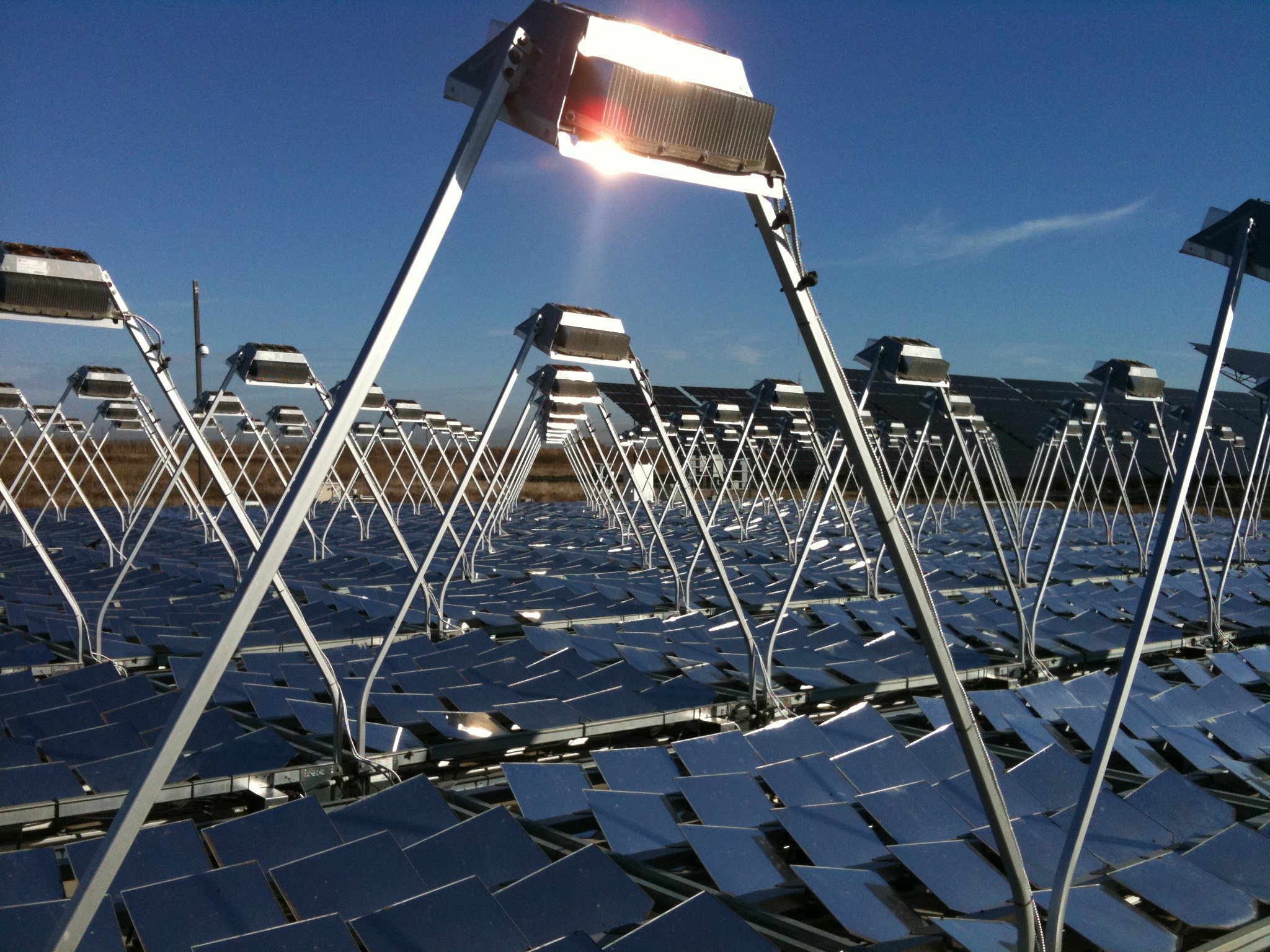
photo: Todd Woody

In The New York Times special Energy report, I write about how community solar power plants offer residents a chance to own photovoltaic arrays without putting panels on their roofs — or cutting down trees:

DAVIS, Calif. — In this environmentally conscious college town, thousands of bicyclists commute each day through a carefully cultivated urban forest whose canopy shields riders and their homes from the harsh sun of this state’s Central Valley.

The intensity of that sunshine also makes Davis an attractive place to generate clean green energy from rooftop solar panels. And therein lies a conundrum. Tapping the power of the sun can also mean cutting down some of those trees.

“Davis has spent many, many decades getting trees planted and improving energy efficiency by virtue of shade trees that cool houses,” said Mitch Sears, the city’s sustainability program manager. “But if you want solar energy, it’s not rocket science that you need the sun.”

Now a San Francisco company, CleanPath Ventures, is promoting a solution to allow homeowners to keep their trees and go solar at the same time. CleanPath plans to expand its existing solar farm on the city’s outskirts and then sell “garden plots” to homeowners who would own the electricity generated by their patch of photovoltaic panels. Apartment dwellers and other residents whose homes are not suitable for rooftop solar arrays would also be able to own a piece of the power plant.

“If you moved down the block, you’d take the electricity production with you just like if you make an investment in a community garden, wherever you live you’ll benefit from what’s grown in the garden,” said Matt Cheney, a longtime financier of renewable energy and the founder of CleanPath Ventures.

Community solar power plants are seen as a way to expand the availability of renewable energy while taking advantage of the economies of scale that result from installing thousands of solar panels in a central location rather than scattered on thousands of individual homes.

“To get the energy benefits of solar there’s no reason to drill holes in a roof,” said Jim Burke, manager of the SolarShares program for the Sacramento Municipal Utility District, which serves the region surrounding the state capital.

The utility, known as SMUD, started SolarShares, one of the nation’s first community solar-power-plant programs, in July 2008 when it offered customers the opportunity to buy electricity from a 1.2-megawatt photovoltaic power plant built on a turkey farm southeast of Sacramento.

“People love solar, but we required you to own a roof” and that it face a certain way, said Mr. Burke. “Multifamily buildings were usually excluded and renters were excluded.”

Then there was the tree issue.

“SMUD has planted hundreds of thousands of trees to shade rooftops and then with solar we’re saying cut them down,” he noted.

The SolarShares program gives customers the option of buying power from a half-kilowatt or a one-kilowatt portion of the solar farm. For instance, for a household that uses 2,158 kilowatt-hours a year, a one-kilowatt solar system would cover about 81 percent of their electricity consumption and cost $21.50 a month. However, the household would receive a monthly credit for the solar electricity produced that would average $13.96.

The pilot SolarShares program sold out within six months and there’s now a waiting list, according to Mr. Burke.

He said SMUD was planning a one-megawatt community solar-power plant that would be built next year and was exploring the placement of up to four megawatts of solar farms on highway rights-of-way owned by the state transportation agency.

Like a community solar farm in St. George, Utah, and a proposed solar garden in Falmouth, Mass., the CleanPath project in Davis would offer residents the chance to buy a physical part of a solar farm.

You can read the rest of the story here.
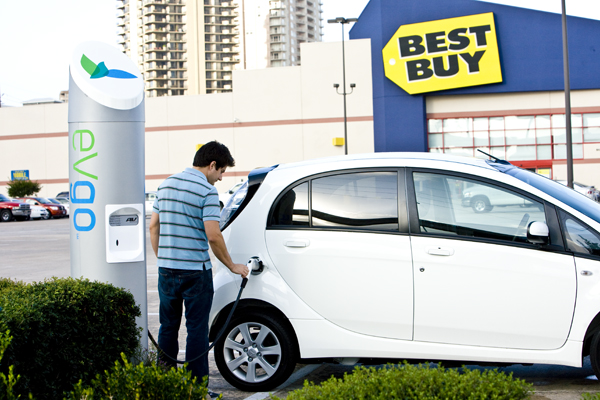
photo: eVgo

I wrote this story for Grist, where it first appeared.

Houston, we have an opportunity.

The nation’s oil capital is making a bid to become the first city to deploy an electric car infrastructure. NRG Energy, a power provider, announced Thursday that it will finance the installation of personal and public charging stations throughout an auto-dependent metropolis synonymous with sprawl.

“The service station of the future is your garage,” David Crane, NRG’s chief executive, said on a conference call Thursday morning. “It’s our strongly held view that if given a choice, Americans want to make a difference. They want to make a difference with respect to the environment and with respect to national security.”

Called eVgo, the $10 million network will feature 220-240 volt Level 2 chargers for Houstonians’ garages that will charge electric cars like the Nissan Leaf overnight.

“Freedom Stations” and “Convenience Stations” will be dispersed around the city and offer Level 2 charging as well as fast-charging that lets drivers top off their batteries in about 10 minutes to get a 30-mile boost.

NRG, working with electric infrastructure company AeroVironment and General Electric, plans to install 50 Freedom Stations by the middle of next year, building them at shopping centers and along freeways in a 25-mile radius from downtown Houston.

Charging posts will be installed at Walgreens drugstores, at Best Buy outlets, and at H-E-B, a chain of Texas supermarkets.

“Our goal is that anywhere in Harris County, Texas, you’ll be within five miles of a charger,” said Crane, who added that NRG’s plan was to eventually deploy around 100 Level 2 and fast-charging stations.

EVgo will offer three-year contracts with monthly subscription packages ranging from $49 to $89. For $49, drivers get a home charger. The more expensive subscriptions offer home chargers and unlimited access to the entire charging network.

Crane said Houston’s suburban sprawl and maze of highways actually makes the city more suitable for an electric car infrastructure than greener-than-thou West Coast cities.

“The advantage a city like Houston has over places like San Francisco and New York City is that the great majority of people have garages,” he noted. “And people understand energy down here.”

He said the goal is to sign up 1,000 eVgo customers during the project’s first year.

Four electricity providers have joined the eVgo coalition, including TXU Energy and Reliant Energy (which is owned by NRG).

While NRG operates fossil fuel-fired power plants, it has also made investments in renewable energy, including taking a $300 million equity stake in BrightSource Energy’s 370-megawatt Ivanpah solar project, now under construction in the Southern California Desert. NRG also has a joint venture with solar power plant developer eSolar to build solar farms in the desert Southwest.

Still, a reporter for the Dallas Morning News asked Crane, “Why are you starting this in Houston? Are you taunting the oil industry?”

Crane chuckled and then said, “Let me state for the record we’re not taunting the oil industry.”

But making a buck at Big Oil’s expense is another matter.

photo: Todd Woody

I wrote this story for Grist, where it first appeared.

The landscape of Silicon Valley is littered with technology pioneers who were a little too ahead of their time and failed to cash in, either because the market wasn’t ready or because competitors swooped in and commercialized their breakthroughs.

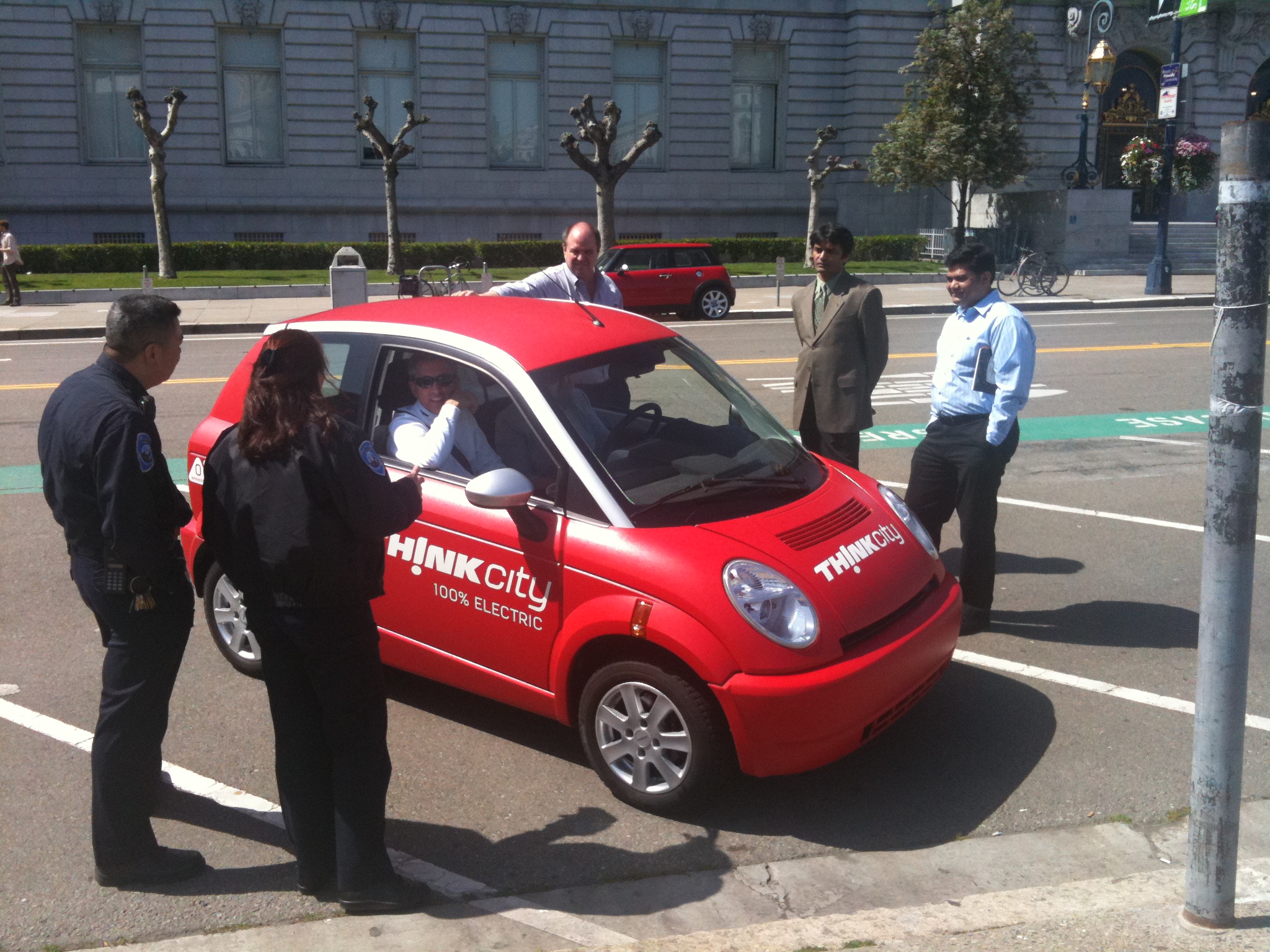
As the first mass-market electric cars hit showrooms, the question is whether Think, the Norwegian electric automaker, has now been early to the party twice.

Back in the late 1990s, Ford acquired a majority share of Think, invested $100 million, and produced a two-seater urban runabout called the City. The car was sold in Norway and was a familiar sight on San Francisco Bay Area streets at the turn of the century, where it was leased to residents as part of a pilot project that allowed drivers to charge up at Bay Area Rapid Transit stations. (Among those who drove a Think: Google co-founder Sergey Brin.)

We all know the rest of the story: Low oil prices and California’s abandonment of its zero-emission mandate killed off the electric car. Ford ditched Think, which eventually filed for bankruptcy.

In 2006, a Norwegian professor and entrepreneur named Jan-Olaf Willums and a group of investors revived Think to manufacture a next-generation battery-powered City. When I visited Think in Oslo in 2007, Willums promoted a vision of the electric car as not an isolated hunk of metal (or plastic, in the City’s case) but as an internet-enabled transportation service that interacted with the power grid — and you — through your mobile phone.

“We want to sell mobility,” Willums told me. “We don’t want to sell a thing called the Think.”

Production of the new City began in late 2008, and there are now some 2,500 of the highway-ready cars on the road in Norway and elsewhere in Europe.

But as Think prepares to enter the United States market — the company plans to assemble the City in Indiana — it’s searching for space in a parking lot crowded with competitors which have embraced, to varying degrees, Willums’ vision.

When I test-drove the Chevrolet Volt in May, General Motors executives proudly showed how you could check on the car’s battery charger and communicate with the vehicle through your iPhone or Blackberry. The Nissan guy riding shotgun in the electric Leaf I drove in July did the same.

So how does Think compete against those deep-pocketed competitors offering four-and-five-seat sedans?

I recently talked to Barry Engle, Think’s newest chief executive, about the company’s strategy now that the electric auto age has at last arrived. (Like his immediate predecessor, Richard Canny, Engle was a longtime Ford executive.)

“This is a company that for many years was this lone voice in the wilderness trying to convince people that they had a better idea,” says Engle. “I don’t know if the world was quite ready for what we have. But wow, a lot has changed here over the past year or so.”

Engle stresses that Think is not out to compete with GM and Nissan in the U.S., but will focus on a niche market — urbanites who want a small, easily maneuverable electric car.

“We don’t delude ourselves that we are a full-fledged manufacturer with a full line of products,” he says. “We’re uniquely positioned in the marketplace as few have expressed interest in what we do well, a city car.”

Such cars are popular in Europe’s densely packed cities, where electric cars are exempt from high registration and congestion charges. Then there’s a huge potential market in Asia’s megacities.

And if American city-dwellers start to downsize their rides and go electric at the same time, then Think will have arrived right on time.

I wrote this story for Grist, where it first appeared.

Four months ago, General Electric fired up the imaginations of would-be entrepreneurs tooling away in garages everywhere when it offered up $200 million as part of an “Ecomagination Challenge” to crowdsource smart grid and renewable energy ideas.

On Tuesday, the global conglomerate announced the first set of winners, a dozen startups that collectively will secure $55 million in investment from GE and two venture firms collaborating with the company, Foundation Capital and RockPort Capital Partners.

The winners hail from everywhere from Silicon Valley to Sweden. Most are developing technology for the smart grid.

Others are focused on smart buildings. ClimateWell of Stockholm is making heating and cooling systems designed to operate not on electricity, but on solar-heated hot water. Soladigm of Milpitas, Calif., meanwhile, manufactures windows that incorporate electronics that allow them to darken — keeping buildings cool during sunny summer months. In winter, they lighten to trap the sun’s heat.

The payoff for these companies goes far beyond the cash. Given GE’s involvement in just about every aspect of the electricity distribution system as well as its smart home efforts, the global behemoth is a huge market for their services.

“We are working with these new partners to accelerate the development and deployment of these concepts on a scale that will help drive a cleaner, more efficient, and economically viable grid,” Jeff Immelt, GE’s chief executive, said in a statement. “The partnerships formed through this Challenge represent a new way of doing business at GE as we continue to expand our broad digital energy offering in the growing power grid market.”

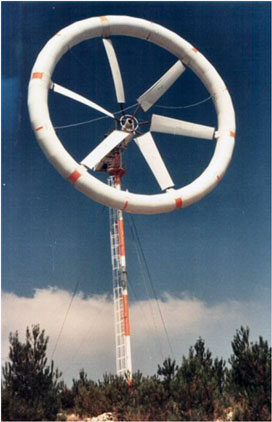
GE also named five Innovation Challenge award winners that will each score $100,000. Among the most intriguing startups is Capstone Metering, a Texas company developing a smart water meter, and WinFlex of Israel, which is developing an inflatable wind turbine.

GE and its venture capital partners received nearly 4,000 entries in the contest.

“This is perhaps the largest participation in an open innovation challenge a company has ever generated,” GE executive Beth Comstock said on a conference call Tuesday.

Another executive noted that the company received many ideas from individuals, which will prove valuable to GE.

“It gives us insight into how consumers are thinking about energy and energy efficiency,” he noted.

Design a site like this with WordPress.com
Get started