Feeds:
Posts
Comments

brightsource-ivanpah.png

When President Bush signed the energy bill into law last month, much was made of the legislation’s mandate that automakers dramatically boost the fuel efficiency of their fleets. Less noticed was that the bill dropped a provision that would have extended the solar investment tax credit — a measure viewed as essential to transforming solar energy from a niche business into a multi billion-dollar industry that can generate gigawatts of greenhouse gas-free electricity.

The timing couldn’t be worse. With the current solar credit set to sunset, as it were, at the end of 2008, Big Solar is at at a tipping point: Utilities and renewable energy companies are in the midst of negotiating massive megawatt power purchase deals whose financing depends on the 30 percent investment tax credit, or ITC.

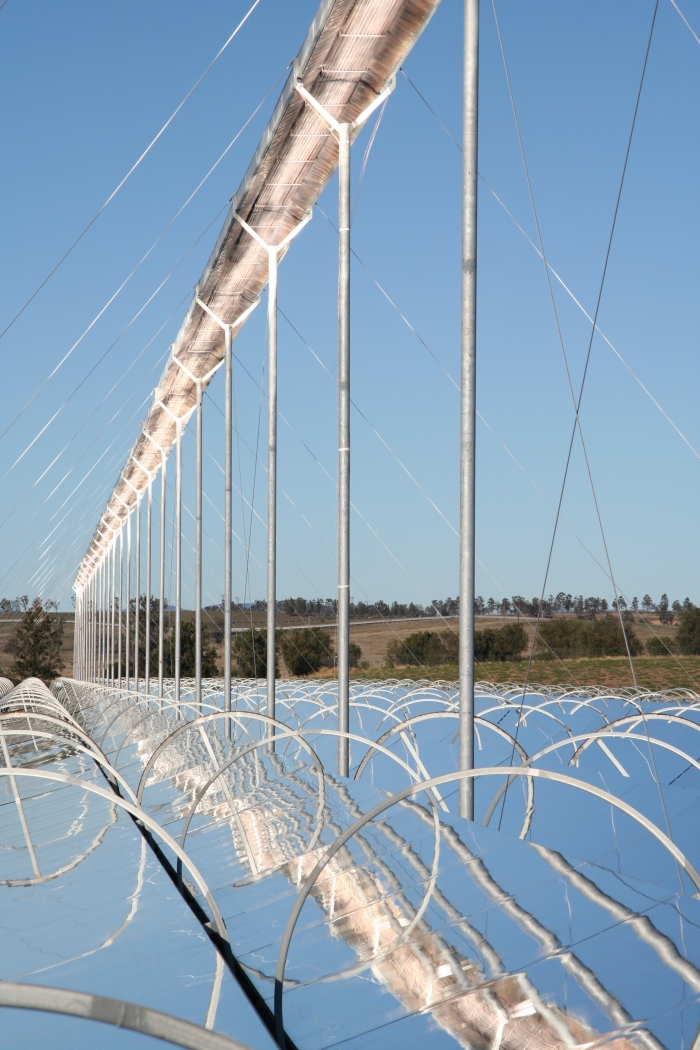
“I think there is a major concern that this will stall all the beneficiaries of the ITC,” said Joshua Bar-Lev, vice president for regulatory affairs for solar power plant developer BrightSource Energy. The Oakland, Calif.-based startup is negotiating a 500-megawatt agreement with California utility PG&E and is proceeding with plans to build a 400-megawatt solar thermal power station on the Nevada border (artist rendering above).

Solar energy companies, utilities like PG&E (PCG) and Edison International (EIX) as well as financiers such as Morgan Stanley (MS) and GE Energy Financial Services (GE), had pushed for an eight-year extension of the investment tax credit to give Big Solar projects enough time to get off the ground and start to achieve economies of scale. The provision also would have allowed utilities to claim the credit for solar projects they build. The measure drew support from both sides of the aisle in Congress but died — by one vote in the Senate — when Bush threatened to veto the energy bill because the solar tax credit would be financed by repealing previous tax breaks given to Big Oil.

“The Congressional leadership is very strong in their support of the ITC; they will put this on the table In 2008,” said Chris O’Brien, a Sharp Solar executive and chairman of the Solar Energy Industries Association, in an e-mail. “The solar industry will continue to contact legislators in key states.”

House Speaker Nancy Pelosi and the Democratic leadership in the Senate have pledged to re-introduce renewable energy tax credit legislation this session. “Speaker Pelosi has said repeatedly that she hopes to address that this year,” Drew Hammill, a spokesman for Pelosi, told Green Wombat. “We’re just getting started but there’s bipartisan support for the tax credit.”

Publicly, at least, no one in the solar industry will say that the uncertainty over the tax credit is affecting planned projects. “Our expectation is that there will be another tax bill that will address this issue,” said Kevin Walsh, managing director of the renewable energy group at GE Energy Financial Services. “We’re working on a number of [solar thermal] deals but it’s too early to disclose them.”

In recent months, PG&E has signed deals for more than a gigawatt of electricity — enough to light more than 750,000 homes — with solar power plant developers. Such power purchase agreements can take more than a year to hammer out and the permitting and construction of a solar power station can take another three to five years.

“We’re continuing to move forward with negotiations and with contracts that have already been signed, but certainly the absence of the ITC could potentially impact future projects,” said PG&E spokesman Keely Wachs. “Without the credit, it does increase the cost of that energy and of course it also sends a very clear market signal as to our country’s energy priorities.”

Silicon Valley solar startup Ausra is building a 177-megawatt solar power plant on the Central California coast to supply electricity to PG&E and is pursuing deals with Florida’s FPL (FPL) and other utilities.

“Just like any business, the solar industry prefers a predictable system for the future,” wrote Holly Gordon, Ausra’s director of regulatory and legislative affairs, in an e-mail. “It will be more difficult to plan for our projects while the situation remains uncertain. While we are currently seeing excellent demand for solar energy at market prices, we need a long term extension of the renewable energy tax credits to ensure market stability and investor confidence as the market continues to grow.”

Web 2.0 to the rescue

instedd-2.png

A non-profit bankrolled by Google.org launches Thursday with a mission to deploy technology to detect disease and coordinate responses to global health and environmental disasters. And a prime weapon in its arsenal?

Twitter.

InSTEDD (Innovative Support to Emergencies, Diseases and Disasters) has big plans for the instant messaging service that techies, teenagers and twentysomethings use to instantly – and constantly — update their network of friends by broadcasting instant messages over their cell phones.

“It’s an example that seems almost laughable,” InSTEDD chief executive Eric Rasmussen tells Green Wombat. “But from our perspective, Twitter has remarkable capacity.”

InSTEDD will use free social networking services like Twitter and Facebook and Web 2.0 programs like Google (GOOG) Maps to coordinate health programs and disaster relief.

Rasmussen — a physician, former U.S. Navy commander and veteran relief worker — says one of InSTEDD’s first projects will be working with the Mekong Basin Disease Surveillance Network Project, a joint effort of six Southeast Asian nations. Field workers, for instance, can send out Twitter updates on their work to colleagues, hospitals and relief organizations.

“I was very impressed that Twitter worked in Laos,” Rasmussen says. “We were in the highlands of the Mekong Delta and had one bar [of cell phone signal strength] but we could get messages out. I have had trouble finding my team members from time to time when people go to remote villages to deliver supplies. But if there is a cell signal I can get an SMS message out. It is the ubiquitous form factor.”

InSTEDD’s Palo Alto-based team — which includes former Microsoft (MSFT) executives — will tap $5 million from Google.org (Google’s philanthropic arm) plus money from the Rockefeller Foundation to develop technology tools for humanitarian organizations, the United Nations and other groups.

“The eventual hope is that there will be a robust, resilient platform that goes end to end, from field reporting to deep analysis,” says Rasmussen. “We only build what we can’t find off the shelf.”

One humanitarian mashup might combine Twitter, Facebook and Google Maps. Managers and members of a relief organization, for example, could check their Facebook group to see the location of far-flung field workers on a map and receive updates on their work via Twitter.

“It’s the broadcast aspect of Twitter that’s so powerful,” says Rasmussen. “I can go to the people in a tent next to me, I can go to four different emergency centers and headquarters all at one time.”

For the field worker, all that is needed is a mobile phone.

Says Rasmussen: “We recognize the hot, tired, scared aspect of working in these environments so we’re looking at keeping things simple.”

ecomotors-engine-diagram-012008_examples.jpg

Silicon Valley green tech investor Vinod Khosla caused a stir recently when he dissed plug-in electric hybrid cars as “toys” that would not contribute much in the way of fighting global warming. The blogs were buzzing from red-faced EV enthusiasts taking umbrage at Khosla, who has made big bets on biofuels and is never shy at expressing his opinions on all matters green.

But an investment Khosla Ventures announced this week in EcoMotors, a Detroit startup developing a high-efficiency diesel engines, shows that the legendary venture capitalist is more eclectic when it comes to electrics than his public pronouncements might make him seem.

EcoMotors founders Peter Hofbrauer and John Coletti, veterans of Volkswagen and Ford (F) respectively, are engineering engines that they hope will achieve 100 miles per gallon, run on gasoline, diesel or biofuels and be used to power — wait for it — plug-in hybrid electric cars.

What drove Khosla to change his mind on hybrids? He didn’t, really. To understand why, we need to look under the hybrid hood. There are two types of hybrids. A parallel” hybrid contains two drive trains — an electric motor to power the car at low speeds for short periods of time, and a conventional gasoline engine for higher speeds. The Toyota (TM) Prius and Honda (HMC) Civic hybrid and most other hybrids on the road today are parallel hybrids. (A plug-in version would allow for a more powerful battery pack that could be recharged from a standard electrical outlet.)

In contrast, a series hybrid takes some of the complexity — and presumably the cost — out of the design by using only an electric drive train to propel the car while relying on a small internal combustion engine to power a generator that charges the battery and provides power to the electric motor when needed. The Chevrolet Volt, General Motor’s (GM) plug-in electric hybrid under development, is a series plug-in hybrid. And the EcoMotors’ engine will be designed for use in a series hybrid.

“He was referring to parallel hybrids,” says Khosla Partner’s Ford Tamer of his boss’s anti-hybrid comments made in a speech at an investor conference. “We do believe a series hybrid is the way to go. He was also referring to the fact that the hybrid platform is inherently an expensive platform.”

So is a series platform at this point, but Khosla’s vision is to drive that cost down by creating high-efficiency engines and batteries. Hence the investment in EcoMotors. And hence the hiring last September of Tamer, a former top executive at chipmaker Broadcom and a co-founder of another chip company, Agere (later acquired by Lucent). “I’ve been focused on the efficiency side of Khosla — engines, motors, turbines, even solar and batteries,” says Tamer, Khosla Ventures’ operating partner.

Khosla is the sole funder of EcoMotors – and no, Tamer won’t reveal the size of the investment – which officially launched this month and remains so stealthy it doesn’t even have a website yet.

Tamer says EcoMotors CEO Hofbrauer developed a high-efficiency engine under contract with the Defense Advanced Research Projects Agency, of DARPA, for use in military vehicles. EcoMotors has now licensed the technology for commercial use.

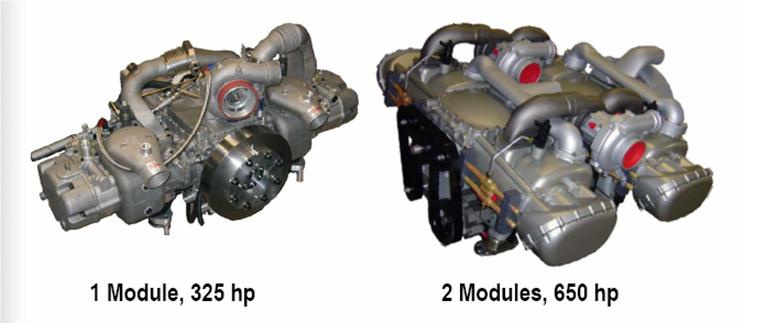
Here’s how it works, as explained by Tamer: the EcoMotors engine is built of 2-cylindar “modules” that can be stacked depending on the need for power – one or two modules for a car, three or four for a big truck. “If you have two modules, you can shut down one module for city driving,” says Tamer. “But when you need to need to go uphill or need power for highway driving, you engage the second module. That gives you better fuel efficiency and reduces emissions.” (EcoMotors’ renderings of the engine’s design are above.)

With the recently enacted energy bill mandating automakers raise the average fuel efficiency of their fleets to 35 miles per gallon by 2020, EcoMotors aims to demo its first engine to potential customers by early 2009.

A plug-in electric hybrid drive train will be further down the road but Khosla Ventures already has made investments in companies developing components for such a system. One such startup is Seeo, a Berkeley, Calif.-based company whose website cryptically says it is “developing advanced materials to revolutionize electricity storage and delivery.” And Thursday morning, Khosla Ventures announced it had upped its investment in Transonic Combustion, a California startup developing  fuel injection systems designed to increase fuel efficiency.

“Our belief is that we have to get a fuel-efficient, emissions-conscious diesel engine on its own,” Tamer says. “Then going to a hybrid becomes a bonus.”

One of Vinod Khosla’s mantras is that green technology must become cheap and scalable enough to be adopted in China and India, countries whose impact on climate change is monumental. In other words, a $25,000 plug-in hybrid doesn’t stand a chance against a Tata Nano, the Indian people’s car unveiled last week.

Remarks Tamer: “$2,500 will buy a Tata – that’s a DVD upgrade on a Lexus.”

schott.jpegBig Solar has been about Big Dreams – fields of mirrors carpeting the desert to produce clean, greenhouse-gas free electricity. But in another step toward making that vision a concrete-and-glass reality, Schott Solar announced Monday that it is building a factory in Albuquerque, N.M., to manufacture components for large-scale solar thermal power plants as well as photovoltaic modules for commercial rooftop arrays.

The German company’s news follows Silicon Valley solar startup Ausra’s announcement last month that it’s building a solar thermal factory in Nevada — the first in North America.

That solar companies are now investing capital to break ground on manufacturing plants represents the creation of a Big Solar infrastructure and, of course, a move to get on the ground floor of what is expected to be a solar building boom in the sun-drenched Southwest of the United States. Utilities throughout the region are facing mandates to dramatically increase their use of renewable energy. In California, for instance, PG&E (PCG), Southern California Edison (EIX) and San Diego Gas & Electric (SRE) are all negotiating big megawatt contracts for utility-scale solar power thermal power plants. A consortium of Southwest utilities meanwhile has put out to bid a 250-megawatt solar station.

“We certainly see the opportunity for growth in the solar thermal market,” Mark Finocchario, CEO of Shott’s North American operations, told Green Wombat. “The concentration of solar thermal plants will be in the Southwest and we see that’s where the rest of the supply market will develop as well. But we would have the ability to ship product to anywhere in the world.”

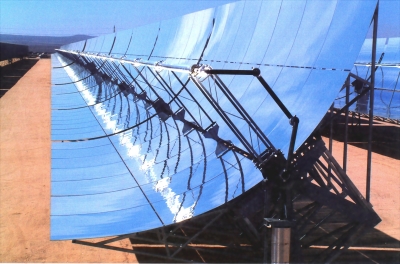
The $100 million Albuquerque factory will manufacture solar thermal receivers — long tubes that hang over curved mirrors called solar troughs. The mirrors focus the sun’s rays on the receivers and liquid inside becomes superheated to produce steam that drives electricity-generating turbines.

Finocchario says the the plant, which will employ 350 people, is set to go online by the end of the first quarter of 2009. Future plans call for another $400 million investment to expand the factory’s workforce to 1,500.

How green is CES?

2008lvcc4.jpgThe Consumer Electronics Show now underway is a tech Bacchanal that this year is drawing some 140,000 people to Las Vegas. In years past, CES organizers might have touted the outsized consumption that accompanies the instant creation of a mid-size city. These days that would be ecologically incorrect, of course, and CES stresses that the 20,310 tons of planet-warming carbon dioxide conference-goers will generate will be completely neutralized through the purchase of carbon offsets from the non-profit Carbonfund.org.

“CarbonFund will invest in energy efficiency, renewable energy and reforestation projects to offset the emissions created by every inch of CES space, ” reads an e-mail from a CES public relations firm that landed in Green Wombat’s in-box on Monday, “all show freight, the shuttle buses and 600,000 hotel rooms will be offset via investments, (In fact, CES will be the largest carbon neutral trade show EVER!)”

The cost of the CES carbon tax: $108,000. No, there’s not a zero or three missing from that number. For the price of a Tesla Roadster and change, CES is cleansing the collective environmental sins of 140,000 people. Without wading into the controversial arena of carbon offsets or questioning the good intentions of CES’ organizers, that number begs an obvious question: If neutralizing a looming global catastrophe comes so cheap, wouldn’t have Bill and Melinda Gates just have written a check by now?

Unfortunately, when it comes to greenhouse gases, what happens in Vegas does not stay in Vegas. The very real CO2 emissions from those 140,000 people now gridlocking the Strip — think of all those idling taxis alone — will enter the atmosphere in real time. Worse, much of the electricity for CES is being generated by a 42-year-old coal-fired power plant north of Las Vegas that was identified in a recent report on utility emissions as the nation’s worst carbon polluter.

Those emissions will in no way be immediately offset by the purchased carbon credits. The money will fund environmentally worthwhile projects but it may be years — or decades in the case of reforestation – before they actually begin having an impact on greenhouse gas emissions. According to Carbonfund.org’s Web site, CES’ money will be invested in such things as buying renewable energy certificates from wind farms and planting trees in Nicaragua and Hungary.

CarbonFund is also letting conference-goers offset the considerable CO2 emitted by jets ferrying more than a hundred thousand people into Las Vegas. That’s also a bargain: The bill for the six Fortune reporters who flew into town for CES from New York and San Francisco comes to a grand total of $23.81. At that price, you almost feel guilty about paying so little to not to feel guilty about your contribution to global warming.

CES also has taken such environmentally friendly steps as using biodegradable food utensils and recycled paper and laying down recycled carpet in an exhibit hall. But there’s no getting around the fact that the confab is held in what is perhaps the United States’ most unsustainable city, whose unchecked sprawl across the Mojave Desert makes it an ecological time bomb as temperatures rise and water tables fall.

Relocating the event to New York, Boston, San Francisco or another walkable, mass-transit, eco-oriented city would send a message that CES is serious about going green. Of course, it’ll snow on the Strip in July before that happens. But for CES 2009, why not ditch the carbon offsets and use the money to buy a fleet of bicycles instead of clogging the streets with carbon-spewing taxis. It won’t neutralize CES’ greenhouse gas emissions but it would actually reduce them where it counts.

serpa2.jpg

Another day, another new solar power plant. At least that’s the way it seems, given SunPower’s recent spate of deals to build multi-megawatt photovoltaic solar power stations. The latest came Friday when the Silicon Valley solar panel maker announced a contract to construct an 8-megawatt solar power plant in Spain. The agreement follows a November deal for three other solar power stations in Spain totaling 21 megawatts. That in turn was preceded by an October announcement of a contract for a 18-megawatt plant in — where else — Spain.

See a pattern here? SunPower (SPWR) now has solar power plants totaling more than 100 megawatts built or under contract in Spain. Plus it constructed an 11-megawatt solar power station in neighboring Portugal and a 10-megawatt plant in Germany. It’s sole PV power plant in the United States is a 15-megawatt station at Nellis Air Force Base outside Las Vegas.

It’s no accident that SunPower has set its sights on Spain and other European markets. Spain and Portugal, for instance, offer simple so-called feed-in-tariffs that pay solar power plant operators a premium rate — typically for 15 to 20 years — for producing renewable energy. That makes the economics of financing and building solar power plants relatively straightforward in contrast to the patchwork of short-term state and federal green energy incentives in the U.S. (Witness the current upheaval in the industry over the crucial solar investment tax credit that expires at the end of 2008, and which Congress neglected to extend in the recently enacted energy bill.)

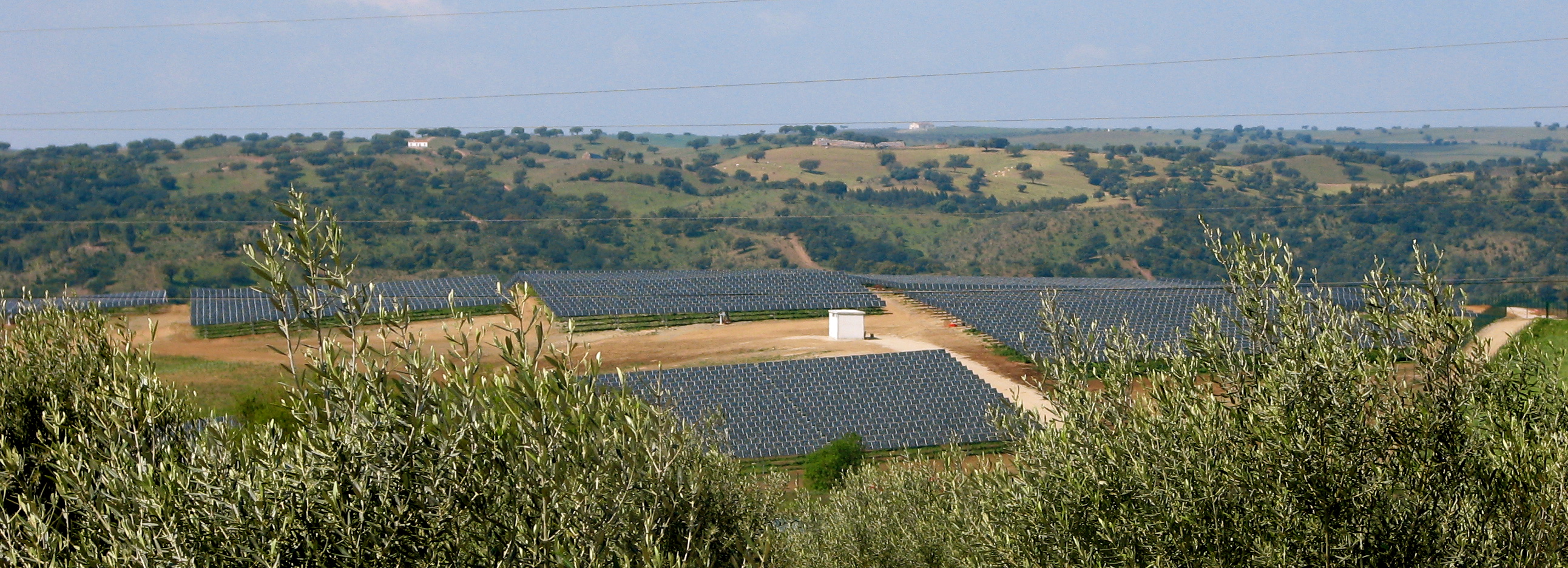
No wonder Europe is attracting renewable energy financiers like GE Energy Financial Services (GE), which financed SunPower’s Portugal plant (pictured above). “We truly believe utility-scale solar will be an incredible opportunity,” Kevin Walsh, managing director of GE Energy Financial Services, told Green Wombat at the opening of the Portugal plant last March. (That’s not to say that companies like GE don’t see opportunity in the U.S. market. Just this morning, SunPower announced that GE Energy Financial Services will finance and own five 1-to-2.4-megawatt commercial solar arrays in California being installed by SunPower for Toyota (TM), Hewlett-Packard (HPQ), Agilent, Lake County, and the Rancho California Water District.)

The built-in profit margin for solar in Spain and Portugal also makes photovoltaic power plants viable. PV plants are essentially residential rooftop solar arrays writ large that track the sun and convert sunlight that strikes silicon-based cells directly into electricity. But silicon is expensive and solar panels are relatively inefficient. So absent subsidies like feed-in tariffs, few PV power stations have been built in the U.S., which has focused on large-scale solar thermal power plants that use mirrors to heat water or other liquids to create steam that drives electricity-generating industrial turbines. The beauty — literally – of a PV plant is that it contains virtually no moving parts or bulky power blocks that contain turbines and other machinery. That means they can be built closer to urban areas and used to shoulder the load from overburdened utility substations.

Even solar panel installers are striking deals overseas. Silicon Valley-based solar installer Akeena (AKNS), for instance, developed a new solar panel system called Andalay that cuts the cost of installation for homes and businesses. The company contracted with China solar panel giant Suntech (STP) to manufacture Andalay, which will also sell the panel in Europe, Japan and Australia.

ausra-16.jpgBig Solar is on a roll in California.

For the second time in seven weeks, the California Energy Commission has voted to accept an application for a massive megawatt solar power plant. The commission on Wednesday certified as “data adequate” Silicon Valley startup Ausra’s application to build a 177-megawatt solar on the state’s central coast. That means Ausra’s Carrizo Energy Solar Farm has cleared a significant regulatory hurdle and the commission will begin a year-long review process. If all goes well, construction will begin in 2009 and the plant will start producing electricity in 2010. (To get an idea of the complexity of the California licensing process and why the acceptance of an application is a big deal, you just need to scan Aura’s 1,000-page application package.

The Ausra move follows the commission’s Oct. 31 vote to greenlight for review BrightSource Energy’s planned 400-megawatt power station complex to be built in the Mojave Desert on the Nevada border.

Ausra, backed by A-list venture capitalists Vinod Khosla and Kleiner Perkins Caufield & Byers, has signed a 20-year power purchase agreement with utility giant PG&E (PCG) for the greenhouse gas-free electricity generated by the Carrizo plant in eastern San Luis Obispo County. BrightSource (backed by Morgan Stanley (MS) and VantagePoint Venture Partners), meanwhile, continues to negotiate with the utility for a 500-megawatt power purchase deal.

finavera-aquabuoy.jpg

An offshore wave farm will supply Californians with clean green electricity generated by the ocean, under a first-of-its-kind power purchase agreement that utility PG&E will announce Tuesday morning.

The giant San Francisco-based utility has signed a long-term contract to buy 2-megawatts of electricity from Finavera Renewables’ wave-energy power plant, to be built off the Northern California coast. The Vancouver company intends to eventually expand the Humboldt County project into a 100-megawatt “wave park.” It is likely to be the first of a score of floating power stations dotting California’s 1,100-mile coastline in the coming years, judging by the stack of applications for such wave farms on file at the Federal Energy Regulatory Commission.

“This power purchase agreement is extremely significant and reflects the massive potential for wave power as a renewable source of energy in the future,” says PG&E spokesman Keely Wachs. Like the Golden State’s other big investor-owned utilities — Southern California Edison (EIX) and San Diego Gas & Electric (SRE) — PG&E (PCG) must obtain 20 percent of its electricity from renewable sources by 2010 and 33 percent by 2020.

“The California market is huge for wave energy,” Finavera CEO Jason Bak told Fortune’s Green Wombat. “This is the first power purchase agreement with a large utility, and we see this as being one of the key components to commercializing wave energy technology.”

The ocean as potential source of greenhouse gas-free power is tremendous: The energy locked up in the surf rolling toward the California coast is equivalent to some 37 gigawatts — enough to light nearly 30 million homes — according to PG&E. And unlike the sun and wind, waves can generate electricity 24/7. But the technology to tap all that water-borne power and deliver it at competitive prices remains in the start-up phase.

PG&E and Finavera would not disclose the terms of the power purchase agreement. But Bak acknowledged that the key challenge he and other wave-energy companies face is “advancing the technology to the stage where we have a near-commercial technology.”

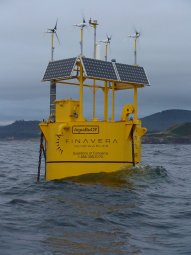
Finavera plans to deploy strings of connected wave-energy converters that it calls AquaBuoys. As waves roll past an array of AquaBuoys connected to an onshore station by an undersea cable, two-stroke hose pumps convert their energy into pressurized seawater that drives electricity-generating turbines. According to filings Finavera has made with the Federal Energy Regulatory Commission, a fully built-out 100 megawatt Humboldt wave farm would consist of 200 to 300 AquaBuoys floating on a two-square-mile site about two to three miles off the town of Trinidad. The initial phase of the project is expected to go online in 2012 and will use eight AquaBuoys.

While PG&E is merely dipping its corporate toe in the wave-energy waters with a relatively small 2-megawatt power purchase agreement, the deal with Finavera is likely to intensify efforts to stake claims on the best stretches of coast.

PG&E itself earlier this year unveiled its WaveConnect project to build two 40-megawatt wave farms, one off Humboldt and the other off the Mendocino County coast. Chevron (CVX) dived in last July with a plan for a Humboldt wave farm to be built by Scotland’s Ocean Power Delivery — now called Pelamis Wave Power — before abruptly pulling its application a month later.

Over the past two months there’s been a new flurry of applications. New Jersey’s Ocean Power Technologies (OPTT) in November filed for a FERC permit for a 20-megawatt “wave energy park” to be located off the Humboldt coast. And a newcomer to the wave energy business called GreenWave Energy Solutions has filed permit applications for wave farms off Mendocino and the Central Coast town of Moro Bay in San Luis Obispo County. (The Thousand Oaks, Calif., company lists a San Francisco attorney as its president and it was registered by a Southern California developer.)

Before Finavera can begin construction of the Humboldt wave farm, it must first spend two to three years completing environmental impact studies and negotiating with local, state and federal regulators. While obtaining financing for wave-energy projects using untried technology is difficult, Finavera will have one advantage over its competitors: a long-term power purchase agreement with one of the United States’ largest utilities.

“This PPA is a vote of confidence from PG&E that we can get the project done,” says Bak.

Just about every business has an electricity meter and a water meter. But what about a greenhouse gas meter?

In the years ahead, a growing number of companies will need one. A national U.S. greenhouse gas cap is all but inevitable and global warming-driven limits on greenhouse gas emissions already imposed by Europe and California require certain industries to calculate and report their emissions. Emerging carbon trading markets, meanwhile, offer the opportunity to profit from cutting CO2. Even companies unlikely to fall under the purview of the carbon regulators — such as Google (GOOG) and Sun Microsystems (JAVA) — are measuring their carbon footprints as an act of good corporate citizenship to show customers employees their green bona fides.

As Green Wombat has written previously, IBM (IBM) sees a big business in carbon consulting. Now Big Blue has collaborated with Evergreen Energy (EEE) to create what they call the GreenCert greenhouse gas meter. Rather than a hunk of hardware, it’s an Internet-based software program designed to collect real-time emissions data from sensors and other sources. It calculates the volume of greenhouse gases being released into the atmosphere by a company and certifies any reductions as credits that can be traded on carbon markets. GreenCert’s engine was developed by C-Lock Technology, a subsidiary of Evergreen, a “clean coal” technology company. IBM is providing the database and Internet software to allow GreenCert to be rolled out across across industries and be accessible to regulators and other parties.

The project was born out of Evergreen’s efforts to quantify emissions reductions from its technology that transforms the dirtiest coal into a cleaner-burning fuel.

The GreenCert gas meter is an attempt to standardize what is now largely a one-off customized task. Companies that want to calculate their carbon footprint face myriad choices, according to Larry Vertal, senior strategist at chipmaker Advanced Micro Devices (AMD), which annually tabulates and discloses its greenhouse emissions as part of its global climate protection plan. Among them: what to measure, how to measure and what scientific protocols to use. If those protocols change or new legislation or regulations alter the way emissions are calculated, a company must go back and tweak its customized carbon footprint program.

GreenCert, on the other hand, automatically incorporates such changes, according to C-Lock chief technology officer Patrick Zimmerman, who led the team that developed the greenhouse gas meter. “The system was designed to very efficiently and accurately quantify greenhouse gas emissions in a way that is transparent, reproducible and easily automated,” he says.

The program starts with a database profiling a particular industry then collects emissions data from a specific company. Evergreen is first focusing on agriculture and the utility industry.

GreenCert allows farmers to quantify and document changes in agricultural practices that result in more carbon being stored in the soil and then sell those carbon credits, theoretically, on carbon trading markets to companies that fail to meet their greenhouse gas emission quotas.

“For agriculture, there is a geographic information system that stores high-resolution relevant geographic information that affects and controls carbon sequestration in the soil,” says Zimmerman. “Then we have provided an Internet portal where farmer can go online and sign up their land.”

“We have algorithms built into the system that guarantee data quality,” he adds. “If a farmer says, `I grew 80 bushes of corn an acre’ and GreenCert knows that the historical average is 60, it’ll flag it. And then we’ll go to the warehouse and do an audit. We have four levels of verification and make sure models are regionally calibrated. We only certify carbon that is there at a very high level of confidence level.”

For utilities, GreenCert installs sensors and conducts an audit to establish an emissions baseline and then delivers software over the Internet so power plant managers can document changes in, say, boiler efficiency.

Evergreen spokesman Paul Jacobson said GreenCert is in its pilot project phase and it has yet to be decided whether the company will license GreenCert to customers or provide the greenhouse gas meter in exchange for a percentage of the revenue from trading carbon credits.

The carrot for installing greenhouse gas meters — besides complying with any global warming legislation — is the prospect of selling certified carbon emission reduction credits on carbon trading markets. Some analysts claim that will be a trillion-dollar opportunity in the coming years, but currently there’s only a few voluntary markets, such as the Chicago Climate Exchange and various informal purchases by companies wishing to offset their greenhouse gas emissions

Evergreen has its eye on government-regulated carbon markets, like the European market and the one being considered by California. In such cap-and-trade markets, companies’ emissions are limited; if they exceed their caps they must buy emission credits from those that have reduced their carbon output.

That said, there’s no guarantee at this point that such markets will accept credits generated by GreenCert.

“Our goal is that no carbon offset will be generated that doesn’t make a difference in atmosphere,” says Zimmerman. “For a cap and trade program to really work, carbon offsets have to be valuable. Rather than churn out cheap credits for the voluntary market, we wanted it stringent enough for regulated markets.”

For its part, IBM sees GreenCert as the type of greenware with a significant potential payoff.

“Right now there’s a lot of legislation going on around the world and there’s a need to be open and nimble so that as changes occur and new legislation is put into place, carbon offsets reflect those changes,” says Tim Kounadis, IBM’s director of worldwide channel marketing for Lotus software. “The whole greenhouse gas market is one we’re looking at seriously. We see a big business opportunity because it matters to business.”

ausra-solar-field.jpg

Here’s another sign that Big Solar’s time has come: Silicon Valley startup Ausra is building the United States’ first solar power plant factory.

When the 130,000-square-foot facility goes online in April outside Las Vegas, robots will assemble mirror arrays and other equipment that will then be trucked to solar power plant building sites in California and the Southwest. Ausra, backed by venture capitalists Vinod Khosla and Kleiner Perkins Caufield & Byers, signed a deal with utility PG&E (PCG) in November to supply electricity generated by a 177-megawatt solar thermal power station to be built on California’s central coast.

“Steel, flat glass and standard boiler pipe flows into the factory and completed solar fields come out ready for installation,” John O’Donnell, Ausra’s  executive vice president, told Fortune’s Green Wombat from Nevada over the din of construction noise. “We wound up working with one of Australia’s leading builders of car production systems to develop robotic assembly, weld, bond and paint systems for the mirror units.”

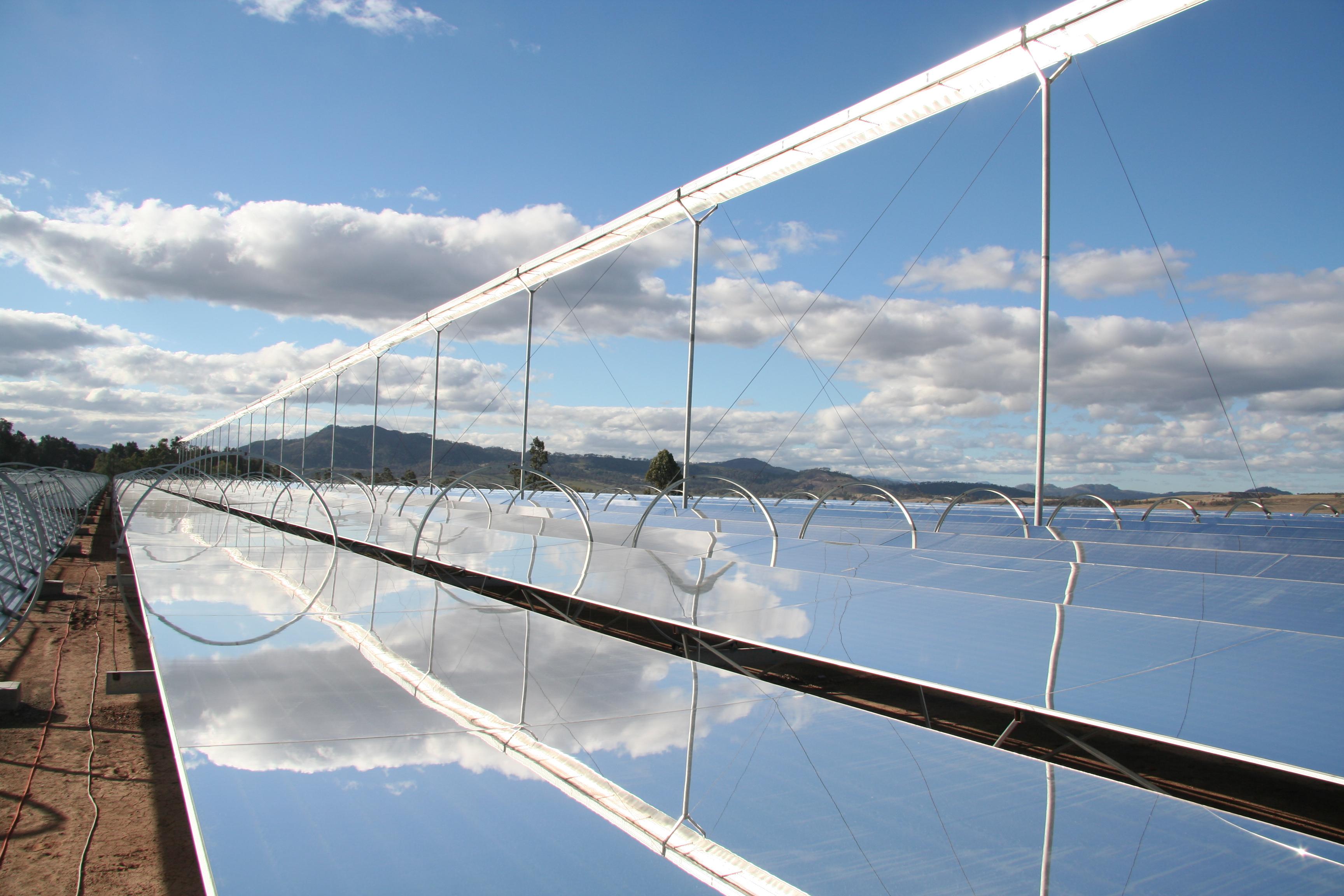
Ausra will deploy large arrays of long mirrors that concentrate sunlight on water-filled pipes that hang over the reflectors. As the water is heated up to 545 degrees Fahrenheit the resulting steam drives a standard turbine to generate electricity. O’Donnell says the Las Vegas factory, located near McCarran International Airport, will employ about 50 people and be able to produce 70 megawatts worth of solar equipment a month — implying Ausra has many more big power deals on the table.

The facility marks the emergence of Nevada as a player in the solar power industry. “We see Nevada as one of the best markets for solar power,” says O’Donnell. “It’s the business climate in Nevada, the solar resource and a rapidly growing market for electric power. The main reason for being here is the combination of a transportation center, a workforce and a central location for where we think all the power plants will be. We looked at locations in California, Phoenix and here. Taking the five-year view, we would like to build a lot of power plants in the Southwest so we asked, ‘Where is the best location. What are the transportation options?’ ”

Nevada’s proximity to California means that solar power plants can be built on its side of the border to ship electricity to densely populated Southern California as well as the booming Las Vegas region. O’Donnell says Nevada offered Ausra a standard package of tax incentives but nothing extra to locate the factory in the Silver State.

“As the world transitions to clean energy, Nevada will be a leader in building and delivering clean power to our state, to our region, and to our country,” said Nevada Development Authority CEO Somer Hollingsworth in a statement.

Nevada will get a run for its money from sun-drenched Arizona, where Phoenix-based Stirling Energy Systems plans to build factories to manufacture Stirling dishes for solar power plants that will supply electricity to Southern California Edison (EIX) and San Diego Gas & Electric (SRE).

Design a site like this with WordPress.com
Get started