Feeds:
Posts
Comments

Archive for the ‘Uncategorized’ Category

I wrote this story for Grist, where it first appeared.

At an event at Google last week, green tech investor Vinod Khosla noted that solar companies are building factories in California even though it would be cheaper to manufacture photovoltaic panels in China.

“The markets are here, the innovators are here, the ecosystem is here,” he said, noting that the state’s global warming law, known as Assembly Bill 32, or AB 32, had created a predictable regulatory climate, spurring investment in California.

Adding another data point to Khosla’s argument, AQT Solar, a Sunnyvale, Calif., startup, announced Thursday that it had officially flipped the switch on its first factory – in the heart of Silicon Valley.

The company’s trajectory is classic Silicon Valley and illustrates Khosla’s thesis of why California has become an epicenter of green technology innovation.

AQT was founded in 2007 by veterans of the Valley’s old-line tech industry who saw a way to repurpose existing technology to make cheaper and more efficient thin-film solar cells at a time when photovoltaic module prices were plummeting and competitors with high capital costs were being squeezed. (Thin-film solar cells are made by depositing semiconducting materials on glass or flexible materials, a process which allows them to be essentially printed on long rolls of metal.)

The startup managed to get to the production phase on $15 million raised from investors — a pittance for a solar cell manufacturer — and on Thursday the company also announced its first customer, the developer Sol Pacifico, which will install AQT solar cells at a luxury resort to be built in Baja Mexico.

The factory will initially be able to produce 15 megawatts’ worth of solar cells a year.

AQT has been able to recycle Silicon Valley’s old computer chip company infrastructure as well as tap its intellectual and financial capital.

“We found a building that was an old semiconductor plant that fit our needs perfectly,” says Michael Bartholomeusz, AQT’s chief executive. “In next six months, we’ll be expanding our Sunnyvale facility and hiring 40 more people. We’ll have a second manufacturing site next year.”

That’s not a huge number of jobs, of course, but inevitably some of those employees will capitalize on their experience at AQT and start their own companies, continuing Silicon Valley’s endless cycle of innovation.

Khosla’s point was that that feedback loop could be short-circuited if voters in November pass Proposition 23, a California ballot initiative that would suspend the state’s global warming law and with it the certainty businesses that rely on to make investment decisions.

“More of the startups in Silicon Valley are setting up factories here rather than in China, and that’s because there’s a market here,” he said. “That will change” if Proposition 23 passes.
Read Full Post »

photo: Todd Woody

I wrote this story for Grist, where it first appeared.

With months to go before the first mass production electric cars hit American streets, the $41,000 question (before rebates and tax incentives) is whether drivers will buy them en masse.

Which is why you should keep your eye on Berkeley, Calif. While I would hardly hold out my hometown as an avatar of mainstream American values, on the environmental front it’s often been in the vanguard of things to come, like curbside recycling.

Take hybrid cars. When I was reporting a story earlier this year on the San Francisco Bay Area as the launch pad for mass-market electric cars, Andrew Tang, an executive with PG&E, told me that the utility was closely watching local sales of the Toyota Prius as a proxy for likely purchases of electric cars. Studying Prius distribution helped PG&E create a heat map of neighborhoods where the electricity demand might spike.

In Berkeley, he said, one out of every five cars sold for the past four years has been a Prius. Made sense to me. Priuses seem as common as Obama bumper stickers and are just part of the visual landscape, like Alice Waters. But it wasn’t until my friend Mike and his son Bryce were visiting from Texas recently that the hybridization of Berkeley really became apparent to me.

We were at REI picking up some gear for a camping trip when Bryce remarked that he had counted eight Priuses in the store’s rather small parking lot. On the 2.8-mile drive home we decided to see how many Priuses we could spot along the road into the Berkeley Hills.

We counted 34, including four on my block.

A few weeks later I played the Prius game on the way down the hill to the Berkeley Bowl to pick up some groceries. I counted 25 Priuses, two Honda Insight hybrids, an old Toyota RAV4 electric and one gunmetal gray Tesla Roadster.

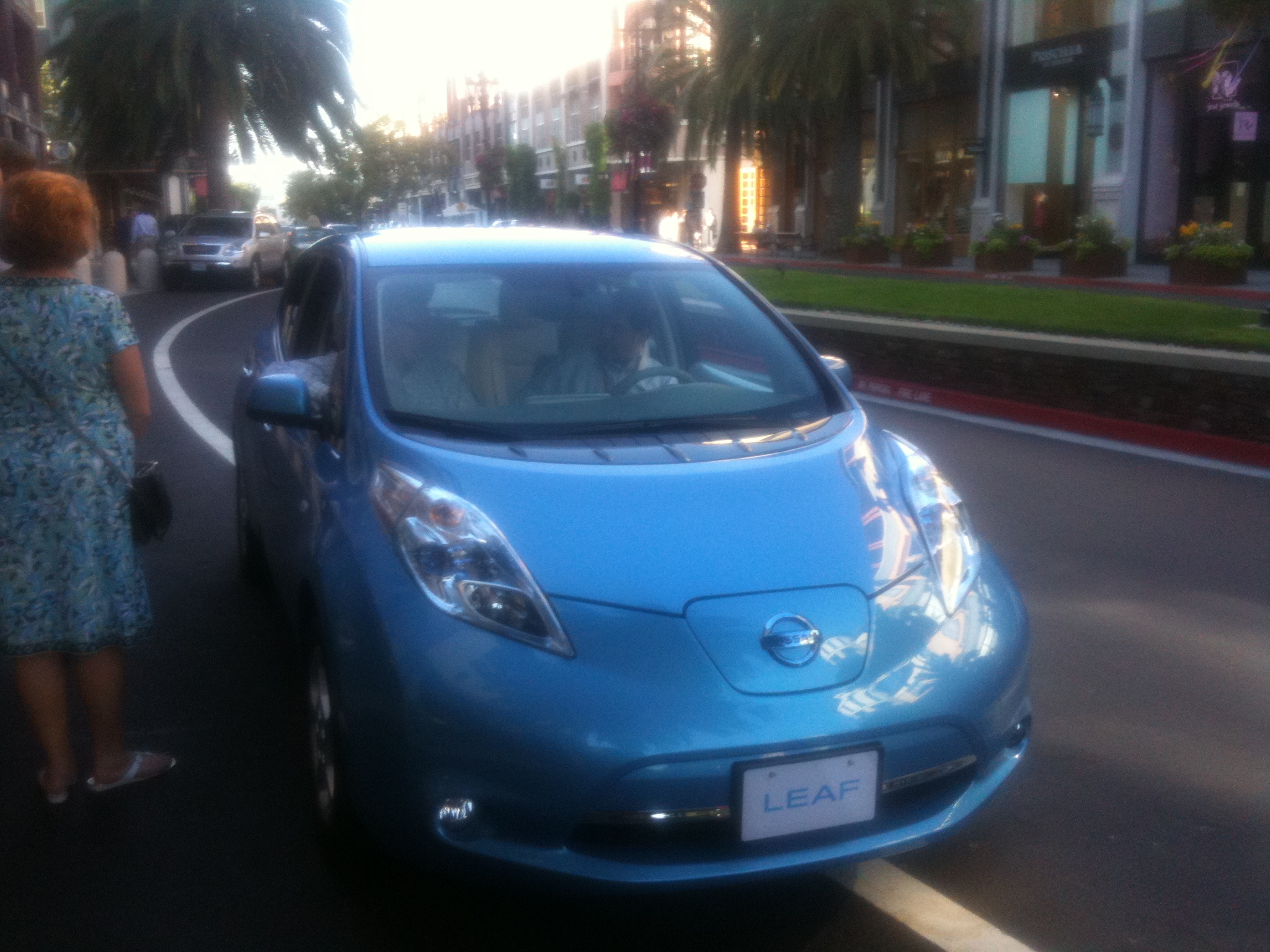
So will Toyota’s hegemony stand once Nissan’s battery-powered Leaf blows into town? No doubt, many will trade in their Prius to go electric. The Leaf sports a distinctive look that, like the Prius, screams green to your neighbors. (And keeping up with the Joneses is just a part of Berkeley’s cultural fabric.)

The Chevrolet Volt may be a harder sell, given it is an electric hybrid and boasts a muscular all-American look that you don’t see too often on the streets here.

But every Prius owner won’t have to switch to electric in order to have an impact. Seeing a Leaf or Volt in the neighbor’s driveway or in the REI parking lot will make an electric car less a curiosity and more just another automotive option when trading in that ’95 Volvo station wagon.

Read Full Post »

photo: Better Place

I wrote this story for Grist, where it first appeared.

In a few months, you’ll be able to buy a Nissan Leaf or Chevrolet Volt if you live in places like San Francisco. But where are you going to plug in your electric car?

When I took a spin in the Leaf last week in San Jose, one of the car’s features was a large touch screen that displayed a map locating nearby charging stations – all two of them.

On Wednesday, the Bay Area Air Quality Management District moved to fill out that map, voting to allocate $5 million to subsidize the installation of 3,000 home charging stations, 2,000 public charging stations and 50 fast-chargers near highways. (Fast chargers can top off an electric car battery in a matter of minutes rather than hours.)

The district regulates air pollution in the nine-county San Francisco Bay Area and it has taken a keen interest in electric cars for good reason.

Transportation is responsible for more than half of the region’s air pollution and replacing carbon-spewing cars with emission-free ones will go a long way to improving public health and keeping the area in compliance with state and federal air quality standards.

“The past several years have seen exciting progress in the development of electric vehicle technology,” Jack P. Broadbent, the air district’s chief executive, said in a statement. “Creating a useful charging network will make it easier for Bay Area residents to spare the air every day by going electric.”

The details of how the $5 million will be distributed remain to be worked out, Ralph Borrmann, an air district spokesman, said in an email.

“The funding mechanism may be a combination of a traditional grant program with a voucher component,” he said. “So for example, a resident may purchase a charging system from a dealer who provides an incentive voucher which will be paid for through the air district.”

Borrmann said the air district won’t own the public charging network, targeted for employer and public parking lots.

It remains to be seen just how much of a charge the air district will actually get for its $5 million, given that installation of a single home charging station alone can cost more than $2,000. But the move to support electric cars underscores the fact that greening transportation isn’t just good for the environment, it’s good for human health.

Read Full Post »

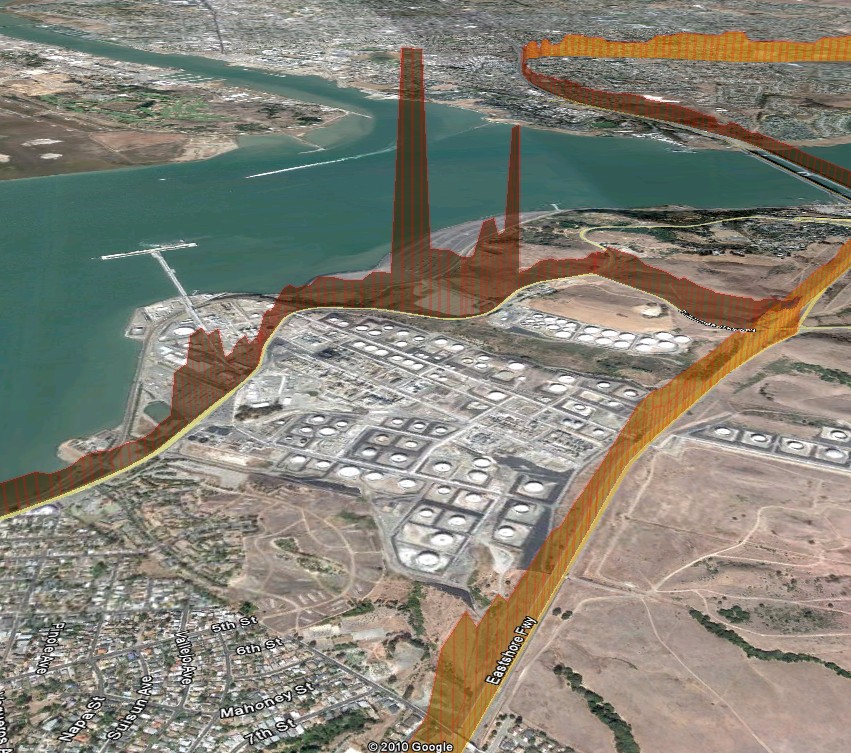
Image: Picarro

In the Green Inc. column I wrote for Monday’s New York Times and International Herald Tribune, I go hunting for greenhouse gases in the San Francisco Bay Area with Picarro, a Silicon Valley company that makes analyzers that measure CO2 and methane emissions in real-time:

SAN FRANCISCO — The recent Copenhagen climate talks faltered in part over how to verify that nations are actually reducing their carbon emissions. Likewise, the integrity of emissions trading markets, like the one under consideration by the U.S. Congress, will depend on the ability to accurately measure greenhouse gases.

That’s creating a burgeoning global business for Picarro, a Silicon Valley company that makes portable analyzers that take precise real-time measurements of carbon dioxide, methane and other greenhouse gases. The machines also allow scientists to pinpoint the source of emissions.

To get a real-life demonstration of the machine’s potential to zero in on the source of carbon emissions, I went hunting for greenhouse gas emissions with Chris Rella, Picarro’s director of research and development.

Mr. Rella rolled up in a white Dodge Sprinter van and slid back a door to reveal a rack of Picarro analyzers connected to a video screen that was displaying the concentration of methane, a potent greenhouse gas, in the atmosphere around us.

A translucent tube connected to the analyzers snaked through the roof of the van to collect air samples, while a GPS device continuously tracked the van’s location and a wireless modem transmitted all the data back to the Picarro headquarters in Sunnyvale, California. It’s all very “Mission: Impossible.”

You can read the column here.

Read Full Post »

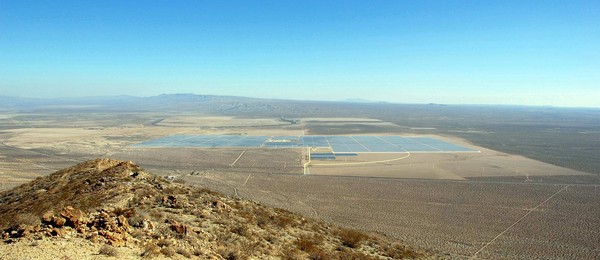
Image: NextEra Energy

In Sunday’s Los Angeles Times, I write about how a seemingly intractable dispute about the environmental impact of a big solar power plant in California is being resolved with some innovative compromises:

A developer who proposes to cut down hundreds of trees to make way for a massive project could expect to provoke a fair amount of environmental outrage.

Not in California City. Officials in this sprawling desert community east of Bakersfield are thrilled at NextEra Energy’s move to break out the chain saws.

The firm, a subsidiary of utility giant FPL Group, is seeking to build a solar power plant in the area that would consume a large amount of water. The trees are tamarisks, a water-hungry invasive species, and removing them could help recharge the aquifer in this arid region.

“The water that normally would go into the tamarisk will go down into the basin — it’s a big environmental win,” said Michael Bevins, California City’s public works director.

The tree deal is just one way that what threatened to become another intractable fight over the environmental effect of desert solar power plants is turning into a blueprint for the resolution of similar disputes.

You can read the rest of the story here.

Read Full Post »

Distributed solar goes wide

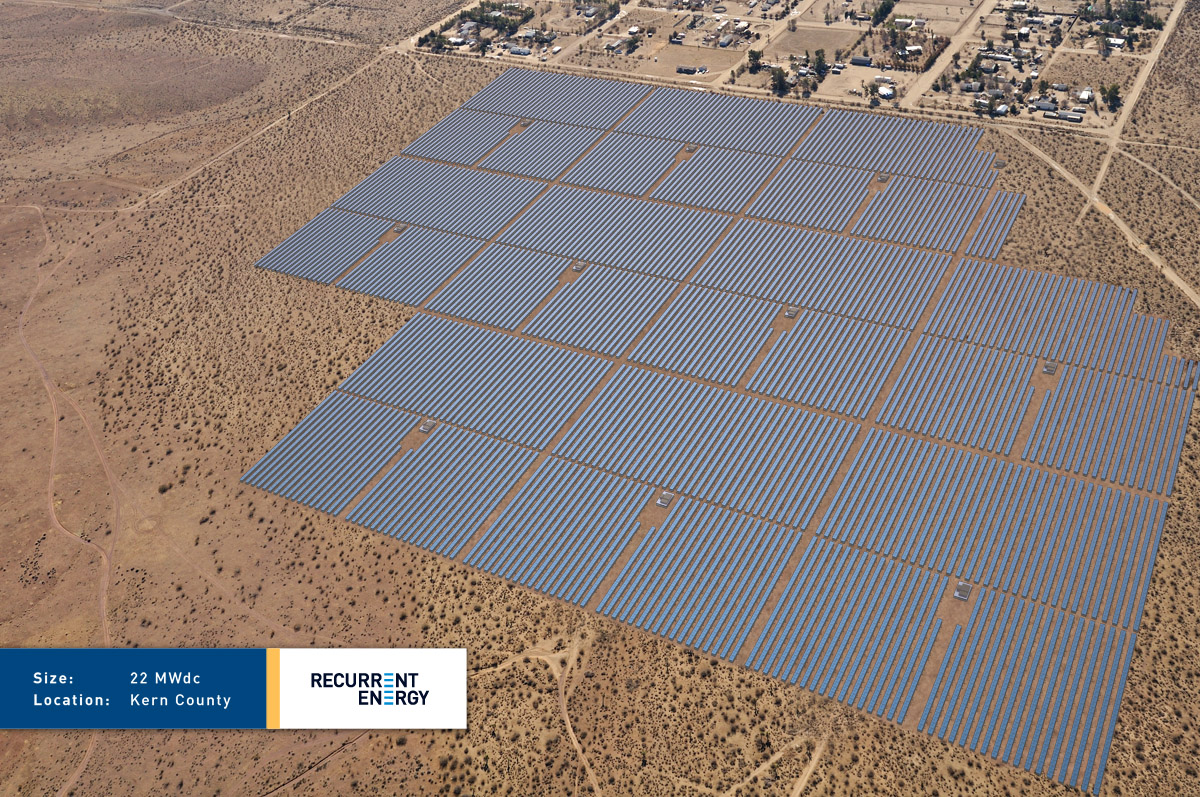
Artist rendering: Recurrent Energy

A couple of stories on the boom in distributed solar. As I wrote the New York Times:

As big solar power plants planned for the desert Southwest remain bogged down in environmental disputes, utilities increasingly are turning to so-called distributed solar rooftop arrays and small photovoltaic farms that can be built close to transmission lines.

Over the past few weeks, some 1,300 megawatts’ worth of distributed solar deals and initiatives have been announced or approved. At peak output, that is the equivalent of a big nuclear power plant.

Two weeks ago in California, regulators authorized the utility Southern California Edison’s program to install 500 megawatts of solar on commercial rooftops. A few days later, they recommended that Pacific Gas and Electric, the dominant utility in Northern California, be given the green light for its own 500-megawatt initiative that aims to install ground-mounted photovoltaic arrays near electrical substations and urban areas.

The Sacramento Municipal Utility District said in January that it took only a week to sell out its 100-megawatt solar program, which offers developers the opportunity to build photovoltaic projects of up to five megawatts.

And last week, the New York Power Authority announced a program to install 100 megawatts of solar arrays around the state.

“All of this is a great indication that solar prices are continuing to get a lot cheaper and that results in scale,” said Adam Browning, executive director of Vote Solar, a San Francisco nonprofit that promotes renewable energy.

You can read the rest of the story here.

In my Grist column, I took a deeper dive into distributed solar:

I spotted a rare critter on the streets of San Francisco this week—a smiling, optimistic businessperson.

Then again, Ron Kenedi is in the solar panel business.

“The big news as I see it is the demand—demand keeps growing everywhere,” says Kenedi, vice president of Sharp Solar, the renewable energy arm of the Japanese conglomerate. “What really amazes me every day is how much demand has grown throughout the world.”

Kenedi is not one for Pollyannaish optimism—he started in the business around the time Ronald Reagan took down Jimmy Carter’s solar panels from the White House roof.

“I used to have to go out there with a sandwich board on to get people interested in solar,” he says. “Now I can’t even walk down the street without people talking to me about solar and wanting it on their home and businesses.”

That’s because there’s a boom in so-called distributed generation under way—placing solar panels and pint-sized photovoltaic farms at or near where electricity is consumed.

Until very recently, distributed generation just couldn’t compete on cost with Big Solar—massive megawatt solar thermal power plants usually located in the desert.

Big Solar has had the edge by the dint of the gigawatt-size deals utilities have struck with developers like BrightSource Energy, eSolar, and Solar Millennium. Large solar thermal power plants—which use mirrors to heat liquids to create steam that drives a generator—could make electricity cheaper than photovoltaic panels, which produce electrons when the sun strikes semiconducting materials.

Now that’s all changing. Over the past year, a number of Big Solar thermal projects have become mired in disputes over their impact on fragile desert ecosystems and the lack of transmission lines to connect them to cities. In December, California’s powerful Democratic senator, Dianne Feinstein, introduced legislation to ban renewable energy development on more than a million acres of the Mojave Desert she wants to protect as national monument.

Photovoltaic module prices, meanwhile, have plummeted by about 30 percent over the past year thanks to an oversupply of modules and the rise of low-cost Chinese manufacturers. Thin-film solar companies, which make solar cells that use little or no expensive polysilicon and which layer or print them on glass or metal, began to produce solar modules for less than a one dollar a watt—long considered a key milestone for making solar competitive with fossil fuels. Though less efficient than conventional crystalline solar modules, thin-film solar cells can be manufactured more cheaply, making it particularly suited for use by photovoltaic power plants.

You can read the rest of the column here.

Read Full Post »

photo: Chris Kennedy / USFWS

Late last week, the Obama administration denied endangered species protection to the American pika, which environmentalists and some scientists believe is imperiled by global warming. As I wrote Monday in The New York Times:

The Obama administration has determined that the American pika, a small rabbit-like mammal, is not threatened by climate change.

The decision underscores how the Endangered Species Act has become the latest battlefield in the fight over global warming.

Environmentalists consider the pika to be the animal most vulnerable to climate change in the continental United States due to its inability to survive even small increases in temperature.

The pika lives on alpine mountain ranges throughout the West, and as average temperatures have increased in recent decades, some populations have disappeared at lower elevations while others have moved to higher peaks, according to scientific studies.

In an initial finding issued last April, the U.S. Fish and Wildlife Service said that protecting the pika under the Endangered Species Act “may be warranted because of the present or threatened destruction, modification, or curtailment of its habitat or range as a result of effects related to global climate change.”

But after a full review, government scientists have concluded that the pika could survive temperatures projected to increase 3 degrees Celsius in its mountain habitat as well as the loss of snow pack, which the animals depend on for shelter. “The American pika has demonstrated flexibility in its behavior and physiology that can allow it to adapt to increasing temperature,” the scientists wrote in the finding released Friday.

Greg Loarie, an attorney who represents the Center for Biological Diversity, the environmental group that petitioned to list the pike as endangered, said studies do not support the government’s position.

You can read the rest of the story here.

Read Full Post »

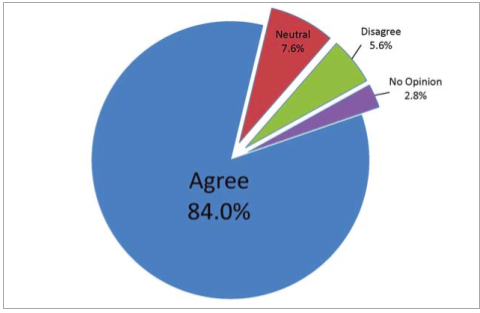
nyu economist survey

A survey of top economists has found them remarkably like-minded on the economic threat posed by climate change. As I wrote Wednesday in The New York Times:

A New York University School of Law survey found near unanimity among 144 top economists that global warming threatens the United States economy and that a cap-and-trade system of carbon regulation will spur energy efficiency and innovation.

“Outside academia the level of consensus among economists is unfortunately not common knowledge,” Richard Revesz, dean of the law school, said during a press conference on Wednesday. “The results are conclusive – there is broad agreement that reducing emissions is likely to have significant economic benefits.”

The law school’s Institute for Policy Integrity sent surveys to 289 economists who had published at least one article on climate change in a top-rated economics journal in the past 15 years. Half of those economists responded anonymously to a dozen questions that solicited their opinions on a range of issues, from the impact of climate change on particular industries to how the benefits of reduced greenhouse-gas emissions should be calculated.

The survey found that 84 percent of the economists agreed that climate change “presents a clear danger” to the United States and global economies – hitting agriculture the hardest – even though the severity of global warming remains unknown.

You can read the rest of the story here.

Read Full Post »

pharox lamp geretoucheerd

photo: Lemnis Lighting

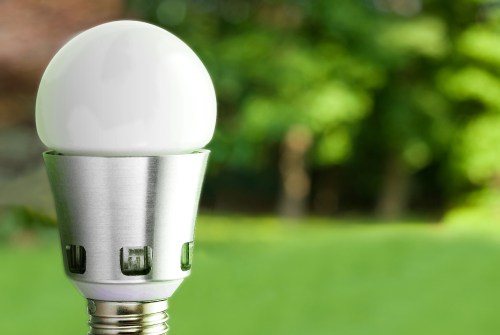
In the Los Angeles Times today, I write about the introduction Friday of a dimmable LED bulb that can screw into any standard home light fixture. There’s just one catch — it costs $40:

Would you pay $39.95 for a light bulb?

Didn’t think so. But what if it used 90% less electricity than a standard incandescent bulb, cut greenhouse gas emissions and saved you an estimated $280 over its 25-year lifespan?

That’s the challenge facing Dutch start-up Lemnis Lighting today as it begins selling the American version of what apparently is the world’s first dimmable LED bulb compatible with home light fixtures.

LEDs — light-emitting diodes — are semiconductors that glow and are the great light hope for slashing carbon emissions from lighting, which consumes about 19% of energy production worldwide.

Lemnis says its Pharox60 LED lasts six times as long as an energy-efficient compact fluorescent light bulb. But unlike CFLs, LEDS don’t contain toxic mercury.

You can read the rest of the story here.

Read Full Post »

green-wombat

Green Wombat will be mostly off the grid in Australia, riding some waves and communing with the wombats, until January 14.

See you in the New Year.

Read Full Post »

« Newer Posts - Older Posts »

Design a site like this with WordPress.com
Get started