Feeds:
Posts
Comments

Archive for the ‘SunPower’ Category

photos: SolarWorld

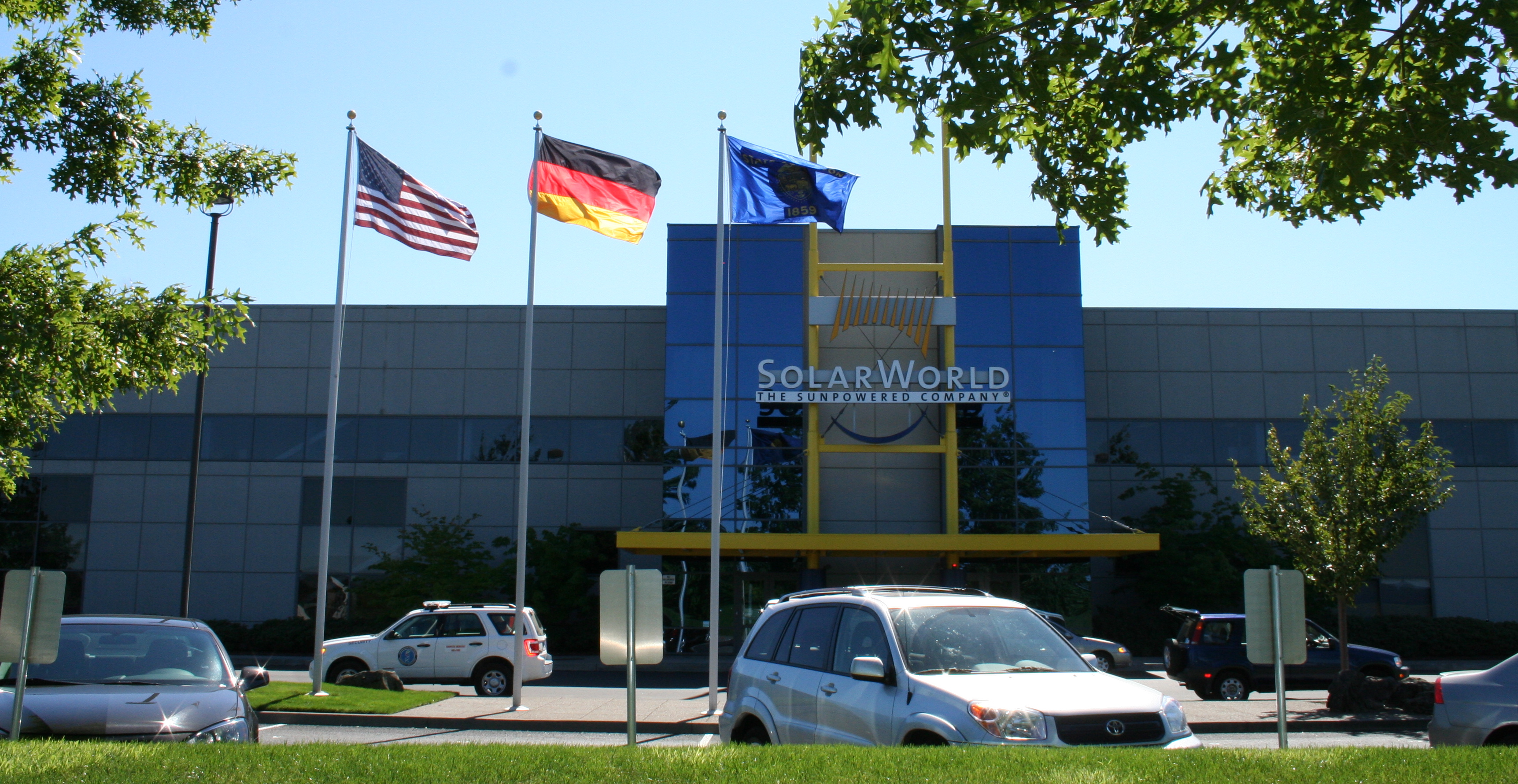
HILLSBORO, Ore. – A solar cell factory has sprouted in Oregon’s Silicon Forest amid the region’s old-growth semiconductor plants. And who is providing these well-paid, high-tech green jobs, investing in America rather than fleeing to Asia to set up shop? The Germans.

Bonn-based SolarWorld AG on Friday officially flips the switch on the United States’ largest solar cell plant. (See the Fortune video here.) The company, the world’s fifth largest solar cell manufacturer, has recycled a former Komatsu factory built to produce silicon wafers for the chip industry  Last week, SolarWorld America president Boris Klebensberger gave Green Wombat a sneak peak at the new Hillsboro plant and talked about why a German company, whose domestic solar market is the planet’s largest, is pursuing a made-in-America strategy. (SolarWorld’s German rival Solon AG, meanwhile, on Friday opened a smaller solar module plant in Tucson, Ariz.)

“I know a lot of people will say, ‘You idiot, Boris. You can’t manufacture in the U.S.,’ ” says Klebensberger, 39, who sports a hoop earring and has a penchant for saying what’s on his mind.
That has been the conventional wisdom. While thin-film solar companies like First Solar (FSLR), Solyndra and Energy Conversion Devices (ENER) have built factories in the U.S., traditional silicon-based module makers such as SunPower (SPWRA) have outsourced production overseas.

But SolarWorld is counting on its expertise in manufacturing in high-cost Germany and its new American branding to give it a competitive advantage. “Made in America is a very big selling point,” says SolarWorld marketing director Anne Schneider. “Customers like that.”

Like other solar cell makers, SolarWorld is trying to build a brand around an increasingly commoditized product. “Even in a commodity business this is a brand,” says Klebensberger. “If you have to choose between two products that are technologically the same,  you’ll probably choose the one made in the U.S.”

SolarWorld jumped into the U.S. market in 2006 when it acquired Royal Dutch Shell’s solar cell factory in Camarillo, Calif., and a silicon ingot plant in Vancouver, Wash. “This was an opportunity for SolarWorld to establish itself in the U.S. market very quickly and get an employee base,” says Klebensberger, who also serves as COO of SolarWorld’s global operations.

The company was founded in 1998 by, as Klebensberger puts it, “five crazy guys who people thought were on drugs” when they said they were going into the solar business. (Klebensberger was employee No. 7.) But Germany’s lucrative incentives for renewable energy quickly turned the nation into a solar powerhouse and SolarWorld went public in 1999. Revenues – $931 million last year – have been growing around 30%-40% annually and the company has a market cap of $3.1 billion.

SolarWorld saw a potentially huge opportunity in the U.S. but the Shell plant was relatively small – producing 80 megawatts of solar cells annually – so Klebensberger went shopping for a new factory. He ruled out California – too expensive – before settling on Hillsboro, 20 miles west of Portland.

The cost of living was reasonable – at least compared to California – and Oregon is on the forefront of promoting sustainability and the green economy. And just as importantly, Intel (INTC) and other chip companies had opened semiconductor factories, or fabs, in the area in the 1980s and ’90s. “A lot of our workforce came from established chip companies or those that closed their fabs,” says Klebensberger, sipping tea from a coffee cup emblazoned with “Got Silicon?”

“The manufacturing and product is different but the raw starting material is the same and there’s a lot of similarity in the equipment,” adds Gordon Bisner, vice president of operations and a chip industry veteran. “There’s a lot of the same skill sets from a maintenance and engineering standpoint and understanding the basic manufacturing principles and what it takes to manufacture a product successfully in the United States.”

Klebensberger’s team found an old Komatsu silicon wafer fab that had stood empty for years. They bought the 480,000-square foot building for $40 million last year and began retrofitting it. “We needed a quick ramp-up,” says Klebensberger. “This business is all about speed.”

The retrofit took about 15 months – though the minimalist gray industrial decor of the Komatsu era remains. When fully built out in a couple of years, the plant will produce 500 megawatts’ worth of solar cells annually and employ 1,400 workers. In the meantime, the target is 100 megawatts by the end of 2008, and 250 megawatts in 2009.

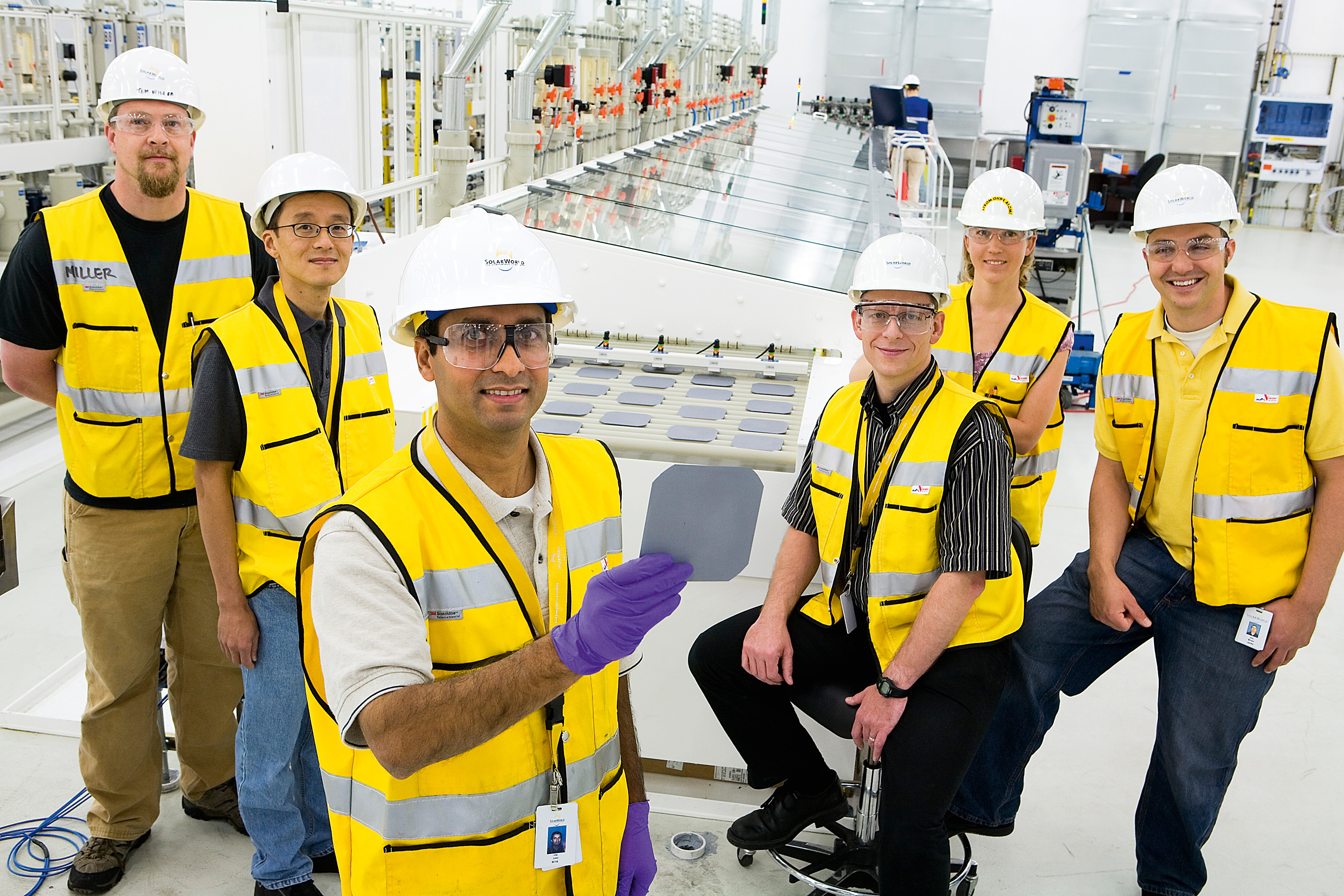
In one corner of the building, a room of steel vats cook up polysilicon, producing eight-foot-long silicon ingots in the shape of giant silver pencils. Those ingots are taken to another room where wiresaw machines slice them into wafers. The wafers then travel down a conveyor belt where robots wash them and scan for imperfections.

“What’s critical here is the equipment,” says Bisner over the hum of the machines. “Our competitive advantage is how we use the equipment, how can we get every little bit of photovoltaic cell out of the end of the line. It takes equipment, it takes technology and it takes people too.”

In an adjoining room, the wafers are imprinted with contacts and transformed into photovoltaic cells. Depending on customer demand, SolarWorld will sell both silicon wafers and finished cells. The company currently gets 10% to 15% of its revenues from the U.S.

SolarWorld isn’t the only solar company wanting a made-in-America label. Sanyo this week announced it will build a solar cell factory in Salem, south of Portland. And Chinese solar giant Suntech (STP) earlier this month acquired a California-based solar installer and announced a joint venture with San Francisco-based MMA Renewable Ventures (MMA) to build solar power plants. Suntech chief strategy officer Steven Chan told Green Wombat this week that Suntech will likely open factories in the U.S. within a couple years.

Says Klebensberger, “We provide green jobs. We’re not just talking about it, we’re doing it.”

Read Full Post »

SAN DIEGO – California Governor Arnold Schwarzenegger made a surprise appearance at the solar industry’s annual confab Monday night, warning not to use the financial crisis as an excuse to abandon the fight against global warming.

“We should not give in to those who say environmental goals should take a back seat until the economy improves,” said Schwarzenegger, kicking off the Solar Power International conference. “That’s short-sighted thinking. Tough economic times mean we need more solar, more green jobs.”

The governator’s championing of solar energy through California’s million solar roofs initiative and its landmark global warming law has made Schwarzenegger something of a patron saint of the solar industry, and the audience was on its feet cheering the perma-tanned politician.

The solar power conference is a barometer of the industry’s growth. When Schwarzenegger last appeared at the conference in 2006, 6,000 attendees crammed the San Jose Convention center. This week an estimated 20,000 people have descended upon San Diego for the event. (For techies, think of it as the Consumer Electronics Show and Macworld rolled into one.)

The crowd was in a festive mood. Solar stocks were up dramatically Monday with the bounce back on Wall Street – First Solar (FSLR) spiked nearly 23% and Suntech (STP) rose 21% as was SunPower (SPWRA). And ten days ago Congress slipped into the financial bailout package an eight-year extension of a crucial 30% solar investment tax credit, lifted a $2,000 tax credit limit for homeowners who install solar arrays and allowed utilities to claim the investment tax credit for solar installations. “Imagine it took a financial rescue plan to get a tax credit for solar,” Schwarzenegger remarked.

The Republican governor used the occasion to champion California, as he is his wont, giving kudos to Southern California Edison (EIX) for the utility’s plans to install 250-megawatts’ worth of solar panels on warehouse roofs. “I can envision going up in a helicopter and up and down California and see no more warehouses without solar panels.”

“Solar is the future, it cannot be stopped,” he added.

Read Full Post »

Photos: Solyndra

SAN FRANCISCO – The chatter of the Financial District types who lunch at One Market is a bit deafening, so I’m sure I’ve misheard when Solyndra CEO Chris Gronet tells me how much funding his stealth solar startup has raised. “You said $60 million, right?” I ask.

“$600 million,” he replies.

That pile of cash from investors ranging from Silicon Valley venture capitalists to Richard Branson to the Walton family wasn’t the only big number Solyndra revealed to Green Wombat in anticipation of the solar panel manufacturer’s public debut Tuesday after operating undercover for more than three years. “We have $1.2 billion in orders under contract,” says Kelly Truman, the Fremont, Calif.-based company’s vice president for marketing and business development.

The stealth startup is a Silicon Valley archetype, along with the baby-faced Web 2.0 mogul and the millionaire stock-option secretary. But perhaps no company in recent memory has managed to hire more than 500 people and build a state-of-the-art thin-film solar factory – in plain view of one of the Valley’s busiest freeways – without attracting much attention beyond a few enterprising green business blogs.

Thin-film solar has been something of a Holy Grail in Silicon Valley, with high-profile startups like Nanosolar – with nearly $500 million in funding itself – all vying to be first to market with copper indium gallium selenide solar cells. CIGS cells can essentially be printed on flexible materials or glass without using expensive silicon. While such solar cells are less efficient at converting sunlight into electricity, production costs are expected to be significantly lower than making traditional silicon-based modules. (Thin-film companies like First Solar (FSLR) – also backed by the Waltons – use an older technology.)

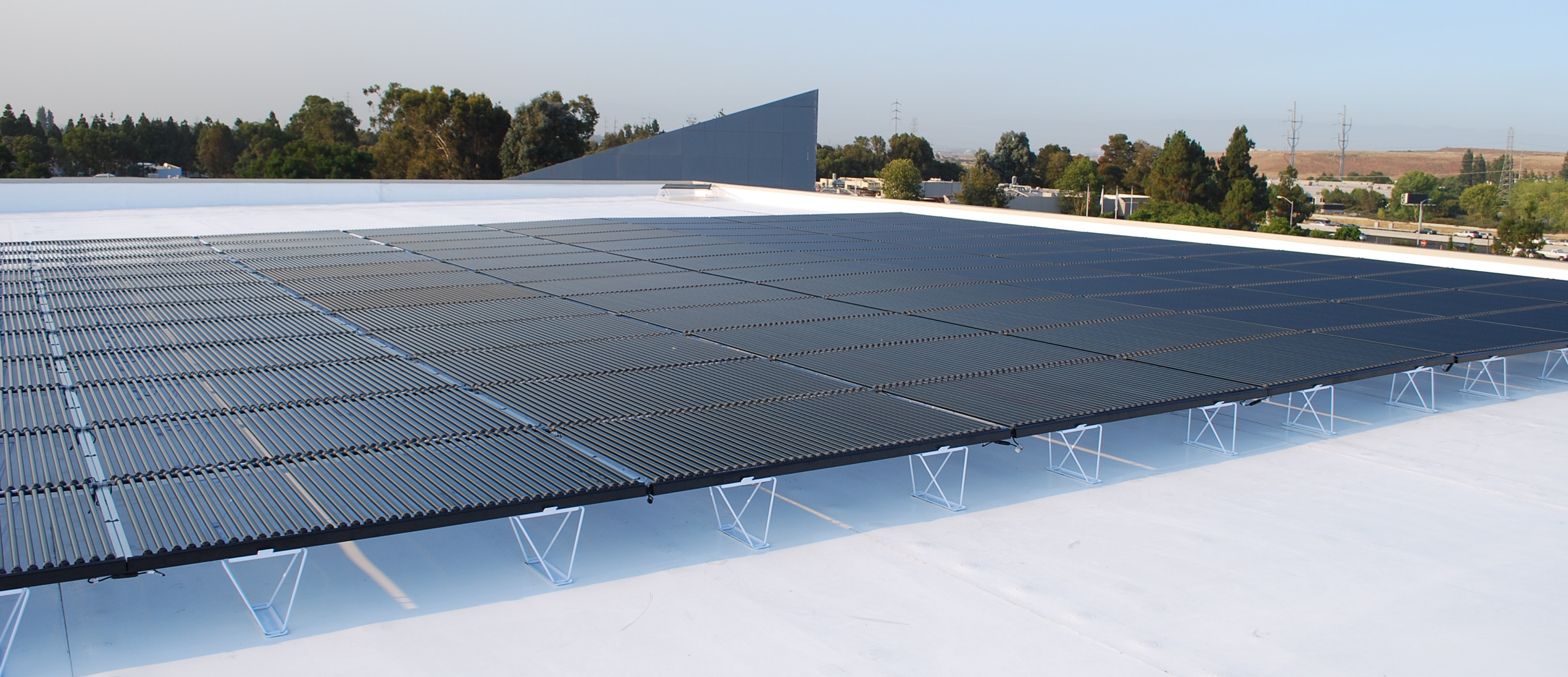
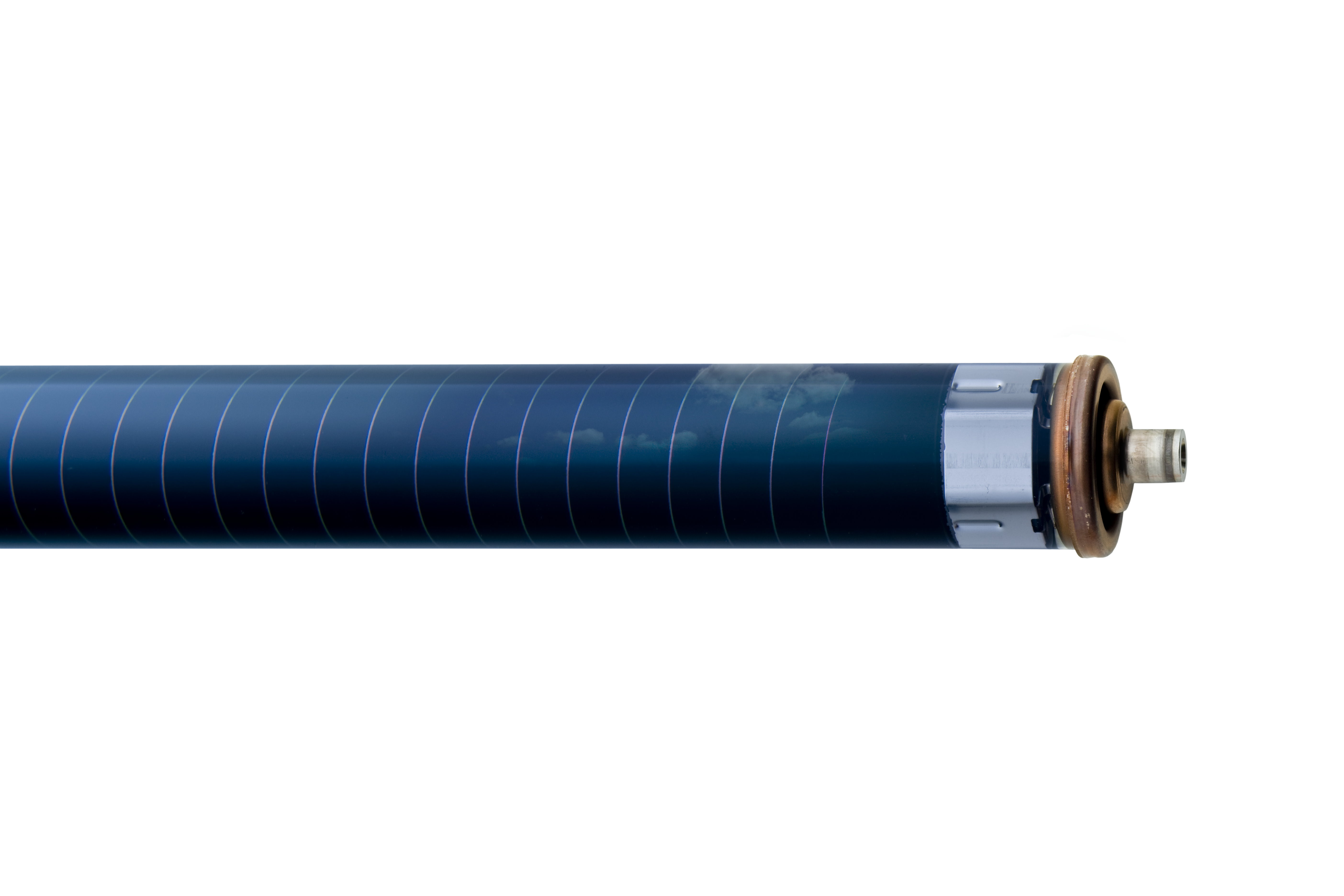
Yet Solyndra bursts onto the scene with a factory operating 24/7 and a billion-dollar book of business. The reason for Solyndra’s secrecy – and success with investors and customers – is sitting in a bazooka-sized cylinder propped up beside Truman at the restaurant. He pulls out a long, black glass tube that is darkened by a coating of solar cells.

The cylindrical shape is the key, according to CEO Gronet. Conventional rooftop solar panels must be tilted to absorb direct sunlight as they aren’t efficient at producing electricity from diffuse light. But the round Solyndra module collects sunlight from all angles, including rays reflected from rooftops. That allows the modules, 40 to a panel,  to sit flat and packed tightly together on commercial rooftops, maximizing the amount of space for power production.

“We can cover twice as much roofspace as conventional solar panels and they can be installed in one-third the time,” says Gronet, a boyish 46-year-old who holds a Stanford Ph.D. in semiconductor processing and was an 11-year veteran of chip equipment maker Applied Materials (AMAT) before he started Solyndra in May 2005.

And because air flows through the panels they stay cooler and don’t need to be attached to the roof to withstand strong winds. That means installers simply clip on mounting stands and then snap the panels together like Legos.

“For flat commercial rooftops this is game-changing technology,” said Manfred Bachler, chief technical officer at European solar installation giant Phoenix Solar, in a statement.

Solyndra’s target is the 30 billion square feet of flat roofspace found on big box stores and other buildings in the U.S., according to Navigant Consulting – a potential $650 billion solar market.  The emerging business model is for a solar developer to finance, install and operate a commercial solar array and then sell the electricity to the rooftop owner. Solyndra’s business is to supply the solar panels to the installers, a market crowded with competitors like SunPower (SPWRA) and Suntech (STP).

A good chunk of the $600 million the company has raised has gone toward building its 300,000-square-foot solar fab. A video Gronet and Truman played for me shows a highly automated factory, with robotic assembly lines and robot carts moving the solar modules through the production process.

The fab – which can produce 110 megawatts’ worth of solar cells a year – already is shipping panels to big customers like Solar Power in the U.S. and Germany’s Phoenix Solar – three-quarters of its $1.2 billion in orders are destined for European companies. Solyndra is in the process of obtaining permits for a second 420-megawatt fab in Fremont; upon its completion, Solyndra would become one of the biggest solar cell manufacturers in North America. (Gronet says a third fab will be built in Europe, Asia or the Middle East.)

That has helped Solyndra attract a long list of investors, from Silicon Valley VCs like CMEA and US Venture Partners to Madrone Capital – the Walton family’s (WMT) private equity fund – and Masdar, the Abu Dhabi company whose mission is to transform the oil-rich emirate into a green tech powerhouse. Another high-profile investor is Richard Branson’s Virgin Green Fund.

“We looked at 117 solar companies and have made two investments, including Solyndra,” says Anup Jacob, a partner at Virgin Green Fund and a Solyndra board member. “Dr. Chris Gronet and his team came out of Applied Materials and really took the best and brightest of Silicon Valley. They’re great scientists and operations people.”

Jacob told Green Wombat that Virgin hired Stanford scientists to evaluate Solyndra’s technology and engineering firms to vet its solar factory. “Because we’re late-stage investors, we were able to look at all their major competitors,” he says. “There’s a number of well-heeled solar companies that have said they are going to do a lot of things but haven’t delivered.”

Virgin concluded that Solyndra could make good on its promise to make solar competitive with traditional sources of electricity. “As a rooftop owner, all you care about is how much electricity you can get from your rooftop at the cheapest price possible,” he says.

One challenge, he adds, was keeping mum about Solyndra. “I gotta tell you that Richard Branson is a guy who loves to talk about what’s he’s doing and it was real effort to honor Solyndra’s wishes to keep quiet.”

Read Full Post »

In another sign that the financial crisis is not slowing the solar industry, Suntech, the giant Chinese solar module maker, made a big move into the United States market on Thursday. The company announced a joint venure with green energy financier MMA Renewable Ventures to build solar power plants and said it would acquire California-based solar installer EI Solutions.

Founded in 2001, Suntech (STP) recently overtook its Japanese and German rivals to become the world’s largest solar cell producer. The company has focused on the lucrative European market and only opened a U.S. outpost, in San Francisco, last year.  The joint venture with MMA Renewable Ventures (MMA) – called Gemini Solar – will build photovoltaic power plants bigger than 10 megawatts.

Most solar panels are produced for commercial and residential rooftops, but in recent months utilities have been signing deals for massive megawatt photovoltaic power plants. Silicon Valley’s SunPower (SPWRA) is building a 250-megawatt PV power station for PG&E (PCG) while Bay Area startup OptiSolar inked a contract with the San Francisco-based utility for a 550-megawatt thin-film solar power plant. First Solar (FSLR), a Tempe, Ariz.-based thin-film company, has contracts with Southern California Edision (EIX) and Sempre to build smaller-scale solar power plants.

Suntech’s purchase of EI Solutions gives it entree into the growing market for commercial rooftop solar systems. EI has installed large solar arrays for Google, Disney, Sony and other corporations.

“Suntech views the long-term prospects for the U.S. solar market as excellent and growing,” said Suntech CEO  Zhengrong Shi in a statement.

Other overseas investors seem to share that sentiment, credit crunch or not.  On Wednesday, Canadian, Australian and British investors lead a $60.6 million round of funding for Silicon Valley solar power plant builder Ausra. “So far the equity market for renewable energy has not been affected by the financial crisis,” Ausra CEO Bob Fishman told Green Wombat.

The solar industry got more good news Wednesday night when the U.S. Senate passed a bailout bill that included extensions of crucial renewable energy investment and production tax credits that were set to expire at the end of the year.

Read Full Post »

photo: David Lena

In a move that could alter the economics of the global solar industry, California utility PG&E on Thursday announced that it will buy 800 megawatts of electricity produced from two massive photovoltaic power plants to be built in San Luis Obsipo County on the state’s central coast. The 550-megawatt thin-film plant from Bay Area startup OptiSolar and a 250-megawatt PV plant from Silicon Valley’s SunPower dwarf by orders of magnitude the five-to-15 megawatt photovoltaic power stations currently in operation around the world.

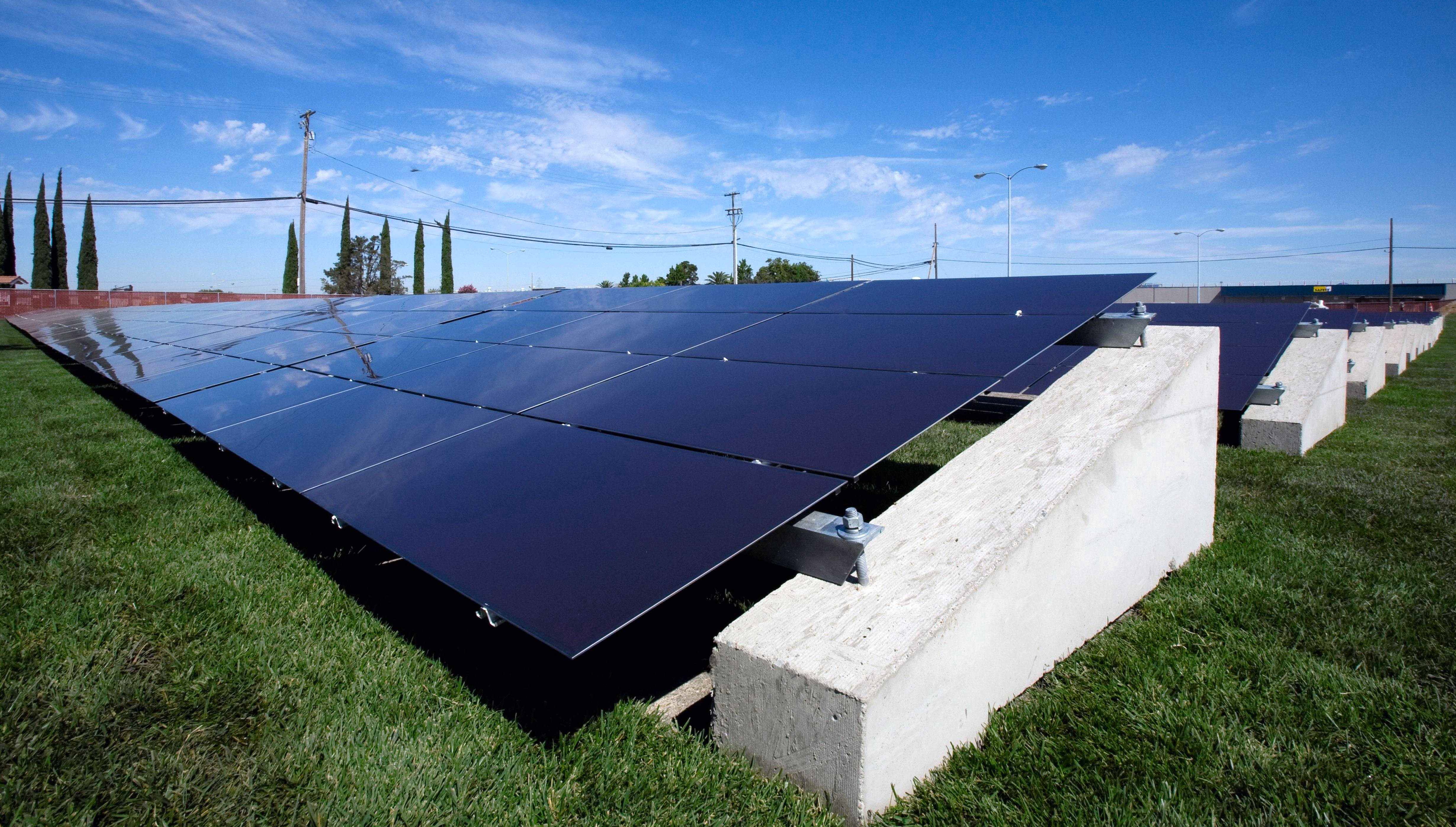
Most of the industrial-scale solar plants designed to replace fossil-fuel power use solar thermal technology, meaning they deploy mirrors to heat liquids to produce steam that drives electricity-generating turbines. Photovoltaic power plants essentially take the solar panels found on suburban rooftops and put them on the ground in gigantic arrays. How gigantic? OptiSolar’s Topaz Solar Farm will cover 9 1/2 square miles of ranch land with thin-film panels like the ones in the photo above. Combined, the two solar plants would produce enough electricity to power 239,000 California households, according to PG&E (PCG).

“Obviously this is huge and a bold move,” says Reese Tisdale, a senior analyst who studies the economics of solar power for Emerging Energy Research in Cambridge, Mass. “It’s a pretty big jump in manufacturing capacity and a big opportunity for the PV industry, particularly for thin-film.”

If the power plants are ultimately built – and that’s a big if, given the challenges to get such facilities online – and other utilities follow PG&E’s lead, demand for solar modules could skyrocket. (Thin-film cells like those made by OptiSolar are deposited or printed in layers on glass or flexible metals. They are less efficient at converting sunlight into electricity than standard solar modules but they use far less expensive polysilicon and can be produced much more cheaply.)

First Solar (FSLR), a leading thin-film maker, has an annual manufacturing capacity of around 275 megawatts – which will rise to a gigawatt by the end of 2009. (First Solar is building two small-scale solar power plants for Southern California Edison (EIX) and Sempra (SRE).) SunPower (SPWR) is expected to produce 250 megawatts worth of solar modules this year; its California Valley Solar Ranch project for PG&E alone will be consume 250 megawatts.

“If we were trying to do it this year, it would be all of our production,” says Julie Blunden, SunPower’s vice president for public policy. “SunPower is ramping very quickly. By 2010 our production will be at least 650 megawatts.” SunPower’s solar power plant is set to begin producing electricity in 2010.

The PG&E deal puts OptiSolar in the spotlight. Founded by veterans of the Canadian oil sands industry, the stealth Hayward, Calif., startup has kept its operations under cover, avoiding the media as it quietly set up a manufacturing plant in the East Bay and prepared to break ground on a million-square-foot factory in Sacramento.

OptiSolar CEO Randy Goldstein told Green Wombat that the company will have no problem producing enough solar cells to build Topaz, which is scheduled to go online in 2011, as well as fulfill contracts for some 20 small-scale power plants in Canada.

“Our plan has always been to produce solar energy on a very large scale to make it cost-competitive, even in a market like California,” Goldstein says.

The terms of utility power purchase agreements like the ones OptiSolar and SunPower have signed with PG&E are closely held secrets, but it has long been an open secret that building massive photovoltaic power plants was not economically viable. Last year when I attended the opening of an 11-megawatt PV power station in Portugal – which offers generous solar subsidies – that was built by SunPower’s PowerLight subsidiary, PowerLight’s CEO told me that pursuing such projects in the U.S. was not an attractive proposition due to market incentives and public policy.

So what has changed too make constructing gargantuan PV power plants profitable?

“Lots of things have changed,” says SunPower’s Blunden. “Power prices are going up and public policy is requiring utilities to have a portfolio of renewables.”  And after building some 40 megawatts of power plants in Spain, SunPower has been able to improve its manufacturing processes and cut costs, according to Blunden.  “We could see where the cost reductions were coming down and the benefits of scale,” she says. “We saw there was a way for us to be competitive with other renewables.”

Goldstein says OptiSolar’s business model of owning the supply chain – from building its own machines to make solar cells to constructing, owning and operating power plants – will allow it to reduce costs. “By taking control of the value chain from start to finish, by being vertically integrated and cutting out the middleman,” he says, “we can be competitive not only with other renewable energy but with conventional energy.”

Photovoltaic power plants do have certain advantages over their solar thermal cousins. They don’t need to be built in the desert, thus avoiding the land rush now underway in the Mojave. PV is a solid-state technology and with no moving parts – other than the sun tracking devices used in some plants – they make little noise and are relatively unobtrusive. Most importantly in drought-stricken California, they consume minimal water. And the modular nature of solar panels means that a power plant can start producing electricity in stages rather after the entire facility has been constructed.

“The economies of scale does make PV cost competitive with other renewable energy generating technologies, and wouldn’t be possible without advances that SunPower and OptiSolar have been working on,” says PG&E spokeswoman Jennifer Zerwer. “We take a stringent look at all technologies and we’re not wedded to a particular one.”

With the PV plants, PG&E now has contracts to obtain 24 percent of its electricity from renewable sources.

But contracts are no guarantee the even a watt will be generated. The Topaz and California Valley projects must overcome a number of obstacles, not the least of which is the U.S. Congress’ failure so far to extend a crucial 30 percent investment tax credit for solar projects that expires at the end of the year. SunPower’s Blunden acknowledges the PG&E project is contingent on the tax credit being renewed.

PG&E executive Fong Wan said as much at a press conference Thursday afternoon: “That is a major hurdle. If the investment tax credit is not extended, I expect many of our projects will be delayed.”

Then there’s the question of how welcoming rural San Luis Obispo County residents will be to two massive solar power plants in the neighborhood. Along with a 177-megawatt solar thermal power plant being built by Silicon Valley startup Ausra for PG&E adjacent to the Topaz project, the county has become a solar hot spot. Ausra has run into some community opposition and state officials are growing concerned about the impact of the power plants on protected wildlife.

“The challenge is going to be the magnitude of these projects,” says Tisdale, the energy analyst. “Other projects are already facing opposition from the environmentalists.”

But for solar power companies like OptiSolar the impetus is to get big and get big fast. “I think it’s going to demonstrate that photovoltaics have the ability to be part of the energy mix,” says Goldstein of Topaz. “We can scale up and have a big impact. There’s not going to be a lot of room for niche players in the long run.”

Read Full Post »

photo: Southern California Edison

When Southern California Edison unveiled plans to install 250 megawatts’ worth of solar panels on warehouse roofs back in March, it was hailed as a ground-breaking move. In one fell swoop, the giant utility would cut the cost of photovoltaic power, expand the solar market and kick-start efforts to transform untold acres of sun-baked commercial roof space into mini-power plants.

There’s just one problem: the solar industry is fighting the billion-dollar plan. In briefs filed with the California Public Utilities Commission, solar companies, industry trade groups and consumer advocates argue that allowing a utility to own and operate such massive green megawattage will crowd out competitors who can’t hope to compete with a project financed by Edison’s ratepayers.  (In California, shareholders of investor-owned utilities are guaranteed a rate of return for approved projects, while utility customers bear a portion of the costs in the form of higher rates.)

The five-year plan “would establish SCE as the monopoly developer of commercial-scale distributed solar in its service territory,” wrote Arno Harris, CEO of Recurrent Energy, a San Francisco company that sells solar electricity to commercial customers. “This would irreparably impair the development of a competitive solar industry.”

Southern California Edison (EIX) is the first utility in the United States to propose such a “distributed generation” scheme and the dispute is being watched closely as a test case for the viability of producing renewable electicity from hundreds of millions of square feet of commercial rooftops. Such systems can be plugged directly into existing transmission lines and tend to generate the most solar power when electricity demand spikes – typically on summer afternoons when people crank their air conditioners. Having such green energy on tap would save utilities from having to build expensive and planet-warming fossil fuel-powered “peaker plants” that sit idle except when demand suddenly rises.

Even critics hail Edison’s move as “bold” and “visionary” and no one disputes that in California the development of big rooftop solar has lagged. For instance, the state’s $3.3 billion “million solar roofs” initiative is designed to put smaller-scale solar panels on homes and businesses and provides generous rebates for systems under 1 megawatt. At the other end of the scale, the state’s big utilities have been signing contracts to buy electricity from solar thermal power plants to be built in the desert. Left out of the subsidy game are incentives for the 1-to-2 megawatt arrays well-suited for commercial buildings.

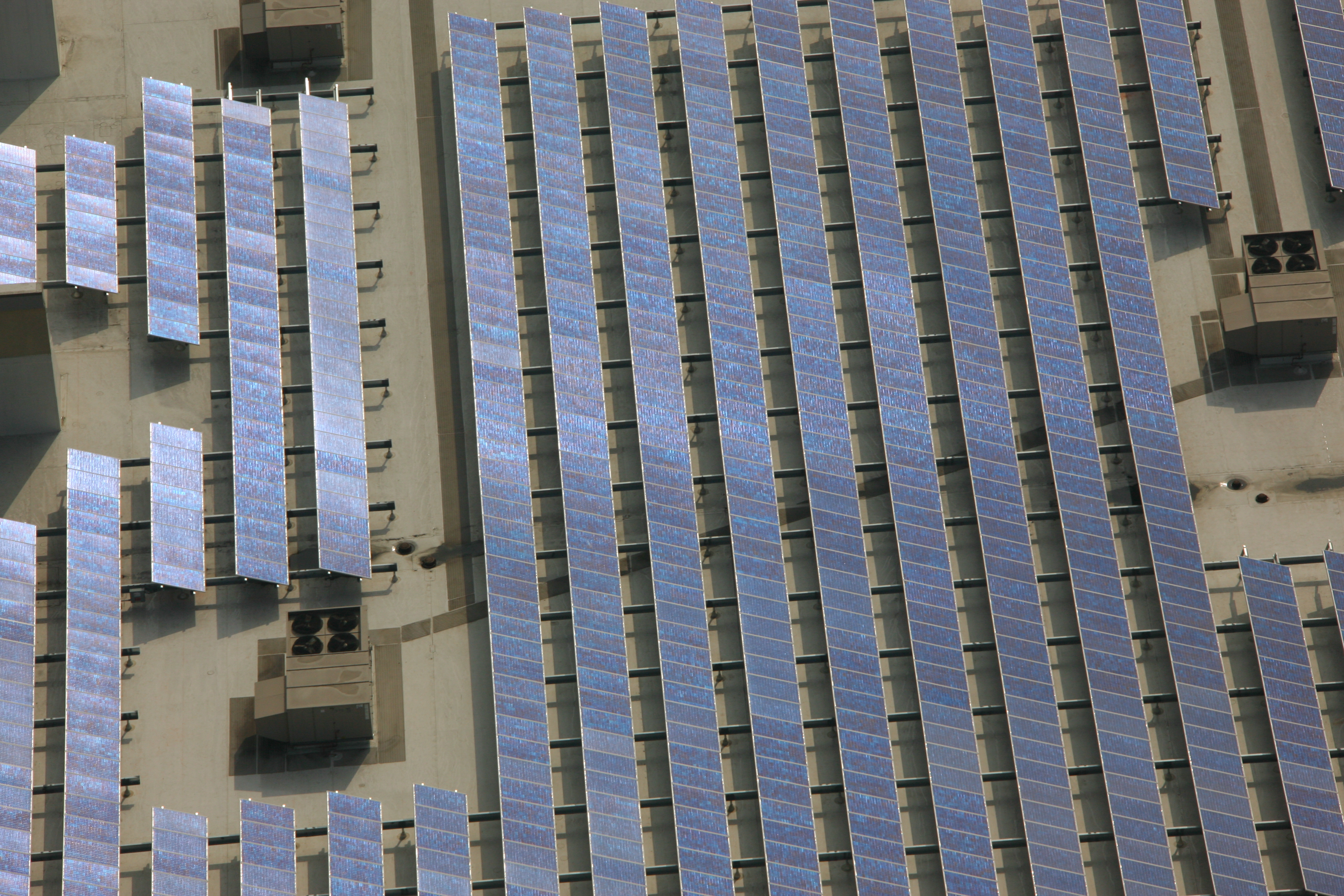
Southern California Edison says it’s filling that gap and will energize the solar industry, not crush it. The utility plans to lease 65 million square feet of commercial rooftop space in the “Inland Empire” region of Southern California for solar arrays that would generate enough electricity to power 162,000 homes.

“SCE’s financial stability and business reputation will increase the probability that 250 MW of solar PV systems will be available to meet the state’s solar rooftop goals over the next five years,” the utility’s attorneys wrote in a brief filed with the utilities commission, which must approve the program. “In so doing, a solar PV program can improve efficiencies … to reduce costs and jump start the competitiveness of solar PV for widespread application on California roofs.”

There’s no doubt the program will be a boon for solar module makers. For instance, thin-film solar cell company First Solar (FSLR) is supplying 33,000 panels for the program’s first project, a 600,000-square-foot roof array in the inland city of Fontana. However, Southern California Edison intends to contract for union labor to install the solar systems and tap its own capital and a rate hike to finance the project. That won’t leave many opportunities for solar installers and financiers like SunPower (SPWR), SunEdison and MMA Renewable Ventures (MMA).

“Even though this program is kind of taking bread out of our own mouth, the demand for solar will keep going up,” says Mark McLanahan, senior vice president of corporate development at MMA Renewable Ventures, a San Francisco firm that finances commercial solar arrays.

“What they have announced is extremely visionary,” McLanahan tells Green Wombat. “It’s game changing and opens up whole new realms of what solar can do. That’s exciting.”  On the other hand, he says, “It’s certainly possible that a young, growing industry that is pretty fragmented could be hurt by this rather than helped.”

A solution advanced by some solar industry critics is for Southern California Edison to open up the entire program to competitive bidding, not just the procurement of solar panels. The utility vehemently opposes the idea, arguing it would work against the economies of scale it says it can bring to the program.

Whether regulators will approve Southern California Edison’s request for a rate hike to pay for the initiative – and at electricity rates that are significantly higher than those set for other solar programs – remains to be seen. The commission’s own ratepayer advocate has questioned whether utility customers will get their money’s worth.

The utilities commission is unlikely to issue a final decision until next year. In the meantime, you can bet the state’s other big utilities – PG&E (PCG) and San Diego Gas & Electric (SRE) – and solar companies will be watching to see whether the sky’s the limit for big rooftop solar or whether a ceiling is about to be placed on the industry’s ambitions.

Read Full Post »

In late 2006, there was something of an exodus from Australia as solar startups decamped for California, frustrated by the long-entrenched conservative government’s tepid support for renewable energy. On one Sydney-to-San Francisco flight alone could be found David Mills, co-founder of solar power plant company Ausra, and Danny Kennedy, chief of solar installer startup Sungevity.

Flash forward 18 months and solar energy companies are beating a path back to Australia. Ausra recently opened up operations Down Under, and last week Silicon Valley solar company SunPower (SPWR) acquired an Australian solar installer called Solar Sales. So is Oz the next hot solar market? By all accounts, the sun-baked environmentally conscious country should be. But the move into the South Pacific is another example of how governments’ ever-morphing renewable energy policies are spurring solar companies to move operations around the globe.

“Obviously there’s a lot of sun in Australia but with the recent change in government there’s a policy environment that could be much more favorable for us,” Peter Aschenbrenner, SunPower’s vice president of corporate strategy, told Green Wombat. “We decided to get in now. It was a little opportunistic as the owners of  Solar Sales were looking to monetize their investment. It follows a model of a previous acquisition in Italy where we got in before the market headed north.”

Last November, a left-leaning Labor government took power in Australia, immediately signed the Kyoto Accord and expanded a national subsidy for rooftop solar panels. Meanwhile, individual Australian states, much like their American counterparts, have enacted their own incentives. Three states – Queensland, South Australia and Victoria – have adopted “feed-in-tariffs” that pay homeowners a premium for electricty produced from solar panels – up to four times the prevailing power rates. Solar homeowners that return  more electricity to the grid than they consume can zero out their power bill or even earn cash from their utility.

But the government of Prime Minister Kevin Rudd has shown the same propensity to alter the rules of the game mid-stream as its predecessor, which wreaked havoc on the wind industry several years ago when it abruptly curtailed a renewable energy target. The Rudd government already has changed course on a national solar subsidy – which provides rebates up to $A8,000 for photovoltaic systems – to make it available only to households earning less than $A100,000 – which qualifies as middle middle-class in Australia’s big cities. Some of the states in turn have limited their subsidies. Victoria – Australia’s second-most populous state – will pay premium solar rates to only 100,000 households.

Given that solar is a game that moves as you play and the relatively small size of the Australian market (population: 20 million) Kennedy for one is cautious about doing business in his homeland.

“I think that it’s potentially a good market in the future,” says Kennedy, a former longtime Greenpeace activist who’s close to Australia’s environment minister and other government officials. “But it’s not living up to its potential because there’s a set of mixed signals from the federal and state governments and no certainty from one year to the next.”

Just how quickly the market can change has been illustrated by Spain, a solar hotspot that has attracted SunPower and other solar power plant builders as well as financiers like GE Energy Financial Services (GE)  with its lucrative premium rates for green electricity. But now the Spanish government is considering cutting its feed-in-tariff and limiting it to an annual 300 megawatts of installed solar, 100 megawatts of which must be rooftop photovoltaic systems. By contrast, some 1,100 megawatts of solar were expected to be installed this year. That would dramatically change the economics for solar energy companies that have moved into the Spanish market.

“This is something we’ve been preparing for,” says Aschenbrenner of SunPower, which has focused on building photovoltaic power plants in Spain. “With our global footprint, we are well placed to move allocation around as these markets wax and wane. In Spain, we’ve been working on building a dealer network to focus on the residential and small commercial markets.”

In Australia, SunPower will need to ramp up its new acquisition since Solar Sales operates on the country’s isolated West Coast while most of the country’s population is concentrated on the eastern seaboard. About half of Solar Sales business has been building off-the-grid power systems for Outback communities that rely on diesel generators for power. Aschenbrenner says he expects that business to continue but the focus will switch to residential solar.

photos: Todd Woody

Read Full Post »

When Intel announced this week that it was spinning off a stealth in-house startup called SpectraWatt to develop solar cells, it appeared the chip giant was just the latest old-line Silicon Valley tech firm bitten by the green bug.

After all, crosstown chipmaker Cypress Semiconductor jumped into the solar game back in 2004 when it acquired SunPower (SPWR), now a leading manufacturer of solar cells and panels and an installer of large-scale solar arrays. Then the world’s biggest chip-equipment maker, Applied Materials (AMAT), retooled machines that make flat-screen video displays to produce thin-film solar panels. And just this month, Hewlett-Packard (HPQ) unveiled a deal to license solar technology to a solar cell startup while IBM (IBM) announced it would develop thin-film solar.

But it’s not just now jumping on the enviro-biz bandwagon – Intel’s solar efforts have been quietly under development since 2004. That’s when Andrew Wilson, an 11-year Intel (INTC) veteran, was chatting with a colleague while waiting for a conference call to begin. “We were shooting the breeze and I mentioned that I had replaced all the light bulbs in my house with compact fluorescent lights and my utility bill had come down by a third,” says Wilson, SpectraWatt’s CEO. “And he said, `Hey, did you know that solar cells are made of silicon?’ ”

“We started talking about what a business plan would look like, because if something is made out of silicon then Intel should be taking advantage of that market,” Wilson told Fortune. A year later, Wilson and his colleagues had developed a marketing plan and secured funding from Intel’s new-business incubator to develop a business strategy and hone its technology. (It’s no coincidence that the nascent solar industry is populated by computer industry veterans from companies that put the silicon in Silicon Valley.)

When it comes to cutting-edge solar technology, silicon-based cells are considered a bit old-school. Silicon is currently in short supply and the resulting high prices have led venture capitalists to invest hundreds of millions of dollars in thin-film solar startups that promise to dramatically lower the cost of solar by printing or otherwise applying non-silicon solar cells to glass or flexible materials that can be integrated into walls, windows and other building materials. While thin-film solar is less efficient at converting sunlight into electricity, the expectation is that it can be produced much more cheaply than conventional cells.

But thin-film solar is still largely an early-stage technology and silicon-based cells will continue to be the big market for the near-future. So the question is, how does Intel compete with established players like SunPower, China’s Suntech (STP) and Germany’s Q-Cells as solar cells become a commodity? Intel controls some 80 to 90 percent of the worldwide chip market but it’s unlikely that it – or any other player – will replicate that experience in solar cells.

Wilson’s view is that it’s early days for the solar market and that SpectraWatt’s ace in the hole is Intel’s global manufacturing experience and history of technological innovation. “The solar industry today looks like the microelectronics industry in the late ‘70s – there’s very few standards and no one is manufacturing at scale,” says Wilson. “It’s all about manufacturing processes and material sciences that will lead to fundamental breakthroughs. The product is vastly simpler than a microprocessor but the fundamental nature of a solar cell isn’t all that different. When you think of what it takes to manufacture globally and manage supply chains, that’s Intel’s core competence.”

There certainly is room for more players, given that solar was a $30 billion market in 2007 and is expected to continue to grow at a clip of 30 to 40 percent in the coming years.

Wilson says SpectraWatt has secured silicon supplies and is developing technology that will give it a competitive edge. He’s keeping mum about the details of that technology for now. “We do believe we will have a technological advantage when we get what we’re doing in the lab to manufacturing,” Wilson says.

The company is set to begin building its manufacturing facility in Oregon later this year, with production to begin in mid-2009.

SpectraWatt launches with a $50 million investment lead by Intel Capital, the company’s investing arm. Other investors include Goldman Sachs (GS), PCG Clean Energy and Technology Fund, and German solar giant Solon. (As Green Wombat has written, Solon has invested in an array of solar startups in the United States, including Sungevity and thin-film solar company Global Solar.)

Read Full Post »

serpa2.jpg

Another day, another new solar power plant. At least that’s the way it seems, given SunPower’s recent spate of deals to build multi-megawatt photovoltaic solar power stations. The latest came Friday when the Silicon Valley solar panel maker announced a contract to construct an 8-megawatt solar power plant in Spain. The agreement follows a November deal for three other solar power stations in Spain totaling 21 megawatts. That in turn was preceded by an October announcement of a contract for a 18-megawatt plant in — where else — Spain.

See a pattern here? SunPower (SPWR) now has solar power plants totaling more than 100 megawatts built or under contract in Spain. Plus it constructed an 11-megawatt solar power station in neighboring Portugal and a 10-megawatt plant in Germany. It’s sole PV power plant in the United States is a 15-megawatt station at Nellis Air Force Base outside Las Vegas.

It’s no accident that SunPower has set its sights on Spain and other European markets. Spain and Portugal, for instance, offer simple so-called feed-in-tariffs that pay solar power plant operators a premium rate — typically for 15 to 20 years — for producing renewable energy. That makes the economics of financing and building solar power plants relatively straightforward in contrast to the patchwork of short-term state and federal green energy incentives in the U.S. (Witness the current upheaval in the industry over the crucial solar investment tax credit that expires at the end of 2008, and which Congress neglected to extend in the recently enacted energy bill.)

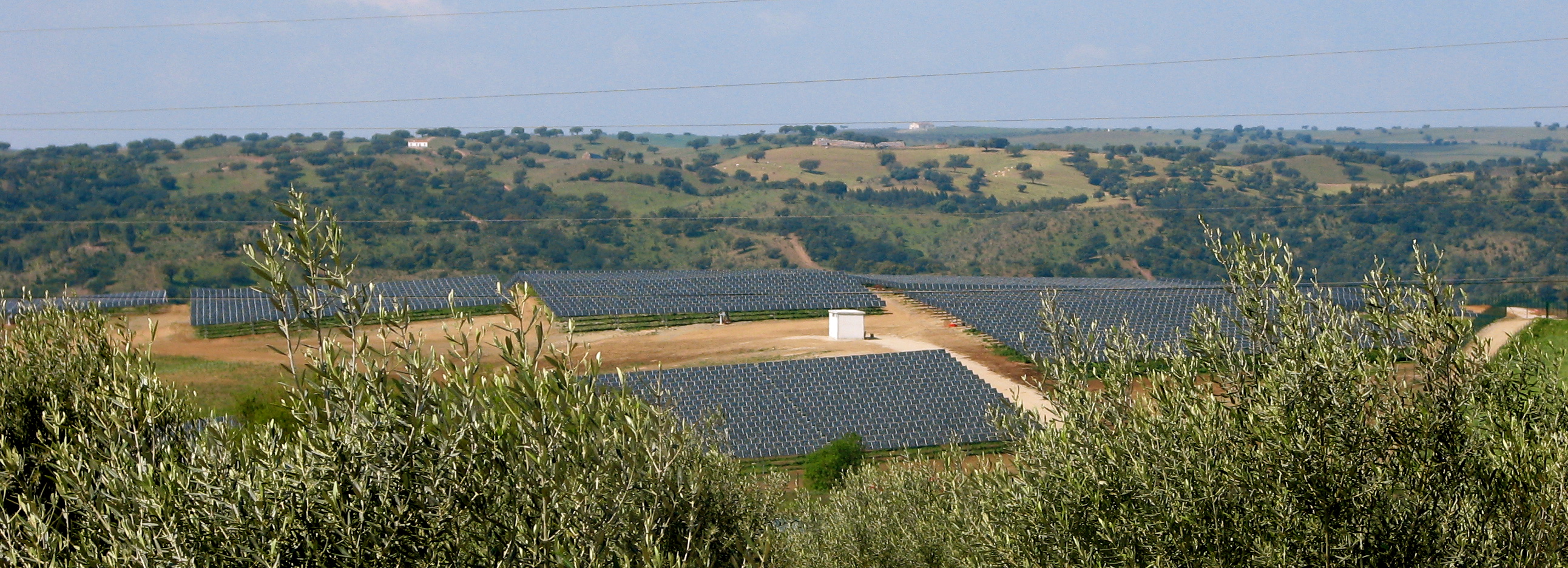
No wonder Europe is attracting renewable energy financiers like GE Energy Financial Services (GE), which financed SunPower’s Portugal plant (pictured above). “We truly believe utility-scale solar will be an incredible opportunity,” Kevin Walsh, managing director of GE Energy Financial Services, told Green Wombat at the opening of the Portugal plant last March. (That’s not to say that companies like GE don’t see opportunity in the U.S. market. Just this morning, SunPower announced that GE Energy Financial Services will finance and own five 1-to-2.4-megawatt commercial solar arrays in California being installed by SunPower for Toyota (TM), Hewlett-Packard (HPQ), Agilent, Lake County, and the Rancho California Water District.)

The built-in profit margin for solar in Spain and Portugal also makes photovoltaic power plants viable. PV plants are essentially residential rooftop solar arrays writ large that track the sun and convert sunlight that strikes silicon-based cells directly into electricity. But silicon is expensive and solar panels are relatively inefficient. So absent subsidies like feed-in tariffs, few PV power stations have been built in the U.S., which has focused on large-scale solar thermal power plants that use mirrors to heat water or other liquids to create steam that drives electricity-generating industrial turbines. The beauty — literally – of a PV plant is that it contains virtually no moving parts or bulky power blocks that contain turbines and other machinery. That means they can be built closer to urban areas and used to shoulder the load from overburdened utility substations.

Even solar panel installers are striking deals overseas. Silicon Valley-based solar installer Akeena (AKNS), for instance, developed a new solar panel system called Andalay that cuts the cost of installation for homes and businesses. The company contracted with China solar panel giant Suntech (STP) to manufacture Andalay, which will also sell the panel in Europe, Japan and Australia.

Read Full Post »

« Newer Posts

Design a site like this with WordPress.com
Get started