Feeds:
Posts
Comments

Archive for the ‘solar energy’ Category

Twice now the renewable energy industry has narrowly lost votes in Congress to extend an investment tax credit crucial to jump-starting the market for large-scale projects like solar power plants. In December, Big Oil outmaneuvered green energy advocates and their Congressional supporters by claiming that rescinding huge tax breaks for the fossil fuel industry to pay for renewables would cost consumers at the pump. A more recent attempt to revive the tax credit also failed.

Now the American Council on Renewable Energy is bringing out its big green guns. Representatives from Silicon Valley tech giants, Wall Street investment banks and utilities signed a letter sent to the congressional leadership late Wednesday urging the long-term extension of the 30 percent investment tax credit as well as the production tax credit for the electricity produced by solar, wind, geothermal and other renewable energy systems. Among the signers urging action by March 1 are executives from )Google (GOOG), Hewlett-Packard (HPQ), Applied Materials (AMAT), Credit Suisse (CS), Wells Fargo (WFC), venture capitalists Kleiner Perkins Caufield & Byers and utility San Diego Gas & Electric, a subsidiary of energy giant Sempra (SRE).

Interestingly, the phrases “climate change” and “global warming” never appear in the letter. In a savvy move, the council has forsaken doom and gloom for a purely economic message: American jobs, competitiveness and innovation are at stake, the signers argue, and the tax incentive will spark a green tech boom at relatively little cost to the taxpayers. It’s a Silicon Valley mindset and its no surprise that while the signers represent companies from all over the United States, most hail from California.

The tax credits expire at the end of 2008 and proponents argue that a five-to-eight year extension is needed to create a stable investment climate, given that it can take three to five years for a large solar power plant to be permitted and built.

“The United States is in a historic position to lead in innovation and competitiveness in the renewable energy sector,” wrote the council’s three co-chairs, which include Dan Reicher, Google.org’s director of climate and energy initiatives. “As with all energy markets and in plans for growth in any businesses, certainty and continuity in public policy provides the confidence needed for stability in investments. We must ensure we are not creating an environment for boom and bust cycles in renewable energy and that we are not tying the hands of business owners in the sector looking to scale their technologies to meet demand and price points.”

Without an extension of the tax credits, the council warns that renewable energy projects in the pipeline that would produce 42 gigawatts of greenhouse-gas free electricity — enough to power tens of millions of homes — could grind to a halt, giving competitors in Europe and Asia the upper hand when it comes to green tech innovation.
Read Full Post »

For a state steeped in the mythology of Big Oil, Big Coal (plants) and well, big everything, Texas does not necessarily come to mind when you think of Big Green.

It’s a reputation somewhat undeserved, given the Texas-sized wind farms sprawling across the hundreds of thousands of acres of the state’s ranch lands. Now there are signs that California’s solar boom is spreading eastward. One leading indicator: Silicon Valley solar power plant startup Ausra is opening an outpost in the Lone Star State and hiring an executive to “lead the development of stand-alone solar thermal power projects in Texas using Ausra’s proprietary Compact Linear Fresnel reflector technology and the sale of solar field to utility scale customers,” according to a job description posted last week at the Berkeley Institute of the Environment at the University of California, Berkeley.

Like a growing number of states, Texas has a so-called renewable energy portfolio standard that mandates a certain portion of its electricity supply come from green sources. (Unlike most other states that require utilities to obtain a set percentage of electricity from renewable sources, Texas sets a total green energy target and ups the ante every two years. For instance, the 2009 target of 3,272 megawatts rises to 5,880 megawatts in 2011. Texas utilities are allocated a share of those megawatts based on their sales.)

But if you want to sell solar to Texans you have to be in Texas. That’s because when it comes to electricity, Texas is literally a country onto itself: the Texas power grid is not connected to the rest of the country (except for some outbound transmission lines) and all renewable energy must be generated within the state. (Unlike, say, California, which can buy electricity produced by solar power plants in neighboring Nevada or Arizona.)

“Texas is another California-sized market that’s growing rapidly and seeking clean options in the portfolio,” Ausra executive vice president John O’Donnell tells Green Wombat. “While solar resources are somewhat lower than the Mojave, west Texas is a very good solar region and we see major opportunities going forward.”

O’Donnell wouldn’t reveal details about Ausra’s Texas plans (though the job posting says Ausra aims to build 1-to-2 gigawatts worth of solar power plants a year). But Texas clearly is in the market for green energy. Utility TXU’s (TXU) cancellation of several massive megawatt coal-fired plants (and Wall Street’s growing aversion to such projects) along with the ratcheting up of renewable energy mandates means the state will increasingly be looking to solar and wind to fill the void.

Utility El Paso (EE) is accepting bids to supply for 300-megawatts of green energy while Austin Energy is committed to obtaining at least 100 megawatts of solar energy under the city’s goal of going carbon neutral by 2020.

With wide open spaces and plenty of sunshine and flat land, look for other solar power plant players to beat a path to Texas in the coming months.

Read Full Post »

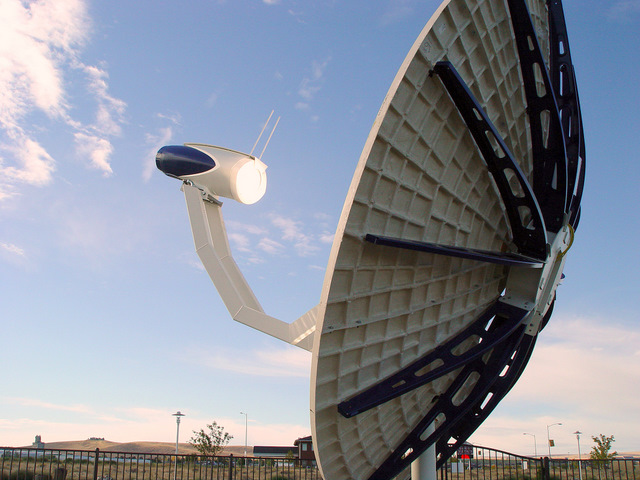
infinia-stirling-dish.jpgA passel of high-profile high-tech investors  — including Khosla Ventures, Paul Allen’s Vulcan Capital and Bill Gross’ Idealab — are backing yet another new player in the increasingly hot market for large-scale solar power, pumping $50 million into Infinia, a Kennewick, Wash., company manufacturing a Stirling solar dish.

The Stirling dish has a storied — if unfulfilled – history in the annals of solar energy. It marries a Stirling heat engine, 17th-century invention, with a mirrored dish that looks like a super-sized version of a home satellite receiver. The solar dish focuses the sun’s rays on the Stirling engine, heating a gas inside that drives pistons to generate electricity. Stirling dishes are much more efficient at converting sunlight into electricity than solar thermal technologies that use mirrors to heat liquid-filled tubes to create steam to drive electricity-generating turbines. But while solar thermal plants exist today, the Stirling solar dish has never been deployed on a large scale since work on the technology began in earnest following the oil shocks of the 1970s.

Stirling Energy Systems of Phoenix in 2005 signed contracts with utilities Southern California Edison (EIX) and San Diego Gas & Electric (SRE) to build up to build tens of thousands of Stirling dishes to produce up to 1.75 gigawatts of greenhouse gas-free electricity. Though the company operates a six dishes in a prototype power plant at Sandia National Laboratories New Mexico, it is still working to get production costs down and rivals have questioned whether Stirling Energy Systems will be able to fulfill its deals. (See Green Wombat’s 2007 Business 2.0 magazine article on Stirling Energy Systems here. )

infinia-stirling-engine.jpgBut Infinia CEO J.D. Sitton tells Green Wombat that his company has perfected the Stirling dish to make it competitive with large-scale solar thermal as well as new photovoltaic technologies like thin-film solar. Infinia aims to deploy its Stirling dishes in smaller configurations so that solar power plants can be located near cities and at other sites that don’t require vast stretches of desert land where solar thermal plants are typically built. Each 21-foot-high, 15-foot-wide solar dish can generate 3-kilowatts (compared to 25 kilowatts for Stirling Energy Systems’ dish).

Infinia won’t itself become a solar developer but will provide its dishes to for power plants that range in size from 1 megawatt to 150 megawatts or more. In contrast, most solar thermal power plants now being planned are in the 400-500 megawatt range.

“We fly in the face of what has been the conventional wisdom in the solar thermal field that to be competitive you have to have a very large system,” says Sitton. “We can be deployed within city limits and be connected to existing transmission systems. No additional transmission capacity is required.”

“Our approach is that the winning solutions will be those that generate for most kilowatts for the least cost,” he adds. “This is a game about capital efficiency.”

That, of course, has been the mantra of leading green tech investor Vinod Khosla, who has disparaged photovolatic solar systems as too expensive to displace fossil-fuel generated power. Khosla also is backing Palo Alto solar thermal startup Ausra, which last year signed a deal to supply solar electricity to California’s largest utility, PG&E (PCG). Serial entrepreneur Bill Gross’ Idealab is funding solar thermal startup eSolar, which also is being backed by Google (GOOG).

Infinia contends the design of its Stirling dish system makes it competitive with solar thermal technologies. First, the Stirling engine uses helium rather than hydrogen, which typically must be periodically replenished. “We have no lubrication inside the machine and it needs no maintenance,” Sitton says. “We use helium in a hermetically sealed system.”

Second, he says the Infinia dish is made of six panels of glass rather than the 76 panels on the Stirling Energy Systems dish. “That gives us lower production costs and lower capital costs,” says Sitton. “We brought in large-scale manufacturer from the beginning. It’s not like we built a prototype and now have to reduce the cost to produce it.”

The first prototype went online last October and Sitton says Infinia is building a second at Sandia. Field tests will be conducted later this year in California and Nevada. He says Infinia is currently negotiating with solar developers and full-scale production is set to begin in November. Infinia has been in business since the 1980s, building Stirling engines for other applications. But the green tech boom and demands from utilities for renewable energy led the company to focus on solar.

Whether Infinia beats Stirling Energy Systems to market remains to be seen but look for the deals it signs with solar developers for a good indication of just how viable its technology is likely to be.

Read Full Post »

img_2914.jpg

Israeli solar power plant developer Solel announced Monday it has scored $105 million in funding from London-based investment firm Ecofin — yet another sign that the market for large-scale solar energy projects is reaching critical mass.

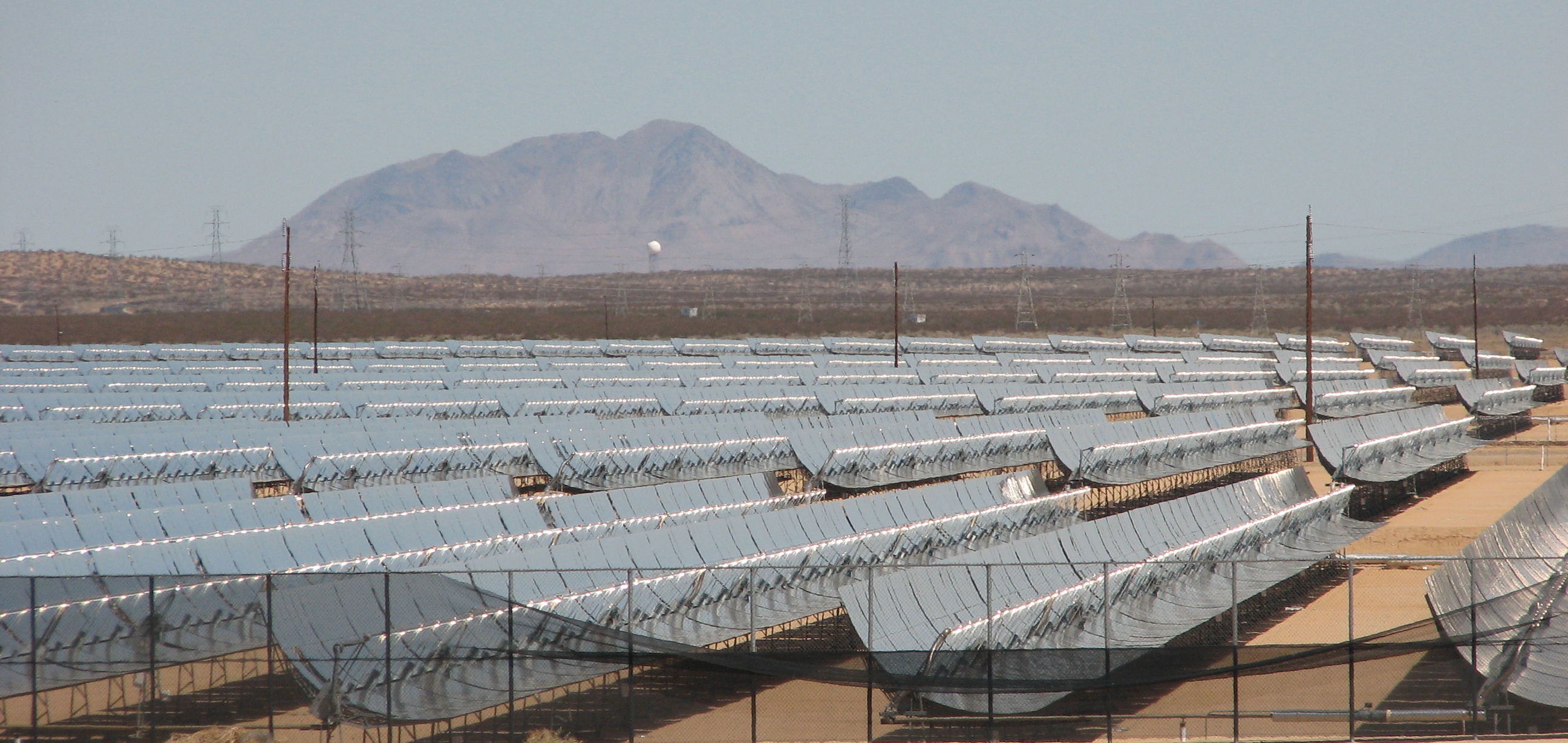
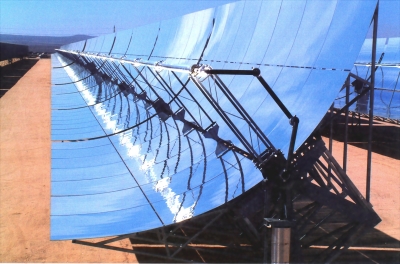
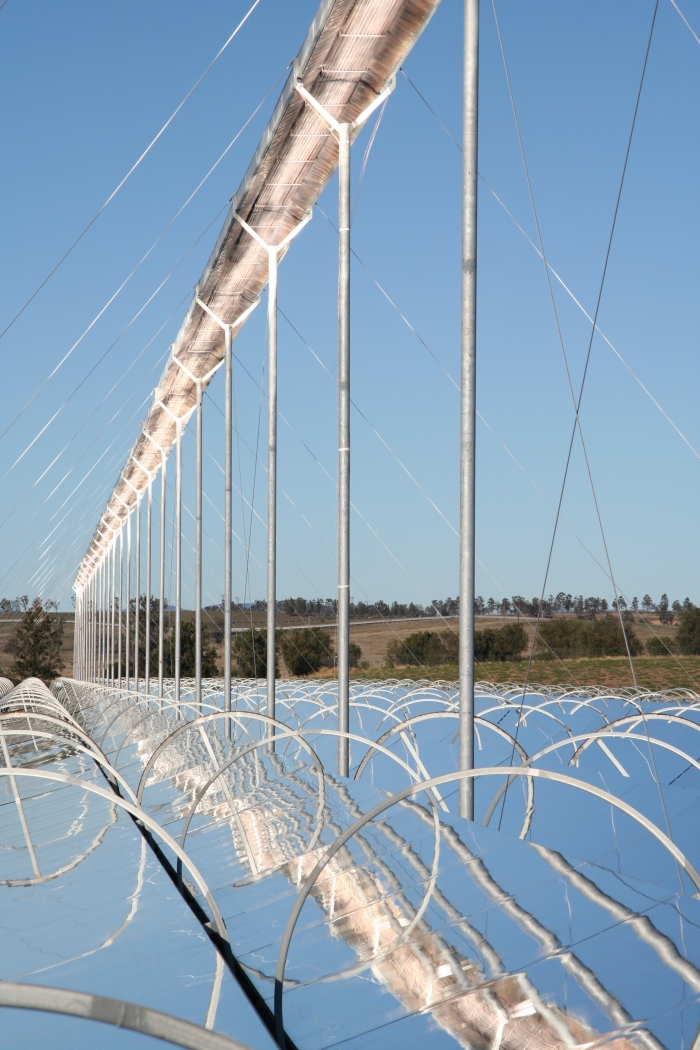
Solel last July signed the world’s largest solar power deal when it agreed to supply California utility PG&E (PCG) with 553 megawatts of green electricity to be produced by a massive solar thermal power plant to be built in the Mojave Desert. The company’s solar trough technology is also used in nine solar power plants (photo above) that were built in the Southern California desert in the 1980s. (In a solar trough power plant, long rows of parabolic mirrors focus the sun’s rays on tubes of liquid suspended over the arrays to create steam that drives an electricity-generating turbine.)

Raising $105 million is impressive and it’s certainly a big number. But given that a 500-megawatt solar power plant can easily cost $1 billion or more to build, it’s a relative drop in the bucket. However, it will allow Solel to move forward with the project and line up project financing for the PG&E plant while it negotiates more deals with other utilities — it won’t say which, but likely candidates are Southern California Edison (EIX) and San Diego Gas & Electric (SRE).

Competitors BrightSource Energy and Ausra have solar power plant applications before the California Energy Commission and have signed or are negotiating power purchase agreements with PG&E.

“Everyone is realizing that the market is there for thousands of megawatts of peaking power,” Solel CEO Avi Brenmiller recently told Green Wombat. “As time goes by we see energy prices rising and utilities are focusing their efforts to get solar thermal power because this is the right solution in the southwest United States.”

The Ecofin investment in Solel is notable also given the uncertainty surrounding solar power at the moment due to Congress’ failure to extend the solar investment tax credit in the recently enacted energy bill. The 30 percent credit is considered crucial to help solar energy companies secure financing for power plants and achieve economies of scale. The tax credit expires at the end of 2008 but solar energy proponents and their allies on Wall Street say they’re confident that Congress will take up legislation this session to extend it for as long as eight years.

Read Full Post »

brightsource-ivanpah.png

When President Bush signed the energy bill into law last month, much was made of the legislation’s mandate that automakers dramatically boost the fuel efficiency of their fleets. Less noticed was that the bill dropped a provision that would have extended the solar investment tax credit — a measure viewed as essential to transforming solar energy from a niche business into a multi billion-dollar industry that can generate gigawatts of greenhouse gas-free electricity.

The timing couldn’t be worse. With the current solar credit set to sunset, as it were, at the end of 2008, Big Solar is at at a tipping point: Utilities and renewable energy companies are in the midst of negotiating massive megawatt power purchase deals whose financing depends on the 30 percent investment tax credit, or ITC.

“I think there is a major concern that this will stall all the beneficiaries of the ITC,” said Joshua Bar-Lev, vice president for regulatory affairs for solar power plant developer BrightSource Energy. The Oakland, Calif.-based startup is negotiating a 500-megawatt agreement with California utility PG&E and is proceeding with plans to build a 400-megawatt solar thermal power station on the Nevada border (artist rendering above).

Solar energy companies, utilities like PG&E (PCG) and Edison International (EIX) as well as financiers such as Morgan Stanley (MS) and GE Energy Financial Services (GE), had pushed for an eight-year extension of the investment tax credit to give Big Solar projects enough time to get off the ground and start to achieve economies of scale. The provision also would have allowed utilities to claim the credit for solar projects they build. The measure drew support from both sides of the aisle in Congress but died — by one vote in the Senate — when Bush threatened to veto the energy bill because the solar tax credit would be financed by repealing previous tax breaks given to Big Oil.

“The Congressional leadership is very strong in their support of the ITC; they will put this on the table In 2008,” said Chris O’Brien, a Sharp Solar executive and chairman of the Solar Energy Industries Association, in an e-mail. “The solar industry will continue to contact legislators in key states.”

House Speaker Nancy Pelosi and the Democratic leadership in the Senate have pledged to re-introduce renewable energy tax credit legislation this session. “Speaker Pelosi has said repeatedly that she hopes to address that this year,” Drew Hammill, a spokesman for Pelosi, told Green Wombat. “We’re just getting started but there’s bipartisan support for the tax credit.”

Publicly, at least, no one in the solar industry will say that the uncertainty over the tax credit is affecting planned projects. “Our expectation is that there will be another tax bill that will address this issue,” said Kevin Walsh, managing director of the renewable energy group at GE Energy Financial Services. “We’re working on a number of [solar thermal] deals but it’s too early to disclose them.”

In recent months, PG&E has signed deals for more than a gigawatt of electricity — enough to light more than 750,000 homes — with solar power plant developers. Such power purchase agreements can take more than a year to hammer out and the permitting and construction of a solar power station can take another three to five years.

“We’re continuing to move forward with negotiations and with contracts that have already been signed, but certainly the absence of the ITC could potentially impact future projects,” said PG&E spokesman Keely Wachs. “Without the credit, it does increase the cost of that energy and of course it also sends a very clear market signal as to our country’s energy priorities.”

Silicon Valley solar startup Ausra is building a 177-megawatt solar power plant on the Central California coast to supply electricity to PG&E and is pursuing deals with Florida’s FPL (FPL) and other utilities.

“Just like any business, the solar industry prefers a predictable system for the future,” wrote Holly Gordon, Ausra’s director of regulatory and legislative affairs, in an e-mail. “It will be more difficult to plan for our projects while the situation remains uncertain. While we are currently seeing excellent demand for solar energy at market prices, we need a long term extension of the renewable energy tax credits to ensure market stability and investor confidence as the market continues to grow.”

Read Full Post »

schott.jpegBig Solar has been about Big Dreams – fields of mirrors carpeting the desert to produce clean, greenhouse-gas free electricity. But in another step toward making that vision a concrete-and-glass reality, Schott Solar announced Monday that it is building a factory in Albuquerque, N.M., to manufacture components for large-scale solar thermal power plants as well as photovoltaic modules for commercial rooftop arrays.

The German company’s news follows Silicon Valley solar startup Ausra’s announcement last month that it’s building a solar thermal factory in Nevada — the first in North America.

That solar companies are now investing capital to break ground on manufacturing plants represents the creation of a Big Solar infrastructure and, of course, a move to get on the ground floor of what is expected to be a solar building boom in the sun-drenched Southwest of the United States. Utilities throughout the region are facing mandates to dramatically increase their use of renewable energy. In California, for instance, PG&E (PCG), Southern California Edison (EIX) and San Diego Gas & Electric (SRE) are all negotiating big megawatt contracts for utility-scale solar power thermal power plants. A consortium of Southwest utilities meanwhile has put out to bid a 250-megawatt solar station.

“We certainly see the opportunity for growth in the solar thermal market,” Mark Finocchario, CEO of Shott’s North American operations, told Green Wombat. “The concentration of solar thermal plants will be in the Southwest and we see that’s where the rest of the supply market will develop as well. But we would have the ability to ship product to anywhere in the world.”

The $100 million Albuquerque factory will manufacture solar thermal receivers — long tubes that hang over curved mirrors called solar troughs. The mirrors focus the sun’s rays on the receivers and liquid inside becomes superheated to produce steam that drives electricity-generating turbines.

Finocchario says the the plant, which will employ 350 people, is set to go online by the end of the first quarter of 2009. Future plans call for another $400 million investment to expand the factory’s workforce to 1,500.

Read Full Post »

serpa2.jpg

Another day, another new solar power plant. At least that’s the way it seems, given SunPower’s recent spate of deals to build multi-megawatt photovoltaic solar power stations. The latest came Friday when the Silicon Valley solar panel maker announced a contract to construct an 8-megawatt solar power plant in Spain. The agreement follows a November deal for three other solar power stations in Spain totaling 21 megawatts. That in turn was preceded by an October announcement of a contract for a 18-megawatt plant in — where else — Spain.

See a pattern here? SunPower (SPWR) now has solar power plants totaling more than 100 megawatts built or under contract in Spain. Plus it constructed an 11-megawatt solar power station in neighboring Portugal and a 10-megawatt plant in Germany. It’s sole PV power plant in the United States is a 15-megawatt station at Nellis Air Force Base outside Las Vegas.

It’s no accident that SunPower has set its sights on Spain and other European markets. Spain and Portugal, for instance, offer simple so-called feed-in-tariffs that pay solar power plant operators a premium rate — typically for 15 to 20 years — for producing renewable energy. That makes the economics of financing and building solar power plants relatively straightforward in contrast to the patchwork of short-term state and federal green energy incentives in the U.S. (Witness the current upheaval in the industry over the crucial solar investment tax credit that expires at the end of 2008, and which Congress neglected to extend in the recently enacted energy bill.)

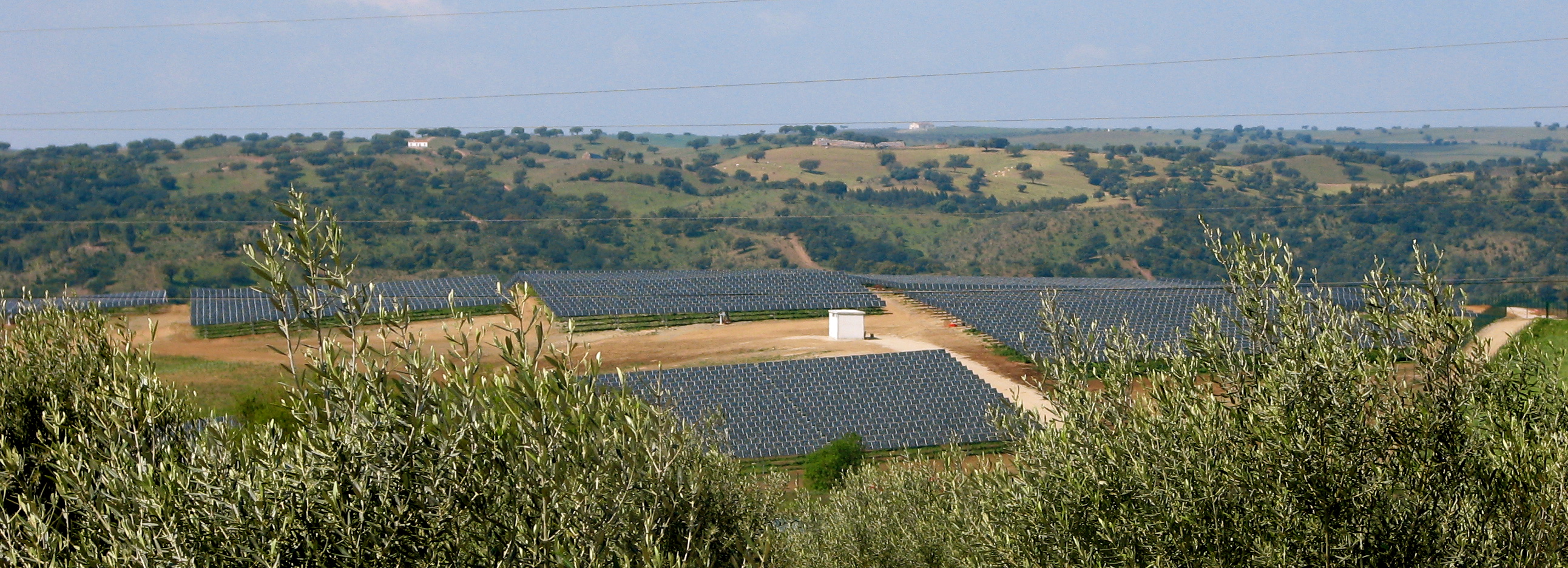
No wonder Europe is attracting renewable energy financiers like GE Energy Financial Services (GE), which financed SunPower’s Portugal plant (pictured above). “We truly believe utility-scale solar will be an incredible opportunity,” Kevin Walsh, managing director of GE Energy Financial Services, told Green Wombat at the opening of the Portugal plant last March. (That’s not to say that companies like GE don’t see opportunity in the U.S. market. Just this morning, SunPower announced that GE Energy Financial Services will finance and own five 1-to-2.4-megawatt commercial solar arrays in California being installed by SunPower for Toyota (TM), Hewlett-Packard (HPQ), Agilent, Lake County, and the Rancho California Water District.)

The built-in profit margin for solar in Spain and Portugal also makes photovoltaic power plants viable. PV plants are essentially residential rooftop solar arrays writ large that track the sun and convert sunlight that strikes silicon-based cells directly into electricity. But silicon is expensive and solar panels are relatively inefficient. So absent subsidies like feed-in tariffs, few PV power stations have been built in the U.S., which has focused on large-scale solar thermal power plants that use mirrors to heat water or other liquids to create steam that drives electricity-generating industrial turbines. The beauty — literally – of a PV plant is that it contains virtually no moving parts or bulky power blocks that contain turbines and other machinery. That means they can be built closer to urban areas and used to shoulder the load from overburdened utility substations.

Even solar panel installers are striking deals overseas. Silicon Valley-based solar installer Akeena (AKNS), for instance, developed a new solar panel system called Andalay that cuts the cost of installation for homes and businesses. The company contracted with China solar panel giant Suntech (STP) to manufacture Andalay, which will also sell the panel in Europe, Japan and Australia.

Read Full Post »

ausra-16.jpgBig Solar is on a roll in California.

For the second time in seven weeks, the California Energy Commission has voted to accept an application for a massive megawatt solar power plant. The commission on Wednesday certified as “data adequate” Silicon Valley startup Ausra’s application to build a 177-megawatt solar on the state’s central coast. That means Ausra’s Carrizo Energy Solar Farm has cleared a significant regulatory hurdle and the commission will begin a year-long review process. If all goes well, construction will begin in 2009 and the plant will start producing electricity in 2010. (To get an idea of the complexity of the California licensing process and why the acceptance of an application is a big deal, you just need to scan Aura’s 1,000-page application package.

The Ausra move follows the commission’s Oct. 31 vote to greenlight for review BrightSource Energy’s planned 400-megawatt power station complex to be built in the Mojave Desert on the Nevada border.

Ausra, backed by A-list venture capitalists Vinod Khosla and Kleiner Perkins Caufield & Byers, has signed a 20-year power purchase agreement with utility giant PG&E (PCG) for the greenhouse gas-free electricity generated by the Carrizo plant in eastern San Luis Obispo County. BrightSource (backed by Morgan Stanley (MS) and VantagePoint Venture Partners), meanwhile, continues to negotiate with the utility for a 500-megawatt power purchase deal.

Read Full Post »

ausra-solar-field.jpg

Here’s another sign that Big Solar’s time has come: Silicon Valley startup Ausra is building the United States’ first solar power plant factory.

When the 130,000-square-foot facility goes online in April outside Las Vegas, robots will assemble mirror arrays and other equipment that will then be trucked to solar power plant building sites in California and the Southwest. Ausra, backed by venture capitalists Vinod Khosla and Kleiner Perkins Caufield & Byers, signed a deal with utility PG&E (PCG) in November to supply electricity generated by a 177-megawatt solar thermal power station to be built on California’s central coast.

“Steel, flat glass and standard boiler pipe flows into the factory and completed solar fields come out ready for installation,” John O’Donnell, Ausra’s  executive vice president, told Fortune’s Green Wombat from Nevada over the din of construction noise. “We wound up working with one of Australia’s leading builders of car production systems to develop robotic assembly, weld, bond and paint systems for the mirror units.”

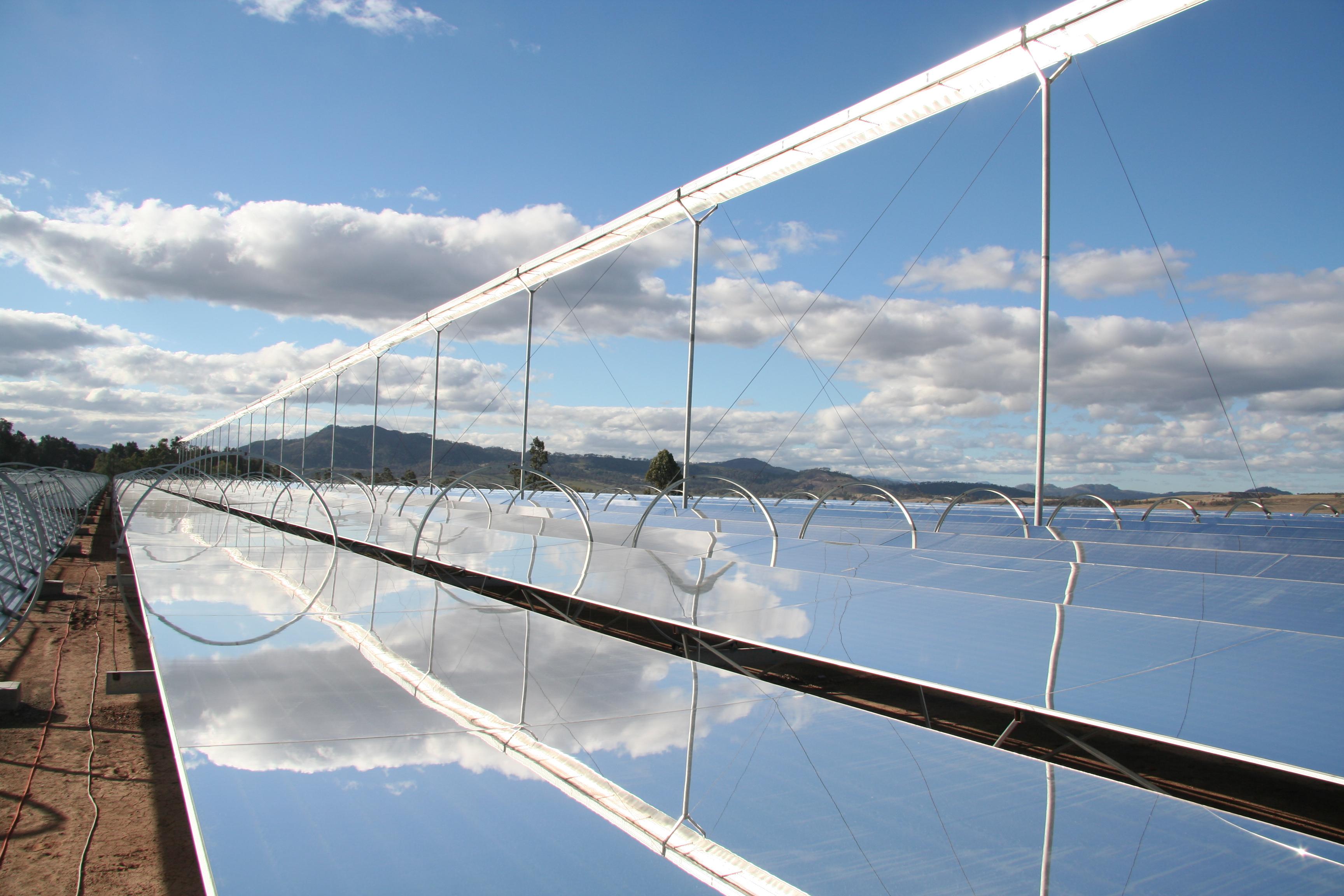
Ausra will deploy large arrays of long mirrors that concentrate sunlight on water-filled pipes that hang over the reflectors. As the water is heated up to 545 degrees Fahrenheit the resulting steam drives a standard turbine to generate electricity. O’Donnell says the Las Vegas factory, located near McCarran International Airport, will employ about 50 people and be able to produce 70 megawatts worth of solar equipment a month — implying Ausra has many more big power deals on the table.

The facility marks the emergence of Nevada as a player in the solar power industry. “We see Nevada as one of the best markets for solar power,” says O’Donnell. “It’s the business climate in Nevada, the solar resource and a rapidly growing market for electric power. The main reason for being here is the combination of a transportation center, a workforce and a central location for where we think all the power plants will be. We looked at locations in California, Phoenix and here. Taking the five-year view, we would like to build a lot of power plants in the Southwest so we asked, ‘Where is the best location. What are the transportation options?’ ”

Nevada’s proximity to California means that solar power plants can be built on its side of the border to ship electricity to densely populated Southern California as well as the booming Las Vegas region. O’Donnell says Nevada offered Ausra a standard package of tax incentives but nothing extra to locate the factory in the Silver State.

“As the world transitions to clean energy, Nevada will be a leader in building and delivering clean power to our state, to our region, and to our country,” said Nevada Development Authority CEO Somer Hollingsworth in a statement.

Nevada will get a run for its money from sun-drenched Arizona, where Phoenix-based Stirling Energy Systems plans to build factories to manufacture Stirling dishes for solar power plants that will supply electricity to Southern California Edison (EIX) and San Diego Gas & Electric (SRE).

Read Full Post »

first-solar-turner.jpgFirst Solar, the solar panel maker with the Googlicious stock price, announced Friday afternoon that it had acquired a solar installer backed by media mogul and environmentalist Ted Turner.

The price First Solar (FSLR) paid for Turner Renewable Energy — to be renamed First Solar Electric — was decidedly un-Google-like: a mere $34.3 million in stock and cash. But the deal is more important for what it says about the state of the solar industry. Increasingly, solar energy companies want to be able to deliver the complete package to customers. That means solar panel makers like First Solar — a Phoenix-based company whose largest shareholders are the Walton heirs — want to be able control and cash in on the booming market to install solar arrays on commercial and residential rooftops. Vertical integration, as they say. Silicon Valley solar cell maker SunPower (SPWR), for instance, bought solar installer PowerLight last year and has seen business grow as its panels appear everywhere from Palo Alto rooftops to Portuguese solar power plants. In China, meanwhile, solar company Trina Solar (TSL) makes silicon ingots, wafers, and modules. It recently announced it will begin producing its own polysilicon, the raw material of solar cells.

With the acquisition of Turner, First Solar also gets the financing relationships the company has forged that let it sell massive megawatt solar arrays to Fortune 500 firms. Turner, for examples, works with MMA Renewable Ventures (MMA) of San Francisco on deals. (Just this week SunPower announced the formation of a jointly owned holding company with Morgan Stanley (MS) to finance solar arrays for customers.) For Ted Turner, it was a fast turnaround — he made his investment in the company then known as DT Solar just last January.

Read Full Post »

« Newer Posts - Older Posts »

Design a site like this with WordPress.com
Get started