Feeds:
Posts
Comments

Archive for the ‘renewable energy’ Category

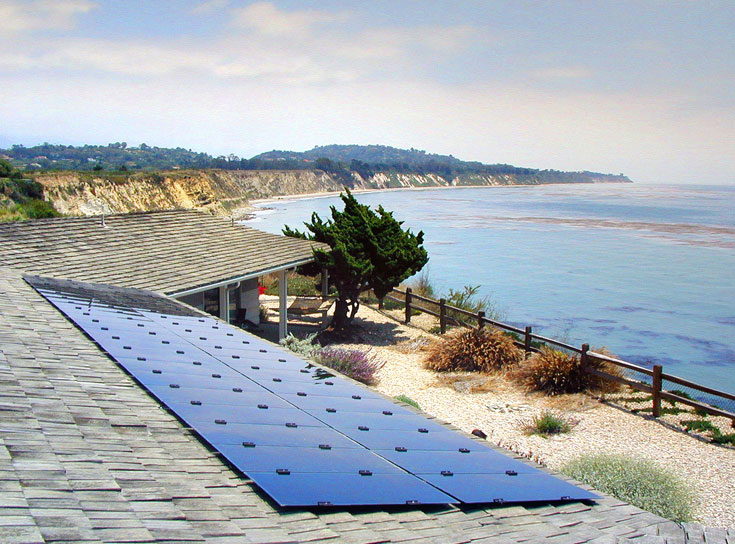
photo: SolarCity

In The New York Times on Monday, I write about a $100 million tax equity fund created by PG&E Corporation to finance residential solar installations:

P.G.&E. Corporation, the California utility holding company, has created a $100 million tax-equity fund to finance residential solar installations by SunRun, a San Francisco start-up that leases photovoltaic arrays to homeowners.

The fund, managed by a P.G.&E. subsidiary, Pacific Energy Capital II, is the largest single solar leasing pool to date, according to the company, and marks the growing interest of utilities in the renewable energy financing business.

“We’re in somewhat of a unique position in that roughly half of the nation’s rooftop solar installations are in our service territory,” Brian Steel, P.G.&E.’s senior director of corporate strategy, said in an interview. “We’re at the proverbial ground zero of these new technologies and so perhaps more than any utility holding company in the country we have a strategic imperative to get ahead of the curve through having a propriety seat at the table with a partner like SunRun.”

The financing, announced Monday, follows P.G.&E.’s creation of a $60 million tax-equity vehicle in January for SolarCity, a Silicon Valley company that also leases solar arrays to homeowners.

The $100 million in financing is expected to fund solar installations for 3,500 homes in Arizona, California, Colorado, Massachusetts and New Jersey.

“That a major energy company like P.G.&E. is coming to the table illustrates that distributed solar is becoming part of the mainstream energy business,” said Edward Fenster, SunRun’s chief executive.

You can read the rest of the story here.
Read Full Post »

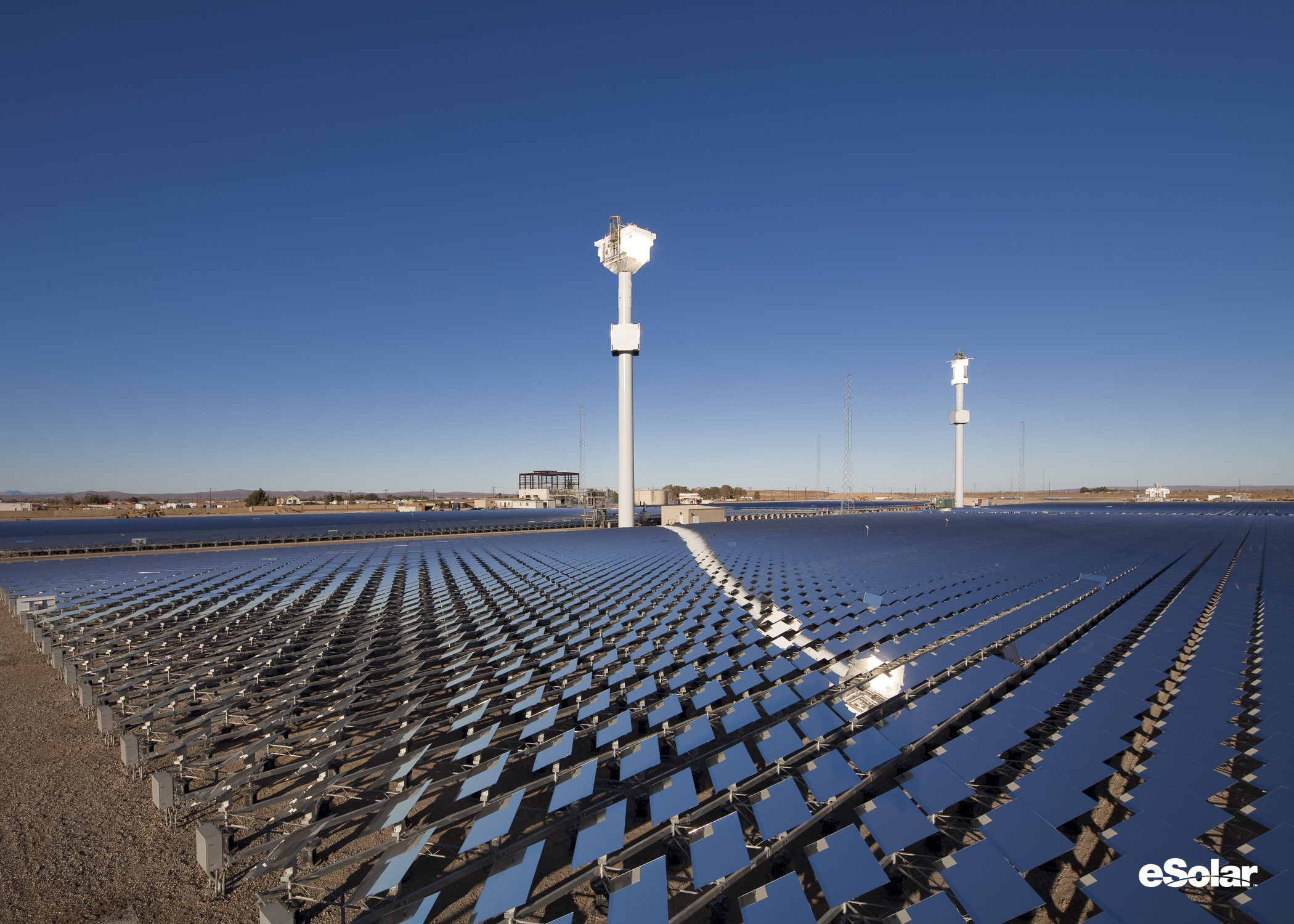
photo: eSolar

This post first appeared on Grist.

Amid all the hope and hype about the nascent solar boom under way in California, there’s long been an elephant in the room – transmission. Billions and billions of dollars must be spent to build and upgrade transmission lines to connect dozens of proposed solar power plants to the grid.

Now that elephant has rolled over and squashed one project’s use of innovative solar technology. Last year, California utility PG&E signed a deal with NRG Energy, a New Jersey-based electricity provider, to buy power from a 92-megawatt solar farm called the Alpine SunTower to be built near the desert town of Lancaster, northeast of Los Angeles.

The power plant would deploy solar thermal technology developed by eSolar, a Pasadena startup founded by serial technology entrepreneur Bill Gross. NRG and eSolar earlier had inked a partnership to build 500 megawatts’ worth of solar farms. In January, eSolar reached an agreement with a Chinese company to supply technology for solar farms that would generate a massive 2,000 megawatts of electricity.

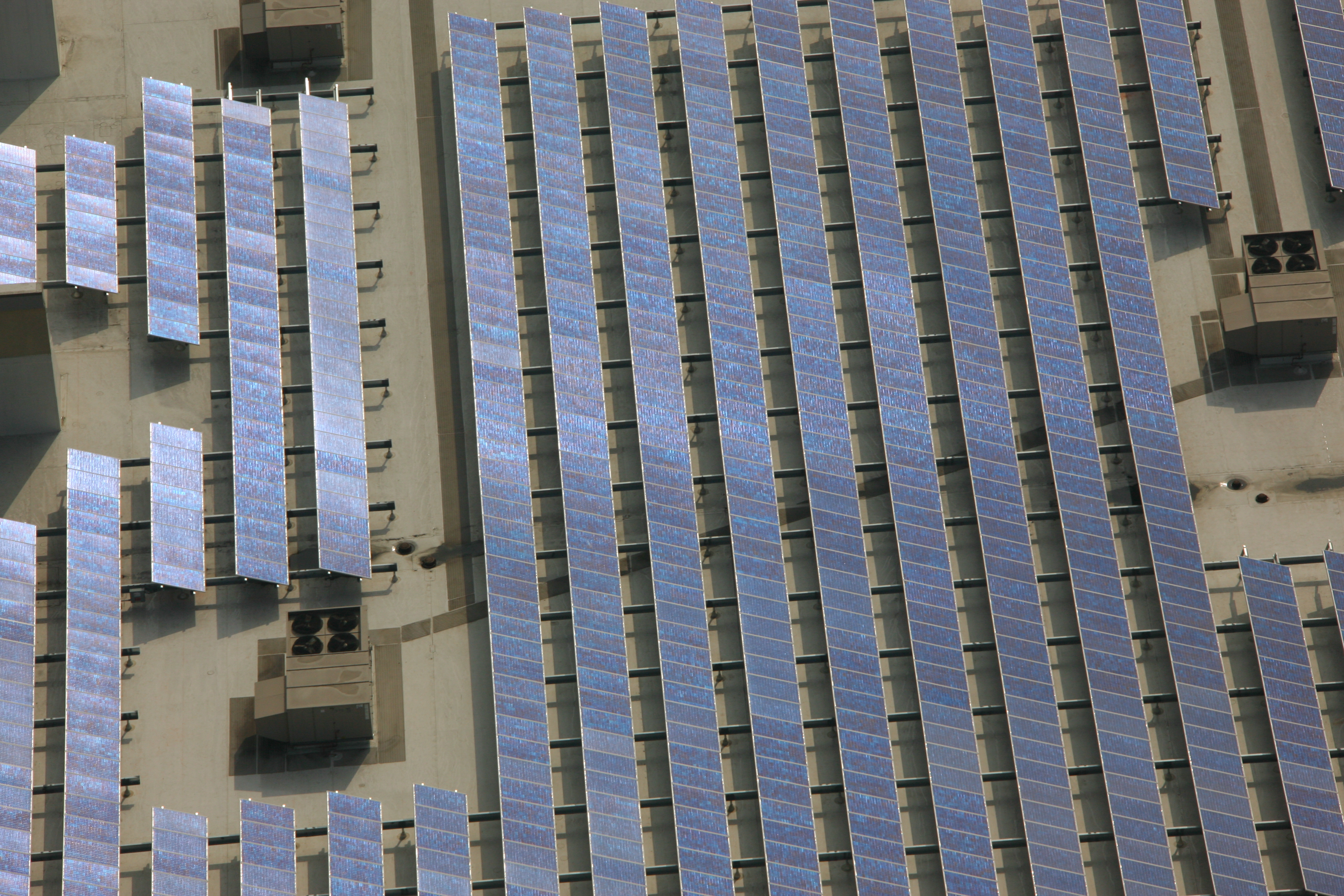
PG&E, however, submitted a letter recently to the California Public Utilities Commission  asking approval for a re-negotiated deal with NRG that has resulted in a downsizing of the Alpine SunTower project to 66 megawatts. And instead of deploying eSolar’s fields of mirrors that focus the sun on a water-filled boiler that sits atop a tower to create steam to drive a turbine, the power plant will generate electricity from photovoltaic panels like those found on residential rooftops.

The utility gave no reason for the technology switch. “NRG has not finalized the exact type of panels or the manufacturer of the panels,” a PG&E executive wrote in the letter. “Solar PV panels have been used in installations throughout the world, in both small and utility scale applications.”

However, when I contacted eSolar about the change, I received a joint statement from the company and NRG:

“NRG is returning the project to its originally proposed size to match the transmission capacity available to the project at this time,” it said. “Maintaining the project as previously announced would require waiting for additional interconnection studies and potential transmission upgrades that would delay the project delivery date.”

While solar panels are not as efficient as eSolar’s solar thermal technology in generating electricity, they are modular – meaning you can just keeping adding them to produce a desired amount of power or to match the transmission capacity in an area. ESolar’s power plants, on the other hand, are designed to be built in 46-megawatt units so there’s far less flexibility in scaling them up or down.

It’s too early to say whether this portends other switches from solar thermal to photovoltaic technology, especially as solar cell prices fall and California utilities scramble to meet a mandate requiring they obtain 20 percent of their electricity from renewable sources by the end of this year and 33 percent by 2020.

But the elephant is getting restless.

Read Full Post »

This post first appeared on Grist.

Legislation pending in New York that would require the state to install 5,000 megawatts of solar power by 2025 could generate 22,198 jobs and boost the economy by $20 billion, according to a report released by Vote Solar on Wednesday.

The cost to consumers would be just a 39-cent-a-month hike on their utility bills, the report found.

Vote Solar, a San Francisco non-profit that is backing the bills in the New York legislature along with the Natural Resources Defense Council and other environmental groups, commissioned the study conducted by Crossborder Energy. Described as an independent consultant, Crossborder relied on economic models developed by the National Renewable Energy Laboratory to make its projections.

“We note that in an effort to be conservative in our assumptions, these benefits are calculated without taking into account any potential new manufacturing,” the report stated. “Precedent shows that states that make a clear commitment to clean energy see reciprocal investment on behalf of manufacturing companies. For example, in both Arizona and California, the states’ strong and transparent policies were fundamental to the decisions of two major global solar manufacturers…to locate their first domestic manufacturing operations in those states.”

New York currently has less than 25 megawatts of solar installed. The New York Solar Jobs and Development Act would require the state’s utilities to install enough solar to account for at least 2.5 percent of their electricity sales by 2025. Those targets could be reached through residential and commercial rooftop solar installations or by building solar power plants. Utilities could own and operate their own solar power facilities to meet 25 percent of their mandate.

But the legislation does not specify incentives or other policies to encourage solar installations, which would inevitably affect the cost of the program for developers and consumers.

Read Full Post »

photo: Todd Woody

Green Wombat has been in transition so I’m a bit behind on posting. In case you missed it, in the Sunday New York Times on May 9, I wrote a profile of David Gelbaum, one of the nation’s biggest — and until now — most reclusive green technology investors and environmental philanthropists:

AMID the $6 million homes perched on a beachfront cliff in this conservative Southern California enclave, the seven-year-old Honda Civic hybrid with the Obama bumper sticker is the giveaway.

It’s not the usual drive of choice for wealthy former hedge fund managers like David Gelbaum. Then again, there’s not much that is business as usual about Mr. Gelbaum, an intensely private person who happens to be one of the nation’s largest — and largely unknown — green technology investors and environmental philanthropists.

Mr. Gelbaum has invested $500 million in clean-tech companies since 2002 through his Quercus Trust, amassing a portfolio of some 40 businesses involved in nearly every aspect of the emerging green economy, be it renewable energy, the smart electric grid, sustainable agriculture, electric cars or biological remediation of oil spills. He has poured almost as much into environmental causes.

“I think his impact on green technology is huge,” says Bill Gross, the serial technology entrepreneur and founder of eSolar, a solar power start-up in which Mr. Gelbaum has invested. “He is supporting bolder and riskier bets, and he’s doing it from a different filter than a traditional venture capitalist, and I think that makes a wider opportunity for success.”

In this economic downturn, many venture capitalists have grown cautious about putting money into what Vinod Khosla, the prominent Silicon Valley green tech investor, calls “science experiments.” But Quercus Trust is still taking chances on blue-sky start-ups pursuing technological breakthroughs.

Working outside the clubby venture capital network, Mr. Gelbaum has, until recently, maintained an obsessively low profile. In Silicon Valley, he remains something of an unknown. Associates say his near-invisibility is owed to a genuine modesty and concerns over the security of his family because of his wealth. Recipients of his philanthropy, for instance, signed confidentiality agreements that forbade mention of his name.

Mr. Gelbaum says he decided to break his long silence upon becoming chief executive in February of Entech Solar, one of his portfolio companies that is publicly traded. “This is what’s best for the company,” he says, pointing out that Entech benefits if he maintains a more public profile.

It is too early to predict whether Mr. Gelbaum’s big green bets will pay off. But he’s been capitalizing on two trends: the rapid decline in the price of photovoltaic power, and a focus on cutting capital costs as solar power competition with China intensifies.

His environmental philanthropy also gives him an influence beyond laboratories and boardrooms. He has given $200 million to the Sierra Club and $250 million to the Wildlands Conservancy, a land trust he co-founded that has acquired and preserved 1,200 square miles of land in California, including more than a half million acres of the Mojave Desert.

You can read the rest of the story here.
Read Full Post »

photo: Aurora Biofuels

As I write in The New York Times on Friday, it’s spring cleaning at three renewable energy firms as top executives depart SolarReserve, Clipper Windpower and Aurora Biofuels:

The past week has brought a spate of executive departures at renewable energy startups, with the president of SolarReserve, a power plant builder, and the chief executives of Clipper Windpower and Aurora Biofuels stepping down.

Terry Murphy, a rocket scientist who co-founded SolarReserve after a career at United Technologies’ Rocketdyne division, has started a new venture called Advanced Rocket Technologies in Commercial Applications, or ARTiCA. The firm will evaluate green technologies for entrepreneurs and investors, according to Mr. Murphy.

Mr. Murphy and SolarReserve both said the departure was voluntary. “With the company solidly executing on its business strategies, Mr. Murphy has transitioned to an external role in providing developmental expertise to other early stage clean energy companies,” wrote Debra Hotaling, a spokeswoman for SolarReserve, in an e-mail message.

When Mr. Murphy left Rocketdyne to start SolarReserve, the startup licensed Rocketdyne’s molten salt technology so that its solar power plants could store solar energy for use after the sun sets or on cloudy days.

“SolarReserve, in my opinion, is up and running on all four cylinders,” said Mr. Murphy.

“What I did at Rocketdyne and what I did at SolarReserve and what I’m looking at doing in the future is to sift through technologies to find those that can be commercialized.”

Mr. Murphy’s new firm will focus on technologies involving renewable energy, desalinization and sustainability, he said.

You can read the rest of the story here.

Read Full Post »

In The New York Times on Thursday, I write about a report from Bloomberg New Energy Finance that shows China has become the dominant solar module supplier in the huge California market:

China’s rise as a major solar module maker has been meteoric, but perhaps nowhere has its ascension been faster than in California, the United States’ largest solar market.

The Chinese company Yingli Solar has captured 27 percent of California’s solar market, according to a preliminary report.
Over the last three years, China’s share of the California market, in terms of supplied megawatts, has risen to 46 percent, from 2 percent, according to a preliminary report by Bloomberg New Energy Finance, a research and consulting firm.

At the same time, the share supplied in California by American companies has declined to 16 percent, from 43 percent.

“The ascendancy of Chinese manufacturers would be noteworthy regardless of market conditions, but is particularly telling in a time when purse-strings are still tight,” the report said.

At the beginning of 2009, Chinese solar companies supplied 21 percent of the market; by year’s end their stake had more than doubled.

You can read the rest of the story here.

Read Full Post »

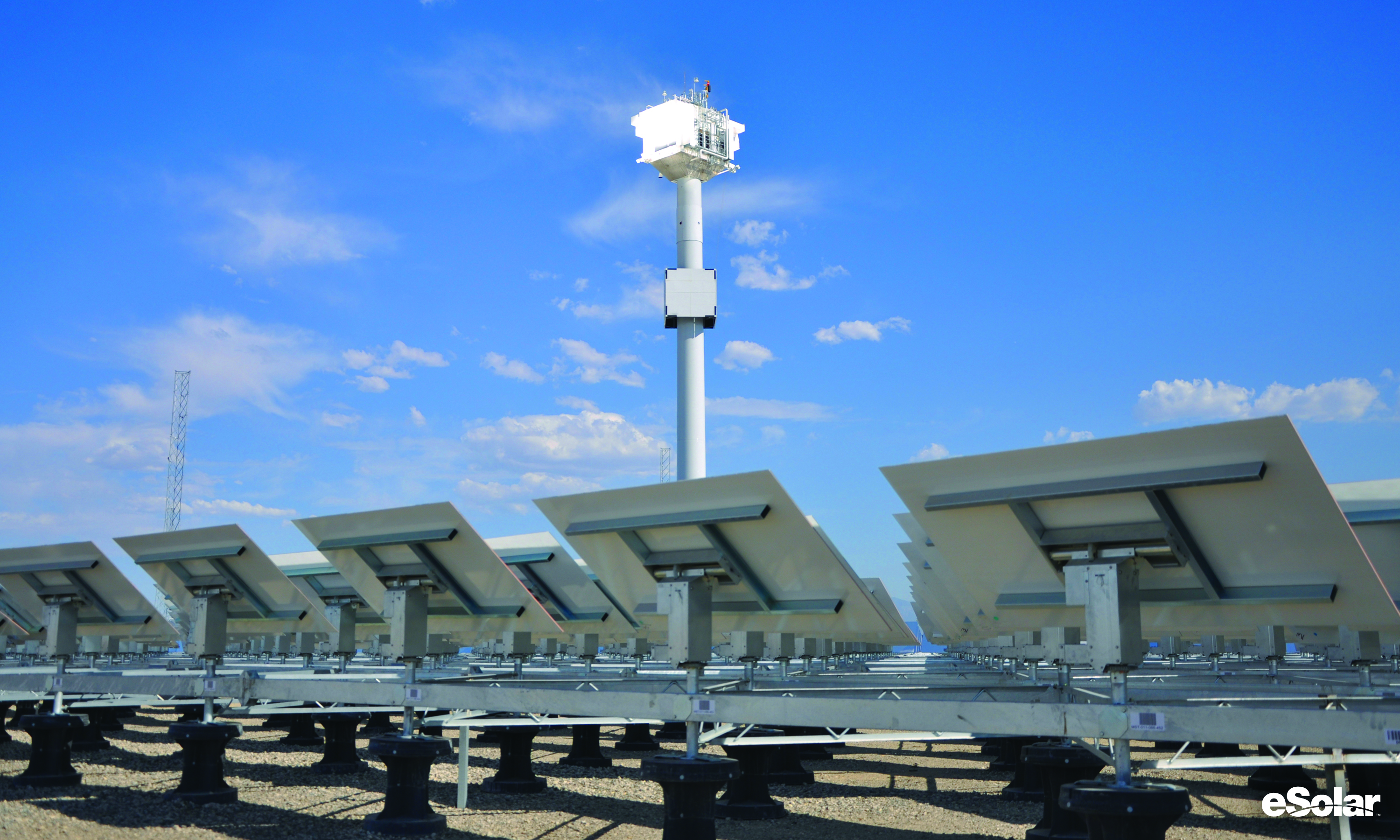
photo: eSolar

In my new Green State column on Grist, I take a look at the implications of California startup eSolar’s 2,000 megawatt solar thermal deal with China:

Forget Red China. It’s Green China these days—at least when it comes to making big renewable deals.

Friday night, a Chinese developer and eSolar of Pasadena, Calif., signed an agreement to build solar thermal power plants in the Mongolian desert over the next decade. These plants would generate a total of 2,000 megawatts of electricity. It’s the largest solar thermal project in the world and follows another two-gigawatt deal China struck in October with Arizona’s First Solar for a massive photovoltaic power complex. Altogether, the eSolar and First Solar projects would produce, at peak output, the amount of electricity generated by about four large nuclear power plants, lighting up millions of Chinese homes.

Is China the new California, the engine powering the green tech revolution?

Yes and no. When it comes to technological and entrepreneurial innovation, Beijing lags Silicon Valley (and Austin, Boston, and Los Angeles)—for now. But as a market, China is likely to drive demand for renewable energy, giving companies like eSolar the opportunity to scale up their technology and drive down costs.

[We’ll pause here to state the obvious: China’s investment in renewable energy and other green technologies is miniscule compared to the resources devoted to its continued building of coal-fired power plants and efforts to secure dirty oil shale supplies in Canada and elsewhere.]

“All the learning from this partnership will help us in the United States,” Bill Gross, eSolar’s founder and chairman, told me. “I think as soon as the economy improves in the rest of the world and banks start lending, there will be a lot of competition in the U.S. and Europe. But, until then, China has the money and the demand.”

In a one-party state, a government official saying, “Make it so,” can remove obstacles to any given project and allocate resources for its development. Construction of the first eSolar project, a 92-megawatt power plant, in a 66-square-mile energy park in northern China, is set to begin this year

“They’re moving very fast, much faster than the state and U.S. governments are moving,” says Gross, who is licensing eSolar’s technology to a Chinese firm, Penglai Electric, which will manage the construction of the power plants. Another Chinese company will open and operate the projects

You can read the rest of the column here.

Read Full Post »

photo: eSolar

In The New York Times on Monday, I follow up on my story in Saturday’s Los Angeles Times on China’s move into solar thermal power with a 2,000 megawatt deal with eSolar of California:

China’s plans to build 2,000 megawatts of solar thermal power using technology from a California company, eSolar, will also include the construction of biomass power plants to generate electricity when the sun sets.

The solar and biomass plants will share turbines and other infrastructure, reducing the projects’ cost and allowing around-the-clock electricity production, according to Bill Gross, eSolar’s chairman.

“That supercharges the economics of solar,” said Mr. Gross in a telephone interview, noting that the addition of biomass generation will allow power plants to operate at 90 percent of capacity.

Under terms of the deal announced Saturday in Beijing, eSolar will license its “power tower” technology to Penglai Electric, which will manage the construction of the power plants over the next decade.

Another Chinese company, China Shaanxi Yulin Huayang New Energy Co., will own and operate the first projects to be built in the 66-square-mile Yulin Energy Park in northern China.

A local shrub grown in the surrounding region to fight desertification, called the sand willow, will supply fuel for the biomass power plants, according to Penglai Electric.

“It’s an economical use of a resource that’s already in place,” said Nathaniel Bullard, a solar analyst with Bloomberg New Energy Finance, a research and consulting firm. “That’s a very savvy move, rather than attach an energy storage system to the solar project.”

You can read the rest of the story here.

Read Full Post »

photo: SolarReserve

In The New York Times on Saturday, I write about utilities NV Energy and PG&E signing power purchase agreements to buy electricity from SolarReserve’s solar farms, which store the sun’s energy in molten salt to generate power at night:

Solar farms that would serve two Western utilities are planning to use technology that will generate electricity after the sun goes down, a move that could be a potential game-changer for the industry.

The two farms being planned by SolarReserve of Santa Monica, Calif., would store the sun’s energy in molten salt, releasing the heat at night when it could be used to drive a turbine and generate electricity. Two utilities, NV Energy in Nevada and Pacific Gas and Electric, Northern California’s biggest utility, would buy the power.

The sun’s intermittent nature has made large-scale solar farms most useful as so-called peaker plants that supply electricity when demand spikes, typically in the late afternoon on hot days. But the ability of SolarReserve to store the sun’s energy for use at night would be a step forward in technology.

“The energy storage characteristics were a key factor in our selection of the Tonopah solar energy project,” NV Energy’s chief executive, Michael Yackira, said in a statement. The utility will be able to draw electricity from the solar farm more or less on demand, which makes it easier to balance the load on the power grid.

NV Energy would buy power from the 100-megawatt Crescent Dunes Solar Energy Project being planned on federal land near Tonopah, Nev., about 215 miles northwest of Las Vegas.

“We’re expecting to put in 12 hours of storage, which allows us to move power within the day to meet peak requirements as well as to operate at full load,” SolarReserve’s chief executive, Kevin Smith, said of the Tonopah plant.

You can read the rest of the story here.

Read Full Post »

In Tuesday’s New York Times, I write about California Senator Dianne Feinstein’s move to ban renewable energy production in two proposed national monuments in the Mojave Desert:

AMBOY, Calif. — Senator Dianne Feinstein introduced legislation in Congress on Monday to protect a million acres of the Mojave Desert in California by scuttling some 13 big solar plants and wind farms planned for the region.

But before the bill to create two new Mojave national monuments has even had its first hearing, the California Democrat has largely achieved her aim. Regardless of the legislation’s fate, her opposition means that few if any power plants are likely to be built in the monument area, a complication in California’s effort to achieve its aggressive goals for renewable energy.

Developers of the projects have already postponed several proposals or abandoned them entirely. The California agency charged with planning a renewable energy transmission grid has rerouted proposed power lines to avoid the monument.

“The very existence of the monument proposal has certainly chilled development within its boundaries,” said Karen Douglas, chairwoman of the California Energy Commission.

For Mrs. Feinstein, creation of the Mojave national monuments would make good on a promise by the government a decade ago to protect desert land donated by an environmental group that had acquired the property from the Catellus Development Corporation.

“The Catellus lands were purchased with nearly $45 million in private funds and $18 million in federal funds and donated to the federal government for the purpose of conservation, and that commitment must be upheld. Period,” Mrs. Feinstein said in a statement.

The federal government made a competing commitment in 2005, though, when President George W. Bush ordered that renewable energy production be accelerated on public lands, including the Catellus holdings. The Obama administration is trying to balance conservation demands with its goal of radically increasing solar and wind generation by identifying areas suitable for large-scale projects across the West.

Mrs. Feinstein heads the Senate subcommittee that oversees the budget of the Interior Department, giving her substantial clout over that agency, which manages the government’s landholdings. Her intervention in the Mojave means it will be more difficult for California utilities to achieve a goal, set by the state, of obtaining a third of their electricity from renewable sources by 2020; projects in the monument area could have supplied a substantial portion of that power.

“This is arguably the best solar land in the world, and Senator Feinstein shouldn’t be allowed to take this land off the table without a proper and scientific environmental review,” said Robert F. Kennedy Jr., the environmentalist and a partner with a venture capital firm that invested in a solar developer called BrightSource Energy. In September, BrightSource canceled a large project in the monument area.

You can read the rest of the story here.
Read Full Post »

« Newer Posts - Older Posts »

Design a site like this with WordPress.com
Get started