Feeds:
Posts
Comments

Archive for the ‘green tech’ Category

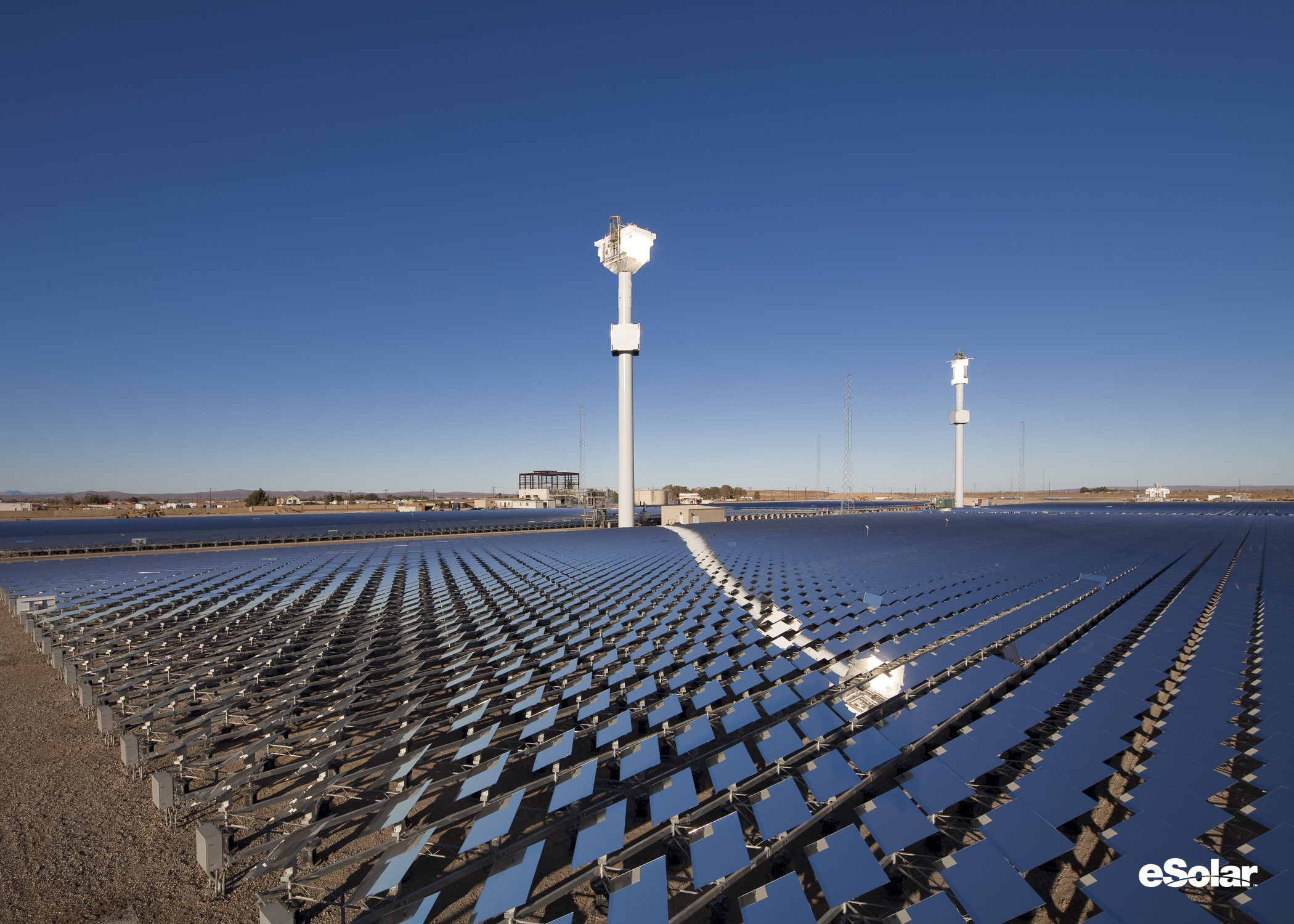
photo: eSolar

I wrote this story for Grist, where it first appeared.

As the traditional Labor Day kickoff to the fall election campaign approaches, the battle is intensifying over Proposition 23, the California ballot initiative that would effectively repeal the state’s landmark climate change law.

And thus the title of a gathering Tuesday at Google’s Silicon Valley headquarters: “Electric Bills & Oil Spills: Will California Continue to be a Clean Energy Leader?”

The not-so-subtle subtext: Not if Prop 23 passes.

“We’re strongly behind the No on 23 campaign,” Bill Weihl, Google’s green energy czar (yes, that’s his title), said as he kicked off the event in a company café packed with Bay Area green A-listers.

Not surprisingly, the panel focused less on the environmental consequences of Prop 23 than on the potential for the ballot initiative to derail California’s green tech revolution.

“Proposition 23 will kill markets and the single largest source of job growth in California in the last two years,” declared Vinod Khosla, a leading green tech investor, referring to the clean energy economy. “Not only that, it’ll kill investment in the long term for creating the next 10 Googles.”

Chipped in Weihl: “For California, we can either lead in this and invest in it and participate in this huge growth sector or cede that to China, India, and other places. It would be crazy for us to sit back and let others take that opportunity.”

Underwritten by Texas oil companies Tesoro and Valero and other out-of-state fossil fuel corporations, Prop 23 would suspend California’s global warming law — popularly known as AB 32, as in Assembly Bill 32 — until the unemployment rate drops to 5.5 percent for four consecutive quarters. (In other words, never.) AB 32 requires California to reduce greenhouse gas emissions to 1990 levels by 2020, which most likely would be accomplished through a cap-and-trade market.

Khosla and Weihl were joined on a panel by Mary Nichols, head of the California Air Resources Board, the agency charged with implementing AB 32; and Tom Bottorff, an executive with the utility PG&E.

“If you listen to the arguments of the proponents of Prop 23, their vision of California is a World War II or 1950s vision,” said Nichols, who before her appointment by Gov. Arnold Schwarzenegger was a longtime activist with the Natural Resources Defense Council. “They want to go back to a time when rubber factories and building of aircraft and automobiles were the main businesses of California.”

As the fight over Prop 23 heats up, expect to see a lot more of such talk from a place where the future is the main export.


Read Full Post »

photo: Todd Woody

In a followup to my story in Wednesday’s New York Times about recycling farmland and toxic waste sites for renewable energy projects, I take a deeper dive into why some farmers in the California’s San Joaquin Valley want to stop raising crops and start growing electrons:

In an article in The New York Times on Wednesday, I wrote about an ambitious plan to build one of the world’s largest solar energy complexes on 30,000 acres of farmland in the San Joaquin Valley of California.

Elsewhere, big renewable energy projects have encountered opposition from farmers, ranchers and environmentalists who worry about the impact of solar power plants on agriculture, wildlife and scarce water supplies.

But farmers in the San Joaquin Valley’s Westlands Water District are embracing solar power as a solution to their water woes. And environmental groups are backing the project as a way to avoid fights over building solar power plants in pristine desert areas.

In the 1960s, the west side of the San Joaquin Valley was transformed from a desert to one of the nation’s most productive agricultural centers thanks to a huge irrigation project that transports water from Northern California and distributes it to 600,000 acres of farmland through 1,034 miles of underground pipes.

Decades of irrigation and drainage problems led to a buildup of salt in the soil that forced the water district to spend $100 million to acquire and retire 100,000 acres of land from most agricultural production. Drought and environmental disputes over the impact of water diversions on endangered fish, meanwhile, slashed water deliveries to Westlands farmers.

The water district hopes to make money off salt-contaminated land by providing an initial 12,000 acres to Westside Holdings, a firm that has proposed building a 5,000-megawatt photovoltaic power complex called the Westlands Solar Park.

And farmers like Mark Shannon have agreed to lease their parched land to Westside, reluctantly concluding there’s more money to be made by growing electrons than crops.

“Last year, we received only 10 percent of our water supply and we idled 85 percent of this ranch,” said Mr. Shannon of the 5,300-acre property that his family has farmed for three generations. “My dad is 67 and I can’t believe how many times I’ve called him and he’s in tears — he just always figured he’d pass this land on to me.”

Mr. Shannon took me up in a small plane for a bird’s-eye view of the impact of the water crisis on his land, where brown fields surround green patches of almonds and pistachios. Beyond his farm are dry lands that stretch to the horizon, property owned by the Westlands Water District and taken out of irrigated production.

“Last year, we had over 250,000 acres in the district that didn’t get farmed,” said Sarah Woolf, a Westlands spokeswoman. “Then you have drainage issues coupled with the long-term reliability of the water supply.”

Desperate farmers have been spending millions of dollars drilling hundreds of deep groundwater wells, which in turn has caused subsidence problems.

In other parts of California, the prospect of covering square miles of farmland with solar panels has stirred outrage among some rural residents. But Mr. Shannon and Westlands officials don’t expect any significant opposition in the San Joaquin Valley.

The reason: if farmers such convert their land to solar farms, their water allocations will be redistributed to their neighbors.

You can read the rest of the story here.

Read Full Post »

photo: Todd Woody

In Wednesday’s New York Times, I write about a growing movement to repurpose farmland and toxic waste sites for big renewable energy projects:

LEMOORE, Calif. — Thousands of acres of farmland here in the San Joaquin Valley have been removed from agricultural production, largely because the once fertile land is contaminated by salt buildup from years of irrigation.

But large swaths of those dry fields could have a valuable new use in their future — making electricity.

Farmers and officials at Westlands Water District, a public agency that supplies water to farms in the valley, have agreed to provide land for what would be one of the world’s largest solar energy complexes, to be built on 30,000 acres.

At peak output, the proposed Westlands Solar Park would generate as much electricity as several big nuclear power plants.

Unlike some renewable energy projects blocked by objections that they would despoil the landscape, this one has the support of environmentalists.

The San Joaquin initiative is in the vanguard of a new approach to locating renewable energy projects: putting them on polluted or previously used land. The Westlands project has won the backing of groups that have opposed building big solar projects in the Mojave Desert and have fought Westlands for decades over the district’s water use. Landowners and regulators are on board, too.

“It’s about as perfect a place as you’re going to find in the state of California for a solar project like this,” said Carl Zichella, who until late July was the Sierra Club’s Western renewable programs director. “There’s virtually zero wildlife impact here because the land has been farmed continuously for such a long time and you have proximity to transmission, infrastructure and markets.”

Recycling contaminated or otherwise disturbed land into green energy projects could help avoid disputes when developers seek to build sprawling arrays of solar collectors and wind turbines in pristine areas, where they can affect wildlife and water supplies.

The United States Environmental Protection Agency and the National Renewable Energy Laboratory, for instance, are evaluating a dozen landfills and toxic waste sites for wind farms or solar power plants. In Arizona, the Bureau of Land Management has begun a program to repurpose landfills and abandoned mines for renewable energy.

In Southern California, the Los Angeles Department of Water and Power has proposed building a 5,000-megawatt solar array complex, part of which would cover portions of the dry bed of Owens Lake, which was drained when the city began diverting water from the Owens Valley in 1913. Having already spent more than $500 million to control the intense dust storms that sweep off the lake, the agency hopes solar panels can hold down the dust while generating clean electricity for the utility. A small pilot project will help determine if solar panels can withstand high winds and dust.

“Nothing about this is simple, but it’s worth doing,” Austin Beutner, the department’s interim general manager, said of the pilot program.

All of the projects are in early stages of development, and many obstacles remain. But the support they’ve garnered from landowners, regulators and environmentalists has attracted the interest of big solar developers such as SunPower and First Solar as well as utilities under pressure to meet aggressive renewable energy mandates.

Those targets have become harder to reach as the sunniest undeveloped land is put off limits.

Last December, Senator Dianne Feinstein, Democrat of California, introduced legislation to protect nearly a million acres of the Mojave Desert from renewable energy development.

But the senator’s bill also includes tax incentives for developers who build renewable energy projects on disturbed lands.

For Westlands farmers, the promise of the solar project is not clean electricity, but the additional water allocations they will get if some land is no longer used for farming.

“Westlands’ water supply has been chronically short over the past 18 years, so one of the things we’ve tried to do to balance supply and demand is to take land out of production,” said Thomas W. Birmingham, general manager of the water district, which acquired 100,000 acres and removed the land from most agricultural production. “The conversion of district-owned lands into areas that can generate electricity will help to reduce the cost of providing water to our farmers.”

You can read the rest of the story here:

Read Full Post »

I wrote this story for Grist, where it first appeared.

The Gulf oil spill disaster is usually tied to Americans’ insatiable appetite for gasoline to fuel an unsustainable lifestyle.

And while transportation accounts for most of the United States’ petroleum consumption, there are still more than 14 million homes that rely on some type of oil for heating. Retrofitting those houses to run on cleaner fuel and increase their energy efficiency could save as much oil as would be spilled in two Deepwater Horizon disasters a month, according to a report from the Natural Resources Defense Council and the Institute for Market Transformation, a non-profit focused on green building.

“Retrofitting our oil-heated homes and commercial buildings to 50 percent savings would save 2 billion barrels of oil by 2030, practically offsetting the amount of oil we could get by drilling in the Outer Continental Shelf,”  the report states. “In addition, home retrofits could save more than double the amount of natural gas that we could produce by drilling the Outer Continental Shelf.”

NRDC points out that the $20 billion BP has set aside for the Gulf cleanup could finance energy efficiency retrofits for every home in Louisiana and Mississippi, cutting homeowners utility bills by 25 percent. The nearly $4 billion BP has spent so far on the cleanup could pay for retrofitting 650,000 homes.

“That could have been spent on U.S.-made insulation, air conditioners, furnaces, water heaters, and other products, as well as the labor to install them,” the report states. “Of course, oil savings from building efficiency pale in comparison to the savings potential of more efficient vehicles, better urban planning, and increasing transportation options, but the magnitude of the savings potential of the building sector illustrates just how short-sighted our focus on drilling has become.”

And while building energy efficiency improvements aren’t cheap, those investments will continue to pay dividends for decades in the form of lower energy bills and reduced demand for fossil fuels.

Read Full Post »

photo: Todd Woody

I wrote this story for Grist, where it first appeared.

The anemic economic recovery may have hit the dog days of summer with consumer spending and factory orders slowing, but the new energy economy continues to surge, according to a report released Tuesday by Ernst & Young.

Venture capital (VC) investment in renewable energy, electric cars, energy efficiency, and other green technology jumped to $1.5 billion in the United States in the second quarter of 2010, a nearly 64 percent spike over the second quarter of last year. Green tech investment now has returned to the record levels of the third quarter of 2008, before the global economic collapse shut down the VC’s ATM.

So where’s the money going? Between March and June, at least, investors hitched a ride with startups developing electric cars and the infrastructure to support them. Better Place, the Palo Alto company building electric vehicle charging networks around the world, snagged $350 million. Fisker Automotive, a Southern California startup building a sexy and pricy plug-in hybrid sports sedan called the Karma, scored $35 million, according to the report.

Solar remains a hot opportunity for venture capitalists, with nearly $439 million invested in the second quarter, a 183 percent increase from the year-ago quarter.

It’s no coincidence that the beneficiaries of investors’ largesse are also those startups that received federal loan guarantees to build big solar power plants. (Raising additional capital usually is a requirement for obtaining such federal loan guarantees.)

BrightSource Energy, for instance, secured a $1.37 billion loan guarantee from the U.S. Department of Energy to build its first solar power plant, now undergoing licensing in California. It then quickly raised $180 million from investors.

VCs also continue to pour cash — nearly $200 million in the second quarter — into energy efficiency startups, which tend to be far less capital-intensive than renewable energy companies.

So it’s a good time to go pitch that great green tech idea you’ve been kicking around, right?

Not necessarily. Ernst & Young notes that nearly 59 percent of investment in the second quarter went to so-called later-stage startups that are well on their way to rolling out products.

In other words, venture capitalists seem to be more interested in priming the pipeline for initial public offerings or acquisitions that will produce a big pay day than in financing what green tech investor Vinod Khosla calls “science experiments.”

Read Full Post »

photo: Todd Woody

I wrote this story for Grist, where it first appeared.

Judging by the comments on my previous post comparing the Chevrolet Volt plug-in hybrid and Nissan Leaf electric car, more than a few readers are suffering sticker shock at the price of greening their rides.

Now there’s another option for those wanting to take the occasional trip down the electric highway without forking over $41,000 for a Volt or $32,780 for a Leaf (before a $7,500 federal tax incentive).

This week, rental car giant Enterprise Holdings announced it had placed an order for 500 Leafs that will be available in early 2011 at Enterprise Rent-a-Car locations in Phoenix and Tucson, Ariz.; Knoxville and Nashville, Tenn.; San Diego; Los Angeles; Portland, Ore.; and Seattle. (Not coincidentally, those cities are also where Nissan will first roll out the Leaf later this year and where a Department of Energy-funded network of charging stations will be built.)

“There is a lot of conversation and buzz about the electric car and we would like to offer it to our customer base as it comes commercially and economically viable,” Lee Broughton, Enterprise Holdings’ director of sustainability, told me.

Enterprise Holdings also owns Alamo and National Car Rental, but decided to place the Leafs with Enterprise Rent-a-Car as its locations are concentrated in neighborhoods.

“We’re uniquely placed to offer exposure of the electric vehicle to customers,” says Broughton. “When you think about the daily urban commuter, electric cars are in the sweet spot.”

He says Enterprise, which currently offers nearly 7,000 hybrid cars for rent, is also talking to other electric carmakers.

The company has not set a price for renting a Leaf, but Broughton noted that Enterprise’s hybrid fleet commands a slight premium.

“There is a sticker price difference for a vehicle of a similar size simply because of the technology and the infrastructure to support it,” he notes of the Leaf.

Enterprise will qualify for the $7,500 federal tax incentive for each Leaf as well as any available local and state rebates.

Adding cars like the Leaf and the Volt to rental fleets could be an effective way to expose people to electric cars and expand the market. They would also seem ideal for urban car-sharing services like Zipcar, which offer hipsters cool rides like the Mini Cooper and the Prius.

But when I talked to top executives at Zipcar and its competitors earlier this year, I found their enthusiasm tempered by the costs of the first mass-market electric cars and plug-in hybrids and worries about whether a sufficient number of charging stations will be available for their customers.

That could well change over the next year as electric cars begin to proliferate and curious consumers decide the best way to go electric is to do a time-share.

Read Full Post »

I wrote this story for Grist, where it first appeared.

Are you a Volt kind of gal or a Leaf guy?

With General Motors and Nissan revving up to put the first mass-produced electric cars in showrooms in a few months, the shape of the nascent market is starting to emerge as the engineers complete their work and the marketers begin theirs.

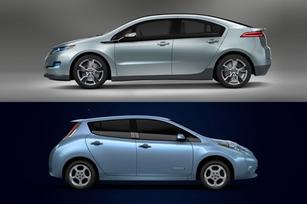
The cars, the Chevrolet Volt and the Nissan Leaf, take two different technological roads to sustainable transportation, and their differing appeal was on display Monday when I spent the afternoon at the Plug-In 2010 conference in San Jose. (Even the cars’ names telegraph their shades of green.)

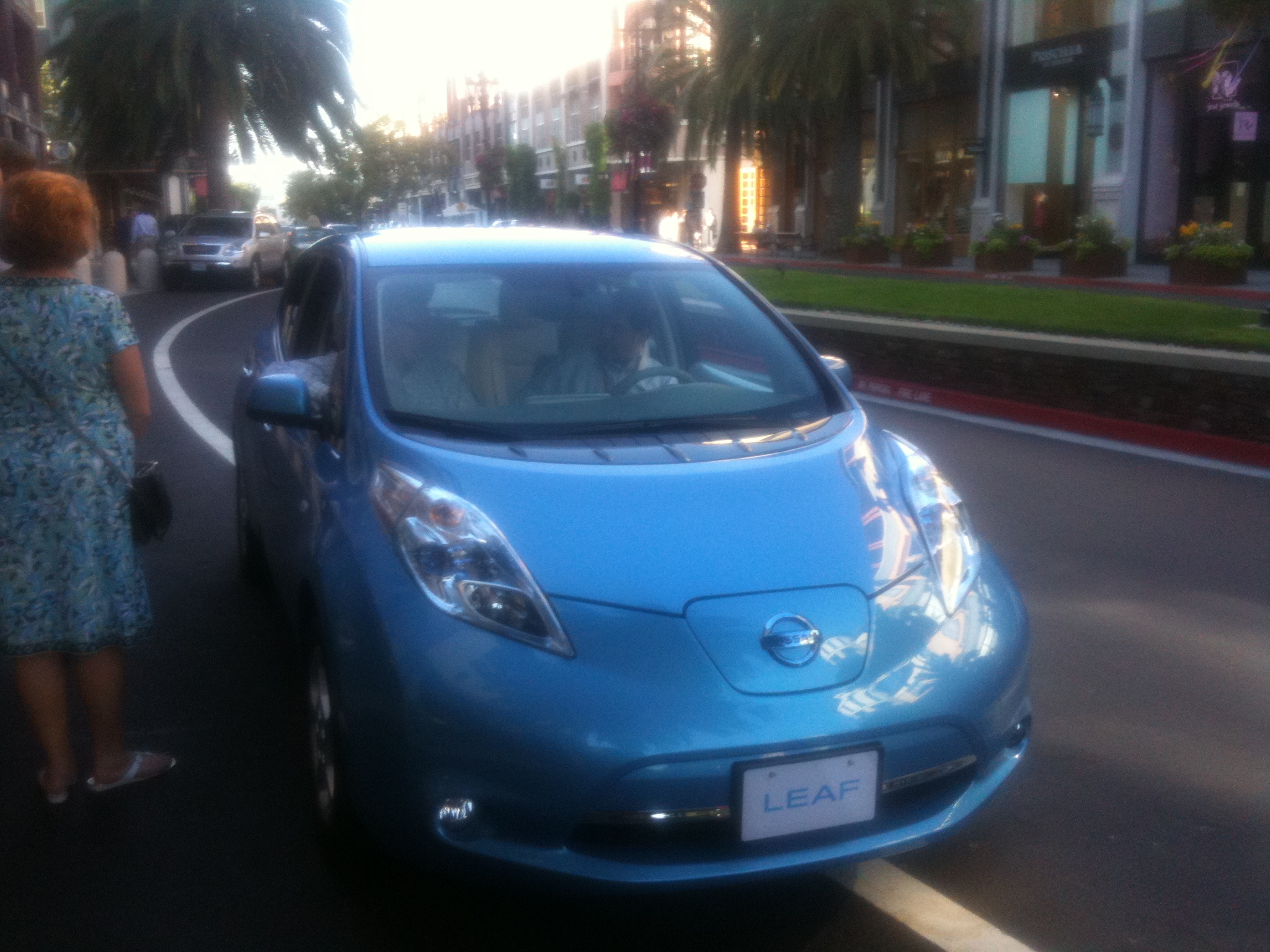
First I took a test drive of a metallic blue Leaf parked outside the Hotel Valencia in San Jose’s upscale Santana Row shopping district. Like the Toyota Prius, the five-seater Leaf has a distinctive shape that lets your neighbors know you’ve gone green — that and the logo emblazoned on the side that screams “zero emission” in big letters.

Nissan clearly is targeting the Prius set. Inside, the Leaf features a clean minimalist interior with just enough high-tech touches to let you know you that this is not your grandma’s Sentra. Move the big and round blue LED-illuminated knob in the center console to the left and down and the Leaf is in gear. (Press the button on the top of the knob to put the Leaf in park.)

Like every other electric vehicle I’ve driven, the Leaf accelerates quickly as power is instantaneously transferred to the wheels, albeit not as silently as other EVs. Nissan has implanted speakers under the wheel wells that broadcast a low sound somewhat like a starship going into warp to warn unsuspecting pedestrians that a car is coming.

Touch a button on the big dashboard screen and the Leaf tells you how many miles you can travel on the battery’s remaining charge and displays a map showing just how far you can go in any direction. Another button displays the location of charging stations — which are very few and far between in San Jose at the moment.

Other than the iPhone-like features, the Leaf drives and handle like any other compact car. Which is the point, after all, for automakers seeking to make electric cars as common as the Honda Civic.

Still, Nissan is clearly targeting the enviro crowd that made the Prius a hit and broke down barriers for electric cars.

“Basically everything you see here is made out of recycled water bottles, right down to the floor mats,” the Nissan representative riding shotgun points out about the interior.

If that doesn’t provide enough green cred at the neighborhood cocktail party, there’s the optional solar panel that does double duty as a spoiler. (“Ninety-nine percent bragging rights, one percent function,” concedes the Nissan rep.)

But what about the Volt?

That same evening, I attended a dinner where GM executives at long last revealed the sticker price of the Volt: $41,000, versus $32,780 for the Leaf, before a $7,500 federal tax credit.

Although GM calls the Volt an “extended range electric vehicle,” it is in fact a serial hybrid that will travel 40 emission-free miles on a charge from its lithium ion battery pack. When the battery runs down, a small gasoline engine kicks in to power a generator that delivers electricity to the car’s motor. That lets the Volt go 340 miles, dispelling range anxiety. (Nissan says the Leaf can travel up to 100 miles on a charge.)

“This car is designed for the majority of Americans,” Joel Ewanick, GM’s vice president for North America marketing, said at the dinner. “This is a car that the average person can drive on a daily basis. It’s not something that’s a unique little niche vehicle.”

The Volt has an aggressive muscular stance and an interior choc-a-block with buttons and ports (plus a 32-gig hard drive for your music collection) that should appeal to the Camaro crowd as well as greenies. (It’s also fun to drive, as I found out when I took the Volt for a spin a couple of months ago.)

So, which to choose?

The reality is that both types of cars are needed to accelerate the transition away from gasoline-powered vehicles, and both vehicles present conundrums to potential buyers.

As I tooled around in the Leaf, I realized that if I had driven the car down to San Jose from Berkeley, I wouldn’t have enough juice to make a return trip. On the other hand, if I had taken the Volt, I would have been burning carbon for more than half the trip.

Clearly, the electric-car market will need both the Volt and the Leaf in the coming years.

And a lot of fast-charging stations.

Read Full Post »

Image: Google

I wrote this story for Grist, where it first appeared.

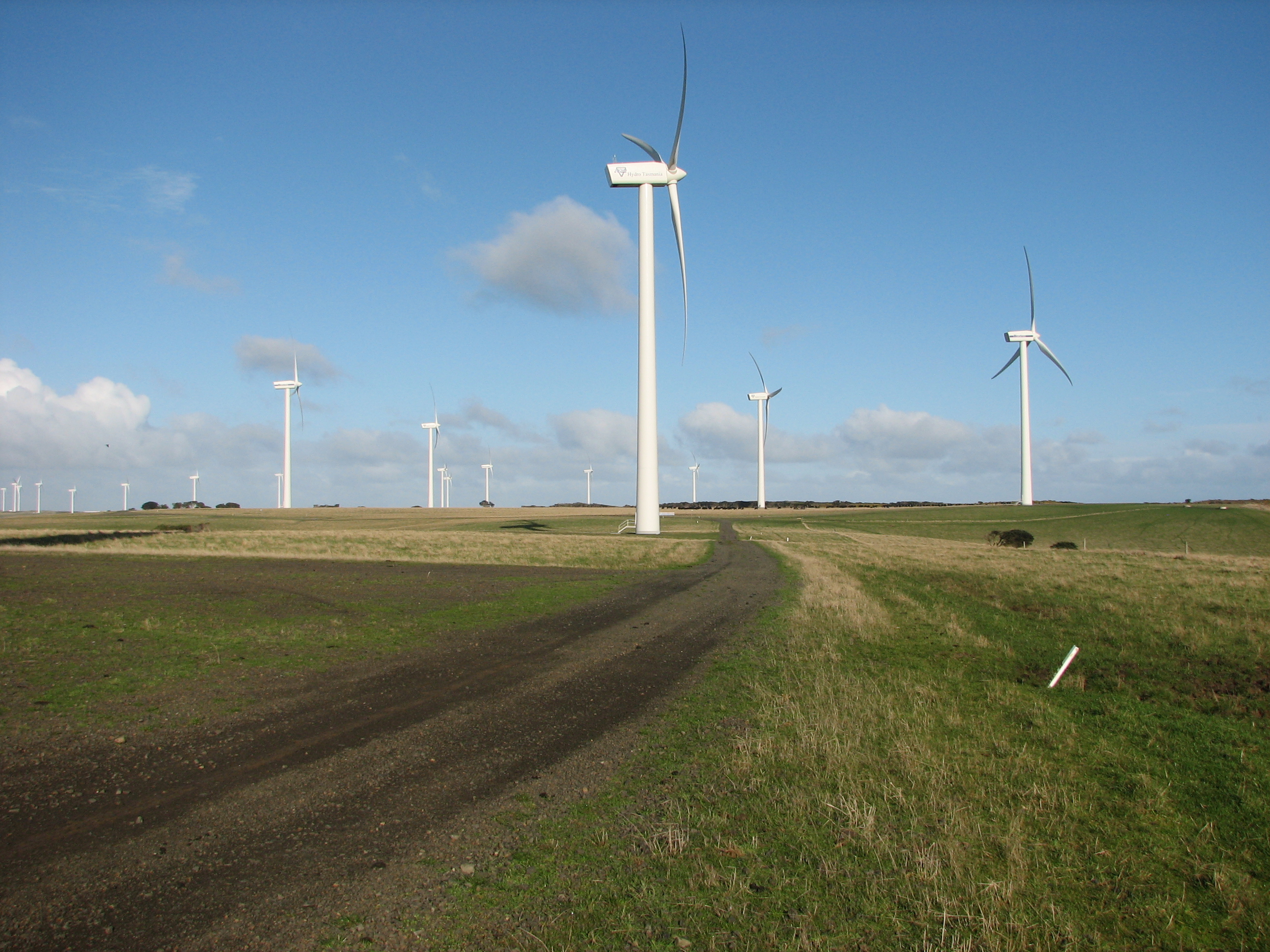
Google is officially in the green energy business. The search giant announced on Tuesday that its Google Energy subsidiary signed a 20-year power purchase agreement with NextEra Energy. Google will begin buying 114 megawatts of electricity from an Iowa wind farm on July 30.

Google, of course, cannot directly use the clean green energy generated by the wind farm; that power goes into the local grid. So Google Energy will sell the power on the regional spot market, where utilities and electricity retailers go to buy power when demand spikes and they have a shortfall. Google will use the revenue from spot market sales to buy renewable energy certificates (RECs) which will offset its greenhouse gas emissions.

Many companies buy RECs in an attempt to be carbon neutral, obtaining them from third-party brokers. But by purchasing RECs directly tied to the renewable energy it is also buying, Google is getting a bigger bang for its buck.

“By contracting to purchase so much energy for so long, we’re giving the developer of the wind farm financial certainty to build additional clean energy projects,” Urs Hoelzle, Google’s senior vice president for operations, wrote on a blog post Tuesday.

“The inability of renewable energy developers to obtain financing has been a significant inhibitor to the expansion of renewable energy,” he added. “We’ve been excited about this deal because taking 114 megawatts of wind power off the market for so long means producers have the incentive and means to build more renewable energy capacity for other customers.”

In a statement on its site, Google also noted that its motivations for signing long-term renewable energy contracts are not entirely altruistic.

“Through the long term purchase of renewable energy at a predetermined price, we’re partially protecting ourselves against future increases in power prices,” the company stated. “This is a case where buying green makes business sense.”

It remains to be seen how big a green power purchaser Google will become. (The company has also invested directly in a wind project built by NextEra Energy, the biggest American wind power producer.)

But Dan Reicher, Google.org director of climate change and energy programs, told me earlier this year that finding clean ways of powering Google’s massive data centers led in part to the establishment of Google Energy.

“This interest in procuring green electrons is part of what’s driven Google Energy,” he said.

Read Full Post »

photo: GE

In my Green State column on Grist on Thursday, I write about General Electric’s $200 million contest to find ideas and technologies to accelerate deployment of the smart grid:

Got a killer smart grid idea? General Electric has $200 million to spend.

Jeff Immelt, chief executive of the industrial conglomerate, flew into San Francisco to announce on Tuesday that GE was hooking up with prominent venture capital firms from Silicon Valley, the East Coast, and Europe to offer a supersized version of the X Prize for innovation. (GE and the participating venture capitalists are each contributing $100 million to the challenge.)

“We really believe this digital energy space is going to move fast and big as an economic proposition,” Immelt said before a hundred or so of Silicon Valley’s green tech elite who gathered for a lavish press event at the neo-classical Bently Reserve building in downtown San Francisco. “It also lays the groundwork for everything that needs to be done in an energy future, from nuclear to renewables.”

“GE can offer 50 to 60 percent of the solutions,” he added. “But the only way we can grow is by partnering with the venture community.”

And you too, Grist reader. GE will essentially crowdsource ideas, business plans, and potential startup acquisitions at a new site called Ecomagination Challenge: Powering the Grid. (“Ecomagination” is how GE brands its various environmental and green technology ventures and initiatives.)

Between now and September 30 you can submit ideas and vote on the best ones — the one scoring the most reader votes, and GE’s approval, wins $50,000. The company and its venture partners will award five other entries $100,000 each, which could lead to further equity investment.

A day into the smart grid challenge, ideas submitted from around the world range from wind farms on the Great Lakes to a proposal to “harness the energy from the Earth’s rotation.”

Now it’s doubtful that any startup entrepreneur worth her seed funding will risk floating  a potential multimillion-dollar idea for all to see. But GE’s partnership with venture capital firms such as Kleiner Perkins Caufield & Byers and Rockport Capital Partners — not to mention its use of social media to troll for innovative ideas — speaks to the challenges of building a smart grid.

First we need to define what a smart grid is. Comparing it to the Internet is a favored analogy. The current power transmission system is patchwork of early-to-mid 20th century technology that sends electricity from power plants to homes, offices, and factories. It’s essentially a one-way, analog system.

What Immelt calls “digital energy” will transform the power grid into a two-way, interactive system through the use of software, sensors, and other devices that allow utilities and grid operators to control and monitor energy use from the household level up, as well as get real-time data on electricity demand and supply. The various parts of the grid — transformers, substations, power lines — will communicate digitally, alerting operators, for instance, when a component has failed.

The ability to collect and analyze such grid data is crucial for the mass expansion of renewable energy. Most forms of green energy — solar and wind, for instance — are intermittent and increasingly decentralized; there are more than 31,000 rooftop solar installations in California alone.

To maximize renewable energy production and minimize greenhouse gas emissions, utilities and grid operators must be able to balance electricity being fed into the grid from tens of thousands of such sources along with energy from centralized fossil fuel power stations.

And in the coming years, utilities will need to know the location and charging status of tens of thousands of electric cars, each one automobile battery both a consumer and a potential provider of electricity. (If 100,000 cars plug in at 9 p.m. in California just as wind farms hit peak production, a utility will want to use that emission-free electricity to charge up emission-free vehicles rather than rely on, say, natural gas-fired power plants.)

You can read the rest of the column here.

Read Full Post »

This post first appeared on Grist.

Green tech is back in the green.

Global venture capital investment in green technology companies reached $4.04 billion in the first half of 2010, exceeding – slightly — the record set in the boom year of 2008, according to a preliminary report released Thursday by the Cleantech Group and Deloitte.

Venture investment in the second quarter rose to $2.02 billion, up 43 percent from the year-ago quarter. Investments in the first half of the year spiked 65 percent from the same period in 2009.

“There’s been a very clear resurgence in solar activity and that is largely responsible for the strong quarter,” Richard Youngman, the Cleantech Group’s head of global research, said on a conference call Thursday.

Solar captured $811 million, or about 40 percent, of green technology investment in the second quarter, according to the Cleantech Group, a San Francisco-based consulting and research firm. It defines the global market as consisting of North America, China, India, Israel and Europe.

Solyndra, a Silicon Valley thin-film solar panel maker, scored a $175 million investment while solar power plant builder BrightSource Energy took in $150 million.

It’s no coincidence that both companies have been the beneficiaries of the Obama administration’s push for renewable energy. Solyndra received a $535 million loan guarantee to build a new factory in the San Francisco Bay Area (which the president visited in May) and BrightSource was granted a $1.37 billion loan guarantee to get its first solar thermal power plant online.

Despite the recession, corporate America poured a record $5.1 billion into green tech companies in the first half of 2010, a 325 percent increase from a year ago.

“The significant strengthening of corporate and utility investment into the cleantech sector, relative to 2009, is very encouraging, given the key role they will play in enabling broader adoption of clean technologies at scale,” Scott Smith, partner, Deloitte’s U.S. clean tech leader in the United States, said in a statement.

Youngman warned not to read too much into the success this week of Tesla Motor’s initial public offering. Though the Silicon Valley electric carmaker’s share price accelerated some 40.5 percent on opening day, he pointed out that high-profile IPOs from Solyndra and Goldwind, a Chinese wind turbine maker, were pulled recently.

In fact, head east if you want to get in on a booming IPO market –12 of the 19 green tech offerings in the second quarter came from Chinese companies and raised $1.73 billion, or 75 percent of the total IPO take, according to the Cleantech Group.

The flip side, of course, is that the anemic IPO market in the United States also is driving venture capital investment as green tech firms are forced to raise private money.

Read Full Post »

« Newer Posts - Older Posts »

Design a site like this with WordPress.com
Get started