Feeds:
Posts
Comments

Archive for the ‘green policy’ Category

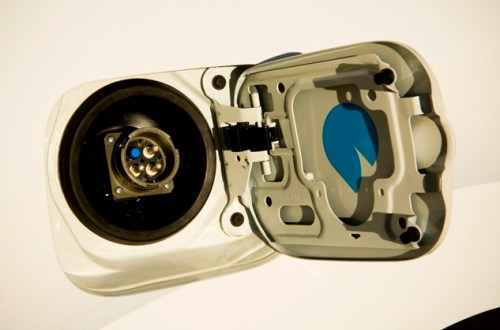
betterplaceplug

photo: Better Place

With electric cars months away from hitting the road, the California Public Utilities Commission has begun the complex task of establishing a regulatory framework for the state’s emerging electric vehicle infrastructure. The biggest fight is likely to be over whether to regulate companies like Better Place, which plans to build an electric car charging network in the state. As I write in The New York Times on Monday:

With electric cars set to hit the mass market next year, a skirmish is breaking out in California over who will control the state’s electric vehicle infrastructure.

The California Public Utilities Commission will write the rules of the electric road and is just starting to grapple with the complex regulatory issues surrounding the integration of battery-powered cars into the state’s electrical grid.

One of the biggest questions is whether to regulate Better Place, Coulomb Technologies and other companies that plan to sell electricity to drivers through a network of battery charging stations.

California’s three big investor-owned utilities have split over the issue.

“The commission should establish its authority to regulate third-party providers of electricity for electric vehicles,” Christopher Warner, an attorney for Pacific Gas & Electric, wrote in a filing with the utilities commission. “Managing the increased electricity consumption and load attributable to electric vehicles in order to avoid adverse impacts on the safety and reliability of the electric grid may be one of the most difficult management challenges that electric utilities will face.”

Southern California Edison, meanwhile, urged the commission to move cautiously, calibrating any regulation to the specific business models of the companies.

San Diego Gas & Electric said the commission does not have the right to regulate companies like Better Place.

You can read the rest of the story here.

Read Full Post »

IMG_1214

photo: Todd Woody

Can a state that gets 95 percent of its electricity from coal-fired power plants go green? The Natural Resources Defense Council thinks so. In a report released this week, the environmental group lays out how Indiana can become the California of the Midwest when it comes to renewable energy. As I write in The New York Times on Friday:

Coal-dependent Indiana could become one of the nation’s greenest states by tapping rural resources to generate renewable energy, according to a new report issued by the Natural Resources Defense Council.

The Hoosier State now obtains 95 percent of its electricity from plants running on coal — largely imported from Wyoming and elsewhere — but it could profit as an exporter of wind energy and machinery, the report said.

“Indiana has some of the best wind potential in the eastern U.S. and has a competitive advantage as a wind producer over most other states because of its location,” said the report’s author, Martin R. Cohen, said during a conference call on Wednesday.

Mr. Cohen noted that while the wind blows stronger in states like North Dakota and Nebraska, Indiana already has the transmission system in place to bring wind-generated electricity to eastern cities.

If Indiana increased wind energy production to 4,500 megawatts from its current 530 megawatts, it would create thousands of jobs and attract turbine manufacturers, according to the report. An owner of a 500-acre farm could earn $30,000 a year from leasing land for wind turbines, Mr. Cohen estimated.

Farmers also could profit, the report said, if Indiana starts harvesting corn stalks, wheat stalks and soybean residue and uses the biomass either for power production or to make ethanol.

You can read the rest of the story here.

Read Full Post »

thnk-goes-amsterdam77
photo: Think

In The New York Times today, I write about how Stockholm’s congestion pricing system, which charges drivers to enter the city center, has helped triple the number of alternative fuel cars in the Swedish capital:

When Sweden began charging motorists to drive into downtown Stockholm during rush hour, the goal was to reduce traffic congestion, cut greenhouse gas emissions and boost ridership on public transportation.

That has happened, and now a new study has found another benefit from so-called congestion pricing: In the 24-square kilometer congestion zone in Sweden’s capital, the number of registered alternative fuel vehicles, which are exempt from congestion tolls, jumped from five percent of the total vehicle fleet in 2006 to 14 percent in 2008.

“The changes in the make-up of the vehicle fleet are not exclusively due to the congestion tax, but surveys show that exemption from the congestion tax is the single most significant incentive for those buying alternative fuel vehicles in Stockholm,” concluded the report, which was released this month by the Stockholm Traffic Administration.

You can read the rest of the story here.

Read Full Post »

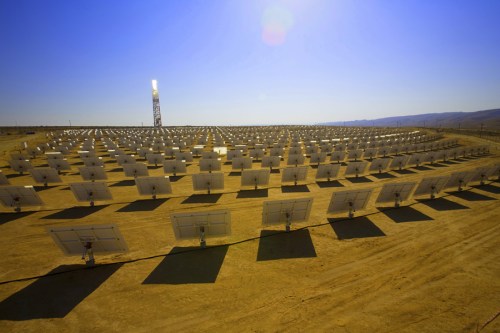
esolar_8
photo: eSolar

In Sunday’s Los Angeles Times, I write about how the rise of green technology is changing the way Silicon Valley venture capitalists do business:

Silicon Valley venture capitalists have always been about inventing the future — taking a wild idea, nurturing it with cash and creativity and giving birth to new products, companies and industries we once couldn’t imagine and now can’t conceive of living without: the Web, Google, the iPhone, Twitter.

But as green technology becomes the latest tech wave to break from the nation’s entrepreneurial epicenter, it’s now all about companies reinventing the past. Solar power companies, electric car start-ups and algae biofuel ventures aim to remake century-old trillion-dollar industries on a global scale.

Venture capitalists poured $4 billion into green-tech start-ups in 2008 — nearly 40% of all tech investments in the U.S., according to a survey by PricewaterhouseCoopers. Green-tech investment plunged in the first half of 2009 to $513 million as the recession dragged on, but there are signs of a rebound: Silicon Valley’s Khosla Ventures announced this month that it had raised $1.1 billion — the biggest first-time fund in a decade — that would be largely devoted to investing in green-tech start-ups, many in Southern California.

But green-tech companies face unique challenges, including global markets, tough technological hurdles and a future shaped by government incentives and regulatory policy. Those challenges are changing the game on Sand Hill Road.

“If you’re starting a Web 2.0 company, your basic needs are personnel and servers — there is no physical product, no manufacturing capacity, no inventory, no steel in the ground,” VantagePoint’s Salzman said, referring to software-based companies that provide services over the Internet.

Green-tech start-ups, he said, often need big money and investors steeped in big science and big government.

You can read the rest of the story here.
Read Full Post »

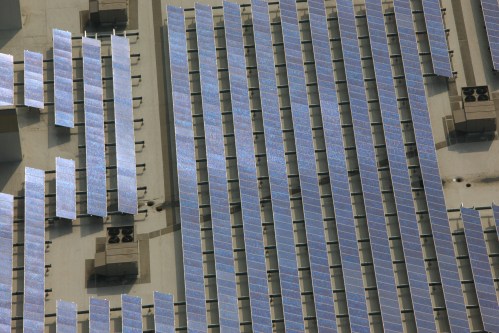
solarcells

photo: Southern California Edison

It hasn’t received much media attention, but the California Public Utilities Commission has just proposed instituting a first-of-its-kind reverse auction market to spur renewable energy development — mainly solar photovoltaic.  As I write today in The New York Times:

California regulators are taking an eBay approach to ramping-up renewable energy in the Golden State.

In what might be a world first, the California Public Utilities Commission on Thursday proposed letting developers bid on contracts to install green energy projects. A solar company that offers to sell electricity to one of California’s three big utilities at a rate lower than its competitors would win a particular power purchase agreement.

This “reverse auction market” feed-in tariff is designed to avoid the pitfalls the have plagued efforts in Europe to encourage development of renewable energy by paying artificially high rates for electricity produced by solar power plants or rooftop photovoltaic projects.

You can read the rest of the story here:

Read Full Post »

eSolar Sierra

photo: eSolar

The U.S. Department of Energy on Friday began accepting applications for at least $3 billion in direct funding of renewable energy power plant projects.

The funding, part of the federal stimulus package, is in lieu of a 30 percent investment tax credit that green energy developers can take on their projects. Given that most solar and wind developers carry no tax liabilities, they have relied on investment banks and other investors to front the hundreds of millions and billions of dollars in financing needed for their projects in exchange for the tax credits. But as the economy tanked along with investment banks, demand for so-called tax equity partnerships evaporated.  Big Solar projects stalled and wind developers delayed turbine orders.

Curiously, the Department of Energy said on Friday that the $3 billion would fund some 5,000 projects. That works out to about $600,000 per power plant. But a single 250-megawatt solar power plant alone can cost more than a $1 billion and would thus soak up $300 million or 10% of the funding pool.

The question is, will DOE end up funding a few large-scale green energy projects that could start to give, say, the solar thermal industry economies of scale, or will it spend the money on hundreds of smaller renewable energy facilities?

That’s a crucial issue for solar developers like Tessera Solar/Stirling Energy Systems, eSolar and BrightSource Energy, which is backed Google (GOOG), Morgan Stanley (MS) and VantagePoint Venture Partners as well as a clutch of oil giants – Chevron (CVX), BP (BP) and Norway’s StatoilHydro.

Also left unsaid in the DOE’s announcement was the fact that renewable energy projects need to break ground by the end of 2010 to qualify for the direct funding. Which is why BrightSource, Nextera Energy (a subsidiary of utility giant FPL Group (FPL) ) and Tessera Solar are eager to expedite the lengthy California licensing process and get their projects approved before New Year’s Eve 2010 so they can put shovel to dirt and start shoveling cash into their coffers.

Read Full Post »

NRDC water report

Water isn’t as sexy as solar, doesn’t carry the smart grid’s geek cred or inspire green technolust like the Fisker Karma or Tesla Roadster electric sports cars. But as a new Natural Resources Defense Council report drives home, it could be one of the biggest climate-change related business opportunities of the new century.

The NRDC study focuses on California, where drought, a growing population and the specter of global warming-triggered water shortages demand innovative water efficiency policies and technological solutions. Just like California has kept its per capita energy consumption flat over the past 30 years as its population doubled through energy efficiency standards, the reports’ authors say that the Golden State must take the same approach with water.

“Such measures can help stretch limited water supplies, save businesses, money, reduce energy consumption, improve water quality, and protect local, regional, and statewide ecosystems,” wrote authors Ronnie Cohen, Kristina Ortez and Crossley Pinkstaff.

They focus on the so-called commercial, industrial and institutional sector, or CII — i.e. Big Business and Big Government — and the takeaway headline is that if those water consumers cut their consumption by implementing existing conservation technology they would save enough H2O to supply the coastal metropolises of Los Angeles, San Diego and San Francisco.

As has been oft pointed out, a great deal of energy is expended to transport and manage water — 20% of California’s electricity production is water-related, according to the state’s energy commission — and cutting water use will also slash companies’ electricity bill and, not incidentally, greenhouse gas emissions.

The report says that CII accounts for one-third of California’s urban water use. Taking such prosaic measures as installing aerators on faucets, low-flow shower heads and energy efficient commercial dishwashers and washers can save millions of gallons of water. Take toilets, for example. Urinals alone — pay attention guys — consume 15% of the water used in commercial restrooms. Switching to waterless urinals would save 45,000 gallons a year per urinal, according to the report.

More high tech measures involve deploying smart irrigation systems that use sensor networks to determine when to turn on the sprinklers at all those golf courses built in the California desert and in suburban communities throughout the state.  Needless to say, much of the opportunity in Big Water be for consultants and policymakers.

The whale in the room, of course, is Big Agriculture. Ag was beyond the scope of the NRDC report but it is the biggest consumer of water in California and has often been the most resistance to change or paying the true cost of such things as growing rice and alfalfa in the desert.

But as far as the commercial and government sectors go, the report concludes with these policy recommendations:

  • “Establish efficiency standards for water-using products.
  • Set performance-based water savings targets that provide water agencies with flexibility.
  • Prioritize water conservation above increasing supply.
  • Adopt a Public Goods Charge on water sales to provide a dedicated funding source for water efficiency programs, including expanded technical and financial assistance.
  • Encourage partnerships with—and financial support from—energy utilities and wastewater agencies.
  • Streamline the process for recycled water use.
  • Encourage volumetric pricing for sewer services.
  • Decouple water agencies’ sales from revenue.
  • Improve water use data collection and management.”

Read Full Post »

The wind industry has been getting a lot of love of late from the Obama administration.

The president spent Earth Day at an Iowa factory that makes wind turbine towers and announced new regulations for offshore wind farms. Meanwhile, Interior Secretary Ken Salazar has been talking up the potential of offshore wind to generate as much as 20% of the eastern seaboard’s electricity that is now provided by coal-fired power plants.

But such scenarios won’t come to pass unless the administration seriously tackles the transmission grid problems that are keeping wind from becoming a nationwide source of green energy, according to panel of wind industry executives who spoke at Fortune Magazine’s Brainstorm Green panel this week.

“The real challenge is to connect wind farms in the Great Plains with the population centers of the Midwest,” said Bob Gates, senior vice president of commercial operations for Clipper Windpower. California-based Clipper is one of two U.S.-owned wind turbine makers (the other being General Electric (GE) ).

For instance, Clipper and BP (BP) have signed an agreement to build a 5,000-megawatt wind farm – the nation’s largest – in South Dakota. But the deal is more a dream at this stage because there are no power lines to transmit such massive amounts of electricity to Chicago and other Midwestern cities. (Gates said there is enough transmission available to begin construction this summer of a small 25-megawatt portion of the wind farm.)

The Obama administration has devoted billions of dollars in stimulus package funding to transmission projects and the Federal Energy Regulatory Commission last week approved incentives for a company planning to build a $12 billion “Green Power Express” transmission project to bring wind to Midwest metropolises.

Gates and the other panelists — Andris Cukurs, CEO of Indian turbine maker Suzlon’s North American operations; Don Furman, a transmission executive with Spanish wind developer Iberdrola Renewables, and James Walker, vice chairman of French-owned wind developer enXco – said the development of wind offshore from East Coast cities would ease transmission bottlenecks.

“Connecting offshore wind to cities is relatively cheap and easy compared to bringing wind power from the Dakotas to New York City,” Gates said. Another way to work around transmission gridlock would be to develop highly efficient small turbines that could be placed near cities and existing power lines, said Gates.

Despite Obama’s embrace of wind, the executives said they don’t see the industry resuming its record growth in 2008 – when U.S. wind capacity more than doubled – until 2010 or later. The credit crunch delayed or scuttled numerous wind farms and turbine orders have fallen dramatically.

One bright spot: Growing interest from well-capitalized utilities in directly investing in wind farms.

“Utility ownership is about 15% of the U.S. turbine fleet,” said Furman of Iberdrola Renewables. “I see more utility ownership in the coming years,, perhaps up to a third of the fleet.”

Read Full Post »

three_in_row_hi_mediumWave farm developers must overcome more hurdles to get their projects approved under an agreement signed Thursday ending a feud between two federal agencies that warred over the regulation of offshore wind and wave farms.

A jurisdictional dispute between the U.S. Department of the Interior and the Federal Energy Regulatory Commission had left in limbo a number of wave energy projects planned for the outer continental shelf, particularly applications from Grays Harbor Ocean Energy of Seattle to build half a dozen combined wave-and-wind farms from New Jersey to Hawaii. The Interior Department’s Minerals Management Service had challenged FERC’s right to approve approve projects on the outer continental shelf. Last month the agencies agreed to end the water fight but offered few specifics on how offshore wind and wave farms would be regulated.

On Thursday, Interior Secretary Ken Salazar and FERC chairman Jon Wellinghoff signed an accord detailing how their agencies will deal with such projects. FERC will license the construction and operation of wave farms on the outer continental shelf but the Minerals Management Service will issue leases and rights-of-way for those projects. The Minerals Management Service also will be the sole agency to license wind and solar projects on the outer continental shelf.

Previously, a wave energy developer applied to FERC for a preliminary permit to explore the feasibility of a project in a particular stretch of ocean. As such permits award developers first rights to build a project in a given locale, there’s been something of an offshore land rush over the past couple of years to stake claims on the best sites. (The city of San Francisco and Grays Harbor Ocean Energy, for instance, are feuding over competing claims.)

Under Thursday’s agreement, FERC will no longer issue such preliminary permits for wave farms on the outer continental shelf and will not license any projects until developers first secure a lease or right-of-way from the Interior Department.

That should slow the land rush as developers will now be dealing with two federal agencies when it comes to floating their projects.

Read Full Post »

solara

photo: BrightSource Energy

As the Nevada legislature debates extending tax breaks for large-scale solar power plants, a new report finds that ramping up solar development in the Silver State could produce thousands of good-paying green jobs while generating nearly $11 billion in economic benefits.

The study from San Francisco-based non-profit Vote Solar concludes that 2,000 megawatts’ worth of big solar thermal and photovoltaic farms — needed to meet Nevada’s electricity demand — would result in 5,900 construction jobs a year during the plants’ building phase, 1,200 permanent jobs and half a billion dollars in tax revenues.

“It is likely that such an investment in solar generating facilities could bring solar and related manufacturing to Nevada,” the reports authors wrote. “The economic impact of such manufacturing development is not included in this analysis, but would add significant additional benefits.”

Vote Solar’s job projections are based on an economic model developed by the National Renewable Energy Laboratory to project the impact of solar trough power plants, the most common, if dated, type of Big Solar technology.

The different solar technologies set to come online in the next couple of years could change that equation. No doubt thousands of jobs will be generated by Big Solar but just how many will depend on the mix of solar thermal and photovoltaic power plants that ultimately come online. New technologies like BrightSource Energy’s “power tower,” Ausra’s compact linear fresnel reflector and Stirling Energy Systems’s solar dish may generate similar numbers of jobs. But then there’s eSolar’s power tower solar farms – which uses fields of mirrors called heliostats to focus the sun on a water-filled boiler, creating steam that drives an electricity-generating turbine.  eSolar’s small and prefabricated heliostat arrays cut out much of the skilled labor typically needed on such projects as they can be installed by two workers using a wrench.

Photovoltaic farms essentially take rooftop solar panels and put them on the ground and thus don’t require highly skilled laborers to build turbine power blocks, miles of piping and other infrastructure needed in solar thermal facilities. (They also can be built much more quickly than a solar thermal plant, which is why utilities have been striking deals with companies like First Solar (FSLR) and SunPower (SPWRA) for PV farms.)

A second report released this week — from the Large-Scale Solar Association, an industry group — found that Nevada could gain an edge over Arizona and California in luring solar power plant builders if it extended and sweetened tax incentives.  The three states form something of a golden triangle of solar, offering the nation’s most intense sunshine and vast tracts of government-owned desert land that are being opened up for solar development.

The timing of the reports was no accident. The Nevada Legislature held hearings earlier this week on extending tax breaks for Big Solar that expire in June, and Vote Solar’s utility-scale solar policy director, Jim Baak, went to Carson City to lobby legislators, hoping to head off one proposal to tax renewable energy production.

The Large-Scale Solar report, prepared by a Las Vegas economic consulting firm, found that if legislators let the tax breaks sunset, as it were, the developer of a 100-megawatt solar power plant would pay $55.1 million in taxes in Nevada during the first 15 years of the facility’s operation compared to $26.1 million in Arizona and between $36.1 and $37.9 million in California. If the current incentives are kept, tax payments drop to $25.1 million. A bigger tax break would reduce the tax burden to $14.3 million.

Read Full Post »

« Newer Posts - Older Posts »

Design a site like this with WordPress.com
Get started