Feeds:
Posts
Comments

Archive for the ‘green cars’ Category

sracer_580
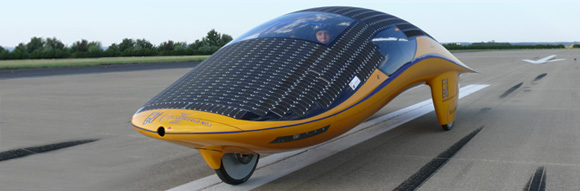
Photo: SolarWorld

When Green Wombat met with SolarWorld COO Boris Klebensberger last month, he noted that the German solar cell maker opened for business in 1998 just as oil prices hit an all-time low. “The company was founded by five crazy guys who people thought were on drugs, ” he laughed.

They still might. SolarWorld, now the world’s fifth-largest solar module manufacturer, has made an unsolicited $1.3 billion offer to buy General Motors’ German-based Opel division. And why would a renewable energy company want to get into a fossil fuel-dependent business? To build green cars, of course.

“The automotive industry is down a deep well and when you’re in a deep well you have to find a new product for the future,” SolarWorld CEO Frank Asbeck told Green Wombat as he was getting out of taxi Wednesday in Rome to attend the dedication of a SolarWorld solar array at the Vatican. “The next cycle will be renewable energy. The switch will be from automotive to electromotive, or as we call it, sunmotive.”

If the Pope can go green, why not another tradition-bound global institution?

If SolarWorld’s bid seems comically low for a century-old automotive powerhouse, consider this: As of Wednesday morning General Motors’ (GM) total market capitalization stood at $2.2 billion. That’s not a typo — Sergey Brin and Larry Page probably have that much rattling around the change drawers of their Priuses (TM). SolarWorld’s market cap, in contrast, is $1.6 billion.

The SolarWorld bid does come with a rather large catch, however. The company wants GM to make compensation payments of 40,000 euros (about $51,500) per Opel worker for a total of 1 billion euros ($1.3 billion) — what the automaker would have to shell out under German law if it shut down. Opel has been something of a jewel in GM’s crown, but it has suffered from its parent’s mistakes and now Opel executives themselves are asking the German government for a billion-dollar bailout.

GM has dismissed the SolarWorld bid out of hand while some financial analysts called the offer a PR stunt. If it was a joke, it’s been a costly one: the company’s shares initially plunged 19% after Jefferies questioned management’s credibility and downgraded its stock.

“We’re not making jokes,” Asbeck says. “We say we’ll give a billion and General Motors gives a billion. We are strong enough in renewable energy to give scale to old fossil fuel industry.”

While SolarWorld has no plans to make a sun-powered car like the experimental racer (pictured above) it built, Asbeck says the company would retool Opel to increase production of green cars by 5% each year, transitioning from plug-in electric hybrids like the Chevy Volt to all-electric vehicles. “We think extended range cars are the car for the next five years,” he says, noting that Opel management would be left in place but given a new mission.

SolarWorld’s chances of acquiring Opel might appear slim, but Asbeck’s strategy is sober. Just witness Silicon Valley startup Better Place’s success at signing deals with the governments of Israel, Denmark, Australia and California to build an electric car infrastructure and its alliance with Renault-Nissan to produce battery-powered vehicles. Even Ford (F) executive chairman Bill Ford has been developing a green strategy for the auto industry, according to The New York Times.

“I think that times have changed and we as a solar company can export our spirit of building a new industry,” says Asbeck. “Opel can be the first green car company in Germany.”
Read Full Post »

betterplaceplugElectric cars are as good for the economy as the environment and could put $80 billion in consumers’ pockets by 2030, according to a new study from the University of California.

Not surprisingly, the oil industry would take a $175 billion hit under the scenario sketched by UC Berkeley’s Global Venture Lab, while a booming battery business would gain $130 billion as the internal combustion engine sputters out. “There will also be significant changes in the balance of payments among nations as petroleum imports decline,” the authors wrote. “We find the net imports of the U.S. will decline by $20 billion.”

The report makes several assumptions to arrive at its optimistic conclusions: The Cal researchers are counting on 39% of cars on the road to be electric by 2030 and powered by electricity generated from renewable sources like wind and solar.

Electric car owners would save an estimated $7,203 in operating costs, mainly because with no engines to maintain, battery-powered vehicles rarely see the inside of mechanic’s garage.

Left unexplored in the report was the impact of electric cars on the United States auto industry. If General Motors (GM), Ford (F) and Chrysler survive – and that’s a big if these days – they stand to benefit assuming they retool for the electric age and produce cars consumers want to buy before rivals like Toyota (TM), Honda (HMC) and Renault-Nissan beat them to the punch. But their dealer networks are sure to suffer once their lucrative repair and maintenance business evaporates.

Another winner in the electric car economy will be solar and wind companies and utilities, particularly those like PG&E (PCG) and Southern California Edison (EIX) that are making multi billion-dollar investments in renewable energy.

One of the biggest assumption the Cal report makes involves the rise of a U.S. battery industry. “We don’t have a battery industry today,” said Shai Agassi, CEO of electric car infrastructure startup Better Place, on Friday at a panel Green Wombat moderated for the University of California’s Global Technology Leaders Conference. “Either we make them here or they’re going to be made in China.”

Agassi and the mayors of San Francisco, San Jose and Oakland on Friday announced that Better Place would build a $1 billion network of charging stations throughout the Bay Area. Renault-Nissan has agreen to provide Better Place with the hundreds of thousands of electric cars it’ll need to put on the road make its business model profitable.

photo: Better Place

Read Full Post »

20081117_3625_betterplace

Photo: Better Place/Acey Harper

SAN FRANCISCO – It was a day when the shift from the past to the future was almost palpable.

It started Thursday morning in Berkeley where Green Wombat was moderating a panel of tech luminaries gathered at the University of California’s Global Technology Leaders Conference. As Shai Agassi, founder of electric car infrastructure company Better Place, makes the case for harnessing Silicon Valley’s technological innovation to Detroit’s manufacturing might to create a sustainable car industry, dispatches from the automotive apocalypse roll down my BlackBerry: Ford (F) shares sink to $1.01…GM’s (GM) stock falls to its lowest level since World War II…U.S. automakers beg for a bailout…California Congressman Henry Waxman ousts Michigan’s John Dingell — the Duke of Detroit — from his 28-year chairmanship of the powerful House Energy and Commerce Committee.

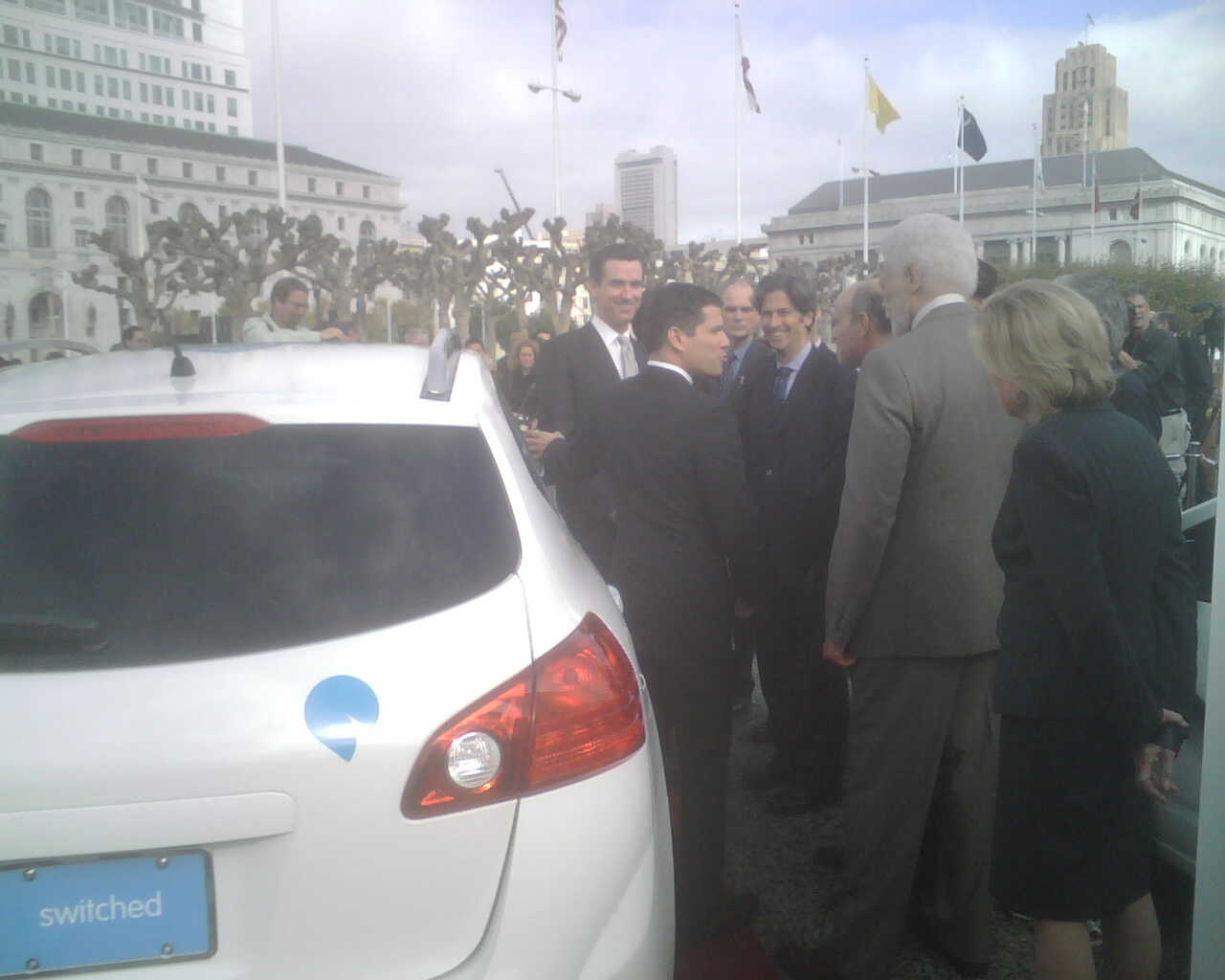
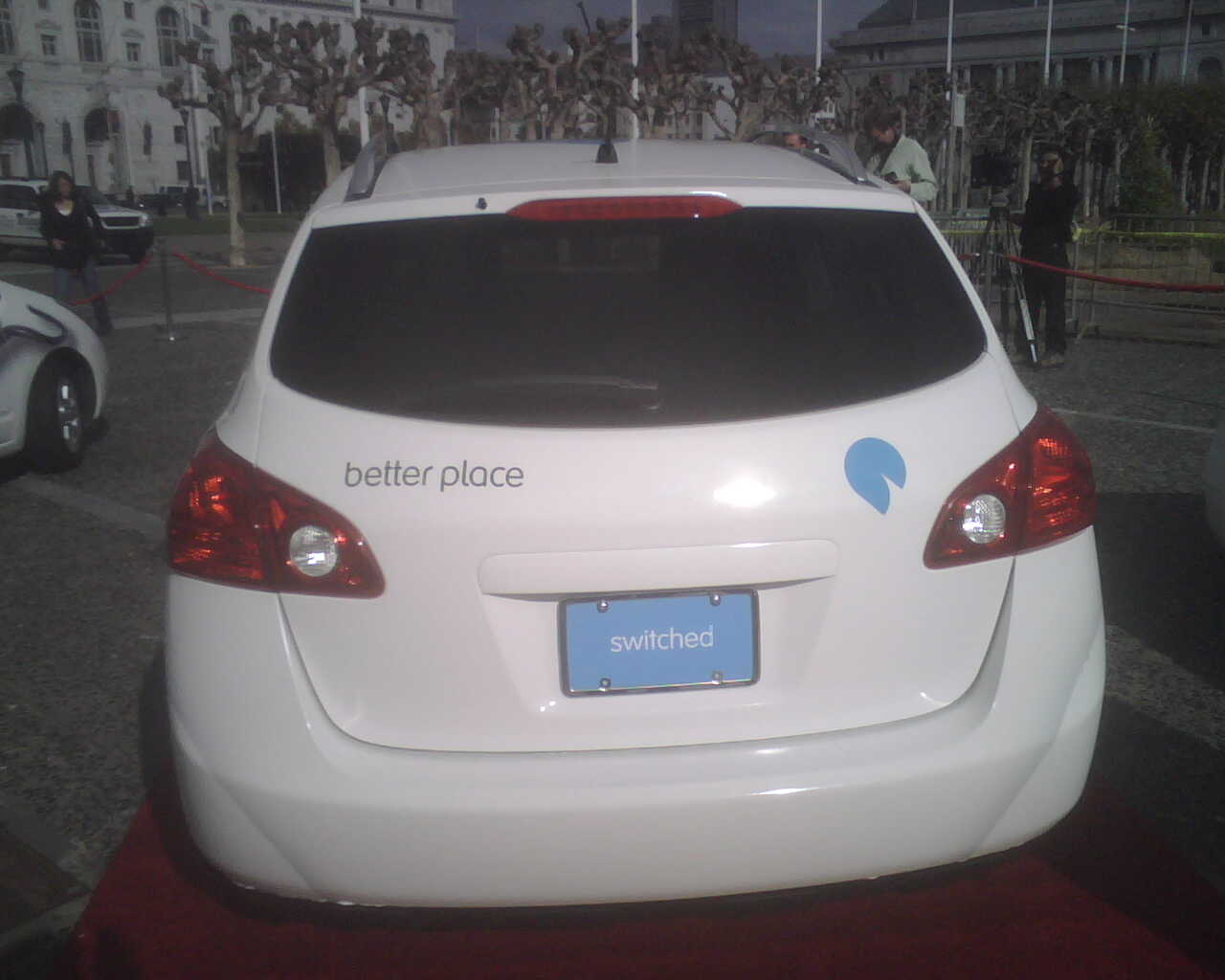
Agassi slips out of the conference and an hour later I catch up with him across the Bay at San Francisco City Hall where he and representatives of Governor Arnold Schwarzenegger and the mayors of San Francisco, San Jose and Oakland announce a $1 billion project to build a regional network of electric car charging stations. Better Place has signed similar deals with governments in Israel, Denmark and Australia, but California is the company’s first foray into the U.S. market. Planning for the Bay Area network begins in 2009 with construction scheduled to start in 2010 and commercial rollout set for 2012.

better20place202The mood is ebullient. “This is the start of a regional effort to become the capital of electric vehicles in the United States,” proclaims San Francisco Mayor Gavin Newsom before an audience that includes representatives from state and federal environmental agencies, green groups. Silicon Valley business leaders and officials from GM and Toyota (TM).

For his part, Agassi says, ” We believe this is not just a model for California, but a blueprint for the United States.”

The blueprint works like this: The mayors of the Bay Area’s three largest cities agreed to expedite permitting and installation of electric car charging stations, standardize regional regulations to promote an electric car infrastructure and offer incentives to employers to install chargers at workplaces. The mayors also agreed to pool purchases of municipal electric car fleets.

Better Place will raise the capital to install thousands of charging spots on the streets of San Francisco, San Jose and Oakland as well as stations between California cities where drivers can swap depleted batteries for fresh ones when they make longer trips. The Palo Alto-based company will own the car batteries and charge drivers for the miles driven. Automaker Renault-Nissan is developing electric cars for the Better Place network.

The big idea: Only by building an electric car infrastructure first will automakers produce the tens of millions of electric cars needed to make a significant dent in greenhouse gas emissions and the nation’s dependence on foreign oil.

That business model elicited some skepticism earlier in the day at the Berkeley conference, where Michael Marks, former CEO of electric carmaker Tesla Motors, questioned Agassi’s claim that Better Place would be able to provide electric cars that cost no more than gasoline-powered vehicles. And Jim Davidson, co-founder of Silicon Valley private equity firm Silver Lake, asked if Better Place would essentially be tapping the power grid to create a monopoly. (No, Agassi said, the Better Place network would be open to all electric cars.)

When Green Wombat sat down with Agassi and Newsom in the mayor’s offices Thursday afternoon, I asked Agassi, who brings a charismatic messianism to his mission, how Better Place would raise the billions needed to roll out an electric car infrastructure in California amid a global economic meltdown. He noted that in Australia Better Place signed up investment giant Macquarie Bank to create an infrastructure fund to finance that project while in Denmark a utility will provide financing.

“We will do the same thing here; we’re working with Morgan Stanley (MS) and Goldman Sachs (GS),” Agassi says, recounting a conversation he recently had with investors who he said were eager to put money in Better Place projects.

If anything, Newsom, 41, and Agassi, 40, and their allies regard the confluence of the financial crisis, the great Detroit car crash and the consolidation of green power in the incoming Obama administration and Congress as a once-in-a-lifetime opportunity to launch a disruptive technology on a global scale and transform the U.S. automotive industry.

“We’re uniquely positioned in that our local representative is Speaker of the House,” notes Newsom, referring to his close political ally, San Francisco Democrat Nancy Pelosi, who on Thursday sent a message of support for the Better Place initiative. “That can elevate what we’re trying to achieve out here.”

There’s no doubt that Newsom has a knack for game-changing politics. (He launched the gay marriage movement in these offices.) But the nuts and bolts of getting the bureaucracy to fall in line will be a harder challenge, as anyone who has ever tried to get a permit to do a home renovation in San Francisco can tell you. And not all of San Francisco’s collaborations with Silicon Valley tech companies have gone well — witness the collapse of the citywide Wi-Fi initiative Newsom undertook with Google (GOOG).

Agassi hesitated when I asked about plans to extend the Bay Area electric car network to the rest of California, noting that negotiating agreements with the nearly 100 municipalities that make up Greater Los Angeles poses a challenge. “I got a call the other day from the mayor of L.A. asking where are we,” Agassi says. “We hope to eventually make it an electric charging corridor from California to Seattle to Vancouver.”

On Thursday, Agassi and the politicians took pains to paint the Better Place initiative as not a California versus Michigan thing, or new economy versus old. And they just may be right. For in a strange way, by building an electric car infrastructure, California is offering Detroit a rescue package of its own: Supplying the network lays the groundwork for the mass production of electric cars that could be the auto industry’s salvation.

That may be counter to conventional wisdom, but perhaps Robert F. Kennedy Jr., environmentalist and advisor to Silicon Valley’s VantagePoint Venture Partners – a Better Place investor – put it best on Thursday at the press event when he upended the East Coast view of the Golden State: “When you come to California, you find people in touch with reality.”

Read Full Post »

better20place206

photo: Todd Woody

SAN FRANCISCO – As Congress considers bailing out a U.S. auto industry damaged by its dependence on fossil fuel-hogging SUVs, San Francisco Bay Area leaders on Thursday unveiled plans for a $1 billion regional network of charging stations for electric cars.

Silicon Valley startup Better Place will construct the network, deploying thousands of chargers for electric cars on the streets of San Francisco, San Jose and Oakland. The cities will be linked by battery swapping stations so drivers can travel longer distances. Better Place, founded by former SAP executive Shai Agassi, previously struck deals with governments in Israel, Denmark and Australia to build electric car networks. This is the well-funded startup’s first move in the U.S. market. Construction on the Bay Area network will begin in 2010 with commercial rollout in 2012.

“This is the start of a regional effort to become the capital of electric vehicles in the United States,” proclaimed San Francisco Mayor Gavin Newsom at a press conferences at city hall attended by the mayors of San Jose and Oakland as well as representatives from state and federal environmental agencies.

California Governor Arnold Schwarzenegger threw his support to the project and the the cities of San Jose, San Francisco and Oakland have pledged to expedite permitting of Better Place charging stations, standardize regulations and offer incentives for employers to install chargers at workplaces.

Read Full Post »

After a year of stalemate that threatened to strangle the nascent United States solar industry, the U.S. Senate on Tuesday passed energy legislation that extends a key investment tax credit until 2016.

The 30% solar tax credit was part of a package of green energy incentives that includes a one-year extension of the production tax credit crucial to the wind industry and a $2,500-$7,500 tax credit for people who buy plug-in electric vehicles. (That should make General Motors (GM) happy as it prepares to roll out its ever-increasingly expensive Volt plug-in electric hybrid.)

Homeowners also won an extension of a tax credit for installing solar panels and the $2,000 cap on such systems was lifted. Put in a small wind turbine or a geothermal heat pump and you can claim up to a $4,000 and $2,000 tax credit, respectively.

The big winner was the solar industry. Congress’ failure to extend the investment tax credit threatened to scuttle scores of multibillion-dollar solar power plants in the pipeline and undermine mandates that utilities like PG&E (PCG) and Southern California Edison (EIX) obtain a growing percentage of their electricity from renewable sources.

The legislation now returns to the House of Representatives, which earlier passed a similar version of the Senate bill.

Read Full Post »

photo: Think Global

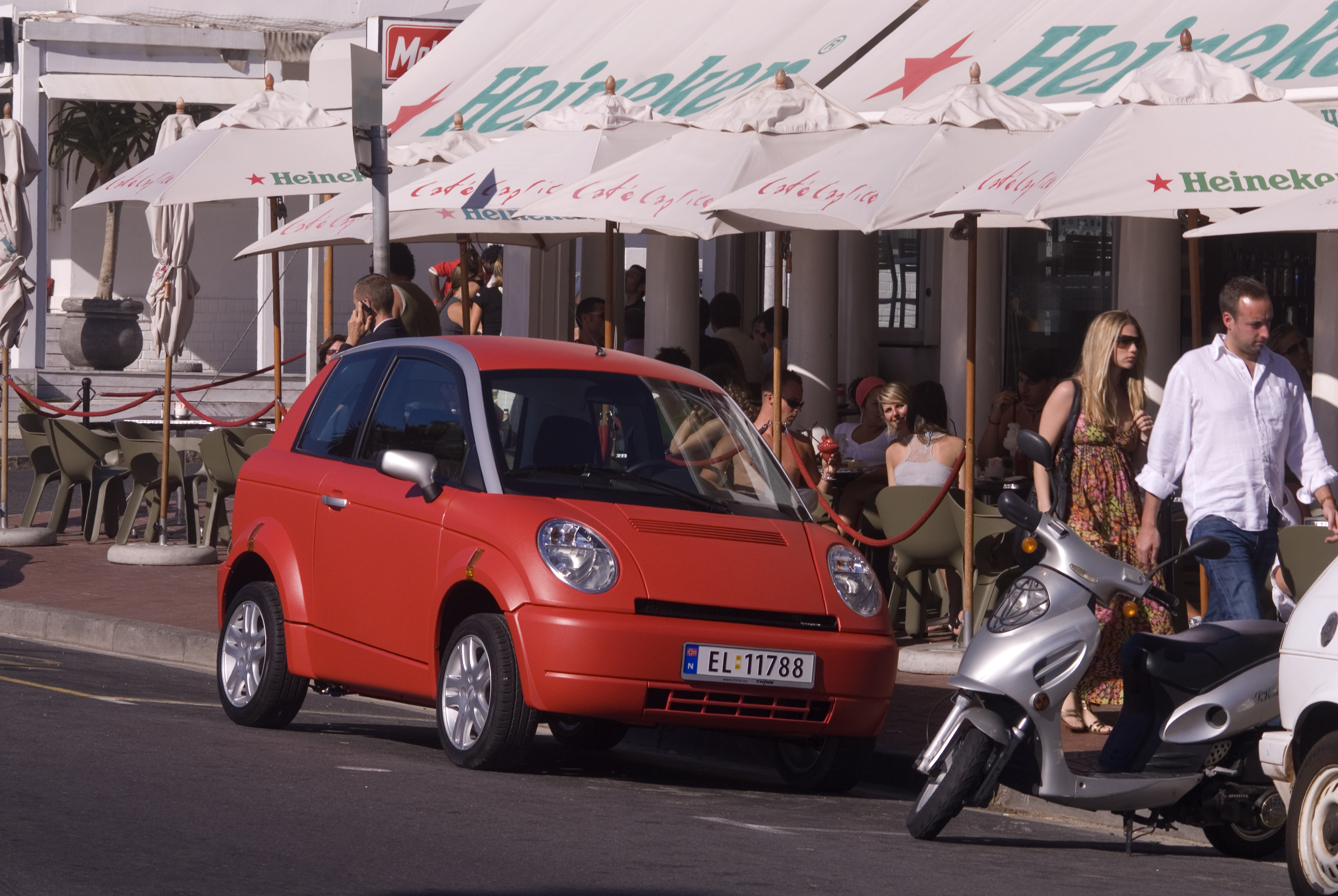
Norwegian electric carmaker Think Global, once owned by Ford, has tapped Ford executive Richard Canny as its new president and chief operating officer. Canny previously served as president of Ford South America, president of Ford Argentina and managing director of Ford Malaysia.

Think also announced Tuesday that it has hired a veteran of Volvo and Saab, Mikael Ekholm, as executive vice president for engineering and manufacturing. The appointment of the Australian-born Canny comes as the Oslo company ramps up production of the City, it’s Internet-enabled, battery-powered urban runabout.

Green Wombat chatted with Think CEO Jan-Olaf Willums via e-mail Tuesday about the rollout of the City in Europe, its next model – an electric crossover SUV –  and the company’s plans for the United States market. (At Fortune’s Brainstorm Green conference in April, Willums announced the formation of Think North America with marquee venture capital firms Kleiner Perkins Caufield & Byers and Rockport Capital Partners. Other investors in Think include General Electric (GE) )

“The factory completed its planned build of 100 cars for the local market prior to the Norwegian summer shutdown,” says Willums, a longtime entrepreneur and sustainability expert who made his fortune as a co-founder of Norweigan solar company REC Solar. “Of course, like any new vehicle launch we are having occasional new issues arise and teething problems to overcome.”

The cars are now on Oslo roads racking up high mileage under real-world conditions, he adds.

(You can still spot the previous generation of the City, built under Ford (F) ownership, tooling around Oslo, as I did when I visited in 2007 for a story I did on Think.)

Willums says Think will boost production in the second half of the year to support sales in Norway and elswhere in Scandinavia. “During 2009, we are planning a roll out to a number of other European markets with our plans for the major cities (Paris, Amsterdam, Nice, Zurich, Basel) being the priority,” he says. The order of the rollout, he notes, will depend in part on where the government and private sector incentives for electric vehicles are strongest.

To that end, Willums says that the timing of the City’s debut in the United States will be determined in part by state incentives and the policy of the incoming administration in Washington.

Think is in a race to get its cars on the road as the big automakers accelerate their plans for plug-in hybrids and all-electric cars for the mass market. General Motors (GM) is hurrying to bring its Chevy Volt plug-in electric hybrid to showrooms while Toyota (TM) is working on a plug-in version of the Prius. Mitsubishi will supply its i MiEV electric car to California utilities PG&E (PCG) and Southern California Edison (EIX) for fleet testing.

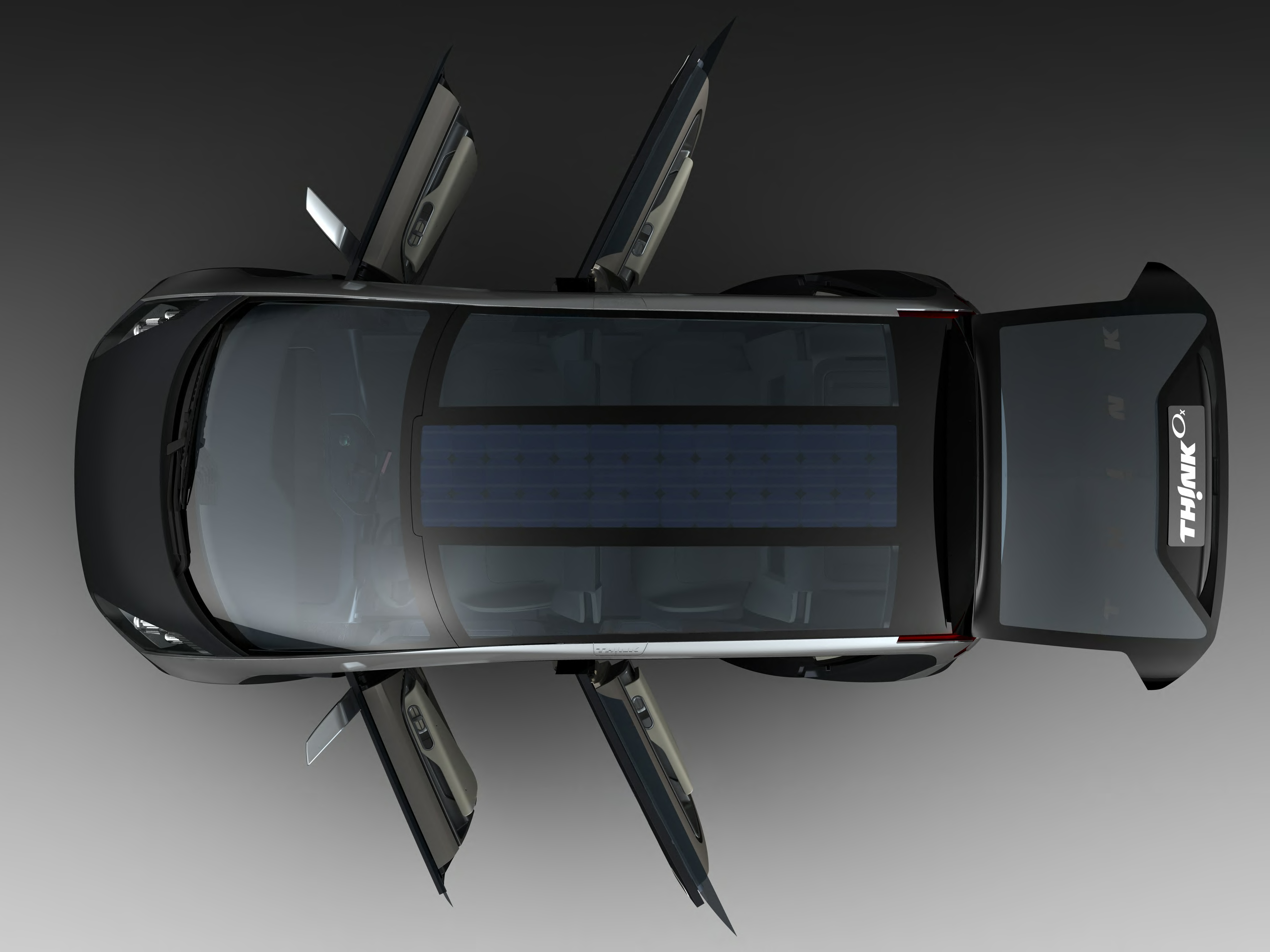
Meanwhile, work continues on the Think Ox, the company’s planned five-seater crossover model. Think showed off a concept version of the electric car at the Geneva auto show earlier this year. The addition of Canny, Willums says, should help the company “grow and mature to a larger scale electric car producer.”

Along with gearing up production of the City, Think has been energizing its marketing efforts, judging by the slick promotional video it created for the Ox below. (For a higher-def version, go here.)

Read Full Post »

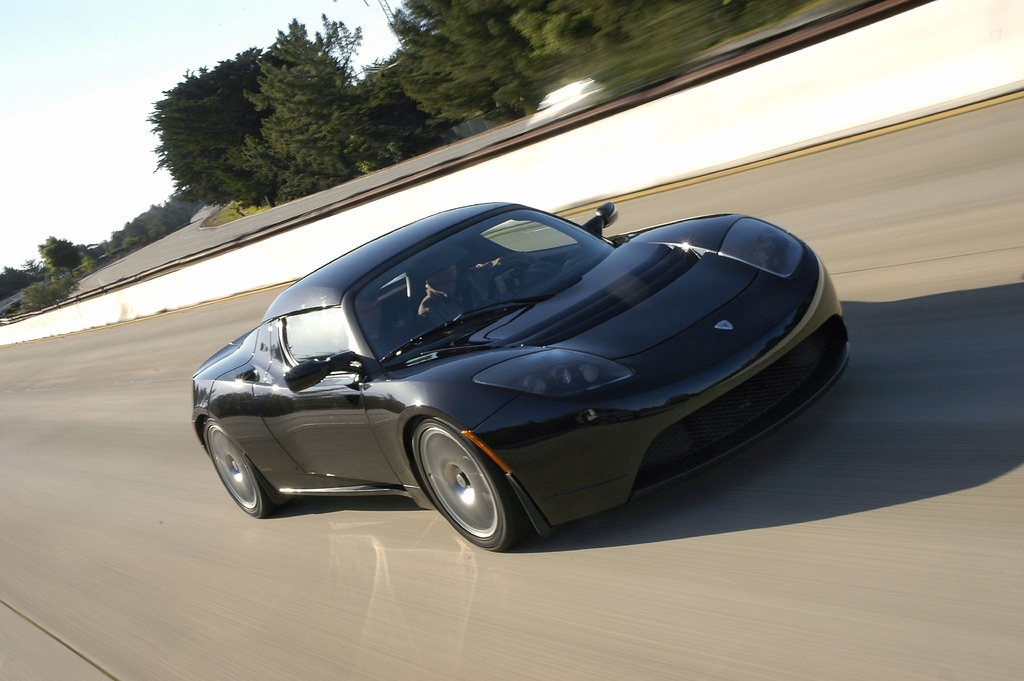
Monday night, Green Wombat swung by SF Green, one of a growing number of green tech networking events sprouting up around San Francisco and Silicon Valley. The draw – beyond drinks with a standing-room-only crowd of bright-eyed twenty-and-thirtysomethings in a San Francisco art gallery – was the appearance of leading venture capitalist Ray Lane of Kleiner Perkins Caufield & Byers and Darryl Siry of Tesla Motors, maker of the Roadster electric supercar.

Despite the fact that Tesla has sued a Kleiner company, Fisker Automotive – which is producing an electric hybrid sports sedan – for alleged intellectual property theft, no sparks flew. (Though at Fortune’s recent Brainstorm Green conference, Lane couldn’t resist taking a jab at allegations that Fisker founder Henrik Fisker appropriated Tesla technology when he did design work for the Silicon Valley startup: “It’s ridiculous,” Lane said. “Henry Fisker wouldn’t know a drive train from a glass of water. He’s a designer.)

Siry, Tesla’s vp of sales, marketing & service, said five of the $100,000 Roadsters have rolled off the assembly line so far with one car tooling around Los Angeles, and others in the Bay Area and London. By year’s end, Tesla, which has been wrestling with drive train problems, should have more than 100 cars on Bay Area roads, home to many the company’s tech titan customers.

Tesla has raised $145 million, Siry noted, and will do another round before an IPO. The Roadster will always be a limited production marquee car but to mass produce its next vehicle, a five-seat sports sedan code-named White Star, Tesla will need that IPO or project financing. Siry also sketched a future where Tesla might supply electric drive trains to automakers in exchange for project financing.

“Tesla is a tech company wrapped in an automotive brand,” he said at the event co-sponsored by VentureBeat.

Lane and Kleiner Perkins have gone beyond investing in electric car companies to running one. Lane is chairman of Think North America, the U.S. arm of Norwegian electric carmaker Think Global. Kleiner and Rockport Capital took a 50 percent stake in the North American operation, which launched last month.

The Think and Fisker investments are emblematic of a new direction for VCs who have jumped into the green tech game. Unlike the first dot-com era or even the current Web 2.0 age, there’s no quick exit on the horizon for investments in green tech companies that may be years away from producing a product and require hundreds of millions, if not billions, in project financing to build car factories or solar energy power plants.

Lane compared investing in green tech to the long-term horizon needed for investing in biotech startups, where the key is to hit milestones that allow investors to calculate valuations.

Still, it’s a big gamble, given rising commodity prices and global economic upheaval.

Kleiner is also an investor in solar power plant startup Ausra. “Steel prices are killing us,” Lane said. Ausra’s power plants consist of hundred of acres of mirrors mounted on steel frames. “With Ausra, we [calculate] we could deliver solar thermal electricity at 12 cents a kilowatt-hour. But with steel prices, who knows?”

A shortage of qualified green tech workers has become an issue, according to Lane. The nascent solar power plant business relies on recruiting engineers and project developers from the carbon-based industry. “Talented people in project development at companies like Bechtel are maxed out for years on building projects,” he said.

Read Full Post »

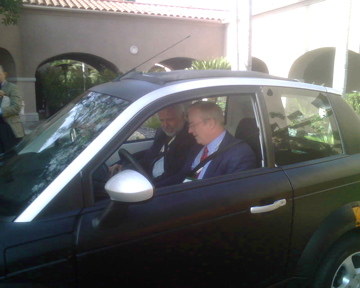
PASADENA, Calif. — If you wanted a snapshot of the emerging alliance between utilities and automakers, the car park of the Langham hotel here was the place to be Tuesday morning. There was the CEO of one of the largest utilities in the United States putting the pedal to the metal of the battery-powered Think City with Think Global CEO Jan-Olaf Willums riding shotgun.

“I liked it a lot,” PG&E (PCG) Chairman and CEO Peter Darbee told Green Wombat after a few spins around the hotel in the electric coupe. “The acceleration was fast, it handled well and it has a European feel.”

We had just finished a Fortune Brainstorm Green session on electric cars (along General Motors’ (GM) executive Beth Lowery), where Darbee declared, “We want to replace the oil industry” as the fuel supplier to the automakers. Fuel in this case is electricity, though unlike Big Oil, regulated utilities such as PG&E and Southern California Edison (EIX) will not make windfall profits no matter how many electrons they push into Chevy Volts.

The topic at hand was the potential for vehicle-to-grid, or V2G, if electric cars go mass market. The big idea: electric cars are essentially mobile generators and rolling energy storage devices. When hundreds of thousands of them are plugged in, they can not only download electricity but return power to the grid from their batteries, allowing utilities to meet peak demand without firing up expensive fossil fuel power plants that often sit idle until everyone cranks up their air conditioners.

PG&E is working with Google (GOOG) to develop technology to allow a smart power grid to detect where an electric car is plugged in so the owner can be charged or credited with consuming electricity or returning it to the grid. The smart grid would also be able to detect power demand spikes and then tap the appropriate number of car batteries to smooth out the electricity supply.

Utilities like PG&E are eager to forge alliances with electric carmakers for other reasons. In California, electric cars could be charged at night when greenhouse gas-free power sources like wind farms tend to produce the most electricity but when demand otherwise falls off. Utilities are also interested in buying used electric car batteries (which retain 80 percent of their capacity even after they’re no longer good for transportation) to store renewable energy that can be released when electricity demand spikes.

Lowery, GM’s vice president for environment, energy and safety policy, said such interest from utilities is prompting the automaker to think how electric cars could spawn new markets. “We’re definitely looking at different business models for batteries,” she said.

On Monday, Think Global and venture capital powerhouses Kleiner Perkins Caufield & Byers and Rockport Capital Partners announced the formation of Think North America as a joint venture between the Norwegian company and the VCs that will bring the Think City to California next year.

Rockport managing general partner and acting Think North America president Wilber James was at the panel and suggested Think supply some cars to PG&E. As the session ended, Darbee, James and Willums headed to the parking lot where Willums showed off the car’s Internet-enabled interactive features, including a video screen with a button already labeled “vehicle-to-grid.”

Read Full Post »

PASADENA, Calif. — Norwegian electric carmaker Think Global is bringing its zippy urban runabout to the United States.

On Monday at Fortune’s Brainstorm Green conference, Think launched its North American operation with Silicon Valley venture capitalist heavyweight Kleiner Perkins Caufield & Byers and Boston’s Rockport Capital Partners as lead investors.

Think North America will sell the Think City, its two-seater battery-powered car, as well as a forthcoming five-seater called the Think Ox.

“We thought this would be a wonderful vehicle to bring to the U.S.,” said Kleiner partner Ray Lane. He’ll serve as chairman of Think North America, which will be a 50-50 joint venture between Think and Kleiner/Rockport. They declined to put a price tag on the investment but Lane said “we’ll invest what it takes.”

The Think City began rolling off the production line in Norway earlier this year and Think already has announced it will sell the car in France, the U.K. and Scandinavia. With its current battery, the City can go about 110 miles on a charge at a top speed of around 62 miles an hour. Lane said Think North America aims to sell the car in the U.S. market for less than a Toyota (TM) Prius, which retails for around $25,000. Batteries being developed by Think’s partners A123Systems in collaboration with General Electric (GE) will boost the range and top speed, Willums has noted.

“This is not just a one-off kind of deal,” says Rockport’s Wilber James, who is serving as Think North America’s president while a CEO search is underway. “Being venture capitalists, we’re on the cutting edge in battery technology. We’re not just passive investors; we’re very active in this company.”

Think CEO Jan Olaf-Willums, who appeared on stage with Lane and James, said he hopes to sell a few thousand cars next year — starting in California — and then ramp up to 30,000 cars. “We can put assembly plants anywhere in six months,” said Willums, referring to Think’s $10 million modular factories.

James and Lane seemed taken with the little electric. “I had the privilege of sitting in back of the City while Ray Lane drove the car with Jan-Olaf through the streets of Geneva,” said James. “It’s a fun car to drive.”

Green Wombat can confirm that. I drove a Think City last year when I visited Willums in Norway for a story I wrote for Business 2.0 magazine. The stylish two-seater with the roof-to-bumper glass hatch accelerates like a sports cars, thanks to the instant transmission of power from the electric motor to the wheels.

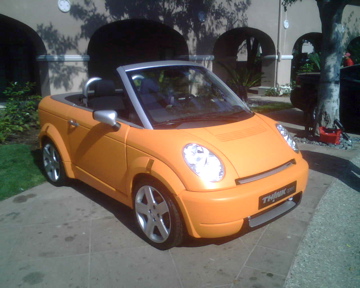
Willums brought two Thinks – one a sporty orange convertible, the other a black coupe — to Pasadena. “That will be a big seller in Los Angeles,” Lane told Green Wombat as a crowd gathered around the cabriolet in the Southern California sunshine outside the Langham hotel in Pasadena.

Since I drove the City last, it’s been been upgraded with an interactive, Internet-enabled touchscreen. The City will sync with your home computer, download your schedule, your shopping list and monitor your battery usage and driving habits, according to Dipender Saluja, whose Silicon Valley startup, Automatik, is developed the the technology to create what Willums calls a “computer on wheels.” The onboard system is designed to communicate with a smart utility grid so that the owner can be charged or credited for the electricity consumed or returned back to the grid from the car’s battery.

On Monday, I got behind the wheel of the Think City that sported a large sunroof and took a quick spin around the hotel grounds with Willums. Version 2.0 of the car was a more refined iteration of the pre-production car I drove last year in Norway but still a blast to drive.

Lane and Willums said Think will begin by selling a few thousand cars to corporate fleets. He also said Think North America is in discussions with utilities like PG&E (PCG).

Read Full Post »

thinkox_004.jpg

General Electric has officially confirmed its $4 million investment in Norwegian electric carmaker Think Global, a development Green Wombat reported back in December. GE Energy Financial Services (GE) also has invested $20 million in Massachusetts lithium-ion battery maker A123Systems, which will supply batteries to Think. General Electric said its scientists will work with both Think and A123 to improve battery technology for electric cars to “enable global electrification of transportation.”

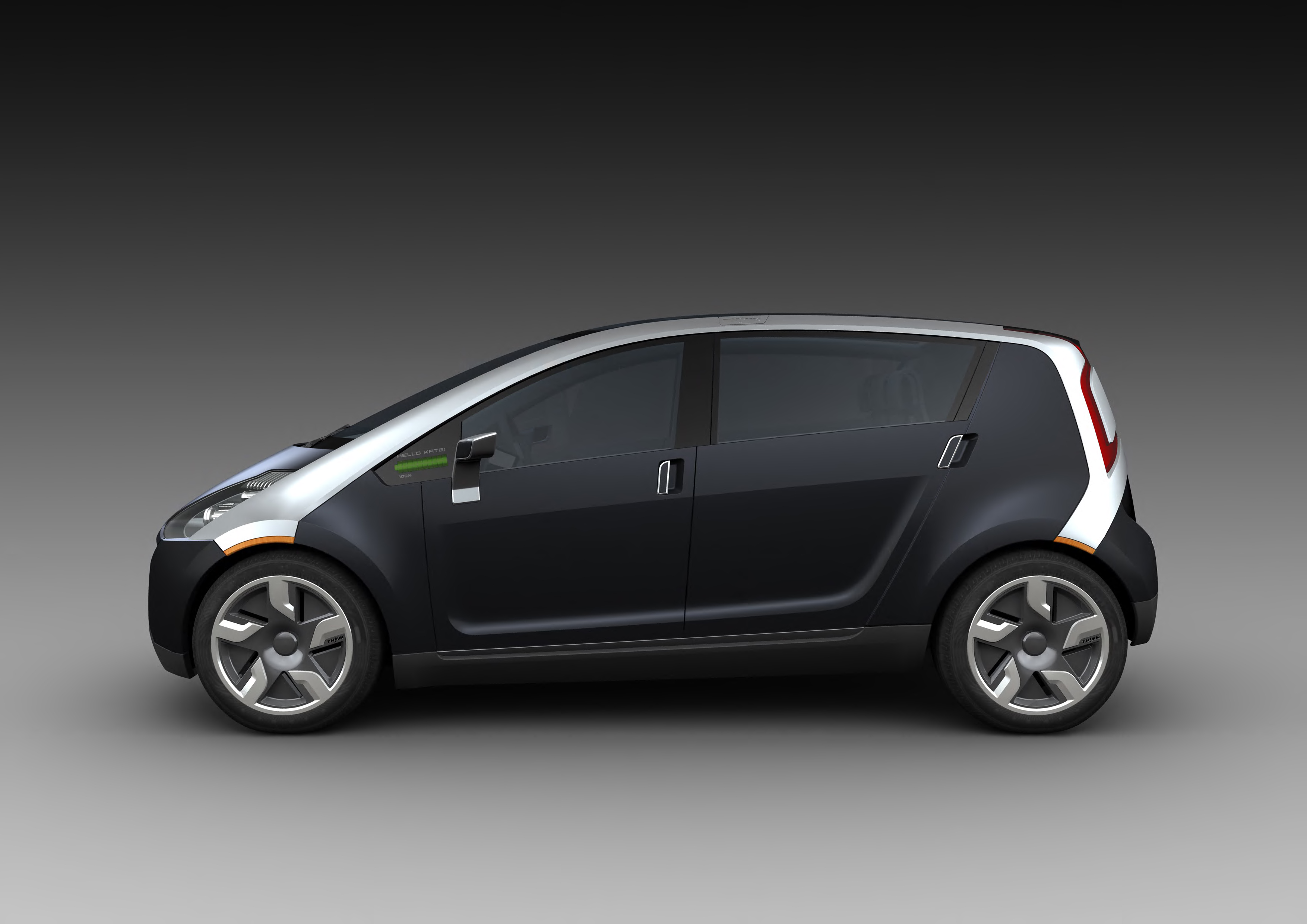
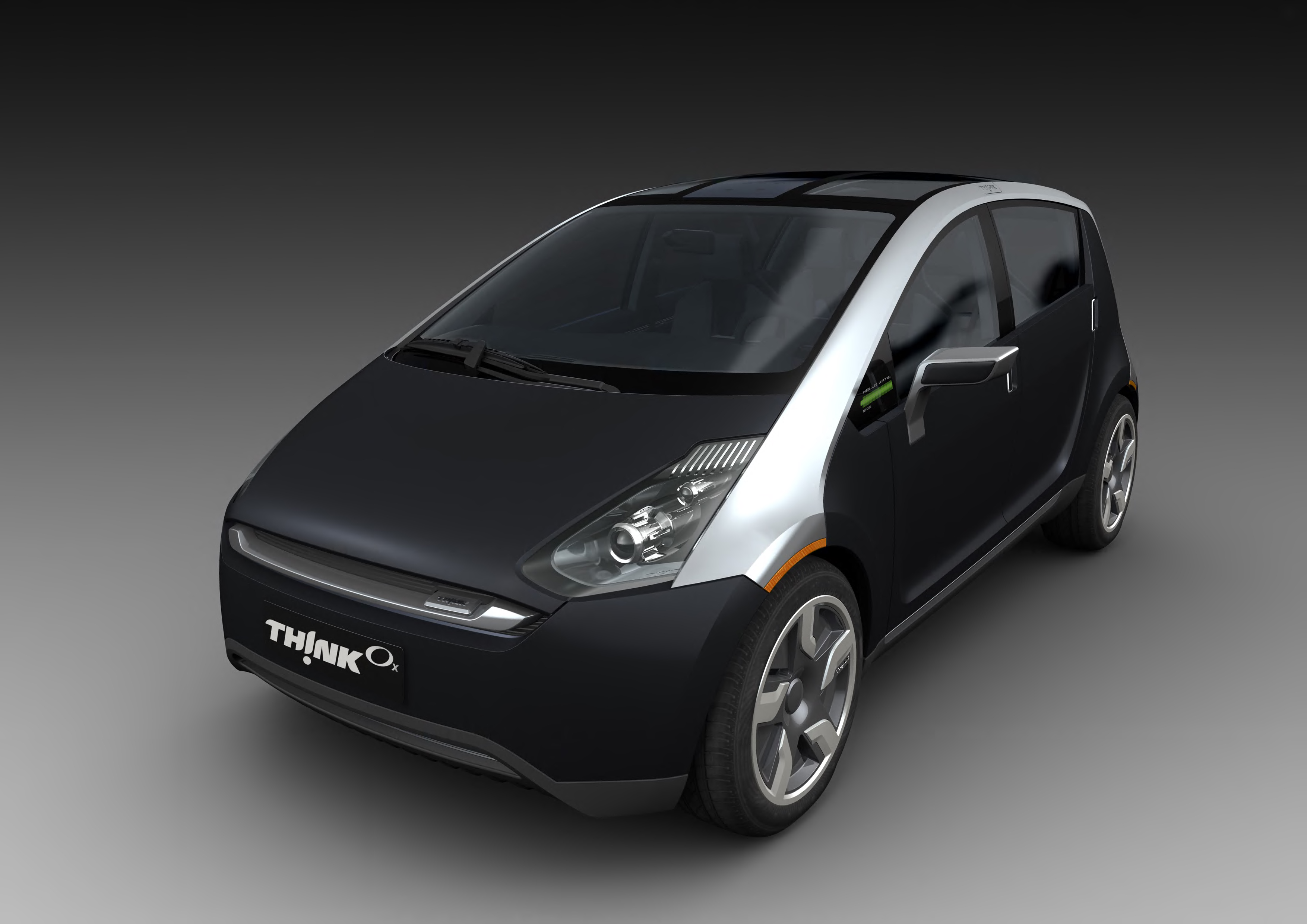
thinkox_006.jpgAnd as Green Wombat reported last week, Think, formerly owned by Ford (F), unveiled its next model Wednesday at the Geneva Auto Show, a futuristic five-seater called the Think Ox that will eventually be available as a two-door coupe and possibly a taxi. The sleek five-door vehicle resembles a low-slung crossover SUV but maintains the signature touches of the Think City — an urban runabout now rolling off Think’s production line in Norway — including the roof-to-bump glass rear hatch. The concept car also sports a translucent roof with a solar panel, presumably to power radios and other gadgets.

According to Think, the Ox will have a range of about 125 miles (200 kilometers) on a charge and a top speed of about 85 miles an hour. Future models may include a range extender — a small flex-fuel engine that will charge the battery and let the Ox go 280 miles. (The General Motors (GM) Volt electric hybrid is based on the same concept.) Think also unveiled its “connect car” technology to make the Think City and Ox a rolling Internet-connected, GPS-enabled computer that will calculate the cheapest and most environmentally beneficial times to recharge as well as give drivers access to the cars’ systems through their mobile phones.

When Green Wombat caught up with Think CEO Jan-Olaf Willums in San Francisco last week he emphasized that although the Ox is being presented as a concept car, the technology is almost ready for prime time and the model that is expected to hit the market in 2011 will resemble the show version.

Correction: An earlier version of this story said Think was collaborating with an unnamed Fortune 100 automaker. In fact, Think was collaborating with a Fortune 100 company, General Electric.

thinkox_001.jpg

Read Full Post »

« Newer Posts - Older Posts »

Design a site like this with WordPress.com
Get started