Feeds:
Posts
Comments

Archive for the ‘global warming’ Category

For a state steeped in the mythology of Big Oil, Big Coal (plants) and well, big everything, Texas does not necessarily come to mind when you think of Big Green.

It’s a reputation somewhat undeserved, given the Texas-sized wind farms sprawling across the hundreds of thousands of acres of the state’s ranch lands. Now there are signs that California’s solar boom is spreading eastward. One leading indicator: Silicon Valley solar power plant startup Ausra is opening an outpost in the Lone Star State and hiring an executive to “lead the development of stand-alone solar thermal power projects in Texas using Ausra’s proprietary Compact Linear Fresnel reflector technology and the sale of solar field to utility scale customers,” according to a job description posted last week at the Berkeley Institute of the Environment at the University of California, Berkeley.

Like a growing number of states, Texas has a so-called renewable energy portfolio standard that mandates a certain portion of its electricity supply come from green sources. (Unlike most other states that require utilities to obtain a set percentage of electricity from renewable sources, Texas sets a total green energy target and ups the ante every two years. For instance, the 2009 target of 3,272 megawatts rises to 5,880 megawatts in 2011. Texas utilities are allocated a share of those megawatts based on their sales.)

But if you want to sell solar to Texans you have to be in Texas. That’s because when it comes to electricity, Texas is literally a country onto itself: the Texas power grid is not connected to the rest of the country (except for some outbound transmission lines) and all renewable energy must be generated within the state. (Unlike, say, California, which can buy electricity produced by solar power plants in neighboring Nevada or Arizona.)

“Texas is another California-sized market that’s growing rapidly and seeking clean options in the portfolio,” Ausra executive vice president John O’Donnell tells Green Wombat. “While solar resources are somewhat lower than the Mojave, west Texas is a very good solar region and we see major opportunities going forward.”

O’Donnell wouldn’t reveal details about Ausra’s Texas plans (though the job posting says Ausra aims to build 1-to-2 gigawatts worth of solar power plants a year). But Texas clearly is in the market for green energy. Utility TXU’s (TXU) cancellation of several massive megawatt coal-fired plants (and Wall Street’s growing aversion to such projects) along with the ratcheting up of renewable energy mandates means the state will increasingly be looking to solar and wind to fill the void.

Utility El Paso (EE) is accepting bids to supply for 300-megawatts of green energy while Austin Energy is committed to obtaining at least 100 megawatts of solar energy under the city’s goal of going carbon neutral by 2020.

With wide open spaces and plenty of sunshine and flat land, look for other solar power plant players to beat a path to Texas in the coming months.

Read Full Post »

infinia-stirling-dish.jpgA passel of high-profile high-tech investors  — including Khosla Ventures, Paul Allen’s Vulcan Capital and Bill Gross’ Idealab — are backing yet another new player in the increasingly hot market for large-scale solar power, pumping $50 million into Infinia, a Kennewick, Wash., company manufacturing a Stirling solar dish.

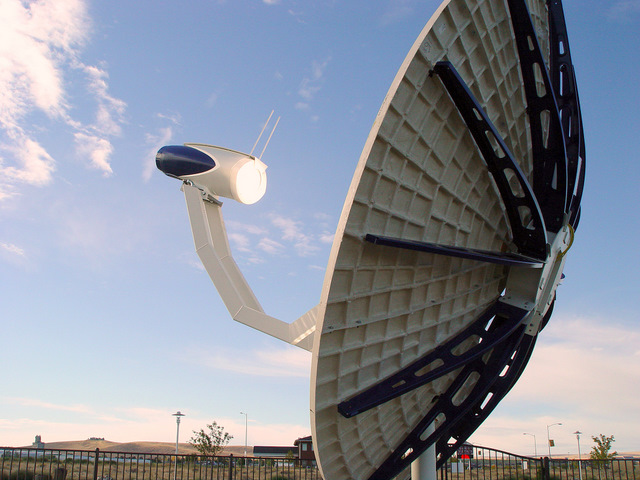
The Stirling dish has a storied — if unfulfilled – history in the annals of solar energy. It marries a Stirling heat engine, 17th-century invention, with a mirrored dish that looks like a super-sized version of a home satellite receiver. The solar dish focuses the sun’s rays on the Stirling engine, heating a gas inside that drives pistons to generate electricity. Stirling dishes are much more efficient at converting sunlight into electricity than solar thermal technologies that use mirrors to heat liquid-filled tubes to create steam to drive electricity-generating turbines. But while solar thermal plants exist today, the Stirling solar dish has never been deployed on a large scale since work on the technology began in earnest following the oil shocks of the 1970s.

Stirling Energy Systems of Phoenix in 2005 signed contracts with utilities Southern California Edison (EIX) and San Diego Gas & Electric (SRE) to build up to build tens of thousands of Stirling dishes to produce up to 1.75 gigawatts of greenhouse gas-free electricity. Though the company operates a six dishes in a prototype power plant at Sandia National Laboratories New Mexico, it is still working to get production costs down and rivals have questioned whether Stirling Energy Systems will be able to fulfill its deals. (See Green Wombat’s 2007 Business 2.0 magazine article on Stirling Energy Systems here. )

infinia-stirling-engine.jpgBut Infinia CEO J.D. Sitton tells Green Wombat that his company has perfected the Stirling dish to make it competitive with large-scale solar thermal as well as new photovoltaic technologies like thin-film solar. Infinia aims to deploy its Stirling dishes in smaller configurations so that solar power plants can be located near cities and at other sites that don’t require vast stretches of desert land where solar thermal plants are typically built. Each 21-foot-high, 15-foot-wide solar dish can generate 3-kilowatts (compared to 25 kilowatts for Stirling Energy Systems’ dish).

Infinia won’t itself become a solar developer but will provide its dishes to for power plants that range in size from 1 megawatt to 150 megawatts or more. In contrast, most solar thermal power plants now being planned are in the 400-500 megawatt range.

“We fly in the face of what has been the conventional wisdom in the solar thermal field that to be competitive you have to have a very large system,” says Sitton. “We can be deployed within city limits and be connected to existing transmission systems. No additional transmission capacity is required.”

“Our approach is that the winning solutions will be those that generate for most kilowatts for the least cost,” he adds. “This is a game about capital efficiency.”

That, of course, has been the mantra of leading green tech investor Vinod Khosla, who has disparaged photovolatic solar systems as too expensive to displace fossil-fuel generated power. Khosla also is backing Palo Alto solar thermal startup Ausra, which last year signed a deal to supply solar electricity to California’s largest utility, PG&E (PCG). Serial entrepreneur Bill Gross’ Idealab is funding solar thermal startup eSolar, which also is being backed by Google (GOOG).

Infinia contends the design of its Stirling dish system makes it competitive with solar thermal technologies. First, the Stirling engine uses helium rather than hydrogen, which typically must be periodically replenished. “We have no lubrication inside the machine and it needs no maintenance,” Sitton says. “We use helium in a hermetically sealed system.”

Second, he says the Infinia dish is made of six panels of glass rather than the 76 panels on the Stirling Energy Systems dish. “That gives us lower production costs and lower capital costs,” says Sitton. “We brought in large-scale manufacturer from the beginning. It’s not like we built a prototype and now have to reduce the cost to produce it.”

The first prototype went online last October and Sitton says Infinia is building a second at Sandia. Field tests will be conducted later this year in California and Nevada. He says Infinia is currently negotiating with solar developers and full-scale production is set to begin in November. Infinia has been in business since the 1980s, building Stirling engines for other applications. But the green tech boom and demands from utilities for renewable energy led the company to focus on solar.

Whether Infinia beats Stirling Energy Systems to market remains to be seen but look for the deals it signs with solar developers for a good indication of just how viable its technology is likely to be.

Read Full Post »

coal_fired_power_plant.jpgThree major Wall Street investment banks have pledged to adhere to a set of “Carbon Principles” to assess the risk — ecological and economic — of investing in planet-warming fossil fuel power plants. But does this signal that Wall Street’s ardor for Big Coal is cooling, or are we seeing a rather sophisticated greenwash that will allow further investment in dirty power to carry a green seal of approval?

Probably a bit of both.

Citi (C), JPMorgan Chase (JPM) and Morgan Stanley (MS) collaborated with with such coal-dependent utilities as American Electric Power (AEP), NRG Energy (NRG) and Southern Company (SO) along with national green groups Environmental Defense and the Natural Resources Defense Council to draft the Carbon Principles.

In short, the banks — all of which have come under fire from environmentalists for financing power projects that are a major contributor to climate change — have agreed to evaluate the economic viability of coal-fired plants in light of a widely expected national cap on greenhouse gas emissions. Such a cap would force utilities to reduce their carbon spew or pay a price per ton of carbon dioxide emitted over the limit.

But there’s some caveats here. According to the Carbon Principles, the financing criteria “does not establish specific performance criteria that companies or their projects must meet nor does it lay out specific types of transactions that the financial institutions will avoid.”

In other words, absent a hard target for power plant emissions, the banks can continue financing those projects, principles or not. (The Sierra Club lists proposed coal-fired power plants and their financiers here.) “There was resistance on part of the financial institutions to set specific targets or reductions,” Mark Brownstein, Environmental Defense’s managing director of business partnerships, told Green Wombat. “Banks do not see themselves as regulators but they are responsible to shareholders and investors with regard to risk.”

Still, says Brownstein, “I think that if the principles are honestly implemented, if companies honestly wrestle with data they collect and do honest due diligence, it will make a difference in the direction of investment in the utility space. We’ll see much less conventional coal, and more investment in renewable energy and low-carbon coal technologies.”

“I think we’ve been surprised, frankly,” adds Brownstein, “for whom these principles and this due diligence is in fact new.” Brownstein previously was an executive with New Jersey-based utility Public Service Enterprise Group (PEG), which was one of the utilities that worked on the Carbon Principles.

Whether the Carbon Principles result in any canceled coal projects remains to be seen, but Brownstein says that one consequence might be a higher cost of capital for those plants that do obtain financing.

JPMorgan spokesman Brian Marchiony told Green Wombat in an e-mail that, “We are certainly going to take a harder look at those projects and encourage other alternative energy options.”

Citi and Morgan Stanley did not respond to requests for comment.

Marchiony says that JPMorgan already had been using some environmental criteria to screen fossil fuel power plants. “We’ve added additional questions to our checklist and strengthened those that we were already asking in order to incorporate the carbon issue more formally into the financing discussion,” he says.

Given growing opposition to new coal-fired power plants from local communities and regulators, the big investment banks had already been reconsidering coal-related investments.

Brownstein says Environmental Defense will continue to push for Wall Street’s disengagement from Big Coal. “We very much look at these principles as a floor and not a ceiling,” he says. “We feel as an organization it would be both environmentally irresponsible and financially irresponsible for them to move ahead and invest in conventional coal.”

Read Full Post »

img_2914.jpg

Israeli solar power plant developer Solel announced Monday it has scored $105 million in funding from London-based investment firm Ecofin — yet another sign that the market for large-scale solar energy projects is reaching critical mass.

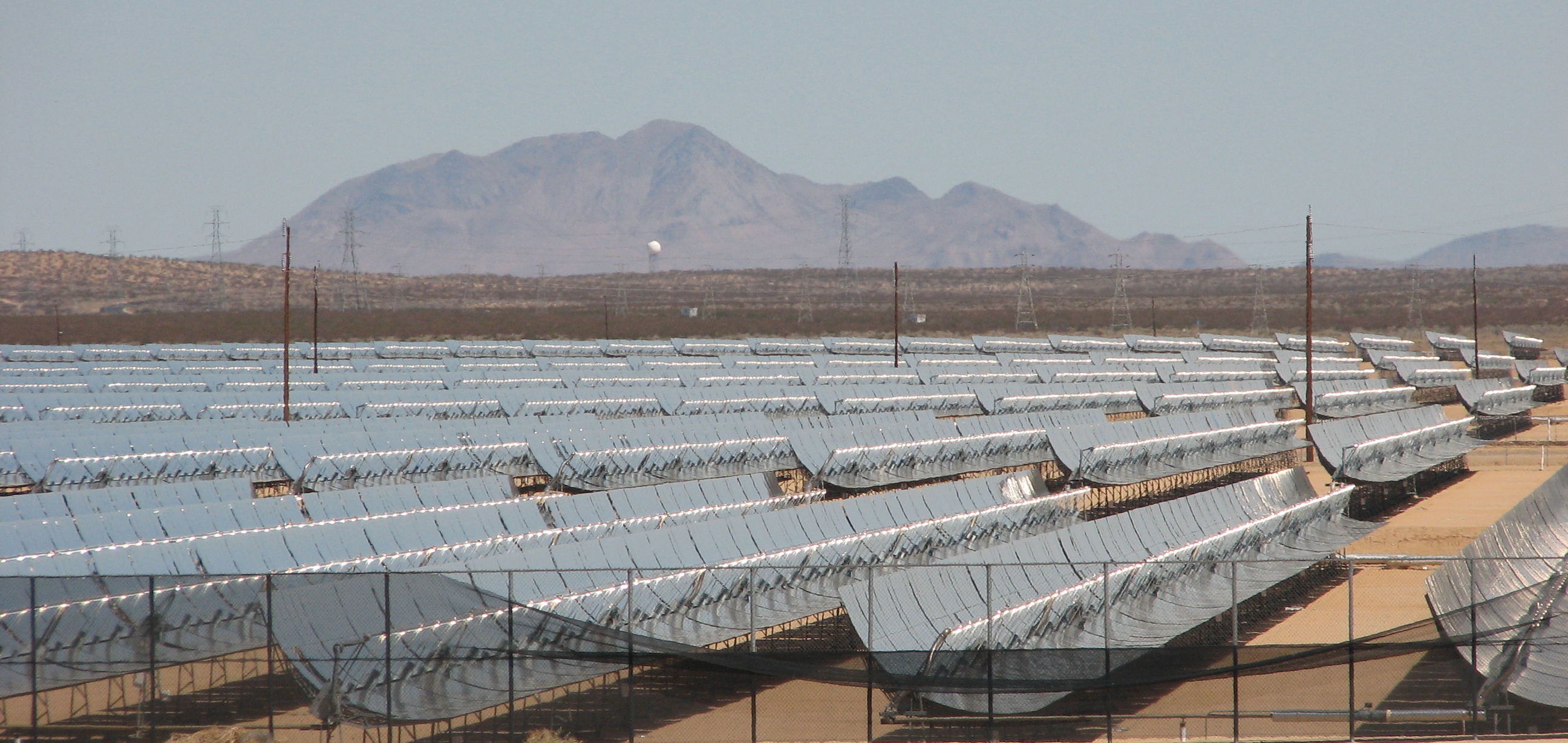
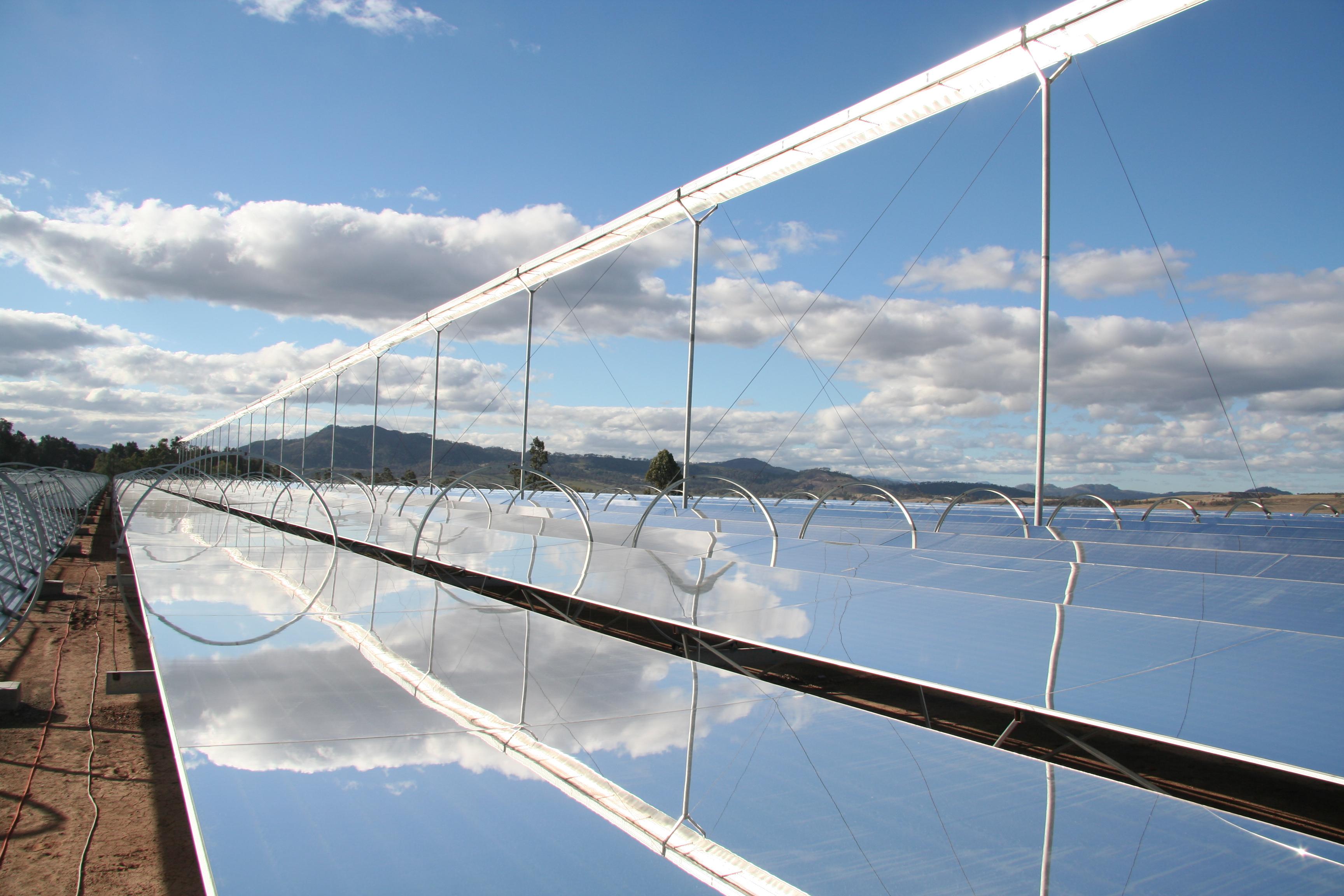
Solel last July signed the world’s largest solar power deal when it agreed to supply California utility PG&E (PCG) with 553 megawatts of green electricity to be produced by a massive solar thermal power plant to be built in the Mojave Desert. The company’s solar trough technology is also used in nine solar power plants (photo above) that were built in the Southern California desert in the 1980s. (In a solar trough power plant, long rows of parabolic mirrors focus the sun’s rays on tubes of liquid suspended over the arrays to create steam that drives an electricity-generating turbine.)

Raising $105 million is impressive and it’s certainly a big number. But given that a 500-megawatt solar power plant can easily cost $1 billion or more to build, it’s a relative drop in the bucket. However, it will allow Solel to move forward with the project and line up project financing for the PG&E plant while it negotiates more deals with other utilities — it won’t say which, but likely candidates are Southern California Edison (EIX) and San Diego Gas & Electric (SRE).

Competitors BrightSource Energy and Ausra have solar power plant applications before the California Energy Commission and have signed or are negotiating power purchase agreements with PG&E.

“Everyone is realizing that the market is there for thousands of megawatts of peaking power,” Solel CEO Avi Brenmiller recently told Green Wombat. “As time goes by we see energy prices rising and utilities are focusing their efforts to get solar thermal power because this is the right solution in the southwest United States.”

The Ecofin investment in Solel is notable also given the uncertainty surrounding solar power at the moment due to Congress’ failure to extend the solar investment tax credit in the recently enacted energy bill. The 30 percent credit is considered crucial to help solar energy companies secure financing for power plants and achieve economies of scale. The tax credit expires at the end of 2008 but solar energy proponents and their allies on Wall Street say they’re confident that Congress will take up legislation this session to extend it for as long as eight years.

Read Full Post »

brightsource-ivanpah.png

When President Bush signed the energy bill into law last month, much was made of the legislation’s mandate that automakers dramatically boost the fuel efficiency of their fleets. Less noticed was that the bill dropped a provision that would have extended the solar investment tax credit — a measure viewed as essential to transforming solar energy from a niche business into a multi billion-dollar industry that can generate gigawatts of greenhouse gas-free electricity.

The timing couldn’t be worse. With the current solar credit set to sunset, as it were, at the end of 2008, Big Solar is at at a tipping point: Utilities and renewable energy companies are in the midst of negotiating massive megawatt power purchase deals whose financing depends on the 30 percent investment tax credit, or ITC.

“I think there is a major concern that this will stall all the beneficiaries of the ITC,” said Joshua Bar-Lev, vice president for regulatory affairs for solar power plant developer BrightSource Energy. The Oakland, Calif.-based startup is negotiating a 500-megawatt agreement with California utility PG&E and is proceeding with plans to build a 400-megawatt solar thermal power station on the Nevada border (artist rendering above).

Solar energy companies, utilities like PG&E (PCG) and Edison International (EIX) as well as financiers such as Morgan Stanley (MS) and GE Energy Financial Services (GE), had pushed for an eight-year extension of the investment tax credit to give Big Solar projects enough time to get off the ground and start to achieve economies of scale. The provision also would have allowed utilities to claim the credit for solar projects they build. The measure drew support from both sides of the aisle in Congress but died — by one vote in the Senate — when Bush threatened to veto the energy bill because the solar tax credit would be financed by repealing previous tax breaks given to Big Oil.

“The Congressional leadership is very strong in their support of the ITC; they will put this on the table In 2008,” said Chris O’Brien, a Sharp Solar executive and chairman of the Solar Energy Industries Association, in an e-mail. “The solar industry will continue to contact legislators in key states.”

House Speaker Nancy Pelosi and the Democratic leadership in the Senate have pledged to re-introduce renewable energy tax credit legislation this session. “Speaker Pelosi has said repeatedly that she hopes to address that this year,” Drew Hammill, a spokesman for Pelosi, told Green Wombat. “We’re just getting started but there’s bipartisan support for the tax credit.”

Publicly, at least, no one in the solar industry will say that the uncertainty over the tax credit is affecting planned projects. “Our expectation is that there will be another tax bill that will address this issue,” said Kevin Walsh, managing director of the renewable energy group at GE Energy Financial Services. “We’re working on a number of [solar thermal] deals but it’s too early to disclose them.”

In recent months, PG&E has signed deals for more than a gigawatt of electricity — enough to light more than 750,000 homes — with solar power plant developers. Such power purchase agreements can take more than a year to hammer out and the permitting and construction of a solar power station can take another three to five years.

“We’re continuing to move forward with negotiations and with contracts that have already been signed, but certainly the absence of the ITC could potentially impact future projects,” said PG&E spokesman Keely Wachs. “Without the credit, it does increase the cost of that energy and of course it also sends a very clear market signal as to our country’s energy priorities.”

Silicon Valley solar startup Ausra is building a 177-megawatt solar power plant on the Central California coast to supply electricity to PG&E and is pursuing deals with Florida’s FPL (FPL) and other utilities.

“Just like any business, the solar industry prefers a predictable system for the future,” wrote Holly Gordon, Ausra’s director of regulatory and legislative affairs, in an e-mail. “It will be more difficult to plan for our projects while the situation remains uncertain. While we are currently seeing excellent demand for solar energy at market prices, we need a long term extension of the renewable energy tax credits to ensure market stability and investor confidence as the market continues to grow.”

Read Full Post »

ausra-16.jpgBig Solar is on a roll in California.

For the second time in seven weeks, the California Energy Commission has voted to accept an application for a massive megawatt solar power plant. The commission on Wednesday certified as “data adequate” Silicon Valley startup Ausra’s application to build a 177-megawatt solar on the state’s central coast. That means Ausra’s Carrizo Energy Solar Farm has cleared a significant regulatory hurdle and the commission will begin a year-long review process. If all goes well, construction will begin in 2009 and the plant will start producing electricity in 2010. (To get an idea of the complexity of the California licensing process and why the acceptance of an application is a big deal, you just need to scan Aura’s 1,000-page application package.

The Ausra move follows the commission’s Oct. 31 vote to greenlight for review BrightSource Energy’s planned 400-megawatt power station complex to be built in the Mojave Desert on the Nevada border.

Ausra, backed by A-list venture capitalists Vinod Khosla and Kleiner Perkins Caufield & Byers, has signed a 20-year power purchase agreement with utility giant PG&E (PCG) for the greenhouse gas-free electricity generated by the Carrizo plant in eastern San Luis Obispo County. BrightSource (backed by Morgan Stanley (MS) and VantagePoint Venture Partners), meanwhile, continues to negotiate with the utility for a 500-megawatt power purchase deal.

Read Full Post »

finavera-aquabuoy.jpg

An offshore wave farm will supply Californians with clean green electricity generated by the ocean, under a first-of-its-kind power purchase agreement that utility PG&E will announce Tuesday morning.

The giant San Francisco-based utility has signed a long-term contract to buy 2-megawatts of electricity from Finavera Renewables’ wave-energy power plant, to be built off the Northern California coast. The Vancouver company intends to eventually expand the Humboldt County project into a 100-megawatt “wave park.” It is likely to be the first of a score of floating power stations dotting California’s 1,100-mile coastline in the coming years, judging by the stack of applications for such wave farms on file at the Federal Energy Regulatory Commission.

“This power purchase agreement is extremely significant and reflects the massive potential for wave power as a renewable source of energy in the future,” says PG&E spokesman Keely Wachs. Like the Golden State’s other big investor-owned utilities — Southern California Edison (EIX) and San Diego Gas & Electric (SRE) — PG&E (PCG) must obtain 20 percent of its electricity from renewable sources by 2010 and 33 percent by 2020.

“The California market is huge for wave energy,” Finavera CEO Jason Bak told Fortune’s Green Wombat. “This is the first power purchase agreement with a large utility, and we see this as being one of the key components to commercializing wave energy technology.”

The ocean as potential source of greenhouse gas-free power is tremendous: The energy locked up in the surf rolling toward the California coast is equivalent to some 37 gigawatts — enough to light nearly 30 million homes — according to PG&E. And unlike the sun and wind, waves can generate electricity 24/7. But the technology to tap all that water-borne power and deliver it at competitive prices remains in the start-up phase.

PG&E and Finavera would not disclose the terms of the power purchase agreement. But Bak acknowledged that the key challenge he and other wave-energy companies face is “advancing the technology to the stage where we have a near-commercial technology.”

Finavera plans to deploy strings of connected wave-energy converters that it calls AquaBuoys. As waves roll past an array of AquaBuoys connected to an onshore station by an undersea cable, two-stroke hose pumps convert their energy into pressurized seawater that drives electricity-generating turbines. According to filings Finavera has made with the Federal Energy Regulatory Commission, a fully built-out 100 megawatt Humboldt wave farm would consist of 200 to 300 AquaBuoys floating on a two-square-mile site about two to three miles off the town of Trinidad. The initial phase of the project is expected to go online in 2012 and will use eight AquaBuoys.

While PG&E is merely dipping its corporate toe in the wave-energy waters with a relatively small 2-megawatt power purchase agreement, the deal with Finavera is likely to intensify efforts to stake claims on the best stretches of coast.

PG&E itself earlier this year unveiled its WaveConnect project to build two 40-megawatt wave farms, one off Humboldt and the other off the Mendocino County coast. Chevron (CVX) dived in last July with a plan for a Humboldt wave farm to be built by Scotland’s Ocean Power Delivery — now called Pelamis Wave Power — before abruptly pulling its application a month later.

Over the past two months there’s been a new flurry of applications. New Jersey’s Ocean Power Technologies (OPTT) in November filed for a FERC permit for a 20-megawatt “wave energy park” to be located off the Humboldt coast. And a newcomer to the wave energy business called GreenWave Energy Solutions has filed permit applications for wave farms off Mendocino and the Central Coast town of Moro Bay in San Luis Obispo County. (The Thousand Oaks, Calif., company lists a San Francisco attorney as its president and it was registered by a Southern California developer.)

Before Finavera can begin construction of the Humboldt wave farm, it must first spend two to three years completing environmental impact studies and negotiating with local, state and federal regulators. While obtaining financing for wave-energy projects using untried technology is difficult, Finavera will have one advantage over its competitors: a long-term power purchase agreement with one of the United States’ largest utilities.

“This PPA is a vote of confidence from PG&E that we can get the project done,” says Bak.

Read Full Post »

Just about every business has an electricity meter and a water meter. But what about a greenhouse gas meter?

In the years ahead, a growing number of companies will need one. A national U.S. greenhouse gas cap is all but inevitable and global warming-driven limits on greenhouse gas emissions already imposed by Europe and California require certain industries to calculate and report their emissions. Emerging carbon trading markets, meanwhile, offer the opportunity to profit from cutting CO2. Even companies unlikely to fall under the purview of the carbon regulators — such as Google (GOOG) and Sun Microsystems (JAVA) — are measuring their carbon footprints as an act of good corporate citizenship to show customers employees their green bona fides.

As Green Wombat has written previously, IBM (IBM) sees a big business in carbon consulting. Now Big Blue has collaborated with Evergreen Energy (EEE) to create what they call the GreenCert greenhouse gas meter. Rather than a hunk of hardware, it’s an Internet-based software program designed to collect real-time emissions data from sensors and other sources. It calculates the volume of greenhouse gases being released into the atmosphere by a company and certifies any reductions as credits that can be traded on carbon markets. GreenCert’s engine was developed by C-Lock Technology, a subsidiary of Evergreen, a “clean coal” technology company. IBM is providing the database and Internet software to allow GreenCert to be rolled out across across industries and be accessible to regulators and other parties.

The project was born out of Evergreen’s efforts to quantify emissions reductions from its technology that transforms the dirtiest coal into a cleaner-burning fuel.

The GreenCert gas meter is an attempt to standardize what is now largely a one-off customized task. Companies that want to calculate their carbon footprint face myriad choices, according to Larry Vertal, senior strategist at chipmaker Advanced Micro Devices (AMD), which annually tabulates and discloses its greenhouse emissions as part of its global climate protection plan. Among them: what to measure, how to measure and what scientific protocols to use. If those protocols change or new legislation or regulations alter the way emissions are calculated, a company must go back and tweak its customized carbon footprint program.

GreenCert, on the other hand, automatically incorporates such changes, according to C-Lock chief technology officer Patrick Zimmerman, who led the team that developed the greenhouse gas meter. “The system was designed to very efficiently and accurately quantify greenhouse gas emissions in a way that is transparent, reproducible and easily automated,” he says.

The program starts with a database profiling a particular industry then collects emissions data from a specific company. Evergreen is first focusing on agriculture and the utility industry.

GreenCert allows farmers to quantify and document changes in agricultural practices that result in more carbon being stored in the soil and then sell those carbon credits, theoretically, on carbon trading markets to companies that fail to meet their greenhouse gas emission quotas.

“For agriculture, there is a geographic information system that stores high-resolution relevant geographic information that affects and controls carbon sequestration in the soil,” says Zimmerman. “Then we have provided an Internet portal where farmer can go online and sign up their land.”

“We have algorithms built into the system that guarantee data quality,” he adds. “If a farmer says, `I grew 80 bushes of corn an acre’ and GreenCert knows that the historical average is 60, it’ll flag it. And then we’ll go to the warehouse and do an audit. We have four levels of verification and make sure models are regionally calibrated. We only certify carbon that is there at a very high level of confidence level.”

For utilities, GreenCert installs sensors and conducts an audit to establish an emissions baseline and then delivers software over the Internet so power plant managers can document changes in, say, boiler efficiency.

Evergreen spokesman Paul Jacobson said GreenCert is in its pilot project phase and it has yet to be decided whether the company will license GreenCert to customers or provide the greenhouse gas meter in exchange for a percentage of the revenue from trading carbon credits.

The carrot for installing greenhouse gas meters — besides complying with any global warming legislation — is the prospect of selling certified carbon emission reduction credits on carbon trading markets. Some analysts claim that will be a trillion-dollar opportunity in the coming years, but currently there’s only a few voluntary markets, such as the Chicago Climate Exchange and various informal purchases by companies wishing to offset their greenhouse gas emissions

Evergreen has its eye on government-regulated carbon markets, like the European market and the one being considered by California. In such cap-and-trade markets, companies’ emissions are limited; if they exceed their caps they must buy emission credits from those that have reduced their carbon output.

That said, there’s no guarantee at this point that such markets will accept credits generated by GreenCert.

“Our goal is that no carbon offset will be generated that doesn’t make a difference in atmosphere,” says Zimmerman. “For a cap and trade program to really work, carbon offsets have to be valuable. Rather than churn out cheap credits for the voluntary market, we wanted it stringent enough for regulated markets.”

For its part, IBM sees GreenCert as the type of greenware with a significant potential payoff.

“Right now there’s a lot of legislation going on around the world and there’s a need to be open and nimble so that as changes occur and new legislation is put into place, carbon offsets reflect those changes,” says Tim Kounadis, IBM’s director of worldwide channel marketing for Lotus software. “The whole greenhouse gas market is one we’re looking at seriously. We see a big business opportunity because it matters to business.”

Read Full Post »
Sustainable_sv_2 Silicon Valley these days is the epicenter of all things green, home to renewable energy entrepreneurs, ecologically minded venture capitalists and global warming-fighting CEOs. Moreover, Sustainable Silicon Valley, a coalition of tech giants, utilities like PG&E (PCG), local governments and non-profits, has set a target of slashing the region’s greenhouse gas emissions 20 percent below 1990 levels by 2010. The valley is, in local parlance, eating its own dog food. On Tuesday, the group released its annual CO2 report. While some individual companies have dramatically cut their carbon footprints and the valley’s overall emissions have fallen slightly since 2000, Sustainable Silicon Valley won’t realize its ambitious 2010 goal. "Unless a miracle happens between 2007 and 2010, it’s highly unlikely," Sustainable Silicon Valley executive director Rick Row told Green Wombat.

Why? Blame it on the car in carbon. A whopping 56 percent of Silicon Valley’s greenhouse gas emissions came from the tail pipe in 2006 (compared to 40 percent for California as a whole). A trip down one of the valley’s traffic-choked freeways is a graphic reminder of the region’s dependence on and love affair with the automobile. The bottom line is that you can cover Applied Materials (AMAT), Hewlett-Packard (HPQ) and other companies in solar panels but you won’t make significant strides in cutting carbon emissions until you deal with the monster in the garage. "We don’t have traditional city centers and clear corridors that people can commute along," says Row. "The problem with cars is that people only think about the marginal costs of driving" not the global impact.

Some Silicon Valley companies are trying to cut their employees’ commute. About half of Sun Microsystems’ (JAVA) workers telecommute while Google (GOOG) and Yahoo (YHOO) dispatch biodiesel-powered shuttles to ferry employees to corporate campuses. Those companies and others also offer subsidies toward the purchase of fuel efficient cars and encourage car-pooling. But the Sustainable Silicon Valley report underscores the necessity of replacing the infernal combustion engine with electric motors and fuels cells. While valley VCs have invested in local electric car company Tesla Motors and various biofuel startups, they and the region’s legions of entrepreneurs have appeared more interested in solar energy and other green plays than solving the car carbon conundrum.

Read Full Post »

PG&E’s Green Power

Pge_b2With PG&E in the news with its bid to become the nation’s leading solar utility, Business 2.0’s feature on the San Francisco company is timely. The story appears in the October – and last – issue of the magazine and is available online. The piece, written by Katherine Ellison and edited by Green Wombat, looks at PG&E’s (PCG) effort to remake itself as a cutting edge utility for a carbon-constrained world.

Read Full Post »

« Newer Posts - Older Posts »

Design a site like this with WordPress.com
Get started