Feeds:
Posts
Comments

Archive for the ‘environment’ Category

photo: Walmart

I wrote this story for Grist, where it first appeared.

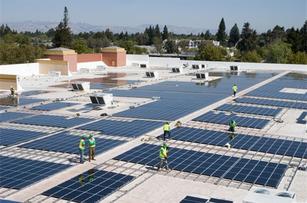
When Walmart announced on Monday that it would install 15 megawatts’ worth of solar arrays on as many as 30 of its stores in California and Arizona, it set out to shape the solar market in more ways than one.

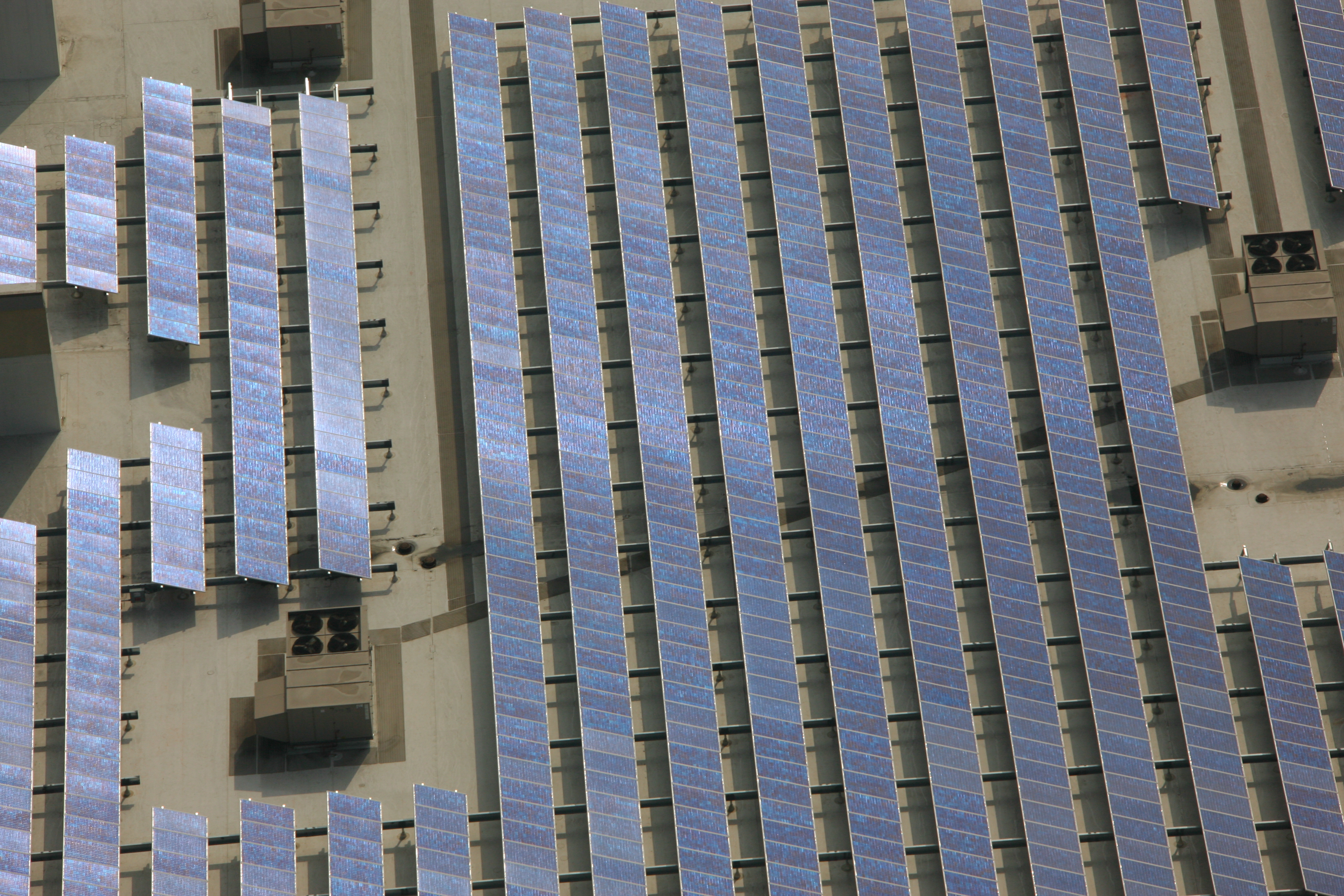
The reason? The world’s biggest retailer specified that many of the new solar installations should use thin-film photovoltaic panels. Thin-film solar cells are printed or deposited on glass or flexible materials. And although they are less efficient at converting sunlight into electricity, they can be produced at a lower cost than traditional crystalline silicon solar cells.

Thin-film solar currently accounts for just about 20 percent of the solar market. The most technologically advanced versions have had a difficult time grabbing market share due to competition with low-cost Chinese crystalline silicon manufacturers and a recession that has dried up investor funding.

Enter Walmart.

“By leveraging our global scale to become a more efficient company, we are able to lower our expenses and help develop markets for new technologies,” Kim Saylors Laster, Walmart’s vice president of energy, said in a statement. “Developing and incorporating new renewable energy sources, like thin film, reduces energy price risk and aligns very well with our commitment to solving business challenges through technology.”

Walmart signed a deal with SolarCity, a leading Silicon Valley solar installer, to manage the project. SolarCity will install and own the photovoltaic arrays on Walmart stores and sell the electricity to the retailer.

SolarCity’s chief executive, Lyndon Rive, told me Monday that the company will install thin-film solar arrays made by First Solar and Miasolé.

First Solar, which makes an older variant of the technology called cadmium telluride, is the world’s biggest thin-film manufacturer and Walton family members were early investors in the Tempe, Ariz., company. First Solar is also an investor in SolarCity, which already uses its photovoltaic panels.

Miasolé, a Silicon Valley startup, is one of a number of companies that has developed a type of thin-film solar cell called copper indium gallium selenide, or CIGS, that offers the promise of higher efficiencies and lower costs.

“Walmart wanted to see thin-film be adopted and made that a requirement in the bidding process,” says Rive.

He noted that the retailer did not dictate the percentage of stores that should receive thin-film solar arrays but expects the technology will account for the majority of installations over the next year.

“There’s no hard and fast number but they’d like us to do as much as possible,” said Rive.

Another twist in the Walmart deal is that the company collaborated with the Environmental Defense Fund (EDF) to develop the criteria used to select SolarCity. (EDF, which maintains an office near Walmart’s headquarters in Bentonville, Ark., has long worked with the retailer on sustainability initiatives.)

The goal, Walmart said in a statement, “was to identify the most innovative solar technologies that would create benefits on three fronts — to the environment, technology, and financial viability.”

The bigger ambition, though, is to shape the solar market, as Walmart acknowledged.

“The company’s large scale on-site installation of CIGS could help further the development of this technology and bring it to market quicker, while use of cadmium telluride thin film could help make the case for other businesses to adopt the technology for on-site commercial use.”

Read Full Post »

photo: California Energy Commission

In Friday’s New York Times, I wrote about California regulators’ licensing of a 1,000-megawatt solar thermal power plant, which would be the world’s largest solar energy complex:

California regulators have licensed what is for the moment the world’s largest solar thermal power plant, a 1,000-megawatt complex called the Blythe Solar Power Project to be built in the Mojave Desert.

By contrast, a total of 481 megawatts of new solar capacity was installed in the United States last year, mostly from thousands of rooftop solar arrays, according to the Solar Energy Industries Association, a trade group.

“Given the challenge of climate change at this time, it is very important to reduce fossil fuel use by moving forward with the largest solar project in California,” Robert Weisenmiller, a member of the California Energy Commission, said at a hearing Wednesday in Sacramento after a unanimous vote to approve the Blythe project.

“We’re taking a major step toward reducing the threat of future climate change impacts on the state, and at the same time the other real challenge for the state is the economy,” he added, referring to 604 construction jobs and 221 permanent jobs that the Blythe project would create in an area of California where the unemployment rate was 15 percent this summer.

After years of environmental reviews, the California Energy Commission has in the past three weeks licensed solar thermal farms that would generate 1,500 megawatts of electricity when completed.

A commission spokeswoman said the commissioners anticipated making licensing decisions by the end of 2010 on additional solar projects that would produce another 2,829 megawatts. At peak output, those solar farms would generate the equivalent electricity produced by several large nuclear power plants.

Developers are racing to start construction before federal tax incentives for big renewable energy projects expire at year’s end.

If all the projects are built, they would create 8,000 construction jobs and 1,000 permanent jobs, according to the energy commission.

At peak operation, the Blythe solar complex would supply enough electricity for 800,000 homes. The multibillion-dollar project will be built in four 250-megawatt phases.

It is notable for being the first big solar project to be licensed that would be built on federal land. The United States Bureau of Land Management is expected to decide by the end of October whether to approve the Blythe complex.

The project will be constructed by Solar Millennium, a German developer, and will cover 9.3 square miles in Riverside County in Southern California with long rows of parabolic troughs. The solar reflectors focus the sun on liquid-filled tubes suspended over the mirrors to create steam that drives an electricity-generating turbine housed in a central power block.

You can read the rest of the story here.

Read Full Post »

Photo: WorldWater & Solar Technologies

I wrote this story for Grist, where it first appeared.

Carbon neutral jumbo jets may be a long way off but some airports are making strides in cutting their greenhouse gas emissions.

Denver International, for instance, announced Tuesday that it will install a 4.4-megawatt solar array, more than doubling the 2 megawatts’ worth of photovoltaic panels the airport built in 2008. Earlier this year, Denver signed a deal for a third array, which will generate an additional 1.6 megawatts of electricity.

Yingli Green Energy is providing the 19,000 panels for the 4.4-megawatt project. A Yingli spokesperson told me that altogether, the photovoltaic arrays will supply on average about 6 percent of the airport’s electricity demand. But on days when the sunshine is intense, the solar farm would generate enough electricity to meet nearly a third of Denver International’s electricity needs.

When completed in 2011, the 4.4-megawatt installation will be Colorado’s largest commercial solar project. But what’s really notable is the photovoltaic module maker supplying the solar panels, Yingli.

The Chinese company only entered the United States in 2009 and by that year’s end had captured nearly a third of the California solar market, the bright star of the U.S. solar system. Low-cost Chinese solar companies now supply almost half the California market, according to Bloomberg New Energy Finance, a consulting and research firm.

The Denver deal is another sign that Yingli and other Chinese solar panel makers are shaking up the U.S. market as they move beyond their California base.

In other news, another relatively little-known Chinese firm, Solarfun, said Monday it struck a deal to supply 9.5 megawatts’ worth of solar modules to Martifer Solar, the U.S. subsidiary of a Portuguese renewable energy company, which will install them at projects in California and Colorado.

“Solarfun is focused on the U.S. market as one of our primary growth drivers going forward and we expect Martifer to be a key partner as we continue to build market presence and share,” Bruce Ludemann, the vice president and general manager of Solarfun’s North American operations, said in a statement.

Such success may cause consternation in the executive suites of rivals from Bonn to Silicon Valley, where low-cost Chinese manufacturing is forcing competitors to become even more efficient and maintain their technological edge.

But in the end, the China’s ability to secure such large deals shows that the solar market truly is taking off.

Read Full Post »

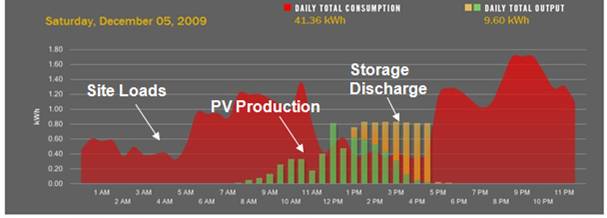
In Wednesday’s New York Times, I wrote about two experimental projects in California to store solar energy produced by photovoltaic rooftop arrays:

In the garage of Peter Rive’s San Francisco home is a battery pack. It is not connected to Mr. Rive’s electric Tesla Roadster sports car, but to the power grid.

The California Public Utilities Commission has awarded $1.8 million to Mr. Rive’s company, SolarCity, a residential photovoltaic panel installer, to research the feasibility of storing electricity generated by rooftop solar arrays in batteries.

As rooftop solar systems provide a growing percentage of electricity to California’s grid, regulators and utilities are increasingly concerned about how to balance the intermittent nature of that power with demand.

One possible solution is to store energy generated by solar arrays in batteries and other systems and then feed that electricity to the grid when, say, a cloudy day results in a drop in power production. And when demand peaks, electricity generated from renewable sources could be dispatched from batteries rather than fossil-fuel burning power plants.

“As soon as distributed solar starts providing 5 to 10 percent of demand, its intermittent nature will need to be addressed,” said Mr. Rive, who is SolarCity’s co-founder and chief operating officer.

SolarCity is teaming with Tesla Motors, the Silicon Valley electric car company run by Mr. Rive’s cousin, Elon Musk, and the University of California, Berkeley, to study how to integrate solar arrays and off-the-shelf Tesla lithium-ion battery backs into the grid. SolarCity plans to put such systems in six homes.

“We think in the years ahead this will be the default way that solar is installed,” Mr. Rive said. “Getting the costs down, though, is not going to be an easy task.”

Homeowners could potentially benefit by tapping batteries at hours when electricity rates are high or using them to provide backup power if the grid goes down.

The research has just begun, and at the moment SolarCity is testing the impact of charging and discharging electricity from the Tesla battery pack in Mr. Rive’s garage. His roof sports a three-kilowatt solar array.

“We’re at the point now where we can direct the battery to charge and discharge at specific times by sending a signal over the Internet,” Mr. Rive said.

Included in the $14.6 million awarded for solar energy storage research by the utilities commission was $1.9 million to SunPower for a project that will store in ice and batteries electricity generated by solar arrays at Target stores.

SunPower, a Silicon Valley solar panel manufacturer and power plant developer, will work with Ice Energy, a Colorado company that makes systems that use electricity when rates are low to form ice. When rates are high, air conditioning refrigerant is cooled by the melting ice rather than by an electricity-hogging compressor.

The Ice Bear system and a solar array will be installed at one Target store while battery packs will be used at two other stores in California.

You can read the rest of the story here.

Read Full Post »

I wrote this story for Grist, where it first appeared.

Talk about sporting greens: On Wednesday, all of the United States’ professional sports leagues said they would distribute a guide on how to switch to renewable energy and urge their teams to solarize their stadiums.

The guide was prepared by the Natural Resources Defense Council (NRDC) and the Bonneville Environmental Foundation and marks a new alliance between environmentalists and the nation’s baseball, football, hockey, and soccer teams.

“It’s not a league mandate, it’s not a requirement for stadiums and arenas to install solar panels, but it indicates an important cultural shift recognized by professional sports that all arenas and stadiums in the country should at least consider and evaluate the opportunity that solar power might provide,” Allen Hershkowitz, a senior scientist with the NRDC, said during a conference call Wednesday.

“Frankly, sports matter. Sports matter a lot,” he added. “Sports is one of the most iconic and influential sectors of our society and frankly we need to have a cultural shift as well as a technical and economic shift if we’re going to advance and move to sustainability.”

In other words, if Jill Six-Pack sees that the Yankees have gone solar she might consider doing the same.

“We really have the ability to shift the dial,” said Darryl Benge, the assistant general manager of Qwest Field in Seattle, home to the Seahawks and Sounders. “We basically bring together small cities on game day.”

Representatives from the National Basketball Association, the National Hockey League, and other stadiums said that economics as well as the environment were pushing them to go green.

Benge noted that Qwest Field’s electricity rates had jumped 18 percent this year, which played a part in the stadium’s decision to solicit bids to install a 600-kilowatt solar array.

In Los Angeles, the Staples Center flipped the switch on a 345.6-kilowatt photovoltaic system that has so far saved $100,000 in electricity costs, according to Lee Zeidman, executive vice president for operations for the facility.

The Staples Center has gone beyond solar to install waterless urinals that save seven million gallons of water annually, and switched to non-toxic cleaning products.

Other teams have tackled the waste issue. Scott Jenkins, the vice president of ballpark operations for the Seattle Mariners, said the team has saved $1 million over three years by recycling 80 percent of the waste generated at games.

Gary Betteman, commissioner of the National Hockey League, said 30,000 shopping bags were replaced with reusable totes during the Stanley Cup, and he noted that several NHL venues have installed solar panels.

Stadium managers acknowledged that sports’ biggest carbon footprint comes from fans driving to and from games. The challenge, they said, will be to get more fans to take public transportation as well as to build arenas in urban areas with accessible mass transit.

For his part, Hershkowitz said he was astounded that it has taken the environmental movement 40 years to forge a strong alliance with professional sports.

“If you want to change the world you don’t emphasize how different you are from everybody else,” he said. “You focus on your similarities.”

Read Full Post »

I wrote this story for Grist, where it first appeared.

Want to help solve the global water crisis? Step away from your laptop and let it join millions of other computers being used by scientists who will tap idle processing power to develop water filtering technology, clean up polluted waterways, and find treatments for water-related diseases.

Those were among the projects announced Tuesday by IBM, which sponsors a global network of linked personal computers called the Worldwide Community Grid.

The idea of aggregating thousands of individual computers to create a virtual supercomputer is nothing new — searchers of extraterrestrial life and scientists seeking medical cures have been doing that for years. But this is apparently the first time the approach has been used to tackle one of the planet’s bigger environmental problems.

In China, Tsinghua University researchers, with the help of Australian and Swiss scientists, will use 1.5 million computers on the Worldwide Community Grid to develop nanotechnology to create drinkable water from polluted sources, as well as from saltwater.

To do that, the scientists need to run millions of computer simulations as part of their “Computing for Clean Water” project.

“They believe they can collapse tens or even hundreds of years of trial and error into mere months,” Ari Fishkind, an IBM spokesperson, told me.

Big Blue is providing computer hardware, software, and technical help to the Worldwide Community Grid. But Fishkind says the company doesn’t anticipate the effort will have a commercial payoff for its own water filtering membrane efforts.

“We will be watching Tsinghua University’s progress closely, but the two projects are not directly related,” he said in an email message. “While IBM’s research focuses on a broad application of filtering technology/technique, including industrial applications, Tsignhua’s focus is drinking water.”

Brazilian scientists, meanwhile, will plug into the grid to screen 13 million chemical compounds in their search for a cure for schistosomiasis, a water-borne tropical disease that kills between 11,000 and 200,000 people annually.

In the United States, the Worldwide Community Grid will be used to run complex simulations that assess how actions by farmers, power plant operators, real estate developers, and others affect the health of Chesapeake Bay, the nation’s largest estuary.

“Responsible and effective stewardship of complex watersheds is a huge undertaking that must balance the needs of each unique environment with the needs of the communities that depend on them for survival,” said Philippe Cousteau, co-founder of Azure Worldwide, a firm that is participating in the project.

To join the Worldwide Community Grid, you just need to download a piece of software from the group’s site.

Oh, and stay off Facebook and Twitter for a bit.

Read Full Post »

photo: Southern California Edison

I wrote this story for Grist, where it first appeared.

The California Legislature started out the week in the green by passing the nation’s first energy storage bill. But legislators quickly ran into the red Wednesday when they failed to approve legislation to impose a statewide ban on plastic bags, or codify Governor Arnold Schwarzenegger’s executive order that utilities obtain a third of their electricity from renewable sources by 2020.

But don’t go crying in your organic beer yet. On Thursday, the California Public Utilities Commission signed off on 650 megawatts of new solar energy contracts and programs.

Whch all goes to show that in the Golden State, environmental politics are not green and brown. And despite the fate of Proposition 23, the oil company-bankrolled ballot initiative to suspend California’s global warming law, the state’s panoply of green laws allows progress to be made on various fronts.

The utilities commission, for instance, approved contracts for two giant photovoltaic solar farms to be built in the Mojave Desert by First Solar. Together they will supply 550 megawatts of electricity to the utility Southern California Edison.

Commissioner Timothy Simon noted at Thursday’s energy commission meeting in San Francisco that the price for that electricity is lower than previous solar contracts, another sign that photovoltaic power is edging ever closer to edging out fossil fuels. The price also speaks to the ability of First Solar, the Tempe, Ariz.-based thin-film solar company, to win and begin to execute big projects.

The commission also greenlighted San Diego Gas & Electric’s proposal for 100-megawatt’s worth of small-scale photovoltaic projects.

Most installations will be 1 or 2 megawatts and built in parking lots or other open spaces where they can be plugged into the grid without expensive transmission upgrades. The move comes on top of 1,000 megawatts of distributed solar generation that the utilities commission previously approved for California’s two other big utilities.

Michael R. Peevey, the president of the utilities commission, said despite the failure of the state legislature to institutionalize the 33 percent renewable portfolio standard — currently subject to reversal by the next governor — California was on a solar streak.

“With approval of this project we’ll have added 1,100 megawatts of photovoltaic electricity by the three utilities,” said Peevey, noting that separately the California Solar Initiative will add another 3,000 megawatts and that by year’s end regulators are poised to approve big solar farms that will generate 4,700 megawatts of electricity.

“These are big, big numbers,” Peevey added. “Independent of the legislature, we’re moving to a RPS economy.”

Read Full Post »

photo: Mountain Lion Foundation

In Thursday’s New York Times, I write about the mountain lion that was stalking the streets of Berkeley, Calif., this week:

The appearance of a mountain lion Tuesday near downtown Berkeley, Calif., caused a stir in this animal-loving, environmentally conscious community, where residents may obsess about locally grown organic food but don’t expect to be on the menu.

The mountain lion, a 100-pound female, was spotted around 2 a.m. Tuesday in the city’s Gourmet Ghetto district, according to the Berkeley Police Department.

The cougar roamed within pouncing range of Alice Waters’s Chez Panisse restaurant, the temple of California cuisine, where twice-cooked kid goat with cumin, ginger, eggplant, and chickpeas was the featured dish that evening. But the state’s top-level predator probably was on the hunt for venison and got lost, according to wildlife experts.

“A mountain lion traveling through an urban environment is infrequent but looking at aerial photographs of the surrounding area you can see why it chose Berkeley,” said Marc Kenyon, the statewide mountain lion program coordinator for the California Department of Fish and Game.

The reason: deer, the mountain lion’s main prey. Berkeley is wedged between San Francisco Bay and sylvan foothills that abut miles of forested parkland. It’s a mountain lion smorgasbord with cougar chow wandering the hills and valleys. (On Wednesday morning, for instance, I walked out of my hillside house to find a pack of deer ambling down the street.)

“Where there are deer, mountain lions not far behind,” noted Mr. Kenyon. “The mountain lion might have been following a deer down the hill and at one point turned off a path and spotted a raccoon and decided to chase that raccoon and got turned around and walked west toward the city instead of east toward the hills.”

More than half of California is classified as mountain lion habitat by the Department of Fish and Game, which estimates there are between 4,000 and 6,000 of the animals in the state. California voters banned the hunting of mountain lions for sport in 1990.

While reports of mountain lion sightings have been growing as human development expands into the animal’s habitat, Mr. Kenyon said the number of mountain lions actually is thought to be falling statewide due to a decline in deer population in some regions.

“California is the state with the highest number of humans coexisting with the highest number of mountain lions,” said Tim Dunbar, executive director, Mountain Lion Foundation, a non-profit based in Sacramento, Calif. “And though there have been some fatal incidents on occasion we’re doing very well.”

Such encounters usually do not end well for the mountain lion, though. In Berkeley, police officers tracked the cougar as it ran through the surrounding residential neighborhood for an hour, jumping over fences from backyard to backyard. According to news reports, an officer shot and killed the animal at 3:30 a.m.

The incident unleashed a Berkeley-style debate on Berkeleyside, a local blog, over whether the mountain lion should have been killed.

You can read the rest of the story here.

Read Full Post »

I wrote this story for Grist, where it first appeared.

The California Legislature has passed the nation’s first energy storage bill, which could result in the state’s utilities being required to bank a portion of the electricity they generate.

Assembly Bill 2514 now heads to the desk of Gov. Arnold Schwarzenegger, who has made climate change and green technology his political legacy as his final term winds down.

Energy storage is considered crucial for the mass deployment of wind farms, solar power plants, and other sources of intermittent renewable energy, as well to build out the smart grid.

On the West Coast, for instance, the wind tends to blow hardest at night when demand for electricity is low. If utilities can store that wind-generated power — and energy from solar farms — in batteries, flywheels, and other devices, they can avoid building and firing up those billion-dollar, greenhouse gas-emitting, fossil-fuel power plants that are only used when demand spikes.

AB 2514 won the support of Jerry Brown, the California attorney general who is the Democratic candidate for governor. The Sierra Club and union groups also support the measure. Various business organizations, including the California Chamber of Commerce, opposed the bill.

Sponsored by Assembly member Nancy Skinner, a Berkeley Democrat, the bill was stripped of its more stringent provisions by the time it emerged from the legislative sausage-making process on Friday.

Originally, AB 2514 required California’s three big investor-owned utilities — PG&E, Southern California, and San Diego Gas & Electric — to have energy storage systems capable of providing at least 2.25 percent of average peak electrical demand by 2015. By 2020 the target would rise to at least 5 percent of average peak demand.

The bill now only requires that the California Public Utilities Commission determine the appropriate targets — if any — for energy storage systems, and then require the Big Three utilities to meet those mandates by 2015 and 2020. Publicly-owned utilities must set energy storage system targets to be met by 2016 and 2021.

Still, AB 2514 is a significant step and could ultimately help jump-start the market for energy storage, which remains in its infancy.

PG&E, for instance, plans to build an experimental facility that would tap electricity generated during peak wind farm production to pump compressed air into an underground reservoir. When demand jumps, the reservoir would release the air to run electricity-generating turbines which are capable of producing 300 megawatts of power.

And last week, PG&E proposed building a “pumped hydro” storage system. As its name implies, the system would pump water from one reservoir to another reservoir at a higher elevation during times of peak renewable energy production. Water in the upper reservoir would then be sent back downhill to power a turbine when electricity demand begins to spike.

Read Full Post »

photo: Sonoma County

In The New York Times on Tuesday, I wrote about the latest nail in the coffin of Property Assessed Clean Energy, or PACE, programs:

Many homeowners who participated in a program that let them repay the cost of solar panels and other energy improvements through an annual surcharge on their property taxes must pay off the loans before they can refinance their mortgages, two government-chartered mortgage companies said Tuesday.

The guidance came from Fannie Mae and Freddie Mac as efforts to resolve a dispute over the program — called Property Assessed Clean Energy, or PACE — have failed.

Approved by 22 states, the programs let municipalities sell bonds to finance improvements in energy efficiency. Homeowners typically pay back the loans over 20 years through an annual property tax assessment. As is the case with other property tax assessments, a lien is placed on the home that has priority over the mortgage if the homeowner defaults.

In July, the Federal Housing Finance Agency, which oversees Fannie and Freddie, effectively derailed the program when it issued guidance to lenders stating that the liens violated the agency’s underwriting standards. Fannie and Freddie buy and sell most of the nation’s home mortgages.

That guidance led to the halt of most PACE programs and left in limbo those homeowners who had already taken out energy improvement loans.

On Tuesday, Fannie and Freddie issued guidance to lenders stating that borrowers with sufficient equity in their homes must pay off the loans before refinancing. Those homeowners without enough equity to take cash out of their home to pay off the lien can refinance with the loan in place.

“Fannie Mae will not purchase mortgage loans secured by properties with an outstanding PACE obligation unless the terms of the PACE program do not permit priority over first mortgage liens,” according to the guidance.

The program’s proponents have argued that it overcomes obstacles to installing expensive solar panels and making other energy efficiency improvements that reduce greenhouse-gas emissions while creating jobs.

In response to the Federal Housing Finance Agency’s actions, the California attorney general’s office filed a lawsuit in July against Fannie and Freddie, as did the Sierra Club. Meanwhile, legislation has been introduced in Congress to allow the program to go forward.

“It’s absolutely clear now that the F.H.F.A. is not at all interested in working out a solution that would allow PACE to proceed — the agency appears intent only on obstructing the program,” Janill L. Richards, a California supervising deputy attorney general, wrote in an e-mail.

You can read the rest of the story here.

Read Full Post »

« Newer Posts - Older Posts »

Design a site like this with WordPress.com
Get started