Feeds:
Posts
Comments

Archive for the ‘energy’ Category

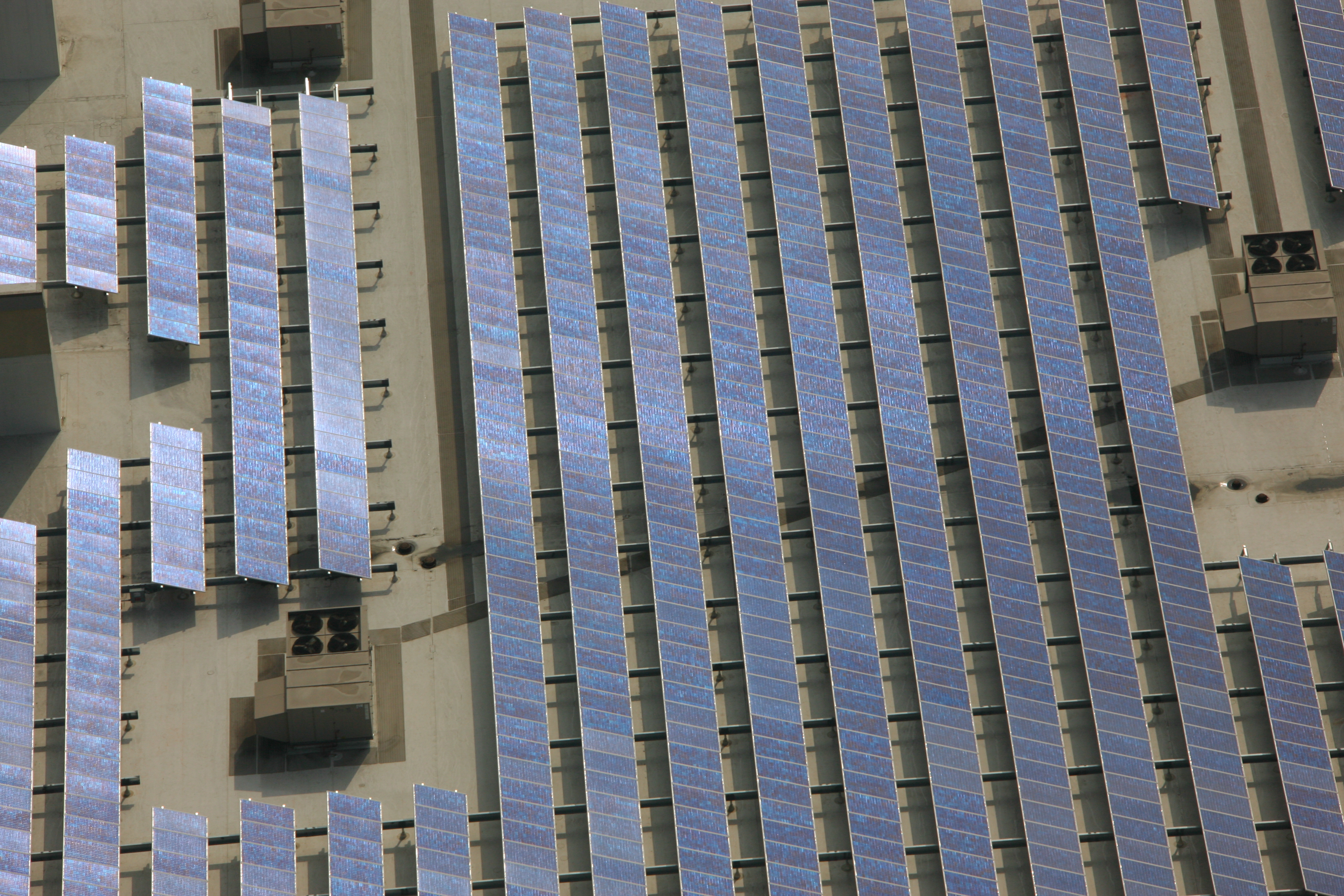
In The New York Times on Tuesday, I write about the latest developments in the Fannie Mae/Freddie Mac – PACE solar loan saga:

The federal agency that oversees two government-chartered mortgage finance companies imposed new restrictions Tuesday on homeowners’ ability to take advantage of a program that allows them to repay the cost of installing solar panels and other energy improvements through an annual surcharge on their property taxes.

The new guidelines could also make it more difficult for homeowners to obtain mortgages even if they don’t participate in the programs, called Property Assessed Clean Energy, or PACE, but happen to live in an area where they are offered.

“For all intents and purposes, until cooler heads prevail or Congress acts, it’s very difficult to envision PACE going forward,” said Cisco DeVries, president of Renewable Funding, a company in Oakland, Calif., that creates and administers the programs for local governments.

In issuing the guidance to Fannie Mae and Freddie Mac, which buy and resell most mortgages, the Federal Housing Finance Agency was critical of the energy efficiency programs that have been authorized by 22 states and that have drawn $150 million in stimulus funding support from the Obama administration.

When a municipality pays for energy efficiency upgrades through the program, a lien is placed on the home. The liens, like other property tax assessments, take priority over the mortgage if the homeowner defaults.

But the housing agency on Tuesday characterized PACE liens as different from other special assessments that cities routinely use to finance sewers, sidewalks and other civic improvements.

“They present significant risk to lenders and secondary market entities, may alter valuations for mortgage-backed securities and are not essential for successful programs to spur energy conservation,” the agency wrote.

The Federal Housing Finance Agency said efforts were continuing to develop underwriting standards for energy efficiency programs.

“However, first liens that disrupt a fragile housing finance market and longstanding lending priorities, the absence of robust underwriting standards to protect homeowners and the lack of energy retrofit standards to assist homeowners, appraisers, inspectors and lenders determine the value of retrofit products combine to raise safety and soundness concerns,” the agency stated.

You can read the rest of the story here.
Read Full Post »

In Sunday’s New York Times, I have an update on the controversy surrounding Fannie Mae and Freddie Mac’s blocking of the PACE solar loan program:

Two government-chartered mortgage finance companies are unlikely to accept loans on homes that are part of a special program that lets homeowners repay the cost of energy improvements through a surcharge on their property tax bills, according to Energy Department officials.

The Obama administration has allocated $150 million in stimulus money to support the financing technique, called Property Assessed Clean Energy, or PACE, and 22 states have authorized such programs. In a separate stimulus effort, President Obama on Saturday announced nearly $2 billion in loan guarantees for solar energy production.

Through the PACE program, loans to install solar panels and make other energy improvements would be repaid through 20-year special assessments on property tax bills and secured through a lien.

On May 5, Fannie Mae and Freddie Mac, which buy and resell most home mortgages, notified lenders that such liens could not take priority over a mortgage but did not offer guidance on how to handle such loans. The uncertainty has frozen many PACE programs and led some energy companies to furlough workers.

On Friday, Cathy Zoi, an assistant secretary at the Energy Department, called officials in Boulder County, Colo., to inform them that the administration had been unable to persuade the Federal Housing Finance Agency, which oversees Fannie Mae and Freddie Mac, to accept mortgages with PACE liens.

The liens, like other property tax assessments, would be paid first if a homeowner defaults.

“She said in light of the circumstances we should look at other ways of financing energy efficiency with the stimulus money,” said Ben Pearlman, a commissioner in Boulder County.

“We’re very concerned,” Mr. Pearlman said. “It’s a powerful program and a powerful idea. We need to find an easy way for people to make those investments.”

Those homeowners who already carry energy liens on their property may find it difficult to refinance their mortgages. In Sonoma County, Calif., some lenders have declined to issue new loans for homes with such liens unless the assessment is paid off.

Ms. Zoi also called Cisco DeVries, president of Renewable Funding, a company in Oakland, Calif., that devises and administers PACE programs for local governments. “She indicated that the agencies had decided not to accept the liens and the administration needed to begin contingency planning on what to do with stimulus funding allocated for PACE,” Mr. DeVries said.

Dan Leistikow, the Energy Department’s director for public affairs, confirmed the calls. “We expect to get more written guidance from the regulators this week,” he said on Saturday.

You can read the rest of the story here.

Read Full Post »

photo: Solyndra

In The New York Times on Friday, I follow up my story in Thursday’s paper on mortgage giants Fannie Mae and Freddie Mac paralyzing PACE programs that allow homeowners to install solar arrays and make energy efficiency upgrades through an annual assessment on their property taxes:

In an article in The Times on Thursday, I explained how Fannie Mae and Freddie Mac, the government-chartered mortgage giants, have derailed an innovate financing program that lets homeowners pay for expensive solar panels and energy efficiency upgrades over time through an annual surcharge on their property tax bills.

The program is called Property Assessed Clean Energy, or PACE, and it has been authorized by 22 states since 2008. The energy improvement assessments are secured by a lien on the home, but the agencies, which hold more than half of mortgages in the United States, recently sent letters to lenders warning them that such liens could not take priority over a mortgage. Fannie and Freddie worry that if a homeowner defaults, taxpayers will be left in the lurch, as property taxes generally are paid before mortgages are.

Putting aside whether such liens are any different from the property tax assessments commonly used to finance municipal improvements, how big a potential liability would Fannie and Freddie face?

Not very big, according to an analysis by the California attorney general’s office.

You can read the rest of the story here.

Read Full Post »

image: California Energy Commission

In The New York Times on Friday, I write about another setback in California’s scramble to meet its renewable energy targets:

The developer of a hybrid biomass solar power plant to be built in California has abruptly canceled the project, underscoring the challenges the state faces in meeting its ambitious renewable energy goals.

Martifer Renewables, a Portuguese company, had signed a 20-year power purchase agreement with the California utility PG&E for 106.8 megawatts. The power was to be generated from a pair of power plants called San Joaquin Solar 1 and 2 that would be built on 640 acres of agricultural land in Fresno County. The facility would produce electricity from a solar field by day and burn biomass collected from area farms by night. But 18 months into an extensive licensing process and after recently depositing $250,000 for a transmission study, Martifer notified the California Energy Commission last month that it was withdrawing its license application.

The developer’s representatives did not return a request for comment. But in a June 17 letter to the energy commission, Miguel Lobo, a Martifer executive, wrote, “We were not able at this time to resolve some of our issues regarding project economics and biomass supply amongst other things.”

Although local residents and regulators had raised issues about the proposed solar farm’s water consumption and other impacts, it was the project’s plan to operate around the clock by burning biomass that proved problematic, according to energy commission records.

You can read the rest of the story here.

Read Full Post »

photo: SunRun

In The New York Times on Tuesday, I write about SunRun, a San Francisco solar leasing company that has scored a whopping $55 million round of equity funding:

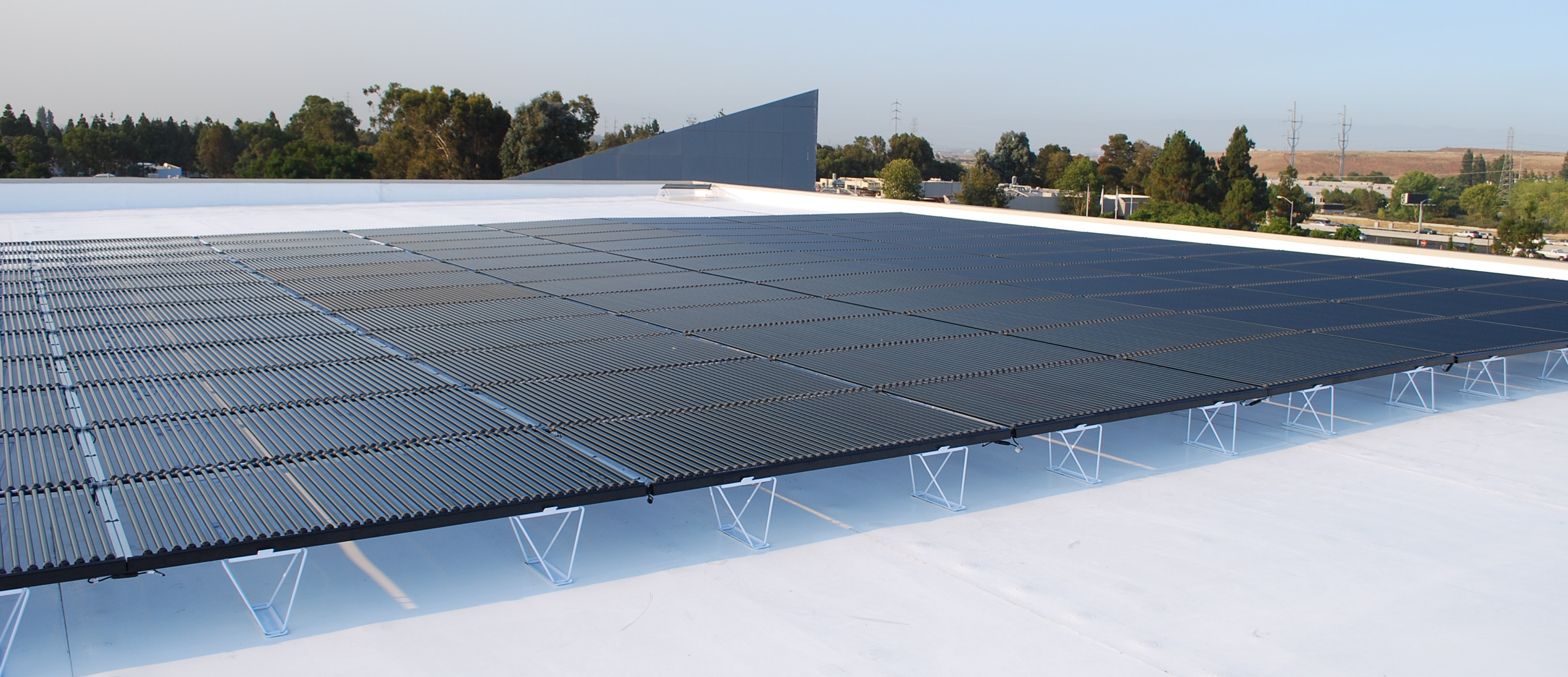
SunRun, a San Francisco start-up that leases rooftop solar arrays to homeowners, said Tuesday it had raised $55 million from investors.

The equity investment led by Sequoia Capital, a prominent Silicon Valley venture firm, is one of the largest made in a solar leasing firm and a sign that companies are poised for a major expansion beyond the industry’s core market in California.

The investment follows a $100 million tax equity fund PG&E Corporation, the utility holding company, created last week to finance residential solar installations for SunRun customers. PG&E Corporation in January formed a $60 million financing pool for SolarCity, a Silicon Valley competitor to SunRun. SolarCity is also tapping $190 million in tax equity funds created over the past year for the company by U.S. Bancorp.

“If the $55 million is going to actual corporate expansion, it is one of the largest corporate fund-raisings we’ve seen for that purpose in this space,” said Nathaniel Bullard, a solar analyst with Bloomberg New Energy Finance. “It speaks to the opportunity outside of California, in the Southwest and the Northeast.”

The investment is nearly double the $30 million SunRun had previously raised from Sequoia Capital, Accel Partners and Foundation Capital.

“We’re seeing early signs of an inflection point in the market where the cost of offering a solar solution is becoming cheaper than utility pricing,” said Warren Hogarth, a partner at Sequoia Capital, an early investor in Apple, Google and Yahoo. “We’re moving from people buying solar because it’s a nice thing to do to buying solar because it makes economic sense.”

You can read the rest of the story here.
Read Full Post »

photo: Todd Woody

This post first appeared on Grist.

The California Assembly has passed legislation that takes the first step to requiring that a percentage of electricity generated in the state be stored.

Electricity, of course, is the ultimate perishable commodity. If the bill is approved by the California Senate and signed by Gov. Arnold Schwarzenegger, it would apparently be the first time a state will move toward mandating that electricity generated by wind farms, solar power plants, and other intermittent sources be stored for use during peak demand.

That’s key if California is to meet its ambitious mandates to obtain 33 percent of its electricity from renewable sources by 2020.

“Electric energy storage is an emerging industry that offers the possibility to solve a number of major obstacles to the achievement of a sustainable electricity future,” according to an analysis of the legislation prepared by the California Public Utilities Commission in May. “It can effectively address problems such as the integration of intermittent renewables.”

Sponsored by Assembly member Nancy Skinner, a Berkeley Democrat, the bill has been watered down to make it palatable to the state’s utilities and regulators. It originally required the state’s utilities to obtain energy storage systems capable of providing at least 2.25 percent of average peak electrical demand by 2014. By 2020 the target would rise to at least 5 percent.

The latest version of the bill now wending its way through the state Senate requires the California Public Utilities Commission to open proceedings on energy storage and by October 2013 to adopt an initial target — if appropriate — for utilities to meet by the end of 2015.

California Attorney General Jerry Brown, the Democratic candidate for governor, is sponsoring the legislation, which is backed, not surprisingly, by the renewable energy industry and venture capitalists.

“It’s part of our bigger effort to deal with climate change,” Cliff Rechtschaffen, Special Assistant Attorney General, told me. “When we looked at how to develop renewables, the technology is here but stalled by lack of regulatory focus.”

Utilities spend billions of dollars building so-called peaker plants that operate just hours a year to supply electricity and avoid blackouts when demand spikes — say, on a hot day when everyone cranks up their air conditioners.

Such costs — and greenhouse gas emissions — could be cut or reduced if electricity stored from wind farms or solar power plants could be dispatched when demand rises.

A report prepared for the California Energy Commission and released this month concluded that adding gigawatts of wind and solar energy to the grid to meet renewable energy mandates would require “major alterations to system operations.”

Without storage, more natural gas power plants or hydroelectric facilities would need to be built to smooth out grid operations as increasing amounts of solar and wind energy comes online, according to the report prepared by Kema, an energy consulting firm.

“Storage can be up to two to three times as effective as adding a combustion turbine to the system,” the report stated.

The cost and feasibility of such storage systems is another matter, as it remains a nascent industry.

Most efforts focus on using batteries or mechanical systems like flywheels to store electricity. California utility PG&E has launched a pilot project to store electricity in the form of compressed air. Some developers of solar power plants intend to use molten salt to capture heat that can be released and used to drive an electricity-generating turbine after the soon goes down.

“This bill moves storage to the top of the regulatory agenda where it belongs,” says Rechtschaffe

Read Full Post »

photo: SolarCity

In The New York Times on Monday, I write about a $100 million tax equity fund created by PG&E Corporation to finance residential solar installations:

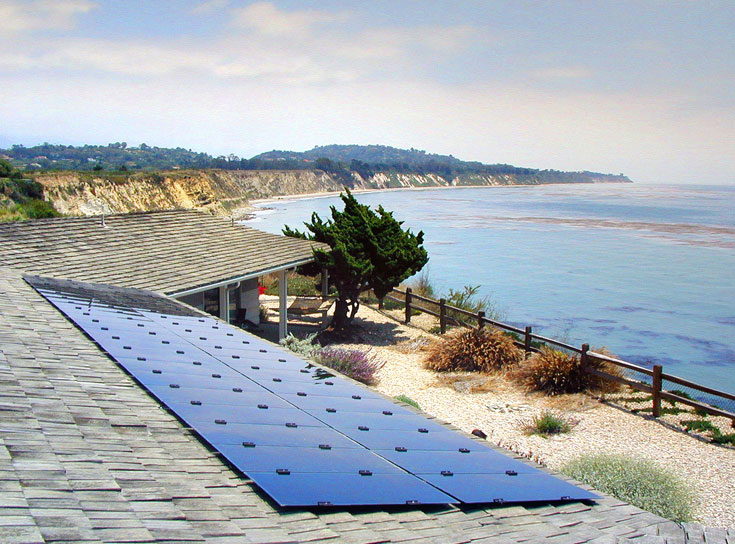
P.G.&E. Corporation, the California utility holding company, has created a $100 million tax-equity fund to finance residential solar installations by SunRun, a San Francisco start-up that leases photovoltaic arrays to homeowners.

The fund, managed by a P.G.&E. subsidiary, Pacific Energy Capital II, is the largest single solar leasing pool to date, according to the company, and marks the growing interest of utilities in the renewable energy financing business.

“We’re in somewhat of a unique position in that roughly half of the nation’s rooftop solar installations are in our service territory,” Brian Steel, P.G.&E.’s senior director of corporate strategy, said in an interview. “We’re at the proverbial ground zero of these new technologies and so perhaps more than any utility holding company in the country we have a strategic imperative to get ahead of the curve through having a propriety seat at the table with a partner like SunRun.”

The financing, announced Monday, follows P.G.&E.’s creation of a $60 million tax-equity vehicle in January for SolarCity, a Silicon Valley company that also leases solar arrays to homeowners.

The $100 million in financing is expected to fund solar installations for 3,500 homes in Arizona, California, Colorado, Massachusetts and New Jersey.

“That a major energy company like P.G.&E. is coming to the table illustrates that distributed solar is becoming part of the mainstream energy business,” said Edward Fenster, SunRun’s chief executive.

You can read the rest of the story here.
Read Full Post »

photo: eSolar

This post first appeared on Grist.

Amid all the hope and hype about the nascent solar boom under way in California, there’s long been an elephant in the room – transmission. Billions and billions of dollars must be spent to build and upgrade transmission lines to connect dozens of proposed solar power plants to the grid.

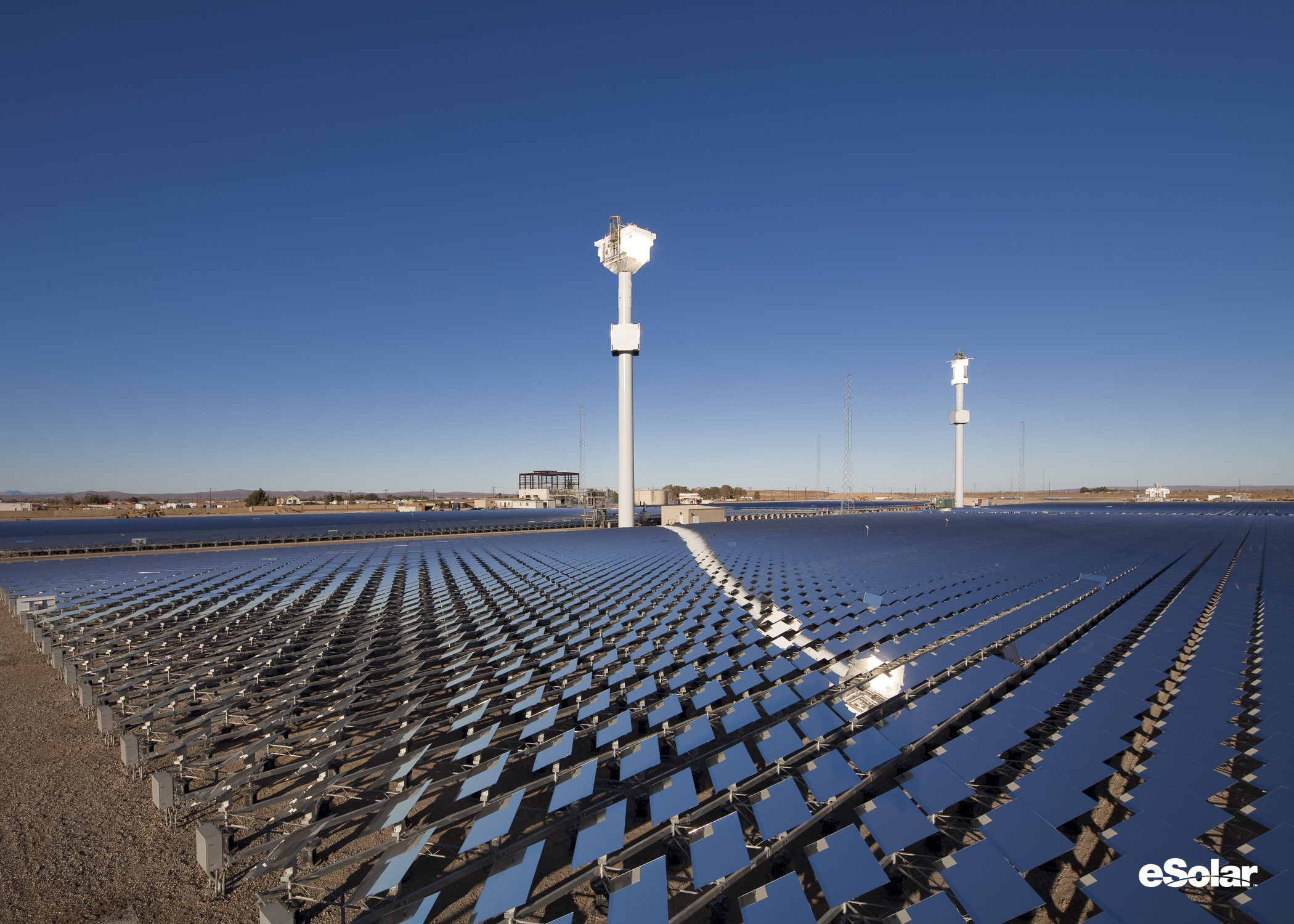
Now that elephant has rolled over and squashed one project’s use of innovative solar technology. Last year, California utility PG&E signed a deal with NRG Energy, a New Jersey-based electricity provider, to buy power from a 92-megawatt solar farm called the Alpine SunTower to be built near the desert town of Lancaster, northeast of Los Angeles.

The power plant would deploy solar thermal technology developed by eSolar, a Pasadena startup founded by serial technology entrepreneur Bill Gross. NRG and eSolar earlier had inked a partnership to build 500 megawatts’ worth of solar farms. In January, eSolar reached an agreement with a Chinese company to supply technology for solar farms that would generate a massive 2,000 megawatts of electricity.

PG&E, however, submitted a letter recently to the California Public Utilities Commission  asking approval for a re-negotiated deal with NRG that has resulted in a downsizing of the Alpine SunTower project to 66 megawatts. And instead of deploying eSolar’s fields of mirrors that focus the sun on a water-filled boiler that sits atop a tower to create steam to drive a turbine, the power plant will generate electricity from photovoltaic panels like those found on residential rooftops.

The utility gave no reason for the technology switch. “NRG has not finalized the exact type of panels or the manufacturer of the panels,” a PG&E executive wrote in the letter. “Solar PV panels have been used in installations throughout the world, in both small and utility scale applications.”

However, when I contacted eSolar about the change, I received a joint statement from the company and NRG:

“NRG is returning the project to its originally proposed size to match the transmission capacity available to the project at this time,” it said. “Maintaining the project as previously announced would require waiting for additional interconnection studies and potential transmission upgrades that would delay the project delivery date.”

While solar panels are not as efficient as eSolar’s solar thermal technology in generating electricity, they are modular – meaning you can just keeping adding them to produce a desired amount of power or to match the transmission capacity in an area. ESolar’s power plants, on the other hand, are designed to be built in 46-megawatt units so there’s far less flexibility in scaling them up or down.

It’s too early to say whether this portends other switches from solar thermal to photovoltaic technology, especially as solar cell prices fall and California utilities scramble to meet a mandate requiring they obtain 20 percent of their electricity from renewable sources by the end of this year and 33 percent by 2020.

But the elephant is getting restless.

Read Full Post »

photo: Skyline Solar

This post first appeared on Grist.

Grist’s David Roberts sent out a Tweet to his Tweeps today asking which city has installed the most solar. I’ve got an answer for you, David: Nipton, California.

The desert micropolis – population 38 – announced Thursday that it had installed a solar array that will provide 85 percent of its electricity. (The population of the outpost on the edge of Mojave National Preserve spikes to 250 or so during tourist season.)

The solar system is ground-mounted rather than on rooftops and only generates 82 kilowatts. But what is notable is the technology developed by Skyline Solar, a Silicon Valley startup I first wrote about for Grist last year.

The company’s power plants resemble solar thermal parabolic trough installation that deploy long rows of mirrors to heat tubes of liquid suspended over the arrays to create steam that drives an electricity-generating turbine.

Skyline’s system is purely solid state, however. Each 120-foot-long trough concentrates the sun on photovoltaic modules attached to the edges of the arrays. That boosts the solar cell’s electricity production as does a tracking mechanism that allows the arrays to follow the sun throughout the day.

Such concentrating photovoltaic systems – which Skyline calls “high gain solar “ – have been a niche market due to their relatively high costs. But as solar cell prices decline and solar thermal projects get bogged down in environmental disputes, they have become increasingly attractive as they can be built near utility substations and plugged directly into the grid without the need to build expensive new transmission systems.

Skyline has pushed to lower costs by using common materials – glass, steel – and designing the arrays so their components can be mass-produced by automotive manufacturers. The company last year struck a deal with the Michigan subsidiary of Canadian auto manufacturing giant Magna International to make components for its HGS 1000 solar system.

In other news on the solar frontier Thursday, Silicon Valley startup MiaSolé said the National Renewable Energy Laboratory had confirmed that the company’s copper indium gallium selenide solar cells have 13.8 percent efficiency in production. Such thin-film cells typically have a lower efficiency than standard polysilicon solar cells but are cheaper to manufacture. But with an efficiency approaching 14 percent, MiaSolé could give some standard module makes a run for their money.

Read Full Post »

This post first appeared on Grist.

Legislation pending in New York that would require the state to install 5,000 megawatts of solar power by 2025 could generate 22,198 jobs and boost the economy by $20 billion, according to a report released by Vote Solar on Wednesday.

The cost to consumers would be just a 39-cent-a-month hike on their utility bills, the report found.

Vote Solar, a San Francisco non-profit that is backing the bills in the New York legislature along with the Natural Resources Defense Council and other environmental groups, commissioned the study conducted by Crossborder Energy. Described as an independent consultant, Crossborder relied on economic models developed by the National Renewable Energy Laboratory to make its projections.

“We note that in an effort to be conservative in our assumptions, these benefits are calculated without taking into account any potential new manufacturing,” the report stated. “Precedent shows that states that make a clear commitment to clean energy see reciprocal investment on behalf of manufacturing companies. For example, in both Arizona and California, the states’ strong and transparent policies were fundamental to the decisions of two major global solar manufacturers…to locate their first domestic manufacturing operations in those states.”

New York currently has less than 25 megawatts of solar installed. The New York Solar Jobs and Development Act would require the state’s utilities to install enough solar to account for at least 2.5 percent of their electricity sales by 2025. Those targets could be reached through residential and commercial rooftop solar installations or by building solar power plants. Utilities could own and operate their own solar power facilities to meet 25 percent of their mandate.

But the legislation does not specify incentives or other policies to encourage solar installations, which would inevitably affect the cost of the program for developers and consumers.

Read Full Post »

« Newer Posts - Older Posts »

Design a site like this with WordPress.com
Get started