Feeds:
Posts
Comments

Archive for the ‘alternative energy’ Category

In The New York Times last week, I wrote about how Yingli, the Chinese solar module maker, is heading east after capturing nearly a third of the California market last year:

Yingli, the Chinese solar module maker that captured nearly a third of the California market last year, has struck a deal to supply a New Jersey developer with more than 10 megawatts of photovoltaic panels.

The agreement announced Tuesday with SunDurance Energy for the first time brings  Yingli’s reach to the East Coast. SunDurance, owned by a construction and engineering firm, the Conti Group, will install the Yingli solar panels on rooftops, in carports and in ground-mounted solar farms.

“Being able to have a presence on both coasts and in some of the other states that are emerging is very significant for us,” Robert Petrina, the managing director for Yingli’s American operations, said.

He said Yingli shipped 15 megawatts of modules in the fourth quarter of 2009 in the United States. The deal with SunDurance calls for Yingli to provide 10 megawatts through the third quarter of this year. The company had previously supplied solar panels to SunDurance for other projects.

Yingli, based 100 miles south of Beijing in the city of Baoding, opened offices in New York and San Francisco at the beginning of 2009. By year’s end, the company held 27 percent of the California market, according to Bloomberg New Energy Finance, a research and consulting firm. Its stock is listed on the New York Stock Exchange.

Chinese firms, including the Yingli rival Suntech, increased their share of the California market to 46 percent, up from 21 percent at the beginning of 2009.

Mr. Petrina said declines in the price of polysilicon — a vital ingredient in solar cells — and in subsidies paid by European countries made it feasible for Yingli to enter the American market.

You can read the rest of the story here.

Read Full Post »

photo: Todd Woody

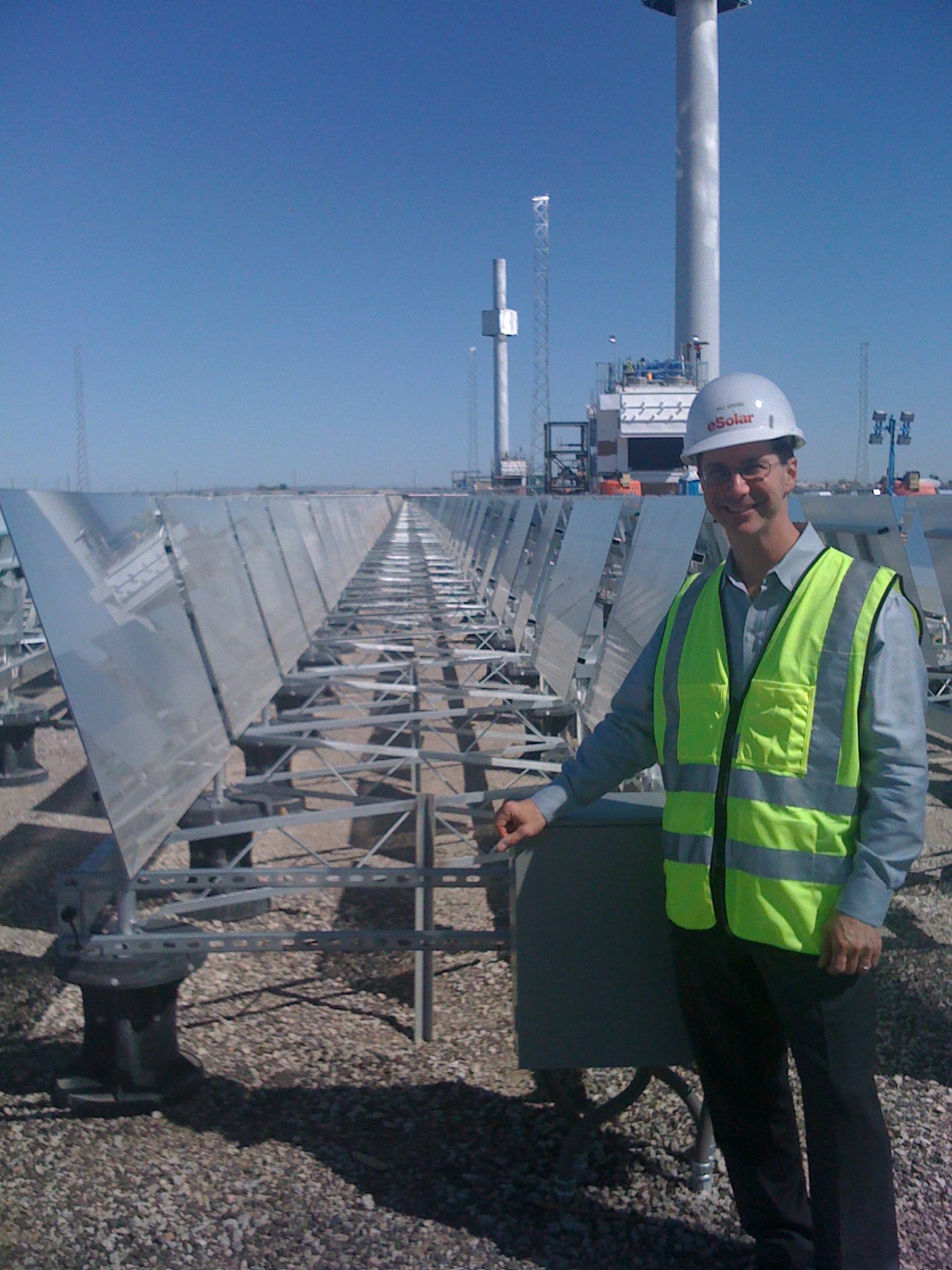
In an interview I did with green tech entrepreneur Bill Gross for Yale Environment 360, Gross talks about the future of solar energy, his relationship with Google, and how to avoid battles over building large solar farms in the deserts of the Southwest:

Bill Gross is not your typical solar energy entrepreneur. In a business dominated by Silicon Valley technologists and veterans of the fossil fuel industry, Gross is a Southern Californian who made his name in software. His Idealab startup incubator led to the creation of companies such as eToys, CitySearch, and GoTo.com. The latter pioneered search advertising — think Google — and was acquired by Yahoo for $1.6 billion in 2003.

That payday has allowed Gross to pursue his green dreams. (As a teenager, he started a company to sell plans for a parabolic solar dish he had designed.) Over the past decade, Gross has launched a slew of green tech startups, including solar power plant builder eSolar, electric car company Aptera, and Energy Innovations, which is developing advanced photovoltaic technology.

But it has been eSolar, backed by Google and other investors, that has been Idealab’s brightest light. In January, the company signed one of the world’s largest green-energy deals when it agreed to provide the technology to build solar farms in China that would generate 2,000 megawatts of electricity — at peak output the equivalent of two large nuclear power plants. And last week, eSolar licensed its technology to German industrial giant Ferrostaal to build solar power plants in Europe, the Middle East, and South Africa. Those deals followed eSolar partnerships in India and the U.S.

ESolar’s power plants deploy thousands of mirrors called heliostats to focus the sun’s rays on a water-filled boiler that sits atop a slender tower. The heat creates steam that drives an electricity-generating turbine. Last year, eSolar built its first project, a five-megawatt demonstration power plant, called Sierra, in the desert near Los Angeles.

This “power tower” technology is not new, but what sets the company apart is Gross’ use of sophisticated software and imaging technology to control the 176,000 mirrors that form a standard, 46-megawatt eSolar power plant. That computing firepower precisely positions the mirrors to create a virtual parabola that focuses the sun on the tower. That allows the company to place small, inexpensive mirrors close together, which dramatically reduces the land needed for the power plant and cuts manufacturing and installation costs.

“We use Moore’s law rather than more steel,” Gross likes to quip, referring to Intel co-founder Gordon Moore’s maxim that computing power doubles every two years.

You can read the interview here.

Read Full Post »

photo: TXU Energy

In The New York Times on Thursday, I wrote about Texas utility TXU Energy hooking up with Silicon Valley’s SolarCity to offer its Dallas area customers the option of going solar:

TXU Energy, a Texas utility with two million customers, is making it possible for homeowners in the Dallas area to lease or buy rooftop solar-power systems in one of the first programs of its kind.

The energy provider said Wednesday that it had signed a deal with SolarCity, a Silicon Valley start-up that finances and installs residential rooftop arrays, to manage the initiative.

“Our vision is to supply solar power to millions of homes and businesses,” said Lyndon Rive, SolarCity’s chief executive. “The only way to achieve this is by partnering with companies that are providing power today. If we can partner with energy providers, adoption will happen much faster.”

Homeowners will sign up for the TXU Energy Solar Program through the utility, and SolarCity will design and install the solar-panel systems. Under the lease program, the owner of a three- to four-bedroom house would typically pay about $35 a month after tax incentives, according to TXU Energy.

SolarCity retains ownership of the photovoltaic arrays and responsibility for their maintenance. The solar-power system could be bought outright for about $26,000, TXU Energy said.

SolarCity will pay a referral fee to TXU Energy for each system leased or sold.

You can read the rest of the story here.

Read Full Post »

photo: Todd Woody

In Wednesday’s New York Times, I have a story on Bloom Energy, which has revealed its fuel cell technology with much fanfare after remaining in stealth mode for eight years:

SUNNYVALE, Calif. — A Silicon Valley company is claiming a breakthrough in a decades-old quest to develop fuel cells that can supply affordable and relatively clean electricity. Google, Bank of America, Wal-Mart and other large corporations have been testing the devices, which will be formally introduced on Wednesday.

The start-up, Bloom Energy, has raised about $400 million from investors and spent nearly a decade developing a new variety of solid oxide fuel cell, considered the most efficient but most technologically challenging fuel-cell technology.

K. R. Sridhar, Bloom’s co-founder and chief executive, said devices made by his company were generating electricity at a cost of 8 to 10 cents a kilowatt hour, using natural gas. That is lower than commercial electricity prices in some parts of the country.

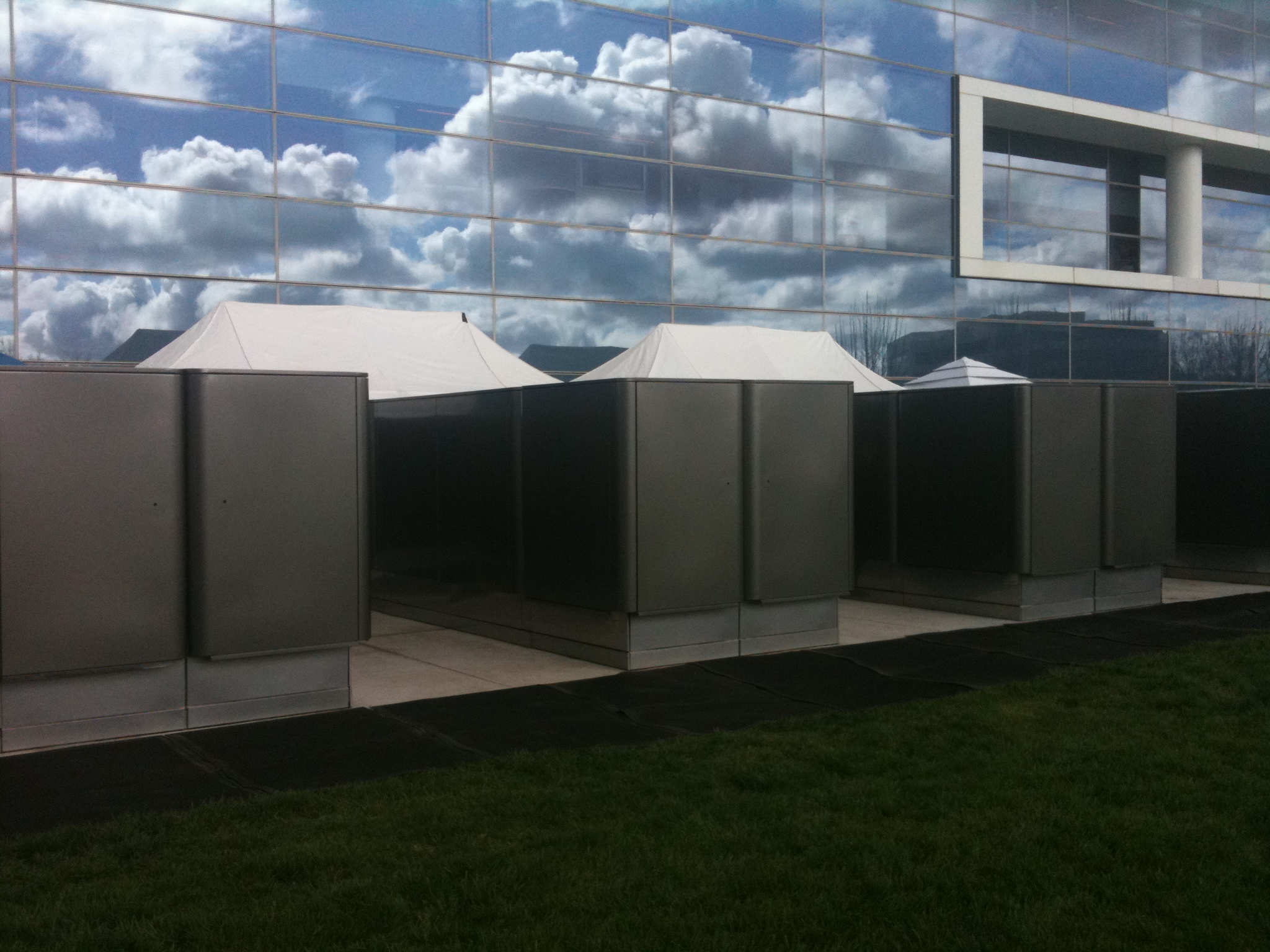
“We got into this business to make affordable electricity, not fuel cells,” Mr. Sridhar said Tuesday as workers assembled stacks of fuel cells in tall, round cylinders and installed them in silver metal cubes at Bloom’s headquarters in a Silicon Valley office park.

The company has been working on the technology for eight years while saying little. The secrecy, and the prominence of the venture capitalists backing Bloom, have fueled both hype and skepticism about its efforts. Bloom is scheduled to unveil the technology Wednesday at a news conference attended by Gov. Arnold Schwarzenegger of California and Colin Powell, the former secretary of state and a member of Bloom’s board.

You can read the rest of the story here.

I followed up the piece with an online story in The Times offering a more detailed look at Bloom:

In The New York Times on Wednesday, I wrote about Bloom Energy, the once-secretive Silicon Valley start-up that has apparently made a big breakthrough in developing a fuel cell that can generate electricity at competitive prices while minimizing greenhouse gas emissions.

The company is officially unveiling its Bloom Energy Server at a news conference on Wednesday morning featuring Gov. Arnold Schwarzenegger of California; Colin L. Powell, the former secretary of state and a Bloom board member; and John Doerr, Silicon Valley’s leading green-tech investor. But on Monday and Tuesday, I had the opportunity to spend some time at the start-up’s headquarters in Sunnyvale and to see the Bloom box up close.

In contrast to the usual Silicon Valley practice of announcing a coming product, Bloom spent nearly a decade developing its fuel-cell technology while saying nary a word. Over the past year and a half, it has quietly sold and installed 100-kilowatt Bloom boxes at Google, Bank of America, Wal-Mart and other big companies. The boxes cost $700,000 to $800,000 apiece.

“Silicon Valley is learning some hard and important skills, mainly making stuff again,” said Mr. Doerr, a partner at the venture-capital firm Kleiner Perkins Caufield & Byers and a Bloom Energy board member.

Making stuff, particularly solid-oxide fuel cells, is very hard work. Such fuel cells have been something of a holy grail as they can operate at extremely high temperatures to maximize efficiency and can use a variety of fuels, like natural gas and biogas. Since the heat allows the fuel to be directly transformed into electricity through an electrochemical process, the expensive precious metals and rare-earth elements used in other fuel cells to act as catalysts could theoretically be eliminated.

But finding cheap common materials as substitutes and ensuring fuel cells don’t crack and leak under such conditions have stymied scientists for more than 30 years.

So how did Bloom crack the fuel-cell conundrum?

You can read the rest of the story here.

Read Full Post »

In The New York Times on Wednesday, I write about a survey of U.S. utility industry executives and insiders conducted by Black & Veatch:

American utility industry executives see nuclear energy as the most promising carbon-free power source, are skeptical of climate change science, and are uncertain about the future, according to a report to be issued Thursday by Black & Veatch, the engineering and consulting giant.

The survey of 329 executives, managers and engineers, which Black & Veatch shared with The New York Times, comes as the utility industry faces slow growth in energy consumption and a two-year fall in capital spending, the first such decline since the Great Depression.

“The industry is facing a lot of demands to spend more money to fix up an aging infrastructure, build smart grids and deal with cyber security while cutting carbon emissions,” said Bill Kemp, a Black & Veatch vice president, in an interview. “In the near term, we’ll have a difficult economic environment and a slow sales growth as regulators are reluctant to push through large rate increases while voters are still in pain.”

The stalled emissions trading legislation in Congress has added to the confusion about the future shape of the electricity market, Black & Veatch found. Despite a high-profile campaign by some utility executives to support an emissions trading market, more than 70 percent of the industry insiders surveyed oppose the current legislation and 52 percent said the United States cannot afford the proposal to cap greenhouse gas emissions.

More than 75 percent think there is a future for coal-fired power plants.

In fact, 44 percent of those surveyed don’t believe global warming is caused by human activity, according to the report, while 7 percent don’t believe the planet is warming.

“Utility respondents generally appear to be less certain of the threat of global warming than the general public and scientific community, as well as many political and policy leaders,” the report’s authors wrote.

“Utility professionals also seem to be quite disturbed about the direction of the global warming movement,” they added, “and the likelihood that their organizations will be facing what many of them seem to view as draconian changes in the short term.”

You can read the rest of the story here.

Read Full Post »

photo: Ausra

The week kicked off with French nuclear energy giant Areva’s acquisition of Silicon Valley solar company Ausra. As I wrote Monday in the Los Angeles Times:

French nuclear energy giant Areva has jumped into the U.S. renewable energy market with the acquisition of Ausra, a Silicon Valley solar power plant startup backed by high-profile venture capitalists.
Terms of the deal were not disclosed, but in an interview on Monday, Areva executive Anil Srivastava said that the price the company paid for Ausra was in line with the $418 million that rival Siemens spent last year to acquire Solel, an Israel solar power plant builder.

That would be a decent payday for Ausra’s investors, which include marquee Silicon Valley venture capital firms Kleiner Perkins Caufield & Byers and Khosla Ventures.

“The current shareholders are very well-reputed venture capitalists and I can assure you they negotiated very well,” said Srivastava, the chief executive of Areva’s renewable energy division.

You read the rest of the story here.

And the week is ending with Thursday’s announcement of another Silicon Valley-European deal. This time, as I write in The New York Times, California’s SunPower is acquiring a European solar developer:

SunPower, a leading Silicon Valley solar company, said on Thursday that it has agreed to acquire SunRay Renewable Energy, a European photovoltaic power plant builder, in a $277 million deal.

The acquisition follows Monday’s purchase of Ausra, another Silicon Valley solar technology company, by Areva, the French nuclear energy giant in a deal that an Areva executive valued at around $400 million.

SunPower has previously supplied solar panels to SunRay, which has a pipeline of projects in Europe and Israel that totals 1,200 megawatts. SunRay, which is headquartered in Malta, is owned by its management and Denham Capital.

You can read the rest of that story here.

Read Full Post »

Photo: Golub Corporation

In The New York Times on Wednesday, I write about a New York grocery store chain that has installed a low-emission fuel cell to power one of its supermarkets:

A supermarket in Albany is among the first grocery stores in the country to install a fuel cell to supply cleaner, greener electricity along with heat and hot water.

Fuel cells reform natural gas to produce hydrogen that’s combined with oxygen to generate electricity, heat and water. The process produces a fraction of the carbon dioxide and other pollutants emitted by power plants.

The Price Chopper store in Albany, owned by the Golub Corporation, is using a 400-kilowatt PureCell fuel cell made by U.T.C. Power, a division of United Technologies.

The fuel cell provides most of the electricity for the 69,000-square-foot supermarket, and in the event of a blackout it can operate off the grid to keep the lights on.

Benny Smith, vice president of facilities for Golub, said the company began investigating fuel cells in 2007 when electricity prices spiked in the Northeast, where it operates 120 Price Chopper stores.

“You have to plan your own destiny,” said Mr. Smith. “After meeting with the U.T.C. folks, we decided to go with a fuel cell since a combined heat and power system is more efficient and had a positive cash flow.”

A major consideration, according to Mr. Smith, was the availability of financial incentives from the New York State Energy Research Development Authority. He said the agency gave U.T.C. an $800,000 grant, which the company factored into a lease agreement with Golub.

The fuel cell, which feeds electricity into the power grid, began operating last month. During the winter, it supplies about 90 percent of the store’s electricity and heats the facility. “We’re producing at a much more effective cost due to the combined heat and power,” said Mr. Smith.

You can read the rest of the story here.

Read Full Post »

In The New York Times on Thursday, I write about how California regulators are helping revive a once-thriving solar hot water market:

California regulators on Thursday approved a $350 million program to subsidize the installation of solar water heaters to reduce greenhouse gas emissions.

The program will allocate $250 million for the replacement of hot water heaters fueled by natural gas and $100.8 million for those powered by electricity.

Solar hot water systems typically consist of a storage tank and a rooftop array that collects heat from the sun to warm the water.

Customers of California’s three big investor-owned utilities will receive rebates of up to $1,500, or about 30 percent of the cost of replacing a residential natural-gas hot water heater with a solar system. Owners of multi-family commercial buildings are eligible for up to $500,000 in incentives.

The California Public Utilities Commission reserved 60 percent of the funds to install solar hot water systems on those buildings, with the balance going to single-family homes.

Homeowners with electric hot water heaters can receive up to $1,010 to install a solar hot water system and owners of commercial buildings will get up to $250,000. Only about 10 percent of hot water systems in California are electric, according to the utilities commission.

The program’s goal is to replace 585 therms of natural gas -– the equivalent of installing 200,000 solar hot water systems — and 150 megawatts of electricity by 2017. Incentives decrease over the eight-year life of the program.

“Today’s decision will increase consumer confidence and understanding of solar water heating technology and its benefits,” Michael R. Peevey, president of the utilities commission, said in a statement.

You can read the story of the story here.

Read Full Post »

Could we really be as dependent on fossil fuels in 2034 as we are today? In The New York TImes on Friday, I write about a projection from energy consultants Black & Veatch that sees fossil fuels continuing to play a dominant role in the United States a quarter century from now:

A quarter century from now the United States’ reliance on fossil fuels will have declined only marginally, according to a projection from Black & Veatch, the engineering and energy consulting firm.

In 2034, a mix of coal, natural gas and other fossil fuels will supply 68 percent of the nation’s energy needs, compared to 76 percent today. The share of energy production from renewable sources, including solar and wind, in 2034 will rise to 13 percent from 5 percent. Nuclear power will supply only 2 percent more electricity than it does in 2010, the firm said.

Those numbers were part of a presentation that Black & Veatch made to utility executives and other clients in Sacramento this week and which Mark Griffith, a managing director at the company, shared with The Times.

“We’re not assuming that greenhouse gas legislation leads to a immediate shutdown of all coal plants, nor does it lead to going directly to natural gas or renewables,” said Mr. Griffith.

However, Mr. Griffith acknowledged that a number of factors remain in flux that could change those dynamics, including the final shape of a cap-and-trade system – if one is implemented – and whether the United States imposes a requirement that all states obtain a percentage of their electricity from renewable sources.

You can read the rest of the story here.

Read Full Post »

In The New York Times on Thursday, I write about a report from Bloomberg New Energy Finance that shows China has become the dominant solar module supplier in the huge California market:

China’s rise as a major solar module maker has been meteoric, but perhaps nowhere has its ascension been faster than in California, the United States’ largest solar market.

The Chinese company Yingli Solar has captured 27 percent of California’s solar market, according to a preliminary report.
Over the last three years, China’s share of the California market, in terms of supplied megawatts, has risen to 46 percent, from 2 percent, according to a preliminary report by Bloomberg New Energy Finance, a research and consulting firm.

At the same time, the share supplied in California by American companies has declined to 16 percent, from 43 percent.

“The ascendancy of Chinese manufacturers would be noteworthy regardless of market conditions, but is particularly telling in a time when purse-strings are still tight,” the report said.

At the beginning of 2009, Chinese solar companies supplied 21 percent of the market; by year’s end their stake had more than doubled.

You can read the rest of the story here.

Read Full Post »

« Newer Posts - Older Posts »

Design a site like this with WordPress.com
Get started