Feeds:
Posts
Comments

Posts Tagged ‘IBM’

img_1296_2

photo: Todd Woody

IBM on Tuesday said it has signed  a deal to help build a smart grid for utility EnergyAustralia. Some 12,000 sensors will be installed on the Australian utility’s transmission network around Sydney to monitor electricity distribution and detect outages and other problems. It’s IBM’s largest smart grid project of its type to date.

Big Blue will build the software systems to integrate the sensor data into the operations of EnergyAustralia, which runs the country’s biggest electricity distribution network. In dollar terms, the deal is small – just A$3.2 million (U.S. $2.2 million) – but significant in showing the viability of transforming analog electricity distribution systems into an intelligent network, according to Michael Valocchi, an executive with IBM’s (IBM) global energy and utilities unit.

“The electricity distribution operator will have a real-time view of the network and will be able to pinpoint outages quickly and reduce their length,” Valocchi told Green Wombat. “What I really like about this deal is that it starts to show and harden the message that smart grid is much more than automated metering. As you see more distributed energy and renewable energy out there, this type of sensor and this type of intelligence on the grid will help manage that.”

The sensors will be placed mainly at EnergyAustralia’s substations and around transformers, Valocchi says.

IBM had previously rolled out a smaller version of the smart grid system in Denmark. And in February the tech giant announced a deal to build a smart utility and water system for the Mediterranean island nation of Malta.  While overseas utilities have been quicker to smarten up their analog power grids, Valocchi says the United States should not be far beyond, especially as federal stimulus money for smart grids begins to flow.

Read Full Post »

487207673_hpim1983

photo: IBM

IBM on Friday unveiled a series of  “smart water” services to deploy sensor networks and data-crunching software to help environmental officials better manage an increasingly scarce commodity.

“What we got back from people who monitor water systems is that they had a huge amount of data, that they were often entering the data by hand, and that they didn’t have time to analyze the data,” says Sharon Nunes, vice president for Big Green Innovations at IBM. “What we’re trying to to do is build more intelligence into their water systems.”

Here’s how it works in a nutshell: Sensors are scattered throughout a water district’s infrastructure – from reservoirs to the pipes that deliver H20 to homes – and gather information on water quality, leakage and other conditions. IBM (IBM) software analyzes that data and organizes it on a computer dashboard so water managers can at a glance detect problems and balance supply and demand.

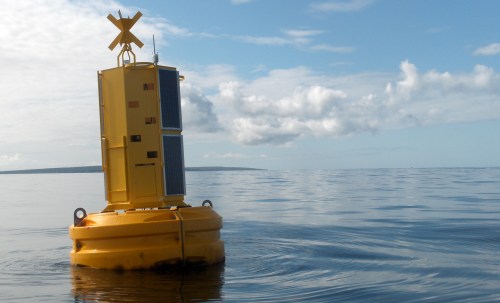
A demonstration of the IBM technology and its reach is underway in Ireland’s Galway Bay. Working with Marine Institute Ireland, IBM’s SmartBay project has equipped several hundred buoys like the one in the photo above with sensors that are networked through wireless links. The sensors measure such things as water temperature, salinity and oxygen content. Nunes said some sensors measure wave height to determine the best locales for wave energy production while another experimental intelligent sensor detects phosphates and then essentially does a science experiment in a box to determine whether the data is of sufficient quality to beam back to the home base.

The project also uses fishermen as “nodes on the network,” allowing them to text-message reports of floating debris on the bay. SmartBay crunches that data and sends back a map showing the likely position of flotsam over the next 24 hours so boats can avoid collisions.

Nunes says all this data – presented on a computer dashboard – allows the Galway harbor master to get a quick snapshot of the the bay’s health and potential navigation hazards so decisions can be made quickly – like whether to close the beaches because of a spike in pollution.

She estimates the potential market for smart water technology to be between $15 billion and $20 billion. The $64,000 question, though, is whether IBM’s likely customers – cash-strapped municipalities and state and local governments – can afford to get smart.

The answer, Nunes says, is that federal stimulus package money is available for water projects while other countries like China have set aside cash – $53 billion in China’s case – for water quality projects.

Read Full Post »

ibm-smarter-planet1

The ecobiz buzz these days is all about greening the grid, what with tens of billions of dollars in the stimulus bill for transforming the electricity system into a digitalized, interactive version of the Internet. Just on Wednesday, the European island nation of Malta announced a $91 million deal with IBM to not only create a smart power grid but to smarten up its water system as well.

Water, in fact, is likely to emerge in coming years as big an opportunity as electricity for tech companies. Just as climate change is driving efforts to add intelligence to the power grid to more efficiently manage electricity usage and new sources of renewable energy, a warming world is making water an even scarcer resource.

“How do you look at the ecosystem of water and make it a smart grid?” asks Drew Clark, director of strategy for IBM’s Venture Capital Group.  “It really makes a lot of sense if you think about it. It’s a scarce commodity, just like electrons —  it’s more scarce, in fact. It needs to be kept secure, it needs to be kept safe, it very often is abundant except when you need it a certain time and in a certain place.”

Clark’s job is to find companies – startups usually – with technology IBM (IBM) can tap for business units like its Global Energy & Utilities Industry. These days that means companies that develop sensor networks and other technologies that can be deployed across smart grids as part of IBM’s Smarter Planet initiative to essentially create a physical version of the Internet for the natural and man-made worlds – water systems, transportation, agriculture.

That, of course, would generate untold terabytes of data that would need to be crunched, mined and analyzed, spurring demand for the type of software and Big Iron computing that is IBM’s forté.

“We look at taking otherwise less-smart systems and essentially instrument them with these sensors and make them intelligent,” Clark told Green Wombat at IBM’s San Francisco offices. “Every one of these smart grids are based on some collection, in some cases millions, of smart sensors that are sensing some characteristic. IBM looks at it and says this is an information management problem. How do we take the information from all these devices and sensors and bring it together in a way to make sense out of it, business sense out of it.”

Take water. In California, for instance, a three-year drought has put water districts under pressure to cut their customers’ consumption while conserving every drop possible. Many districts still rely on dispatching workers in trucks to check on water quality and water levels and check for pipeline leaks and breaks.

IBM is designing systems to automate that process by placing small sensors in reservoirs and along pipelines right up to homes and businesses. “These sensors are wireless and form a mesh network,” Clark says. “This one talks to this one that bridges to this one that bridges to another and every so often there is an access point that is able to gather up all the information.”

Big Blue analyzes that data and displays it on a computer dashboard that allows water managers to monitor their systems and head off problems like leaks or contamination. For example, General Electric (GE), Clark says, makes a sensor the size of a half-dollar that can detect multiple environmental conditions.

IBM has pilot projects underway with some water districts but faces a business challenge: Those public agencies typically are underfunded and don’t have millions of dollars on hand to roll out smart water systems. Money is usually not so much of a problem for Big Agriculture and Clark says IBM’s early customers are corporate farming giants like Archer Daniels Midland (an ADM spokesman points out that the company is a crop processor, not a farmer) that want sensor networks to better manage everything from irrigation systems to soil conditions.

Clark expects that after energy, water will be next up on the legislative agenda. IBM, along with other tech giants, appears to have the ear of the Obama administration. IBM chief executive Sam Palmisano joined the CEOs of Google (GOOG), Applied Materials (AMAT) and other tech companies last week in a meeting with President Barack Obama about investment in green technology.

Read Full Post »

malta-smart-grid

Photo: Visit Malta

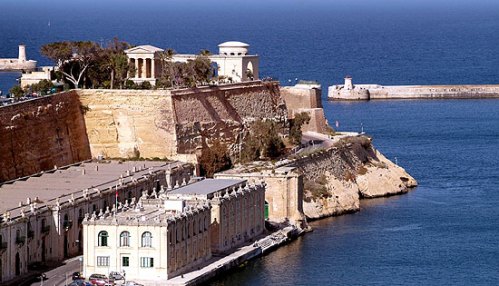
The Mediterranean island nation of Malta on Wednesday unveiled a deal with IBM to build a “smart utility” system that will digitize the country’s electricity grid and water system.

Granted, Malta is a microstate with a population of 403,500 (smaller than Sacramento; bigger than Iceland). But the world — and utility infrastructure giants like General Electric (GE) — will be watching closely. Not only is Malta the first country to green its national grid but it will also serve as a test case for whether integrating so-called smart technologies into both electricity and water systems can help mitigate the increasing deleterious effects of global warming on the island.

As with other island states, power and water are intricately linked on Malta. All of the archipelago’s electricity is generated from imported fuel oil while the country depends on energy-intensive desalinization plants for half its water supply. Meanwhile, rising sea levels threaten its underground freshwater supplies.

“About 55% of the cost of water on Malta is related to electricity – it’s a pretty staggering amount,” Guido Bartels, general manager of IBM’s Global Energy & Utilities Industry division, told Green Wombat from Malta on Tuesday.

So how can digitizing the grid help? IBM (IBM) and its partners will replace Malta’s 250,000 utility meters with interactive versions that will allow Malta’s electric utility, Enemalta, to monitor electricity use in real-time and set variable rates that reward customers that cut their power consumption.  As part of the $91 million (€70 million) project, a sensor network will be deployed on the grid  –  along transmission lines, substations and other infrastructure – to provide information that will let the utility more efficiently manage electricity distribution and detect potential problems. IBM will provide the software that will aggregate and analyze all that data so Enemalta can identify opportunities to reduce costs – and emissions from Malta’s carbon-intensive power plants. (For an excellent primer on smart grids, see Earth2Tech editor Katie Fehrenbacher’s recent story.)

A sensor network will also be installed on the water system for Malta’s Water Services Corporation. “They’ll indicate where there is water leakage and provide better information about the water network,” says Robert Aguilera, IBM’s lead executive for the Malta project, which is set to be completed in 2012. “The information that will be collected by the system will allow the government to make decisions on how to save money on water and electricity consumption.”

Cutting the volume of water that must be desalinated would, of course, reduce electricity use in the 122-square-mile (316-square-kilometer) nation.

With the U.S. Congress debating an economic stimulus package that includes tens of billions of dollars for greening the power grid, IBM sees smart grid-related technologies as a $126 billion market opportunity in 2009. That’s because what’s happening in Malta today will likely be the future elsewhere – no country is an island when it comes to climate change. Rising electricity prices and water shortages are afflicting regions stretching from Australia to Africa to California.

IBM spokeswoman Emily Horn says Big Blue has not yet publicly identified which companies will be providing the smart meters, software and other services for the Malta grid project.

Malta’s greenhouse gas emissions are expected to rise 62% above 1990 levels by 2012, according to the European Environment Agency, and as a member of the European Union the country will be under pressure to cut its carbon. A smart energy grid will help but Malta, like Hawaii and other island states, will have to start replacing carbon-intensive fuel oil with renewable energy.

The island could present opportunities for other types of smart networks. According to the Maltese government, Malta has the second-highest concentration of cars in the world, with 660 vehicles per square kilometer. That also contributes to the country’s dependence on imported oil and its greenhouse gas emissions.

Given that Silicon Valley company Better Place has described islands as the ideal location to install its electric car charging infrastructure, perhaps CEO Shai Agassi should be looking at adding Malta to the list of countries that have signed deals with the startup.

Read Full Post »

When Intel announced this week that it was spinning off a stealth in-house startup called SpectraWatt to develop solar cells, it appeared the chip giant was just the latest old-line Silicon Valley tech firm bitten by the green bug.

After all, crosstown chipmaker Cypress Semiconductor jumped into the solar game back in 2004 when it acquired SunPower (SPWR), now a leading manufacturer of solar cells and panels and an installer of large-scale solar arrays. Then the world’s biggest chip-equipment maker, Applied Materials (AMAT), retooled machines that make flat-screen video displays to produce thin-film solar panels. And just this month, Hewlett-Packard (HPQ) unveiled a deal to license solar technology to a solar cell startup while IBM (IBM) announced it would develop thin-film solar.

But it’s not just now jumping on the enviro-biz bandwagon – Intel’s solar efforts have been quietly under development since 2004. That’s when Andrew Wilson, an 11-year Intel (INTC) veteran, was chatting with a colleague while waiting for a conference call to begin. “We were shooting the breeze and I mentioned that I had replaced all the light bulbs in my house with compact fluorescent lights and my utility bill had come down by a third,” says Wilson, SpectraWatt’s CEO. “And he said, `Hey, did you know that solar cells are made of silicon?’ ”

“We started talking about what a business plan would look like, because if something is made out of silicon then Intel should be taking advantage of that market,” Wilson told Fortune. A year later, Wilson and his colleagues had developed a marketing plan and secured funding from Intel’s new-business incubator to develop a business strategy and hone its technology. (It’s no coincidence that the nascent solar industry is populated by computer industry veterans from companies that put the silicon in Silicon Valley.)

When it comes to cutting-edge solar technology, silicon-based cells are considered a bit old-school. Silicon is currently in short supply and the resulting high prices have led venture capitalists to invest hundreds of millions of dollars in thin-film solar startups that promise to dramatically lower the cost of solar by printing or otherwise applying non-silicon solar cells to glass or flexible materials that can be integrated into walls, windows and other building materials. While thin-film solar is less efficient at converting sunlight into electricity, the expectation is that it can be produced much more cheaply than conventional cells.

But thin-film solar is still largely an early-stage technology and silicon-based cells will continue to be the big market for the near-future. So the question is, how does Intel compete with established players like SunPower, China’s Suntech (STP) and Germany’s Q-Cells as solar cells become a commodity? Intel controls some 80 to 90 percent of the worldwide chip market but it’s unlikely that it – or any other player – will replicate that experience in solar cells.

Wilson’s view is that it’s early days for the solar market and that SpectraWatt’s ace in the hole is Intel’s global manufacturing experience and history of technological innovation. “The solar industry today looks like the microelectronics industry in the late ‘70s – there’s very few standards and no one is manufacturing at scale,” says Wilson. “It’s all about manufacturing processes and material sciences that will lead to fundamental breakthroughs. The product is vastly simpler than a microprocessor but the fundamental nature of a solar cell isn’t all that different. When you think of what it takes to manufacture globally and manage supply chains, that’s Intel’s core competence.”

There certainly is room for more players, given that solar was a $30 billion market in 2007 and is expected to continue to grow at a clip of 30 to 40 percent in the coming years.

Wilson says SpectraWatt has secured silicon supplies and is developing technology that will give it a competitive edge. He’s keeping mum about the details of that technology for now. “We do believe we will have a technological advantage when we get what we’re doing in the lab to manufacturing,” Wilson says.

The company is set to begin building its manufacturing facility in Oregon later this year, with production to begin in mid-2009.

SpectraWatt launches with a $50 million investment lead by Intel Capital, the company’s investing arm. Other investors include Goldman Sachs (GS), PCG Clean Energy and Technology Fund, and German solar giant Solon. (As Green Wombat has written, Solon has invested in an array of solar startups in the United States, including Sungevity and thin-film solar company Global Solar.)

Read Full Post »

« Newer Posts

Design a site like this with WordPress.com
Get started