Feeds:
Posts
Comments

I wrote this story for Grist, where it first appeared on November 30, 2010.

A day after Energy Secretary Steven Chu’s “Sputnik speech,” in which he warned that China was investing billions in renewable energy while American politicians bickered over small-potatoes stimulus spending on green technology, a report from Ernst & Young released Tuesday confirmed Asia’s ascendancy.

“A new world is emerging in the clean energy sector with China now the clear leader in the global renewables market,” the report’s authors wrote.

Ernst & Young publishes a quarterly “country attractiveness” index for investors that ranks nations’ renewable energy policies, renewable energy markets, and other factors.

China took first place — again — ousting the U.S. from the spot it had occupied between 2006 and 2010.

“China’s record spending on its wind industry this quarter represented nearly half of all funds invested in new wind projects around the world,” the report states. “Figures released for the second quarter of 2010 showed that China invested around $10 billion in wind out of a global total of $20.5 billion.”

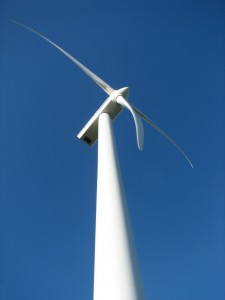
Half the wind turbines that will come online this year worldwide will have been made in China, according to the report.

“Since reaching top spot in our index in September, China has opened up a healthy gap from other markets,” Ben Warren, an Ernst & Young executive, said in a statement. “Cleantech, including renewable energy, represents a significant part of the country’s future economic growth plans.

“The level of wind energy being deployed in China shows what can be achieved with a carefully planned energy and industrial policy that elevates cleantech to a national strategic level,” he added. “The Chinese solar industry is also fast becoming of great importance in the global marketplace.”

And China clearly has its eye on the U.S. market. As I wrote last week, one of China’s largest solar companies has formed a joint venture with California startup SolarReserve to build photovoltaic power plants in the desert Southwest.

And it’s not just China the U.S. has to worry about in the green energy race. According to Ernst & Young, South Korea, Romania, Egypt, and Mexico are rising fast as their governments devote more resources to renewable energy.
I wrote this story for Reuters, where it first appeared on November 30, 2010.

With NRG Energy’s announcement on Tuesday that it will invest $450 million investment in a California photovoltaic project, the New Jersey-based power provider has pledged a total of $750 million for big solar plants in the past two months.

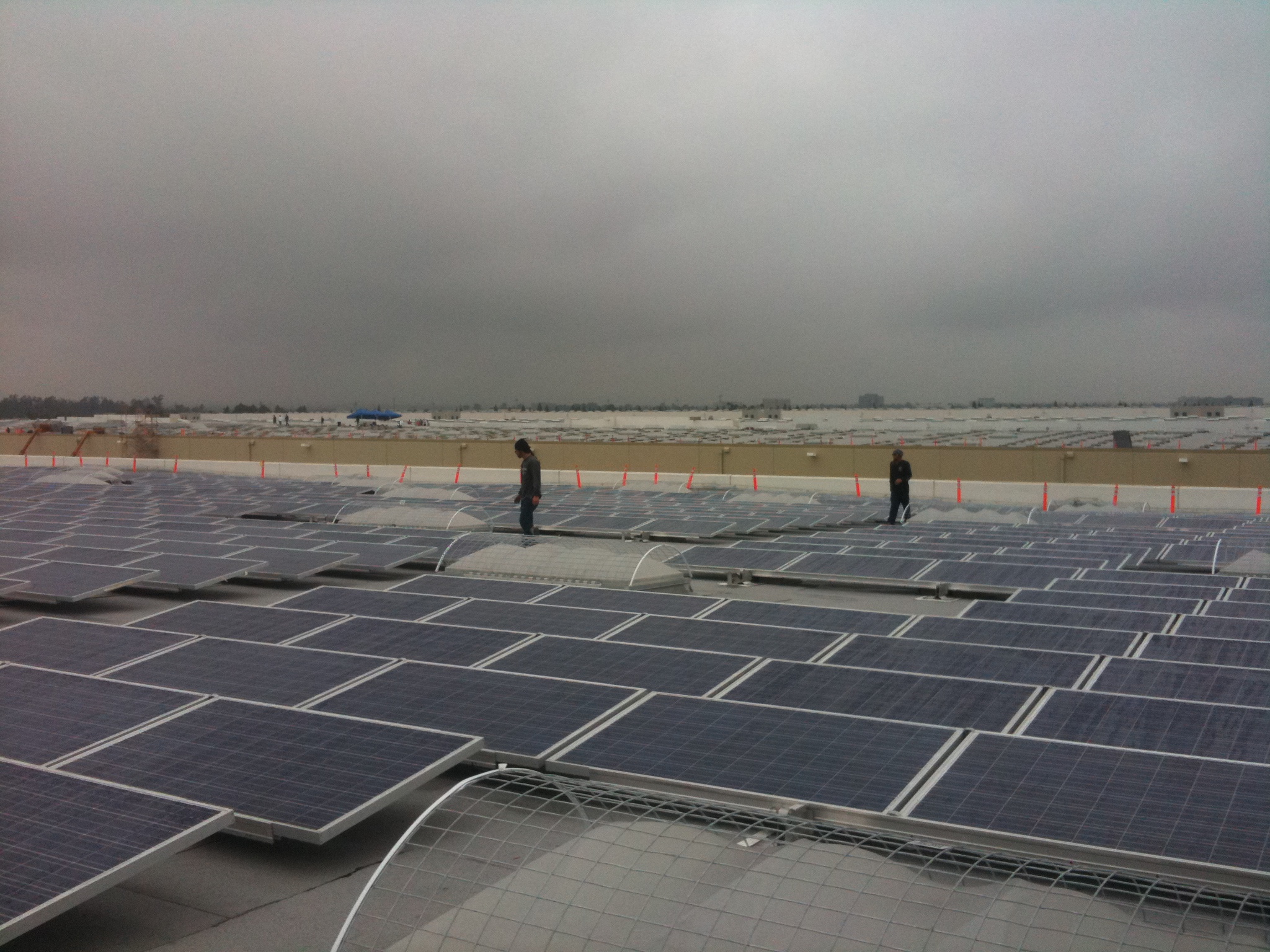
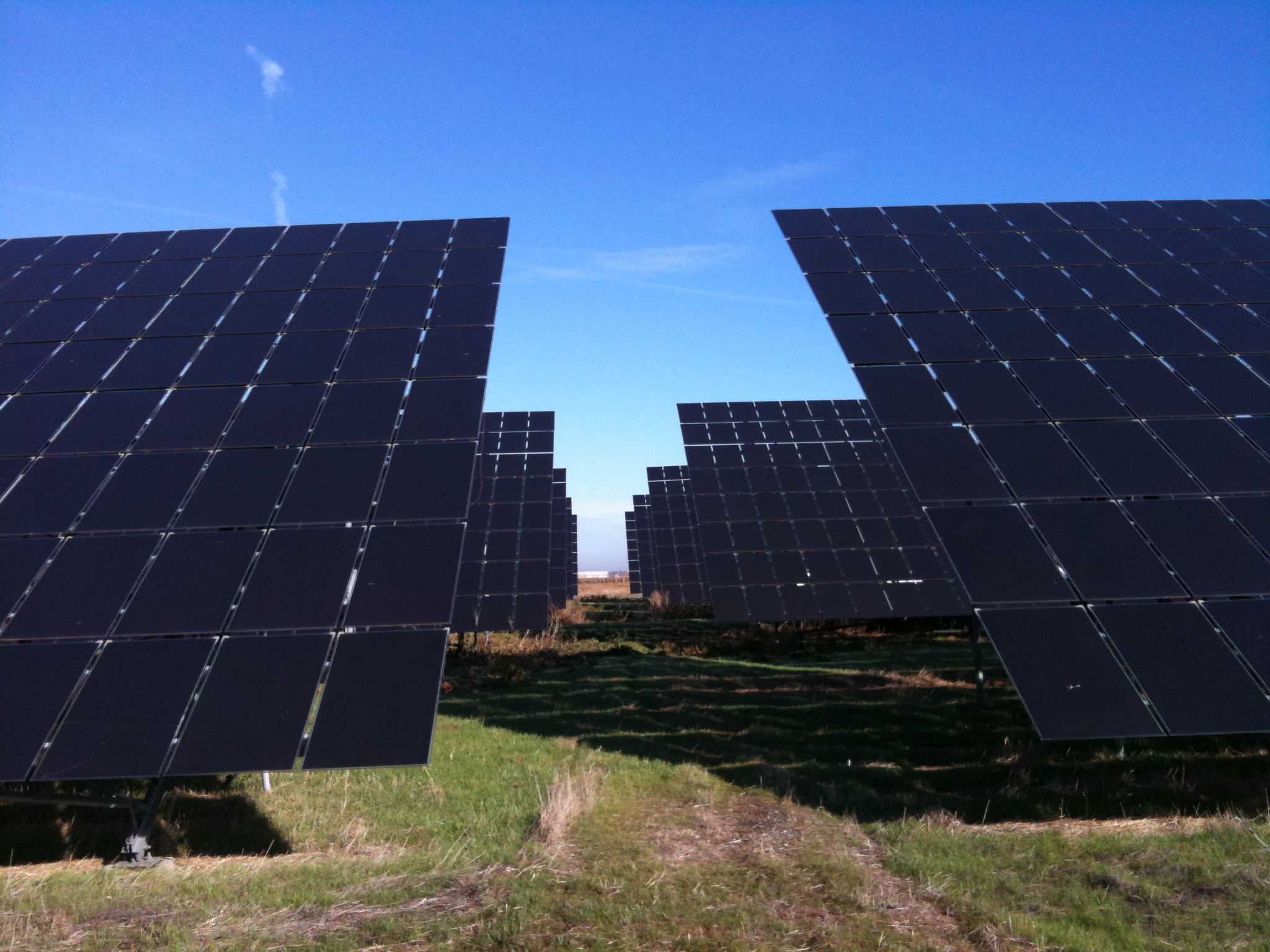
A new report from GTM Research indicates why NRG sees such sunny prospects for the solar business. According to the researchers, utilities in the United States already have signed contracts for 5,400 megawatts’ worth of photovoltaic power plants that will be built by 2014 with another 10,100 megawatts in negotiation.

The U.S. utility-scale photovoltaic market is expected to grow from $1 billion in 2010 to $8 billion by 2015, the report said.

“The global PV industry is increasingly turning its attention toward the U.S. utility PV market as a driver of global demand over the next five years,” the report’s authors wrote. “Indeed, conditions appear right to support massive growth.”

That growth is being driven by a 50 percent fall in the price of photovoltaic modules since 2009 as well as state mandates that require utilities to obtain a certain percentage of their electricity from renewable sources.

The price of natural gas, though, will play a critical role in the competitiveness of solar power plants.

While solar farms can produce electricity at near-competitive rates with natural gas-fired power plants during peak demand in some states, the plunge in natural gas prices in recent years has put more pressure on photovoltaic developers to lower costs.

“From the perspective of the U.S. utility PV market, the importance of being within competitive range of a natural gas project is nearly as valuable as becoming cheaper, the report said. “In order for the U.S. utility market to take off, the key argument to be made by developers to utilities, and by utilities to their regulators, is that PV can deliver power at a competitive rate with other peaking facilities.”

No surprise that the largest solar market remains in California, where the state’s three big investor-owned utilities hold contracts for 78 percent of the nation’s 5,400 megawatt pipeline of projects.

But there is one dark cloud that threatens to rain on this photovoltaic parade: Project financing.

As part of the federal stimulus package, the government offered renewable energy developers the option of taking cash grants to cover 30 percent of a project’s costs in lieu of an existing investment tax credit. With the cash grant program expiring at year’s end, developers will have to turn to so-called tax equity investors who take the investment tax credit in exchange for cash to finance power plant construction.

You can read the rest of the story here.

I wrote this story for Reuters, where it first appeared on November 30, 2010.

A subsidiary of NRG Energy on Tuesday said it will invest up to $450 million in a 250-megawatt photovoltaic power plant to be built by Silicon Valley’s SunPower on the central California coast.

The New Jersey-based power provider, which operates a fleet of fossil fuel and nuclear plants, has emerged as significant investor in solar projects.

In October, NRG agreed to invest $300 million in BrightSource Energy’s 370-megawatt Ivanpah solar thermal power plant now under construction in the Mojave Desert in Southern California. The company has also struck a partnership with eSolar, a Pasadena, Calif., startup, to build solar power plants in the desert Southwest. And NRG owns a 20-megawatt photovoltaic farm in Blythe, Calif., and has other solar projects under development in Arizona, California and New Mexico.

In the deal with SunPower, NRG Solar will take ownership of the California Valley Solar Ranch in San Luis Obispo County and responsibility for financing the project. SunPower said on Tuesday that it is seeking a federal loan guarantee to build the solar farm and has received a draft term sheet from the United States Department of Energy.

SunPower, a solar power plant developer and one of the U.S.’ largest manufacturers of photovoltaic modules, will build and operate the San Luis Obispo project. The company, based in San Jose, Calif., has a 25-year contract to sell the electricity generated by California Valley Solar Ranch to utility PG&E. Construction is set to begin next year and when the project is completed in 2013 it will produce enough electricity to power about 100,000 homes, according to the company.

You can read the rest of the story here.

I wrote this story for Reuters, where it first appeared on November 29, 2010.

Environmentalists have long used Google Earth to keep tabs on mountaintop mining and to monitor deforestation of the Amazon rainforest. Now with the release Monday of the latest version of Google’s virtual world maps, they’ll be able to literally see the trees in the forest  — in 3D.

Among other new features, Google Earth 6 has initially mapped more than 80 million trees in seven cities, from olive groves in Athens to the flowering dogwoods of Tokyo. Viewers can also fly through a section of the Amazon rainforest in Brazil.

“Google wants to create a more accurate and real model of the world and we want to make sure we’re adding in more information to make the planet more alive and more complete,” Peter Birch, product manager for Google Earth, said in an interview. “Trees provide context wherever you go and this allows you to tell the story of forestlands.”

Birch said Google is working with environmental groups, indigenous peoples and government in Africa, Mexico and South America to use the 3D Trees feature in reforestation and conservation projects.

“We’re modeling the saplings they’re planting as well as areas of mature trees, so people can fly around and get idea of what the forest looks like,” he said.

In Mexico, Google is collaborating with CONABIO, the country’s National Commission for the Knowledge and Use of Biodiversity, to map coastal mangrove forests. Brazil’s Surui people are using Google Earth 6 to map trees significant to the tribe. And in Kenya, the Greenbelt Movement will model five forest restoration projects with the Google software.

Google Earth 6 will initially include 50 tree species and map parks and urban areas of Athens, Berlin, Chicago, New York City, San Francisco, Tokyo and the University of California campus in Davis, Calif.

You can read the rest of the story here.

I wrote this story for Reuters, where it first appeared on November 26, 2010.

In an effort that could help avoid conflicts between wind energy developers and environmentalists, the United States Department of the Interior this week released a map that identifies breeding densities of the imperiled sage-grouse in 11 Western states.

The chicken-sized bird with a white breast and a plumage of brown, black and white feathers is dependent on a sage-brush habitat that also is favored by developers of wind farms in high-wind areas of the Western United States.

“This map and initiative will help advance our collaborative efforts with states and stakeholders to develop smart policy to enhance the sustainability of our sage-grouse populations,” Interior Secretary Ken Salazar said in a statement.  “The final map will give Interior a strong foundation to identify land uses that do not compromise areas that are so critical to the greater sage-grouse.”

Development of all kinds has taken a toll on the ground-dwelling sage-grouse and environmental groups petitioned the federal government to put the bird on the endangered species list. In March, the U.S. Fish and Wildlife Service concluded that protection of the sage-grouse was warranted but that the bird would not be listed due to the need to protect other species first.

You can read the rest of the story here.

I wrote this story for Reuters, where it first appeared on November 29, 2010.

Upping the ante in the greener-than-thou sweepstakes, San Francisco is building what would be the nation’s first LEED Gold-certified airport terminal.

LEED — Leadership in Energy and Environmental Design – is a program run by the United States Green Building Council that awards certification to buildings that meet criteria for sustainability, energy efficiency, water use and other factors.

The revamped Terminal 2 at San Francisco International Airport, which will be home to Virgin America when it opens next spring, is designed to cut energy use by 20 percent and will feature a reclaimed water system.

Ninety percent of the debris from the demolition of the old terminal is being recycled, according to the airport.

Hybrid car drivers will get preferential parking (though passengers can take the train to and from the airport) and the terminal will offer “hydration stations” so people can refill their reusable water bottles once they make it through security.

And fittingly for the birthplace of California cuisine, the terminal’s restaurants will sell locally grown organic food.

You can read the rest of the story here.

I wrote this story for Reuters, where it first appeared on November 24, 2010.

Electricity generation in the United States fell 4.1 percent in 2009, the biggest drop in 60 years, according to a new report from the U.S. Energy Information Administration.

The survey offers a snapshot of the impact the recession had on energy markets and shifts in the power supply as coal costs rose and natural gas prices plummeted. Industrial demand for electricity, for instance, dropped by 9.1 percent in 2009 to the lowest level in 22 years.

Expectations that Congress would pass legislation to impose a cap on greenhouse gas emissions may have also encouraged a move away from carbon-intensive electricity production, the report stated.

Electricity produced from coal-fired power plants fell by 11.6 percent in 2009 from the previous year while generation from natural gas increased by 4.3 percent, according to the report.

“In 2009, annual average natural gas wellhead prices reached their lowest level in seven years,” the report said. “Increased supply due to the availability of shale gas, coupled with mild winter temperatures and higher production, and storage levels, and significant expansions of pipelines capacity also worked to put downward pressure on natural gas prices.”

As Southeastern states switched to natural gas, coal’s share of the nation’s electricity production fell to its lowest level since 1978.

You can read the rest of the story here.

I wrote this story for Grist, where it first appeared on Novembrt 24, 2010.

As it becomes ever more clear that Congress has retreated from climate change legislation faster than a Greenland glacier, cities and states are starting to focus on adapting to the inevitable.

A report released this week by the California Adaptation Advisory Panel laid out the myriad threats climate change poses to the Golden State — as well as strategies to anticipate and prepare for rising sea levels, along with more wildfires, heat waves, and water shortages.

“Failure to anticipate and plan for climate variability and the prospect of extreme weather and related events in land development patterns and in natural resource management could have serious impacts far beyond what has already been experienced,” the report states.

In short, California needs to deploy monitoring technology along its 1,100-mile coastline and overhaul its approach to land use decision-making.

Eight cities and counties across the United States, meanwhile, have joined what is being called the nation’s first climate adaptation effort. The participants are Boston, Cambridge, Mass.,  Flagstaff, Ariz., Tucson, Ariz., Grand Rapids, Mich., Lee County, Fla., Miami-Dade County, Fla., and the San Francisco Bay Conservation and Development Commission.

Created by the ICLEI-Local Governments for Sustainability, a Washington nonprofit, the Climate Resilient Communities program gives the cities and counties planning and database tools to prepare for rising temperatures and sea levels.

“Local governments have a responsibility to protect people, property, and natural resources, and these leading communities wisely recognize that climate change is happening now, and that they must begin planning for impacts that will only become more severe in the coming decades,” Martin Chávez, ICLEI USA’s executive director and a former mayor of Albuquerque, said in a statement.

The idea is to create a standardized municipal planning process to prepare for climate change.

Cities can use the organization’s Adaptation Database and Planning Tool, or ADAPT, to conduct a survey of their vulnerability to climate change and develop and implement a climate preparedness plan.

Just as responsibility for combating global warming has fallen to cities and states in the wake of Congress’ failure to act, so has the duty to get ready for an uncertain future.


I wrote this story for Reuters, where it first appeared on November 23, 2010.

A coalition of environmentalists, national security advocates and budget hawks on Tuesday called for an “oil security fee” and deployment of new transportation technology  to lessen dependence on imported oil and to promote “mobility choice.”

“Oil’s virtual monopoly over transportation fuel coupled with limited economical and convenient alternatives for moving people and goods have made oil a strategic commodity and the lifeblood of the domestic and global economies,” stated a report released by the coalition, called Mobility Choice. “Choice involves both having a range of fuels to power the passenger fleet and having alternative options to driving to accomplish our daily rounds.”

The group called for an “oil security fee” on gasoline and diesel to reflect the true cost of securing oil supplies as well as policies to promote more efficient mass transportation, telecommuting and mixed use residential development.

“We’re not paying the security price of oil at the pump,” Anne Korin, co-director of the Institute for the Analysis of Global Security, a Washington, D.C. non-profit, said during a press conference Tuesday.  “It’s important to internalize that cost with an oil security fee either at the pump or upstream.”

While the odds of Congress passing legislation to impose such a fee may be slim, the group’s advocacy of technological solutions to slash fuel use and promote mass transit may receive a more favorable hearing.

“Information technology has changed the worlds of commerce and leisure, allowing us to contact colleagues and loved ones around the globe nearly instantly,” the report stated. “Yet much of America’s transportation infrastructure is still basically stuck in the 1950s.”

The nation’s 300,000 traffic signals are a case in point.

You can read the rest of the story here.

photo: Todd Woody

I wrote this story for Reuters, where it first appeared:

China’s increasing domination of a rapidly expanding solar module industry is revealed in a report that shows that Chinese companies are expected to account for nearly 72 percent of new photovoltaic manufacturing capacity this year.

For instance, China’s LDK Solar will add the most new capacity in 2010 with 1,420 megawatts coming online, according to iSuppli, an El Segundo, Calif., technology research firm.

Norway’s REC took second place with 1,090 megawatts of manufacturing capacity expected to be added by year’s end.

But Chinese companies held seven of the top 10 positions on iSuppli’s list, representing 6,445 megawatts of manufacturing capacity.

Suntech Power Holdings will add 1,025 megawatts while JA Solar will expand manufacturing by 1,000 megawatts. Yingli Green Energy will add 800 megawatts of capacity by the end of the year while Trina Solar Energy will install an additional 700 megawatts.

“I go to Shanghai every six weeks and the scale of the operations is just jaw dropping, absolutely jaw dropping,” Conrad Burke, chief executive of Innovalight, a Silicon Valley solar company, said in a recent interview.

Innovalight itself abandoned plans to manufacture its own photovoltaic panels in late 2008 and now licenses a patented “silicon ink” to JA Solar and Yingli that boosts the efficiency of their solar modules.

“There’s nothing in California that even comes close to the scale in China,” said Burke.

In fact, earlier this month, Solyndra, a Silicon Valley startup that makes thin-film solar panels, announced it would shutter an existing factory in Fremont, Calif., and delay plans to expand a new manufacturing plant built with a $535 million federal loan guarantee. The company cited competition from low-cost Chinese manufacturers as a major factor in its move to scale back production.

You can read the rest of the story here.

Design a site like this with WordPress.com
Get started