Feeds:
Posts
Comments

kevin-rudd.jpgAustralian voters on Saturday tossed out the decade-old government
of conservative Prime Minster John Howard, installing Labor Party
leader Kevin Rudd (left) as the new PM. Howard was a staunch ally of
the Bush administration on climate change, joining it in refusing to
ratify the Kyoto Accord despite — or because of — Australia’s status
as the planet’s biggest per-capita emitter of greenhouse gases.

Australia is a proverbial canary in the coal mine when it comes to
suffering the consequences of climate change, and Saturday’s election
may foreshadow how environmental issues will play out elsewhere in the
coming years. With the peter-garret-mp.jpgcountry

in the grip of the worst drought on record, global warming — and the
Howard government’s emu-in-the-sand stance that prompted corporate
Australia to push its own climate change agenda — became a hot
campaign topic. The Australian Labor Party’s environment spokesman,
former Midnight Oil front man Peter Garret (right) — a
rock-star-environmentalist-turned-politico — hammered the government
at every turn. Meanwhile, Rudd promised to sign Kyoto, up investment in
green technology and establish a nationwide carbon trading market to
help achieve a 60 percent reduction in greenhouse gas emissions by
2050. Labor also set a target of obtaining 20 percent of this
coal-dependent nation’s electricity from renewable sources by 2020.

Just how much Labor’s climate change policies contributed to its
landslide victory is up for debate, though such was the voters’ wrath
that it appears that even Howard will lose his seat in Parliament, the
first sitting prime minister to do so since 1929. But here’s one
indicator: The Greens scored 20 percent of the votes in some
electorates and will take as many as six seats in the Senate, possibly
giving the environmental party the balance of power in the upper house.
The Greens also contributed to the Labor landslide because under
Australia’s preferential voting system, ballots cast for unsuccessful
Green candidates were re-directed to the ALP.

So with a charismatic greenie like Garrett as Australia’s
presumptive new environment minister, Australia is about to become the
Scandinavia of the South Pacific, right? Not quite. Australia’s current
prosperity owes much to the resource boom under way as China buys up
just about any mineral that can be dug out of the ground. (See my
Fortune colleague Brian O’Keefe’s excellent story on the ire ore gold rush in Western Australia.)

img_3574.jpgGreen
Wombat got a first-hand look at the pressures Rudd will face during a
visit last month to Queensland, the new PM’s home state. Driving
through central Queensland’s coal belt, a never-ending procession of
trains piled high with coal flanked the two-lane highway, running 24/7
between the mines and the port, where China-bound coal ships are
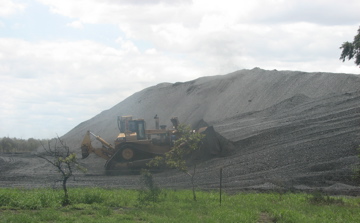
stacked up by the dozens off shore. Bulldozers scaled mountains of coal
piled on the side of the road, scooping the sooty stuff up to be put on
a conveyor belt that straddled the highway to connect to a train depot.
At the Dingo roadhouse, a big color-coded wall map charts central
Queensland’s major coal seams and Shift Miner Magazine is on sale,
chronicling the explosion in coal mining that has turned places like
Rockhampton into boom towns. Riding in from the Rockhampton airport, a
former coal miner-turned-taxi img_3569.jpgdriver
tells me she rues passing up the chance a couple years’ back to buy a
house for $A10,000 in a nearby mining town; such homes now go for
$A300,000. Out on a cattle ranch about 500 kilometers from Rockhampton,
a mining company is drilling for gold but rancher John Dennis tells me
he hopes they find something else. "Black gold," he says. "Coal." (The
biggest corporate takeover attempt now under way Down Under is Aussie
mining giant BHP Billiton (BHP)’s $150 billion offer for rival Rio
Tinto (RTP).)

So no surprise that Rudd wants to spend $A500 million on so-called
clean coal technology to capture and store greenhouse gas emissions
from coal-fired power plants. While sun-drenched Australia has some of
the world’s best solar resource it currently gets about 86 percent of
its electricity from coal-fired power plants. In fact, in recent years,
Australian solar energy companies like Ausra
have relocated to California, frustrated by the government’s lack of
support for renewable energy. But with the new Labor government
pledging to fund a $A150 million Energy Innovation Fund to stop the
brain drain as well as increase the mandatory renewable energy targets,
Australia may be the next frontier for green business.


Green Wombat is moving

Green_wombat_1As you may know, I am now an editor at Fortune and Green Wombat has relocated to the magazine’s site. Please go here to read Green Wombat and sign up for RSS feeds. (Sorry, the RSS feed is not active yet but will be soon.) The email subscription feature is not yet active and until it is I’ll continue to post at the old Green Wombat site as well. Cheers.

next-10-1.pngJust how green is California? Deep green. Very deep green, according to a new California Green Innovation Index compiled by Silicon Valley venture capitalist F. Noel Perry’s non-profit Next 10 foundation.

That might be taken as so much environmental chest-thumping by Golden State partisans, but the report — the product of Next 10 and public-interest consultants Collaborative Economics — offers some persuasive statistics about the role green innovation has played in California’s fortunes.

“The index analyzes key economic and environmental indicators,” writes Perry, “including energy consumption and efficiency, economic growth and carbon emissions, to help us better understand the role green innovation plays in achieving two goals critical to California’s future: 1) reducing the absolute level of the greenhouse gas emissions that cause global warming, and 2) increasing the state’s gross domestic product, which is the basis for our economic vitality ”

The conclusion echoes one repeatedly championed by green tech proponents, from Gov. Arnold Schwarzenegger to Silicon Valley venture capitalists: environmental innovation and economic prosperity go hand in hand.

Here’s some interesting data points from the report:

  • “If California’s annual statewide electricity bill was the same fraction of GDP as Texas…Californians would be paying almost $25 billion more for electricity.”
  • California holds 44% of United States patents in solar technologies and 37% in wind.
  • The Golden State has 36 percent of the U.S.’s green tech venture capital investment.
  • “California utility efficiency programs….reduced the need for 24 power plants between 1975 and 2003….The California Energy Commission estimates that building and appliance standards alone have saved residents and businesses $56 billion through 2003 and are projected to save another $23 billion by 2013.”
  • “More Californians recycle than vote” (More than 50 percent of Californians recycle.)
  • “Per capita CO2 emissions in Texas are double those of California. Per capita emissions levels in California today are slightly lower than they were 15 years ago.”
  • California has about 90 percent of the market for energy-efficient dishwasher and about 50 percent of the market for energy-efficient refrigerators and washing machines

Concludes Next 10: “The growing distance between the trend lines of GDP rising and emissions dropping represent the delinking of GHG emissions from economic growth.”

Next_10_1
Just how green is California? Deep green. Very deep green, according
to a new California Green Innovation Index compiled by Silicon Valley
venture capitalist F. Noel Perry’s non-profit Next 10 foundation.

That might be taken as so much environmental chest-thumping by Golden State partisans, but the report
— the product of Next 10 and public-interest consultants Collaborative
Economics — offers some persuasive statistics about the role green
innovation has played in California’s fortunes.

"The index analyzes key economic and environmental indicators,"
writes Perry, "including energy consumption and efficiency, economic
growth and carbon emissions, to help us better understand the role
green innovation plays in achieving two goals critical to California’s
future: 1) reducing the absolute level of the greenhouse gas emissions
that cause global warming, and 2) increasing the state’s gross domestic
product, which is the basis for our economic vitality "

The conclusion echoes one repeatedly championed by green tech
proponents, from Gov. Arnold Schwarzenegger to Silicon Valley venture
capitalists: environmental innovation and economic prosperity go hand
in hand.

Here’s some interesting data points from the report:

  • "If California’s annual statewide electricity bill was the same
    fraction of GDP as Texas…Californians would be paying almost $25
    billion more for electricity."
  • California holds  44% of United States patents in solar technologies and 37% in wind.
  • The Golden State has 36 percent of the U.S.’s  green tech venture capital investment.
  • "California utility efficiency programs….reduced the need for 24
    power plants between 1975 and 2003….The California Energy Commission
    estimates that building and appliance standards alone have saved
    residents and businesses $56 billion through 2003 and are projected to
    save another $23 billion by 2013."
  • "More Californians recycle than vote" (More than 50 percent of Californians recycle.)
  • "Per capita CO2 emissions in Texas are double those of California.
    Per capita emissions levels in California today are slightly lower than
    they were 15 years ago."
  • California has about 90 percent of the market for energy-efficient
    dishwasher and about 50 percent of the market for energy-efficient
    refrigerators and washing machines

Concludes Next 10: "The growing distance between the trend lines of
GDP rising and emissions dropping represent the delinking of GHG
emissions from economic growth."

berkeley-shoreline.jpgThe devastating San Francisco Bay oil spill brought out thousands of volunteers over the weekend eager to help clean up miles of beaches and shoreline contaminated with toxic bunker fuel and rescue hundreds of petroleum-coated birds. If ever there was a disaster area suited to exploit Internet technology to crowdsource an army of green berets and deploy them where they’re needed most, it’s this Twittering, Google map-mashing epicenter of Web 2.0, right?

Not quite. The masses may be wired but California authorities’ disaster response was strictly 1.0, as Green Wombat discovered when he showed up at a meeting on Saturday called by the state Department of Fish and Game to brief would-be volunteers about the oil spill from the Cosco Busan. The container ship hit the Bay Bridge last Wednesday, dumping 58,000 gallons of heavy oil into the water. A couple hundred people crammed a room at the Richmond Marina in the East Bay, spilling outside into the drizzling rain. As the crowd peppered officials with questions about how they could get to work — a few yards away a dull oily sheen streaked the harbor — DFG representatives patiently explained that volunteers must first receive training before they can be allowed to handle wildlife or clean beaches covered in a hazardous substance.

“We have to get information from you to place you,” said a representative from the DFG’s Office of Spill Prevention and Response as paper forms were handed out for volunteers to fill in. They soon ran out of forms — more than 500 people had shown up at another volunteer meeting held a few hours earlier in San Francisco. Many members of the audience, BlackBerries and Treos in hand, stared in disbelief. Paper? “I’m from Autodesk (ADSK) in Marin and we have 1,500 people that want to get to work on the cleanup,” said one woman. “Can’t you just put up a PDF on your site so we can download it?” Said another volunteer: Can’t we just send you an e-mail?”

To be fair, state officials were overwhelmed by the response from Bay Area residents. (“An oil spill in San Francisco is so different than any other place for one reason: the people,” one DFG official said at the meeting. “People here are passionate about where they live.”) And by Sunday morning, the oil response unit’s site had posted a Yahoo (YHOO) e-mail address (coscobusanspill@yahoo.com) so volunteers could send in their contact details. Still, if you wanted to report sightings of injured wildlife or contaminated shoreline, you had to spend a lot of time hitting redial to try to get through jammed phone lines.

bolinas-lagoon-oil1.jpgThe authorities’ old-media disaster response strategy of relying on newspapers and television to broadcast one-way messages to a population accustomed to Internet interactivity is missing an opportunity to coordinate a faster and better targeted cleanup operation. For instance, as the San Francisco Chronicle reported, residents of the coastal hamlet of Bolinas north of San Francisco were left on their own as they struggled to place a boom across the mouth of the Bolinas Lagoon to keep oil out of the environmentally sensitive Marin County estuary, home to a hundred bird species and a colony of harbor seals.

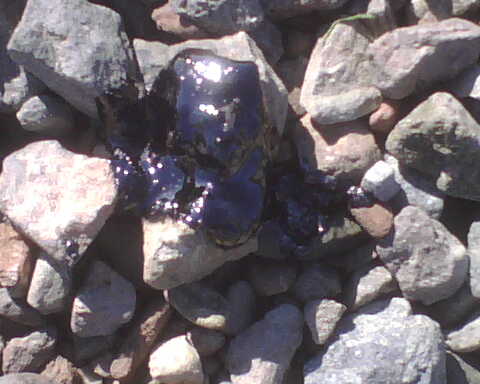
Now imagine if an Internet database of volunteers and their locations was mashed up with a Google (GOOG) map of oil-threatened areas. Would-be volunteers could go online to see where assistance was needed near them or they could be notified by e-mail or text message. Extra bodies and equipment might have helped avoid what Green Wombat found when he and his son visited the eastern shore of Bolinas Lagoon on Sunday: globs of thick purple-black oil dotting the rocks while a dozen endangered California brown pelicans floated off a nearby sandbar where seals bask during low tide. (Photo at right.)

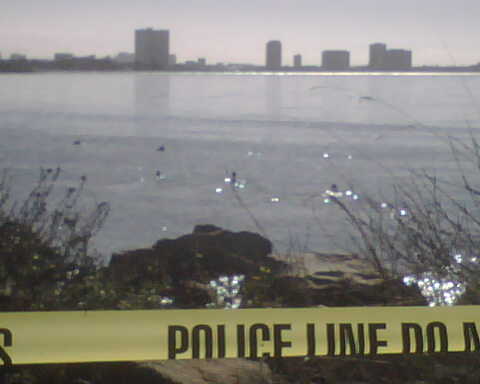
An online map mashup or a wiki page would have also helped wildlife rescuers collect old sheets and towels and other materials needed to clean oil-soaked birds as well as coordinate volunteers to provide support to cleanup crews. As it was, Green Wombat happened to hear a volunteer at the Richmond meeting mention that you could drop off sheets at the Berkeley Marina, where rescued birds were being collected. Stopping by the marina on Sunday, we found another ad hoc group of volunteers helping along the shoreline cordoned off with yellow police tape.

This is not to say creating a Web 2.0 emergency response system would be easy — particularly when it means integrating such an operation with government agencies. But it sounds like an opportunity for some established Internet company or entrepreneur. In the meantime, Bay Area residents, environmental groups and local governments are organizing themselves online, turning to — where else? — Facebook to set up oil spill clearinghouses to exchange information and coordinate haz mat training sessions for volunteers.

Berkeley_shoreline
The devastating San Francisco Bay oil spill brought out thousands of
volunteers over the weekend eager to help clean up miles of beaches and
shoreline contaminated with toxic bunker fuel and rescue hundreds of
petroleum-coated birds. If ever there was a disaster area suited to
exploit Internet technology to crowdsource an army of green berets and
deploy them where they’re needed most, it’s this Twittering, Google
map-mashing epicenter of Web 2.0, right?

Not quite. The masses may be wired but California authorities’
disaster response was strictly 1.0, as Green Wombat discovered when he
showed up at a meeting on Saturday called by the state Department of
Fish and Game to brief would-be volunteers about the oil spill from the
Cosco Busan. The container ship hit the Bay Bridge last Wednesday,
dumping 58,000 gallons of heavy oil into the water. A couple hundred
people crammed a room at the Richmond Marina in the East Bay, spilling
outside into the drizzling rain. As the crowd peppered officials with
questions about how they could get to work — a few yards away a dull
oily sheen streaked the harbor — DFG representatives patiently
explained that volunteers must first receive training before they can
be allowed to handle wildlife or clean beaches covered in a hazardous
substance.

"We have to get information from you to place you," said a
representative from the DFG’s Office of Spill Prevention and Response
as paper forms were handed out for volunteers to fill in. They soon ran
out of forms — more than 500 people had shown up at another volunteer
meeting held a few hours earlier in San Francisco. Many members of the
audience, BlackBerries and Treos in hand, stared in disbelief. Paper?
"I’m from Autodesk (ADSK) in Marin and we have 1,500 people that want
to get to work on the cleanup," said one woman. "Can’t you just put up
a PDF on your site so we can download it?" Said another volunteer:
Can’t we just send you an e-mail?"

To be fair, state officials were overwhelmed by the response from
Bay Area residents. ("An oil spill in San Francisco is so different
than any other place for one reason: the people," one DFG official said
at the meeting. "People here are passionate about where they live.")
And by Sunday morning, the oil response unit’s site
had posted a Yahoo (YHOO) e-mail address (coscobusanspill@yahoo.com) so
volunteers could send in their contact details. Still, if you wanted to
report sightings of injured wildlife or contaminated shoreline, you had
to spend a lot of time hitting redial to try to get through jammed
phone lines.

Bolinas_lagoon_oil1
The
authorities’ old-media disaster response strategy of relying on
newspapers and television to broadcast one-way messages to a population
accustomed to Internet interactivity is missing an opportunity to
coordinate a faster and better targeted cleanup operation. For
instance, as the San Francisco Chronicle reported,
residents of the coastal hamlet of Bolinas north of San Francisco were
left on their own as they struggled to place a boom across the mouth of
the Bolinas Lagoon to keep oil out of the environmentally sensitive
Marin County estuary, home to a hundred bird species and a colony of
harbor seals.

Now imagine if an Internet database of volunteers and their
locations was mashed up with a Google (GOOG) map of oil-threatened
areas. Would-be volunteers could go online to see where assistance was
needed near them or they could be notified by e-mail or text message.
Extra bodies and equipment might have helped avoid what Green Wombat
found when he and his son visited the eastern shore of Bolinas Lagoon
on Sunday: globs of thick purple-black oil dotting the rocks while a
dozen endangered California brown pelicans floated off a nearby sandbar
where seals bask during low tide. (Photo at right.)

An online map mashup or wiki page would have also helped wildlife rescuers
collect old sheets and towels and other materials needed to clean
oil-soaked birds as well as coordinate volunteers to provide support to
cleanup crews. As it was, Green Wombat happened to hear a volunteer at
the Richmond meeting mention that you could drop off sheets at the
Berkeley Marina, where rescued birds were being collected. Stopping by
the marina on Sunday, we found another ad hoc group of volunteers
helping along the shoreline cordoned off with yellow police tape.

This is not to say creating a Web 2.0 emergency response system
would be easy — particularly when it means integrating such an
operation with government agencies. But it sounds like an opportunity
for some established Internet company or entrepreneur. In the meantime,
Bay Area residents, environmental groups and local governments are
organizing themselves online, turning to — where else? — Facebook to
set up oil spill clearinghouses to exchange information and coordinate
haz mat training sessions for volunteers.

first-solar-logo.gif

Solar panel maker First Solar’s Google-like stock price – shares soared 34 percent Thursday to close at $224.43 – is either a sign that green tech is getting bubbly or that investors genuinely see a huge potential market in renewable energy.

Probably a bit of both. The Phoenix-based company makes thin-film solar modules for use in solar power plants or in rooftop arrays for commercial buildings. While thin-film offers lower efficiency than traditional silicon-based solar modules, it can be produced cheaper, and First Solar (FSLR) has been rapidly ramping up production. The trigger for today’s investor love was First Solar’s third-quarter earnings report on Wednesday that showed revenue spiked 106 percent to $159 million from the previous quarter and up a whopping 290 percent from a year ago. First Solar — fun fact: it’s biggest shareholder is the estate of Wal-Mart (WMT) heir John T. Walton — also upped its 2007 revenue forecast to $480 million to $485 million from an earlier estimate of $400 million to $415 million. The stock fell back to $206.85 at the close of trading Friday.

Investors have been prepped by recent announcements from First Solar that the company would double its manufacturing capacity by the end of 2009 and that it had signed new deals with customers. Much of First Solar’s production goes to solar companies in Germany, where generous government subsidies have made the country a solar hotbed. First Solar also is benefiting from being one of the first new-generation thin-film solar companies to market. A host of thin-film startups like Nanosolar and HelioVolt – they also minimize the use of expensive silicon but utilize a different technology – have scored hundreds of millions of dollars in funding from venture capitalists but have yet to produce products.

Savvy investors also know that the U.S. market is poised to take off, particularly for utility-scale solar projects. Half the states have now imposed so-called renewable portfolio standards that require varying percentages of utilities’ electricity be obtained from greenhouse-gas free sources. In California, for instance, in addition to the state’s global warming law that will cap greenhouse gas emissions, portfolio standards oblige utilities like PG&E (PCG), Southern California Edision (EIX) and San Diego Gas & Electric (SRE) get 20 percent of their power from renewable sources by 2010 and a third by 2020. They’re going to need a lot of solar power plants to meet that mandate.

That explains why other solar module makers have experienced a similar run-up in their stock. For instance, SunPower (SPWR), which makes solar panels used in residential and commercial arrays as well as in photovoltaic power plants, has seen its shares spike 81 percent over the past three months to close at $141.93 on Thursday. That’s a 322 percent premium over what the stock was trading a year ago.

First_solar_logo
Solar panel maker First Solar’s Google-like stock price — shares
soared 34 percent today to close at $224.43 — is either a sign that
green tech is getting bubbly or that investors genuinely see a huge
potential market in renewable energy.

Probably a bit of both. The Phoenix-based company makes thin-film
solar modules for use in solar power plants or in rooftop arrays for
commercial buildings. While thin-film offers lower efficiency than
traditional silicon-based solar modules, it can be produced cheaper,
and First Solar (FSLR) has been rapidly ramping up production. The
trigger for today’s investor love was First Solar’s third-quarter
earnings report on Wednesday that showed revenue spiked 106 percent to
$159 million from the previous quarter and up a whopping 290 percent
from a year ago. First Solar — fun fact: it’s biggest shareholder is
the estate of Wal-Mart (WMT) heir John T. Walton  — also upped its 2007
revenue forecast to $480 million to $485 million from an earlier
estimate of $400 million to $415 million. The stock fell back to $206.85 at the close of trading Friday.

Investors were prepped for by recent announcements from First Solar
that the company would double its manufacturing capacity by the end of
2009 and that it had signed new deals with customer. Much of First
Solar’s production goes to solar companies in Germany, where generous
government subsidies have made the a country solar hotbed. First Solar
also is benefiting from being one of the first new-generation thin-film
solar companies to market. A host of thin-film startups like Nanosolar
and HelioVolt — they also minimize the use of expensive silicon but use
a different technology — have scored hundreds of millions of dollars in
funding from venture capitalists but have yet to produce products.

Savvy investors also know that the U.S. market is poised to take
off, particularly for utility-scale solar projects.  Half the states
now have imposed so-called renewable portfolio standards that require
varying percentages of utilities’ electricity be obtained from
greenhouse-gas free sources. In California, for instance, in addition
to the state’s global warming law that will cap greenhouse gas
emissions, portfolio standards oblige utilities like PG&E (PCG),
Southern California Edision (EIX) and San Diego Gas & Electric
(SRE) get 20 percent of their power from renewable sources by 2010 and
a third by 2020. They’re going to need a lot of solar power plants to
meet that mandate.

That explains why other solar module makers have experienced a similar run-up in their stock. For instance, SunPower (SPWR), which makes solar panels used in residential and commercial arrays as well as in photovoltaic power plants, has seen its shares spike 81 percent over the past three months to close at $141.93 on Thursday. That’s a 322 percent premium over what the stock was trading a year ago.

Continue Reading »

berkeley-city-council-solar-vote.png

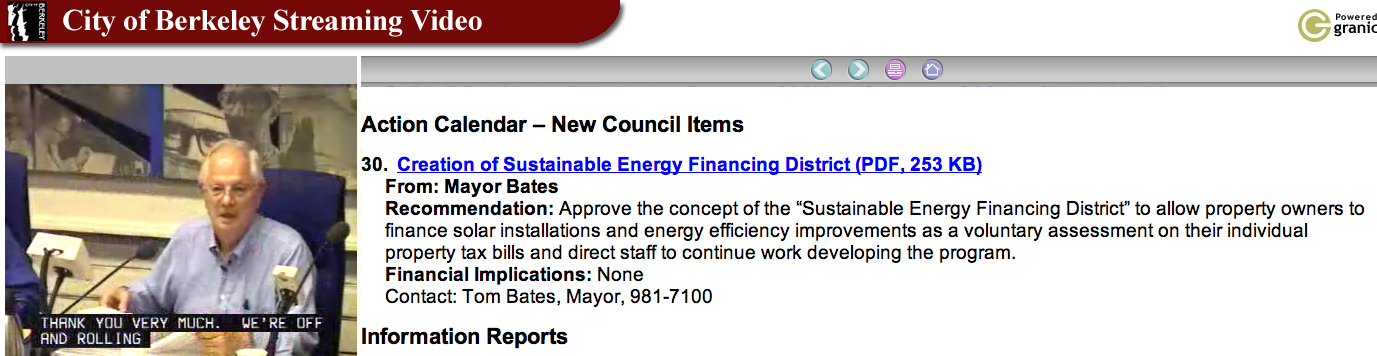
The Berkeley, California, city council Tuesday night greenlighted a proposal to pay for the installation of solar panels and solar hot water systems for any homeowner or commercial building owner in a move to dramatically boost local use of renewable energy. Property owners would retain ownership of the solar systems, paying back the cost over 20 years through an assessment on their annual property tax bill.

“We’re off and rolling,” said Berkeley Mayor Tom Bates after the city council unanimously gave initial approval for the Sustainable Energy Financing District.

Cisco DeVries, Bates’ chief of staff who devised the municipal solar financing proposal, said the city hopes to start signing up homeowners by June 2008. But first it must hammer out the legal and financial details. The city will likely float a bond to obtain millions in bank financing to pay for homeowners’ solar arrays.

“The banks and others have been very interested in this,” said Bates. “The banks that Cisco and I have had conversations with have been very encouraging.”

City manager Phil Kamlarz said Berkeley should be able to obtain a lower interest rate than commercial home equity loans as the property tax assessment will act as a lien, putting banks first in line to collect in the event a property owner defaults.

“We’re looking at what’s the benchmark to make this thing work and right now its less than 7.5% so we’re going to try to make this less than 7.5%,” he told council members.

A property owner would choose a solar installer from a city-approved list. It appears to be a win-win situation solution to the high cost of going solar. The homeowner immediately begins saving money on electricity bills without incurring the $15,000 to $30,000 upfront cost of installing a solar system. They also usually get a boost in their property value from the solar array and the property tax that pays for the system is deductible on their federal income tax return. When the house is sold the solar array and the tax assessment remain with the property, passing to the new owner and thus further diluting the cost of the system.

Bates said other cities have approached him about replicating the Berkeley initiative. The city has won the backing of utility PG&E (PCG) and the solar industry has, not surprisingly, been enthusiastic about a program that promises to expand the market for solar panels made by companies like SunPower (SPWR) and Sharp as well give installers more work.

“This is going to create green collar jobs,” said Bates.

Berkeley’s left-wing politics often puts it on the fringe of the U.S. mainstream but when it comes to environmental policies, the Bay Area city has led the way. Berkeley, after all, was the first city to adopt curbside recycling decades ago, now common even in some of the reddest of red states.

“The power of this is really expanding it beyond Berkeley,” noted one council member.

Berkeley_city_council_solar_vote

The Berkeley, California, city council Tuesday night greenlighted a proposal
to pay for the installation of solar panels and solar hot water systems
for any homeowner or commercial building owner in a move to
dramatically boost local use of renewable energy. Property owners would
retain ownership of the solar systems, paying back the cost over 20
years through an assessment on their annual property tax bill.

“We’re off and rolling,” said Berkeley Mayor Tom Bates after the
city council unanimously gave initial approval for the Sustainable
Energy Financing District.

Cisco DeVries, Bates’ chief of staff who devised the municipal solar
financing proposal, said the city hopes to start signing up homeowners
by June 2008. But first it must hammer out the legal and financial
details. The city will likely float a bond to obtain millions in bank
financing to pay for homeowners’ solar arrays.

“The banks and others have been very interested in this,” said
Bates. “The banks that Cisco and I have had conversations with have
been very encouraging.”

City manager Phil Kamlarz said Berkeley should be able to obtain a
lower interest rate than commercial home equity loans as the property
tax assessment will act as a lien, putting banks first in line to
collect in the event a property owner defaults.

“We’re looking at what’s the benchmark to make this thing work and
right now its less than 7.5% so we’re going to try to make this less
than 7.5%,” he told council members.

A property owner would choose a solar installer from a city-approved
list. It appears to be a win-win situation solution to the high cost of
going solar. The homeowner immediately begins saving money on
electricity bills without incurring the $15,000 to $30,000 upfront cost
of installing a solar system. They also usually get a boost in their
property value from the solar array and the property tax that pays for
the system is deductible on their federal income tax return. When the
house is sold the solar array and the tax assessment remain with the
property, passing to the new owner and thus further diluting the cost
of the system.

Bates said other cities have approached him about replicating the
Berkeley initiative. The city has won the backing of utility PG&E
(PCG) and the solar industry has, not surprisingly, been enthusiastic
about a program that promises to expand the market for solar panels
made by companies like SunPower (SPWR) and Sharp as well give
installers more work.

“This is going to create green collar jobs,” said Bates.

Berkeley’s left-wing politics often puts it on the fringe of the
U.S. mainstream but when it comes to environmental policies, the Bay
Area city has led the way. Berkeley, after all, was the first city to
adopt curbside recycling decades ago, now common even in some of the
reddest of red states.

“The power of this is really expanding it beyond Berkeley,” noted one council member.

Design a site like this with WordPress.com
Get started