Feeds:
Posts
Comments

think-production3.jpg

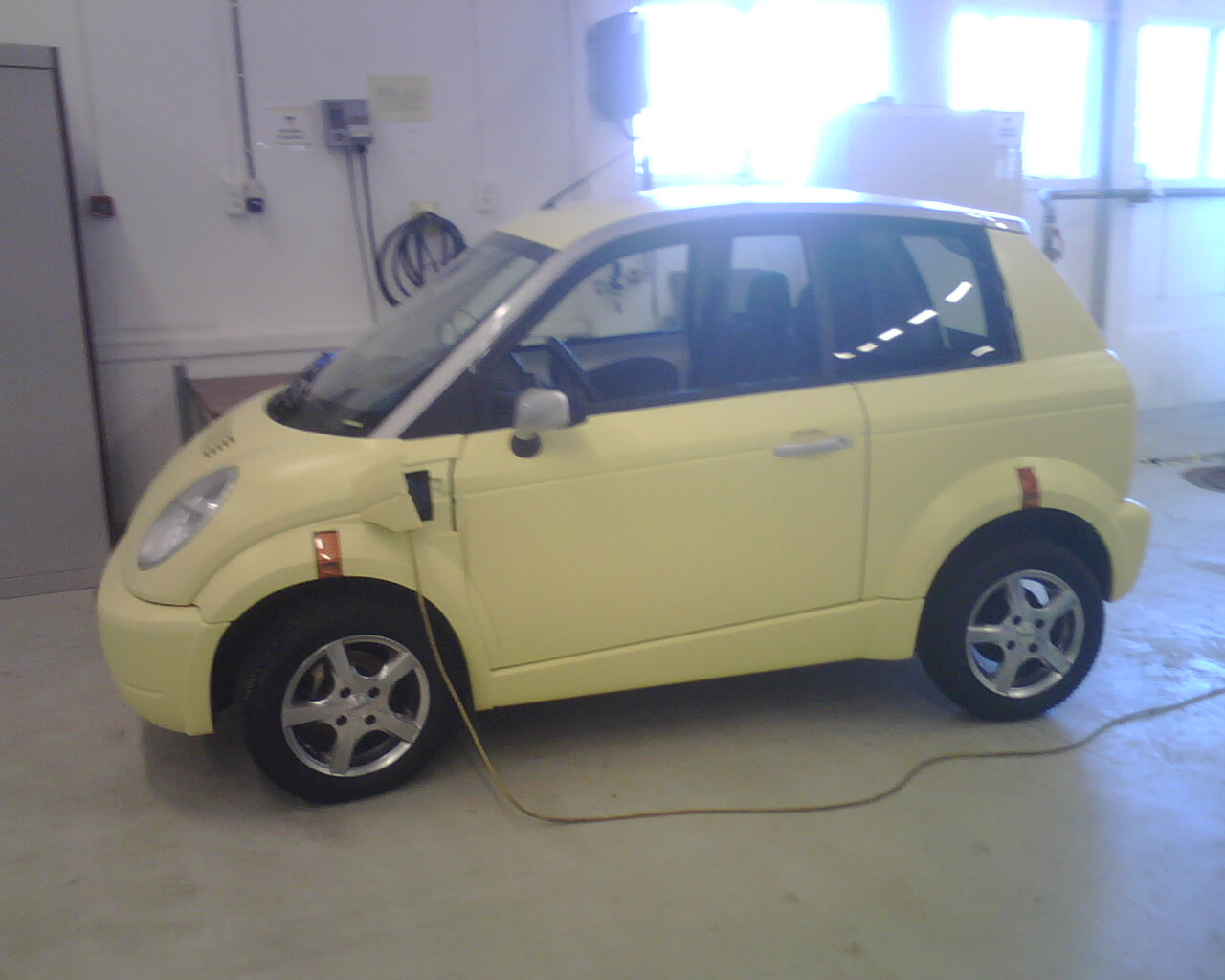
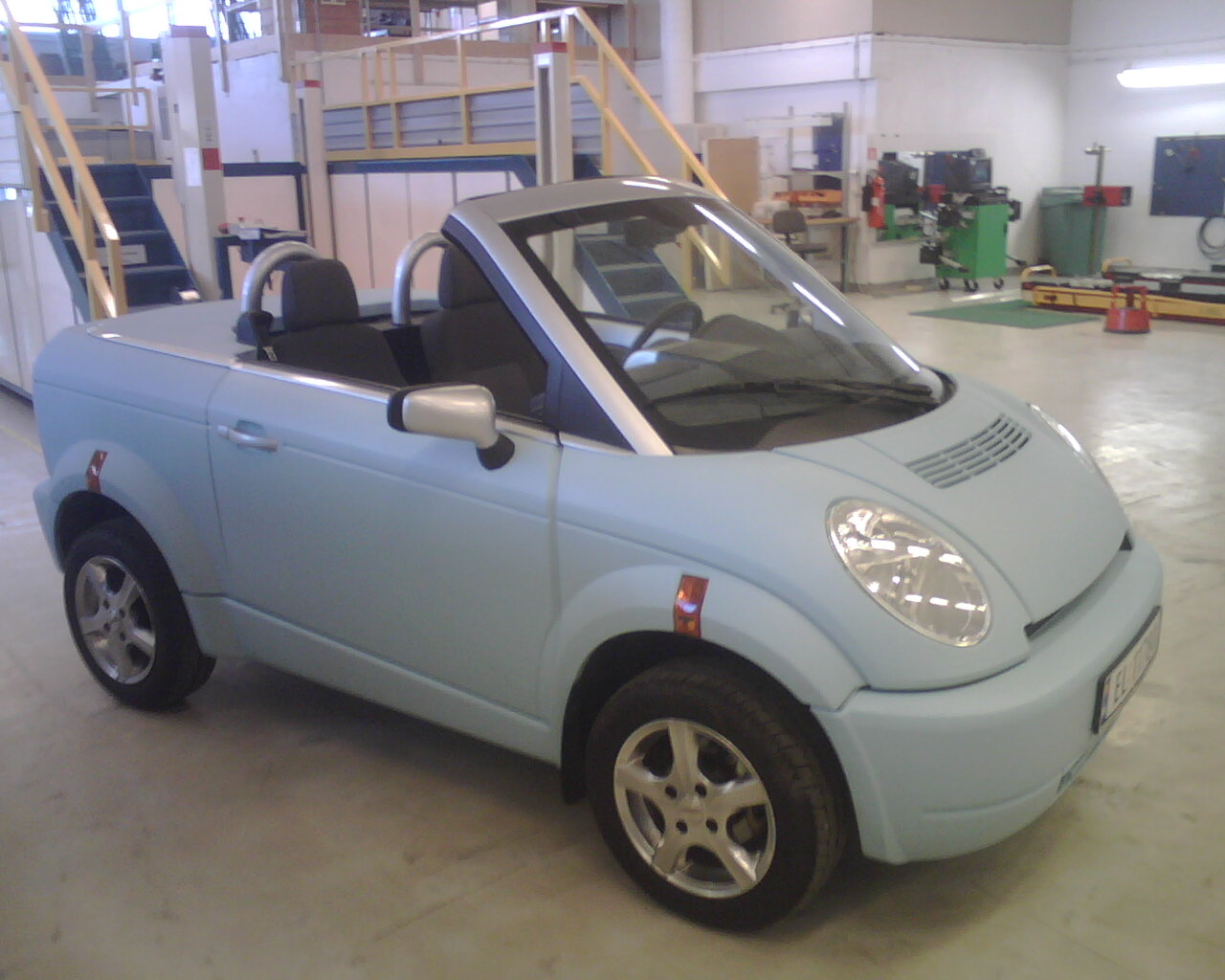
Amid the upheaval at Tesla Motors last week, a milestone in the annals of the electric car went largely unnoticed. At Think Global’s factory in the Norwegian countryside, the first of the company’s battery-powered City urban runabouts rolled off the assembly line.

A canary-yellow two-seater sporting baby-seal-eye headlights and a bumper-to-roof glass hatch, this first production Think City will go about 112 miles (180 kilometers) on a single charge. It’s zippy, fun to drive and could well be the Honda Civic for the age of global warming.

No, Green Wombat hasn’t drunk the electric-car Kool-Aid. (Or the aquavit, in this case.)

Consider: Though ubiquitous now, the Honda Civic arrived on U.S. shores some three decades ago as a tiny, under-powered hatchback from a little-known foreign automaker in the era of the Detroit land yacht. Timing, of course, is everything. The Civic made its debut as the oil embargoes of the 1970s drove Americans from their gas-guzzling Chevys and Fords; and as an entire generation turned to the Japanese for economical well-made models, Tokyo gained a foothold in the U.S. market. In time the Civic morphed into a full range of vehicles and cemented Honda’s (HMC) hold on car buyers even as Americans returned to their profligate ways with the advent of the SUV.
img00150.jpgThink — and other electric car companies — finds itself at a similar inflection point. Gas prices are at historical highs and global pressure to cut greenhouse gases will inevitably fall heavy on one of the biggest carbon culprits, the internal combustion engine. The success of the Toyota (TM) Prius gasoline-electric hybrid is just a harbinger of the market for all-electric cars.

Last May Green Wombat spent some time at Think in Norway and had a chance to test-drive a couple of the City prototypes.

You can read my Business 2.0 magazine feature story on Think here but the capsule version goes like this: A Norwegian startup, the company was acquired by Ford (F) in 1999 when the automaker faced a California mandate to begin producing electric cars. Ford poured some $150 million into Think to develop an EV for the U.S. market then sold the startup once the regulation was killed. (A few hundred of the first-generation City were available for lease in California — Google (GOOG) founder Sergey Brin was one owner — and old-style Thinks can still be spotted on the streets of Oslo.)

Last year Norwegian renewable energy entrepreneur Jan-Olaf Willums (center in photo above) and his investment group acquired Think and revived plans to produce a next-generation City with a next-generation business model. The Internet-enabled car will be sold online and seeded through car-sharing services like Zipcar. Buyers will purchase the car but lease the battery as part of a mobility fee that could include insurance and WiFi access. (The City will sell for about $34,000 in Norway and Willums is shooting for a U.S. sticker price of $15,000 to $17,000 plus $100 to $200 a month for the mobility fee.) Think has raised nearly $80 million from Silicon Valley venture capitalists and European investors to get the production line up and running.
img00158.jpgGreen Wombat caught up with Willums over the weekend via e-mail to get an update on Think’s plans. According to Willums, General Electric (GE) is now an investor in Think and the company struck a deal with GE to collaborate on battery technology. The cars now coming off the assembly line will be put through their paces in the harsh Norwegian winter — a trial that bodes well for an eventual entry into the U.S. northeastern market — and will go on sale in Norway in the first six months of 2008.

Those cars will be powered by a Zebra sodium nickel chloride battery. Earlier this year Think struck a deal with Tesla to buy a version of its high-powered lithium-ion battery packs that give its Roadster its zero-to-60 mph-in-four-seconds vroom. But Tesla put its battery business on hold as it focuses on getting the Roadster on the road. Willums says Think now will obtain lithium-ion batteries from A123 (which is working with General Motors (GM) on its Volt electric hybrid) and EnerDel. Think will begin testing those batteries in the City in the first half of next year. In 2009, Think will begin selling the City in other European countries.

“In 2009 we plan to have a “face lift” i.e. introduce a number of additional features,” says Willums. “The plan is to have a stronger engine and some increased battery capacity at that time.”

The cars sold in Norway carry a Web-enabled black box that transmits battery performance data to Think. Tbe ’09 model will be fully Internet-capable so drivers can communicate with their City and the car can ping its owner when, for instance, it needs maintenance.

img00151.jpgAlas, for American electric car enthusiasts, the City will probably not make it to the U.S. for another couple years. To pave the way, Willums says Think will open a Silicon Valley office in early 2008. (Willums is a familiar figure on Sand Hill Road and held the initial brainstorming sessions for the new Think at the Googleplex in 2006.)

To have a chance to even crack the urban U.S. market, Think will need to increase the City’s top speed from 62 mph and give it more drive time. Inventor Dean Kamen of Segway fame invested in Think and has developed a Stirling heat engine that would extend the City’s range by trickle-charging the battery. (For Green Wombat’s wild ride with Kamen click here.)

“We have recently started discussions with other partners (not in the automotive industry) to explore if one can make a development consortium to make the engine mass producible,” Willums says. “That would be a multiyear project, and we would like to be one partner in such a consortium that would look at many applications of the Stirling engine.”

The road for Think is a long one and many unforeseen obstacles could crash its ambitious plans, which include introducing a family sedan. But like the Honda Civic of 1972, the 2008 Think City may be well just be the prototype of a new automotive model.
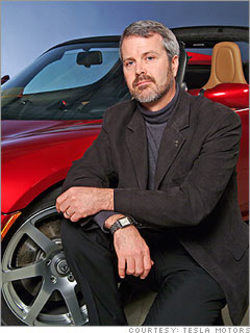
tesla-martin_eberhard.jpgFor Tesla Motors founder Martin Eberhard, getting news of his ouster was like glancing at the review mirror and seeing one of his electric Roadster supercars approaching at 130 miles an hour without a sound.

In other words, he was blindsided. “Somebody in the company asked me if I would be leaving at a certain date and I said, `I don’t think so,’ but that turned out to be the case,” Eberhard told Fortune’s Green Wombat.

The date was last Friday and Tesla left Eberhard by the side of the road just months before the Silicon Valley electric car company rolls its hotly-anticipated Roadster off the production line and into the hands of celebrity customers like the Google founders and California Governor Arnold Schwarzenegger. Green Wombat spoke to Eberhard and Tesla chairman Elon Musk Monday afternoon about the changes at Tesla and the company’s plans for the future.

Eberhard, long the public face of Tesla, stepped down as president of technology and gave up his board seat in a move that is — depending on who’s talking — either part of a planned transition or a hit-and-run take-out of the founder following the appointment of a new chief executive last week. The shakeup comes as Tesla wrestles with a transmission problem that has delayed production of the $100,000 all-electric car that does zero-to-60 in four seconds and can go 245 miles on a single charge.

In August, Eberhard, who started Tesla five years ago with the financial backing of PayPal alum Musk, relinquished his CEO spot so the San Carlos, Calif., startup could hire a top executive with experience in large-scale manufacturing. Former Flextronics chief Michael Marks took over as interim CEO, but Eberhard says he never expected to be booted from the company.

“I truthfully thought I’d be spending quite a few more years at Tesla Motors,” says Eberhard before boarding a flight in Burbank to San Francisco. “The only surprise was that the board no longer wanted me as part of the company. There wasn’t any major disagreement going on, not that I know of anyway.”

As Eberhard recounts it, Musk told him about a month ago that he wanted him to leave at some unspecified future date. “I thought it was a strange notion to kick the founder out of the company anyway, where there wasn’t a big ideological difference on the board where we wanted to go,” Eberhad says. “For all Elon’s character and personality, he’s trying to solve same problem as I am. ”

The end came suddenly last week. On Wednesday, Tesla announced the replacement of Marks with a permanent CEO, tech veteran Ze’ev Drori, founder of chip company Monolithic Memories. Two days later Eberhard was packing up his office. “Elon did talk to me about leaving the company without having a [board] vote,” Eberhard says. “I left voluntarily when it was clear that I wasn’t going to win a vote anyway.” Eberhard, who will serve on a Tesla advisory board, says Musk explained why he was being ousted “only in the vaguest terms.”

When I reach Musk on his cell phone and put the question to him, he pauses and laughs a bit nervously. “I don’t know what to say without being negative,” says Musk, whose other post-PayPal ventures include rocket company SpaceX and solar systems installer Solar City. “It did not make sense for him to be at the company. Of course, if the board thought if it would be better for him to stay he would still be there.”

“I don’t think its ideological, it was more operational, I suppose,” he adds. “There wasn’t an obvious role for Martin.”

That rankles some at Tesla, acknowledges Darryl Siry, the company’s vice president of sales, marketing and service. “I think for a lot of people who have identified with Martin for many years and who are emotionally connected to Martin as a leader at Tesla, this transition is a bit jarring,” he says. “But we have to all adapt and move on. ”

As CEO, Eberhard used Tesla’s blogs to interact with electric car enthusiasts and customers, giving them an unusually detailed look at the development of the Roadster. As his final act he posted a farewell on a Tesla fan site. “I am also not going to lie about it. I am not at all happy with the way I was treated,” he wrote, “and I do not think this was the very best way to handle a transition — not the best for Tesla Motors, not the best for Tesla’s customers (to whom I still feel a strong sense of responsibility), and not for Tesla’s investors. ” (Tesla has attracted a roster of investors that include Google (GOOG) founders Sergey Brin and Larry Page as well as venture capital firms VantagePoint Venture Partners, Technology Partners and Draper Fisher Jurvetson.)

Some Tesla insiders tell Green Wombat they believe Eberhard’s departure is more the result of personality clash with Musk rather than the speed bumps Telsa has hit as it gears up to get the Roadster on the road to meet the expectations of the tech titans, Hollywood celebs and others who have have plunked down six figures for the car. Telsa put plans to sell electric car batteries to other manufacturers on hold while it focuses on the two-seater’s transmission, which hasn’t met the company’s durability standards.

“It’s our biggest issue,” says Musk. “Unfortunately the company picked the wrong supplier, not once but twice, and now we’re on to our third. I feel pretty confident the way things are going but I personally had to take a hand in getting us there.” He says in recent months he’s spent up to a third of his time at Tesla.

“The first production cars should be out in the next few months,” Musk says. “It’s going to be a fairly slow stream until we clear up the production issues. We need to work on production costs as well.”

Musk offered a preview of what’s next for Tesla, saying that early next year the company will unveil its second model, a sports sedan code-named WhiteStar. Tesla also is developing a next-generation transmission, battery and drive train, which it expects to be production-ready in a couple years. “What we’re working on in the shop is a significant advance,” he claims.

Rather than just sell batteries to other electric car manufacturers, Musk says Tesla aims to provide the complete drive train package — motor, transmission, battery and software.

“I think the right path for Tesla is as an independent company,” he says. “As soon as the timing is right we’ll take the company public and use that capital to fund additional product development. We see Tesla as being one of the great car companies of the 21st century and not as a nameplate of some big auto company. We really want Tesla to branch out and have a wide range of models. Our primary interest is how do we get as many electric miles as possible.”

Eberhard says it’ll be difficult to watch from the sidelines. “I wish things were different, for sure. I still feel a strong sense of loyalty to the company. It’s been my life for the past five years. It’s not just a business. It’s a company I started for ideological reasons as well as business reasons — to deal with climate change, oil dependence.”

Under Eberhard Tesla almost single-handedly revived the electric car just a few years after it was declared dead, pushing General Motors (GM) to develop its own EV, the Volt. (GM Vice Chairman Bob Lutz acknowledged as much in a recent interview with U.S News & World Report. “When Tesla announced they were building a car, that kind of tore it for me. I thought, ‘If some little West Coast outfit can do this, we can no longer stand by.’ “)

Eberhard says he’ll take a few months to figure out his next step. In the meantime, he still has his Roadster to look forward to.

He’s No. 2 on the waiting list, right behind Musk.

first-solar-turner.jpgFirst Solar, the solar panel maker with the Googlicious stock price, announced Friday afternoon that it had acquired a solar installer backed by media mogul and environmentalist Ted Turner.

The price First Solar (FSLR) paid for Turner Renewable Energy — to be renamed First Solar Electric — was decidedly un-Google-like: a mere $34.3 million in stock and cash. But the deal is more important for what it says about the state of the solar industry. Increasingly, solar energy companies want to be able to deliver the complete package to customers. That means solar panel makers like First Solar — a Phoenix-based company whose largest shareholders are the Walton heirs — want to be able control and cash in on the booming market to install solar arrays on commercial and residential rooftops. Vertical integration, as they say. Silicon Valley solar cell maker SunPower (SPWR), for instance, bought solar installer PowerLight last year and has seen business grow as its panels appear everywhere from Palo Alto rooftops to Portuguese solar power plants. In China, meanwhile, solar company Trina Solar (TSL) makes silicon ingots, wafers, and modules. It recently announced it will begin producing its own polysilicon, the raw material of solar cells.

With the acquisition of Turner, First Solar also gets the financing relationships the company has forged that let it sell massive megawatt solar arrays to Fortune 500 firms. Turner, for examples, works with MMA Renewable Ventures (MMA) of San Francisco on deals. (Just this week SunPower announced the formation of a jointly owned holding company with Morgan Stanley (MS) to finance solar arrays for customers.) For Ted Turner, it was a fast turnaround — he made his investment in the company then known as DT Solar just last January.

solar-energy-bill-2.pngWith Congress back in session, renewable energy proponents are girding for a battle over legislation that could make or break the nascent solar power industry.

At stake in the energy bill now before Congress is the survival of a 30 percent investment tax credit that makes large-scale solar power plants a viable option for utilities under pressure to cut greenhouse gas emissions by obtaining more of their electricity from renewable sources. On the home front, a similar tax credit for residential solar installations is up for grabs as Congress tries to reconcile House and Senate versions of the energy legislation.

“There are at least eight or nine well-funded companies that are actually making great progress in developing large-scale solar,” says Joshua Bar-Lev, vice president for regulatory affairs for Oakland, Calif.,-based solar power plant developer BrightSource Energy. “I don’t know if any of them are going to be able to finance projects and get the permits they need without these tax credits.”

The solar companies and their allies in the utility industry and on Wall Street had been pressing for an eight-year extension of the investment tax credit. They also want to abolish a prohibition on utilities from taking advantage of the incentive if they invest directly in solar power plants. But since word hit the street that Congressional leaders were considering stripping out the incentives to speed passage of the complex legislation — catchall bills that will affect the fate of nearly every energy-related industry, from Big Oil to biofuels — solar proponents have been converging on the Capitol in an 11th-hour lobbying frenzy.

“Things are very uncertain at the moment,” says Chris O’Brien, an executive at solar panel maker Sharp who serves as chairman of the Solar Energy Industries Association, a trade group. “In recent years, we’ve seen a very sharp increase in corporate investment, project investment and financing for solar technology companies and solar projects. There’s great concern that the U.S. market continue to grow.”

Like other renewable energy sectors, solar has lived and died at the hands of tax incentives. In the 1980s a California tax break encouraged the construction of the state’s first utility-scale power plants by Luz International, founded by BrightSource’s chairman. When the incentives evaporated with the return of cheap energy that decade, the company’s business disappeared (though those Mojave Desert solar power stations continue to operate).

Global warming fears, renewable energy mandates imposed on utilities and a flood of venture capital has revived Big Solar over the past two years. The industry argues that longer term tax incentives must be put in place to ensure solar power plant builders have enough time to break into the electricity market and achieve economies of scale that will drive down the cost of green energy. This time around, the solar entrepreneurs have attracted the support of utilities like PG&E (PCG) and Edison International (EIX) as well as Wall Street titans like Goldman Sachs (GS) and Morgan Stanley (MS), both of which have invested in renewable energy companies. (Morgan Stanley, for instance, is backing BrightSource.)

“We’ve gone to Congress and talked to members about the need for multi-year commitments so we have certainty,” Rick Carter, PG&E’s director of federal government relations, told Green Wombat. “What we’ve seen over past couple years is stop-and-go with tax credits. If you have multi-year leads to build facilities, that doesn’t work.”

Take California, for example. Negotiations between a solar energy company and a utility over a power purchase agreement can last more than a year and it can take another three or four years to to obtain regulatory approval for a solar power plant, secure the site and then get the facility built and operating. PG&E, Southern California Edison and San Diego Gas & Electric (SRE) all have signed long-term power purchase agreements for solar power plants that will be financed and built over the next several years.

Given that the prime solar sites and potential economic payoff for Big Solar is in the sun-drenched West, companies like BrightSource have been targeting Congress members from western states. “We want both representatives and senators to see the benefit of this: price certainty, jobs, clean energy,” says Bar-Lev.

While the situation changes daily, action on the energy legislation is expected sometime in the next two weeks.

solar-energy-bill-2.pngWith
Congress back in session, renewable energy proponents are girding for a
battle over legislation that could make or break the nascent solar
power industry.

At stake in the energy bill now before Congress is the survival of a
30 percent investment tax credit that make large-scale solar power
plants a viable option for utilities under pressure to cut greenhouse
gas emissions by obtaining more of their electricity from renewable
sources. On the home front, a similar tax credit for residential solar
installations is up for grabs as Congress tries to reconcile House and
Senate versions of the energy legislation.

"There are at least eight or nine well-funded companies that are
actually making great progress in developing large-scale solar,"
says Joshua Bar-Lev, vice president for regulatory affairs for Oakland,
Calif.,-based solar power plant developer BrightSource Energy. "I dont
know if any of them are going to be able to finance projects and get
the permits they need without these tax credits."

The solar companies and their allies in the utility industry and on
Wall Street had been pressing for an eight-year extension of the
investment tax credit. They also want to abolish a prohibition on
utilities from taking advantage of the incentive if they invest directly in
solar power plants. But since word hit the street that Congressional
leaders were considering stripping out the incentives to speed passage
of the complex legislation — catchall bills that will affect the fate
of nearly every energy-related industry, from Big Oil to biofuels —
solar proponents have been converging on the Capitol in an 11th-hour
lobbying frenzy.

"Things are very uncertain at the moment," says Chris OBrien, an
executive at solar panel maker Sharp who serves as chairman of the
Solar Energy Industry Association, a trade group. "In recent years,
weve seen a very sharp increase in corporate investment, project
investment and financing for solar technology companies and solar
projects. Theres great concern that the U.S. market continue to grow."

Like other renewable energy sectors, solar has lived and died at the
hands of tax incentives. In the 1980s a California tax break encouraged
the construction of the state’s first utility-scale power plants by Luz
International, founded by BrightSource’s chairman. When the incentives
evaporated with the return of cheap energy that decade, the company’s
business disappeared (though those Mojave Desert solar power stations
continue to operate).

Global warming fears, renewable energy mandates imposed on utilities
and a flood of venture capital has revived Big Solar over the past two
years. The industry argues that longer term tax incentives must be put
in place to ensure solar power plant builders have enough time to break
into the electricity market and achieve economies of scale that will
drive down the cost of green energy. This time around, the solar
entrepreneurs have attracted the support of utilities like PG&E
(PCG) and Edison International (EIX) as well as Wall Street titans like
Goldman Sachs (GS) and Morgan Stanley (MS), both of which have invested
in renewable energy companies. (Morgan Stanley, for instance, is
backing BrightSource.)

"Weve gone to Congress and talked to members about the need for
multi-year commitments so we have certainty," Rick Carter, PG&E’s
director of federal government relations, told Green Wombat. "What
weve seen over past couple years is stop-and-go with tax credits. If
you have multi-year leads to build facilities, that doesnt work."

Take California, for example. Negotiations between a solar energy
company and a utility over a power purchase agreement can last more
than a year and it can take another three or four years to to obtain regulatory approval for a
solar power plant, secure the site and then get the facility built and
operating. PG&E, Southern California Edison and San Diego Gas &
Electric (SRE) all have signed long-term power purchase agreements for
solar power plants that will be financed and built over the next
several years.

Given that the prime solar sites and potential economic payoff for
Big Solar is in the sun-drenched West, companies like BrightSource have
been targeting Congress members from western states. "We want both
representatives and senators to see the benefit of this: price
certainty, jobs, clean energy," says Bar-Lev.

While the situation changes daily, action on the energy legislation is expected sometime in the next two weeks.

HP greens the bottom line

Hp_enviro_1
Overshadowed by Google’s jump
into the renewable energy business on Tuesday was Hewlett-Packard’s
more modest move to go green by installing a 1-megawatt solar array at
its San Diego facility, buying wind power for its Ireland operations
and subsidizing employees’ home solar systems.

In Silicon Valley these days putting a whopping solar array up on
your roof is akin to having the coolest corporate jet or your CEO
back-ordered for a Tesla Roadster. Google (GOOG), of course, has the
biggest, a 1.6-megawatt monster that covers buildings and carports at
the Googleplex in Mountain View. Not to be outdone, Applied Materials
(AMAT) is planning an even larger solar system for its headquarters in
neighboring Santa Clara.

But there’s more at stake here than green bragging rights. Companies
like HP (HPQ) are realizing that tapping renewable energy can also be
good for the bottom line. Take HP’s solar array in San Diego, for
instance. The 5,000-panel system carries no capital costs for HP as the
array will be financed and operated by a third-party affiliated with
solar cell maker SunPower (SPWR). The Silicon Valley company will
install the array and perform maintenance for 15 years while HP
purchases the electricity produced by the solar system at a guaranteed
below-market rate. That gives the company a hedge against rising energy
costs. (HP thinks it’ll save $750,000 over 15 years.) HP also retains
ownership of any potentially marketable renewable energy credits
associated with the array while the financier can take advantage of
Californias solar subsidies.

SunPower wasn’t disclosing the identity of that financier when Green
Wombat inquired on Tuesday, but this morning the company announced a
$200 million deal with Morgan Stanley (MS) to provide financing for
solar installations and power purchase agreements like the one HP
signed. SunPower and Morgan Stanley have formed a jointly owned holding
company to finance SunPower’s solar systems for customers, with the
Wall Street firm kicking in up to $190 million and SunPower putting up
as much as $10 million.

In Ireland, HP will buy a years worth of clean electricity
generated by Airtricitys European wind farms, saving the company an
estimated $40,000 in 2008. Electricity generated by Airtricitys wind
farms is fed into Irelands national power grid rather than directly to
HP facilities. But the additional power generated by the wind farms, as
well as the solar electricity eventually produced by the San Diego
array, will eliminate tons of greenhouse gas emissions from the
atmosphere.

Last, SunPower will give HP employees a $2,000 rebate if they
install the companys residential solar systems, with HP providing
another $2,000. Thats on top of state rebates under the California
Solar Initiative program.

HP greens the bottom line

hp-enviro-1.pngOvershadowed by Google’s jump into the renewable energy business on Tuesday was Hewlett-Packard’s more modest move to go green by installing a 1-megawatt solar array at its San Diego facility, buying wind power for its Ireland operations and subsidizing employees’ home solar systems.

In Silicon Valley these days putting a whopping solar array up on your roof is akin to having the coolest corporate jet or your CEO back-ordered for a Tesla Roadster. Google (GOOG), of course, has the biggest, a 1.6-megawatt monster that covers buildings and carports at the Googleplex in Mountain View. Not to be outdone, Applied Materials (AMAT) is planning an even larger solar system for its headquarters in neighboring Santa Clara.

But there’s more at stake here than green bragging rights. Companies like HP (HPQ) are realizing that tapping renewable energy can also be good for the bottom line. Take HP’s solar array in San Diego, for instance. The 5,000-panel system carries no capital costs for HP as the array will be financed and operated by a third-party affiliated with solar cell maker SunPower (SPWR). The Silicon Valley company will install the array and perform maintenance for 15 years while HP purchases the electricity produced by the solar system at a guaranteed below-market rate. That gives the company a hedge against rising energy costs. (HP thinks it’ll save $750,000 over 15 years.) HP also retains ownership of any potentially marketable renewable energy credits associated with the array while the financier can take advantage of California’s solar subsidies.

SunPower wasn’t disclosing the identity of that financier when Green Wombat inquired on Tuesday, but this morning the company announced a $200 million deal with Morgan Stanley (MS) to provide financing for solar installations and power purchase agreements like the one HP signed. SunPower and Morgan Stanley have formed a jointly owned holding company to finance SunPower’s solar systems for customers, with the Wall Street firm kicking in up to $190 million and SunPower putting up as much as $10 million.

In Ireland, HP will buy a year’s worth of clean electricity generated by Airtricity’s European wind farms, saving the company an estimated $40,000 in 2008. Electricity generated by Airtricity’s wind farms is fed into Ireland’s national power grid rather than directly to HP facilities. But the additional power generated by the wind farms, as well as the solar electricity eventually produced by the San Diego array, will eliminate tons of greenhouse gas emissions from the atmosphere.

Last, SunPower will give HP employees a $2,000 rebate if they install the company’s residential solar systems, with HP providing another $2,000. That’s on top of state rebates under the California Solar Initiative program.

luz-power-plant.jpg

Google the jolly green giant?

In a move to shake up the nascent renewable energy industry, Google announced Tuesday it will spend hundreds of millions of dollars developing new solar and wind technologies while investing in green tech startups.

The goal, according to Google founders Sergey Brin and Larry Page: Send the fossil fuel industry to the coal bin of history by making renewable energy cheaper than coal, a main culprit in the global warming crisis.“

Assuming we can develop this, we want to deploy it as broadly as possible,” said Brin during a conference call. “Which means we’ll license the technology or put it in place ourselves.” Of particular interest is spreading renewable energy technology to rapidly industrializing but coal-dependent countries like China and India.

Dubbed RE<C (as in Renewable Energy Cheaper than Coal), the Google initiative will involve hiring green energy engineers and technologists for an in-house R&D program that will focus on developing breakthroughs in large-scale solar power plants. At the same time, Google’s (GOOG) philanthropic arm, Google.org, will invest in green energy companies. Within a few years Google wants to be able to produce a gigawatt of clean energy — enough to power a city the size of San Francisco — at a price that will undercut cheap electricity from coal-fired plants.

For solar energy companies, the double-headed approach raises the prospect of both a potential brain-drain to Google and the possibility of a payday if the search giant goes on a green tech shopping spree. Page said Google routinely acquires “dozens of companies” and would apply that strategy to the renewable energy initiative where appropriate.

John O’Donnell, executive vice president of Silicon Valley solar energy startup Ausra, said he welcomes Google’s bid to become a green energy player.”I think folks who have or are developing technologies that can deliver RE<C are going to get some speedup in moving to market,” he told Green Wombat. “That’s good news for the sector and for the planet.”

Ausra, backed by venture capital heavyweights Vinod Khosla and Kleiner Perkins Caufield & Byers, builds large-scale solar power plants and recently signed a long-term deal with California utility PG&E (PG&E).

“We’re at a more mainstream engineer/build stage, and don’t expect hiring problems,” O’Donnell added. “Google may encourage more smart folks to seek careers in clean energy.”

Given that a solar power plant can cost anywhere between half a billion and a billion dollars or more, it appears Google will concentrate on perfecting solar technology rather than get into the utility business. “In terms of building power plants, hundreds of millions of dollars is really not a large sum, so I hope they spend the money in a highly leveraged way to get the most out of it,” says John Woolard, CEO of solar power plant startup BrightSource Energy, which is negotiating with utilities to supply 1.5 gigawatts of solar electricity.

“We are very active in the Southwest, and would look forward to working with a group like Google on building out power plants,” he adds. “I never would have predicted that Google would emerge as a provocative leader in large scale solar, but I am very excited about thevisibility it brings to an area of technology that we know has real economic potential.”

Google already is working with two renewable energy startups. One is eSolar, a Pasadena, Calif., developer of utility-scale solar thermal power plants whose chairman is serial tech entrepreneur Bill Gross. The other is Makani Power, a stealth Bay Area startup that is developing what it calls “high-altitude wind energy extraction technologies aimed at the most powerful wind resources.”Page and Brin declined to say if Google has invested in those companies.

PG&E spokeswoman Jennifer Zerwer said RE<C is “clearly a sign of the growing awareness of and response to climate change — and that is a positive trend, especially for those concerned about climate change, as we are. While we did not work directly with Google on this announcement, we team with them on their energy efficiency and renewable efforts.”

Like other California utilities, such as Southern California Edison (EIX) and San Diego Gas & Electric (SRE), PG&E is under the gun to obtain 20 percent of its electricity from renewable sources by 2010 and 33 percent by 2020.

The move into green energy is Google’s biggest departure so far from its core search and advertising business. But Page noted it is not a change of mission for Google.org, which currently is managing initiatives to promote plug-in hybrid cars.

Brin and Page took pains to stress that RE<C makes good business sense, with the potential to profit from Google’s stake in green energy companies or technology the company develops. Still, acknowledged Brin, “We’re not going for huge margins. We want to deploy this fast.”

“This has the ability to change the world,” he added.

luz-power-plant.jpg

Google the jolly green giant?

In a move to shake up the nascent renewable energy industry, Google
announced Tuesday it will spend hundreds of millions of dollars
developing new solar and wind technologies while investing in green
tech startups.

The goal, according to Google founders Sergey Brin and Larry Page:
Send the fossil fuel industry to the coal bin of history by making
renewable energy cheaper than coal, a main culprit in the global
warming crisis.

Assuming we can develop this, we want to deploy it as broadly as
possible," said Brin during a conference call. Which means well
license the technology or put it in place ourselves. Of particular
interest is spreading renewable energy technology to rapidly
industrializing but coal-dependent countries like China and India.

Dubbed RE<C (as in Renewable Energy Cheaper than Coal), the
Google initiative will involve hiring green energy engineers and
technologists for an in-house R&D program that will focus on
developing breakthroughs in large-scale solar power plants. At the same
time, Google’s (GOOG) philanthropic arm, Google.org, will invest in
green energy companies. Within a few years Google wants to be able to
produce a gigawatt of clean energy — enough to power a city the size
of San Francisco — at a price that will undercut cheap electricity
from coal-fired plants.

For solar energy companies, the double-headed approach raises the
prospect of both a potential brain-drain to Google and the possibility
of a payday if the search giant goes on a green tech shopping spree.
Page said Google routinely acquires "dozens of companies" and would
apply that strategy to the renewable energy initiative where
appropriate.

John O’Donnell, executive vice president of Silicon Valley solar
energy startup Ausra, said he welcomes Google’s bid to become a green
energy player.

"I think folks who have or are developing technologies that can
deliver RE<C are going to get some speedup in moving to market," he
told Green Wombat. "That’s good news for the sector and for the planet."

Ausra, backed by venture capital heavyweights Vinod Khosla and
Kleiner Perkins Caufield & Byers, builds large-scale solar power
plants and recently signed a long-term deal with California utility
PG&E (PG&E). "We’re at a more mainstream engineer/build stage,
and don’t expect hiring problems," O’Donnell added. "Google may
encourage more smart folks to seek careers in clean energy."

Given that a solar power plant can cost anywhere between half a
billion and a billion dollars or more, it appears Google will
concentrate on perfecting solar technology rather than get into the
utility business. "In terms of building power plants, hundreds of
millions of dollars is really not a large sum, so I hope they spend the
money in a highly leveraged way to get the most out of it," says John
Woolard, CEO of solar power plant startup BrightSource Energy, which is negotiating with utilities to supply 1.5 gigawatts of solar electricity.

"We
are very active in the Southwest, and would look forward to working
with a group like Google on building out power plants,"  he adds.  "I
never would have predicted that Google would emerge as a provocative
leader in large scale solar, but I am very excited about the
visibility it brings to an area of technology that we know has real economic potential."

Google already is working with two renewable energy startups. One is
eSolar, a Pasadena, Calif., developer of utility-scale solar thermal
power plants whose chairman is serial tech entrepreneur Bill Gross. The
other is Makani Power, a stealth Bay Area startup that is developing
what it calls "high-altitude wind energy extraction technologies aimed
at the most powerful wind resources." Page and Brin declined to say if
Google has invested in those companies.

PG&E spokeswoman Jennifer Zerwer said RE<C is "clearly a sign
of the growing awareness of and response to climate change — and that
is a positive trend, especially for those concerned about climate
change, as we are. While we did not work directly with Google on this
announcement, we team with them on their energy efficiency and
renewable efforts."

Like other California utilities, such as Southern California Edison
(EIX) and San Diego Gas & Electric (SRE), PG&E is under the gun
to obtain 20 percent of its electricity from renewable sources by 2010
and 33 percent by 2020.

The move into green energy is Google’s biggest departure so far from
its core search and advertising business. But Page noted it is not a
change of mission for Google.org, which currently is managing
initiatives to promote plug-in hybrid cars.

Brin and Page took pains to stress that RE<C makes good business
sense, with the potential to profit from Google’s stake in green energy
companies or technology the company develops. Still, acknowledged Brin,
"We’re not going for huge margins. We want to deploy this fast."

"This has the ability to change the world," he added.

kevin-rudd.jpgAustralian voters on Saturday tossed out the decade-old government of conservative Prime Minster John Howard, installing Labor Party leader Kevin Rudd (left) as the new PM. Howard was a staunch ally of the Bush administration on climate change, joining it in refusing to ratify the Kyoto Accord despite — or because of — Australia’s status as the planet’s biggest per-capita emitter of greenhouse gases.

Australia is a proverbial canary in the coal mine when it comes to suffering the consequences of climate change, and Saturday’s election may foreshadow how environmental issues will play out elsewhere in the coming years. With the peter-garret-mp.jpgcountry in the grip of the worst drought on record, global warming — and the Howard government’s emu-in-the-sand stance that prompted corporate Australia to push its own climate change agenda — became a hot campaign topic. The Australian Labor Party’s environment spokesman, former Midnight Oil front man Peter Garret (right) — a rock-star-environmentalist-turned-politico — hammered the government at every turn. Meanwhile, Rudd promised to sign Kyoto, up investment in green technology and establish a nationwide carbon trading market to help achieve a 60 percent reduction in greenhouse gas emissions by 2050. Labor also set a target of obtaining 20 percent of this coal-dependent nation’s electricity from renewable sources by 2020.

Just how much Labor’s climate change policies contributed to its landslide victory is up for debate, though such was the voters’ wrath that it appears that even Howard will lose his seat in Parliament, the first sitting prime minister to do so since 1929. But here’s one indicator: The Australian Greens scored 20 percent of the votes in some electorates and will take as many as six seats in the Senate, possibly giving the environmental party the balance of power in the upper house. The Greens also contributed to the Labor landslide because under Australia’s preferential voting system, ballots cast for unsuccessful Green candidates were re-directed to the ALP.

So with a charismatic greenie like Garrett as Australia’s presumptive new environment minister, Australia is set to become the Scandinavia of the South Pacific, right? Not quite. Australia’s current prosperity owes much to the resource boom under way as China buys up just about any mineral that can be dug out of the ground. (See my Fortune colleague Brian O’Keefe’s excellent story on the iron ore gold rush in Western Australia.)

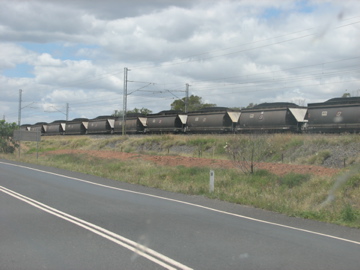
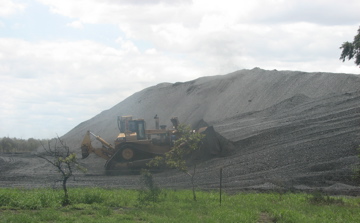
img_3574.jpgGreen Wombat got a first-hand look at the pressures Rudd will face during a visit last month to Queensland, the new PM’s home state. Driving through central Queensland’s coal belt, a never-ending procession of trains piled high with the black stuff flanked the two-lane highway, running 24/7 between the mines and the port, where China-bound coal ships are stacked up by the dozens off shore. Bulldozers scaled mountains of coal sitting on the side of the road, scooping up bucketfuls to be put on a conveyor belt that straddled the highway to connect to a train depot. At the Dingo roadhouse, a big color-coded wall map charts central Queensland’s major coal seams and Shift Miner Magazine is on sale, chronicling the explosion in coal mining that has turned places like Rockhampton into boom towns. Riding in from the Rockhampton airport, a former coal miner-turned-taxi img_3569.jpgdriver tells me she rues passing up the chance a couple years’ back to buy a house for $A10,000 in a nearby mining town; such homes now go for $A300,000. Out on a cattle ranch about 500 kilometers from Rockhampton, a mining company is drilling for gold but rancher John Dennis tells me he hopes they find something else. “Black gold,” he says. “Coal.” (The biggest corporate takeover attempt now under way Down Under is Aussie mining giant BHP Billiton (BHP)’s $150 billion offer for rival Rio Tinto (RTP).)

So no surprise that Rudd wants to spend $A500 million on so-called clean coal technology to capture and store greenhouse gas emissions from coal-fired power plants. While sun-drenched Australia has some of the world’s best solar resource it currently gets about 86 percent of its electricity from coal. In fact, in recent years, Australian solar energy companies like Ausra have relocated to California, frustrated by the government’s lack of support for renewable energy. But with the new Labor government pledging to fund a $A150 million Energy Innovation Fund to stop the brain drain as well as increase the mandatory renewable energy targets, Australia may be the next frontier for green business.

Design a site like this with WordPress.com
Get started