Feeds:
Posts
Comments

thinkox_004.jpg

General Electric has officially confirmed its $4 million investment in Norwegian electric carmaker Think Global, a development Green Wombat reported back in December. GE Energy Financial Services (GE) also has invested $20 million in Massachusetts lithium-ion battery maker A123Systems, which will supply batteries to Think. General Electric said its scientists will work with both Think and A123 to improve battery technology for electric cars to “enable global electrification of transportation.”

thinkox_006.jpgAnd as Green Wombat reported last week, Think, formerly owned by Ford (F), unveiled its next model Wednesday at the Geneva Auto Show, a futuristic five-seater called the Think Ox that will eventually be available as a two-door coupe and possibly a taxi. The sleek five-door vehicle resembles a low-slung crossover SUV but maintains the signature touches of the Think City — an urban runabout now rolling off Think’s production line in Norway — including the roof-to-bump glass rear hatch. The concept car also sports a translucent roof with a solar panel, presumably to power radios and other gadgets.

According to Think, the Ox will have a range of about 125 miles (200 kilometers) on a charge and a top speed of about 85 miles an hour. Future models may include a range extender — a small flex-fuel engine that will charge the battery and let the Ox go 280 miles. (The General Motors (GM) Volt electric hybrid is based on the same concept.) Think also unveiled its “connect car” technology to make the Think City and Ox a rolling Internet-connected, GPS-enabled computer that will calculate the cheapest and most environmentally beneficial times to recharge as well as give drivers access to the cars’ systems through their mobile phones.

When Green Wombat caught up with Think CEO Jan-Olaf Willums in San Francisco last week he emphasized that although the Ox is being presented as a concept car, the technology is almost ready for prime time and the model that is expected to hit the market in 2011 will resemble the show version.

Correction: An earlier version of this story said Think was collaborating with an unnamed Fortune 100 automaker. In fact, Think was collaborating with a Fortune 100 company, General Electric.

thinkox_001.jpg

think-production3.jpgIt was a year ago that venture capitalist and solar energy entrepreneur Jan-Olaf Willums appeared at the Cleantech Forum in San Francisco shortly after taking over Think Global, a Norwegian electric car maker once owned by Ford (F). Willums and his partners had just secured their first round of funding and unveiled plans to revive Think and a zippy urban runabout called the Think City. This week Willums made a return appearance at the 2008 Cleantech Forum and showed just how fast an automotive startup can move amid the lumbering dinosaurs of Detroit.

Green Wombat caught up with the ever-cheerful Willums over coffee Wednesday (unlike his American counterparts he meets the press without the PR minders that seem to accompany every exec everywhere). A day earlier on a panel about alternative transportation he dropped something of a bombshell: At the Geneva Auto Show on Tuesday Think will unveil its next-generation car, a sleek five-seat sedan and a collaboration with an unnamed Fortune 100 company. (See correction at the end of the story.)

Willums, who has raised $93 million from U.S. and European investors, was keeping mum on the identity of its big-league partner until Tuesday but he did say that new model was not just a concept car. “We have designed a five-seater show car but it really is much more than that,” says Willums (photo above). “It is very much a car that can be produced and it looks like the car that will produced.” The plan is to offer the next-gen Think in 2011 as an all-electric as well as well as a so-called series hybrid that uses a small engine to charge the battery and extend its range. (The current Think City has a range of 180 kilometers –112 miles.)

The drawing Willums briefly displayed on the panel showed an stylish aerodynamic four-door sedan. He says Think is planning to later produce a crossover SUV and coupe version of the car. Silicon Valley electric car startup Tesla’s next car also is a five-seater sedan, code-named White Star. “We won’t compete with Tesla,” says Willums. “The Tesla will be more a BMW; we’ll be more the Volkswagen.”

In the meantime, the two-seater Think City is rolling off the production line at the company’s factory outside Oslo and the first 500 cars are set for delivery to customers in March. (For the Think back-story and my 2007 Business 2.0 magazine feature on the company and its innovative business model click here.) Production will be fully ramped up by the end of 2008 and Think aims to produce 10,000 cars a year.

Willums, who will appear on a panel I’m moderating at Fortune’s Brainstorm: Green conference in April, also tells Green Wombat that Think later this week will introduce the City to London and Paris. Think’s strategy is to pursue urban markets that offer incentives for electric vehicles. For instance, for electric cars London waives the $15 congestion “congestion fee” charged for driving into the city and offers free parking. France gives EV buyers a $7,500 rebate. Think plans to begin selling the City in those markets in early 2009. Think has also established a subsidiary in Denmark

The company’s North American plans are still in flux. “We hope to have a plant in the U.S. in 2009,” he says. As with Europe, Think will target urban markets in the U.S., such as San Francisco and New York.

Think has markedly picked up the pace since I last met Willums in Oslo. That’s due in part, he says, because of the big automakers’ more aggressive moves to get into the electric car market, such as General Motors (GM) with its Chevy Volt electric hybrid.

It also seems increasingly clear that innovative startups like Think will survive by making strategic partnerships with bigger players and moving nimbly into select and potentially profitable markets. Whether Think will be a drive-away success remains to be seen but its clear Willums is hitting the accelerator.

Correction: An earlier version of this story said Think was collaborating with an unnamed Fortune 100 automaker. In fact, Think was collaborating with a Fortune 100 company, General Electric.

masdar-city.jpg

While the United States Congress hems and haws over extending relatively modest tax incentives to encourage renewable energy development, Abu Dhabi is spending $15 billion in a drive to make the oil-rich emirate an epicenter of green technology. Called the Masdar Initiative, it’s best known for plans to build Masdar City, a “zero-carbon, zero-waste” urban center.

But Abu Dhabi’s ambitions extend far beyond making Masdar City a showcase for sustainable development, as Masdar Initiative CEO Sultan Ahmed Al Jaber made clear when Green Wombat sat down with him on Tuesday when he was in San Francisco to accept the “Cleantech Leader of the Year” award at the annual Cleantech Forum. “We have decided to establish the Silicon Valley of renewables in Abu Dhabi,” says Al Jaber. “We want to cover the whole value chain – from research to labs to manufacturing to the deployment of technologies.”

To that end, Masdar is collaborating with European and U.S. universities – including MIT and Columbia – to develop a research institute. The Masdar Clean Tech Fund has invested $250 million in renewable energy ventures and Al Jaber, who will be speaking at Fortune’s Brainstorm: Green conference in April, says a second fund is in the works. “We’ll invest wherever the opportunity goes,” he says. “We’re keen on developing renewable energy infrastructure in California; we’re just looking for the right opportunity.”

Masdar City will be a tax-free zone in a bid to lure makers of photovoltaic equipment and other green energy manufacturers. When Al Jaber says Abu Dhabi wants to own the whole supply chain, he means that literally, beginning with polysilicon, the basic building block of solar cells. “We’re looking at manufacturing polysilicon, thin-film for photovoltaics, wind energy components,” he says. “We’re no longer interested in only being a consumer of technology or an off-taker of specific equipment. We want to transform ourselves into a more knowledge-based economy. ”

He expects the renewable energy and waste-reduction technologies developed to build Masdar City – its expected population is 50,000 – to be exported to help retrofit existing cities. “A city of this size would require 820 megawatts of power, but we will reduce energy requirements to 220 megawatts from integrating new designs from day one.”

“This city is going to literally re-engineer urban planning,” he claims.

Abu Dhabi’s ambitions will create opportunities for U.S., European and Asian green tech firms and Al Jaber acknowledges that forming the right partnerships will be the biggest challenge in fulfilling the emirate’s green dreams.

But he says he sees no irony in one of the world’s biggest oil-exporting nations going green. The bottom line: it’s all about power and markets.

“Abu Dhabi recognizes that the global energy markets are evolving and are evolving with substantial growth in alternative energy,” Al Jaber says. “It’s only going to go up. Does that make it a threat or an opportunity? It’s a great opportunity if we invest in it now.”

solana1.jpgArizona Public Service, Arizona’s largest utility, announced plans Thursday for a 280-megawatt solar power plant to be built 70 miles southwest of Phoenix by Spanish company Abengoa Solar. What’s striking about the deal is that it offers a rare glimpse inside the economics of Big Solar. And as the renewable energy industry pushes Congress to extend crucial green tax credits, the jobs that will be spawned by the Solana Generating Station and the economic ripple effect of the huge construction project is Exhibit A in why fighting global warming can be a win-win when it comes to the economy and the environment.

All the previous contracts for 100+ megawatt solar power plants have been in California, where utilities PG&E (PCG), Southern California Edison (EIX) and San Diego Gas & Electric (SRE) have shrouded power purchase agreements in secrecy.

APS (PNW), on the other hand, has lifted the green veil a bit, giving some indication of the current cost of producing utility-scale solar electricity and the larger economic impact. According to APS, the utility will pay around $4 billion over 30 years for the greenhouse gas-free electricity generated by Solana that will light 70,000 homes. That comes to about $133 million a year for the life of the power purchase agreement.

Abengoa spokesman Peter Kelley told Green Wombat that the exact kilowatt per hour rate the company is paying APS is confidential. No doubt though that the utility will pay a premium per kilowatt/hour for its first large-scale solar energy deal compared to electricity produced by a coal or natural-gas fired power plant. That cost disparity is likely to evaporate when the United States moves to price carbon — either through a carbon tax (unlikely) or a cap-and-trade system that requires fossil-fuel power plants to pay if they exceed limits on CO2 emissions. And the cost of financing carbon-spewing power plants will grow in coming years as Wall Street shies way from projects that carry climate change risks. And as solar power plant components and systems go from being one-off prototypes to mass-produced commodities, the cost of solar electricity is expected to drop even further.

Abengoa and APS are not revealing the construction cost of Solana but solar power plants of that size can run half a billion dollars or more. Of course, once built their operating costs are significantly lower than conventional power plants; the fuel — the sun — after all is free.

In the meantime, the Solana Generation Station is expected to inject about $1 billion into the Arizona economy as Abengoa hired 1,500 workers to build the power station and 85 others to operate it, according to APS. The utility estimates that the ripple affect will create another 11,000 to 15,000 jobs.

Abengoa is using a solar trough design for the plant. A tried and true technology, solar trough plants deploy long rows of parabolic mirrors to heat liquid-filled tubes to produce steam that drives electricity-generating turbines. The Solana plant will also store heat in silos of molten salt. The heat can be released when the sun is not shining to run the turbines. “The molten storage will extend the operating hours of the plant both during cloud cover and when sun goes down,” Kelley says. That means Solana can continue to generate electricty as long as six hours after sunset.

The big “if” for Solana is the 30 percent investment tax credit that expires at the end of 2008. If Congress fails to extend the credit, the cost of such solar power plants will jump, jeopardizing their economic viability

Solana is likely to be just the first big solar power plant in Arizona. Utilities there must obtain 15 percent of their electricity from renewable sources by 2025 and with little wind or geothermal available in Arizona, the state is likely to place a big bet on Big Solar.

A green-collar recession?

solar_panels_2ce03.jpgIt’s all about the green economy, stupid.

The United States could lose more than 116,000 green collar jobs and forgo $19 billion in green tech investment in 2009 if Congress fails to extend two tax credits crucial to the renewable energy industry, according to a new study.

One red flag about this report: It was commissioned by the American Wind Energy Association and released by the Solar Energy Industries Association — two trade groups pressing for extension of the investment tax credit and the production tax credit. Green Wombat tends to look askance at studies paid for by business and whose conclusions support the sponsors’ political agenda. But a review of the research conducted by Navigant Consulting indicates that it is solid, based on federal labor data and employment models as well as Navigant’s own market analysis.

Some background. The ITC provides a 30 percent tax credit for the installation of solar arrays and other equipment. Homeowners can claim the tax credit up to a maximum of $2,000 for residential solar arrays. There’s no cap for commercial solar arrays and the tax credit has been a key to attracting financing for large solar installations that can cost millions of dollars. (Several states, most notably California, offer even more lucrative incentives, which should help prop up demand.) The production tax credit provides a subsidy for the generation of electricity by solar, wind, geothermal and other renewable energy systems and has driven the construction of massive megawatt wind farms.

Both credits expire at the end of 2008 and the renewable energy industry and their allies in Silicon Valley and on Wall Street are pressing Congress for a long-term extension — five to eight years — to provide a stable investment climate for green projects. (Last week, executives from Google (GOOG), Hewlett-Packard (HPQ), Applied Materials (AMAT) and Credit Suisse (CS) were among those that signed a letter urging Congress to take action by March 1.)

The Navigant study projects that without the investment tax credit installations of solar arrays will fall from a projected 790 megawatts to 325 megawatts in 2009, eliminating 39,400 potential new jobs.

A couple of points to consider about those numbers. Navigant only considered the impact on the photovoltaic industry that manufactures and installs rooftop solar arrays. It did not calculate the consequences for the solar thermal business, which builds large-scale solar power plants that use mirrors to focus the sun’s rays on liquid-filled tubes or boilers to create steam to drive electricity-generating turbines. The solar thermal industry is in its infancy but utilities like PG&E (PCG), Southern California Edison (EIX) and San Diego Gas & Electric (SRE) have signed several contracts for solar power plants and negotiations for gigawatts more of solar electricity are ongoing.

The first solar power plants in California won’t go online until around 2010 but the construction and operation of those projects are expected to create thousands of jobs. Like the PV industry, solar thermal companies are dependent on the investment tax credit to attract the big money it takes to finance the construction of billion-dollar power plants. The loss of the investment tax credit would hit California particularly hard.

While rooftop solar companies worry about losing business in the future if the investment tax credit is not renewed, the more immediate concern among solar execs Green Wombat has talked to recently is finding enough workers to keep up with demand, especially in California.

Navigant projects an even bigger crash for the wind industry should the production tax credit expire, with installations falling from 6,500 megawatts to 500 megawatts in 2009 with the lose of 76,800 jobs. The wind industry has been continuously buffeted in recent years as Congress has allowed the production tax credit to expire repeatedly only to resuscitate it. In the past, the expiration of the tax credit has resulted in a 73% to 93% drop in the wind market, according to Navigant.

Twice now the renewable energy industry has narrowly lost votes in Congress to extend an investment tax credit crucial to jump-starting the market for large-scale projects like solar power plants. In December, Big Oil outmaneuvered green energy advocates and their Congressional supporters by claiming that rescinding huge tax breaks for the fossil fuel industry to pay for renewables would cost consumers at the pump. A more recent attempt to revive the tax credit also failed.

Now the American Council on Renewable Energy is bringing out its big green guns. Representatives from Silicon Valley tech giants, Wall Street investment banks and utilities signed a letter sent to the congressional leadership late Wednesday urging the long-term extension of the 30 percent investment tax credit as well as the production tax credit for the electricity produced by solar, wind, geothermal and other renewable energy systems. Among the signers urging action by March 1 are executives from )Google (GOOG), Hewlett-Packard (HPQ), Applied Materials (AMAT), Credit Suisse (CS), Wells Fargo (WFC), venture capitalists Kleiner Perkins Caufield & Byers and utility San Diego Gas & Electric, a subsidiary of energy giant Sempra (SRE).

Interestingly, the phrases “climate change” and “global warming” never appear in the letter. In a savvy move, the council has forsaken doom and gloom for a purely economic message: American jobs, competitiveness and innovation are at stake, the signers argue, and the tax incentive will spark a green tech boom at relatively little cost to the taxpayers. It’s a Silicon Valley mindset and its no surprise that while the signers represent companies from all over the United States, most hail from California.

The tax credits expire at the end of 2008 and proponents argue that a five-to-eight year extension is needed to create a stable investment climate, given that it can take three to five years for a large solar power plant to be permitted and built.

“The United States is in a historic position to lead in innovation and competitiveness in the renewable energy sector,” wrote the council’s three co-chairs, which include Dan Reicher, Google.org’s director of climate and energy initiatives. “As with all energy markets and in plans for growth in any businesses, certainty and continuity in public policy provides the confidence needed for stability in investments. We must ensure we are not creating an environment for boom and bust cycles in renewable energy and that we are not tying the hands of business owners in the sector looking to scale their technologies to meet demand and price points.”

Without an extension of the tax credits, the council warns that renewable energy projects in the pipeline that would produce 42 gigawatts of greenhouse-gas free electricity — enough to power tens of millions of homes — could grind to a halt, giving competitors in Europe and Asia the upper hand when it comes to green tech innovation.

For a state steeped in the mythology of Big Oil, Big Coal (plants) and well, big everything, Texas does not necessarily come to mind when you think of Big Green.

It’s a reputation somewhat undeserved, given the Texas-sized wind farms sprawling across the hundreds of thousands of acres of the state’s ranch lands. Now there are signs that California’s solar boom is spreading eastward. One leading indicator: Silicon Valley solar power plant startup Ausra is opening an outpost in the Lone Star State and hiring an executive to “lead the development of stand-alone solar thermal power projects in Texas using Ausra’s proprietary Compact Linear Fresnel reflector technology and the sale of solar field to utility scale customers,” according to a job description posted last week at the Berkeley Institute of the Environment at the University of California, Berkeley.

Like a growing number of states, Texas has a so-called renewable energy portfolio standard that mandates a certain portion of its electricity supply come from green sources. (Unlike most other states that require utilities to obtain a set percentage of electricity from renewable sources, Texas sets a total green energy target and ups the ante every two years. For instance, the 2009 target of 3,272 megawatts rises to 5,880 megawatts in 2011. Texas utilities are allocated a share of those megawatts based on their sales.)

But if you want to sell solar to Texans you have to be in Texas. That’s because when it comes to electricity, Texas is literally a country onto itself: the Texas power grid is not connected to the rest of the country (except for some outbound transmission lines) and all renewable energy must be generated within the state. (Unlike, say, California, which can buy electricity produced by solar power plants in neighboring Nevada or Arizona.)

“Texas is another California-sized market that’s growing rapidly and seeking clean options in the portfolio,” Ausra executive vice president John O’Donnell tells Green Wombat. “While solar resources are somewhat lower than the Mojave, west Texas is a very good solar region and we see major opportunities going forward.”

O’Donnell wouldn’t reveal details about Ausra’s Texas plans (though the job posting says Ausra aims to build 1-to-2 gigawatts worth of solar power plants a year). But Texas clearly is in the market for green energy. Utility TXU’s (TXU) cancellation of several massive megawatt coal-fired plants (and Wall Street’s growing aversion to such projects) along with the ratcheting up of renewable energy mandates means the state will increasingly be looking to solar and wind to fill the void.

Utility El Paso (EE) is accepting bids to supply for 300-megawatts of green energy while Austin Energy is committed to obtaining at least 100 megawatts of solar energy under the city’s goal of going carbon neutral by 2020.

With wide open spaces and plenty of sunshine and flat land, look for other solar power plant players to beat a path to Texas in the coming months.

infinia-stirling-dish.jpgA passel of high-profile high-tech investors  — including Khosla Ventures, Paul Allen’s Vulcan Capital and Bill Gross’ Idealab — are backing yet another new player in the increasingly hot market for large-scale solar power, pumping $50 million into Infinia, a Kennewick, Wash., company manufacturing a Stirling solar dish.

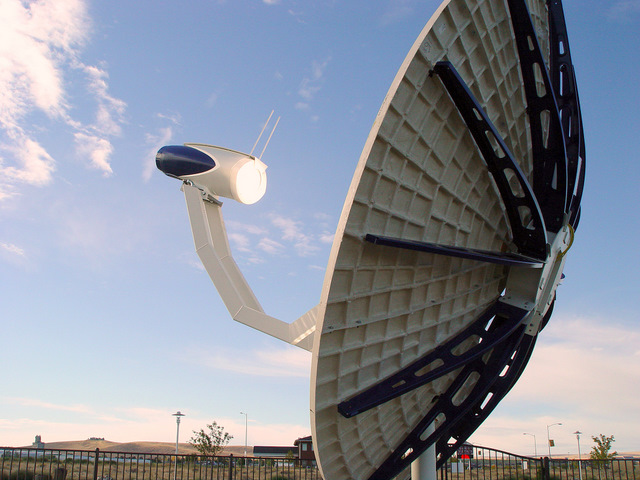
The Stirling dish has a storied — if unfulfilled – history in the annals of solar energy. It marries a Stirling heat engine, 17th-century invention, with a mirrored dish that looks like a super-sized version of a home satellite receiver. The solar dish focuses the sun’s rays on the Stirling engine, heating a gas inside that drives pistons to generate electricity. Stirling dishes are much more efficient at converting sunlight into electricity than solar thermal technologies that use mirrors to heat liquid-filled tubes to create steam to drive electricity-generating turbines. But while solar thermal plants exist today, the Stirling solar dish has never been deployed on a large scale since work on the technology began in earnest following the oil shocks of the 1970s.

Stirling Energy Systems of Phoenix in 2005 signed contracts with utilities Southern California Edison (EIX) and San Diego Gas & Electric (SRE) to build up to build tens of thousands of Stirling dishes to produce up to 1.75 gigawatts of greenhouse gas-free electricity. Though the company operates a six dishes in a prototype power plant at Sandia National Laboratories New Mexico, it is still working to get production costs down and rivals have questioned whether Stirling Energy Systems will be able to fulfill its deals. (See Green Wombat’s 2007 Business 2.0 magazine article on Stirling Energy Systems here. )

infinia-stirling-engine.jpgBut Infinia CEO J.D. Sitton tells Green Wombat that his company has perfected the Stirling dish to make it competitive with large-scale solar thermal as well as new photovoltaic technologies like thin-film solar. Infinia aims to deploy its Stirling dishes in smaller configurations so that solar power plants can be located near cities and at other sites that don’t require vast stretches of desert land where solar thermal plants are typically built. Each 21-foot-high, 15-foot-wide solar dish can generate 3-kilowatts (compared to 25 kilowatts for Stirling Energy Systems’ dish).

Infinia won’t itself become a solar developer but will provide its dishes to for power plants that range in size from 1 megawatt to 150 megawatts or more. In contrast, most solar thermal power plants now being planned are in the 400-500 megawatt range.

“We fly in the face of what has been the conventional wisdom in the solar thermal field that to be competitive you have to have a very large system,” says Sitton. “We can be deployed within city limits and be connected to existing transmission systems. No additional transmission capacity is required.”

“Our approach is that the winning solutions will be those that generate for most kilowatts for the least cost,” he adds. “This is a game about capital efficiency.”

That, of course, has been the mantra of leading green tech investor Vinod Khosla, who has disparaged photovolatic solar systems as too expensive to displace fossil-fuel generated power. Khosla also is backing Palo Alto solar thermal startup Ausra, which last year signed a deal to supply solar electricity to California’s largest utility, PG&E (PCG). Serial entrepreneur Bill Gross’ Idealab is funding solar thermal startup eSolar, which also is being backed by Google (GOOG).

Infinia contends the design of its Stirling dish system makes it competitive with solar thermal technologies. First, the Stirling engine uses helium rather than hydrogen, which typically must be periodically replenished. “We have no lubrication inside the machine and it needs no maintenance,” Sitton says. “We use helium in a hermetically sealed system.”

Second, he says the Infinia dish is made of six panels of glass rather than the 76 panels on the Stirling Energy Systems dish. “That gives us lower production costs and lower capital costs,” says Sitton. “We brought in large-scale manufacturer from the beginning. It’s not like we built a prototype and now have to reduce the cost to produce it.”

The first prototype went online last October and Sitton says Infinia is building a second at Sandia. Field tests will be conducted later this year in California and Nevada. He says Infinia is currently negotiating with solar developers and full-scale production is set to begin in November. Infinia has been in business since the 1980s, building Stirling engines for other applications. But the green tech boom and demands from utilities for renewable energy led the company to focus on solar.

Whether Infinia beats Stirling Energy Systems to market remains to be seen but look for the deals it signs with solar developers for a good indication of just how viable its technology is likely to be.

coal_fired_power_plant.jpgThree major Wall Street investment banks have pledged to adhere to a set of “Carbon Principles” to assess the risk — ecological and economic — of investing in planet-warming fossil fuel power plants. But does this signal that Wall Street’s ardor for Big Coal is cooling, or are we seeing a rather sophisticated greenwash that will allow further investment in dirty power to carry a green seal of approval?

Probably a bit of both.

Citi (C), JPMorgan Chase (JPM) and Morgan Stanley (MS) collaborated with with such coal-dependent utilities as American Electric Power (AEP), NRG Energy (NRG) and Southern Company (SO) along with national green groups Environmental Defense and the Natural Resources Defense Council to draft the Carbon Principles.

In short, the banks — all of which have come under fire from environmentalists for financing power projects that are a major contributor to climate change — have agreed to evaluate the economic viability of coal-fired plants in light of a widely expected national cap on greenhouse gas emissions. Such a cap would force utilities to reduce their carbon spew or pay a price per ton of carbon dioxide emitted over the limit.

But there’s some caveats here. According to the Carbon Principles, the financing criteria “does not establish specific performance criteria that companies or their projects must meet nor does it lay out specific types of transactions that the financial institutions will avoid.”

In other words, absent a hard target for power plant emissions, the banks can continue financing those projects, principles or not. (The Sierra Club lists proposed coal-fired power plants and their financiers here.) “There was resistance on part of the financial institutions to set specific targets or reductions,” Mark Brownstein, Environmental Defense’s managing director of business partnerships, told Green Wombat. “Banks do not see themselves as regulators but they are responsible to shareholders and investors with regard to risk.”

Still, says Brownstein, “I think that if the principles are honestly implemented, if companies honestly wrestle with data they collect and do honest due diligence, it will make a difference in the direction of investment in the utility space. We’ll see much less conventional coal, and more investment in renewable energy and low-carbon coal technologies.”

“I think we’ve been surprised, frankly,” adds Brownstein, “for whom these principles and this due diligence is in fact new.” Brownstein previously was an executive with New Jersey-based utility Public Service Enterprise Group (PEG), which was one of the utilities that worked on the Carbon Principles.

Whether the Carbon Principles result in any canceled coal projects remains to be seen, but Brownstein says that one consequence might be a higher cost of capital for those plants that do obtain financing.

JPMorgan spokesman Brian Marchiony told Green Wombat in an e-mail that, “We are certainly going to take a harder look at those projects and encourage other alternative energy options.”

Citi and Morgan Stanley did not respond to requests for comment.

Marchiony says that JPMorgan already had been using some environmental criteria to screen fossil fuel power plants. “We’ve added additional questions to our checklist and strengthened those that we were already asking in order to incorporate the carbon issue more formally into the financing discussion,” he says.

Given growing opposition to new coal-fired power plants from local communities and regulators, the big investment banks had already been reconsidering coal-related investments.

Brownstein says Environmental Defense will continue to push for Wall Street’s disengagement from Big Coal. “We very much look at these principles as a floor and not a ceiling,” he says. “We feel as an organization it would be both environmentally irresponsible and financially irresponsible for them to move ahead and invest in conventional coal.”

Big bucks for big solar

img_2914.jpg

Israeli solar power plant developer Solel announced Monday it has scored $105 million in funding from London-based investment firm Ecofin — yet another sign that the market for large-scale solar energy projects is reaching critical mass.

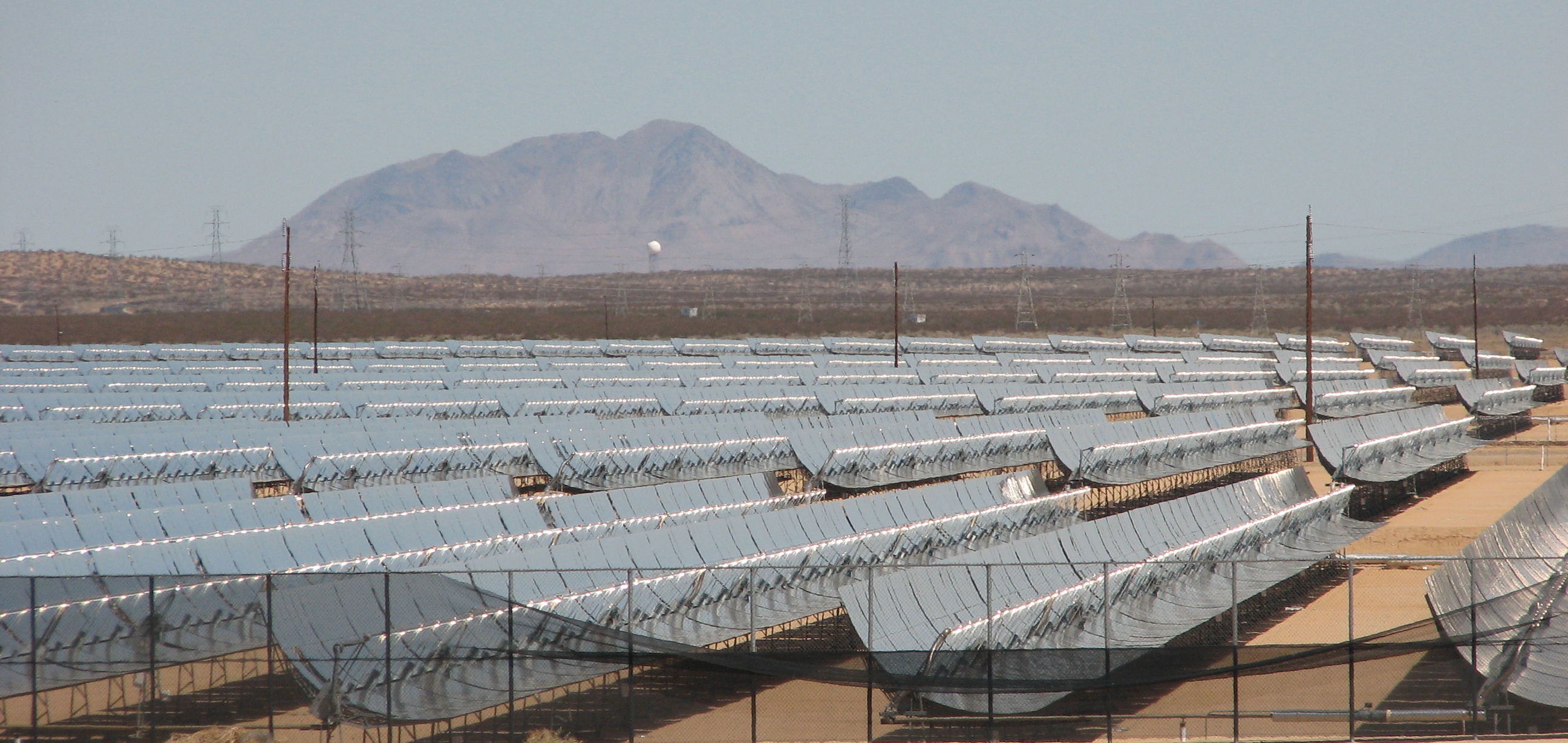
Solel last July signed the world’s largest solar power deal when it agreed to supply California utility PG&E (PCG) with 553 megawatts of green electricity to be produced by a massive solar thermal power plant to be built in the Mojave Desert. The company’s solar trough technology is also used in nine solar power plants (photo above) that were built in the Southern California desert in the 1980s. (In a solar trough power plant, long rows of parabolic mirrors focus the sun’s rays on tubes of liquid suspended over the arrays to create steam that drives an electricity-generating turbine.)

Raising $105 million is impressive and it’s certainly a big number. But given that a 500-megawatt solar power plant can easily cost $1 billion or more to build, it’s a relative drop in the bucket. However, it will allow Solel to move forward with the project and line up project financing for the PG&E plant while it negotiates more deals with other utilities — it won’t say which, but likely candidates are Southern California Edison (EIX) and San Diego Gas & Electric (SRE).

Competitors BrightSource Energy and Ausra have solar power plant applications before the California Energy Commission and have signed or are negotiating power purchase agreements with PG&E.

“Everyone is realizing that the market is there for thousands of megawatts of peaking power,” Solel CEO Avi Brenmiller recently told Green Wombat. “As time goes by we see energy prices rising and utilities are focusing their efforts to get solar thermal power because this is the right solution in the southwest United States.”

The Ecofin investment in Solel is notable also given the uncertainty surrounding solar power at the moment due to Congress’ failure to extend the solar investment tax credit in the recently enacted energy bill. The 30 percent credit is considered crucial to help solar energy companies secure financing for power plants and achieve economies of scale. The tax credit expires at the end of 2008 but solar energy proponents and their allies on Wall Street say they’re confident that Congress will take up legislation this session to extend it for as long as eight years.

Design a site like this with WordPress.com
Get started