Feeds:
Posts
Comments

I wrote this story for Grist, where it first appeared.

In just about every story on renewable energy, there’s a familiar cast of characters: green power developers, utilities, and sundry state and federal regulators. But there’s one key player that often lurks in the background – the grid operator.

In the Golden State, most of the power grid is controlled by the California Independent System Operator. Based in a suburb of Sacramento, Cal ISO, as it’s known, essentially ensures that electricity supply and demand stay in balance to prevent brownouts, blackouts, and other catastrophic failures.

The agency also approves requests for big solar power plants, wind farms, and other renewable energy sources to connect to the grid. You may win approval for your project from the California Energy Commission and the United States Interior Department, but unless Cal ISO gives you the green light to plug into the grid, that big solar farm is nothing but a big white elephant.

The prospect of thousands of megawatts of intermittent sources of electricity like solar and wind jolting the grid — and then blinking off when a cloud passes overhead or the wind dies — poses a huge balancing act for grid operators. That’s especially true in place like California, which has mandated that a third of its electricity be generated from renewable sources by 2020.

So it was significant, if little noticed, when Cal ISO this month announced it would begin to integrate energy storage devices like batteries and flywheels into the grid.

Energy storage is increasingly seen as crucial for greening the grid. Electricity from wind farms, which in California typically generate the most power at night when demand is low, could be stored in giant battery arrays and released during the day when demand and rates rise.

Utility Pacific Gas & Electric, for instance, plans to store energy in the form of compressed air pumped into a cavern. When needed, the air would be released to power an electricity-generating turbine. The utility is also exploring using renewable energy to pump water uphill to a reservoir. When demand spikes, the water would be allowed to flow downhill and run a turbine.

Another utility, the Sacramento Municipal Utility District, plans to install lithium ion battery arrays at solar-powered homes to store electricity produced by photovoltaic arrays.

And last year, the California Legislature passed a law requiring regulators to determine if the state’s three big investor-owned utilities should be required to generate a certain percentage of electricity from energy storage.

Cal ISO’s early energy storage plans are modest, with just an initial 5 to 10 megawatts of storage integrated into the grid once federal officials given their okay. But it’s likely to be only the start.

“The integration of renewable sources introduces new requirements to reliably manage the grid,” Cal ISO’s chief executive, Yakout Mansour, said in a statement. “Our five-year strategic plan points out that storage technologies bring unique operational solutions to grid management as a tool for helping balance renewables on the system.”
I wrote this story for Grist, where it first appeared.

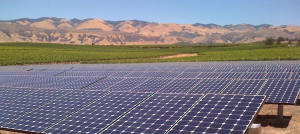
Southern California Edison on Wednesday announced another big photovoltaic power plant deal, this time to buy electricity from a 250-megawatt solar farm to be built by First Solar.

Add that contract to 831 megawatts’ worth of photovoltaic power purchase agreements the Los Angeles utility signed with SunPower and Fotowatio in January, and you’re talking some serious solar — more than a gigawatt. At peak output, that’s the equivalent capacity of a big nuclear power plant. I wouldn’t be surprised to see SoCal Edison execs tooling around town with “I ♥ PV” bumper stickers on their Chevrolet Volts and Nissan Leafs.

(And before you all hit the comment key, we know that a nuclear power plant generates electricity 24/7 while a solar farm only produces power when the sun shines.)

“First Solar’s industry-leading technology makes solar PV an excellent option for clean, emission-free power we can deliver to our customers,” Marc Ulrich, the utility’s vice president for renewable and alternative power, said in a statement. “When we get projects of this magnitude, we make great progress toward our renewable energy goals.”

First Solar’s Silver State South project won’t be built in California, but in neighboring Nevada, as its name implies. Like another First Solar power plant project in Nevada, the 50-megawatt Silver State North solar farm, Silver State South is planned for federal land in the Mojave Desert.

The United States Interior Department last October signed off on a lease for the Silver State North power plant, but the 250-megawatt project for Southern California Edison is still undergoing environmental review.

First Solar spokesman Alan Bernheimer told me Tuesday that the company hopes to secure a lease for 2,500 acres of desert land near the casino border town of Primm by the end of 2011. (The U.S. Bureau of Land Management on its website said it expects to issue a decision on Silver State South in 2012.)

According to Southern California Edison, Silver State South is set to begin producing electricity in early 2014 and will be fully built out by May 2017.

There are some obstacles to overcome, however. The project depends on the construction of a major transmission line proposed by Southern California Edison.

And it would be built adjacent to an area that some environmentalists consider key habitat for the imperiled desert tortoise and other fauna and flora. Last month, a 370-megawatt solar thermal power plant under construction by BrightSource Energy a few miles away became the subject of a lawsuit filed by Western Watersheds Projects. The suit contends the Interior Department and BLM officials failed to properly consider the environmental impact of the BrightSource project on the desert tortoise and other wildlife.

Regardless of the outcome of the Silver State South power plant, First Solar has plenty of other photovoltaic farms in the pipeline. According to Bernheimer, the company has signed contracts for 2,000 megawatts’ worth of big solar projects.

photo: Todd Woody

I wrote this story for Grist, where it first appeared.

When President Obama in his State of the Union address called for 1 million electric cars to be on the road by 2015, skeptics scoffed. But in a report [PDF] released Tuesday, the Department of Energy basically said no worries. We’ve already arrived at our destination.

That optimism comes from automakers’ existing projections of how many electric cars they expect to produce over the next five years.

“The production capacity of EV models announced to enter the U.S. market through 2015 should be sufficient to achieve the goal of one million EVs by 2015,” the report states, noting that 1.6 million hybrids like the Toyota Prius have been sold over the past six years.

If the estimates bear out, 1.2 million electric cars will hit the highways by 2015. That’s about 10 percent of current annual automotive sales. But those rosy numbers includes some big figures from startup companies like Fisker Automotive that have yet to roll a single production vehicle off the assembly line.

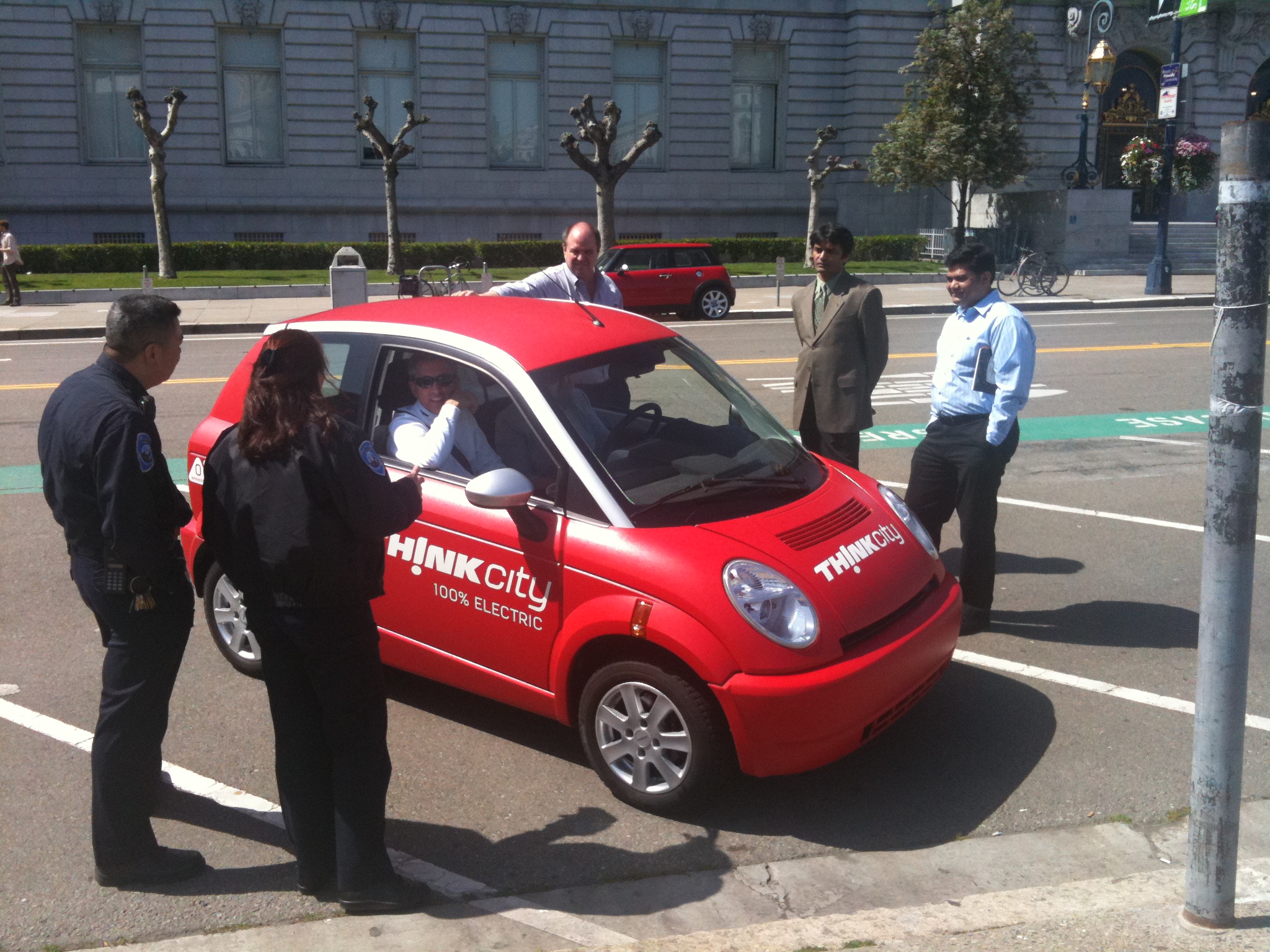
According to the Energy Department, Fisker expects to sell 195,000 of its forthcoming Nina plug-in hybrid by 2015, along with 36,000 Karma high-end sports sedans. And Think, the Norwegian electric carmaker, says it’ll sell 57,000 of its urban runabout in the United States within four years. The Chevrolet Volt, which you can buy now if you live in certain cities, would account for nearly half the projected sales of electric cars in 2015.

On the other hand, those estimates don’t count a number of automakers that say they will or are likely to introduce electric cars in the coming years, depending on how the market shakes out. Among them: Chrysler, China’s BYD, Coda, Honda, Mitsubishi, Hyundai, Toyota, Volkswagen, and Volvo.

Which raises a question: Did the president set his sights too low if it’ll be so easy to get a million EVs on the road by 2015?

It’s always hard to forecast the market for an expensive new technology like the electric car, but the short answer is, probably.

The Energy Department cites studies showing that if battery production goes from 10,000 to 100,000 units a year, battery costs will decline 30 percent to 40 percent. And the report notes that electric vehicles’ overall lower operating costs appeal to corporate fleet purchasers that buy in bulk.

The report made clear that the government has a role to play in promoting the retirement of the internal combustion engine, from handing out research and development cash to funding a nationwide network of electric charging stations.

One suggestion is sure to be popular with potential electric car buyers and could stimulate sales: The Obama administration has proposed converting the $7,500 federal tax credit for EVs into a rebate payable upon purchase at the dealer, rather than making you wait until tax time to gain its benefit.

I wrote this story for Grist, where it first appeared.

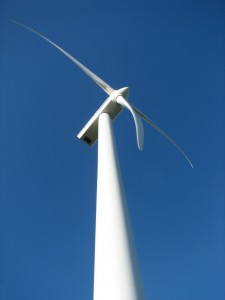
More good news on the renewable energy front Monday: The cost of onshore wind power has dropped to record lows, and in some regions is competitive with electricity generated by coal-fired plants, according to a survey by Bloomberg New Energy Finance, a market research firm.

“The latest edition of our Wind Turbine Price Index shows wind continuing to become a competitive source of large-scale power,” Michael Liebreich, Bloomberg New Energy Finance’s chief executive, said in a statement.

“For the past few years, wind turbine costs went up due to rising demand around the world and the increasing price of steel,” he added. “Behind the scenes, wind manufacturers were reducing their costs, and now we are seeing just how cheap wind energy can be when overcapacity in the supply chain works its way through to developers.”

Driving the trend are falling prices for wind turbines, which have dropped to their lowest level since 2005, according to Bloomberg New Energy Finance.

Bloomberg said it based its analysis on a review of wind turbine contracts provided by 28 turbine buyers in 28 markets across the world. Those contacts represent nearly 7,000 megawatts’ worth of turbines.

Of course, that’s not necessarily good news for turbine manufacturers in the short term. But it makes wind energy more competitive over the long run. Over the past year the industry in the United States, for instance, has seen the wind taken out of its sails as demand has fallen due to the economy and natural gas prices have plummeted.

According to Bloomberg, contracts signed in late 2010 for turbines to be delivered in the first half of this year this year fell 7 percent from 2009 to an average of $1.33 million a megawatt. That’s a 19 percent decline since 2007.

In some regions of Brazil, Mexico, Sweden, and the United States, the cost of electricity generated by wind farms is on par with coal-fired power, the report said. In those areas, the cost of wind-generated electricity is $68 per megawatt-hour compared to $67 a megawatt-hour for coal power and $56 per megawatt-hour for natural gas.

Meanwhile on Monday, Interior Secretary Ken Salazar and Energy Secretary Steven Chu announced that the federal government would grant $50.5 million over five years to spur offshore wind farm developments on the East Coast.

The money will go toward developing offshore wind technology and removing market barrier to building coastal wind farms.


I wrote this story for Grist, where it first appeared.

Earlier this week, I wrote about the green evolution in California regarding electric cars. Well, when it comes to solar energy, it’s starting to look more like a revolution.

This week, utility Southern California Edison asked regulators to approve 20-year contracts to buy 250 megawatts of electricity from 20 small-scale photovoltaic farms.

Nothing especially newsworthy about that until you start reading through the document submitted to the California Public Utilities Commission (hat tip to Adam Browning of the Vote Solar Initiative). Turns out that in response to its request for bids, Southern California Edison received offers in excess of 2,500 megawatts.

In other words, there’s a whole lotta solar companies out there eager to generate carbon-free electricity.

And willing to do it relatively cheaply. Southern California Edison noted in its submission letter that the 20 projects — which will generate between 5 and 20 megawatts — will produce electricity at a cost below what utility industry wonks call the “market price referent.” The MPR, as they call it, represents the levelized cost over 20 years of a combined cycle gas turbine like those typically found in natural gas power plants in the Golden State.

So in plain English, the developers of these solar farms have told the utility that they can produce electricity cheaper than a fossil fuel power plant.

The increasing competitiveness of photovoltaic power is a reflection of the steep drop in solar modules prices in recent years, thanks in large part to the rapid expansion of manufacturing capacity by Chinese solar companies. But solar modules themselves typically represent just half the cost of a project, so the growing competitiveness of solar energy probably also is due to developers’ increased efficiency at building power plants and cutting other costs.

It was notable that a homegrown technology, concentrating photovoltaics, is among those 20 contracts that came in below the market price referent. Amonix, a Southern California company, will supply the technology for four power plants. The company’s concentrating photovoltaics panels boost electricity production by using plastic lens to focus sunlight on highly efficient solar cells.

The conventional wisdom until recently was the technology was still just too expensive to be commercialized. Guess not.

As Vote Solar’s blog put it, “That’s a lot of solar, at a good price.”

In The New York Times on Friday, I write about how Suntech has become the first Chinese solar company to win a major U.S. power plant contract:

Suntech, the Chinese solar giant, has won a contract to supply photovoltaic panels for a 150-megawatt project in Arizona, marking China’s entry into a lucrative United States power-plant market dominated by American companies.

The project is the first phase of a planned 700-megawatt project called Mesquite Solar to be built about 40 miles west of Phoenix and operated by Sempra Generation, a subsidiary of Sempra Energy. A California utility, Pacific Gas & Electric, will purchase the electricity produced by the power plant’s first phase, called Mesquite Solar 1.

As photovoltaic panel prices have plummeted in recent years, utilities have increasingly turned to developers to build massive megawatt projects. American companies like First Solar of Tempe, Ariz., and Silicon Valley’s SunPower have captured the bulk of those contracts.

For instance, last month Southern California Edison signed contracts with SunPower to buy 711 megawatts of electricity from three large photovoltaic projects.

While Chinese companies like Suntech, Yingli Green Energy and Trina Solar have grabbed a significant percentage of the American residential solar market — supplying nearly 40 percent of panels in California — they had shied away from huge utility-scale projects.

Suntech has supplied solar panels for much smaller utility projects but expects large power plants like Mesquite Solar to account for a growing share of its United States revenues, according to Andrew Beebe, the company’s chief commercial officer.

“We think it is significant for us to win a project this large but I don’t know if it’s a China-U.S thing,” Mr. Beebe said in an interview. “We are a global company and we sell all over the world though the vast majority of our product is manufactured in China.”

Last year, Suntech opened its first American factory in Goodyear, Ariz., about 30 miles from the Mesquite site. Mr. Beebe said the factory, which is expected to have a capacity of 50 megawatts by the end of 2011, will supply less than 10 percent of the solar panels for Mesquite Solar 1.

You can read the rest of the story here

I wrote this story for Reuters, where it first appeared on December 2, 2010.

Google unveiled a powerful new mapping tool at the Cancun climate talks on Thursday that allows scientists to monitor changes in the Earth’s environment as climate change accelerates.

The search giant’s philanthropic arm, Google.org, calls the new Google Earth Engine “a planetary-scale platform for environmental data and analysis.” It combines Google Earth’s maps with 25 years’ worth of Landsat satellite images and other data.

Just as important as that data goldmine is Google’s move to put its immense computing resources at scientists’ disposal. Google.org is donating 20 million computational hours over the next two years to developing countries so they can monitor their forests as the United Nation’s prepares to implement an initiative called REDD, Reducing Emissions from Deforestation and Forest Degradation in Developing Countries.

“Deforestation releases a significant amount of carbon into the atmosphere, accounting for 12-18 percent of annual greenhouse gas emissions,” Rebecca Moore, the engineering manager for Google Earth Engine, wrote in a blog post. “For the least developed nations, Google Earth Engine will provide critical access to terabytes of data, a growing set of analytical tools and our high-performance processing capabilities.  We believe Google Earth Engine will bring transparency and more certainty to global efforts to stop deforestation.”

For instance, scientists processed 8,000 Landsat satellite images on Google Earth Engine to create a map of the Democratic Republic of the Congo that shows the loss of forest cover over the past decade.

Scientists also used more than 53,000 satellite images taken between 1984 and 2010 to develop an extremely detailed forest cover and water map of Mexico. The Google Earth Engine tapped 1,000 servers to perform the 15,000 hours of computation needed to create the map in less than a day.

“As we fully develop the platform, we hope more scientists will use new Earth Engine API to integrate their applications online — for deforestation, disease mitigation, disaster response, water resource mapping and other beneficial uses,” Moore wrote. “We look forward to seeing what’s possible when scientists, governments, NGO’s, universities, and others gain access to data and computing resources to collaborate online to help protect the earth’s environment.”

I wrote this story for Reuters, where it first appeared on December 2, 2010.

Fabio has gone electric?

The long-maned Italian model appears in a new commercial promoting electric cars that spoofs Apple’s Mac v. PC ads of years past.

“Hello, I’m an electric,” says a hip young actor in the spot made by Plug In America, a Southern California non-profit.

“And I’m socially responsible gasoline,” says his smarmy counterpart, who is surrounded by a film crew.

“A documentary?” asks Electric.

“Time to spend some money to look like I care too. Of course, I actually profit from destroying the planet but with my billions I’m pumping up my green image. Line!”

“The eagles,” hisses an assistant.

“The balding eagles will always have a home in our oil fields,” Gas says.

The direct yells cut. “Bring in the face, please.”

Enter Fabio (who hitched a ride to the shoot in a Tesla Roadster electric sports car).

The 30-second spot is one of three that appear online and are being broadcast on the EnergyNow! Television program.

With the Chevrolet Volt electric hybrid now rolling off the assembly line and the Nissan Leaf electric car hitting the streets this month, there’s been no shortage of media coverage of electric vehicles or advertising from automakers themselves.

So why the pointed, if funny, barbs – another spot has Gas consorting with a grungy oil worker and a lawyer — at gasoline-powered cars just as Detroit finally moves to go electric?

“Every large auto company manufacturing an electric car is still predominately in business to sell gas burners,” Zan Dubin Scott, a spokeswoman for Plug In America, said in an e-mail. “We wondered just how strongly they’d extol the benefits of electric drive. Plug In America wanted to send an unequivocal message about the economic, environmental and national security benefits of electric over gas.”

Plug In America grew out of a group of electric car enthusiasts who fought to save General Motors’ EV1, the electric Toyota RAV4 and other battery-powered vehicles that briefly came on the market in the late 1990s. (Their effort was chronicled in the 2006 documentary, “Who Killed the Electric Car?” ).

The electric car commercials, each made for about $870, were produced by the Hollywood-electric car industrial complex. Alexandra Paul, a Plug In America board member best known for her role on “Baywatch,” served as producer. Marvin Campbell, the actor who plays Gas, owns two electric RAV4s. Director Eric Swenson drives a Tesla, according to Dubin Scott.

I wrote this story for Reuters, where it first appeared on December 1, 2010.

Dec 1 (Reuters) – The California Energy Commission reinstated approval for a controversial $2 billion solar power plant to be built by NTR’s (NTRb.CO) Tessera Solar that opponents had said was wrongly licensed.

Last month, the commission withdrew its decision granting approval for the 663.5-megawatt Calico plant after the California Unions for Reliable Energy said that the CEC had not properly filed written findings about the plant’s impact on local wildlife.

On Wednesday, energy commissioners set a 30-day notice for opponents to challenge approval of the project that is planned for the Southern California desert.

Tessera Solar is racing to begin construction by the end of the year to be eligible for a federal cash grant program that covers 30 percent of the cost of renewable energy projects.

The Sierra Club and California Unions for Reliable Energy told commissioners that they are considering filing a legal challenge to Calico over its impact on the imperiled desert tortoise and other wildlife.

I wrote this story for Reuters, where it first appeared on December 1, 2010.

So what will the environmentally conscious consumer be buying this holiday season?

Not much, according to a new survey by BBMG, a New York brand innovation firm that focuses on sustainability.

Environmentally conscious consumers in the United States “are spending less but giving more this holiday season, focusing on local, homemade, organic, and donations to good causes as top gift choices that prize unique, memorable experiences over more stuff,” BBMG said in a statement.

In other words, they were not lining up at their local big box store at 3 a.m. on Black Friday to snag $29.99 DVD players.

BBMG defines what it calls “conscious consumers” as “youthful, wired, highly educated, majority female” who will pay more for environmentally beneficial products and who are “three times more likely to try new things” and “three times more likely to reward/punish a brand based on corporate practices.” BBMG claims that conscious consumers account for 30 percent of the U.S. population.

The firm surveyed members of The Collective, its private online community of some 2,000 conscious consumers it and its clients use as a sounding board. About 70 people participated in the shopping survey, according to a Gina Masullo, a BBMG spokeswoman.

“BBMG has conducted many conversations with Collective members about this and related topics over the last year,” Masullo said in an e-mail.

While such consumers may prove elusive for Target or Neiman Marcus, retailers selling environmentally beneficial products will benefit, according to BBMG. For instance, the conscious consumer’s inclination to recycle could be a boon to online retailers like Amazon and eBay that sell vintage or previously used products.

You can read the rest of the story here.

Design a site like this with WordPress.com
Get started