Feeds:
Posts
Comments

I wrote this story for Grist, where it first appeared.

A company controlled by the billionaire Koch brothers, who have bankrolled numerous right-wing causes, has donated $1 million to the campaign to pass Proposition 23, the California ballot initiative that would suspend the state’s global-warming law.

The contribution was made Thursday and came from Flint Hills Resources, a Kansas petrochemical company that is a subsidiary of Koch Industries. The Koch brothers were the subject of a recent profile in The New Yorker.

The Koch donation came a day after Tesoro, a Texas oil company that has been bankrolling the pro-Prop 23 campaign, put $1 million into the campaign coffers.

According to the No campaign, 97 percent of the $8.2 million raised by the Yes forces has been given by oil-related interests and 89 percent of that money has come from out of state. Three companies, Koch Industries, Tesoro, and Valero — another Texas-based oil company — have provided 80 percent of those funds.

“There are three companies from out of state that have a very specific economic interest in rolling back our clean energy economy and jobs,” Thomas Steyer, a San Francisco hedge-fund manger who is co-chair of the No on 23 campaign, said during a conference call Friday.

“I am a businessman,” he added. “I believe in the free enterprise system. I believe in profit. But companies have to accept the rules that are placed on them.”

Steyer, founder of Farallon Capital Management, has pledged $5 million of his own money to the No campaign.

As the traditional Labor Day kickoff to the fall campaign season approaches, the No campaign has also been collecting some large donations, albeit from individuals rather than corporations.

A Southern California businesswoman, Claire Perry, contributed $250,000 on Monday. Last Friday, Julie Packard, a daughter of Hewlett-Packard founder David Packard, gave $101,895.

“If the Yes on 23 folks win, we’re going to change the framework for investment here,” said Steyer. “We’re going to change our ability to create new industries. Those industries are going to go elsewhere, probably not in the United States. Probably specifically our biggest competition in this is China.”
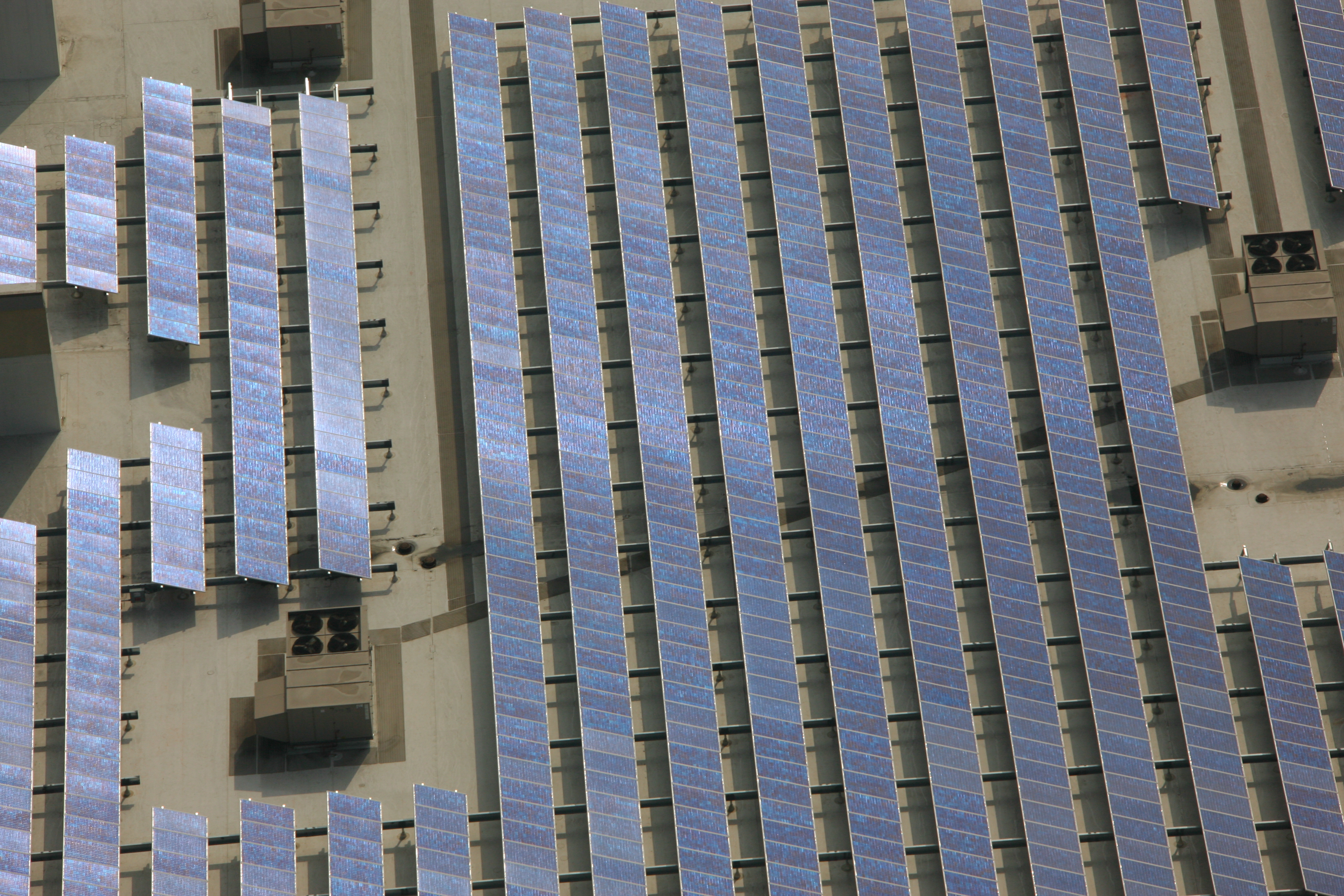


photo: Southern California Edison

I wrote this story for Grist, where it first appeared.

The California Legislature started out the week in the green by passing the nation’s first energy storage bill. But legislators quickly ran into the red Wednesday when they failed to approve legislation to impose a statewide ban on plastic bags, or codify Governor Arnold Schwarzenegger’s executive order that utilities obtain a third of their electricity from renewable sources by 2020.

But don’t go crying in your organic beer yet. On Thursday, the California Public Utilities Commission signed off on 650 megawatts of new solar energy contracts and programs.

Whch all goes to show that in the Golden State, environmental politics are not green and brown. And despite the fate of Proposition 23, the oil company-bankrolled ballot initiative to suspend California’s global warming law, the state’s panoply of green laws allows progress to be made on various fronts.

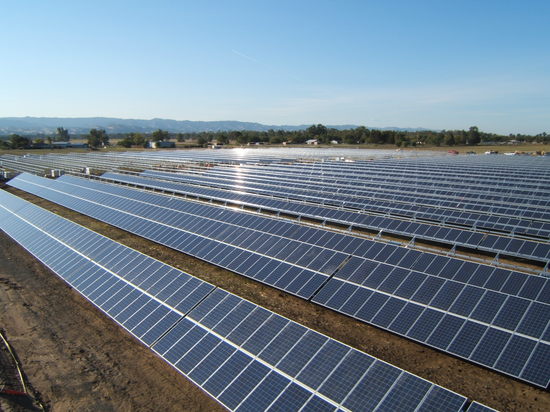
The utilities commission, for instance, approved contracts for two giant photovoltaic solar farms to be built in the Mojave Desert by First Solar. Together they will supply 550 megawatts of electricity to the utility Southern California Edison.

Commissioner Timothy Simon noted at Thursday’s energy commission meeting in San Francisco that the price for that electricity is lower than previous solar contracts, another sign that photovoltaic power is edging ever closer to edging out fossil fuels. The price also speaks to the ability of First Solar, the Tempe, Ariz.-based thin-film solar company, to win and begin to execute big projects.

The commission also greenlighted San Diego Gas & Electric’s proposal for 100-megawatt’s worth of small-scale photovoltaic projects.

Most installations will be 1 or 2 megawatts and built in parking lots or other open spaces where they can be plugged into the grid without expensive transmission upgrades. The move comes on top of 1,000 megawatts of distributed solar generation that the utilities commission previously approved for California’s two other big utilities.

Michael R. Peevey, the president of the utilities commission, said despite the failure of the state legislature to institutionalize the 33 percent renewable portfolio standard — currently subject to reversal by the next governor — California was on a solar streak.

“With approval of this project we’ll have added 1,100 megawatts of photovoltaic electricity by the three utilities,” said Peevey, noting that separately the California Solar Initiative will add another 3,000 megawatts and that by year’s end regulators are poised to approve big solar farms that will generate 4,700 megawatts of electricity.

“These are big, big numbers,” Peevey added. “Independent of the legislature, we’re moving to a RPS economy.”

On Thursday in The New York Times, I write about an independent report that finds that PG&E’s smart meters are not responsible for higher utility bills incurred by some customers:

After Pacific Gas & Electric, the giant California utility, began installing smart meters in the state’s Central Valley, the company was swamped with complaints from residents that their utility bills had increased.

But an independent review of the smart meters released Thursday found that the devices were functioning properly and attributed the high charges to a heat wave last year that coincided with their installation as well as poor customer service by P.G.&.E.

“They are accurately recording usage and throughout our evaluation we found no systemic issues,” Stacey Wood, an executive with the Structure Group, a Houston consulting company, said on Thursday at a meeting of the California Public Utilities Commission. “We did identify there were weakness in the focus on customer service.”

The utilities commission hired the Structure Group to conduct test P.G.&.E’s smart meters and conduct a technical review.

The digital devices wirelessly transmit data on a home’s electricity and natural gas usage to utilities while allowing residents to monitor their electricity consumption in real time. Smart meters are considered a linchpin for the development of a smart power grid and tens of millions of the gadgets are set to be installed nationwide in coming years.

But the rollout has been anything but smooth in California, where nearly 10 million smart meters will be deployed.

“By the fall of 2009, the C.P.U.C. had received over 600 smart meter consumer complaints about ‘unexpectedly high’ bills and allegations that the new electric smart meters were not accurately recording electric usage, almost all of which were from P.G.&E.’s service area,” according to the Structure Report.

The consulting firm said it then tested more than 750 smart meters in the laboratory and in the field and reviewed utility account records for 1,378 customers, including those that had complained of abnormally high bills.

“Of the 613 smart meter field tests, 611 meters were successfully tested, and 100 percent passed average registration accuracy,” the report stated.

The study attributed some residents’ higher bills to a 2009 heat wave in Kern County as well as increased electricity usage due to new swimming pools or additions to their homes.

Then there was P.G.&E.’s handling of the controversy.

“P.G.&E. processes did not address the customer concerns associated with the new equipment and usage changes,” the report said. “Customer skepticism regarding the new advanced meter technology was not effectively addressed by P.G.&E. on a timely basis.”

You can read the rest of the story here.

photo: Mountain Lion Foundation

In Thursday’s New York Times, I write about the mountain lion that was stalking the streets of Berkeley, Calif., this week:

The appearance of a mountain lion Tuesday near downtown Berkeley, Calif., caused a stir in this animal-loving, environmentally conscious community, where residents may obsess about locally grown organic food but don’t expect to be on the menu.

The mountain lion, a 100-pound female, was spotted around 2 a.m. Tuesday in the city’s Gourmet Ghetto district, according to the Berkeley Police Department.

The cougar roamed within pouncing range of Alice Waters’s Chez Panisse restaurant, the temple of California cuisine, where twice-cooked kid goat with cumin, ginger, eggplant, and chickpeas was the featured dish that evening. But the state’s top-level predator probably was on the hunt for venison and got lost, according to wildlife experts.

“A mountain lion traveling through an urban environment is infrequent but looking at aerial photographs of the surrounding area you can see why it chose Berkeley,” said Marc Kenyon, the statewide mountain lion program coordinator for the California Department of Fish and Game.

The reason: deer, the mountain lion’s main prey. Berkeley is wedged between San Francisco Bay and sylvan foothills that abut miles of forested parkland. It’s a mountain lion smorgasbord with cougar chow wandering the hills and valleys. (On Wednesday morning, for instance, I walked out of my hillside house to find a pack of deer ambling down the street.)

“Where there are deer, mountain lions not far behind,” noted Mr. Kenyon. “The mountain lion might have been following a deer down the hill and at one point turned off a path and spotted a raccoon and decided to chase that raccoon and got turned around and walked west toward the city instead of east toward the hills.”

More than half of California is classified as mountain lion habitat by the Department of Fish and Game, which estimates there are between 4,000 and 6,000 of the animals in the state. California voters banned the hunting of mountain lions for sport in 1990.

While reports of mountain lion sightings have been growing as human development expands into the animal’s habitat, Mr. Kenyon said the number of mountain lions actually is thought to be falling statewide due to a decline in deer population in some regions.

“California is the state with the highest number of humans coexisting with the highest number of mountain lions,” said Tim Dunbar, executive director, Mountain Lion Foundation, a non-profit based in Sacramento, Calif. “And though there have been some fatal incidents on occasion we’re doing very well.”

Such encounters usually do not end well for the mountain lion, though. In Berkeley, police officers tracked the cougar as it ran through the surrounding residential neighborhood for an hour, jumping over fences from backyard to backyard. According to news reports, an officer shot and killed the animal at 3:30 a.m.

The incident unleashed a Berkeley-style debate on Berkeleyside, a local blog, over whether the mountain lion should have been killed.

You can read the rest of the story here.

I wrote this story for Grist, where it first appeared.

The California Legislature has passed the nation’s first energy storage bill, which could result in the state’s utilities being required to bank a portion of the electricity they generate.

Assembly Bill 2514 now heads to the desk of Gov. Arnold Schwarzenegger, who has made climate change and green technology his political legacy as his final term winds down.

Energy storage is considered crucial for the mass deployment of wind farms, solar power plants, and other sources of intermittent renewable energy, as well to build out the smart grid.

On the West Coast, for instance, the wind tends to blow hardest at night when demand for electricity is low. If utilities can store that wind-generated power — and energy from solar farms — in batteries, flywheels, and other devices, they can avoid building and firing up those billion-dollar, greenhouse gas-emitting, fossil-fuel power plants that are only used when demand spikes.

AB 2514 won the support of Jerry Brown, the California attorney general who is the Democratic candidate for governor. The Sierra Club and union groups also support the measure. Various business organizations, including the California Chamber of Commerce, opposed the bill.

Sponsored by Assembly member Nancy Skinner, a Berkeley Democrat, the bill was stripped of its more stringent provisions by the time it emerged from the legislative sausage-making process on Friday.

Originally, AB 2514 required California’s three big investor-owned utilities — PG&E, Southern California, and San Diego Gas & Electric — to have energy storage systems capable of providing at least 2.25 percent of average peak electrical demand by 2015. By 2020 the target would rise to at least 5 percent of average peak demand.

The bill now only requires that the California Public Utilities Commission determine the appropriate targets — if any — for energy storage systems, and then require the Big Three utilities to meet those mandates by 2015 and 2020. Publicly-owned utilities must set energy storage system targets to be met by 2016 and 2021.

Still, AB 2514 is a significant step and could ultimately help jump-start the market for energy storage, which remains in its infancy.

PG&E, for instance, plans to build an experimental facility that would tap electricity generated during peak wind farm production to pump compressed air into an underground reservoir. When demand jumps, the reservoir would release the air to run electricity-generating turbines which are capable of producing 300 megawatts of power.

And last week, PG&E proposed building a “pumped hydro” storage system. As its name implies, the system would pump water from one reservoir to another reservoir at a higher elevation during times of peak renewable energy production. Water in the upper reservoir would then be sent back downhill to power a turbine when electricity demand begins to spike.

photo: Sonoma County

In The New York Times on Tuesday, I wrote about the latest nail in the coffin of Property Assessed Clean Energy, or PACE, programs:

Many homeowners who participated in a program that let them repay the cost of solar panels and other energy improvements through an annual surcharge on their property taxes must pay off the loans before they can refinance their mortgages, two government-chartered mortgage companies said Tuesday.

The guidance came from Fannie Mae and Freddie Mac as efforts to resolve a dispute over the program — called Property Assessed Clean Energy, or PACE — have failed.

Approved by 22 states, the programs let municipalities sell bonds to finance improvements in energy efficiency. Homeowners typically pay back the loans over 20 years through an annual property tax assessment. As is the case with other property tax assessments, a lien is placed on the home that has priority over the mortgage if the homeowner defaults.

In July, the Federal Housing Finance Agency, which oversees Fannie and Freddie, effectively derailed the program when it issued guidance to lenders stating that the liens violated the agency’s underwriting standards. Fannie and Freddie buy and sell most of the nation’s home mortgages.

That guidance led to the halt of most PACE programs and left in limbo those homeowners who had already taken out energy improvement loans.

On Tuesday, Fannie and Freddie issued guidance to lenders stating that borrowers with sufficient equity in their homes must pay off the loans before refinancing. Those homeowners without enough equity to take cash out of their home to pay off the lien can refinance with the loan in place.

“Fannie Mae will not purchase mortgage loans secured by properties with an outstanding PACE obligation unless the terms of the PACE program do not permit priority over first mortgage liens,” according to the guidance.

The program’s proponents have argued that it overcomes obstacles to installing expensive solar panels and making other energy efficiency improvements that reduce greenhouse-gas emissions while creating jobs.

In response to the Federal Housing Finance Agency’s actions, the California attorney general’s office filed a lawsuit in July against Fannie and Freddie, as did the Sierra Club. Meanwhile, legislation has been introduced in Congress to allow the program to go forward.

“It’s absolutely clear now that the F.H.F.A. is not at all interested in working out a solution that would allow PACE to proceed — the agency appears intent only on obstructing the program,” Janill L. Richards, a California supervising deputy attorney general, wrote in an e-mail.

You can read the rest of the story here.

I wrote this story for Grist, where it first appeared.

No one said transforming the century-old power system into a state of-the-art digital smart grid was going to be easy. But California already is getting bogged down in a growing fight over installing smart utility meters in homes.

The wireless devices are a linchpin in building the smart grid as they allow the two-way, real-time transfer of data about a home’s power use. Utilities need that information to balance supply and demand on a power grid that will be increasingly supplied with intermittent sources of renewable energy while facing new demands from electric cars.

For homeowners, smart meters and an expected proliferation of smart refrigerators, dishwashers, and other appliances will help them keep a lid on rising electricity costs while making better use of rooftop solar panels.

But from the get-go, smart meters have raised a ruckus in California. First, residents in the state’s hot Central Valley complained that their utility bills spiked after the meters were installed last year.

Then in the San Francisco Bay Area, a small but vocal contingent has been arguing that smart meter antennas are a potential health threat. Never mind that every other person here seems to carry an iPhone, and many, if not most, homes in this tech-centric region boast wireless Internet routers that continuously transmit electromagnetic frequencies through the ether.

At first smart meters appeared to be a fringe issue — at the Fourth of July parade in the Marin County hippie beach enclave of Bolinas, I saw people holding up ban-the-smart-meter banners. But last week, I spotted similar homemade signs at the Berkeley Farmers’ Market. Meanwhile, the Marin towns of Fairfax and Novato have moved to ban smart meter installations; Santa Cruz County is considering doing the same.

Lost in all the hullabaloo is what a smart meter can do for managing your home’s carbon footprint. There are all kinds of gadgets and services coming down the pike that will let you control your electricity use from your phone and pinpoint the power hogs in your home. But even the most basic information provided by a smart meter is a big leap from a once-a-month bill.

My utility, PG&E, installed a smart meter at my house some months ago but just the other week began to let me monitor my electricity use on its website. If you want to geek out, you can really get granular by charting your power use hour-by-hour, pinpointing spikes and seeing how your lifestyle affects your energy consumption.

This morning, for instance, I learned that 21 days into the current billing cycle I’ve used $11 worth of electricity and that my projected total bill is between $15 and $20. My daily electricity use peaks around 6 a.m. and 8 p.m. and I’m using slightly fewer kilowatts than this time last year. I also set up an email alert to be sent if my electricity consumption kicks me into a more expensive rate tier.

And in the keeping down-with-the-Jones department, I learned that my energy use puts me at the very low end of the Berkeley spectrum.

All this provides valuable insight for the building of the green grid. But as with other efforts to transition to a renewable energy economy, overcoming political obstacles to the smart grid may be just as crucial as any technological triumph.

photo: PG&E

I wrote this story for Grist, where it first appeared.

It’s been a big week for Big Solar.

On Wednesday, the California Energy Commission approved a license for the nation’s first new large-scale solar thermal power plant in two decades. Over the next month, the energy commission is expected to green-light three more big solar farms to be built in the Mojave Desert. The projects would collectively generate nearly 2,000 megawatts of electricity. At peak output, that’s the equivalent of a couple of large nuclear power plants.

Less noticed but equally momentous were developments this week on the small-scale solar front.

On Tuesday, an administrative law judge with the California Public Utilities Commission (CPUC) issued a proposed decision that would establish a world-first reverse auction system for renewable energy projects. The idea is to build 1,000 megawatts of decentralized energy generation by allowing developers to bid on projects that would each produce between one and 20 megawatts of electricity. Projects could include small solar farms built on vacant suburban land, or photovoltaic arrays placed on top of wastewater treatment plants or on any other large structures with unused rooftop space.

Think of it as eBay for green energy.

The goal is to accelerate the market for small-scale photovoltaic systems by requiring California’s three big investor-owned utilities to hold auctions twice a year where developers bid on projects that can be built quickly — within 18 months — and plugged into the existing power grid.

By letting the market essentially determine electricity prices rather than the government setting a premium rate to be paid for renewable energy, California hopes to avoid the boom-and-bust cycles that have whipsawed the European solar industry when subsidies have been cut.

“This mechanism would also allow the state to pay developers a price that is sufficient to bring projects online but that does not provide surplus profits at ratepayers’ expense,” utilities commission staff wrote in proposing the so-called reverse auction mechanism last year. “Providing a clear and steady long-term investment signal rather than providing a pre-determined price can create a competitive market.”

While the program would initially set up an auction for 1,000 megawatts, administrative law judge Burton W. Mattson wrote in his decision that that cap could be raised in the future if the auction system is successful.

The proposed decision now needs the approval of the CPUC, which seems a foregone conclusion.

In a sign that there will be no shortage of bidders for solar projects, utility Southern California Edison this week submitted for regulatory approval contracts for eight distributed photovoltaic farms that would generate a total of 140 megawatts.

Most of the mini-power plants will generate 20 megawatts and can be located near utility substations, avoiding the need for expensive new transmission projects.

Southern California Edison also requested approval of contracts for two small biomass power plants and three wind energy projects, one of which will generate 4 megawatts while the other two would each produce 20 megawatts at peak output. Altogether the power purchase agreements are worth $556 million.

The utility said that while it was soliciting contracts for a total of 250 megawatts, it received applications to build projects that would generate nearly twice that amount of electricity.

In Thursday’s New York Times, I write about a new guide to green products vetted by the city of San Francisco, which in 2005 instituted strict purchasing standards:

In 2005, the City of San Francisco instituted strict purchasing standards requiring municipal departments to buy products that met certain environmental, health and toxicity guidelines.

Now the city has put online the database it has developed over the past five years to serve as a resource for other cities as well as for corporate purchasing agents and consumers. Called the SF Approved List, the Web site lists more than 1,000 products, like bathroom disinfectants and computer keyboard cleaners, that do not emit greenhouse gases.

“It is quite difficult for purchasing agents to find environmentally preferable products,” Karl Bruskotter, environmental programs analyst with the City of Santa Monica, Calif., wrote in an e-mail. “Any vendor can offer a product or service and call it green, and the purchasing agent may not know how to ask the right questions to uncover whether or not the product really is green.”

For example, he said, it can be challenging to find a safer chemical product to remove graffiti. He noted that Santa Monica maintained its own green purchasing program. “I have looked at the San Francisco list and sought a distributor down here in L.A. to give to our staff for removing graffiti,” Mr. Bruskotter said.

Chris Geiger, the green purchasing manager for the San Francisco Department of the Environment, said the city researched the environmental and health hazards for each product category.

Mr. Geiger said his team developed its list based on existing “eco-labels,” its own testing and by tapping a database of chemical hazards maintained by GoodGuide, an online consumer service. The city evaluates ingredients, energy efficiency and volume of recycled content. Rather than just compare various products, the environment department also researches environmentally preferred alternatives to using a particular product.

“The biggest difference between SF Approved and commercial guides is that this is coming from a government agency that has looked at products for its own use with an objective eye,” Mr. Geiger said.

You can read the rest of the story here.

photo: Todd Woody

In Wednesday’s New York Times, I write about the California Energy Commission green-lighting the nation’s first big solar power plant in 20 years:

California regulators on Wednesday approved a license for the nation’s first large-scale solar thermal power plant in two decades.

The licensing of the 250-megawatt Beacon Solar Energy Project after a two-and-a-half-year environmental review comes as several other big solar farms are set to receive approval from the California Energy Commission in the next month.

“I hope this is the first of many more large-scale solar projects we will permit,” said Jeffrey D. Byron, a member of the California Energy Commission, at a hearing in Sacramento on Wednesday. “This is exactly the type of project we want to see.”

Developers and regulators have been racing to license solar power plants and begin construction before the end of the year, when federal incentives for such renewable energy projects expire. California’s three investor-owned utilities also face a deadline to obtain 20 percent of their electricity from renewable sources by the end of 2010.

Still, it has been long slog as solar power plants planned for the Mojave Desert have become bogged down in disputes over their impact on protected wildlife and scarce water supplies.

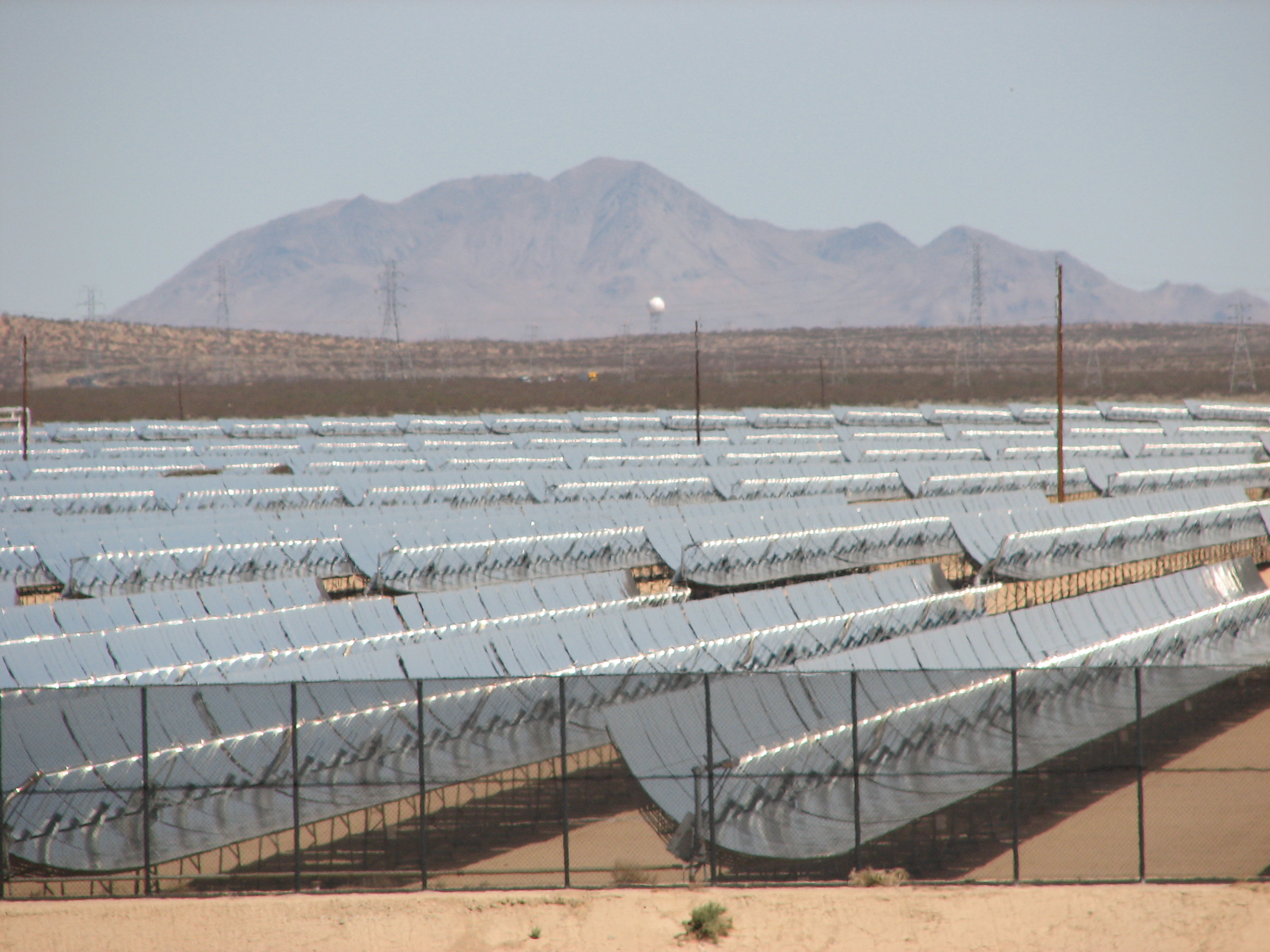
In March 2008, NextEra Energy Resources filed an application to build the Beacon project on 2,012 acres of former farmland in California’s Kern County. Long rows of mirrored parabolic troughs will focus sunlight on liquid-filled tubes to create steam that drives an electricity-generating turbine.

Some rural residents immediately objected to the 521 million gallons of groundwater the project would consume annually in an arid region on the western edge of the Mojave Desert. After contentious negotiations with regulators, NextEra agreed to use recycled water that will be piped in from a neighboring community.

“It’s been a lengthy process, an almost embarrassingly long lengthy process,” said Scott Busa, NextEra’s Beacon project manager, at Wednesday’s hearing. “Hopefully, we’re going from a lengthy process to a timely process.”

You can read the rest of the story here.

Design a site like this with WordPress.com
Get started