Feeds:
Posts
Comments

I wrote this story for Grist, where it first appeared.

When Silicon Valley’s elite gathered at Google’s headquarters in August to rally opposition to Proposition 23, the ballot measure that would suspend the state’s global warming law, one speaker darkly warned that the Texas oil companies backing the initiative would spend as much as $50 million to ensure its passage.

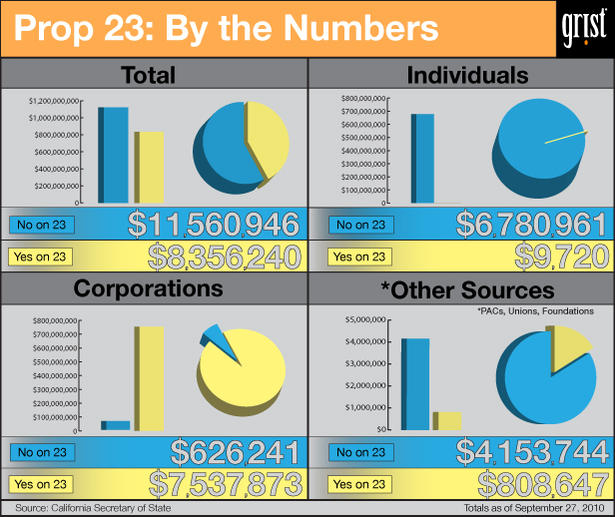
As it turns out, the No on 23 campaign is outspending the Texans. Big time. Case in point: Over the past few days, the No forces have collected $5 million from venture capitalists, New York financiers, renewable energy companies, and other deep-pocketed backers, according to California Secretary of State records.

The Yes campaign, meanwhile, has received only a single $10,000 donation over the past week, from a Houston company that provides services to the oil and petrochemical industries. The last big contribution to the Yes coffers was a $100,000 donation made on Sept. 13.

Of course, Texas oil companies Tesoro and Valero and the billionaire Koch brothers, who earlier contributed $1 million to the Yes effort, could drop $10 million on the campaign tomorrow. But there appears to be a fundraising enthusiasm gap between the campaigns during the home stretch sprint to Election Day.

Take a look at the growing roster of No partisans willing to put their money where their mouths are — not to mention their self-interest.

Ann Doerr, the wife of leading Silicon Valley capitalist John Doerr, gave $1 million to the No campaign on Thursday while her husband contributed $500,000 (in addition to the half million dollars he previously donated). Thomas Steyer, founder of the Farallon Capital Management hedge fund and co-chair of the No on 23 effort, put another $2.5 million into the campaign. San Francisco venture capitalist Paul Klingenstein contributed $100,0000.

On the other coast, New York hedge fund manager Julian Robertson of Tiger Management kicked in half a million dollars on Thursday.

Renewable energy companies stepped to the plate as well. The U.S. division of Spanish wind giant Iberdrola Renewables gave $25,000; Santa Monica-based Solar Reserve, a developer of solar power plants, pitched in $50,000; and Google executive Jonathan Rosenberg contributed $10,000.

The Consumers Union, the Union of Concerned Scientists, the Kaiser Foundation Health Plan, and Working Assets also gave a collective $100,000 over the past week.

With absentee voting beginning in California today, expect to see that cash put to work influencing those who plan to vote early.
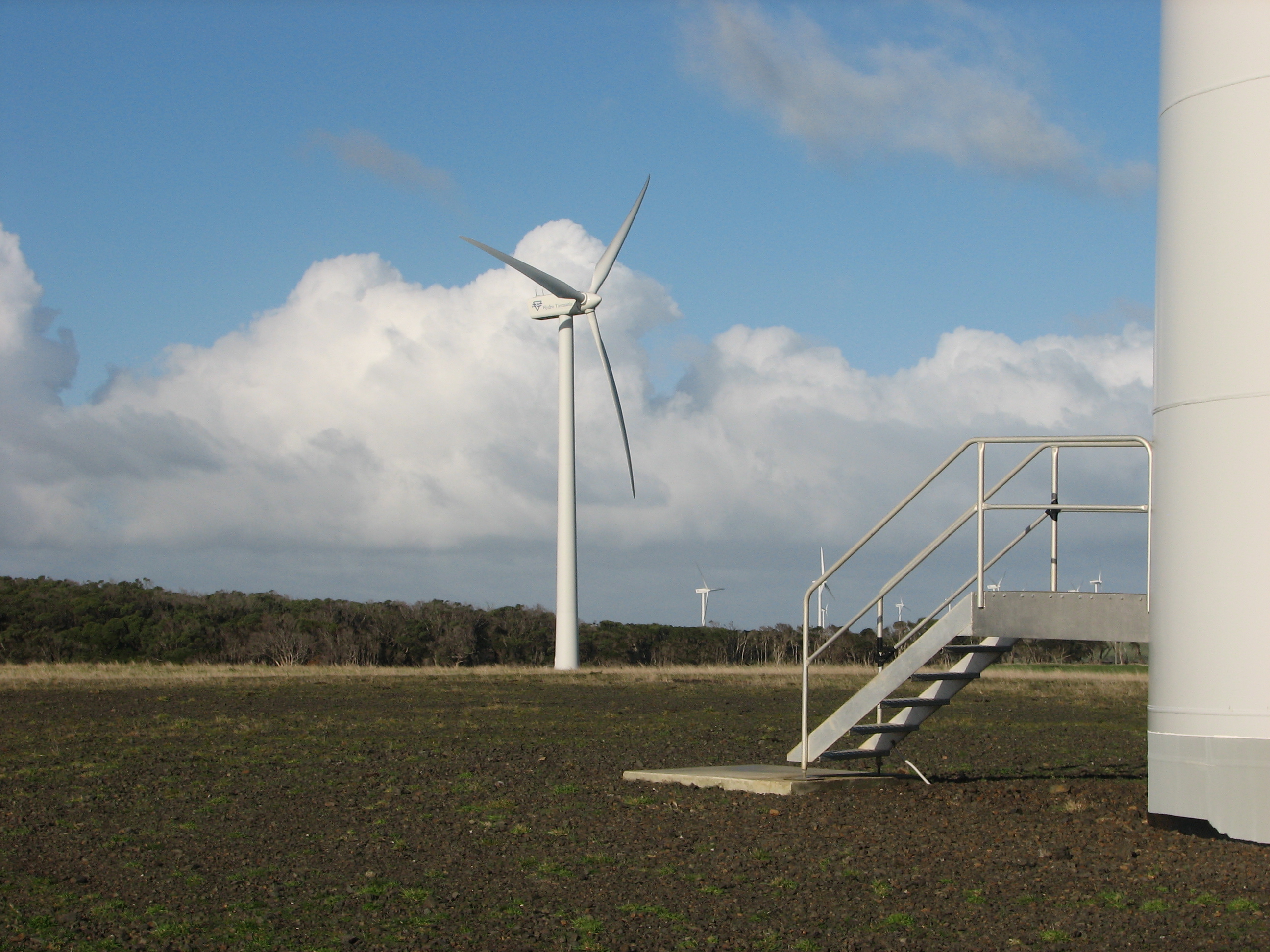
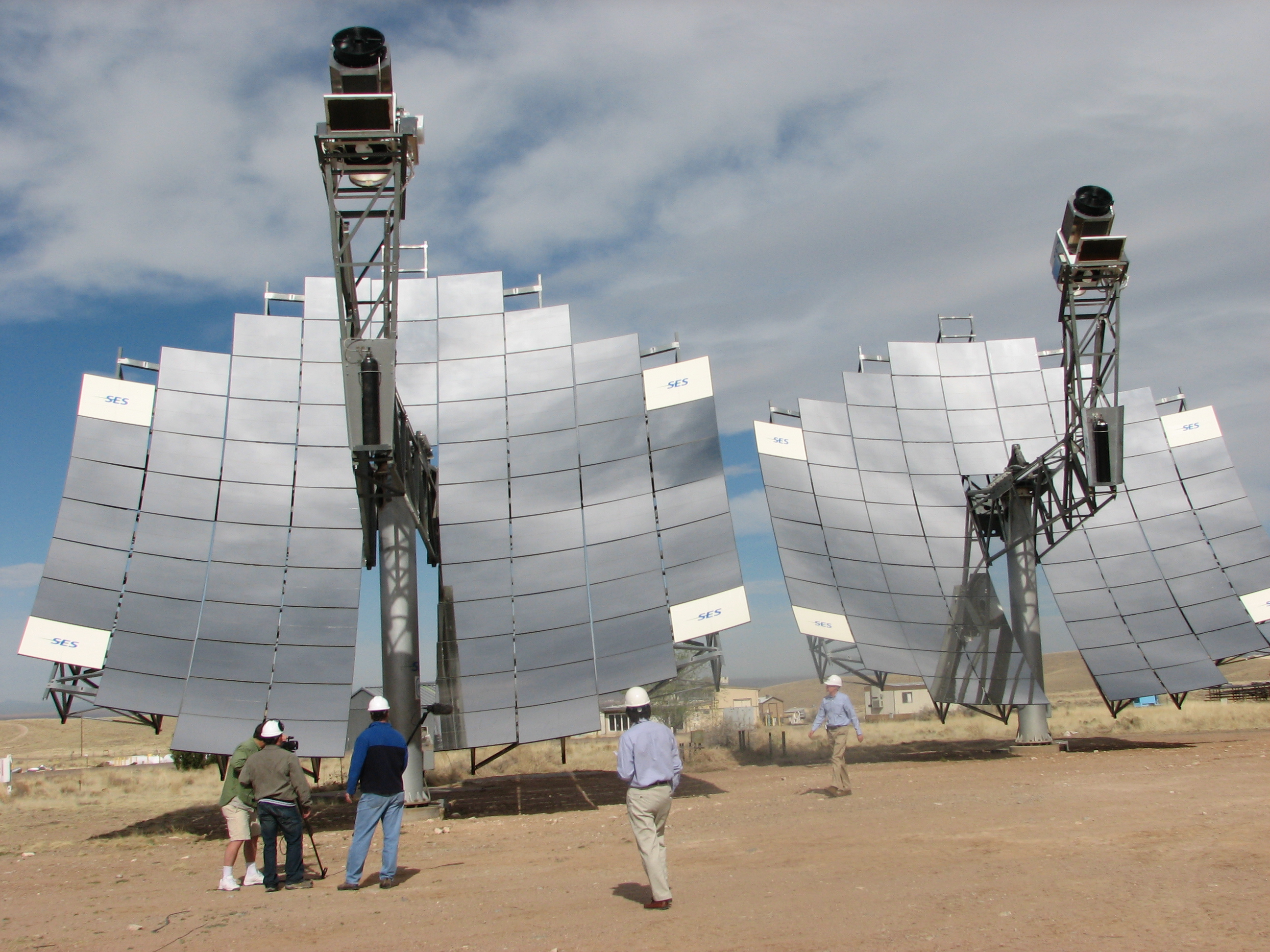
photo: Todd Woody

In The New York Times on Friday, I write about a report showing venture capital investment in green technology companies nose-dived in the third quarter of 2010, with California taking a big hit:

Has the green tech recovery stalled?

Global venture capital investment in green technology companies fell 30 percent, to $1.53 billion, in the third quarter of 2010, according to a preliminary report issued Friday by the Cleantech Group, a San Francisco-based research and consulting firm.

The amount invested in North America, Europe, China, India and Israel in the third quarter is also 11 percent below the year-ago quarter, when investment tanked amid the recession.

The numbers are striking, given that investment in green-tech startups soared in the first half of this year, surpassing records set in 2008 at the height of the clean technology boom.

“Much like we see globally, I think businesses and investors are grappling a little bit with a recovery that hasn’t yet taken off, and I think people are trying to figure out how quickly will the growth occur,” Sheeraz Haji, president of the Cleantech Group, said during a conference call Friday. “I think we’re seeing a little bit of the same in clean tech.”

California, an epicenter of green technology innovation, suffered a precipitous decline, with investment falling 61 percent.

Mr. Haji questioned whether uncertainty over the fate of California’s global warming law, known as A.B. 32, played a role in the falloff in investment. A measure on the November ballot, Proposition 23, would suspend A.B. 32 until the state unemployment rate falls to 5.5 percent for four consecutive quarters.

“We can’t help but wonder that uncertainty around Prop 23 has impacted that,” he said, cautioning that it is difficult to draw hard conclusions based on one quarter’s data. “

The global warming law requires California to cut its greenhouse gas emissions to 1990 levels by 2020. Mr. Haji noted that venture investment soared after the law’s enactment in 2006 as investors poured money into solar startups and companies developing energy efficiency services and electric cars.

Even so, investors put $452 million into California companies in the third quarter, versus $126 million for second-place Texas.

While the rest of North America experienced a rise in investment in the third quarter, California’s poor performance led to a 42 percent decline for the region as a whole.

Not so with Asia. For instance, investment in China jumped to $153 million in the third quarter from $30 million in the second quarter of 2010.

You can read the rest of the story here.

photo: Todd Woody

I wrote this story for Grist, where it first appeared.

While efforts to pass federal climate change legislation have stalled and a fight rages in California to overturn its global warming law at the ballot box, Golden State regulators have been licensing massive desert solar power plant projects at a breakneck pace in recent weeks.

On Wednesday, for instance, the California Energy Commissioned approved two solar projects that would generate nearly 1,000 megawatts of electricity, the 250-megawatt Genesis Solar Energy Project and the 709-megawatt Imperial Valley Solar Project.

Since Aug. 25, the energy commission has licensed six solar thermal power plants that would cover some 39 square miles of desert land and generate 2,829 megawatts. That’s nearly six times as much solar capacity that was installed in the United States last year, mostly from rooftop solar panels.

“Consider how important it is that California move aggressively toward renewables and how important these pioneering projects are,” said Jeffrey Byron, a member of the California Energy Commission, said at a hearing Wednesday.

Regulators and developers are racing to put shovels to ground before the end of the year when federal incentives for large renewable energy projects expire, which could threaten the financial viability of some of the solar projects.

The Genesis project, to be built by Florida-based energy giant NextEra Energy Resources (formerly called FPL), will build long rows of parabolic troughs in the Riverside County desert that will focus sun on liquid-filled tubes suspended over the mirrors to create steam that will drive an electricity-generating turbine. It’s an older solar technology that was first deployed in the 1980s in California.

Tessera Solar’s  Imperial Valley project, on the other hand, will be the first big test of Stirling dish technology. Resembling a giant mirrored satellite receiver, the 38-foot-high, 40-foot-wide, solar dish focuses the sun’s rays on a Stirling engine, heating hydrogen gas to drive pistons that generate 25-kilowatts of electricity. Some 29,000 of Tessera’s Suncatchers will be installed on more 6,400 acres of desert land near the Mexican border about 100 miles east of San Diego.

Meanwhile, California Gov. Arnold Schwarzenegger this week signed into law what is thought to be the nation’s first energy storage legislation. The bill, AB 2514 could result in regulations requiring the state’s utilities to store a certain percentage of electricity generated in energy storage systems such as batteries, compressed air or flywheels.

Energy storage is considered crucial for the mass deployment of solar power plants, wind farms and other sources of intermittent renewable energy, as well to build out the smart grid.

In The New York Times on Thursday, I write about an unusual alliance between California financiers and environmental justice activists to reach minority voters who they believe will be key in defeating Proposition 23, the ballot measure that would suspend the state’s global warming law:

The fight over Proposition 23, the California ballot initiative that would suspend the state’s landmark global warming law, has spawned some unusual political alliances. Mainstream environmentalists, venture capitalists, labor unions, tech chieftains and even some Republicans have all made common cause to oppose the measure, which is backed by two Texas oil companies.

Now activists who work on behalf of poor communities afflicted by pollution and some of California’s top financiers have come together in an effort to bring minority voters to the polls on Nov. 2.

At a recent fund raiser at the waterfront offices of Sungevity, an Oakland, Calif., solar company, hedge-fund managers and other well-heeled investors sipped cocktails and mingled with inner-city activists in the hope of raising $1.9 million for a turn-out-the-vote campaign that will target nine counties with large populations of African-American, Asian and Latino voters.

“There is something kind of strange but great that there are environmental justice activists mixing with entrepreneurs and financiers who are all committed equally to building this clean economy that can lift all boats,” Danny Kennedy, Sungevity’s co-founder and a former Greenpeace activist, told the crowd.

California’s Global Warming Solutions Act of 2006, known as A.B. 32, mandates that the state’s greenhouse gas emissions be cut to 1990 levels by 2020. Proposition 23 would suspend the law until the state unemployment rate falls to 5.5 percent for four consecutive quarters, a rare occurrence in recent decades.

“How voters of color vote on Prop 23 will be the margin of victory or defeat on this,” Roger Kim, executive director of the Asian Pacific Environmental Network, an Oakland-based group, said at the event. “As little as three percent of the vote may make the difference.” (Mr. Kennedy’s wife, Miya Yoshitani, serves as associate director of the Asian Pacific Environmental Network.)

A Field Poll released on Sunday showed Proposition 23 opposed by 45 percent and favored by 34 percent of respondents, with 21 percent still undecided. Latino voters supported the ballot measure 41 percent to 38 percent while African-American and Asian voters opposed it 41 percent to 34 percent. A Los Angeles Times/University of Southern California poll published on Friday found the initiative supported by a slight margin, 40 percent to 38 percent.

“Let’s talk about why people of color especially matter in this campaign,” Thomas F. Steyer, founder of Farallon Capital Management, a $20 billion San Francisco hedge fund, and co-chairman of the “No on 23” campaign, said in a speech at the fund raiser. “And it is true that the swing vote if you look at it may well be people of color. And that’s definitely important and we need to definitely to win this so I don’t want to downplay that.”

You can read the rest of the story here.

I wrote this story for Grist, where it first appeared.

The air war over California’s global warming law has begun.

Flush with cash, the campaign to defeat Proposition 23, the ballot initiative that would suspend the state’s landmark climate change law, broadcast its first two television commercials Tuesday. The ad blitz came as the No campaign collected new contributions Tuesday from old and new economy firms, including $25,000 from electric carmaker Tesla Motors, $50,000 from Florida-based energy giant NextEra Energy Resources, and $25,000 from health insurer Blue Shield of California. Also on Tuesday, the California Teachers Association contributed $200,000 to the No on 23 effort.

The Yes on 23 campaign also hit the airwaves Tuesday in what will probably be a protracted — and expensive — battle for the 21 percent of California voters who’ve told pollsters they’re undecided about the ballot measure. A Field poll released on Sunday found that voters surveyed oppose Prop 23 45 percent to 34 percent.

The ads broadcast Tuesday — hours before California gubernatorial candidates Jerry Brown and Meg Whitman were to face off in their first debate – highlight the different tacks the campaigns are taking.

The No forces’ 15-second spot is grainy and ominous:

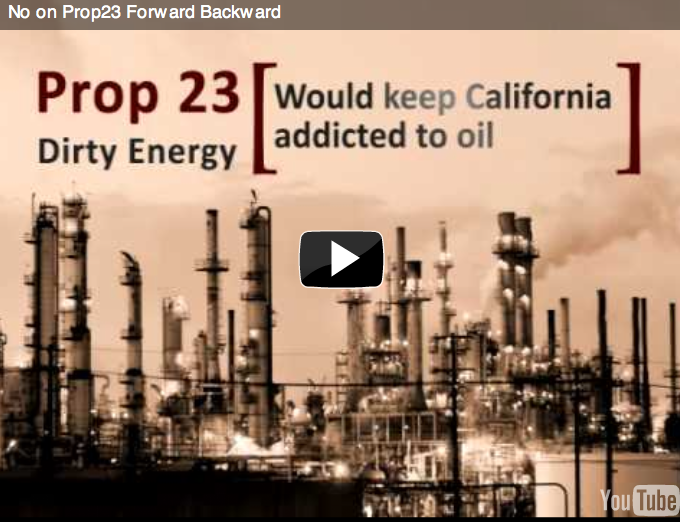
“Prop 23 is one deceptive ballot measure from two Texas oil companies that would have three disastrous consequences,” intones the announcer over gray-tinged images of belching smokestacks, oil refineries, and jammed freeways. “Twenty-three would pollute our air, kill clean energy jobs, and keep us addicted to costly oil. Vote No on 23.”

The second ad from the alliance of environmentalist, Silicon Valley venture capitalists, and green tech companies also aired statewide in California — and on YouTube, of course — takes a somewhat sunnier tone.

“California is outlining a clean energy future, a growing workforce of bright Californians who harness wind and solar power to move our state forward,” goes the 30-second script over scenes of wind farms and workers installing rooftop solar panels.

“But two Texas oil companies have a deceptive scheme to take us backwards. They are spending millions pushing Prop 23, which would kill clean energy standards, keep us addicted to costly polluting oil, and threaten hundreds of thousands of California jobs. Stop the job-killing dirty energy proposition. Vote No on 23.”

But the 30-second ad from the Yes on 23 campaign — largely backed by two Texas oil companies and the billionaire Koch brothers, owners of a petrochemical conglomerate who have bankrolled efforts to derail climate change legislation — shows what the environmentalists and their allies are up against.

“I have enough bills but now the politicians are putting a new energy tax on us to pay for California’s global warming plan,” says a youngish middle-aged woman dressed in a pink sweater and white slacks as she walks from her mailbox to her sunny suburban house on a tree-lined street. “Yes on 23 stops the energy tax, preventing a 60 percent increase in electricity rates, and higher gas prices. And saves more than a million jobs.”

“I want to do my part on global warming,” she adds, flipping through a ballot guide. “All Yes on 23 says is let’s wait until people are back to work and we can afford it. Yes on 23 – it’s common sense.”

The ads’ claims immediately triggered howls from the No campaign.

“The Yes on 23 campaign is up with a new television advertisement chock-full of the deceptive claims the oil companies behind the ballot measures have been making for months,” wrote No spokesman Steve Maviglio in an email blasted to reporters Tuesday and which cited various academic studies disputing the Yes claims.

Misleading, but potentially effective on voters who are not versed in the arcane economics of cap-and-trade.

photo: Edelman

In The New York Times on Tuesday, I write about Adobe Systems putting a dozen Bloom Energy fuel cells on the roof of a parking garage at its downtown San Jose headquarters, the largest such installation in the United States:

To green up its operations, Adobe Systems, the maker of the ubiquitous Flash media player, has done everything from installing waterless urinals to building a wind farm at its downtown San Jose, Calif., headquarters.

Now the company has put a dozen 100-kilowatt Bloom Energy fuel cells on top of a parking garage that will supply nearly a third of the three-tower complex’s electricity.

It will be the nation’s largest installation of Bloom Energy Servers, a cutting-edge solid oxide fuel cell that has been bought by Google, eBay and other big corporations.

Bloom Energy, a long-secretive Sunnyvale, Calif., start-up that has raised $400 million from some of Silicon Valley’s leading venture capitalists, unveiled the energy servers to great fanfare at a February event attended by Gov. Arnold Schwarzenegger of California; Gen. Colin L. Powell, the former secretary of state; and a host of technology chiefs.

Fuel cells convert hydrogen, natural gas or another fuel into electricity through an electrochemical process and then provide electricity directly to a building without the need for new transmission lines. Depending on the type of fuel used, Bloom claims its devices can sharply cut or eliminate greenhouse gas emissions.

Randy Knox, Adobe’s senior director for global workplace solutions, said the company aimed to obtain half of its electricity from renewable sources. But Adobe was stymied by the fact its operations are located in urban skyscrapers rather than on a sprawling corporate campus.

“We just don’t have space on our tower rooftops for large solar arrays,” said Mr. Knox.

Earlier this year Adobe did install 20 1.2-kilowatt vertical wind turbines made by Windspire Energy on a sixth-floor plaza that connects two of its buildings. But the urban wind farm, which looks more like a modern art exhibit than a power plant, generates only enough electricity to power about 10 average homes –- when the wind is blowing.

A dozen Bloom Energy Servers, however, produce 1,200 kilowatts of power around the clock and fit comfortably on the roof of Adobe’s parking garage. Visible from neighboring towers and the 101 freeway, the polished metal cubes’ green-chic look owes more to Apple’s tech aesthetic than to old-school industrial design.

You can read the rest of the story here.

graphic: Grist

I wrote this story for Grist, where it first appeared.

As predicted, the big money has started to pour into the battle over Proposition 23, the California ballot measure that would suspend the state’s global warming law.

But not from where you’d expect. The six-figure donations filling campaign coffers is not coming from the Texas oil companies and petrochemical giants backing Prop 23 but from a coalition of environmentalists, venture capitalists, green tech companies, and environmental justice activists who are working to defeat the measure.

Over the past two weeks, the No on 23 forces have collected more than $1.8 million in contributions while the Yes campaign has taken in only $6,500, according to California Secretary of State records.

The windfall for opponents comes as a Field Poll released Sunday shows Prop 23 losing 45 percent to 34 percent with a large number of voters — 21 percent — still undecided. Meanwhile, a poll from the Los Angeles Times/University of Southern California has Prop 23 winning by a slight margin, 40 percent to 38 percent.

I’ll take a closer look at those poll numbers later but first let’s see who’s putting up the green to keep California green.

Environmental justice groups have jumped into the fight in a significant way this month. SCOPE (Strategic Concepts in Organizing and Policy Education), a Los Angeles-based group that formed in the wake of the 1992 Rodney King riots, has contributed $300,000 in recent weeks. SCOPE is funded by various foundations, including the Ford Foundation and James Irvine Foundation. The organization promotes green jobs and other economic development programs for disadvantaged areas of Los Angeles.

Another Los Angeles organization, listed in financial disclosure filings only as A.L.L.E.R.T., donated $150,000 to another No on Prop 23 group called the California Alliance Action Fund: A Committee Sponsored by Social Justice Organizations.

Then there’s Californians for Clean Energy and Jobs, a Sacramento-based organization that says its “sponsored by environmental organizations and business.” It gave $100,000 to a No on Prop 23 campaign committee that’s backed by the Ella Baker Center for Human Rights, the Oakland, Calif., organization founded by Van Jones.

Meanwhile, individuals continue to write checks. San Francisco investor Robert Fisher, former chair of The Gap clothing empire, contributed another half million dollars on Thursday, bringing his total donations to $1 million.

Steve Westly, the former eBay executive and California state controller who now runs an investment group, donated $10,000; Southern California businessperson, Claire Perry, made her second $250,000 contribution.

A couple of well-heeled New Yorkers also got into the act: Daniel Tishman of Tishman Construction and Garrett Moran of private equity giant The Blackstone group, each donated $25,000 on Friday.

The solar industry, whose prosperity in the United States has been driven in large part by California mandates and incentives for renewable energy, has begun to step up to the plate.

Recurrent Energy, which last week agreed to be acquired by the Japanese conglomerate Sharp, donated $50,000, as did First Solar, the Tempe, Ariz., thin-film solar giant whose early investors include the Walton family. Thomas Werner, chief executive of Silicon Valley’s SunPower, one of the largest American solar panel makers and developers, gave $25,000 on Sept. 18. Another Silicon Valley solar startup, Solaria, put in $5,000.

The Field Poll released this weekend indicates that the broad-based alliance against Prop 23 appears to be keeping proponents of the ballot measure from gaining ground. The only demographic groups that favor Prop 23 are Republicans (47 percent to 33 percent), Latino voters (41 percent to 38 percent), and less educated voters (37 percent to 34 percent for those with a high school education or less; 39 percent to 37 percent for those with some college education).

Geographically, all areas of California, including the conservative Central Valley, oppose Prop 23 by varying margins, according to the poll.

Over the past few weeks, the editorial boards of California’s major newspapers have come out against Prop 23. And Meg Whitman, the Republican candidate for governor, has said she’ll voted against the measure, though she supports suspending the global warming law for one year.

But with just six weeks to go until Election Day, Prop 23 opponents still expect to see a gusher of oil money flowing into the Yes campaign from fossil fuel interests.

photo: GE

I wrote this story for Grist, where it first appeared.

General Electric on Wednesday gave a jump-start to Better Place, the Silicon Valley startup developing an electric car infrastructure in several countries.

Better Place plans to deploy a network of urban charging posts and swapping stations where drivers can exchange depleted company-owned batteries for fresh ones when they need to make trips that exceed their car’s range. GE has agreed to help finance up to 10,000 of those batteries in Better Place’s first two markets: Denmark and Israel. That’s no small matter, given that Better Place faces huge capital outlays for battery purchases.

The global conglomerate will also make its WattStation, a sleek electric car charging post that it unveiled in July in San Francisco, compatible with Better Place’s network.

In addition, GE and Better Place will collaborate on an effort to persuade companies to electrify their vehicle fleets and plug into the electric car charging networks that Better Place plans to build in the San Francisco Bay Area; Ontario, Canada; Australia; and Europe.

It’s not the first time GE has dabbled in the nascent electric car industry. In 2008, the company invested $4 million in Think, the Norwegian electric carmaker.

In yet another deal involving a multinational conglomerate and a California startup, Sharp late Tuesday said it had acquired Recurrent Energy, a San Francisco-based solar developer, for $305 million in cash.

While most people may associate Sharp with televisions and other consumer electronics, the Japanese company is also one of the world’s biggest solar panel makers. Recurrent builds small-scale photovoltaic power plants. It has signed contracts for projects that would generate 330 megawatts, and has another nearly another 1,700 megawatts’ worth of deals in development.

During a conference call on Wednesday, Recurrent’s chief executive, Arno Harris, said Recurrent would retain its name and become a division of Sharp and that he and his team would remain in place.

While the buyout is another sign of the consolidating solar industry, it also indicates that big solar panel makers like Sharp feel pressure from the fast rise of low-cost Chinese manufacturers to diversify their business.

Acquiring Recurrent gives Sharp another source of revenue but it won’t necessarily provide a market for Sharp’s own solar panels. In a telling provision of the acquisition, Harris said Recurrent won’t be compelled to buy Sharp solar panels and can keep its current suppliers. Those include Yingli Green Energy, a Chinese company that captured a third of the California market last year thanks in large part to a big deal with Recurrent.

I wrote this story for Grist, where it first appeared.

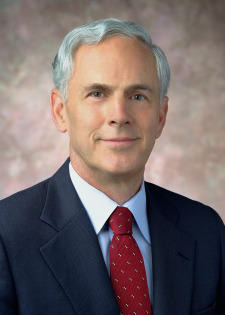
In any emerging industry, there are turning points that bear watching. One of those occurred Tuesday when BrightSource Energy, a California developer of solar power plants, announced the appointment of John E. Bryson as its new chair.

Bryson is a key player in the energy-enviro-regulatory industrial complex, and a member in good standing of the Fortune 500 whose decision to join BrightSource is another signal that Big Solar will be a Big Thing.

A co-founder of the Natural Resources Defense Council in 1970, Bryson went on to become chair and chief executive of Edison International, one of the United States’ largest utilities. He also serves on the boards of Boeing and Disney, as well as the Santa Monica electric car startup Coda Automotive. He is also an advisor to New York private equity and buyout giant Kohlberg Kravis Roberts & Co.

Before going corporate, Bryson was president of the California Public Utilities Commission and California State Water Resources Control Board.

In short, Bryson, 67, is someone who knows his way around the top echelons of the nation’s energy and financial power structure.

Such connections will be key for BrightSource. The company has so far signed contracts to supply more than 2,600 megawatts of electricity to California utilities PG&E and Southern California Edison. It will need to secure many billions of dollars in financing to build more than a dozen large-scale solar power plants to fulfill those deals.

The California Energy Commission on Wednesday is expected to license BrightSource’s first solar project, a 370-megawatt power plant to be built in Southern California’s Ivanpah Valley.

Bryson will serve as non-executive chair, meaning he will not have operational control over the company. A BrightSource spokesperson, though, told me Bryson “intends to be a very active board chair.”

BrightSource has shown itself adept at developing strategic relationships. It counts Google, Morgan Stanley, and Chevron as its investors and brought on engineering giant Bechtel as the chief contractor to build its first power plant as well as to take a stake in the project.

photo: Walmart

I wrote this story for Grist, where it first appeared.

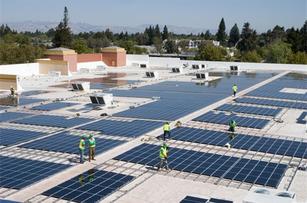
When Walmart announced on Monday that it would install 15 megawatts’ worth of solar arrays on as many as 30 of its stores in California and Arizona, it set out to shape the solar market in more ways than one.

The reason? The world’s biggest retailer specified that many of the new solar installations should use thin-film photovoltaic panels. Thin-film solar cells are printed or deposited on glass or flexible materials. And although they are less efficient at converting sunlight into electricity, they can be produced at a lower cost than traditional crystalline silicon solar cells.

Thin-film solar currently accounts for just about 20 percent of the solar market. The most technologically advanced versions have had a difficult time grabbing market share due to competition with low-cost Chinese crystalline silicon manufacturers and a recession that has dried up investor funding.

Enter Walmart.

“By leveraging our global scale to become a more efficient company, we are able to lower our expenses and help develop markets for new technologies,” Kim Saylors Laster, Walmart’s vice president of energy, said in a statement. “Developing and incorporating new renewable energy sources, like thin film, reduces energy price risk and aligns very well with our commitment to solving business challenges through technology.”

Walmart signed a deal with SolarCity, a leading Silicon Valley solar installer, to manage the project. SolarCity will install and own the photovoltaic arrays on Walmart stores and sell the electricity to the retailer.

SolarCity’s chief executive, Lyndon Rive, told me Monday that the company will install thin-film solar arrays made by First Solar and Miasolé.

First Solar, which makes an older variant of the technology called cadmium telluride, is the world’s biggest thin-film manufacturer and Walton family members were early investors in the Tempe, Ariz., company. First Solar is also an investor in SolarCity, which already uses its photovoltaic panels.

Miasolé, a Silicon Valley startup, is one of a number of companies that has developed a type of thin-film solar cell called copper indium gallium selenide, or CIGS, that offers the promise of higher efficiencies and lower costs.

“Walmart wanted to see thin-film be adopted and made that a requirement in the bidding process,” says Rive.

He noted that the retailer did not dictate the percentage of stores that should receive thin-film solar arrays but expects the technology will account for the majority of installations over the next year.

“There’s no hard and fast number but they’d like us to do as much as possible,” said Rive.

Another twist in the Walmart deal is that the company collaborated with the Environmental Defense Fund (EDF) to develop the criteria used to select SolarCity. (EDF, which maintains an office near Walmart’s headquarters in Bentonville, Ark., has long worked with the retailer on sustainability initiatives.)

The goal, Walmart said in a statement, “was to identify the most innovative solar technologies that would create benefits on three fronts — to the environment, technology, and financial viability.”

The bigger ambition, though, is to shape the solar market, as Walmart acknowledged.

“The company’s large scale on-site installation of CIGS could help further the development of this technology and bring it to market quicker, while use of cadmium telluride thin film could help make the case for other businesses to adopt the technology for on-site commercial use.”

Design a site like this with WordPress.com
Get started