Feeds:
Posts
Comments

Archive for the ‘water tech’ Category

malta-smart-grid

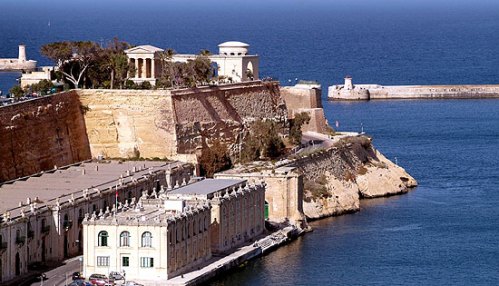
Photo: Visit Malta

The Mediterranean island nation of Malta on Wednesday unveiled a deal with IBM to build a “smart utility” system that will digitize the country’s electricity grid and water system.

Granted, Malta is a microstate with a population of 403,500 (smaller than Sacramento; bigger than Iceland). But the world — and utility infrastructure giants like General Electric (GE) — will be watching closely. Not only is Malta the first country to green its national grid but it will also serve as a test case for whether integrating so-called smart technologies into both electricity and water systems can help mitigate the increasing deleterious effects of global warming on the island.

As with other island states, power and water are intricately linked on Malta. All of the archipelago’s electricity is generated from imported fuel oil while the country depends on energy-intensive desalinization plants for half its water supply. Meanwhile, rising sea levels threaten its underground freshwater supplies.

“About 55% of the cost of water on Malta is related to electricity – it’s a pretty staggering amount,” Guido Bartels, general manager of IBM’s Global Energy & Utilities Industry division, told Green Wombat from Malta on Tuesday.

So how can digitizing the grid help? IBM (IBM) and its partners will replace Malta’s 250,000 utility meters with interactive versions that will allow Malta’s electric utility, Enemalta, to monitor electricity use in real-time and set variable rates that reward customers that cut their power consumption.  As part of the $91 million (€70 million) project, a sensor network will be deployed on the grid  –  along transmission lines, substations and other infrastructure – to provide information that will let the utility more efficiently manage electricity distribution and detect potential problems. IBM will provide the software that will aggregate and analyze all that data so Enemalta can identify opportunities to reduce costs – and emissions from Malta’s carbon-intensive power plants. (For an excellent primer on smart grids, see Earth2Tech editor Katie Fehrenbacher’s recent story.)

A sensor network will also be installed on the water system for Malta’s Water Services Corporation. “They’ll indicate where there is water leakage and provide better information about the water network,” says Robert Aguilera, IBM’s lead executive for the Malta project, which is set to be completed in 2012. “The information that will be collected by the system will allow the government to make decisions on how to save money on water and electricity consumption.”

Cutting the volume of water that must be desalinated would, of course, reduce electricity use in the 122-square-mile (316-square-kilometer) nation.

With the U.S. Congress debating an economic stimulus package that includes tens of billions of dollars for greening the power grid, IBM sees smart grid-related technologies as a $126 billion market opportunity in 2009. That’s because what’s happening in Malta today will likely be the future elsewhere – no country is an island when it comes to climate change. Rising electricity prices and water shortages are afflicting regions stretching from Australia to Africa to California.

IBM spokeswoman Emily Horn says Big Blue has not yet publicly identified which companies will be providing the smart meters, software and other services for the Malta grid project.

Malta’s greenhouse gas emissions are expected to rise 62% above 1990 levels by 2012, according to the European Environment Agency, and as a member of the European Union the country will be under pressure to cut its carbon. A smart energy grid will help but Malta, like Hawaii and other island states, will have to start replacing carbon-intensive fuel oil with renewable energy.

The island could present opportunities for other types of smart networks. According to the Maltese government, Malta has the second-highest concentration of cars in the world, with 660 vehicles per square kilometer. That also contributes to the country’s dependence on imported oil and its greenhouse gas emissions.

Given that Silicon Valley company Better Place has described islands as the ideal location to install its electric car charging infrastructure, perhaps CEO Shai Agassi should be looking at adding Malta to the list of countries that have signed deals with the startup.

Read Full Post »

Golden_gate_bridgephoto: Doogie Boogie
California utility PG&E, the city of San Francisco and a green energy company will collaborate on a study to determine the potential for tapping tidal power in San Francisco Bay by placing turbines on the sea floor below the Golden Gate Bridge.  Earlier studies estimated that tidal power could provide greenhouse gas-free electricity to as many as 40,000 homes in San Francisco. PG&E (PCG) will kick in $1.5 million for the study by outside experts, which will be completed in about a year. Depending on the outcome of the research, it could be three to five years before a tidal project goes online. Golden Gate Energy of Washington, D.C., currently holds the federal permits  to conduct tidal power studies in San Francisco Bay and has committed $346,000 to the effort, according to PG&E. The joint study – the latest of several – will be only the first step in a complicated regulatory dance, complicated by a likely tussle over who ultimately wins the right to develop tidal power. The San Francisco Board of Supervisors recently voted to determine the feasibility of pulling the plug on PG&E and securing its own electricity supplies from renewable sources. A 400-megawatt tidal power plant would obviously help the city achieve that goal.

Read Full Post »

Starbug4_1
Anyone who has read Elizabeth Kolbert’s recent New Yorker article on the impact of global warming on the world’s oceans knows there’s an apocalyptic sea change under way, wrought by climate change, over-fishing and coral bleaching. Next year an inexpensive but technologically advanced autonomous underwater robot is expected to hit the market to boost scientists’ efforts to monitor an area that covers two-thirds of the planet’s surface. The Starbug will keep tabs on water quality, map fish habitat and survey threatened coral reefs. Starbug’s designer, scientist Matthew Dunbabin, told Green Wombat that the little yellow robot also could be deployed to monitor fish populations and detect over-fishing as well as for use in underwater gas and oil exploration and to patrol harbors. DevelopeStarbug2d by Dunbabin’s team at the Australian Commonwealth Scientific and Industrial Research Organisation, the 4-foot-long (1.2 meter) Starbug (CSIRO photo above) is highly manueverable thanks to innovative thruster technology that lets it explore coral reefs and other areas off limits to traditional – read big and heavy – submersibles. That means the Starbug doesn’t have to be tethered to a boat and can operate independently without human intervention.
Another breakthrough: the Starbug "sees" its surroundings, using robotic vision to navigate rather than expensive sonar. Its cameras and the onboard Linux operating system also allow the Starbug to identify and count, for instance, the invasive crown-of-thorns starfish. The marine pest is killing off parts of the Great Starbug5_1
Barrier Reef, an ecological cash cow that generates $11 billion annually in tourism revenues. Given that the Great Barrier Reef covers some 135,000 square miles (349,000 square kilometers), detecting outbreaks of crown-of-thorns starfish is an impossible and prohibitively expensive job for human divers. Dunbabin envisions fleets of Starbugs launched from small boats that will swim around the Great Barrier Reef, transmitting data back to base.  For monitoring of bays and harbors, the Starbug can be launched from shore. The Starbug’s estimated cost of around $US 24,000 should fall with
mass production. Dunbabin’s team is now building the next generation Starbug and will use
the robot to conduct two habitat mapping trials early next year. "Currently we are talking with local and international companies for the commercialization of Starbug," says Dunbabin, pictured below with a Starbug prototype.

Starbug1

Read Full Post »

Air_showerAustralian scientists have developed a showerhead device they say cuts water use by 30 percent by injecting tiny air bubbles into water droplets. "The Aerated Showerhead creates the sensation of having a full and steady stream of water even though the water is now more like a wet shell around a bubble of air," according to the Commonwealth Scientific and Industrial Research Organisation, the  Australian government’s super science agency that created the technology. While aerated showerheads have been around for awhile, the CSIRO nozzle-like gadget is a new technology the agency claims could save the average household 15,000-20,000 liters (about 4,000 to 5,300 gallons) of water annually. Jie Wu, the CSIRO scientist who lead development of the "air shower," says the nozzle is expected to sell for about $15 and can be installed by homeowners. Part of CSIRO’s mandate is to commercialize its technology and it often works with investors and startups on spin-offs or licensing deals. The person to see in this case is Dilip Manuel, the business development manager for CSIRO Manufacturing & Materials Technology. Given its low rainfall, frequent droughts and desert environment, it’s no surprise that Australia leads when it comes to inventing water-saving technology. With a global water crisis looming, such technology will inevitably be in demand.

Read Full Post »

« Newer Posts

Design a site like this with WordPress.com
Get started