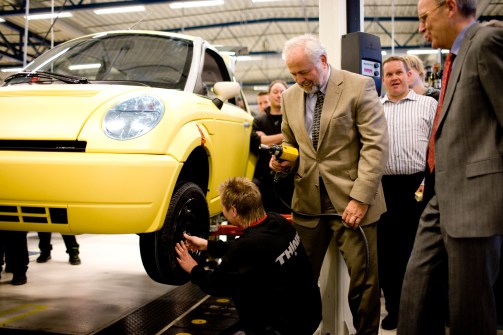
Amid the upheaval at Tesla Motors last week, a milestone in the annals of the electric car went largely unnoticed. At Think Global’s factory in the Norwegian countryside, the first of the company’s battery-powered City urban runabouts rolled off the assembly line.
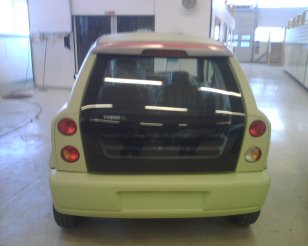
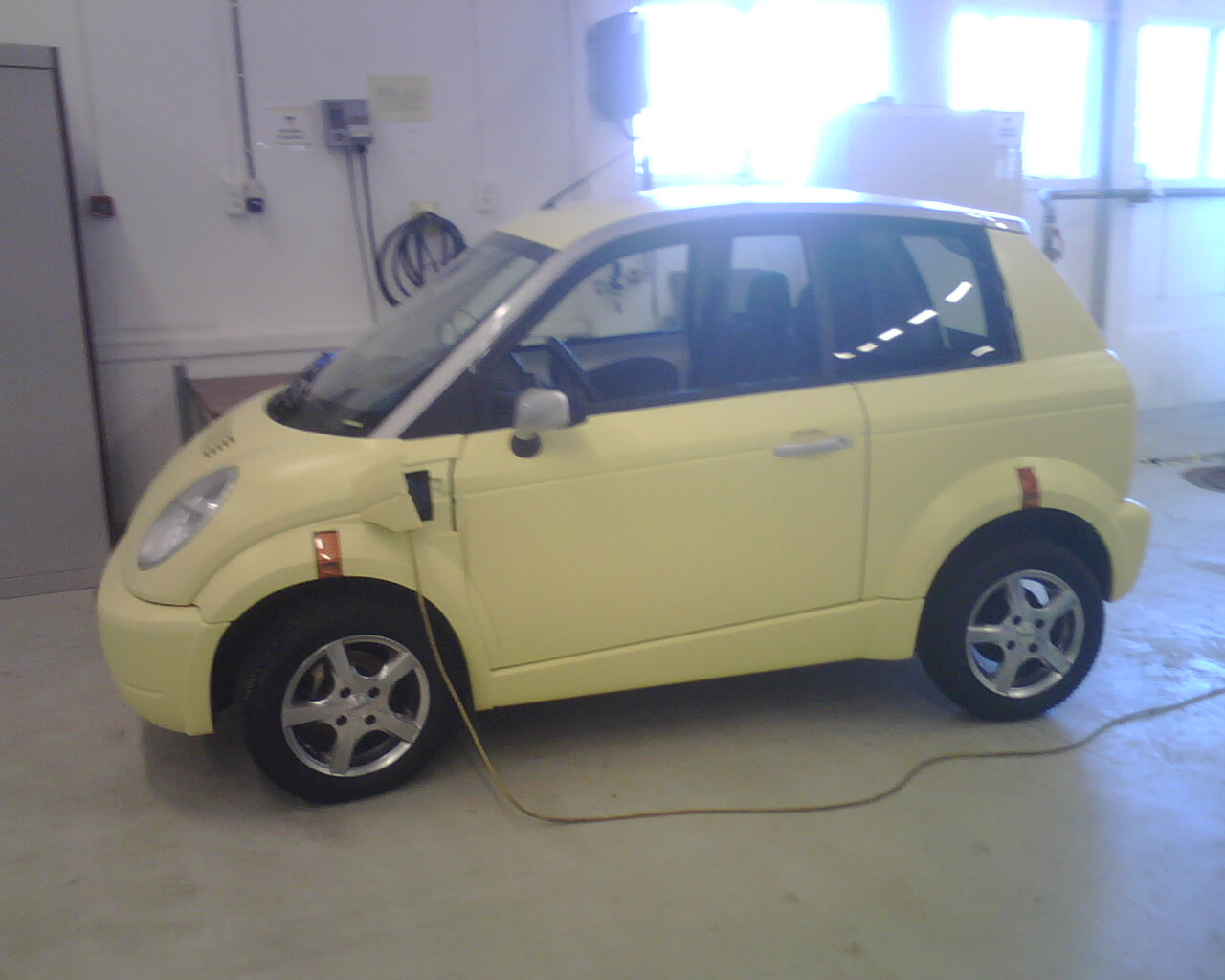
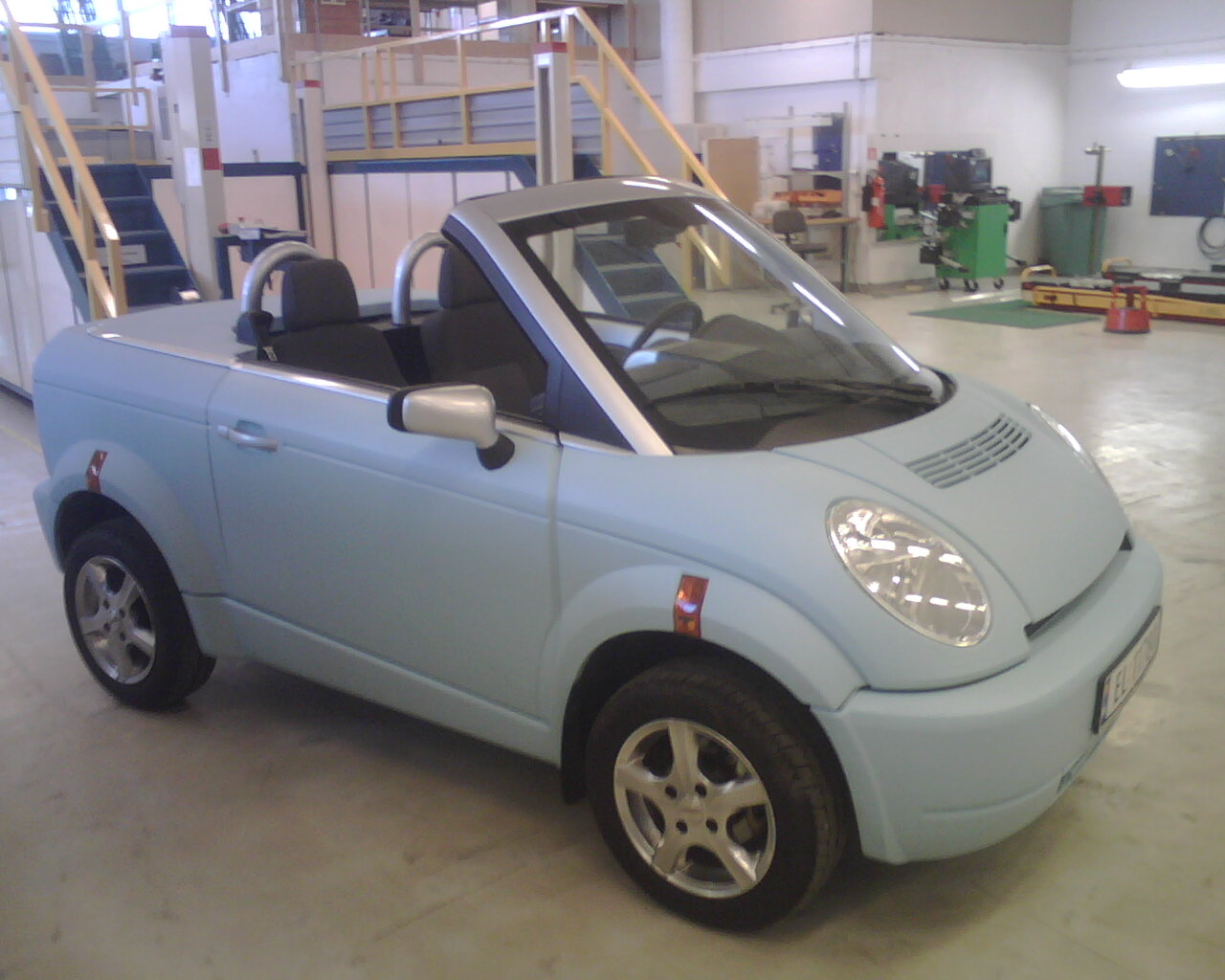
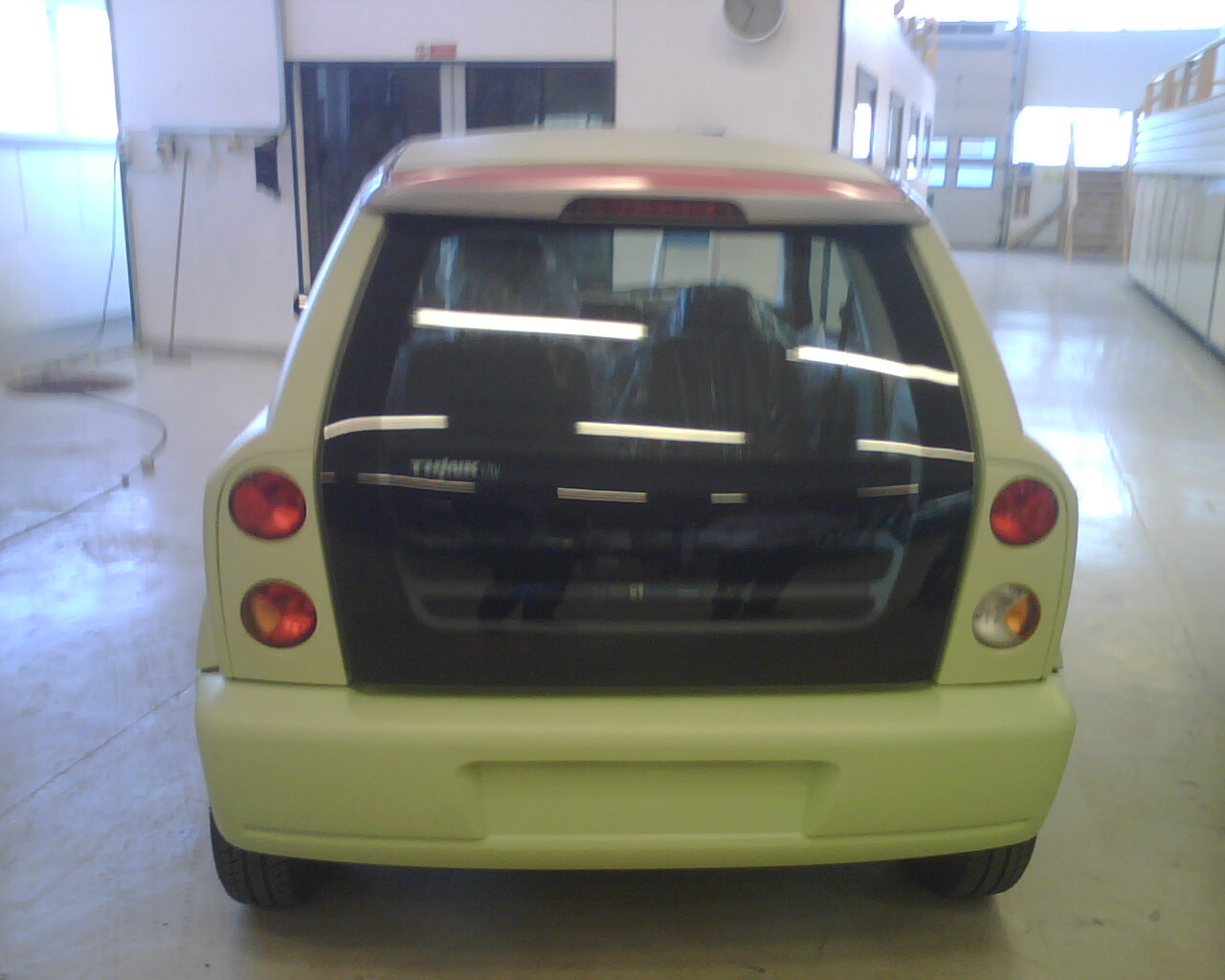
A canary-yellow two-seater sporting baby-seal-eye headlights and a bumper-to-roof glass hatch, this first production Think City will go about 112 miles (180 kilometers) on a single charge. It’s zippy, fun to drive and could well be the Honda Civic for the age of global warming.
No, Green Wombat hasn’t drunk the electric-car Kool-Aid. (Or the aquavit, in this case.)
Consider: Though ubiquitous now, the Honda Civic arrived on U.S. shores some three decades ago as a tiny, under-powered hatchback from a little-known foreign automaker in the era of the Detroit land yacht. Timing, of course, is everything. The Civic made its debut as the oil embargoes of the 1970s drove Americans from their gas-guzzling Chevys and Fords; and as an entire generation turned to the Japanese for economical well-made models, Tokyo gained a foothold in the U.S. market. In time the Civic morphed into a full range of vehicles and cemented Honda’s (HMC) hold on car buyers even as Americans returned to their profligate ways with the advent of the SUV.
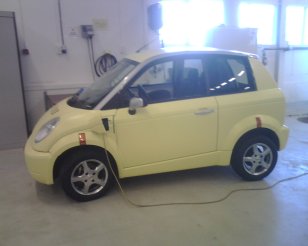 Think — and other electric car companies — finds itself at a similar inflection point. Gas prices are at historical highs and global pressure to cut greenhouse gases will inevitably fall heavy on one of the biggest carbon culprits, the internal combustion engine. The success of the Toyota (TM) Prius gasoline-electric hybrid is just a harbinger of the market for all-electric cars.
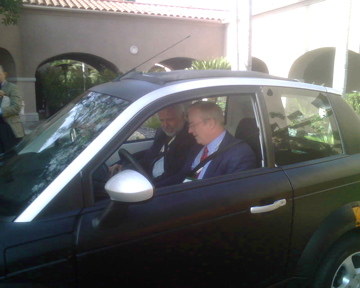
Last May Green Wombat spent some time at Think in Norway and had a chance to test-drive a couple of the City prototypes.
You can read my Business 2.0 magazine feature story on Think here but the capsule version goes like this: A Norwegian startup, the company was acquired by Ford (F) in 1999 when the automaker faced a California mandate to begin producing electric cars. Ford poured some $150 million into Think to develop an EV for the U.S. market then sold the startup once the regulation was killed. (A few hundred of the first-generation City were available for lease in California — Google (GOOG) founder Sergey Brin was one owner — and old-style Thinks can still be spotted on the streets of Oslo.)
Last year Norwegian renewable energy entrepreneur Jan-Olaf Willums (center in photo above) and his investment group acquired Think and revived plans to produce a next-generation City with a next-generation business model. The Internet-enabled car will be sold online and seeded through car-sharing services like Zipcar. Buyers will purchase the car but lease the battery as part of a mobility fee that could include insurance and WiFi access. (The City will sell for about $34,000 in Norway and Willums is shooting for a U.S. sticker price of $15,000 to $17,000 plus $100 to $200 a month for the mobility fee.) Think has raised nearly $80 million from Silicon Valley venture capitalists and European investors to get the production line up and running.
 Green Wombat caught up with Willums over the weekend via e-mail to get an update on Think’s plans. According to Willums, General Electric (GE) is now an investor in Think and the company struck a deal with GE to collaborate on battery technology. The cars now coming off the assembly line will be put through their paces in the harsh Norwegian winter — a trial that bodes well for an eventual entry into the U.S. northeastern market — and will go on sale in Norway in the first six months of 2008.
Those cars will be powered by a Zebra sodium nickel chloride battery. Earlier this year Think struck a deal with Tesla to buy a version of its high-powered lithium-ion battery packs that give its Roadster its zero-to-60 mph-in-four-seconds vroom. But Tesla put its battery business on hold as it focuses on getting the Roadster on the road. Willums says Think now will obtain lithium-ion batteries from A123 (which is working with General Motors (GM) on its Volt electric hybrid) and EnerDel. Think will begin testing those batteries in the City in the first half of next year. In 2009, Think will begin selling the City in other European countries.
“In 2009 we plan to have a “face lift” i.e. introduce a number of additional features,” says Willums. “The plan is to have a stronger engine and some increased battery capacity at that time.”
The cars sold in Norway carry a Web-enabled black box that transmits battery performance data to Think. Tbe ’09 model will be fully Internet-capable so drivers can communicate with their City and the car can ping its owner when, for instance, it needs maintenance.
 Alas, for American electric car enthusiasts, the City will probably not make it to the U.S. for another couple years. To pave the way, Willums says Think will open a Silicon Valley office in early 2008. (Willums is a familiar figure on Sand Hill Road and held the initial brainstorming sessions for the new Think at the Googleplex in 2006.)
To have a chance to even crack the urban U.S. market, Think will need to increase the City’s top speed from 62 mph and give it more drive time. Inventor Dean Kamen of Segway fame invested in Think and has developed a Stirling heat engine that would extend the City’s range by trickle-charging the battery. (For Green Wombat’s wild ride with Kamen click here.)
“We have recently started discussions with other partners (not in the automotive industry) to explore if one can make a development consortium to make the engine mass producible,” Willums says. “That would be a multiyear project, and we would like to be one partner in such a consortium that would look at many applications of the Stirling engine.”
The road for Think is a long one and many unforeseen obstacles could crash its ambitious plans, which include introducing a family sedan. But like the Honda Civic of 1972, the 2008 Think City may be well just be the prototype of a new automotive model.
Read Full Post »



 Green Wombat