Feeds:
Posts
Comments

Archive for the ‘solar energy’ Category

Ausracarrizo
Silicon Valley’s solar boom continues with Ausra, a Palo Alto
startup backed by venture capitalist heavyweights Vinod Khosla and
Kleiner Perkins Caufield & Byers, filing an application to build a
177-megawatt solar power plant on California’s Central Coast.

Ausra’s lodging of its 1,000+ page "application for certification"
with the California Energy Commission last week is another sign the
company, which relocated to Silicon Valley from Sydney last year, is
about to sign a major deal with a California utility. Khosla has
previously said Ausra is negotiating with PG&E (PCG). In its
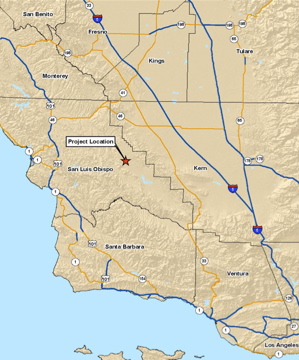
application, the company stated that the San Luis Obispo County
project, called the Carrizo Energy Solar Farm, would begin providing
greenhouse gas-free electricity to "a major California utility" by June
2010 under a 20-year power purchase agreement. If the Commission
licenses the project – at least a year-long process – construction
would begin in 2009. In September, Florida utility FPL (FPL) announced it would use Ausra’s technology for a planned 300-megawatt solar power plant.

While there’s no shortage of solar startups with big plans for Big
Solar, only three companies have actually taken the expensive and
time-consuming step of filing a construction application with the
California Energy Commission. (On Wednesday, Oakland, Calif.-based
solar company BrightSource Energy cleared a major regulatory hurdle
when the Commission signed off on its application for a 400-megawatt Mojave Desert power plant and began the licensing process.)

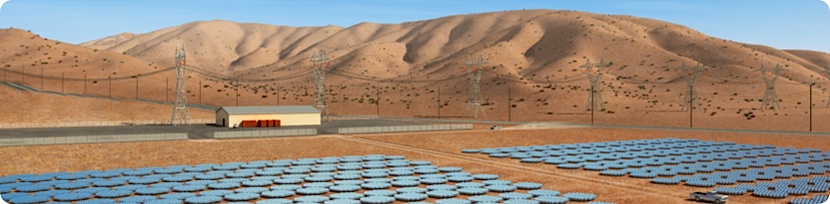
The Carrizo solar thermal power plant will deploy 195 long rows of flat mirrors to focus the sun’ausra-carrizo-map.jpgs
rays on tubes of water suspended over the arrays. The superheated water
creates saturated steam that will drive two electricity-generating
turbines, to be supplied by either GE (GE) or Siemens (SI). While the
efficiency of Ausra’s compact linear fresnel reflector system is lower
than competing technologies, company executives claim they will able to
drive down the costing of producing solar electricity to make it
competitive with natural gas. (For more on Ausra, see Green Wombat’s
previous post.)
Unlike most solar power plants in the works for California, Ausra has
chosen not to locate its facility in the Mojave Desert, where solar
sites are sun-drenched but are often on government land and far from
transmission lines. Instead, the Carrizo project will be built on 640
acres of old ranch land on the Carrizo Plain, where Ausra will just
need to construct a 850-foot transmission line to connect to the power
grid.

"Ausra Inc.’s (Ausra) proved, proprietary technology significantly
reduces the cost of a solar thermal power plant and is thus capable of
significantly reducing global carbon emissions by generating low-carbon
electricity on a commercial scale at competitive prices," the company
stated in its application.

Read Full Post »

brightsource.png

Green Wombat happened to be chatting with BrightSource Energy CEO John Woolard yesterday at the solar power startup’s Oakland, Calif., offices when an executive burst into a conference room with big news: the California Energy Commission had accepted BrightSource’s application to build the first large-scale solar thermal power plant in the Golden State in 16 years. “We were found data adequate this morning by the CEC,” said Doug Divine, vice president of project development. “That’s huge,” replied Woolard. “It’s a big step.”

Indeed it is. In Commission-speak, being declared “data adequate” means the expensive, year-long process of assembling hundreds of pages of documents detailing the proposed 400-megawatt power plant and its environmental impact had passed bureaucratic muster. Now the Commission begins a 12-month process to review and license the project. If all goes well, ground could be broken in early 2009 on BrightSource’s Ivanpah Solar Electric Generating System, to be built in the Mojave Desert just across from the Nevada border in San Bernardino County. (BrightSource’s artist rendering above.)

BrightSource is currently negotiating a 500-megawatt power purchase agreement with California utility PG&E (PCG), and Woolard says the company is in talks with other utilities to supply another 1,000 megawatts from seven power plants. BrightSource has applied to lease a site from the U.S. Bureau of Land Management for a second solar power plant, a 500-megawatt project to be built near Broadwell Dry Lake in the Mojave. The company has relied on venture capital for funding but Woolard revealed Wednesday that the company has also secured investment from Morgan Stanley (MS).

There’s a certain historical symmetry in the Commission’s decision. BrightSource was founded by American-Israeli pioneer Arnold Goldman, whose Luz International built the last big solar power plant in California in 1991. That was Solar Electric Generating System IX, the last of nine solar trough power plants constructed by Luz in the Mojave Desert northeast of Los Angeles and that today are mostly operated by FPL (FPL).

BrightSource has developed a new solar technology, dubbed distributed power tower, that focuses fields of sun-tracking mirrors called heliostats on a tower containing a water-filled boiler. The sun’s rays superheat the water and the resulting steam drives an electricity-generating turbine. BrightSource is now building a 7-megawatt pilot power plant in Israel to show investors the distributed power tower is ready for prime-time. “The technology is locked down,” Woolard says.

Read Full Post »

Brightsource
Green Wombat happened to be chatting with BrightSource Energy CEO John Woolard yesterday at the solar power startup’s Oakland, Calif., offices when an executive burst into a conference room with big news: the California Energy Commission had accepted BrightSource’s application to be build the first large-scale solar thermal power plant in the Golden State in 16 years. “We were found data adequate this morning by the CEC,” said Doug Divine, vice president of project development. “That’s huge,” replied Woolard. “It’s a big step.”

Indeed it is. In Commission-speak, being declared “data adequate” means the expensive, year-long process of assembling hundreds of pages of documents detailing the proposed 400-megawatt power plant and its environmental impact had passed bureaucratic muster. Now the Commission begins a 12-month process to review and license the project. If all goes well, ground could be broken in early 2009 on on BrightSource’s Ivanpah Solar Electric Generating System, to be built in the Mojave Desert just across from the Nevada border in San Bernardino County. (BrightSource’s artist rendering above.)

BrightSource is currently negotiating a 500-megawatt power purchase agreement with California utility PG&E (PCG), and Woolard says the company is in talks with other utilities to supply another 1,000 megawatts from seven power plants. BrightSource has applied to lease a site from the U.S. Bureau of Land Management for a second solar power plant, a 500-megawatt project to be built near Broadwell Dry Lake in the Mojave. The company has relied on venture capital for funding but Woolard revealed Wednesday that the company has also secured investment from Morgan Stanley (MS).

There’s a certain historical symmetry in the Commission’s decision. BrightSource was founded by American-Israeli pioneer Arnold Goldman, whose Luz International built the last big solar power plant in California in 1991. That was Solar Electric Generating System IX, the last of nine solar trough power plants constructed by Luz in the Mojave Desert northeast of Los Angeles and that today are mostly operated by FPL (FPL).

BrightSource has developed a new solar technology, dubbed distributed power tower, that focuses fields of sun-tracking mirrors called heliostats on a tower containing a water-filled boiler. The sun’s rays superheat the water and the resulting steam drives an elecricity-generating turbine. BrightSource is now building a 7-megawatt pilot power plant in Israel to show investors the distributed power tower is ready for prime-time. “The technology is locked down,” Woolard says.

Read Full Post »

From my perch in the Berkeley Hills I look down on a sea of roofs stretching toward San Francisco Bay. A glint here and there in the California sunshine telegraphs that someone has installed a solar array. But even in this most ecologically self-conscious of cities, homeowners face a familiar conundrum: cutting the utility cord and your home’s greenhouse gas emissions means coughing up some serious cash. A residential rooftop solar system can cost anywhere between $15,000 and $30,000, and it can be up to a decade before the array pays for itself in electricity savings. Rebates through the $3.3 billion California Solar Initiative help and the program has been a great success so far, but its goal of a million solar roofs by 2017 will cover just a fraction of the state’s households.

Now the city of Berkeley has devised an innovative plan that could dramatically increase that number and turn the nascent solar industry into a mass market if replicated. Under a solar initiative to be considered by the city council on Tuesday, Nov. 6, Berkeley would finance the installation of solar arrays and solar hot water systems (more on that later) for any homeowner or commercial building owner. You choose an installer from a city-approved list and retain ownership of the solar system, paying back the cost over 20 years through an assessment on your annual property tax bill. “Over next decade we could have solar on 25 percent of the buildings in Berkeley,” Cisco DeVries, chief of staff for Berkeley Mayor Tom Bates, told Green Wombat. The federal government is supporting the Berkeley initiative — the first of its kind — and California’s largest utility, PG&E, backs the plan.

Here’s the game-changing aspect of Berkeley’s proposed Sustainable Energy Financing District: When you sell your home the solar array and the tax surcharge stays with the property, passing on to the new owner. In other words, there’s little risk that you’ll lose money by going solar. And given that a solar array generally boosts your property value — in California, at least — you’ll likely to come out ahead. (When Green Wombat’s Fortune magazine colleague, Michael Copeland, installed solar on his new Berkeley home, the appraised value immediately jumped nearly $13,000.) What’s more, as a property tax the solar assessment is a deductible on your federal income tax return. Banks now offer solar home equity loans that similarly allow property owners to install an array with no upfront costs. But the catch is that when you sell your home, you pay back the loan from the proceeds. With the city financing your solar array, you’re just on the hook for the annual property tax surcharge for the time you own your home.

Given that the city will likely put up a bond to borrow millions of dollars, DeVries expects to obtain a lower interest rate than what would available through a solar home equity loan. “Because this is an assessment on your property bill, effectively a lien, it’s a very secure position for financing,” he says. “In event of foreclosure, it’s paid before the mortgage.”

The program also will finance the installation of solar hot water systems, which for Berkeley and other temperate zone cities could be a real environmental and economic boon. Solar thermal systems that tap the sun’s rays to heat water are widely used in countries like China but have not caught on in the United States. But they make perfect sense for cities such as Berkeley, where moderate weather means that much of residents’ utility bills is not for electricity used to power energy-sucking air conditioners but for natural gas that heats water for bathing, cooking and running dishwashers. “You would be able to displace natural gas and get a much more direct environmental benefit,” says David Rubin, PG&E’s (PCG) director of service analysis, who helps run the utility’s solar rebate program. Solar hot water also will help Berkeley meet a voter-approved mandate to fight global warming by reducing the city’s greenhouse gas emissions 80 percent by 2050.

Just how much extra homeowners will pay on their property tax bill depends on the size of the solar array they install and the terms of the financing the city is able to arrange. But DeVries says some preliminary calculations show that a $15,000 solar array might add $1,300 to a homeowners’ annual tax bill. (It should be noted that Berkeley residents are accustomed to such surcharges. Green Wombat just got his 2007-2008 property tax bill and counts 18 local surcharges, ranging from fees for mosquito control to school classroom-size reduction.) While it will hit them in the pocketbook at tax time, Berkeley homeowners, if they install the appropriate size solar array, can count on free electricity year-round. California is a so-called net-metering state, which means that electricity produced from a residential solar panels is fed into the power grid; in return homeowners receive a credit that can zero out the cost of the energy they consume.

No surprise that the solar industry is enthusiastic about the Berkeley’s initiative, which has the potential to provide a big boost to their business if other cities copy the program. Among those that stand to benefit are installers and solar cell makers like SunPower (SPWR) and Sharp. “It just seems like it’s a great model for other cities to look at and hopefully to emulate because it really advances homeowners’ access to solar,” says Ron Kenedi, vice president of Sharp Solar, one of the world’s biggest solar panel makers. Sharp supplies arrays to many of the installers Berkeley is likely to include in its program. “We found that solar powered homes are easier to sell and move faster on the market. And they gain value over time.”

Says Barry Cinnamon, CEO of solar installer Akeena Solar: “It’s going to raise awareness of solar. I think there will be a big spill-over effect, especially if starts to work. If they can aggregate the financing, it definitely helps lower the cost of solar.”

DeVries has been meeting with solar installers and already has had discussions with PG&E about what support the utility can provide to the program. For PG&E, a big spike in residential and commercial solar could potentially ease the cost and environmental impact of peak power demand. “Having the city finance solar through a property tax assessment is a good idea,” says Rubin. “Additional amounts of solar do help reduce demand.”

Lest you think this is just another wacky notion from Berkeley’s left-winging politicos and social engineers, consider that two Bush administration agencies have lined up in support of the initiative. The U.S. Department of Energy has given Berkeley a $200,000 grant that can be used in part to promote the Sustainable Energy Financing District while the U.S. Environmental Protection Agency is about to sign off on another $160,000 to get the program off the ground and create a guide for other cities.

If approved by the city council next week, DeVries expects to begin signing up homeowners and business owners by June 2008. “I just got an e-mail from a large-scale commercial property owner interested in the program,” he says.

Read Full Post »

From my perch in
the Berkeley Hills I look down on a sea of roofs stretching toward San
Francisco Bay. A glint here and there in the California sunshine
telegraphs that someone has installed a solar array. But even in this
most ecologically self-conscious of cities, homeowners face a familiar
conundrum: cutting the utility cord and your home’s greenhouse gas
emissions means coughing up some serious cash. A residential rooftop
solar system can cost anywhere between $15,000 and $30,000, and it can
be up to a decade before the array pays for itself in electricity
savings. Rebates through the $3.3 billion California Solar Initiative
help and the program has been a great success so far, but its goal of a million solar roofs by 2017 will cover just a fraction of the state’s households.

Now the city of Berkeley has devised an innovative plan that could
dramatically increase that number and turn the nascent solar industry
into a mass market if replicated. Under a solar initiative to be
considered by the city council on Tuesday, Nov. 6, Berkeley would
finance the installation of solar arrays and solar hot water systems
(more on that later) for any homeowner or commercial building owner.
You choose an installer from a city-approved list and retain ownership
of the solar system, paying back the cost over 20 years through an
assessment on your annual property tax bill. “Over next decade we could
have solar on 25 percent of the buildings in Berkeley,” Cisco DeVries,
chief of staff for Berkeley Mayor Tom Bates, told Green Wombat. The
federal government is supporting the Berkeley initiative — the first of
its kind — and California’s largest utility, PG&E, backs the plan.

Here’s the game-changing aspect of Berkeley’s proposed Sustainable
Energy Financing District: When you sell your home the solar array and
the tax surcharge stays with the property, passing on to the new owner.
In other words, there’s little risk that you’ll lose money by going
solar. And given that a solar array generally boosts your property
value — in California, at least — you’ll likely to come out ahead.
(When Green Wombat’s Fortune magazine colleague, Michael Copeland,
installed solar on his new Berkeley home, the appraised value
immediately jumped nearly $13,000.) What’s more, as a property tax the
solar assessment is a deductible on your federal income tax return.
Banks now offer solar home equity loans that similarly allow property
owners to install an array with no upfront costs. But the catch is that
when you sell your home, you pay back the loan from the proceeds. With
the city financing your solar array, you’re just on the hook for the
annual property tax surcharge for the time you own your home.

Given that the city will likely put up a bond to borrow millions of
dollars, DeVries expects to obtain a lower interest rate than what
would available through a solar home equity loan. “Because this is an
assessment on your property bill, effectively a lien, it’s a very
secure position for financing,” he says. “In event of foreclosure, it’s
paid before the mortgage.”

The program also will finance the installation of solar hot water
systems, which for Berkeley and other temperate zone cities could be a
real environmental and economic boon. Solar thermal systems that tap
the sun’s rays to heat water are widely used in countries like China
but have not caught on in the United States. But they make perfect
sense for cities such as Berkeley, where moderate weather means that
much of residents’ utility bills is not for electricity used to power
energy-sucking air conditioners but for natural gas that heats water
for bathing, cooking and running dishwashers. “You would be able to
displace natural gas and get a much more direct environmental benefit,”
says David Rubin, PG&E’s (PCG) director of service analysis, who
helps run the utility’s solar rebate program. Solar hot water also will
help Berkeley meet a voter-approved mandate to fight global warming by
reducing the city’s greenhouse gas emissions 80 percent by 2050.

Just how much extra homeowners will pay on their property tax bill
depends on the size of the solar array they install and the terms of
the financing the city is able to arrange. But DeVries says some
preliminary calculations show that a $15,000 solar array might add
$1,300 to a homeowners’ annual tax bill. (It should be noted that
Berkeley residents are accustomed to such surcharges. Green Wombat just
got his 2007-2008 property tax bill and counts 18 local surcharges,
ranging from fees for mosquito control to school classroom-size
reduction.) While it will hit them in the pocketbook at tax time,
Berkeley homeowners, if they install the appropriate size solar array,
can count on free electricity year-round. California is a so-called
net-metering state, which means that electricity produced from a
residential solar panels is fed into the power grid; in return
homeowners receive a credit that can zero out the cost of the energy
they consume.

No surprise that the solar industry is enthusiastic about the
Berkeley’s initiative, which has the potential to provide a big boost
to their business if other cities copy the program. Among those that
stand to benefit are installers and solar cell makers like SunPower
(SPWR) and Sharp. “It just seems like it’s a great model for other
cities to look at and hopefully to emulate because it really advances
homeowners’ access to solar,” says Ron Kenedi, vice president of Sharp
Solar, one of the world’s biggest solar panel makers. Sharp supplies
arrays to many of the installers Berkeley is likely to include in its
program. “We found that solar powered homes are easier to sell and move
faster on the market. And they gain value over time.”

Says Barry Cinnamon, CEO of solar installer Akeena Solar: “It’s
going to raise awareness of solar. I think there will be a big
spill-over effect, especially if starts to work. If they can aggregate
the financing, it definitely helps lower the cost of solar.”

DeVries has been meeting with solar installers and already has had
discussions with PG&E about what support the utility can provide to
the program. For PG&E, a big spike in residential and commercial
solar could potentially ease the cost and environmental impact of peak
power demand. “Having the city finance solar through a property tax
assessment is a good idea,” says Rubin. “Additional amounts of solar do
help reduce demand.”

Lest you think this is just another wacky notion from Berkeley’s
left-winging politicos and social engineers, consider that two Bush
administration agencies have lined up in support of the initiative. The
U.S. Department of Energy has given Berkeley a $200,000 grant that can
be used in part to promote the Sustainable Energy Financing District
while the U.S. Environmental Protection Agency is about to sign off on
another $160,000 to get the program off the ground and create a guide
for other cities.

If approved by the city council next week, DeVries expects to begin
signing up homeowners and business owners by June 2008. “I just got an
e-mail from a large-scale commercial property owner interested in the
program,” he says.

Read Full Post »
greenvolts-image.jpg

Last year’s California Clean Tech Open winner GreenVolts is a poster child for how a startup can capitalize on the startup contest to bootstrap itself into some major deals. Working from a San Francisco office provided by utility PG&E (PCG) as part of its contest winnings, GreenVolts earlier this year scored a contract with its benefactor to build a 2-megawatt solar power station using the solar startup’s high concentration photovoltaic technology. The company’s microdishes track the sun and focus its rays on small but highly efficient solar cells. Rotating platforms each hold 176 of the dishes.

So it was appropriate that GreenVolts CEO Bob Cart announced last night at this year’s Clean Tech Open ceremony that the company had raised $10 million in its latest round of funding. The company also said that its demonstration solar power plant for Spokane, Wash.-based utility Avista (AVA) had begun generating electricity. Avista had made an earlier investment in GreenVolts and participated in the latest round, which was led by Greenlight Energy Resources.

Read Full Post »

If you want to know what enviro startups Silicon Valley movers and shakers think could be the next big green thing, the California Clean Tech Open is a good leading indicator. Last night in San Francisco the Open named six winners in its second annual startup competition. Each winner receives a $100,000 “startup in a box” package that includes $50,000 in cash from such sponsors as Google (GOOG), Advanced Micro Devices (AMD), Lexus (TM) and California’s Big Three utilities – PG&E (PCG), Southern California Edison (EIX) and San Diego Gas & Electric (SRE). The winners also get $50k worth of legal, marketing, accounting and public relations services from such heavyweights as Silicon Valley law firm Wilson Sonsini Goodrich & Rosati. The opportunity to mingle with the entrepreneurs, venture capitalists and potential clients who judge the contest probably represents the biggest win of all for these startups. Now the winners:

AMD Smart Power Award
The Lucid Design Group of Oakland, Calif., takes a Web 2.0 approach to environmental monitoring, providing real-time feedback on a building or home’s energy and water usage through an online dashboard. The idea: people will be motivated to cut their electricity and water consumption when they see how much and when power is being used by various appliances.

ENVIRON Foundation and Grundfos Air, Water and Waste Award
Overland Park, Kan., startup Microvi Biotech is using biotechnology to treat waste water, sewage and control pollution.

Google Green Building Award
BuildFast of San Carlos, Calif., makes environmentally sensitive prefab housing kits to erect buildings in disaster zones or in low-income areas.

Lexus Transportation Award
Los Angeles’ Syncromatics is developing technology that uses GPS and mobile phone networks for real-time online tracking of buses to improve efficiency and cut fuel costs.

PG&E, SCE and SDG&E Renewables Award
Rohnert Park, Calif.-based 1-Solar is designing lower-cost and longer-life power inverters for solar arrays and other renewable energy systems. Inverters convert the direct current produced by such systems into the alternating current used in households and businesses.

PG&E, SCE and SDG&E Energy Efficiency Award
Nila of Sherman Oaks, Calif., makes LED lighting systems for Hollywood that it says consume 50 to 75 percent less electricity than traditional lighting used in the entertainment industry.

To read older Green Wombat posts, click here.

Read Full Post »

Greenvolts_image
Last year’s California Clean Tech Open winner GreenVolts is a poster child for how a startup can capitalize on the startup contest to bootstrap itself into some major deals. Working from a San Francisco office provided by utility PG&E (PCG) as part of its contest winnings, GreenVolts earlier this year scored a contract with its benefactor to build a 2-megawatt solar power station using the solar startup’s high concentration photovoltaic technology. The company’s microdishes track the sun and focus its rays on small but highly efficient solar cells. Rotating platforms each hold 176 of the dishes.

So it was appropriate that GreenVolts CEO Bob Cart announced last night at this year’s Clean Tech Open ceremony that the company had raised $10 million in its latest round of funding. The company also said that its demonstration solar power plant for Spokane, Wash.-based utility Avista (AVA) had begun generating electricity. Avista had made an earlier investment in GreenVolts and participated in the latest round, which was led by Greenlight Energy Resources.

Read Full Post »

California’s Solar Success

Csi_report_1
Californians are going solar at record rates, according to a new report assessing the performance of the the $3.3 billion California Solar Initiative. The program, which began in January, offers rebates to homeowners, businesses and non-profits that install solar panels. Between January and mid-September, the CSI program has received 5,109 applications representing 160 megawatts of solar energy, according to the study by the California Public Utilities Commission. "In the first nine months alone, requests for CSI incentives are on track to exceed California’s total installed solar from the previous 26 years,"  the report’s authors write. The ambitious goal is to generate 3 gigawatts of solar electricity from solar arrays by the time the program ends in 2016.

About 90 percent of the applications received this year are for residential rooftop solar panels, but the arrays being installed by business, governments and non-profits represent 87 percent of the megawatts of green electricity that will be generated. In July, utility PG&E (PCG) was being flooded by 50 to 90 applications a day. In fact, Northern Californians have been the most enthusiastic about the solar program, judging by the fact that the San Francisco-based utility has received about 70 percent of the rebate applications.

The state currently pays a rebate of $2.50 per watt generated by a solar array. For a real-life example of the bottom line cost of going solar in California, check out the Fortune magazine story Green Wombat wrote tapping colleague Michael Copeland’s experience installing panels on his Berkeley home. But don’t be in a hurry to get that rebate – it took an average 117 days for PG&E customers to receive their checks while Southern California Edison (EIX) customers had to wait 135 days, according to the report. San Diego Gas & Electric (SRE) customers got their rebates the fastest, with an average 113 day wait. One way to avoid spending months checking your mailbox is go with a solar installer that deducts the rebate from the cost of the solar system upfront, as Copeland did.

The California Public Utilities Commission acknowledged that it’s too soon to predict whether Californians will continue to install solar panels at the same rate has they have in 2007, but the commission predicted CSI would outperform past solar incentive programs.

Read Full Post »

Heliovolt_circular_cell
Thin-film solar startup HelioVolt has closed its latest round of financing, raising a total of $101 million since August. The Austin, Texas, company has developed flexible solar cells that it says can be integrated into building materials like roofs, skylights, windows and skyscraper facades. With its latest round, HelioVolt has put itself on equal financial footing with Silicon Valley thin-film startup Nanosolar, a VC favorite. HelioVolt and Nanosolar use copper indium gallium selenide as a semiconducting material rather than expensive silicon. Although the efficiency of thin-film solar is less than conventional photovoltaic panels, the CIGS cells can be printed on rolls of flexible material at lower costs. HelioVolt will use its $101 million to build factories, which it plans to locate near manufacturers of building and construction materials. Nanosolar, meanwhile, is building a thin-film factory in San Jose. While CIGS thin-film startups have yet to produce a product, investors appear to be patient, judging by HelioVolt’s latest round. Among the investors are Sequel Venture Partners, Noventi Ventures, Passport Capital, Paladin Capital Group, Masdar Clean Tech Fund, New Enterprise Associates, Solúcar Energia, Morgan Stanley Principal Investments (MS), Sunton United Energy, and Yellowstone Capital.

Read Full Post »

« Newer Posts - Older Posts »

Design a site like this with WordPress.com
Get started