
Feeds:
Posts
Comments

Archive for the ‘green policy’ Category

On Thursday in The New York Times, I write about an independent report that finds that PG&E’s smart meters are not responsible for higher utility bills incurred by some customers:

After Pacific Gas & Electric, the giant California utility, began installing smart meters in the state’s Central Valley, the company was swamped with complaints from residents that their utility bills had increased.

But an independent review of the smart meters released Thursday found that the devices were functioning properly and attributed the high charges to a heat wave last year that coincided with their installation as well as poor customer service by P.G.&.E.

“They are accurately recording usage and throughout our evaluation we found no systemic issues,” Stacey Wood, an executive with the Structure Group, a Houston consulting company, said on Thursday at a meeting of the California Public Utilities Commission. “We did identify there were weakness in the focus on customer service.”

The utilities commission hired the Structure Group to conduct test P.G.&.E’s smart meters and conduct a technical review.

The digital devices wirelessly transmit data on a home’s electricity and natural gas usage to utilities while allowing residents to monitor their electricity consumption in real time. Smart meters are considered a linchpin for the development of a smart power grid and tens of millions of the gadgets are set to be installed nationwide in coming years.

But the rollout has been anything but smooth in California, where nearly 10 million smart meters will be deployed.

“By the fall of 2009, the C.P.U.C. had received over 600 smart meter consumer complaints about ‘unexpectedly high’ bills and allegations that the new electric smart meters were not accurately recording electric usage, almost all of which were from P.G.&E.’s service area,” according to the Structure Report.

The consulting firm said it then tested more than 750 smart meters in the laboratory and in the field and reviewed utility account records for 1,378 customers, including those that had complained of abnormally high bills.

“Of the 613 smart meter field tests, 611 meters were successfully tested, and 100 percent passed average registration accuracy,” the report stated.

The study attributed some residents’ higher bills to a 2009 heat wave in Kern County as well as increased electricity usage due to new swimming pools or additions to their homes.

Then there was P.G.&E.’s handling of the controversy.

“P.G.&E. processes did not address the customer concerns associated with the new equipment and usage changes,” the report said. “Customer skepticism regarding the new advanced meter technology was not effectively addressed by P.G.&E. on a timely basis.”

You can read the rest of the story here.

Read Full Post »

I wrote this story for Grist, where it first appeared.

The California Legislature has passed the nation’s first energy storage bill, which could result in the state’s utilities being required to bank a portion of the electricity they generate.

Assembly Bill 2514 now heads to the desk of Gov. Arnold Schwarzenegger, who has made climate change and green technology his political legacy as his final term winds down.

Energy storage is considered crucial for the mass deployment of wind farms, solar power plants, and other sources of intermittent renewable energy, as well to build out the smart grid.

On the West Coast, for instance, the wind tends to blow hardest at night when demand for electricity is low. If utilities can store that wind-generated power — and energy from solar farms — in batteries, flywheels, and other devices, they can avoid building and firing up those billion-dollar, greenhouse gas-emitting, fossil-fuel power plants that are only used when demand spikes.

AB 2514 won the support of Jerry Brown, the California attorney general who is the Democratic candidate for governor. The Sierra Club and union groups also support the measure. Various business organizations, including the California Chamber of Commerce, opposed the bill.

Sponsored by Assembly member Nancy Skinner, a Berkeley Democrat, the bill was stripped of its more stringent provisions by the time it emerged from the legislative sausage-making process on Friday.

Originally, AB 2514 required California’s three big investor-owned utilities — PG&E, Southern California, and San Diego Gas & Electric — to have energy storage systems capable of providing at least 2.25 percent of average peak electrical demand by 2015. By 2020 the target would rise to at least 5 percent of average peak demand.

The bill now only requires that the California Public Utilities Commission determine the appropriate targets — if any — for energy storage systems, and then require the Big Three utilities to meet those mandates by 2015 and 2020. Publicly-owned utilities must set energy storage system targets to be met by 2016 and 2021.

Still, AB 2514 is a significant step and could ultimately help jump-start the market for energy storage, which remains in its infancy.

PG&E, for instance, plans to build an experimental facility that would tap electricity generated during peak wind farm production to pump compressed air into an underground reservoir. When demand jumps, the reservoir would release the air to run electricity-generating turbines which are capable of producing 300 megawatts of power.

And last week, PG&E proposed building a “pumped hydro” storage system. As its name implies, the system would pump water from one reservoir to another reservoir at a higher elevation during times of peak renewable energy production. Water in the upper reservoir would then be sent back downhill to power a turbine when electricity demand begins to spike.

Read Full Post »

photo: Sonoma County

In The New York Times on Tuesday, I wrote about the latest nail in the coffin of Property Assessed Clean Energy, or PACE, programs:

Many homeowners who participated in a program that let them repay the cost of solar panels and other energy improvements through an annual surcharge on their property taxes must pay off the loans before they can refinance their mortgages, two government-chartered mortgage companies said Tuesday.

The guidance came from Fannie Mae and Freddie Mac as efforts to resolve a dispute over the program — called Property Assessed Clean Energy, or PACE — have failed.

Approved by 22 states, the programs let municipalities sell bonds to finance improvements in energy efficiency. Homeowners typically pay back the loans over 20 years through an annual property tax assessment. As is the case with other property tax assessments, a lien is placed on the home that has priority over the mortgage if the homeowner defaults.

In July, the Federal Housing Finance Agency, which oversees Fannie and Freddie, effectively derailed the program when it issued guidance to lenders stating that the liens violated the agency’s underwriting standards. Fannie and Freddie buy and sell most of the nation’s home mortgages.

That guidance led to the halt of most PACE programs and left in limbo those homeowners who had already taken out energy improvement loans.

On Tuesday, Fannie and Freddie issued guidance to lenders stating that borrowers with sufficient equity in their homes must pay off the loans before refinancing. Those homeowners without enough equity to take cash out of their home to pay off the lien can refinance with the loan in place.

“Fannie Mae will not purchase mortgage loans secured by properties with an outstanding PACE obligation unless the terms of the PACE program do not permit priority over first mortgage liens,” according to the guidance.

The program’s proponents have argued that it overcomes obstacles to installing expensive solar panels and making other energy efficiency improvements that reduce greenhouse-gas emissions while creating jobs.

In response to the Federal Housing Finance Agency’s actions, the California attorney general’s office filed a lawsuit in July against Fannie and Freddie, as did the Sierra Club. Meanwhile, legislation has been introduced in Congress to allow the program to go forward.

“It’s absolutely clear now that the F.H.F.A. is not at all interested in working out a solution that would allow PACE to proceed — the agency appears intent only on obstructing the program,” Janill L. Richards, a California supervising deputy attorney general, wrote in an e-mail.

You can read the rest of the story here.

Read Full Post »

I wrote this story for Grist, where it first appeared.

No one said transforming the century-old power system into a state of-the-art digital smart grid was going to be easy. But California already is getting bogged down in a growing fight over installing smart utility meters in homes.

The wireless devices are a linchpin in building the smart grid as they allow the two-way, real-time transfer of data about a home’s power use. Utilities need that information to balance supply and demand on a power grid that will be increasingly supplied with intermittent sources of renewable energy while facing new demands from electric cars.

For homeowners, smart meters and an expected proliferation of smart refrigerators, dishwashers, and other appliances will help them keep a lid on rising electricity costs while making better use of rooftop solar panels.

But from the get-go, smart meters have raised a ruckus in California. First, residents in the state’s hot Central Valley complained that their utility bills spiked after the meters were installed last year.

Then in the San Francisco Bay Area, a small but vocal contingent has been arguing that smart meter antennas are a potential health threat. Never mind that every other person here seems to carry an iPhone, and many, if not most, homes in this tech-centric region boast wireless Internet routers that continuously transmit electromagnetic frequencies through the ether.

At first smart meters appeared to be a fringe issue — at the Fourth of July parade in the Marin County hippie beach enclave of Bolinas, I saw people holding up ban-the-smart-meter banners. But last week, I spotted similar homemade signs at the Berkeley Farmers’ Market. Meanwhile, the Marin towns of Fairfax and Novato have moved to ban smart meter installations; Santa Cruz County is considering doing the same.

Lost in all the hullabaloo is what a smart meter can do for managing your home’s carbon footprint. There are all kinds of gadgets and services coming down the pike that will let you control your electricity use from your phone and pinpoint the power hogs in your home. But even the most basic information provided by a smart meter is a big leap from a once-a-month bill.

My utility, PG&E, installed a smart meter at my house some months ago but just the other week began to let me monitor my electricity use on its website. If you want to geek out, you can really get granular by charting your power use hour-by-hour, pinpointing spikes and seeing how your lifestyle affects your energy consumption.

This morning, for instance, I learned that 21 days into the current billing cycle I’ve used $11 worth of electricity and that my projected total bill is between $15 and $20. My daily electricity use peaks around 6 a.m. and 8 p.m. and I’m using slightly fewer kilowatts than this time last year. I also set up an email alert to be sent if my electricity consumption kicks me into a more expensive rate tier.

And in the keeping down-with-the-Jones department, I learned that my energy use puts me at the very low end of the Berkeley spectrum.

All this provides valuable insight for the building of the green grid. But as with other efforts to transition to a renewable energy economy, overcoming political obstacles to the smart grid may be just as crucial as any technological triumph.

Read Full Post »

photo: PG&E

I wrote this story for Grist, where it first appeared.

It’s been a big week for Big Solar.

On Wednesday, the California Energy Commission approved a license for the nation’s first new large-scale solar thermal power plant in two decades. Over the next month, the energy commission is expected to green-light three more big solar farms to be built in the Mojave Desert. The projects would collectively generate nearly 2,000 megawatts of electricity. At peak output, that’s the equivalent of a couple of large nuclear power plants.

Less noticed but equally momentous were developments this week on the small-scale solar front.

On Tuesday, an administrative law judge with the California Public Utilities Commission (CPUC) issued a proposed decision that would establish a world-first reverse auction system for renewable energy projects. The idea is to build 1,000 megawatts of decentralized energy generation by allowing developers to bid on projects that would each produce between one and 20 megawatts of electricity. Projects could include small solar farms built on vacant suburban land, or photovoltaic arrays placed on top of wastewater treatment plants or on any other large structures with unused rooftop space.

Think of it as eBay for green energy.

The goal is to accelerate the market for small-scale photovoltaic systems by requiring California’s three big investor-owned utilities to hold auctions twice a year where developers bid on projects that can be built quickly — within 18 months — and plugged into the existing power grid.

By letting the market essentially determine electricity prices rather than the government setting a premium rate to be paid for renewable energy, California hopes to avoid the boom-and-bust cycles that have whipsawed the European solar industry when subsidies have been cut.

“This mechanism would also allow the state to pay developers a price that is sufficient to bring projects online but that does not provide surplus profits at ratepayers’ expense,” utilities commission staff wrote in proposing the so-called reverse auction mechanism last year. “Providing a clear and steady long-term investment signal rather than providing a pre-determined price can create a competitive market.”

While the program would initially set up an auction for 1,000 megawatts, administrative law judge Burton W. Mattson wrote in his decision that that cap could be raised in the future if the auction system is successful.

The proposed decision now needs the approval of the CPUC, which seems a foregone conclusion.

In a sign that there will be no shortage of bidders for solar projects, utility Southern California Edison this week submitted for regulatory approval contracts for eight distributed photovoltaic farms that would generate a total of 140 megawatts.

Most of the mini-power plants will generate 20 megawatts and can be located near utility substations, avoiding the need for expensive new transmission projects.

Southern California Edison also requested approval of contracts for two small biomass power plants and three wind energy projects, one of which will generate 4 megawatts while the other two would each produce 20 megawatts at peak output. Altogether the power purchase agreements are worth $556 million.

The utility said that while it was soliciting contracts for a total of 250 megawatts, it received applications to build projects that would generate nearly twice that amount of electricity.

Read Full Post »

In Thursday’s New York Times, I write about a new guide to green products vetted by the city of San Francisco, which in 2005 instituted strict purchasing standards:

In 2005, the City of San Francisco instituted strict purchasing standards requiring municipal departments to buy products that met certain environmental, health and toxicity guidelines.

Now the city has put online the database it has developed over the past five years to serve as a resource for other cities as well as for corporate purchasing agents and consumers. Called the SF Approved List, the Web site lists more than 1,000 products, like bathroom disinfectants and computer keyboard cleaners, that do not emit greenhouse gases.

“It is quite difficult for purchasing agents to find environmentally preferable products,” Karl Bruskotter, environmental programs analyst with the City of Santa Monica, Calif., wrote in an e-mail. “Any vendor can offer a product or service and call it green, and the purchasing agent may not know how to ask the right questions to uncover whether or not the product really is green.”

For example, he said, it can be challenging to find a safer chemical product to remove graffiti. He noted that Santa Monica maintained its own green purchasing program. “I have looked at the San Francisco list and sought a distributor down here in L.A. to give to our staff for removing graffiti,” Mr. Bruskotter said.

Chris Geiger, the green purchasing manager for the San Francisco Department of the Environment, said the city researched the environmental and health hazards for each product category.

Mr. Geiger said his team developed its list based on existing “eco-labels,” its own testing and by tapping a database of chemical hazards maintained by GoodGuide, an online consumer service. The city evaluates ingredients, energy efficiency and volume of recycled content. Rather than just compare various products, the environment department also researches environmentally preferred alternatives to using a particular product.

“The biggest difference between SF Approved and commercial guides is that this is coming from a government agency that has looked at products for its own use with an objective eye,” Mr. Geiger said.

You can read the rest of the story here.
Read Full Post »

photo: Todd Woody

In Wednesday’s New York Times, I write about the California Energy Commission green-lighting the nation’s first big solar power plant in 20 years:

California regulators on Wednesday approved a license for the nation’s first large-scale solar thermal power plant in two decades.

The licensing of the 250-megawatt Beacon Solar Energy Project after a two-and-a-half-year environmental review comes as several other big solar farms are set to receive approval from the California Energy Commission in the next month.

“I hope this is the first of many more large-scale solar projects we will permit,” said Jeffrey D. Byron, a member of the California Energy Commission, at a hearing in Sacramento on Wednesday. “This is exactly the type of project we want to see.”

Developers and regulators have been racing to license solar power plants and begin construction before the end of the year, when federal incentives for such renewable energy projects expire. California’s three investor-owned utilities also face a deadline to obtain 20 percent of their electricity from renewable sources by the end of 2010.

Still, it has been long slog as solar power plants planned for the Mojave Desert have become bogged down in disputes over their impact on protected wildlife and scarce water supplies.

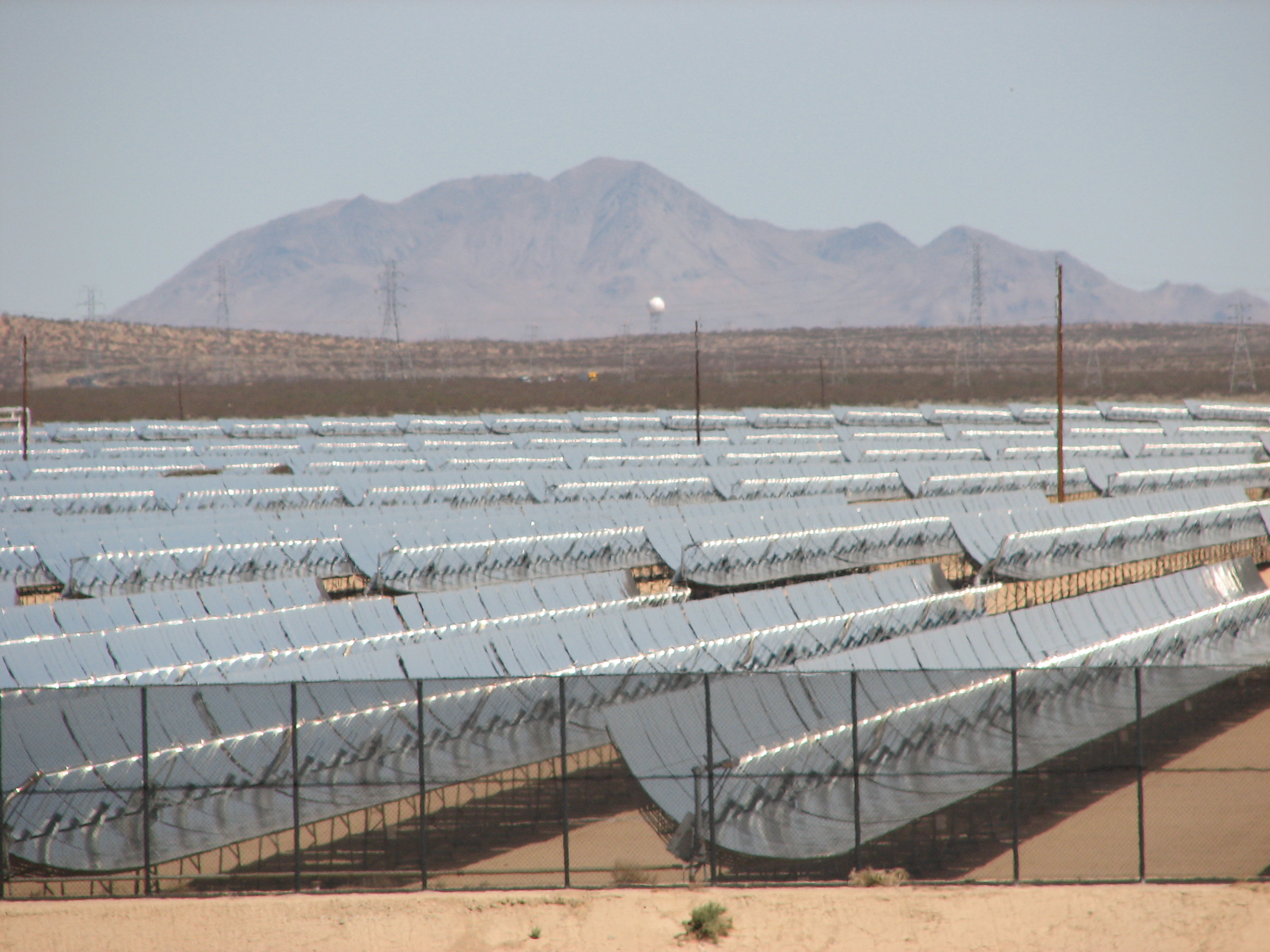
In March 2008, NextEra Energy Resources filed an application to build the Beacon project on 2,012 acres of former farmland in California’s Kern County. Long rows of mirrored parabolic troughs will focus sunlight on liquid-filled tubes to create steam that drives an electricity-generating turbine.

Some rural residents immediately objected to the 521 million gallons of groundwater the project would consume annually in an arid region on the western edge of the Mojave Desert. After contentious negotiations with regulators, NextEra agreed to use recycled water that will be piped in from a neighboring community.

“It’s been a lengthy process, an almost embarrassingly long lengthy process,” said Scott Busa, NextEra’s Beacon project manager, at Wednesday’s hearing. “Hopefully, we’re going from a lengthy process to a timely process.”

You can read the rest of the story here.

Read Full Post »

Photo: Todd Woody

I wrote this story for Grist, where it first appeared.

With the campaign season revving up, even more money is starting to flow into the campaign to defeat Proposition 23.

Prop 23 is the California ballot initiative that would suspend the state’s landmark climate change law. Its opponents had been relying mostly on the largesse of a California coalition of environmental groups and Silicon Valley’s venture capitalists and tech elite to finance their No on 23 campaign. But now No forces are tapping out-of-state donors.

On Thursday, they got $250,000 from New York investor Nicolas Berggruen. Berggruen is head of Berggruen Holdings, which has made investments in wind energy projects.

Also last week, Nancy Burnett of Lummi Island, Wash., deposited $100,000 in the anti-Prop 23 coffers. Burnett is a daughter of David Packard, co-founder of Silicon Valley tech giant Hewlett-Packard, and a supporter of Democratic candidates.

And this week, David Bonderman, a Texas investor with TPG Capital, donated $7,500.

Closer to home, Warren Hellman, the wealthy San Francisco investor, banjo player, and blue-grass aficionado, wrote a $75,000 check to the No campaign. The campaign’s supporters are fighting to preserve California’s Global Warming Solutions Act, popularly known as Assembly Bill 32. AB 32 requires the state to reduce greenhouse gas emissions to 1990 levels by 2020 and allows the creation of a cap-and-trade market to meet that mandate.

The bulk of the money financing the pro-Prop 23 campaign has come from two Texas-based oil companies, Tesoro and Valero, and other out-of-state fossil fuel interests. The most recent big donation came earlier this month when Valero gave $3 million to the effort.

Both sides expect the campaign spending to peak somewhere north of $100 million by the time Election Day rolls around in November, with huge amounts of cash rolling in when the traditional election season kicks off after Labor Day.

One person watching the Prop 23 battle closely is Lawrence Goldenhersh, chief executive of Enviance, a California firm that sells environmental compliance software and services — including those that track greenhouse gas emissions — to big industrial companies.

“If AB 32 is sustained by the voters of California, you will have the largest plebiscite in the history of the climate change debate cast by voters in the world’s seventh largest economy,” Goldenhersh told me Tuesday. “If AB 32 survives and Jerry Brown gets elected governor I think you’ll have cap-and-trade nationally by 2013.”

Enviance has clients on both sides of the Prop 23 fight — including Valero — and thus is not taking a position on the ballot measure, according to Goldenhersh. Still, he calls the election the “Normandy invasion of climate change.”

“If Prop 23 passes and AB 32 is suspended or killed then I think there will not be a lot of drive and political appetite to take on a piece of grand climate legislation in Congress,” he says. “People will say, ‘if it’s too expensive for California then it’s too expensive for a little state.’ “

Read Full Post »

photo: REC Solar

I wrote this story for Grist, where it first appeared.

Every time I fly over Phoenix, Las Vegas, or some other sprawling sun-scorched Southwest city, two thoughts come to mind: Who had the bright idea of putting black shingles on all those desert subdivisions, and why aren’t those roofs covered in solar panels?

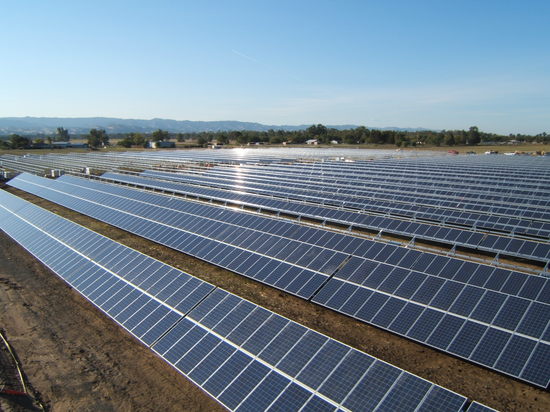
Apparently the administrators at the Southern Arizona VA Health Care System in Tucson had the same idea. This week REC Solar, a California company, announced a deal to install a 2.9-megawatt photovoltaic array on the hospital’s carports. That’s in addition to the 302-kilowatt system ground-mounted system REC Solar currently is building for the veteran’s hospital.

At 2.9 megawatts, the new parking lot installation will apparently be the nation’s largest solar carport complex and will supply a big chunk of the 900,000-square foot facility’s electricity demand. (At peak output, an array of that size would be able to supply electricity to roughly 3,000 average-sized homes, provided their owners didn’t run the air conditioning 24/7.)

The solar panels generate electricity while the carports will help to keep the vehicles underneath cooler. Three years ago, Google put solar panels on carports at its sprawling Silicon Valley headquarters and then installed electric car charging stations in the parking spaces. A San Diego company called Envision Solar builds “solar groves” — tree-like carports with solar panel canopies — in parking lots for companies such as Dell.

While the Arizona deal highlights the opportunity to generate clean electricity from parking lots — those vast wastelands that symbolize the nation’s oil addiction — it also underscores the government’s role in driving demand and creating a market for green technology.

While the Obama administration has doled out billions of dollars in stimulus money for renewable energy projects, it has also directed federal agencies to practice what it preaches. That means increasing the energy efficiency of the government’s own huge real estate holdings, replacing federal automotive fleets with cars that run on alternative fuels, and generating electricity from renewable energy.

As I wrote earlier this week, the United States military has become one of the biggest green forces. The Navy, for instance, is aiming to cut its dependence on fossil fuels in half by 2020 by converting ships to run on electric hybrid propulsion systems, fueling fighter jets with biofuels, and installing everything from smart meters to solar arrays at all naval bases.

In other words, there’s a lot of government carports out there ready to go solar.

Read Full Post »

photo: NRDC

I wrote this story for Grist, where it first appeared.

The climate war has shifted to California.

Proposition 23, an initiative that would suspend Assembly Bill 32 (AB 32), the state’s landmark global warming law, provides the first ballot box test for climate change legislation — and for the prospects of reviving a national cap-and-trade bill.

So far, much of the media attention has focused on Prop 23’s funding. It’s being underwritten by the Texas oil companies Tesoro and Valero along with other mostly out-of-state petrochemical and fossil fuel interests. Prop 23 supporters have contributed more than $6.5 million to the campaign.

But a review of opposition fundraising — for the No on 23 campaign — offers a revealing look at what amounts to a fight for the future, a struggle between the industrial behemoths of the old fossil fuel economy and a startup coalition of environmental groups, Silicon Valley technology companies, financiers, and old-line corporations looking to profit from decarbonizing California.

“The choice that is before California is between the new clean economy versus the dirty old economy,” says Annie Notthoff, California advocacy director for the Natural Resources Defense Council. “The Silicon Valley folks who are willing to invest in the new clean energy economy with their dollars are tangible evidence that this is an economic issue as well as an environmental one.”

The NRDC has emerged as one of the key fundraisers, funneling more than a million dollars to the No on 23 campaign to date. Big green groups such as NRDC and the Environmental Defense Fund took the lead on forging alliances with Fortune 500 companies in the unsuccessful effort to pass national climate change legislation. In contrast, the heavy hitters in California’s Prop 23 battle are green tech entrepreneurs and venture capitalists, who have traditionally shied away from electoral politics.

The last stand for climate change has brought John Doerr, a leading green tech investor with Kleiner Perkins Caufield & Byers, to the table. Doerr has given $500,000 to defeat Prop 23. And he’s not alone.

Wendy Schmidt, founder the 11th Hour Project, a Silicon Valley environmental grant-making nonprofit (and wife of Google chief executive Eric Schmidt), donated $500,000 to NRDC’s No Prop 23 Committee. (Disclosure: The Schmidt Family Foundation is a financial supporter of Grist’s, and Wendy Schmidt is a member of the Grist Board.)

Google itself hasn’t contributed to the No campaign, but last week the search giant’s green energy chief, Bill Weihl, assured a gathering at the company’s Silicon Valley headquarters that, “We’re strongly behind the No on 23 campaign” and the global warming law, known as AB 32.

When asked about Google’s potential financial support for the No campaign, company spokesperson Parag Chokshi said, “Google has been a very strong supporter of AB 32 and wants it to be implemented. We’ll continue to monitor the situation as we move forward.”

To date, the heaviest hitter on Team No is Thomas Steyer, the press-shy founder of San Francisco hedge fund Farallon Capital Management. Steyer, a big donor to Democratic candidates, has pledged $5 million and stepped forward to co-chair the No on 23 Committee with George Schulz, the Republican former secretary of state.

“I personally come at this issue as a businessperson who cares about the economic future of California as well as the environmental and security issues here,” Steyer said on a conference call late last month. “The right way to frame this is that we have a fairly stark choice to either move forward or turn back the clock.”

“We have 12,000 companies in California working on clean energy already,” he added. “It’s going to be one of the dominant spaces in the world and for us to excel and lead in this area we need a consistent regulatory framework for investment.”

Yet another mainstream investor is Robert Fisher, former chair of The Gap, the San Francisco-based clothing empire. Like Schmidt, Fisher has put up a half million dollars for the NRDC fund. And Southern California investor Anne Getty Earhart, an heir to the Getty oil fortune, donated $250,000 directly to the No campaign.

“What makes this unusual is that this is not your classic tree-huggers-versus-big business battle,” says Steve Maviglio, a longtime California Democratic operative and the chief spokesperson for the No on Prop 23 campaign. “Environmentalists, dyed-in-the-wool businessmen, tech companies — they have all been very active in fundraising, active on the lecture circuit and before editorial boards.”

You can read the rest of the story here.
Read Full Post »

« Newer Posts - Older Posts »

Design a site like this with WordPress.com
Get started