Feeds:
Posts
Comments

Archive for the ‘green cars’ Category

think-production3.jpgIt was a year ago that venture capitalist and solar energy entrepreneur Jan-Olaf Willums appeared at the Cleantech Forum in San Francisco shortly after taking over Think Global, a Norwegian electric car maker once owned by Ford (F). Willums and his partners had just secured their first round of funding and unveiled plans to revive Think and a zippy urban runabout called the Think City. This week Willums made a return appearance at the 2008 Cleantech Forum and showed just how fast an automotive startup can move amid the lumbering dinosaurs of Detroit.

Green Wombat caught up with the ever-cheerful Willums over coffee Wednesday (unlike his American counterparts he meets the press without the PR minders that seem to accompany every exec everywhere). A day earlier on a panel about alternative transportation he dropped something of a bombshell: At the Geneva Auto Show on Tuesday Think will unveil its next-generation car, a sleek five-seat sedan and a collaboration with an unnamed Fortune 100 company. (See correction at the end of the story.)

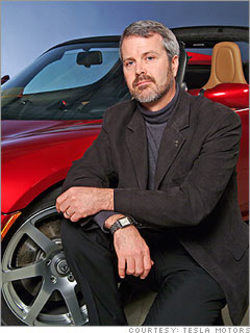
Willums, who has raised $93 million from U.S. and European investors, was keeping mum on the identity of its big-league partner until Tuesday but he did say that new model was not just a concept car. “We have designed a five-seater show car but it really is much more than that,” says Willums (photo above). “It is very much a car that can be produced and it looks like the car that will produced.” The plan is to offer the next-gen Think in 2011 as an all-electric as well as well as a so-called series hybrid that uses a small engine to charge the battery and extend its range. (The current Think City has a range of 180 kilometers –112 miles.)

The drawing Willums briefly displayed on the panel showed an stylish aerodynamic four-door sedan. He says Think is planning to later produce a crossover SUV and coupe version of the car. Silicon Valley electric car startup Tesla’s next car also is a five-seater sedan, code-named White Star. “We won’t compete with Tesla,” says Willums. “The Tesla will be more a BMW; we’ll be more the Volkswagen.”

In the meantime, the two-seater Think City is rolling off the production line at the company’s factory outside Oslo and the first 500 cars are set for delivery to customers in March. (For the Think back-story and my 2007 Business 2.0 magazine feature on the company and its innovative business model click here.) Production will be fully ramped up by the end of 2008 and Think aims to produce 10,000 cars a year.

Willums, who will appear on a panel I’m moderating at Fortune’s Brainstorm: Green conference in April, also tells Green Wombat that Think later this week will introduce the City to London and Paris. Think’s strategy is to pursue urban markets that offer incentives for electric vehicles. For instance, for electric cars London waives the $15 congestion “congestion fee” charged for driving into the city and offers free parking. France gives EV buyers a $7,500 rebate. Think plans to begin selling the City in those markets in early 2009. Think has also established a subsidiary in Denmark

The company’s North American plans are still in flux. “We hope to have a plant in the U.S. in 2009,” he says. As with Europe, Think will target urban markets in the U.S., such as San Francisco and New York.

Think has markedly picked up the pace since I last met Willums in Oslo. That’s due in part, he says, because of the big automakers’ more aggressive moves to get into the electric car market, such as General Motors (GM) with its Chevy Volt electric hybrid.

It also seems increasingly clear that innovative startups like Think will survive by making strategic partnerships with bigger players and moving nimbly into select and potentially profitable markets. Whether Think will be a drive-away success remains to be seen but its clear Willums is hitting the accelerator.

Correction: An earlier version of this story said Think was collaborating with an unnamed Fortune 100 automaker. In fact, Think was collaborating with a Fortune 100 company, General Electric.
Read Full Post »

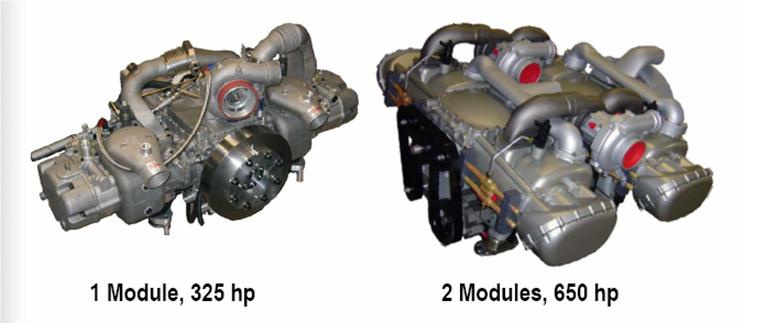
ecomotors-engine-diagram-012008_examples.jpg

Silicon Valley green tech investor Vinod Khosla caused a stir recently when he dissed plug-in electric hybrid cars as “toys” that would not contribute much in the way of fighting global warming. The blogs were buzzing from red-faced EV enthusiasts taking umbrage at Khosla, who has made big bets on biofuels and is never shy at expressing his opinions on all matters green.

But an investment Khosla Ventures announced this week in EcoMotors, a Detroit startup developing a high-efficiency diesel engines, shows that the legendary venture capitalist is more eclectic when it comes to electrics than his public pronouncements might make him seem.

EcoMotors founders Peter Hofbrauer and John Coletti, veterans of Volkswagen and Ford (F) respectively, are engineering engines that they hope will achieve 100 miles per gallon, run on gasoline, diesel or biofuels and be used to power — wait for it — plug-in hybrid electric cars.

What drove Khosla to change his mind on hybrids? He didn’t, really. To understand why, we need to look under the hybrid hood. There are two types of hybrids. A parallel” hybrid contains two drive trains — an electric motor to power the car at low speeds for short periods of time, and a conventional gasoline engine for higher speeds. The Toyota (TM) Prius and Honda (HMC) Civic hybrid and most other hybrids on the road today are parallel hybrids. (A plug-in version would allow for a more powerful battery pack that could be recharged from a standard electrical outlet.)

In contrast, a series hybrid takes some of the complexity — and presumably the cost — out of the design by using only an electric drive train to propel the car while relying on a small internal combustion engine to power a generator that charges the battery and provides power to the electric motor when needed. The Chevrolet Volt, General Motor’s (GM) plug-in electric hybrid under development, is a series plug-in hybrid. And the EcoMotors’ engine will be designed for use in a series hybrid.

“He was referring to parallel hybrids,” says Khosla Partner’s Ford Tamer of his boss’s anti-hybrid comments made in a speech at an investor conference. “We do believe a series hybrid is the way to go. He was also referring to the fact that the hybrid platform is inherently an expensive platform.”

So is a series platform at this point, but Khosla’s vision is to drive that cost down by creating high-efficiency engines and batteries. Hence the investment in EcoMotors. And hence the hiring last September of Tamer, a former top executive at chipmaker Broadcom and a co-founder of another chip company, Agere (later acquired by Lucent). “I’ve been focused on the efficiency side of Khosla — engines, motors, turbines, even solar and batteries,” says Tamer, Khosla Ventures’ operating partner.

Khosla is the sole funder of EcoMotors – and no, Tamer won’t reveal the size of the investment – which officially launched this month and remains so stealthy it doesn’t even have a website yet.

Tamer says EcoMotors CEO Hofbrauer developed a high-efficiency engine under contract with the Defense Advanced Research Projects Agency, of DARPA, for use in military vehicles. EcoMotors has now licensed the technology for commercial use.

Here’s how it works, as explained by Tamer: the EcoMotors engine is built of 2-cylindar “modules” that can be stacked depending on the need for power – one or two modules for a car, three or four for a big truck. “If you have two modules, you can shut down one module for city driving,” says Tamer. “But when you need to need to go uphill or need power for highway driving, you engage the second module. That gives you better fuel efficiency and reduces emissions.” (EcoMotors’ renderings of the engine’s design are above.)

With the recently enacted energy bill mandating automakers raise the average fuel efficiency of their fleets to 35 miles per gallon by 2020, EcoMotors aims to demo its first engine to potential customers by early 2009.

A plug-in electric hybrid drive train will be further down the road but Khosla Ventures already has made investments in companies developing components for such a system. One such startup is Seeo, a Berkeley, Calif.-based company whose website cryptically says it is “developing advanced materials to revolutionize electricity storage and delivery.” And Thursday morning, Khosla Ventures announced it had upped its investment in Transonic Combustion, a California startup developing  fuel injection systems designed to increase fuel efficiency.

“Our belief is that we have to get a fuel-efficient, emissions-conscious diesel engine on its own,” Tamer says. “Then going to a hybrid becomes a bonus.”

One of Vinod Khosla’s mantras is that green technology must become cheap and scalable enough to be adopted in China and India, countries whose impact on climate change is monumental. In other words, a $25,000 plug-in hybrid doesn’t stand a chance against a Tata Nano, the Indian people’s car unveiled last week.

Remarks Tamer: “$2,500 will buy a Tata – that’s a DVD upgrade on a Lexus.”

Read Full Post »

tesla-martin_eberhard.jpgFor Tesla Motors founder Martin Eberhard, getting news of his ouster was like glancing at the review mirror and seeing one of his electric Roadster supercars approaching at 130 miles an hour without a sound.

In other words, he was blindsided. “Somebody in the company asked me if I would be leaving at a certain date and I said, `I don’t think so,’ but that turned out to be the case,” Eberhard told Fortune’s Green Wombat.

The date was last Friday and Tesla left Eberhard by the side of the road just months before the Silicon Valley electric car company rolls its hotly-anticipated Roadster off the production line and into the hands of celebrity customers like the Google founders and California Governor Arnold Schwarzenegger. Green Wombat spoke to Eberhard and Tesla chairman Elon Musk Monday afternoon about the changes at Tesla and the company’s plans for the future.

Eberhard, long the public face of Tesla, stepped down as president of technology and gave up his board seat in a move that is — depending on who’s talking — either part of a planned transition or a hit-and-run take-out of the founder following the appointment of a new chief executive last week. The shakeup comes as Tesla wrestles with a transmission problem that has delayed production of the $100,000 all-electric car that does zero-to-60 in four seconds and can go 245 miles on a single charge.

In August, Eberhard, who started Tesla five years ago with the financial backing of PayPal alum Musk, relinquished his CEO spot so the San Carlos, Calif., startup could hire a top executive with experience in large-scale manufacturing. Former Flextronics chief Michael Marks took over as interim CEO, but Eberhard says he never expected to be booted from the company.

“I truthfully thought I’d be spending quite a few more years at Tesla Motors,” says Eberhard before boarding a flight in Burbank to San Francisco. “The only surprise was that the board no longer wanted me as part of the company. There wasn’t any major disagreement going on, not that I know of anyway.”

As Eberhard recounts it, Musk told him about a month ago that he wanted him to leave at some unspecified future date. “I thought it was a strange notion to kick the founder out of the company anyway, where there wasn’t a big ideological difference on the board where we wanted to go,” Eberhad says. “For all Elon’s character and personality, he’s trying to solve same problem as I am. ”

The end came suddenly last week. On Wednesday, Tesla announced the replacement of Marks with a permanent CEO, tech veteran Ze’ev Drori, founder of chip company Monolithic Memories. Two days later Eberhard was packing up his office. “Elon did talk to me about leaving the company without having a [board] vote,” Eberhard says. “I left voluntarily when it was clear that I wasn’t going to win a vote anyway.” Eberhard, who will serve on a Tesla advisory board, says Musk explained why he was being ousted “only in the vaguest terms.”

When I reach Musk on his cell phone and put the question to him, he pauses and laughs a bit nervously. “I don’t know what to say without being negative,” says Musk, whose other post-PayPal ventures include rocket company SpaceX and solar systems installer Solar City. “It did not make sense for him to be at the company. Of course, if the board thought if it would be better for him to stay he would still be there.”

“I don’t think its ideological, it was more operational, I suppose,” he adds. “There wasn’t an obvious role for Martin.”

That rankles some at Tesla, acknowledges Darryl Siry, the company’s vice president of sales, marketing and service. “I think for a lot of people who have identified with Martin for many years and who are emotionally connected to Martin as a leader at Tesla, this transition is a bit jarring,” he says. “But we have to all adapt and move on. ”

As CEO, Eberhard used Tesla’s blogs to interact with electric car enthusiasts and customers, giving them an unusually detailed look at the development of the Roadster. As his final act he posted a farewell on a Tesla fan site. “I am also not going to lie about it. I am not at all happy with the way I was treated,” he wrote, “and I do not think this was the very best way to handle a transition — not the best for Tesla Motors, not the best for Tesla’s customers (to whom I still feel a strong sense of responsibility), and not for Tesla’s investors. ” (Tesla has attracted a roster of investors that include Google (GOOG) founders Sergey Brin and Larry Page as well as venture capital firms VantagePoint Venture Partners, Technology Partners and Draper Fisher Jurvetson.)

Some Tesla insiders tell Green Wombat they believe Eberhard’s departure is more the result of personality clash with Musk rather than the speed bumps Telsa has hit as it gears up to get the Roadster on the road to meet the expectations of the tech titans, Hollywood celebs and others who have have plunked down six figures for the car. Telsa put plans to sell electric car batteries to other manufacturers on hold while it focuses on the two-seater’s transmission, which hasn’t met the company’s durability standards.

“It’s our biggest issue,” says Musk. “Unfortunately the company picked the wrong supplier, not once but twice, and now we’re on to our third. I feel pretty confident the way things are going but I personally had to take a hand in getting us there.” He says in recent months he’s spent up to a third of his time at Tesla.

“The first production cars should be out in the next few months,” Musk says. “It’s going to be a fairly slow stream until we clear up the production issues. We need to work on production costs as well.”

Musk offered a preview of what’s next for Tesla, saying that early next year the company will unveil its second model, a sports sedan code-named WhiteStar. Tesla also is developing a next-generation transmission, battery and drive train, which it expects to be production-ready in a couple years. “What we’re working on in the shop is a significant advance,” he claims.

Rather than just sell batteries to other electric car manufacturers, Musk says Tesla aims to provide the complete drive train package — motor, transmission, battery and software.

“I think the right path for Tesla is as an independent company,” he says. “As soon as the timing is right we’ll take the company public and use that capital to fund additional product development. We see Tesla as being one of the great car companies of the 21st century and not as a nameplate of some big auto company. We really want Tesla to branch out and have a wide range of models. Our primary interest is how do we get as many electric miles as possible.”

Eberhard says it’ll be difficult to watch from the sidelines. “I wish things were different, for sure. I still feel a strong sense of loyalty to the company. It’s been my life for the past five years. It’s not just a business. It’s a company I started for ideological reasons as well as business reasons — to deal with climate change, oil dependence.”

Under Eberhard Tesla almost single-handedly revived the electric car just a few years after it was declared dead, pushing General Motors (GM) to develop its own EV, the Volt. (GM Vice Chairman Bob Lutz acknowledged as much in a recent interview with U.S News & World Report. “When Tesla announced they were building a car, that kind of tore it for me. I thought, ‘If some little West Coast outfit can do this, we can no longer stand by.’ “)

Eberhard says he’ll take a few months to figure out his next step. In the meantime, he still has his Roadster to look forward to.

He’s No. 2 on the waiting list, right behind Musk.

Read Full Post »

Former SAP (SAP) top exec Shai Agassi unveiled his new venture last night in the pixels of the online editions of the Wall Street Journal and The New York Times: A startup backed by $200 million that will lease removable batteries for electric cars. The company will also build a network of battery-charging stations and battery replacement centers. It appears that Agassi’s company, called Project Better Place, won’t spend its considerable cash hoard on developing new battery technology or electric cars themselves. Instead, according to the articles’ somewhat differing takes, Agassi seeks to extend the range of existing electric car batteries by making it easy to charge up or swap power packs on the road. The company would make money by renting batteries to car owners and charging them to charge up.

"The business model for the electric cars will be similar to that used by mobile phone operators," the company says on its site. "In the same way that wireless operators deploy a network of cell towers to provide an area of mobile phone coverage, Project Better Place will establish a network of charging spots and battery exchange stations to provide ubiquitous access to electricity to power electric vehicles.  The company will partner with car makers and source batteries so that consumers who subscribe to the network can get subsidized vehicles which are cheaper to buy and operate than todays fuel-based cars. Consumers will still own their cars and will have multiple car models to choose from."

Among the big names backing Agassi are Israeli holding company Israel Corp, Morgan Stanley (MS), Tesla investor VantagePoint Venture
Partners, former World Bank chief James Wolfensohn and Edgar Bronfman, Sr.

Battery leasing is an idea that’s gaining currency among electric car companies. Batteries typically account for half the cost of an electric vehicle,
requiring that buyers essentially prepay upfront for years of fuel cost. Norwegian EV maker Think, for instance, plans to sell its City urban runabout and charge a monthly "mobility" fee that will include the battery lease as well as other features like insurance. General Motors (GM) is exploring a similar idea for its Volt electric hybrid under development. Utilities like PG&E (PCG), meanwhile, have expressed interest in buying tens of thousands of used EV batteries to store renewable energy produced by solar arrays and wind farms for use when power demand peaks. Such a secondary market for electric car batteries potentially makes leasing schemes viable.

Agassi will face competition from Capricorn Investment Group, a Palo Alto private equity firm that also intends to launch a battery-leasing company to jump-start the EV market. Capricorn has invested in both Think and Tesla Motors, the Silicon Valley startup that is building the Roadster supercar.

The risk Agassi faces is that companies like Tesla, which itself has raised more than $100 million, will develop long-range electric car batteries that make a network of charging stations and battery replacement stations superfluous. Tesla, for example, says its latest tests show the Roadster will go 245 miles between charges in combined city and highway driving. Still, it’ll be some time before an electric car goes 400 miles on a charge and Agassi has $200 million to play with. A few months ago, Tesla co-founder Martin Eberhard spoke to Green Wombat about the potential for EV battery leasing. "I would love to see that work," he said. "It may work for us down the road. I think its a great idea."

Read Full Post »

TeslaTesla Motors’ announcement that it is delaying production of its electric Roadster sports car until early 2008 to deal with quality-control issues has generated a lot of news coverage. (The car had been set to go into production later this year.) Less attention was paid to the Silicon Valley car company’s other news: EPA-approved testing shows that the Roadster will go 245 miles on a single charge in combined city/highway driving. (If you’re just zooming around town the range is 255 miles while a road trip will take you 235 miles before you need to plug in.) Tesla originally promised the Roadster would have a 250-mile range and then downgraded that estimate earlier this year to around 200 miles. If the new numbers hold up in extended real-life driving, it’s a significant milestone in the development of electric cars. The last production electric car, General Motors’ (GM) EV1 had a top range of about 140 miles. The ability to go 235-255 miles on a charge gives the Roadster a range competitive with fossil-fuel powered cars. (Of course, the nearly $100,000 two-seater is not competitive on price and you’ll be lucky to fit a bag or two of groceries in the trunk.)

According to Tesla’s blog, road tests also found that the car went 267 miles when driven "conservatively" around the Silicon Valley suburb of San Carlos; 230 miles on a grip to Lake Tahoe with two people and luggage; 186 miles when driven "aggressively" on the highway; and 165 miles in a "worst-case scenario" that consisted of "impatient commuting, aggressive stops and starts, high speeds" with the air conditioning blasting.

When Green Wombat interviewed Tesla founder Martin Eberhard in June, he commented on the extraordinary challenges of building an electric car company from the ground up. "Every single little problem that were dealing now is doable, but theres lots of them," says Eberhard.  "Starting a car company is hard. We have an exotic car, with an entirely new drive train, and were putting together a supply chain from both automotive and non-automotive sources around the world. And we have all kinds of regulatory requirements."

Read Full Post »

Crowdsourcing the Electric Car

Img00288
photos: green wombat
Tesla Motors is Silicon Valley’s first car company, founded by geeks rather than gearheads. The startup behind the forthcoming all-electric Roadster sports car may also be the first Web 2.0  automaker.  Tesla execs regularly blog, detailing the development of the zero-to-60-in-four-seconds, $98,000 Roadster and engaging potential buyers and green car supporters in discussions about everything from the engineering challenges of producing an EV to marketing strategies.  Now the San Carlos company is tapping its fan base to gather data to be used in designing home charging stations for the Roadster and, presumably, for future cars like the WhiteStar electric sedan under development.

Img00295
In a blog post last week, Tesla founder and president of technology Martin Eberhard asked EV enthusiasts to download an Excel spreadsheet to record information about their home’s circuitry and the electrical load created by their various appliances. "Okay everybody, I need a little help from you," wrote Eberhard. "What is the biggest EV charging circuit that could be installed in your house? This sounds like an easy question, but it turns out not to be. The answer depends on a lot of factors….Help me out here: Download the spreadsheet, roll up your sleeves, survey your own electrical service, and report back to me. If you are really inspired, do a few more houses your parents, your brother, your neighbor, whatever." (Tesla is also getting help from California utility PG&E (PCG) on the home-charging front. A prototype charging station is pictured at right.) Telsa communications director David Vespremi told Green Wombat that more than 30 people have sent in surveys over the past week.

Back in June, Green Wombat sat down with Eberhard at Tesla’s headquarters to talk about electric cars and the benefits of blogging the development of the Roadster. "We get more customer feedback, more market data than you could ever get from the most expensive market survey you could pay for," Eberhard says. "Being open and getting feedback has been tremendously useful to us. I’m not a big believer in market surveys and focus groups. They’re useful for small things, like ‘does this user interface actually work?’ On the hand with the blogs its a constant conversation and the amount of data and the quality of it is very good. We know our customers, what they know and don’t know, how to target our messaging, and whether our message is getting through. I think the secrecy thing is overrated."

And it goes without saying, that’s a great PR and marketing strategy. Eberhard, of course, acknowledges that Tesla keeps its core technology secret. And that as a startup that has yet to put its first car into production, the company can afford to be more open than competitors who can’t risk killing demand their current lineup of cars by disclosing too much information about the next model.  "If I had already some other sports car on the road and was coming out with the Roadster I’d have to be more careful about it," he says. "With WhiteStar we’re taking a pretty calculated gamble that people who would opt for WhiteStar, most of them wouldn’t have opted for a Roadster anyway. We’ll have to be a little more careful down the road, that’s just the market reality. We’ll try to remain an open and transparent company. Even if I’m not telling people about features on the car, I’ll tell people why."

Read Full Post »

Tesla and PG&E Team Up

Img00286
photo: green wombat
In another step toward creating an alternative automotive infrastructure, Silicon Valley electric car company Tesla Motors and California utility PG&E said today they will collaborate on developing "smart charging" technology. That will allow cars like Tesla’s forthcoming Roadster to be juiced up by remote control, giving utilities the ability to control when the vehicle is charged, say, when electricity demand is low – and power cheap – or when solar, wind and other renewable energy comes online. Smart charging also lets utilities set the rate of charging to balance power demands on the grid. It’s part of a developing vehicle-to-grid system where one day it’s hoped that electric vehicles and plug-in hybrid cars will be able to transmit power back to the grid when demand peaks to avoid using carbon-spewing power plants.  PG&E (PCG) said it anticipates integrating the Tesla smart charging technology into its SmartMeter program, which could give electric car owners a break on their utility bills if they charge their cars at certain times of the day. Other utilities, like Southern California Edison (EIX), are working on similar initiatives.

Read Full Post »

Google’s Green Car Challenge

Google_rechargeit3_lg_2
Hoping to jump-start innovation in "sustainable transportation," Google.org – the search giant’s philanthropic arm –  today issued a $10 million request for proposals for projects that will promote the commercialization of plug-in hybrid vehicles, electric cars and vehicle-to-grid technology. "We plan to invest amounts ranging from $500,000 to $2,000,000 in selected for-profit companies," said Google.org. "While $10 million is a fraction of the total investment needed to transform our transportation sector, we hope this RFP will help catalyze a broader response. We need the automakers to bring these cars to market, but plug-in vehicles also need an entire ecosystem of companies flourish." The grants are part of Google.org’s (GOOG) RechargeIt.org initiative. In June, the company unveiled a solar-powered parking bay and recharging stations it created with utility PG&E (PCG) where workers can juice up a fleet of plug-in hybrid cars that Google is creating for an employee car-sharing service. Google is also testing several plug-in Toyota Priuses (TM) to assess their potential to serve as mobile generators, transferring electricity back to the grid from their batteries during times of peak demand.

That’s good for the environment and a weapon in the fight against global warming. But it also could be a big business opportunity for Google if plug-in vehicles and vehicle-to-grid (V2G) become common. Imagine the data and network management infrastructure needed to figure out where millions of cars are plugged in at any given moment, determining the power level of their batteries, and matching that with the demands of the power grid. Green Wombat happened to be at the Googleplex on Saturday and asked Dan Reicher, Google.org’s director of climate and energy initiatives, about whether the company has a role to play in V2G. "It’s clearly a data management challenge and there are things we can do, but it’s unclear if it’s a big business opportunity," he said.

What Google is doing now is collecting data on the performance of plug-in hybrid Priuses. On Saturday, Reicher showed the latest additions to Google’s plug-in fleet. Since may, hundreds of Google employees have been using the modified Priuses to run errands and as they tool around Silicon Valley black boxes installed in the cars record data on the driving conditions, fuel efficiency and other factors.

Read Full Post »

Pnnl_ab
photo: PNNL
Will the car of the future be powered by hydrogen pellets? Scientists at the U.S. Department of Energy’s Pacific Northwest National Laboratory in Richland, Washington, are investigating the feasibility of using the chemical compound ammonia borane to store hydrogen. When heated, ammonia borane releases hydrogen gas that could, theoretically, be used in automotive fuel cells. PNNL scientists say an ammonia borane pellet weighing three-quarters of a gram can contain as much as 1.8 liters of hydrogen (for the metrically challenged, that’s about half a gallon). The range of fuel-cell cars currently under development by Ford (F), General Motors (GM), Honda (HMC) and Toyota (TM) is limited by the amount of hydrogen that can be stored in bulky on-board tanks. Pop in a handful of hydrogen pellets into a small onboard reactor that would control the release of hydrogen, the thinking goes, and your fuel-cell car would have the range and performance of a conventional vehicle. "Its somewhat hypothetical but we think it’s something potentially doable," PNNL staff scientist Donald Camaioni told Green Wombat on Thursday. Presumbably such a reactor could also be used to generate electricty for home and commercial use as well.

The research is in its earliest stages, and the prospect of a hydrogen-pellet powered car is many years away, if ever. Camaioni says he and his colleagues have managed to release hydrogen from ammonia borane in the laboratory but two big challenges need to be overcome. One is figuring out how to control the release of hydrogen from ammonia borane through varying the temperature of a reactor. The other is to develop a system that can reprocess the spent pellets for reuse. "Right now there isnt a well known way to do that cost- effectively, he says. Of course, if a hydrogen-pellet fueled vehicle is to be a carbon-free car, a no-emissions way of powering the reactor must be found as well.

Read Full Post »

Tesla_roadster_on_the_road_2
photo:  squiddphoto
The Tesla Roadster hits the highway later this month for the electric sports car’s first public road trip, a 200-mile journey from San Francisco through the Sierras to Lake Tahoe. Sure, it’s a publicity stunt but one designed to demolish the perception that electric cars are short-range put-put mobiles more suited to suburban cul-de-sacs than the open road. As the Silicon Valley startup gears up for production of the zero-to-60-in-four super car this fall, it will use the final prototype of the Roadster for the August 29 road trip. The Global Hyatt hotel chain is sponsoring the event and the Roadster will stop at Hyatts in Sacramento and Incline Village, Nevada, on Lake Tahoe. Hyatt is considering installing charging stations at some properties – Tesla in May won a $561,000 grant from the state of California to develop charging stations that can be deployed at hotels. While this is the first public road trip for the Roadster, Tesla has put the $98,000 car through its paces during long-distance testing, says Tesla public relations director David Vespremi.

Green Wombat recently had an opportunity to take a ride in the Roadster with Vespremi while reporting a story on electric cars ("Have You Driven a Fjord Lately? in the August issue of Business 2.0). The test car is a "fusion red" prototype that screams sex and speed.  Vespremi – like other Tesla employees, he’s a gearhead – backs the Roadster out of the garage at Tesla’s Silicon Valley headquarters and turns onto a busy thoroughfare. We cruise at about 40 mph for a bit and then he punches the accelerator and the car shoots forward into the traffic. Im pushed back into my leather seat,  subconsciously bracing for impact as we silently rocket straight toward a tractor trailer ahead.  David flicks the steering wheel and the car effortlessly swings around the truck and heads toward the entrance ramp to the 101. Its rush hour and the metering lights are on. He hits the accelerator and we rocket up the ramp at 90 miles an hour, gliding around the traffic as we merge onto the freeway. Green Wombat briefly considers taking out a second mortgage and adding his name to the wait list. The drive back to San Francisco in the Zipcar Prius is anti-climatic, to say the least.

Read Full Post »

« Newer Posts - Older Posts »

Design a site like this with WordPress.com
Get started