Feeds:
Posts
Comments

Archive for the ‘green cars’ Category

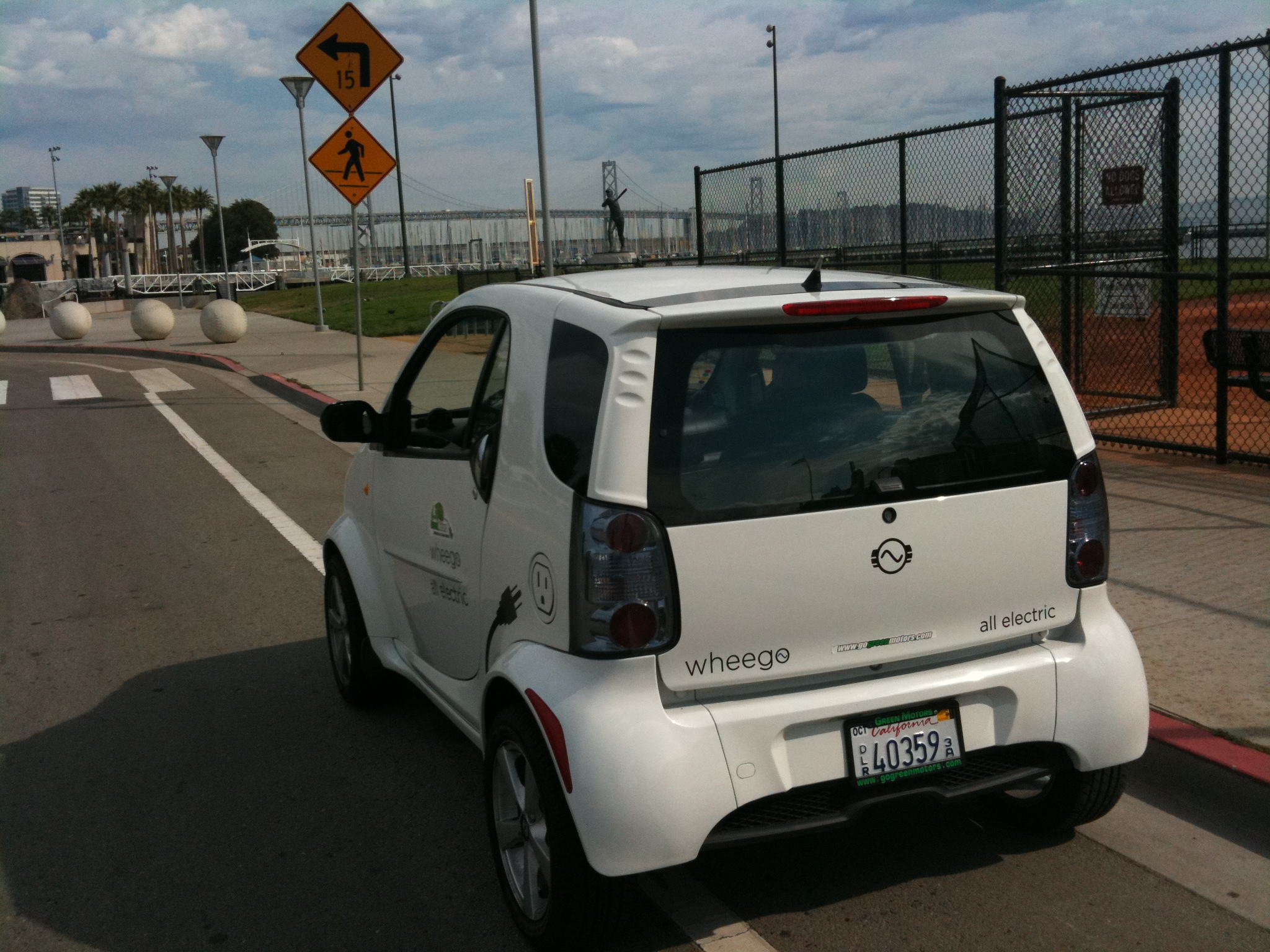
photo: Todd Woody

In a story I wrote with Clifford Krauss in Monday’s New York Times, I look at how the San Francisco Bay Area has is scrambling to prepare for the arrival of mass-market electric cars later this year:

SAN FRANCISCO — If electric cars have any future in the United States, this may be the city where they arrive first.

The San Francisco building code will soon be revised to require that new structures be wired for car chargers. Across the street from City Hall, some drivers are already plugging converted hybrids into a row of charging stations.

In nearby Silicon Valley, companies are ordering workplace charging stations in the belief that their employees will be first in line when electric cars begin arriving in showrooms. And at the headquarters of Pacific Gas and Electric, utility executives are preparing “heat maps” of neighborhoods that they fear may overload the power grid in their exuberance for electric cars.

“There is a huge momentum here,” said Andrew Tang, an executive at P.G.& E.

As automakers prepare to introduce the first mass-market electric cars late this year, it is increasingly evident that the cars will get their most serious tryout in just a handful of places. In cities like San Francisco, Portland, Ore., and San Diego, a combination of green consciousness and enthusiasm for new technology seems to be stirring public interest in the cars.

The first wave of electric car buying is expected to begin around December, when Nissan introduces the Leaf, a five-passenger electric car that will have a range of 100 miles on a fully charged battery and be priced for middle-class families.

Several thousand Leafs made in Japan will be delivered to metropolitan areas in California, Arizona, Washington state, Oregon and Tennessee. Around the same time, General Motors will introduce the Chevrolet Volt, a vehicle able to go 40 miles on electricity before its small gasoline engine kicks in.

“This is the game-changer for our industry,” said Carlos Ghosn, Nissan’s president and chief executive. He predicted that 10 percent of the cars sold would be electric vehicles by 2020.

You can read the rest of the story here.
Read Full Post »

The ability to fast-charge electric cars is seen as key to the adoption of battery-powered vehicles. But as I wrote in The New York Times on Thursday, utilities are worried such devices will overload the grid:

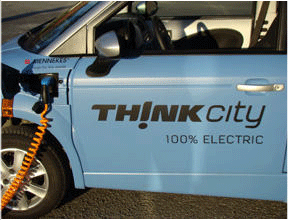
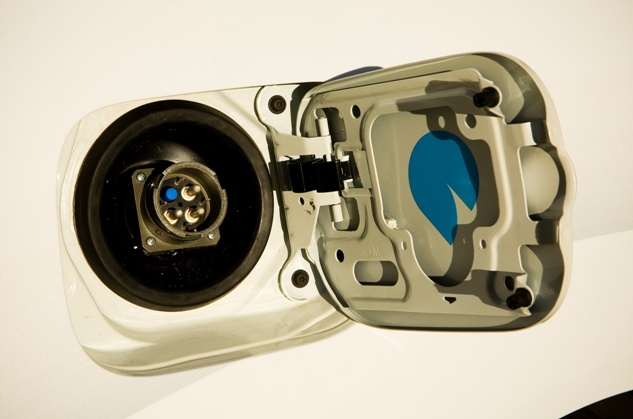
Think, the Norwegian electric automaker, announced a deal this week with a California company, AeroVironment, a maker of electric vehicle charging stations, to introduce fast-charging stations that can charge its battery-powered City car to 80 percent capacity in as little as 15 minutes.

A conventional charger can take eight or more hours to charge an electric car, depending on the battery.

“The development and deployment of very-fast-charge stations will help speed the electrification of automobiles in the United States and globally,” Richard Canny, Think’s chief executive, said in a statement.

But utilities — concerned that fast-chargers could overload the electricity grid — are more cautious.

Think and AeroVironment did not reveal the voltage of their fast-charger but such devices — known in the industry as “Level 3” chargers — generally average around 440 volts. Most household appliances run on 110 volts.

“It is premature to evaluate the feasibility or safety of Level 3 fast-charging equipment,” wrote Christopher Warner, a lawyer for the utility Pacific Gas and Electric, in a brief filed with the California Public Utilities Commission in October. “Such charging may require large investments in infrastructure and load management constraints in order to prevent ‘mini-peaks’ and localized impacts on grid reliability.”

You can read the rest of the story here.
Read Full Post »

photo: Better Place

In The New York Times on Friday, I wrote about the latest developments in California’s efforts to write the rules of the road for an electric car infrastructure:

California officials have indicated they are not inclined to regulate electric car infrastructure companies that plan to sell electricity to drivers through networks of charging stations.

Whether to treat such companies as quasi-utilities has been a contentious issue. The state’s three big utilities have split on the topic, while battery charging start-ups like Better Place and Coulomb Technologies have warned that regulation could stifle innovation and scare off investors.

Now the president of the California Public Utilities Commission, Michael R. Peevey, has signaled he is siding with the companies as the commission moves to put electric car regulations in place.

“Facilities that are solely used to provide electricity as a transportation fuel do not constitute ‘electric plant,’” wrote Mr. Peevey in a recent ruling. “As such, the commission would not have regulatory authority regarding the price that an electric vehicle charging facility operator charges for charging services or other aspects of the operation of such facilities.”

That is not likely to be the final word on the subject. Mr. Peevey, who is overseeing the electric car rule-making process, invited utilities, automakers and charging station companies to file briefs on his proposed interpretation of the law.

With several mass-market electric cars set to hit showrooms by the end of the year, the utilities commission is moving unusually swiftly to resolve a variety of outstanding issues. In his ruling, Mr. Peevey set an April deadline to issue a preliminary decision on the most of them.

You can read the rest of the story here.
Read Full Post »

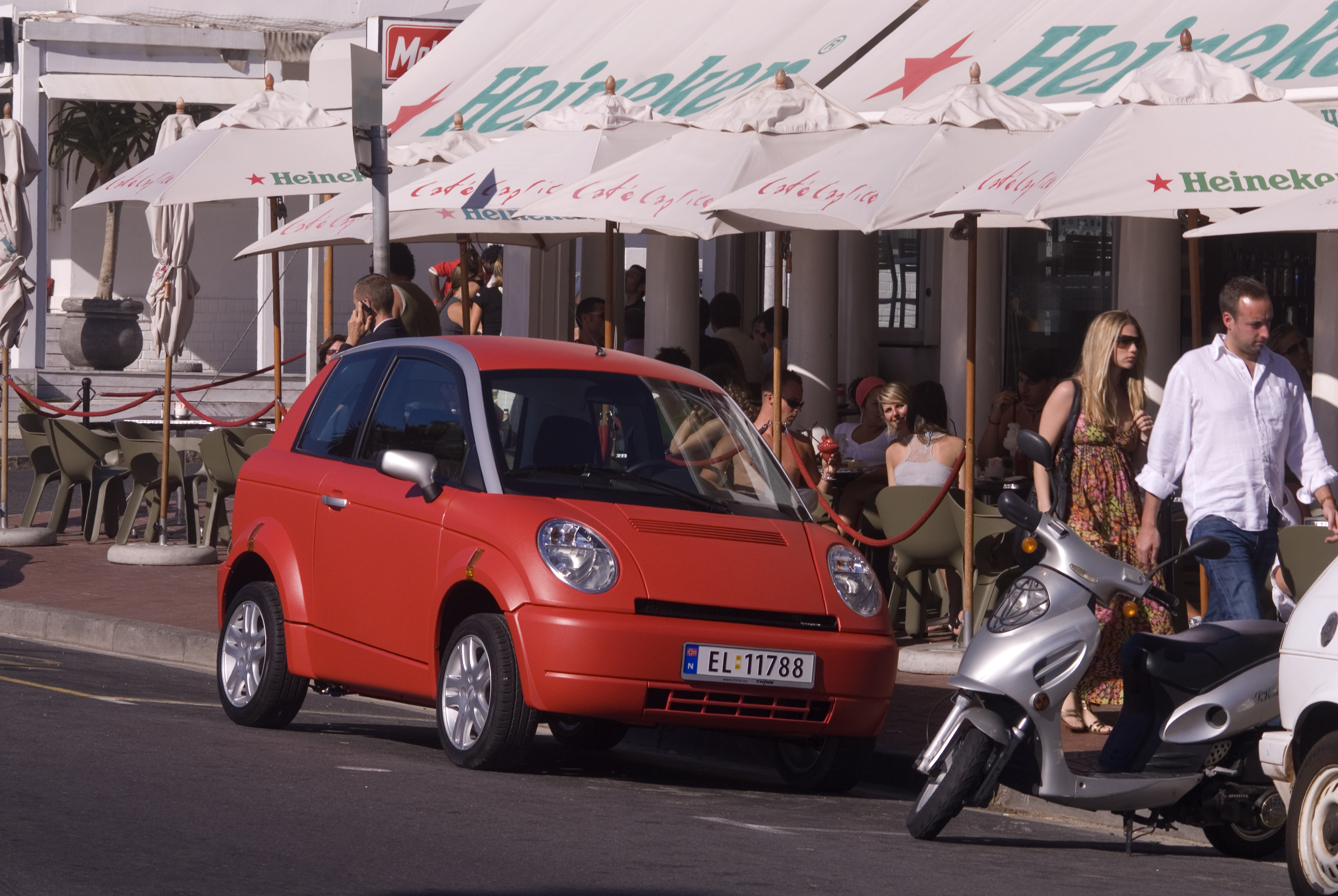
photo: Think

In The New York Times on Monday, I write about a new McKinsey report that looks at the potential for electric cars in three of the world’s “megacities” — New York, Paris and Shanghai:

New Yorkers, start your electric cars.

A report from the consulting firm McKinsey, scheduled to be issued Monday, found that about a fifth of New York City residents are “early adopters” likely to purchase an electric car. Such vehicles could account for 16 percent of automobile sales by 2015, with 70,000 electric and plug-in hybrid electric cars on city streets.

Even so, the city would only see a net two percent reduction in carbon emissions from the replacement of gasoline-powered cars by electric vehicles, or EVs, according to a summary of the report provided to The Times.

“Achieving a visible carbon effect from EV penetration will require a higher penetration of the fleet and further improvements in local power generation, with a higher share of renewables and less carbon-intensive technology in the future,” the report said.

Those findings were part of a study gauging the appeal of electric cars in three large cities – New York, Paris and Shanghai. The report’s release comes as electric vehicles take center stage at the opening of the Detroit auto show Monday.

You can read the rest of the story here.

Read Full Post »

photo: Think

In The New York Times on Tuesday, I write about Norwegian electric carmaker Think’s announcement that it will open its first U.S. assembly plant in Indiana:

Think, the Norwegian electric carmaker, said on Tuesday that it will open its first American assembly plant in Elkhart, Ind.

The Think City, a battery-powered, two-seat hatchback, is set to begin rolling off the Indiana assembly line in early 2011, ramping up to a potential annual production of 20,000 cars by 2013. The factory is expected to eventually employ more than 400 workers.

About 1,500 of the plastic-bodied cars are already on the street in Europe, and Think will begin selling the City in the United States later this year. The car will be imported from a Finland assembly plant until the Indiana factory opens in a former recreational vehicle factory.

Think’s investment in the Indiana facility depends in part on securing a United States Department of Energy loan guarantee to finance the project, according to Richard Canny, Think’s chief executive.

“Our plan is based around the D.O.E. loan,” Mr. Canny said in a telephone interview on Tuesday. “If that didn’t happen we would be looking at a slower and shallower investment plan.”

Indiana was one of several states vying for the Think assembly plant. Tax incentives offered by Indiana and Elkhart’s proximity to automotive suppliers in neighboring Michigan helped clinch the deal, according Mr. Canny.

You can read the rest of the story here.
Read Full Post »

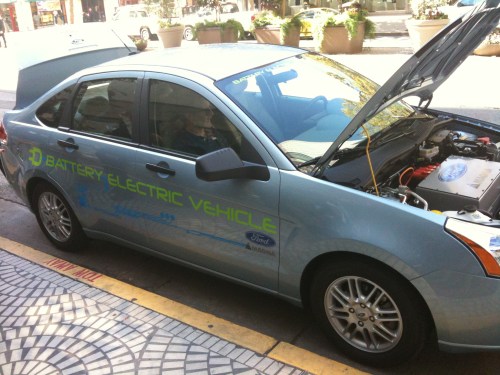
IMG_0021
photo: Todd Woody

Ford executives brought a battery-powered Focus sedan to San Francisco on Thursday (along with a plug-in hybrid Escape). It was clear from the presentation by Nancy Gioia, Ford’s director of global electrification, that the automaker is aiming for a mass market and is spending a great deal of effort on helping create an entire electric car infrastructure. As I wrote in The New York Times on Friday:

At a press event in San Francisco on Thursday, Ford showed off a prototype of what might be called the Model T of the automaker’s electric car strategy: the battery-powered Focus sedan.

“This is about affordable transportation for the masses — this is not about a small niche,” said Nancy Gioia, Ford’s director of global electrification.

To keep costs down, the Focus and plug-in electric hybrids will be built — in small numbers at first — on what the company calls its global “C” platform, which produces two million cars a year.

“The assembly line in Michigan will produce the battery-electric Focus and also, with minor modifications, the gas Focus,” Ms. Gioia said. “We can change production as the market shifts.”

The Focus will hit the market in 2011 followed the next year by a plug-in electric Escape sport-utility vehicle, which Ford also showed off in San Francisco. Ms. Gioia said she expects electric and plug-in hybrids will account for 10 to 25 percent of the market by 2020.

You can read the rest of the story here.
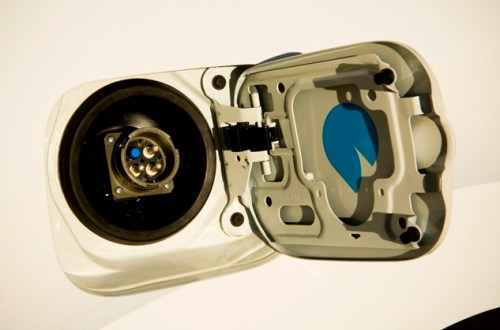
But the cars seemed almost beside the point as Ford executives focused on their strategy to work with utilities and other groups to create open standards for electric cars and ensure that a charging infrastructure is in place when buyers hit showrooms.

Read Full Post »

betterplaceplug

photo: Better Place

With electric cars months away from hitting the road, the California Public Utilities Commission has begun the complex task of establishing a regulatory framework for the state’s emerging electric vehicle infrastructure. The biggest fight is likely to be over whether to regulate companies like Better Place, which plans to build an electric car charging network in the state. As I write in The New York Times on Monday:

With electric cars set to hit the mass market next year, a skirmish is breaking out in California over who will control the state’s electric vehicle infrastructure.

The California Public Utilities Commission will write the rules of the electric road and is just starting to grapple with the complex regulatory issues surrounding the integration of battery-powered cars into the state’s electrical grid.

One of the biggest questions is whether to regulate Better Place, Coulomb Technologies and other companies that plan to sell electricity to drivers through a network of battery charging stations.

California’s three big investor-owned utilities have split over the issue.

“The commission should establish its authority to regulate third-party providers of electricity for electric vehicles,” Christopher Warner, an attorney for Pacific Gas & Electric, wrote in a filing with the utilities commission. “Managing the increased electricity consumption and load attributable to electric vehicles in order to avoid adverse impacts on the safety and reliability of the electric grid may be one of the most difficult management challenges that electric utilities will face.”

Southern California Edison, meanwhile, urged the commission to move cautiously, calibrating any regulation to the specific business models of the companies.

San Diego Gas & Electric said the commission does not have the right to regulate companies like Better Place.

You can read the rest of the story here.
Read Full Post »

SalinasRabobankTeslaChargingSM

photo: SolarCity

In my new Green State column on Grist, I write about how SolarCity, a Silicon Valley rooftop solar installer, is getting into the electric-car charging station business:

You can’t get more California greenin’ than this.

Peter Rive can charge up his Tesla Roadster electric sports car in his San Francisco garage with carbon-free electricity supplied by a solar array on his roof. Then, if he’s in the mood for a road trip, he can drive to Los Angeles, stopping at a solar-powered charging station along the way to top off the battery.

The free charging stations on the “solar highway”—aka the 101—were recently installed by SolarCity, the Silicon Valley rooftop solar company Rive founded with his brother Lyndon. (The electric-blue Roadster sitting in his garage was made by his cousin Elon Musk‘s startup, Tesla Motors.)

So what’s a solar company doing installing highway charging stations for six-figure sports cars driven by people with seven-figure salaries?

In part, it’s a result of SolarCity’s connection to Tesla and grants the electric carmaker received from the state of California to demo charging stations. It makes for great PR, of course, but the bigger picture here is how the emerging electric vehicle industry will drive (sorry) the adoption of residential and commercial photovoltaic systems.

You can read the rest of the column here.

Read Full Post »

thnk-goes-amsterdam77
photo: Think

In The New York Times today, I write about how Stockholm’s congestion pricing system, which charges drivers to enter the city center, has helped triple the number of alternative fuel cars in the Swedish capital:

When Sweden began charging motorists to drive into downtown Stockholm during rush hour, the goal was to reduce traffic congestion, cut greenhouse gas emissions and boost ridership on public transportation.

That has happened, and now a new study has found another benefit from so-called congestion pricing: In the 24-square kilometer congestion zone in Sweden’s capital, the number of registered alternative fuel vehicles, which are exempt from congestion tolls, jumped from five percent of the total vehicle fleet in 2006 to 14 percent in 2008.

“The changes in the make-up of the vehicle fleet are not exclusively due to the congestion tax, but surveys show that exemption from the congestion tax is the single most significant incentive for those buying alternative fuel vehicles in Stockholm,” concluded the report, which was released this month by the Stockholm Traffic Administration.

You can read the rest of the story here.

Read Full Post »

0060-20090901-DSC_4084

photo: Mission Motors

Would you pay $68,995 for an electric motorcycle that goes 150 mph and 150 miles on a charge? Mission Motors, a San Francisco startup, is betting well-heeled techies and gearheads will pony up for the thrill of instantaneous acceleration offered by an electric superbike. The company’s prototype, the Mission One, earlier this month set a world speed record for electric motorcycles. As I write in The New York  Times today:

Mission Motors, an electric motorcycle startup based in San Francisco, said Tuesday that its prototype vehicle had set a world speed record for battery-powered bikes of 150.059 miles per hour at the Bonneville Speedway in Utah.

That was the average speed achieved during two, mile-long trials but the motorcycle, called the Mission One, hit 161 m.p.h. on the Bonneville Salt Flats during one run on Sept 1.

Speed matters for what amounts to the Tesla Roadster of electric motorcycles.

“Our focus is on the market that is most motivated by performance,” said Forrest North, the co-founder and chief executive of Mission Motors and a former battery engineer at the high-end electric car maker, Tesla. Mr. North is bringing a bit of that company’s strategy to Mission Motors: Build a stylish high-tech, high-priced electric vehicle for enthusiasts, and then move down the market with less expensive models.

You can read the rest of the story here.

Read Full Post »

« Newer Posts - Older Posts »

Design a site like this with WordPress.com
Get started