Feeds:
Posts
Comments

Archive for the ‘global warming’ Category

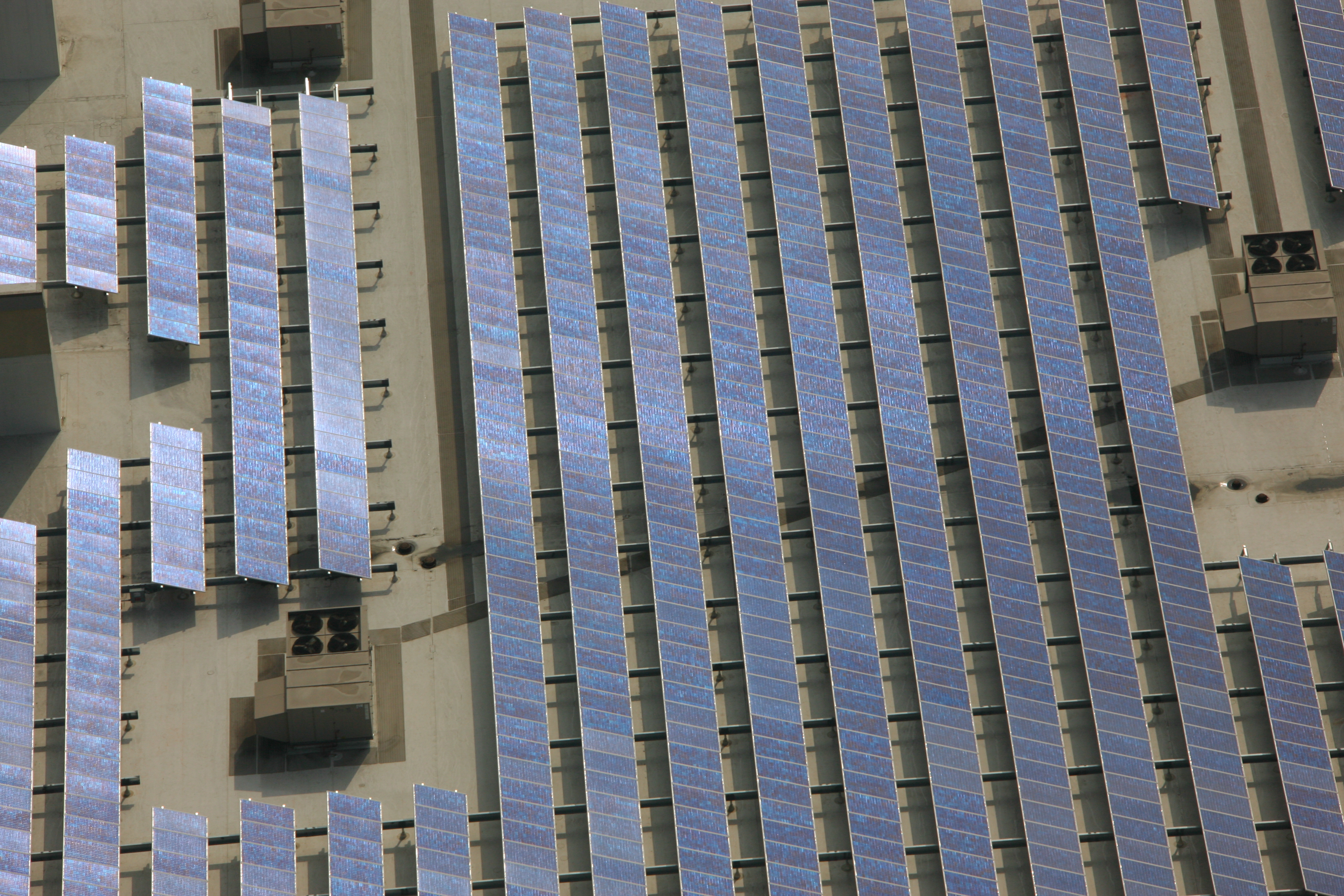
photo: eSolar

If Wall Street’s implosion can feel remote on the West Coast, where green tech startups largely rely on Silicon Valley venture capital, there may be no escaping the fallout from the credit crunch.

Still, even those renewable energy companies tapping East Coast cash have powered ahead amid the chaos on the Street. Take SolarReserve, a Santa Monica, Calif.-based solar power plant developer. A day after Lehman Brothers filed for bankruptcy last week, the stealth startup announced a $140 million round of funding from investors that included Citigroup (C) and Credit Suisse (CS).

Lehman does hold small stakes in wind turbine maker Clipper Windpower of Carpinteria, Calif., and Ormat Technologies, a Reno, Nev., geothermal developer. “Lehman’s exit from wind is not good news, but it’s not the end of the world,” says Ethan Zindler, head of North American research for New Energy Finance, a London-based research firm. And while Lehman holds stock lent to it from solar cell companies like SunPower (SPWR) and Evergreen Solar – potentially diluting their earnings per share if the stock is not returned – Lehman is not a big player in solar.

That’s not the case with Goldman Sachs (GS) and Morgan Stanley (MS). Both are major solar and wind investors and both were forced this week to reorganize themselves into bank holding companies to stave off shotgun marriages with other institutions. Spokespeople for Goldman and Morgan Stanley told Green Wombat that the firms’ transformation into more conventional commercial banks – at least a two-year process- will not change their green investing strategies.

But if there appears to be little immediate collateral damage from the financial crisis for green tech startups, there are longer-term consequences. Solar power plants, wind farms and other large-scale renewable energy projects require billions of dollars in bank financing.

“Credit is just going to get more expensive,” says Zindler. “We’ve already seen some pull-back for some big solar and wind deals. Bigger developers who have solid balance sheets will be OK but the smaller guys could be in trouble.”

Says Bill Gross, chairman of solar power plant developer eSolar: “I think if you’re going to get project financing, you’re just going to have to show higher returns to get people to take the money out of the mattress.”

But Gross, the founder of Pasadena, Calif.-based startup incubator Idealab, argues that given soaring electricity demand and fossil fuel prices, large-scale renewable energy projects will be an attractive investment, paricularly since utilities typically sign 20-year contracts for the power they produce. eSolar, which is backed by Google and other investors, has a long-term contract to supply Southern California Edison with 245 megawatts of green electricity. Gross says eSolar has a pipeline of other projects and interest in the company remains high, particularly overseas.

“If you can make projects that can compete with fossil fuels on a parity basis, those projects are going to be financed,” he says, “because they’re safe returns for 20 years and I think money is going to flow to them.”

Rob Lamkin, CEO of solar power plant startup Cool Earth, echoed that sentiment. “The credit crisis does give me pause,” says Lamkin, whose Livermore, Calif.-company has raised $21 million in venture funding and is developing “solar balloons” that use air pressure to concentrate sunlight on solar cells. “But the energy problem is so big that I don’t see problems raising project financing.”

The key for developers of utility-scale projects – particularly solar power plants – will be keeping their costs under control; not an easy thing when deploying new technologies amid a commodities boom.

Dita Bronicki, CEO of geothermal power plant developer Ormat Technologies (ORA), does not anticipate trouble obtaining project financing. “I think the cost of money is going to go up, but a company like Ormat with an operating fleet and operating cash flow will not be as affected,” Bronicki says. “Small companies will find that lenders will be more picky in what they will invest.”

Green entrepreneurs tend to be an optimistic bunch, so it’s not surprising they still think the future looks bright. But they had reason to be sunny this week – amid Wall Street’s meltdown, the U.S. Senate on Tuesday passed, at long last,  extensions of crucial renewable energy investment tax credits and other goodies to goose green tech, such as a tax credit worth up to $7,500 for buyers of plug-in electric cars. The Senate action now must be reconciled with similar legislation in the House of Representatives.

Solar projects, for instance, would qualify for a 30% investment tax credit through 2016.

“That is one thing that will help project finance,” says Gross. “So many people are sitting on the sidelines right now and if the investment tax credit passes that will help get these projects financed.”

Read Full Post »

After a year of stalemate that threatened to strangle the nascent United States solar industry, the U.S. Senate on Tuesday passed energy legislation that extends a key investment tax credit until 2016.

The 30% solar tax credit was part of a package of green energy incentives that includes a one-year extension of the production tax credit crucial to the wind industry and a $2,500-$7,500 tax credit for people who buy plug-in electric vehicles. (That should make General Motors (GM) happy as it prepares to roll out its ever-increasingly expensive Volt plug-in electric hybrid.)

Homeowners also won an extension of a tax credit for installing solar panels and the $2,000 cap on such systems was lifted. Put in a small wind turbine or a geothermal heat pump and you can claim up to a $4,000 and $2,000 tax credit, respectively.

The big winner was the solar industry. Congress’ failure to extend the investment tax credit threatened to scuttle scores of multibillion-dollar solar power plants in the pipeline and undermine mandates that utilities like PG&E (PCG) and Southern California Edison (EIX) obtain a growing percentage of their electricity from renewable sources.

The legislation now returns to the House of Representatives, which earlier passed a similar version of the Senate bill.

Read Full Post »

photo: Todd Woody

Green Wombat’s story in the new issue of Fortune magazine on the solar power plant-fueled boom in demand for wildlife biologists is now online here. The photo above of the blunt-nosed leopard lizard was taken at a state reserve in San Luis Obispo County.

Or you can read the story below.

The hottest tech job in America

Giant solar plants are being built where dozens of protected species live. That’s good news for wildlife biologists.

By Todd Woody, senior editor

(Fortune Magazine) — It looks like a scene from an old episode of The X-Files: As a red-tailed hawk circles overhead and a wild pronghorn sheep grazes in the distance, a dozen people in dark sunglasses move methodically through a vast field of golden barley, eyes fixed to the ground, GPS devices in hand. They’re searching for bodies.

In this case, however, the bodies belong to the endangered blunt-nosed leopard lizard, and the crew moving through the knee-high grain are wildlife biologists hired by Ausra, a Silicon Valley startup that’s building a solar power plant for utility PG&E on this square mile of central California ranchland.

With scores of solar power stations planned for sites in the Southwest, demand for wildlife biologists is hot. They’re needed to look for lizards and other threatened fauna and flora, to draw up habitat-protection plans, and to comply with endangered-species laws to ensure that a desert tortoise or a kit fox won’t be inadvertently squashed by a solar array.

That has engineering giants like URS (URS, Fortune 500) in San Francisco and CH2MHill of Englewood, Colo., scrambling to hire biologists to serve their burgeoning roster of solar clients. “It’s a good time to be a biologist – it’s never been busier in my 15 years in the business,” says Angela Leiba, a senior project manager for URS, which is staffing the $550 million Ausra project. URS has brought onboard 40 biologists since 2007 to keep up with the solar boom. Salaries in the industry, which typically start around $30,000 and run up to about $120,000, have spiked 15% to 20% over the past year.

The work is labor-intensive. “It can take a 30- to 50-person team several weeks to complete just one wildlife survey,” says CH2MHill VP David Stein.

The economics of Big Solar ensure that wildlife biology will be a growth field for years to come. For one thing, there’s the mind-boggling scale of solar power plants. Adjacent to the Ausra project in San Luis Obispo County, for instance, OptiSolar of Hayward, Calif., is building a solar farm for PG&E that will cover 9 1/2 square miles with solar panels. Nearby, SunPower of San Jose will do the same on 3.4 square miles. Every acre must be scoured for signs of “species of special concern” during each phase of each project.

That adds up to a lot of bodies on the ground. URS, for instance, has dispatched 75 biologists to Southern California where Stirling Energy Systems of Phoenix is planting 12,000 solar dishes in the desert. “The biologists are critical to move these projects forward,” notes Stirling COO Bruce Osborn. For one project Stirling had to pay for two years’ worth of wildlife surveys before satisfying regulators.

Just about every solar site is classified as potential habitat for a host of protected species whose homes could be destroyed by a gargantuan power station. (Developers of California solar power plants, for example, have been ordered to capture and move desert tortoises out of harm’s way.) The only way to determine if a site is crawling with critters is to conduct surveys.

While that means a lot of jobs for wildlife biologists, it’s not all red-tailed hawks and pronghorn sheep for these nature boys and girls. The work can get a bit Groundhog Dayish, say, after spending 1,400 hours plodding through the same barley field in 90-degree heat in search of the same blunt-nosed leopard lizard. No wonder then when URS crew boss Theresa Miller asks for volunteers to reconnoiter a decrepit farmhouse for some protected bats on the Ausra site, hands shoot up like schoolchildren offered the chance to take the attendance to the principal’s office.

PG&E (PCG, Fortune 500) renewable-energy executive Hal La Flash worries that universities aren’t cranking out enough workers of all stripes for the green economy. “It could really slow down some of these big solar projects,” he says. Osborn can vouch for that: Biological work on the Stirling project has ground to a halt at times while the company waits for its consultants to finish up surveys on competitors’ sites.

For the young graduate, veteran biologist Thomas Egan wants to say just three words to you: Mohave ground squirrel. The rare desert dweller is so elusive that the only way to detect it on a solar site is to set traps and bag it. “There’s a limited number of people authorized to do trapping for Mohave ground squirrels,” says Egan, a senior ecologist with AMEC Earth & Environmental. “If you can work with the Mohave ground squirrel, demand is intense.”

Read Full Post »

SAN FRANCISCO – Google and General Electric said Wednesday that they will collaborate on developing geothermal power as well as technology to enable plug-in vehicles to return electricity to the grid.

During Google’s (GOOG) annual Zeitgeist conference at its Silicon Valley headquarters, Google CEO Eric Schmidt and GE (GE) chief Jeff Immelt said the two giants also would team up to push for policy changes in Washington to develop smart electricity grids to allow the widespread deployment of renewable energy.

“There’s two fundamental things that have to be done, and which we’re working with Google on,” said Immelt before an audience that included former Vice President Al Gore. “One, there has to be more capacity. The second thing is there has to be a smart grid to allow it to operate more effectively. That’s primarily software. We make the hardware.”

Schmidt quizzed Immelt about the impact of the Wall Street meltdown on green energy. “Will the craziness of last week screw some of this stuff up?” asked Schmidt. “Are we going to get set back for years because of all the shenanigans in the financial industry?”

“People should be concerned but not panicked,” replied Immelt. “The federal government is doing the right thing.”

Gore was not so sanguine, noting that Congress has failed repeatedly to extend crucial investment tax credits for renewable energy. “While Congress is voting on oil drilling and leasing oil shale – which is a move that would be game over for the climate crisis – they’re preparing to filibuster over renewable energy tax credits,” he said.

Google and GE are among scores of Fortune 500 companies that have lobbied Congress to extend the investment tax credit and the production tax credit, which is particularly important to the wind industry. ”

“I’m a lifelong Republican and I believe in free markets but over time we worship false idols,” says Immelt. “Sometimes we think the free market is whatever the price of oil is today. In the end, clean energy is both a technology and a public policy.”

He noted that because the production tax credit allowed the wind industry to scale up, wind-generated electricity now costs about six-to-seven cents a kilowatt hour, down from 15 cents 15 years ago.

“We bought Enron’s wind business for a few million dollars and now it’s worth $7 to 8 billion,” Immelt said. “I’ve made some bad decisions but that wasn’t one of them.”

Google in August invested nearly $11 million in geothermal companies developing so-called enhanced geothermal systems technology to allow the earth’s heat to be tapped nearly anywhere and turned into electricity. On Wednesday, Google and GE said they will work on technology to transform geothermal into a large-scale source of green electricity.

In a statement, the two companies said they will also “explore enabling technologies including software, controls and services that help utilities enhance grid stability and integrate plug-in vehicles and renewable energy into the grid.”

Image: Google

Read Full Post »

Green Wombat often highlights high tech when it comes to tackling global warming and energy independence. But a new study from the University of California’s Lawrence Berkeley National Laboratory shows that simply installing white roofs on homes and commercial buildings – to reflect the sun’s rays rather than absorb them – can reduce air-conditioning costs by 20% and could save $1 billion a year in energy outlays in the United States.

Switch to cool sidewalks and roads and the savings rise to $2 billion annually, according to the study by scientists Hashem Akbari and Surabi Menon and California Energy Commissioner Art Rosenfeld to be published in the journal Climate Change.

The scientists calculated that a global white roofs and roads effort would offset 44 billion metric tons of greenhouse gas emissions, or more than a year’s worth of carbon, and help stablize future C02 emission increases.

“The 44 Gt CO2-equivalent offset potential for cool roofs and cool pavements would counteract
the effect of the growth in CO2-equivalent emission rates for 11 years,” according to the authors.

Such emission reductions, of course, can be securitized into tradable carbon credits, which the study estimates would be worth $1.1 trillion. Regulated carbon market exist in places like Europe but securities based on cool roofs have not yet been created.

A global cool roofs agreement could avoid the pitfalls of Kyoto-style accords, the scientists note.  “Installing cool roofs and cool pavements in cities worldwide does not need delicate negotiations between nations in terms of curbing each country’s CO2 emission rates.”

It’s one of those low-tech, commonsense solutions to both energy use and global warming – one used for thousands of years in the regions like the Mediterranean; those picturesque villages overlooking the sea are white-washed for a reason.

In California, commercial buildings with flat roofs have been required to cool it since 2005. But one of the biggest hurdles in the U.S. to doing the white thing may be homeowner associations that dictate everything from the color of your mailbox to where you place your rubbish bin. The vast majority of homes in California either have standard black shingle roofs or Spanish-style red tiles. A proposal to paint those roofs white will likely incite architectural outrage.

But there’s another, albeit much more expensive solution, to hot roofs: Cover them with solar panels.

photo: California Energy Commission

Read Full Post »

photo: Southern California Edison

When Southern California Edison unveiled plans to install 250 megawatts’ worth of solar panels on warehouse roofs back in March, it was hailed as a ground-breaking move. In one fell swoop, the giant utility would cut the cost of photovoltaic power, expand the solar market and kick-start efforts to transform untold acres of sun-baked commercial roof space into mini-power plants.

There’s just one problem: the solar industry is fighting the billion-dollar plan. In briefs filed with the California Public Utilities Commission, solar companies, industry trade groups and consumer advocates argue that allowing a utility to own and operate such massive green megawattage will crowd out competitors who can’t hope to compete with a project financed by Edison’s ratepayers.  (In California, shareholders of investor-owned utilities are guaranteed a rate of return for approved projects, while utility customers bear a portion of the costs in the form of higher rates.)

The five-year plan “would establish SCE as the monopoly developer of commercial-scale distributed solar in its service territory,” wrote Arno Harris, CEO of Recurrent Energy, a San Francisco company that sells solar electricity to commercial customers. “This would irreparably impair the development of a competitive solar industry.”

Southern California Edison (EIX) is the first utility in the United States to propose such a “distributed generation” scheme and the dispute is being watched closely as a test case for the viability of producing renewable electicity from hundreds of millions of square feet of commercial rooftops. Such systems can be plugged directly into existing transmission lines and tend to generate the most solar power when electricity demand spikes – typically on summer afternoons when people crank their air conditioners. Having such green energy on tap would save utilities from having to build expensive and planet-warming fossil fuel-powered “peaker plants” that sit idle except when demand suddenly rises.

Even critics hail Edison’s move as “bold” and “visionary” and no one disputes that in California the development of big rooftop solar has lagged. For instance, the state’s $3.3 billion “million solar roofs” initiative is designed to put smaller-scale solar panels on homes and businesses and provides generous rebates for systems under 1 megawatt. At the other end of the scale, the state’s big utilities have been signing contracts to buy electricity from solar thermal power plants to be built in the desert. Left out of the subsidy game are incentives for the 1-to-2 megawatt arrays well-suited for commercial buildings.

Southern California Edison says it’s filling that gap and will energize the solar industry, not crush it. The utility plans to lease 65 million square feet of commercial rooftop space in the “Inland Empire” region of Southern California for solar arrays that would generate enough electricity to power 162,000 homes.

“SCE’s financial stability and business reputation will increase the probability that 250 MW of solar PV systems will be available to meet the state’s solar rooftop goals over the next five years,” the utility’s attorneys wrote in a brief filed with the utilities commission, which must approve the program. “In so doing, a solar PV program can improve efficiencies … to reduce costs and jump start the competitiveness of solar PV for widespread application on California roofs.”

There’s no doubt the program will be a boon for solar module makers. For instance, thin-film solar cell company First Solar (FSLR) is supplying 33,000 panels for the program’s first project, a 600,000-square-foot roof array in the inland city of Fontana. However, Southern California Edison intends to contract for union labor to install the solar systems and tap its own capital and a rate hike to finance the project. That won’t leave many opportunities for solar installers and financiers like SunPower (SPWR), SunEdison and MMA Renewable Ventures (MMA).

“Even though this program is kind of taking bread out of our own mouth, the demand for solar will keep going up,” says Mark McLanahan, senior vice president of corporate development at MMA Renewable Ventures, a San Francisco firm that finances commercial solar arrays.

“What they have announced is extremely visionary,” McLanahan tells Green Wombat. “It’s game changing and opens up whole new realms of what solar can do. That’s exciting.”  On the other hand, he says, “It’s certainly possible that a young, growing industry that is pretty fragmented could be hurt by this rather than helped.”

A solution advanced by some solar industry critics is for Southern California Edison to open up the entire program to competitive bidding, not just the procurement of solar panels. The utility vehemently opposes the idea, arguing it would work against the economies of scale it says it can bring to the program.

Whether regulators will approve Southern California Edison’s request for a rate hike to pay for the initiative – and at electricity rates that are significantly higher than those set for other solar programs – remains to be seen. The commission’s own ratepayer advocate has questioned whether utility customers will get their money’s worth.

The utilities commission is unlikely to issue a final decision until next year. In the meantime, you can bet the state’s other big utilities – PG&E (PCG) and San Diego Gas & Electric (SRE) – and solar companies will be watching to see whether the sky’s the limit for big rooftop solar or whether a ceiling is about to be placed on the industry’s ambitions.

Read Full Post »

For those readers who missed Green Wombat’s feature story on the solar land rush in the July 21 issue of Fortune – available here at Fortune.com – I reprint below.

The Southwest desert’s real estate boom

From California to Arizona, demand for sites for solar power projects has ignited a land grab.

By Todd Woody, senior editor

(Fortune Magazine) — Doug Buchanan grins with relief when he sees the carcasses. He has just driven up a steep dirt road onto a vast, sunbaked mesa overlooking the Mojave Desert in western Nevada. There, a few feet from the trail, lie the corpses of two steers. A raven perches on one, the only object more than three feet above the ground on this pancake-flat plateau. Cattle, dead or alive, qualify as good news in Buchanan’s line of work. If cattle are present, that means grazing is permitted, and that in turn means that this land is most likely not protected habitat for the desert tortoise.

Buchanan, 53, is scouting sites for a solar power company called BrightSource Energy, an Oakland-based startup backed by Google and Morgan Stanley. The blunt, fifth-generation Californian, who used to survey the same area for natural-gas power sites, knows that the presence of an endangered species such as the tortoise could derail BrightSource’s plans to build a multibillion-dollar solar energy plant on the mesa.

BrightSource badly wants these 20 square miles of federal land on what is called Mormon Mesa. The company was in such a hurry to stake its claim with the U.S. Bureau of Land Management that it applied for a lease sight unseen. That’s an expensive gamble for a startup, given that application fees alone run in the six figures. “I usually like to go out and kick the tires before filing a claim,” Buchanan says, “but there’s a lot of competitive pressure these days to move fast.”

That’s putting it mildly. A solar land rush is rolling across the desert Southwest. Goldman Sachs, utilities PG&E and FPL, Silicon Valley startups, Israeli and German solar firms, Chevron, speculators – all are scrambling to lock up hundreds of thousands of acres of long-worthless land now coveted as sites for solar power plants.

The race has barely begun – finished plants are years away – but it’s blazing fastest in the Mojave, where the federal government controls immense stretches of some of the world’s best solar real estate right next to the nation’s biggest electricity markets. Just 20 months ago only five applications for solar sites had been filed with the BLM in the California Mojave. Today 104 claims have been received for nearly a million acres of land, representing a theoretical 60 gigawatts of electricity. (The entire state of California currently consumes 33 gigawatts annually.)

It’s not just a federal-land grab either. Buyers are also vying for private property. Some are paying upwards of $10,000 an acre for desert dirt that a few years ago would have sold for $500.

No doubt the prospect of potential riches is overheating expectations. But California and surrounding states have mandated massive increases in renewable energy in the next few years. That has led some experts at Emerging Energy Research of Cambridge, Mass., to predict that Big Solar could be a $45 billion market by 2020.

Meanwhile, the land rush is setting the stage for a showdown between solar investors and those who want to protect a fragile environment that is home to the desert tortoise and other rare critters. The Southwest is on the cusp of what could be a green revolution. And the biggest obstacle of all may be … environmentalists.

***

Over the past year a parade of executives bearing land claims have made the trek to a stucco BLM office just off the interstate in the dusty city of Needles, Calif., a 110-mile drive south from Las Vegas. (It’s the town where the late “Peanuts” cartoonist, Charles M. Schulz, briefly lived as a boy; in the comic strip, Snoopy’s brother Spike is a resident.) The Bush administration has instructed the BLM to facilitate renewable-energy projects (along with nonrenewable ones). But Sterling White, the BLM’s earnest Needles field manager, is also concerned about what could happen if they transform the Mojave into a collection of giant power stations. “One of our biggest challenges is the cumulative impact of these projects,” he says.

Nearly 80% of the land that White’s office oversees is federally protected wilderness or endangered-species habitat. That leaves about 700,000 acres for solar power plants, only some of which are near transmission lines. Land leases are handed out on a first-come, first-served basis, but White is also supposed to weed out speculators from genuine solar developers based on loose criteria such as who is negotiating with utilities and who is applying for state power licenses. White has yet to approve a single lease, but he has summarily rejected four because they lie in protected-species habitat.

***

Solar prospectors tend to be as secretive about their land as forty-niners were about the veins of gold they discovered. Most bids are placed by limited-liability corporations with opaque names that conceal their ownership. And no one has been as quick to move into the Mojave – or as tightlipped about it – as Solar Investments.

That entity, it turns out, is Goldman Sachs’s solar subsidiary. The investment bank’s designs on the desert are a topic of intense interest and speculation. Goldman declined to comment. But here’s what we know:

Solar Investments filed its first land claim in December 2006 and within a month had applied for more than 125,000 acres for power plants that would produce ten gigawatts of electricity. Many of the sites lie close to the transmission lines that connect the desert to coastal cities. (Goldman has also staked claims on 40,000 acres of the Nevada desert.)

Nobody expects Goldman to begin operating solar plants. It will probably either partner with another developer or sell its limited-liability company (and its leases) outright. The firm has been making the rounds of solar developers. “The conversation’s been pretty wide-ranging, primarily as an investor interested in financing deals,” says one solar energy executive approached by Goldman. “But there’s clearly an element of interest in our technology.” Goldman has requested permission to install meteorological equipment on its sites and is evaluating “competing technologies, including solar dish systems, power towers, and large-scale photovoltaic arrays,” according to a letter Goldman sent to the BLM in August 2007.

Competitors are lining up behind Goldman, staking claims on some of the same sites in hopes the bank will abandon them. PG&E and FPL, for instance, are in the queue after Goldman on one site. Solel, an Israeli solar company that last year scored a contract to deliver 553 megawatts to PG&E, is third in line behind Goldman on another.

“I view Goldman as a very interesting indicator of things to come,” says Brian McDonald, PG&E’s director of renewable-resource development. “They’re usually ahead of the curve – you can extract a huge amount of value if you get in early.” There’s other smart money here too. A Palo Alto startup called Ausra received $40 million from the elite green venture capitalists Vinod Khosla and Kleiner Perkins Caufield & Byers. Ausra has signed a deal with PG&E and announced its intention to construct a gigawatt’s worth of projects a year.

Most of the power production contemplated for the Mojave will rely on solar thermal technology – the common approach in large-scale generation projects – in which arrays of mirrors heat liquids to produce steam that drives electricity-generating turbines. But a secretive Hayward, Calif., startup called OptiSolar has filed claims on 105,300 acres to build nine gigawatts’ worth of photovoltaic power plants, which employ solar panels similar to those found on residential rooftops. (The company also has applied for leases on 21,800 acres in Arizona and Nevada.) To put those ambitions in context, the biggest photovoltaic power plant operating today produces 15 megawatts. Says OptiSolar executive vice president Phil Rettger: “We have a proprietary technology and a business approach that we’re convinced will let us deploy PV at large scale and be competitive with other forms of renewable energy.”

***

With the prime BLM sites quickly being snapped up – recently the agency temporarily stopped accepting new land claims while it develops a desertwide solar policy – competition is growing for private land. Here, too, the emphasis on secrecy borders on the obsessive. A request to view a piece of desert that is up for sale is treated as if I had asked to visit Area 51.

Waiting outside a roadside diner in southwestern Arizona – I’ve promised not to say where – with BrightSource senior vice president Tom Doyle, I expect to see a weather-beaten farmer come chugging up in a battered pickup. Instead, a pale-green Volvo SUV driven by a physician glides into the parking lot. The doctor, who wishes to remain anonymous, acquired the land two years ago as the renewable-energy boom got underway. “We thought we’d put solar on it – that’s the reason we bought it,” the doctor says as we pile into the Volvo and head into the desert to visit the site. After about five miles we turn off the road and come to a stop in a rocky patch of desert framed by low-slung mountains and buttes. Doyle quizzes the physician about water rights, endangered species, and access to transmission lines before moving out of earshot to talk dollars. The whole process takes only about 20 minutes – the two sides ultimately decide not to do a deal – and then Doyle is on to visit the next potential property.

Such is the land frenzy that farmers in Arizona were paid $45 million for 1,920 acres by Spanish solar company Abengoa so that it could build a 280-megawatt power plant; the land had an assessed value of a few hundred thousand dollars. The company also plunked down $30 million for 3,000 acres in the California Mojave that had traded hands for $1.25 million nine years earlier. That prompted developer Scott Martin to put his adjacent 300-acre parcel – land he had bought only a few months earlier for $457,500 – on the market for $3 million. Also for sale: a $15 million, 3,000-acre tract near Palm Springs, which Martin began shopping around to solar executives like Ausra’s Perry Fontana. When I join Fontana to check out the site, a onetime World War II air base outside the Mojave ghost town of Rice, he says, “I probably get three calls a day from brokers or landowners.” As if on cue, his Bluetooth earpiece lights up with a cold call from a broker peddling some land near Needles.

***

Green energy is not about to get a green light from all environmentalists. “We’re going to challenge these big solar projects, and there’s going to be tremendous environmental battles,” says veteran California activist Phil Klasky, a member of several green groups who helped lead a campaign in the 1990s that scuttled a radioactive-waste dump planned in tortoise territory in the Mojave. “Large solar arrays will have an impact on surrounding critical habitat for the desert tortoise and other threatened species. We have to fight global warming, but just because it’s solar doesn’t make it right.”

The developers are worried about resistance. “I remember the spotted owl,” says Fred Morse, a former Department of Energy official who is a senior advisor to Abengoa’s U.S. operations. The widespread logging of ancient forests, home to the northern spotted owl, set off epic environmental fights in the 1980s and ’90s. As Morse puts it, “The Mohave ground squirrel or the desert tortoise – any one of them could become a cause.”

Solar energy companies may make for less tempting targets than timber barons, but development of the desert has never been attempted on such a scale. The result is that some environmentalists find themselves anguished over which side to take. “We’ve had our share of conflicts over endangered species in this state, no doubt about it,” says Kevin Hunting, a biologist and a deputy director of the California Department of Fish and Game, which enforces the state endangered-species laws. “We’re actively looking to strike that critical balance between the state’s renewable-energy goals and conserving species that are vulnerable. It’s challenging.”

California wildlife regulators, for instance, have peppered Ausra with requests for more biological surveys on the site of a 177-megawatt solar power plant to be built in San Luis Obispo County. The feds could also require Ausra to prepare a plan to protect the San Joaquin kit fox, a process that could take years and shred the project’s economic viability.

Worse for developers, state and federal law require wildlife officials to consider the total impact of multiple projects when weighing whether to approve any individual facility. Next door to Ausra’s solar farm, for example, is OptiSolar’s planned 550-megawatt power plant, which would cover 9 1/2 square miles of potential endangered-species habitat with solar panels. Will the regulators approve one? Both? Nobody knows.

In the meantime, the solar land rush is unlikely to cool down. Which is why Morse wants to keep quiet Abengoa’s $30 million real estate deal. The company is applying to build a 250-megawatt solar power plant on the site, and it may be in the market for more land. “We don’t want to publicize that purchase,” he says, “as the speculators will be coming out of the woodwork.”

Read Full Post »

California utility PG&E will buy 106.8 megawatts of electricity from a hybrid biofuel solar power plant to be built by a Portuguese firm in the state’s Central Valley.

The hybrid technology will allow two 53.4 megawatt plants to tap the sun and agricultural waste produced in surrounding Fresno County to generate green energy around the clock, according to San Joaquin Solar, a subsidiary of Portugal’s Martifer Renewables. For PG&E (PCG), 107 megawatts is just enough to keep the air conditioners running for some 75,000 homes. But if the biofuel solar hybrid performs as billed and can be scaled up, it’s a win-win – recycling ag waste – a huge and expensive problem in California – into electricity.

The percentage of electricity to be produced by solar versus biofuel and other details of the project’s design are sketchy. Andrew Byrnes, an executive with Spinnaker Energy – the San Diego company developing the project for Martifer – told Fortune that such information is “confidential” as are images of what the hybrid plant will look like and the identities of the company’s U.S. investors.

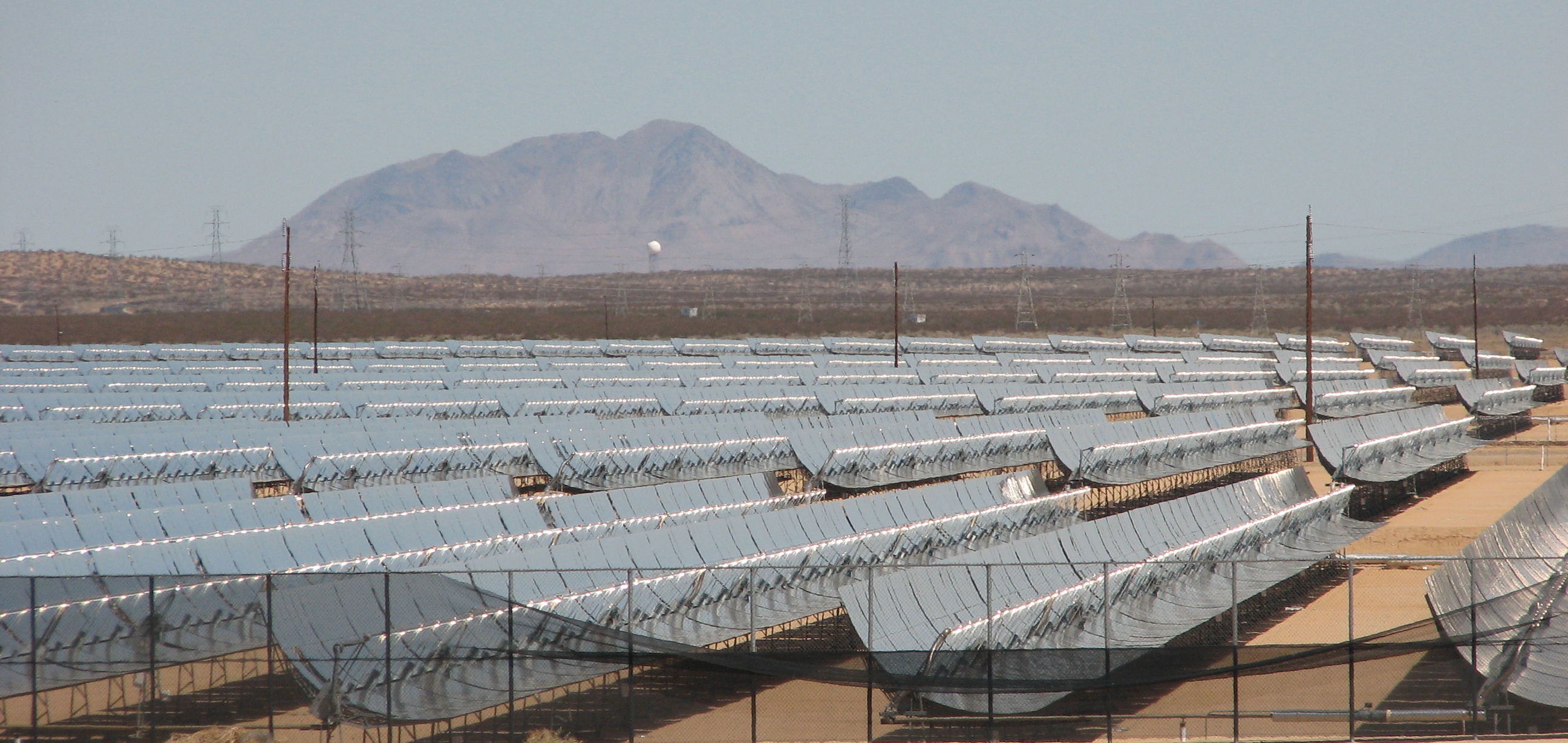
Here’s what we do know: San Joaquin Solar 1 and 2 will be built on private land outside the farming town of Coalinga. They will use long arrays of curved mirrors called solar troughs to focus the sun on liquid-filled tubes to produce steam that will drive electricity-generating turbines. That’s a standard solar technology currently operating in California and elsewhere. The biomass component of the plant will use agricultural waste, green waste and livestock manure to create heat that will generate steam.

It appears the biofuel will be used to keep the plant running at night or on overcast days. “The technologies can run simultaneously,” said Byrnes in an e-mail. “And when a cloud passes overhead (and after the sun sets) the solar facility can still generate energy, since the generation process is dependent on heat rather than direct solar radiation.”

While there is a natural gas-solar hybrid power plant under development in Southern California – see Green Wombat’s “The Prius of power plants” – San Joaquin Solar 1 and 2 will apparently be the world’s first biofuel solar hybrid.

Each power plant will each need 250,000 pounds of biomass a year to operate. Finding that fuel shouldn’t be a problem: Byrnes says a study shows that Fresno County alone produces nearly 2 million tons of ag waste annually.

Read Full Post »

In another sign that technological innovation will drive solutions to global warming and the United States’ energy dependence, technology born of Hewlett-Packard’s imaging and printing research will be used to make more efficient and cheaper solar panels. HP is licensing its transparent transistor technology, which will eliminate the need for mechanical trackers to follow the sun, to a Livermore, Calif., startup called Xtreme Energetics

Here’s how it’s supposed to work: XE’s solar panels concentrate sunlight onto highly efficient solar cells that use a fraction of the expensive silicon found in standard solar modules. A layer of HP’s clear transistors will funnel light to the solar cell as the sun moves across the sky.

“Basically, we don’t have any mechanical gears or cogs,” says XE chief executive Colin Williams, a veteran of JPL/Caltech and a former Stanford University professor. “From an outward appearance the panel appears to be fixed, but internally light is being steered to the solar cell through the electronics.”

Doing away with bulky mechanical trackers means that more panels can be packed onto commercial rooftops, allowing energy-hungry facilities like data centers to draw more of their power from the sun. The panels will be transparent and can be colorized to blend in with building facades. Williams says XE will also produce panels for large-scale solar power plants.

That’s the goal, at least. XE, which is currently funded by its founders, is two years away from producing solar panels with HP’s (HPQ) technology and its claim that they will be twice as efficient at half the cost of conventional solar systems has yet to be proven.

For HP, the solar licensing deal is an unanticipated benefit of collaborative research by HP Labs, engineers at its imaging and printing operation in Oregon and researchers at Oregon State University. “They were looking for future ways to display images,” say Joe Beyers, HP’s vice president of intellectual property licensing. “It just turned out that Colin and his team became aware of the work we were doing with Oregon State and started the dialog.”

Beyers says other potential applications for the technology – developed as part of HP’s new approach to commercializing R&D that my colleague Jon Fortt wrote about recently – include video displays for car windshields.

Read Full Post »

For some on the right coast, the current renewable energy craze seems like a rerun of that ’70s show, the province of California dreamers and pie-in-the-sky Silicon Valley techies. But increasingly it’s all about Big Business, a point driven home Thursday by a deal struck by two decidedly non-crunchy granola types: billionaire oilman T. Boone Pickens and General Electric chief Jeffrey Immelt.

Pickens’ Mesa Power placed an order for 667 GE (GE) wind turbines for the first phase of a massive 4,000-megawatt, 400,000-acre West Texas wind farm called the Pampa Wind Project. When completed in 2014, Pampa is expected to produce enough clean green energy to light up 1.3 million homes, according to Mesa. Each of those 667 turbines alone can generate 1.5 megawatts of electricity. The first phase of the project will cost $2 billion, with a good chunk of the cash going to GE.

That a legendary wildcatter like Pickens sees big money to be made from renewable energy in an oil state like Texas is just another sign that green is not a fad but the future. “You find an oilfield, it peaks and starts declining, and you’ve got to find another one to replace it,” Pickens said in a statement. “It can drive you crazy. With wind, there’s no decline curve.” (Just how much money Pickens will make off wind will depend on whether Congress extends a production tax credit that makes such projects viable.)

When it comes to energy, Texas is literally its own country, as the Lone Star State is not plugged into the national power grid and must generate nearly all its electricity within its borders. Aggressive efforts by Texas regulators and entrepreneurs to make the state energy independent by upgrading its transmission system and tapping wind power are models for the rest of the country.

Read Full Post »

« Newer Posts - Older Posts »

Design a site like this with WordPress.com
Get started