Feeds:
Posts
Comments

Archive for the ‘environment’ Category

Could we really be as dependent on fossil fuels in 2034 as we are today? In The New York TImes on Friday, I write about a projection from energy consultants Black & Veatch that sees fossil fuels continuing to play a dominant role in the United States a quarter century from now:

A quarter century from now the United States’ reliance on fossil fuels will have declined only marginally, according to a projection from Black & Veatch, the engineering and energy consulting firm.

In 2034, a mix of coal, natural gas and other fossil fuels will supply 68 percent of the nation’s energy needs, compared to 76 percent today. The share of energy production from renewable sources, including solar and wind, in 2034 will rise to 13 percent from 5 percent. Nuclear power will supply only 2 percent more electricity than it does in 2010, the firm said.

Those numbers were part of a presentation that Black & Veatch made to utility executives and other clients in Sacramento this week and which Mark Griffith, a managing director at the company, shared with The Times.

“We’re not assuming that greenhouse gas legislation leads to a immediate shutdown of all coal plants, nor does it lead to going directly to natural gas or renewables,” said Mr. Griffith.

However, Mr. Griffith acknowledged that a number of factors remain in flux that could change those dynamics, including the final shape of a cap-and-trade system – if one is implemented – and whether the United States imposes a requirement that all states obtain a percentage of their electricity from renewable sources.

You can read the rest of the story here.

Read Full Post »

In The New York Times on Friday, I write about why business software giant Oracle sees big business in promoting smart water meters:

With many states projecting that they’ll face water shortages in the coming years, smart water meters that provide real-time data on water use can help conserve dwindling supplies.

Traditionally, consumers receive monthly or quarterly water bills, long after the resource has disappeared down the drain. If a smart meter could give real-time information on water use through an in-home video display, the hope is that consumers will curb their consumption when they see, for example, just how many gallons that long shower squanders.

Water districts, on the other hand, can tap such information to detect leaks and other problems and quickly make repairs.

And yet, 64 percent of 300 water districts surveyed in Canada and the United States have no current plans to roll out a smart meter program, according to a study by Oracle, the business software giant.

And why is Oracle interested in smart water meters? The company already sells software systems and services to water districts as well as to electric and gas utilities and sees a large potential market in smart water meters.

(An Oracle rival, IBM, has also targeted water has a money-maker, and it has been developing sensor networks for water agencies.)

“There’s a belief today that water is becoming a critical issue for the nation,” said Guerry Waters, vice president for industry strategy at Oracle Utilities. “It’s a growing issue we’re going to have to deal with, not unlike the issues driving the electric industry.”

But Oracle’s own survey indicates the challenges of both rolling out smart water meters and making a business of them.

You can read the rest of the story here.

Read Full Post »

In The New York Times on Thursday, I write about a report from Bloomberg New Energy Finance that shows China has become the dominant solar module supplier in the huge California market:

China’s rise as a major solar module maker has been meteoric, but perhaps nowhere has its ascension been faster than in California, the United States’ largest solar market.

The Chinese company Yingli Solar has captured 27 percent of California’s solar market, according to a preliminary report.
Over the last three years, China’s share of the California market, in terms of supplied megawatts, has risen to 46 percent, from 2 percent, according to a preliminary report by Bloomberg New Energy Finance, a research and consulting firm.

At the same time, the share supplied in California by American companies has declined to 16 percent, from 43 percent.

“The ascendancy of Chinese manufacturers would be noteworthy regardless of market conditions, but is particularly telling in a time when purse-strings are still tight,” the report said.

At the beginning of 2009, Chinese solar companies supplied 21 percent of the market; by year’s end their stake had more than doubled.

You can read the rest of the story here.
Read Full Post »

photo: Think

In The New York Times on Monday, I write about a new McKinsey report that looks at the potential for electric cars in three of the world’s “megacities” — New York, Paris and Shanghai:

New Yorkers, start your electric cars.

A report from the consulting firm McKinsey, scheduled to be issued Monday, found that about a fifth of New York City residents are “early adopters” likely to purchase an electric car. Such vehicles could account for 16 percent of automobile sales by 2015, with 70,000 electric and plug-in hybrid electric cars on city streets.

Even so, the city would only see a net two percent reduction in carbon emissions from the replacement of gasoline-powered cars by electric vehicles, or EVs, according to a summary of the report provided to The Times.

“Achieving a visible carbon effect from EV penetration will require a higher penetration of the fleet and further improvements in local power generation, with a higher share of renewables and less carbon-intensive technology in the future,” the report said.

Those findings were part of a study gauging the appeal of electric cars in three large cities – New York, Paris and Shanghai. The report’s release comes as electric vehicles take center stage at the opening of the Detroit auto show Monday.

You can read the rest of the story here.
Read Full Post »

photo: eSolar

In The New York Times on Monday, I follow up on my story in Saturday’s Los Angeles Times on China’s move into solar thermal power with a 2,000 megawatt deal with eSolar of California:

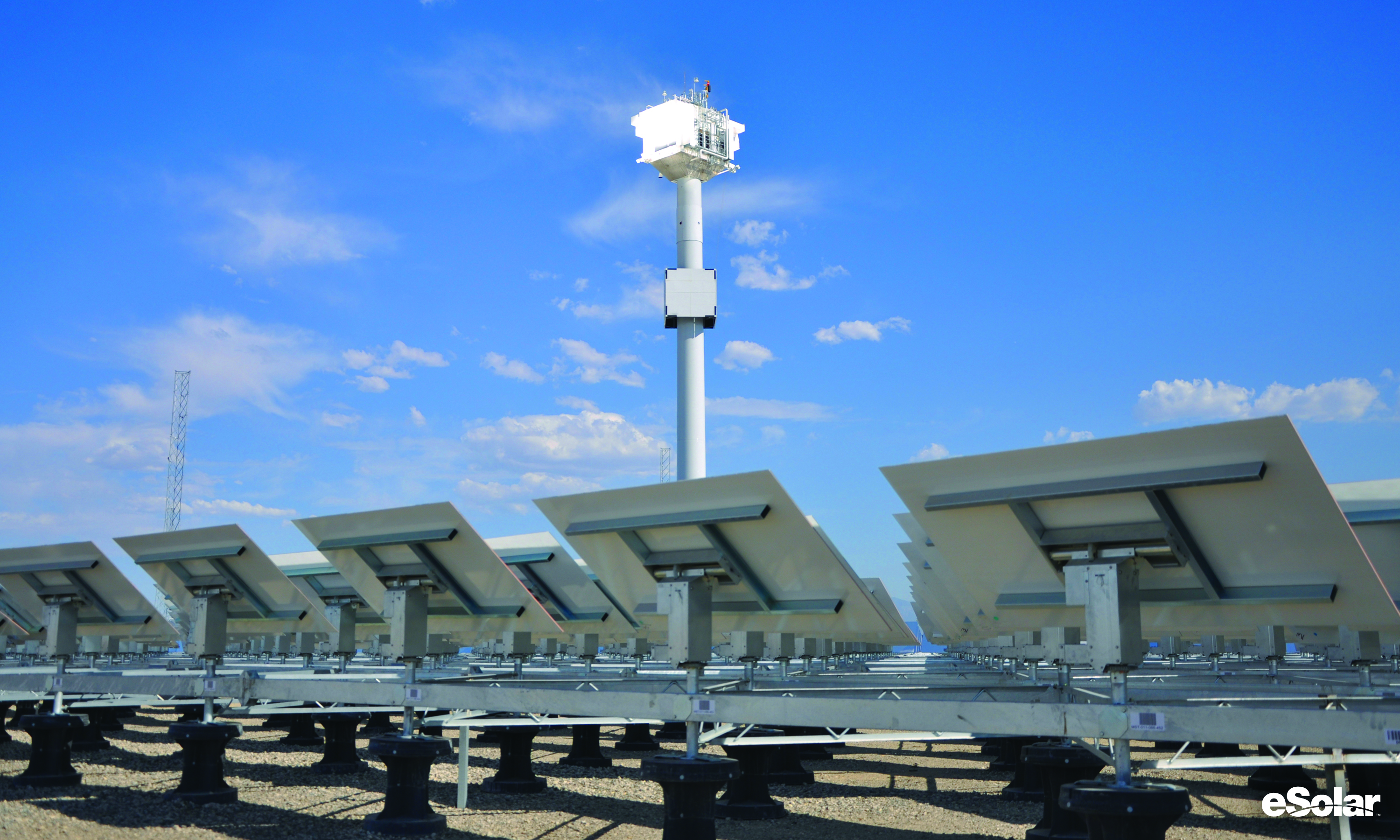
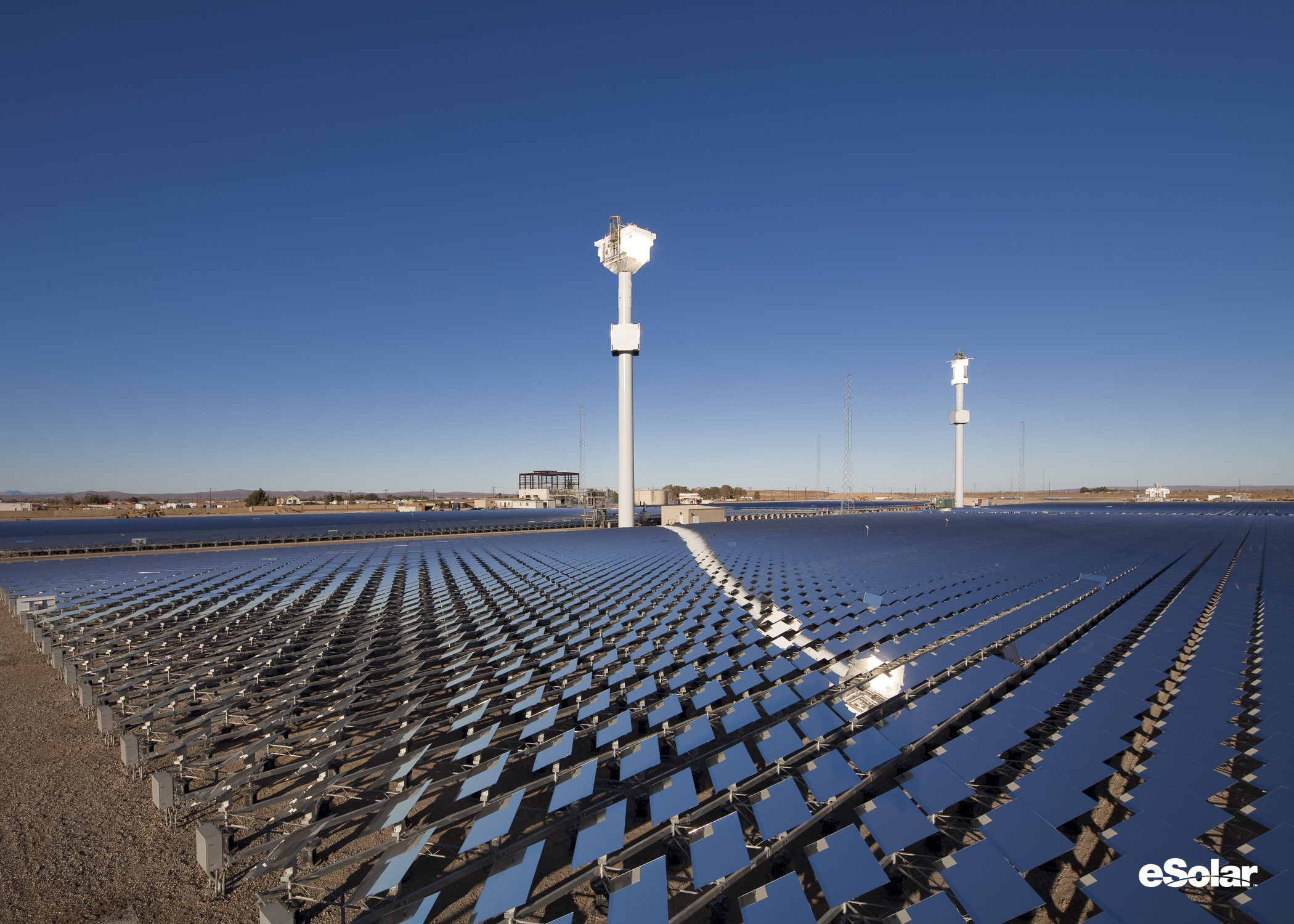
China’s plans to build 2,000 megawatts of solar thermal power using technology from a California company, eSolar, will also include the construction of biomass power plants to generate electricity when the sun sets.

The solar and biomass plants will share turbines and other infrastructure, reducing the projects’ cost and allowing around-the-clock electricity production, according to Bill Gross, eSolar’s chairman.

“That supercharges the economics of solar,” said Mr. Gross in a telephone interview, noting that the addition of biomass generation will allow power plants to operate at 90 percent of capacity.

Under terms of the deal announced Saturday in Beijing, eSolar will license its “power tower” technology to Penglai Electric, which will manage the construction of the power plants over the next decade.

Another Chinese company, China Shaanxi Yulin Huayang New Energy Co., will own and operate the first projects to be built in the 66-square-mile Yulin Energy Park in northern China.

A local shrub grown in the surrounding region to fight desertification, called the sand willow, will supply fuel for the biomass power plants, according to Penglai Electric.

“It’s an economical use of a resource that’s already in place,” said Nathaniel Bullard, a solar analyst with Bloomberg New Energy Finance, a research and consulting firm. “That’s a very savvy move, rather than attach an energy storage system to the solar project.”

You can read the rest of the story here.
Read Full Post »

photo: eSolar

In Saturday’s Los Angeles Times, I write about a ground-breaking solar thermal deal struck by eSolar of Pasadena, Calif., to build two gigawatts of power plants in China over the next decade:

ESolar Inc. of Pasadena signed an agreement Friday to build a series of solar thermal power plants in China with a total capacity of 2,000 megawatts, in one of the largest renewable energy deals of its kind.

Coming four months after an Arizona company, First Solar, secured a contract to build an equally large photovoltaic power plant in China, the ESolar deal signals China’s emergence as a major market for renewable energy.

“They’re moving very fast, much faster than the state and U.S. governments are moving,” said Bill Gross, ESolar’s chairman and the founder of Idealab.

Under the agreement, ESolar will provide China Shandong Penglai Electric Power Equipment Manufacturing Co. the technology and expertise to build solar “power tower” plants over the next decade. Those solar farms would generate a total of 2,000 megawatts of electricity; at peak output that would be equivalent to a large nuclear power plant. The terms of the agreement were not disclosed.

The initial project, which includes a 92-megawatt solar power plant to be built this year, will be located in the 66-square-mile Yulin Energy Park in the Mongolian desert in northern China. The region has become a hot spot for renewable energy, with the 2,000-megawatt First Solar project planned 60 miles to the north.

You can read the rest of the story here.

Read Full Post »

image: SolFocus

In The New York Times on Wednesday, I write about the year-end green tech investing numbers for 2009:

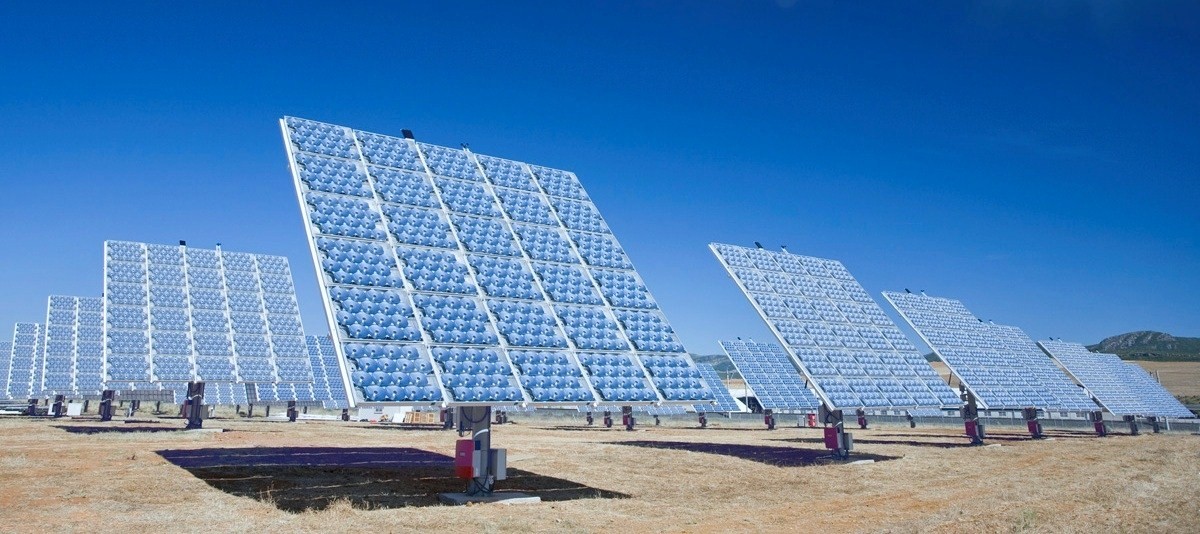
In a flurry of dealmaking bolstered by government subsidies for renewable energy, venture capitalists invested $5.6 billion in green technology companies worldwide in 2009, according to a preliminary report released Wednesday by the Cleantech Group and Deloitte.

That represents a 33 percent drop over the $8.5 billion invested in 2008 — a reflection, the report said, of the global economic downturn. But the overall amount of venture capital fared much worse, retreating to 2003 levels, according to the report, whereas clean technology investments were on track to match 2007 levels.

“In 2009, clean-tech went from a niche category to become the dominant category in venture capital investing,” said Dallas Kachan, managing director of the Cleantech Group, a San Francisco market research and consulting firm. “Clean-tech continued to outpace software and biotech.”

The report’s preliminary survey showed that there were 557 deals in the clean technology space in 2009, compared to 567 deals in 2008 and 488 in 2007.

Solar companies secured $1.2 billion in 2009 — 21 percent of the total and the largest share of venture funding. The biggest deal of the year also went to a solar company, Silicon Valley’s Solyndra, which raised $198 million at the same time it secured a $535 million federal loan guarantee to build a solar module factory.

You can read the rest of the story here.
Read Full Post »

photo: Think

In The New York Times on Tuesday, I write about Norwegian electric carmaker Think’s announcement that it will open its first U.S. assembly plant in Indiana:

Think, the Norwegian electric carmaker, said on Tuesday that it will open its first American assembly plant in Elkhart, Ind.

The Think City, a battery-powered, two-seat hatchback, is set to begin rolling off the Indiana assembly line in early 2011, ramping up to a potential annual production of 20,000 cars by 2013. The factory is expected to eventually employ more than 400 workers.

About 1,500 of the plastic-bodied cars are already on the street in Europe, and Think will begin selling the City in the United States later this year. The car will be imported from a Finland assembly plant until the Indiana factory opens in a former recreational vehicle factory.

Think’s investment in the Indiana facility depends in part on securing a United States Department of Energy loan guarantee to finance the project, according to Richard Canny, Think’s chief executive.

“Our plan is based around the D.O.E. loan,” Mr. Canny said in a telephone interview on Tuesday. “If that didn’t happen we would be looking at a slower and shallower investment plan.”

Indiana was one of several states vying for the Think assembly plant. Tax incentives offered by Indiana and Elkhart’s proximity to automotive suppliers in neighboring Michigan helped clinch the deal, according Mr. Canny.

You can read the rest of the story here.

Read Full Post »

Image: U.S. EPA

In my new Green State column on Grist, I write about how the U.S. Environmental Protection Agency has made its annual year-end enforcement report relevant to the average citizen by creating a Google map mashup that let’s you quickly pinpoint any environmental violations in your neighborhood:

‘Tis the season for the annual year-in-review column, beloved by writers and editors desperate to fill pages and screens of blank space during these slow news weeks.

I’m going to forgo that annual holiday journalism tradition—sort of. While perusing various year-end and year-ahead trend story pitches that had popped into my in-box since Thanksgiving, I came across one from the United States Environmental Protection Agency that caught my attention.

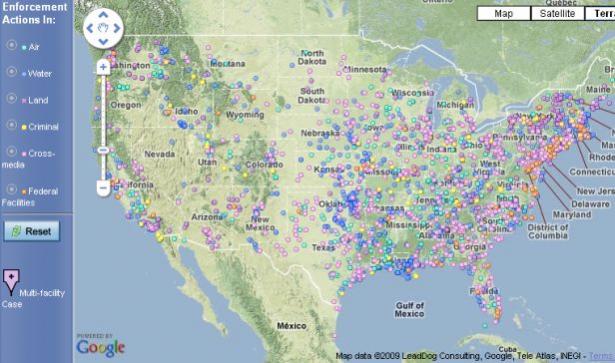
The EPA was releasing its annual enforcement stats for 2009. Usually that’s a big yawn, given that for most of the past decade prosecuting polluters was not high on the must-do list of the former administration. But in 2009 not only was there a much more enforcement-minded EPA administrator in Washington (in the person of Lisa Jackson), the agency for the first time created a Google map mashup of its enforcement actions for the year.

The map lets you zoom in on your city, county, or state and see the civil and criminal cases filed by the EPA for violations of its clean air and water laws and other environmental statutes. Click on the air, water, land, and criminal buttons and colored markers start to populate the map showing you the location of various violations. When you click on a marker a link to detailed information about the case pops up. You can also review any past violations.

You can read the rest of the column here.

Read Full Post »

photo: SolarReserve

In The New York Times on Saturday, I write about utilities NV Energy and PG&E signing power purchase agreements to buy electricity from SolarReserve’s solar farms, which store the sun’s energy in molten salt to generate power at night:

Solar farms that would serve two Western utilities are planning to use technology that will generate electricity after the sun goes down, a move that could be a potential game-changer for the industry.

The two farms being planned by SolarReserve of Santa Monica, Calif., would store the sun’s energy in molten salt, releasing the heat at night when it could be used to drive a turbine and generate electricity. Two utilities, NV Energy in Nevada and Pacific Gas and Electric, Northern California’s biggest utility, would buy the power.

The sun’s intermittent nature has made large-scale solar farms most useful as so-called peaker plants that supply electricity when demand spikes, typically in the late afternoon on hot days. But the ability of SolarReserve to store the sun’s energy for use at night would be a step forward in technology.

“The energy storage characteristics were a key factor in our selection of the Tonopah solar energy project,” NV Energy’s chief executive, Michael Yackira, said in a statement. The utility will be able to draw electricity from the solar farm more or less on demand, which makes it easier to balance the load on the power grid.

NV Energy would buy power from the 100-megawatt Crescent Dunes Solar Energy Project being planned on federal land near Tonopah, Nev., about 215 miles northwest of Las Vegas.

“We’re expecting to put in 12 hours of storage, which allows us to move power within the day to meet peak requirements as well as to operate at full load,” SolarReserve’s chief executive, Kevin Smith, said of the Tonopah plant.

You can read the rest of the story here.

Read Full Post »

« Newer Posts - Older Posts »

Design a site like this with WordPress.com
Get started